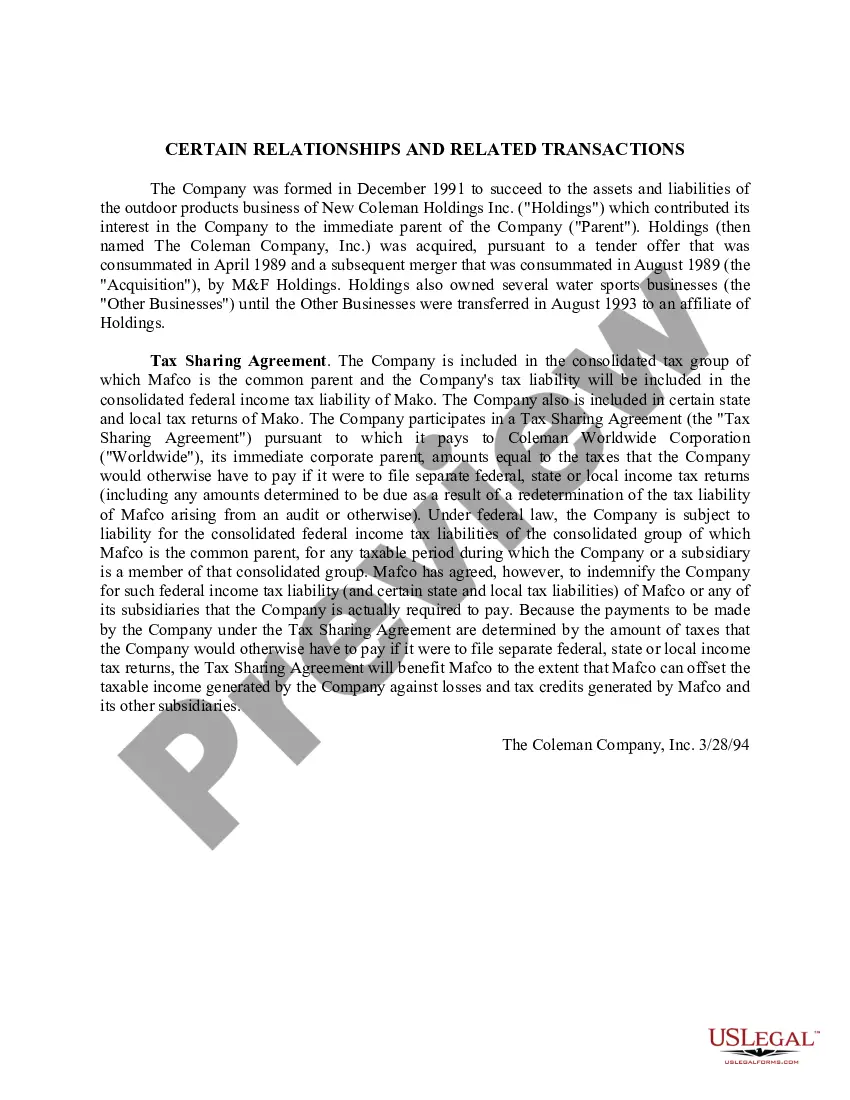
Tax Sharing Agreement
What is this form?
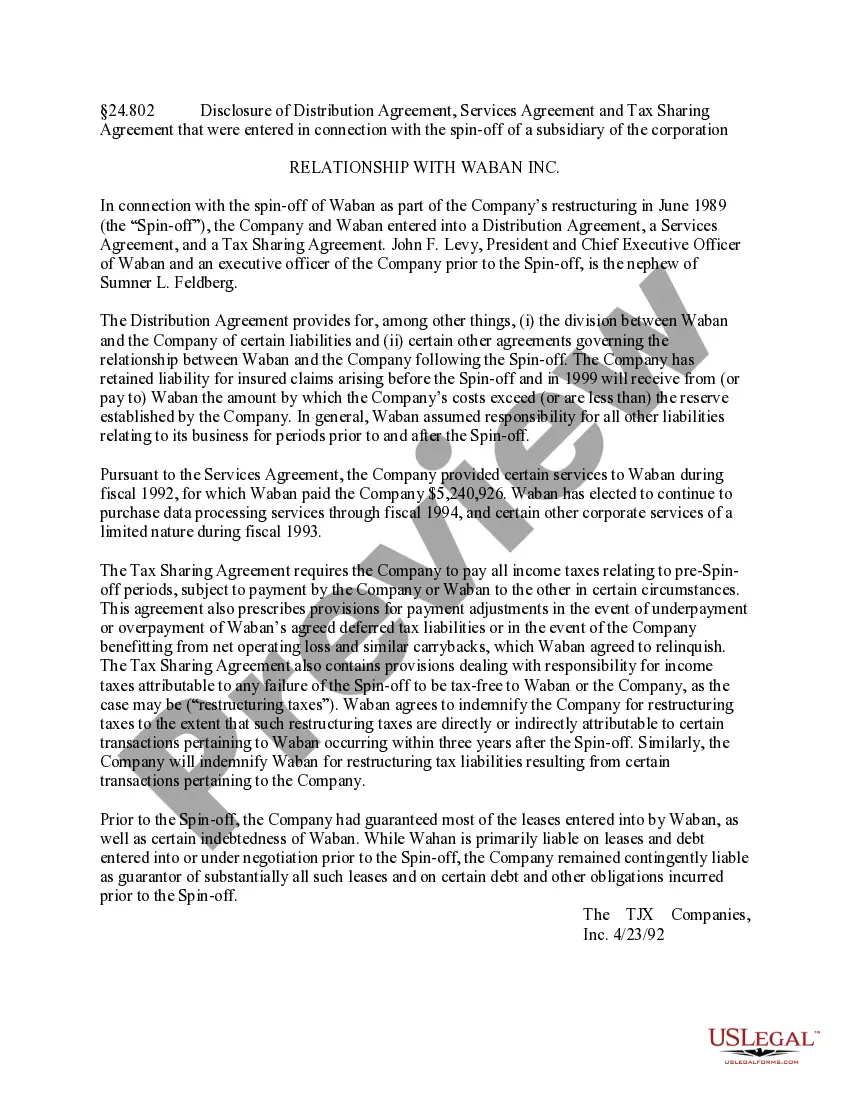
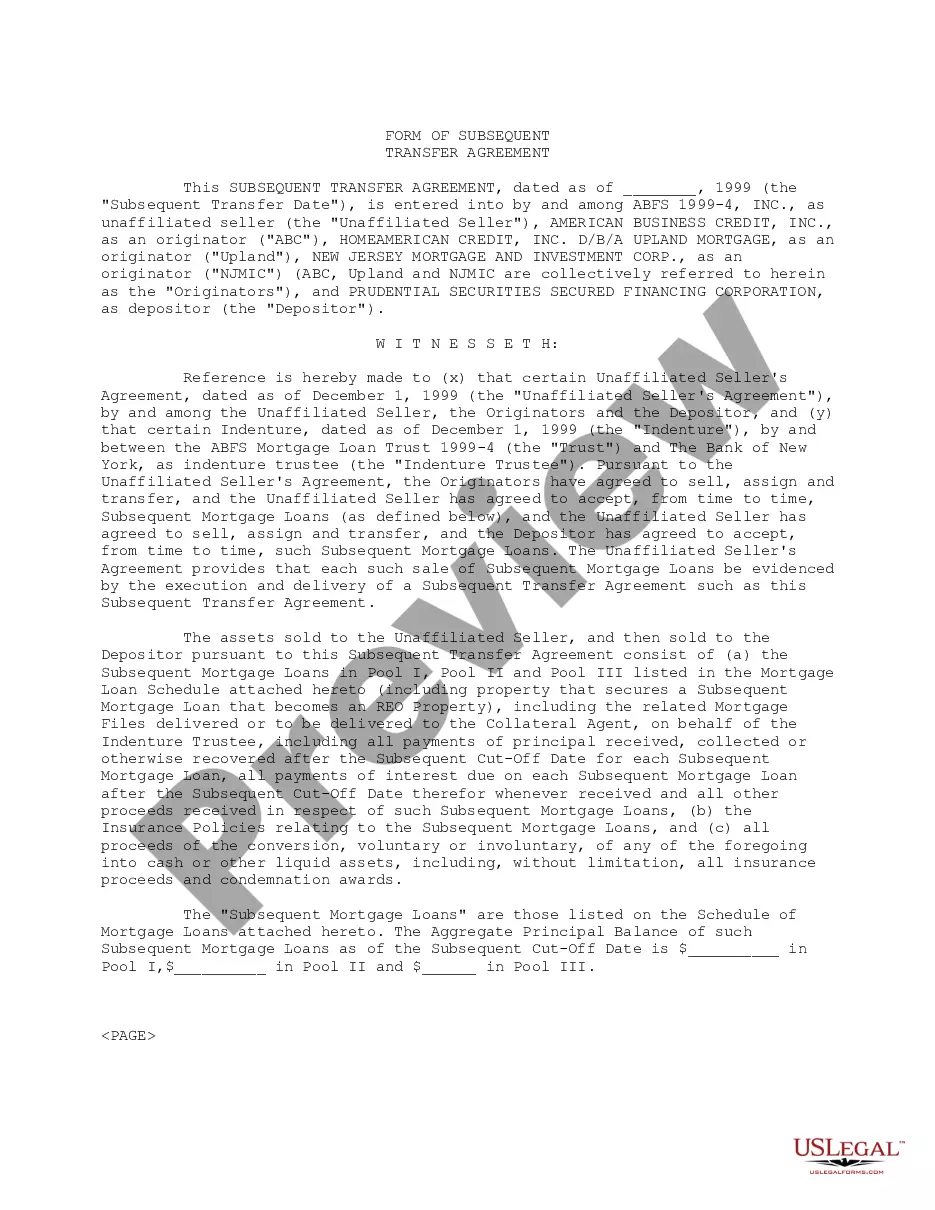
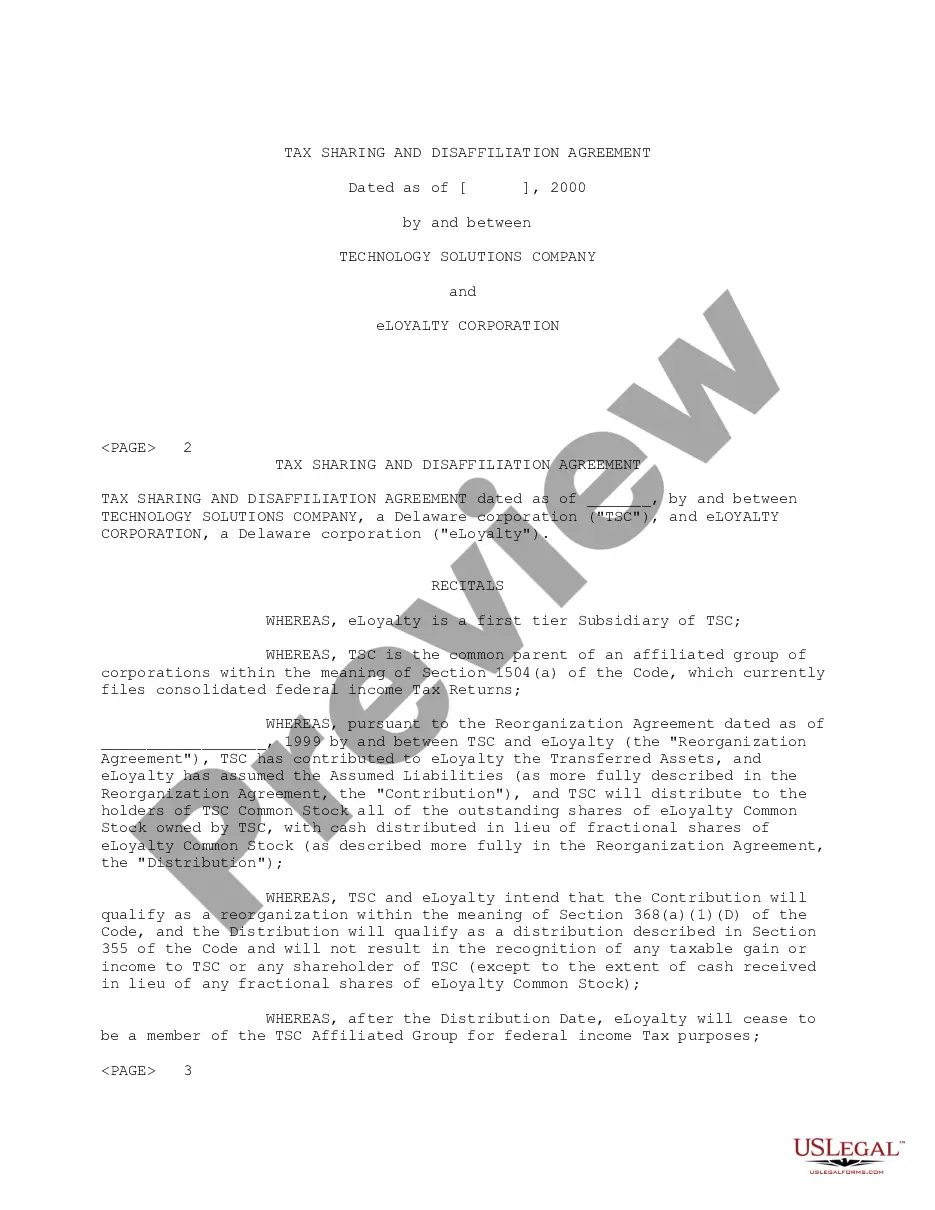
A Tax Sharing Agreement is a legal document used in corporate settings to outline the terms under which taxes are shared among members of a consolidated group. This agreement specifies the process for calculating and allocating tax liabilities, providing clarity on the financial responsibilities among corporate entities. Unlike a standard tax return, which focuses on individual tax obligations, a Tax Sharing Agreement addresses group taxation, ensuring equitable treatment in tax matters among affiliated companies.
Form components explained
- Identification of the parent company and subsidiaries involved in the agreement
- Details regarding the calculation of tax obligations for members of the consolidated group
- Payment obligations and how they are determined within the agreement
- Indemnification provisions regarding federal and state tax liabilities
- Procedures for adjustment in the event of tax audits or re-evaluations
When to use this form
This form should be used when a group of affiliated companies files a consolidated tax return and needs to establish clear guidelines on how tax liabilities will be shared among them. It is especially relevant when the corporate structure includes multiple subsidiary companies under a single parent entity, ensuring each party understands its tax responsibilities and liabilities.
Who needs this form
- Corporations operating under a parent-subsidiary structure
- Tax professionals and corporate accountants managing consolidated tax filings
- Legal advisors drafting agreements for company mergers or acquisitions
How to complete this form
- Identify all parties involved, including the parent company and subsidiaries.
- Specify the tax liabilities to be covered under the agreement.
- Include provisions for how the taxes will be calculated for each entity.
- Detail the payment process and timelines for tax obligations.
- Address indemnification clauses related to federal and state tax liabilities.
Notarization guidance
This form does not typically require notarization to be legally valid. However, some jurisdictions or document types may still require it. US Legal Forms provides secure online notarization powered by Notarize, available 24/7 for added convenience.
Get your form ready online
Our built-in tools help you complete, sign, share, and store your documents in one place.
Make edits, fill in missing information, and update formatting in US Legal Forms—just like you would in MS Word.
Download a copy, print it, send it by email, or mail it via USPS—whatever works best for your next step.
Sign and collect signatures with our SignNow integration. Send to multiple recipients, set reminders, and more. Go Premium to unlock E-Sign.
If this form requires notarization, complete it online through a secure video call—no need to meet a notary in person or wait for an appointment.
We protect your documents and personal data by following strict security and privacy standards.

Make edits, fill in missing information, and update formatting in US Legal Forms—just like you would in MS Word.

Download a copy, print it, send it by email, or mail it via USPS—whatever works best for your next step.

Sign and collect signatures with our SignNow integration. Send to multiple recipients, set reminders, and more. Go Premium to unlock E-Sign.

If this form requires notarization, complete it online through a secure video call—no need to meet a notary in person or wait for an appointment.

We protect your documents and personal data by following strict security and privacy standards.
Common mistakes
- Failing to specify which taxes are covered by the agreement.
- Omitting clear payment terms and timelines for tax obligations.
- Not including necessary indemnification clauses.
- Skipping the review process to ensure compliance with state-specific regulations.
Benefits of using this form online
- Convenient access and immediate download of legal forms.
- Editable templates that can be tailored to meet specific corporate needs.
- Reliable format that ensures compliance with legal standards.
Legal use & context
- The Tax Sharing Agreement helps to formalize tax responsibilities among affiliated companies.
- It provides legal protection for all parties in case of audits or disputes regarding tax payments.
- Such agreements are typically enforceable in conjunction with federal and state tax laws.
Summary of main points
- A Tax Sharing Agreement facilitates fair tax allocation among corporate affiliates.
- It is crucial for companies filing consolidated tax returns to define responsibilities clearly.
- Proper completion of this form can help prevent disputes over tax liabilities among parties.
Looking for another form?



Form popularity
FAQ
A Tax Sharing Agreement is a legal document that outlines how taxes are shared among members of a consolidated group. It specifies how tax liabilities are calculated and allocated, clarifying each entity’s financial responsibilities. It is used when affiliated companies file a consolidated tax return and need clear guidelines for tax sharing.
The Tax Sharing Agreement establishes how the group will calculate and share tax liabilities among its members. It covers how amounts are allocated, who makes payments, and how indemnification for federal and state taxes works, ensuring predictable budgeting and coordinated responses to audits during consolidated filings.
Corporations operating under a parent-subsidiary structure, tax professionals and corporate accountants who manage consolidated filings, and legal advisors handling mergers or acquisitions should use a Tax Sharing Agreement to clarify tax responsibilities and liabilities among affiliated entities, ensuring consistent treatment across the group and reducing the risk of disputes during audits.
The key components include identifying the parent company and subsidiaries involved, detailing how tax obligations are calculated for the consolidated group, specifying payment obligations among members, outlining indemnification for federal and state tax liabilities, and describing procedures for adjustments if a tax audit or re-evaluation occurs.
During a tax audit or re-evaluation, the Tax Sharing Agreement provides procedures for adjusting shared tax liabilities among the members, detailing how allocations and payments are revisited and who bears responsibility for changes. This helps maintain consistent treatment across the consolidated group and supports coordinated responses to audits.
A Tax Sharing Agreement governs how taxes are calculated and shared among all members of a consolidated group, rather than focusing on each entity’s separate return. It sets group-wide calculation methods, payment obligations, indemnification for federal and state taxes, and procedures for audit adjustments, coordinating tax matters across affiliated companies.