Maintenance Assistance - Technician Checklist
Understanding this form
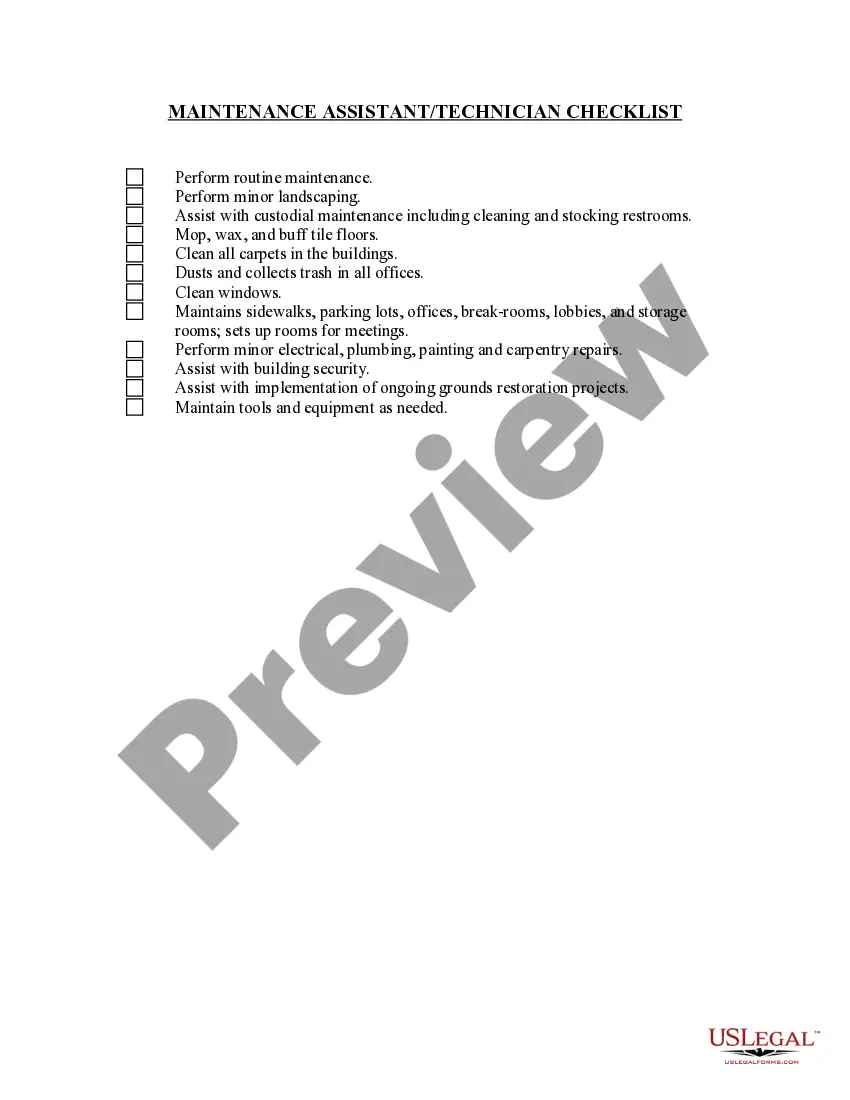
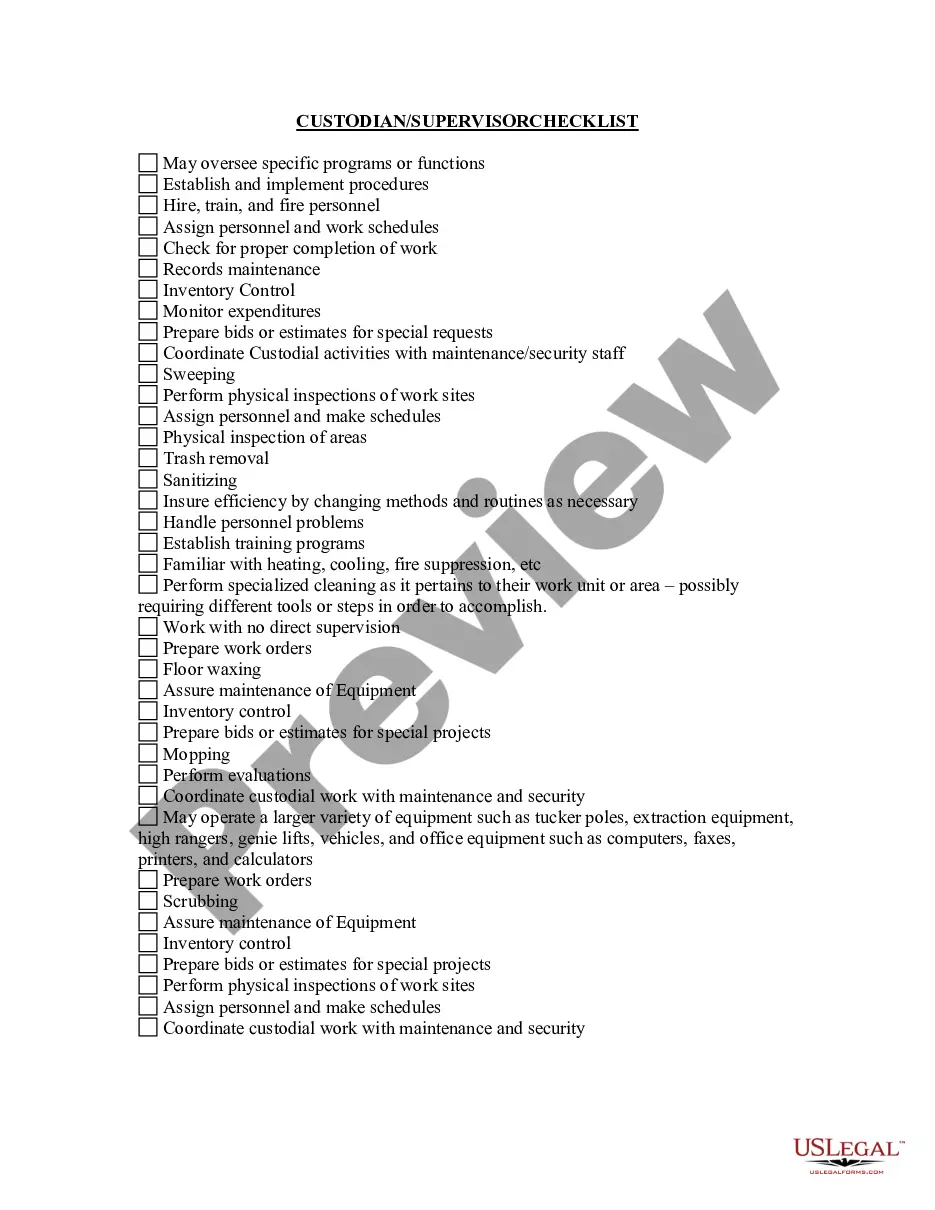
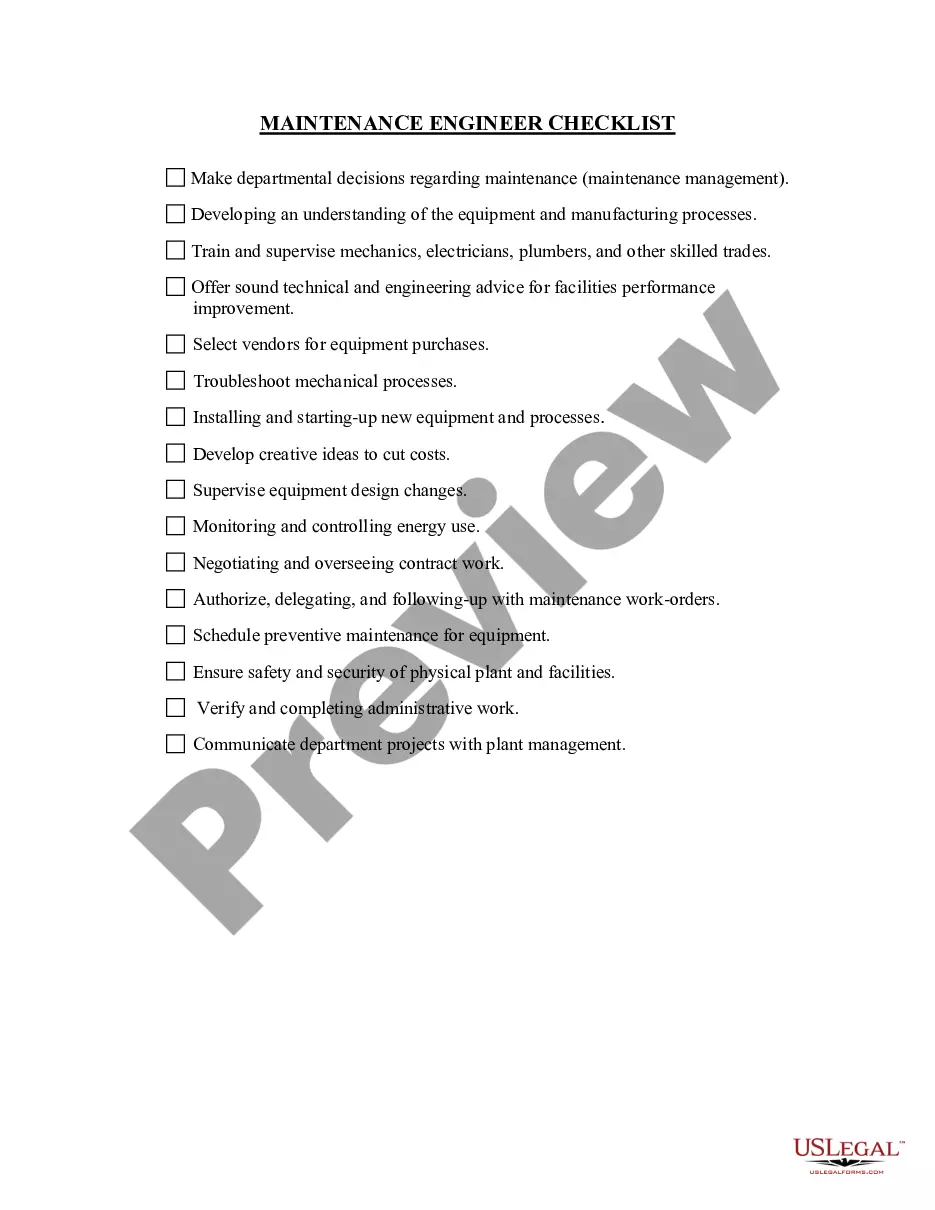
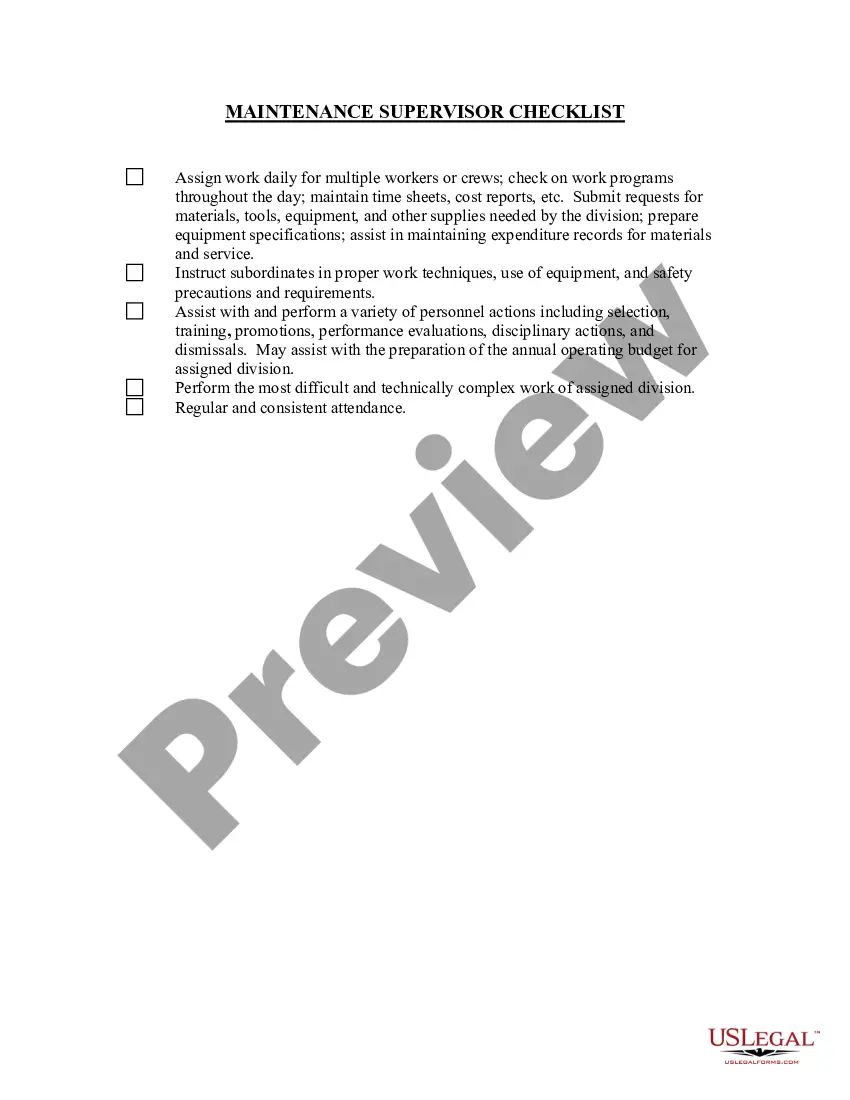
The Maintenance Assistance - Technician Checklist is a form designed to outline the various duties and responsibilities of a maintenance assistant or technician. This checklist serves as a practical tool for supervisors or property managers to ensure that all essential maintenance tasks are performed regularly. Unlike other employment or service agreements, this form focuses specifically on the tasks associated with maintenance roles, providing a straightforward overview for both employees and employers.
Key parts of this document
- Routine maintenance tasks
- Minor landscaping responsibilities
- Custodial duties, including restroom maintenance
- Floor care, such as mopping, waxing, and buffing
- Carpet cleaning requirements
- Waste collection and office cleaning tasks
- Window cleaning responsibilities
- Maintenance of common areas like break rooms and lobbies
- Minor repairs in electrical, plumbing, painting, and carpentry
- Support for building security measures
- Assistance with ongoing grounds restoration projects
- Tool and equipment maintenance duties
Common use cases
This checklist should be used when hiring maintenance assistants or technicians to establish clear expectations regarding their duties. It is particularly useful in property management situations, facilities maintenance, or any environment where regular upkeep of buildings and grounds is necessary. This form can help ensure that all maintenance aspects are covered and that responsibilities are clearly communicated to the staff involved.
Who can use this document
This checklist is intended for:
- Property managers looking to define maintenance roles
- Business owners requiring maintenance staff
- Supervisors in charge of maintenance personnel
- Human resources teams involved in hiring maintenance staff
- Facility managers overseeing day-to-day operations
Completing this form step by step
- Identify the specific tasks required for your maintenance operation.
- Fill in the checklist with detailed descriptions of each duty listed.
- Assign specific individuals to each task, ensuring accountability.
- Review the completed checklist with the maintenance staff to clarify expectations.
- Distribute copies of the checklist for reference and tracking performance.
Does this form need to be notarized?
This form does not typically require notarization unless specified by local law. It is a straightforward checklist that functions for internal use and does not have legal ramifications that necessitate notarization.
Get your form ready online
Our built-in tools help you complete, sign, share, and store your documents in one place.
Make edits, fill in missing information, and update formatting in US Legal Forms—just like you would in MS Word.
Download a copy, print it, send it by email, or mail it via USPS—whatever works best for your next step.
Sign and collect signatures with our SignNow integration. Send to multiple recipients, set reminders, and more. Go Premium to unlock E-Sign.
If this form requires notarization, complete it online through a secure video call—no need to meet a notary in person or wait for an appointment.
We protect your documents and personal data by following strict security and privacy standards.

Make edits, fill in missing information, and update formatting in US Legal Forms—just like you would in MS Word.

Download a copy, print it, send it by email, or mail it via USPS—whatever works best for your next step.

Sign and collect signatures with our SignNow integration. Send to multiple recipients, set reminders, and more. Go Premium to unlock E-Sign.

If this form requires notarization, complete it online through a secure video call—no need to meet a notary in person or wait for an appointment.

We protect your documents and personal data by following strict security and privacy standards.
Avoid these common issues
- Failing to customize tasks for specific job roles.
- Not including all relevant maintenance tasks in the checklist.
- Overlooking the importance of regular review and updates of the checklist.
- Neglecting to communicate the responsibilities clearly to the staff.
Benefits of using this form online
- Instant access to downloadable templates drafted by licensed attorneys.
- Easy to customize the checklist according to specific maintenance needs.
- Convenient editing options allow for quick updates as duties change.
- Reliable storage for keeping track of maintenance responsibilities.
Key takeaways
- The Maintenance Assistance - Technician Checklist outlines essential duties for maintenance staff.
- It is vital for ensuring clarity in maintenance roles and responsibilities.
- Using this form can help enhance accountability and track maintenance performance.
Looking for another form?

Form popularity
FAQ
What is a PM Inspection ? A required inspection that measures and checks adjustments, conducts cleaning, tightening, greasing, lubrication or replacement of certain parts or fluids at specific intervals recommended by the manufacturer.
Get the Right People on the Maintenance Team. Set Goals for the Preventative Maintenance (PM) Plan. Collect Detailed Information on Existing Equipment. Decide Which Assets and Equipment to Include. Create the Preventative Maintenance Schedule.
Maintenance Checklist. An itemized list of discrete maintenance tasks that have been prepared by the manufacturers of the asset and/or other subject matter experts such as consultants. Checklists are the basic building blocks of a maintenance program. Organization of the Checklist.
Ensure that machinery is clear of debris, before and after every shift. Wipe machine surfaces of lubricant, dirt and other loose debris each day. Regularly inspect tools for sharpness. Check for and replace worn or damaged tools. Routinely check all machinery fluid levels and air filters and replace as needed.
A preventive maintenance checklist is a set of written tasks that guide the technician through a PM before it can be closed. A checklist gets all the steps and information out of a manual and into the hands of experienced technicians by standardizing PMs in your CMMS.
For example: performing regular business and equipment inspections, cleaning and lubricating essential equipment, and tidying your business's grounds are all examples of preventive maintenance. The goal of preventive maintenance is to prevent equipment failure before it occurs, and to reduce the risk of accidents.
Preventive maintenance involves the systematic inspection of equipment where potential problems are detected and corrected in order to prevent equipment failure before it happens.
Example tasks may include cleaning, lubrication, replacing or repairing parts, or even partial or complete overhauls. More obvious examples of preventive maintenance include ensuring production line equipment is working efficiently or heating, ventilation or air conditioning elements are inspected, cleaned and updated.