Washington Last Will and Testament for Domestic Partner with Minor Children from Prior Marriage
What is this form?
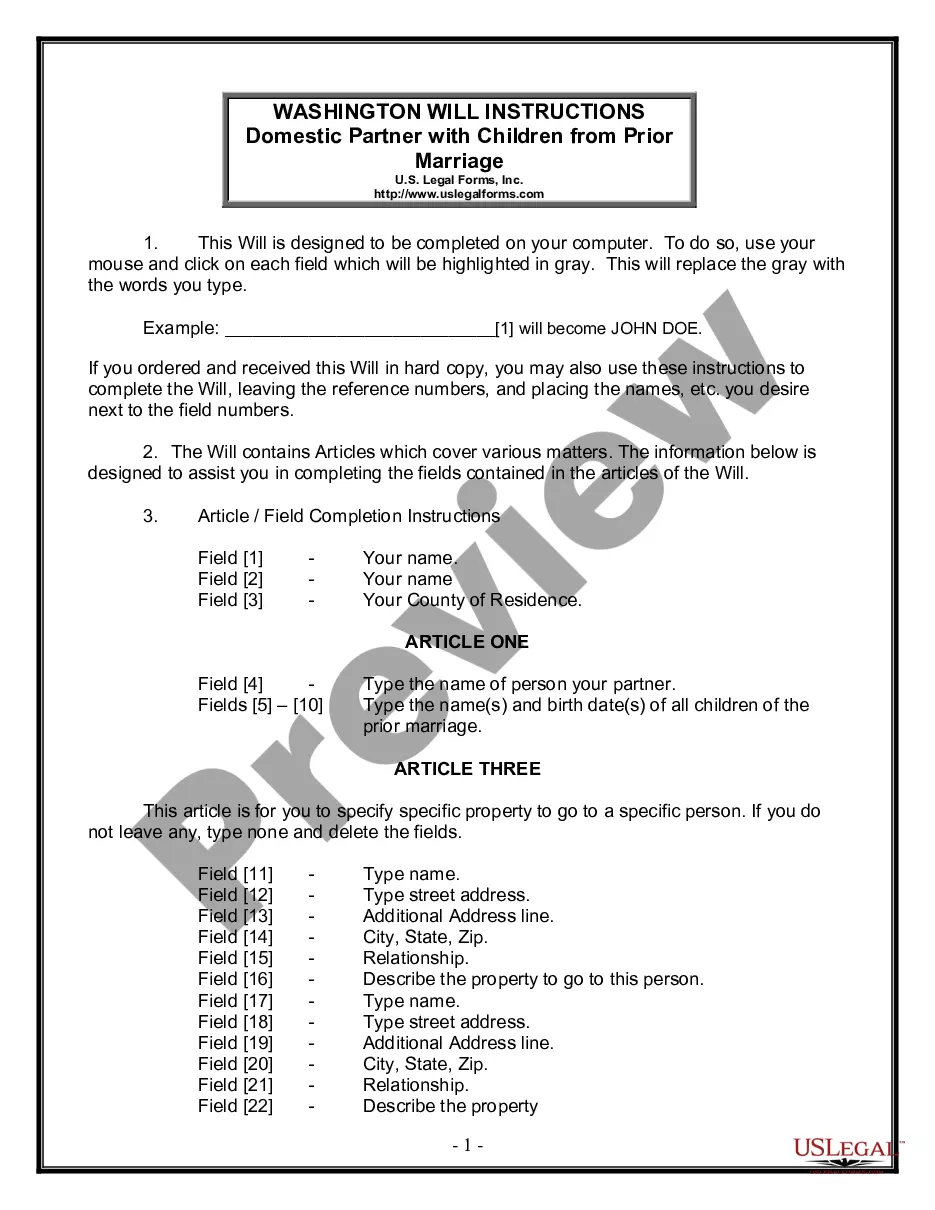
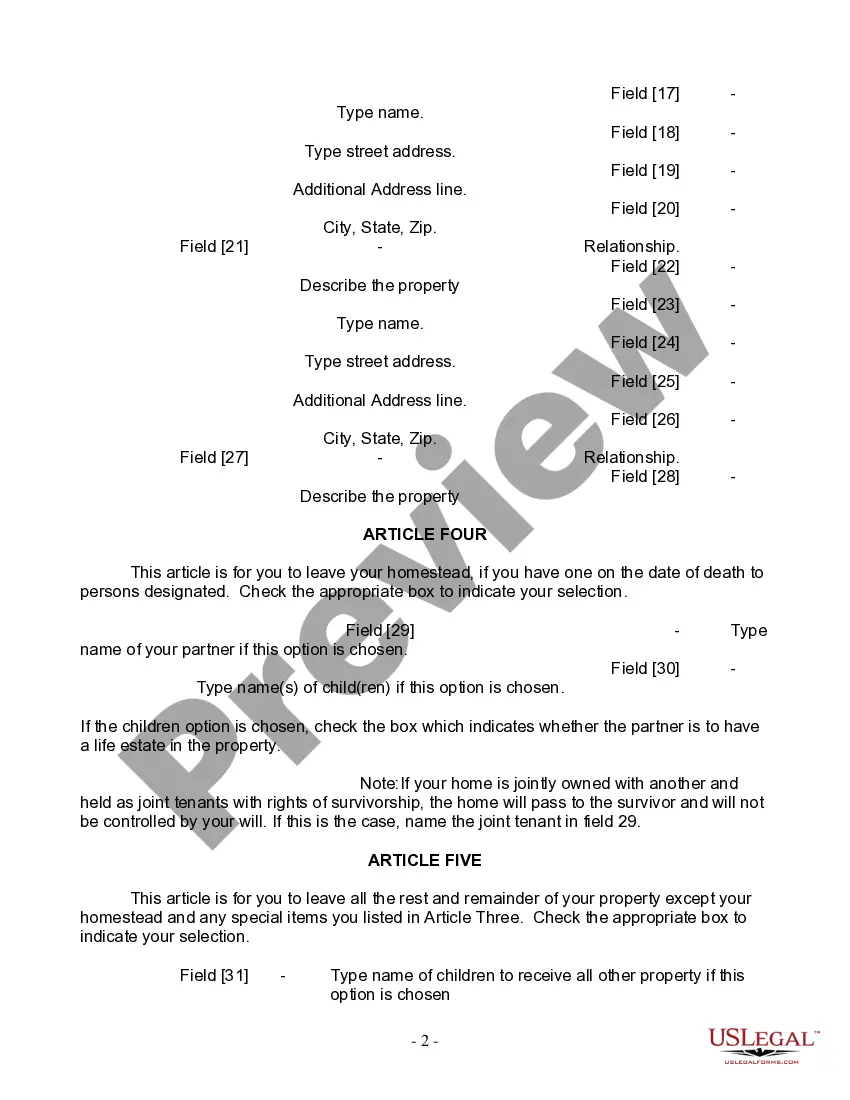
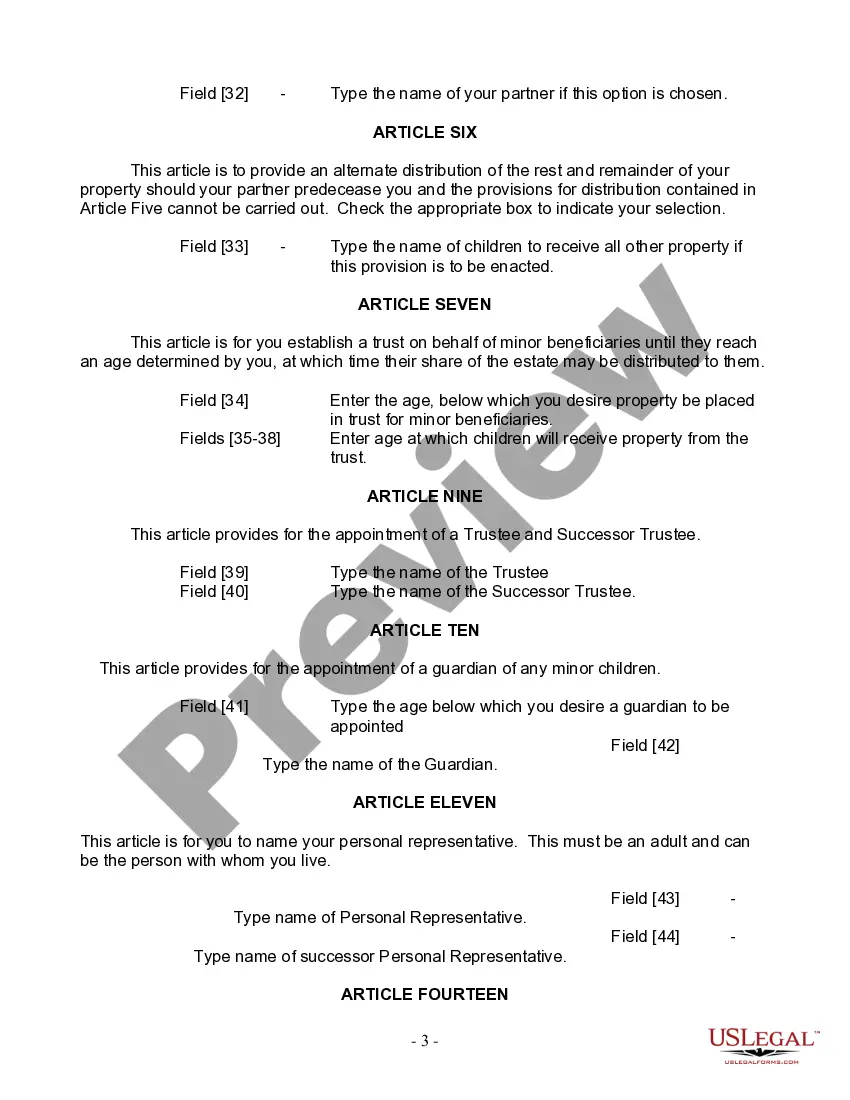
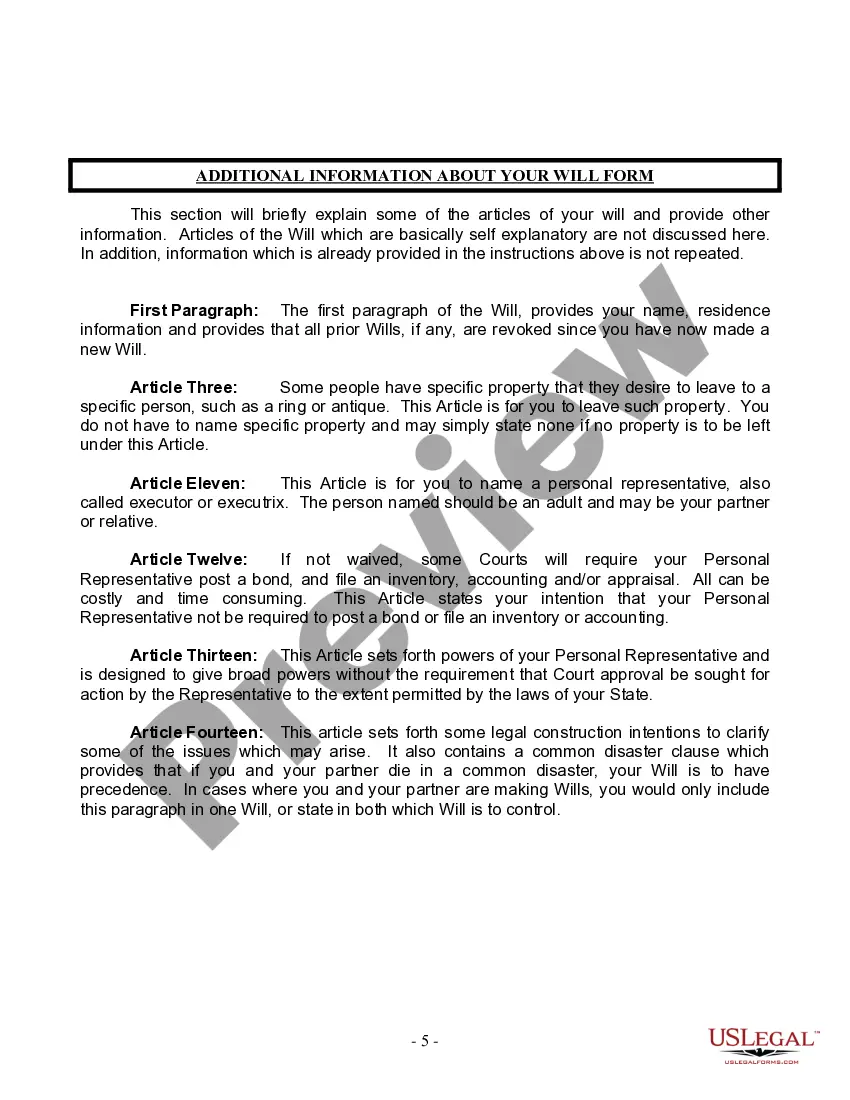
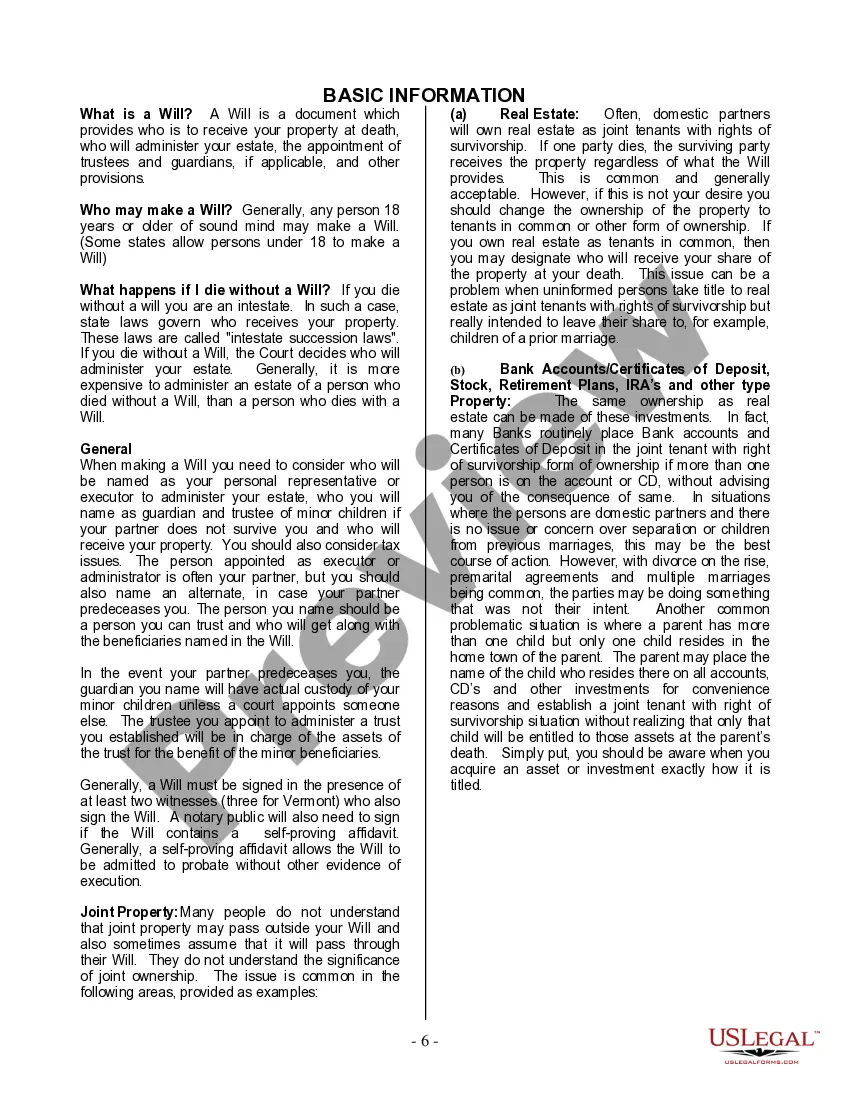
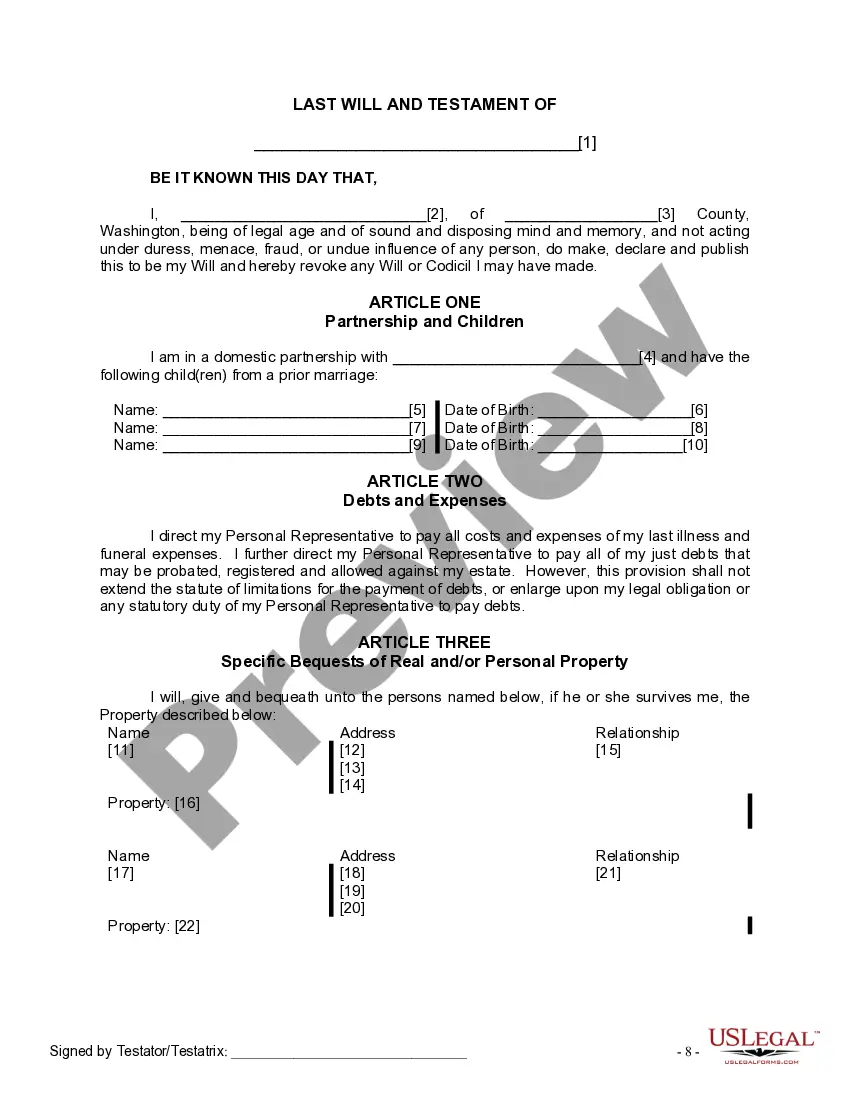
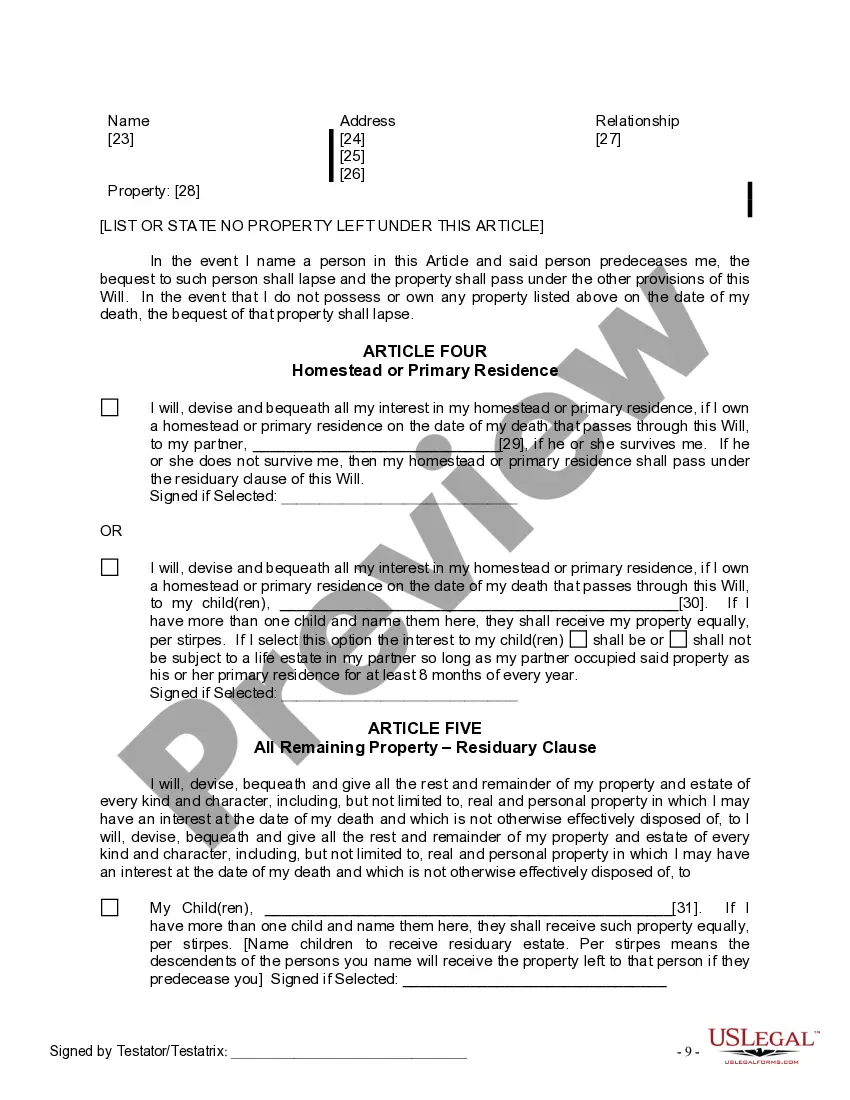
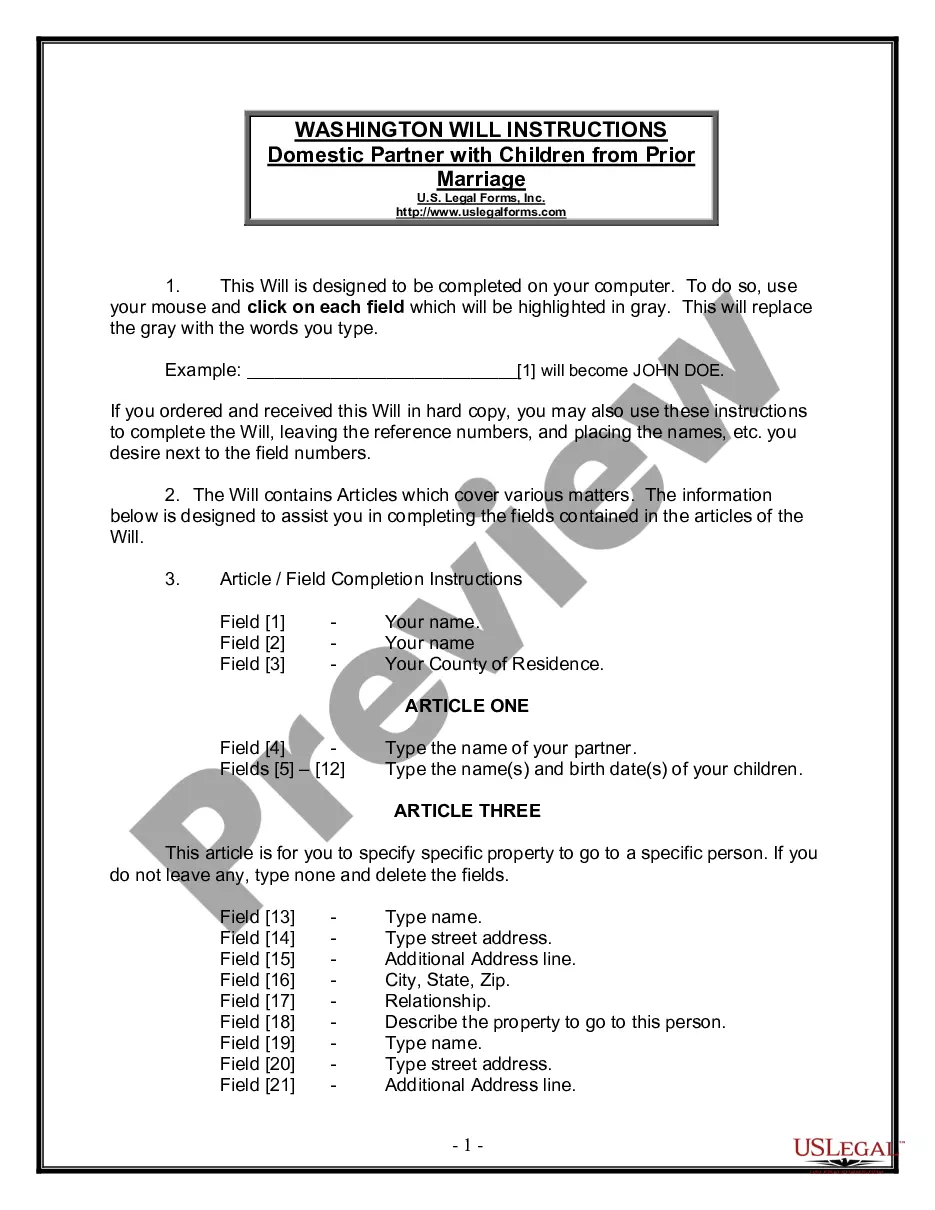
The Last Will and Testament for Domestic Partner with Minor Children from Prior Marriage is a legal document that outlines how your assets will be distributed upon your death. This form specifically addresses the needs of individuals in domestic partnerships who have minor children from a previous marriage. It includes provisions for appointing a personal representative, detailing beneficiaries, and establishing trusts for minor children, ensuring that their needs are taken into account and protected.
What’s included in this form
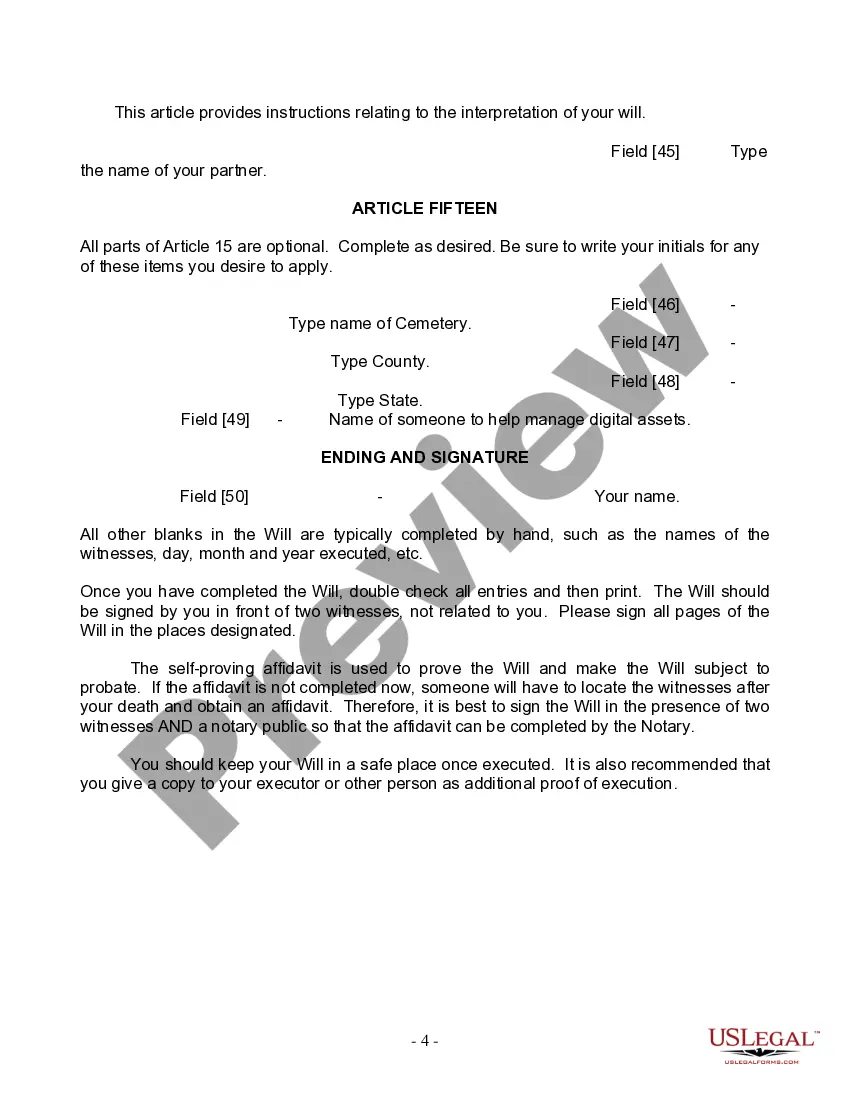
- Appointment of a personal representative or executor to manage your estate.
- Designation of beneficiaries for specific assets as well as the residuary estate.
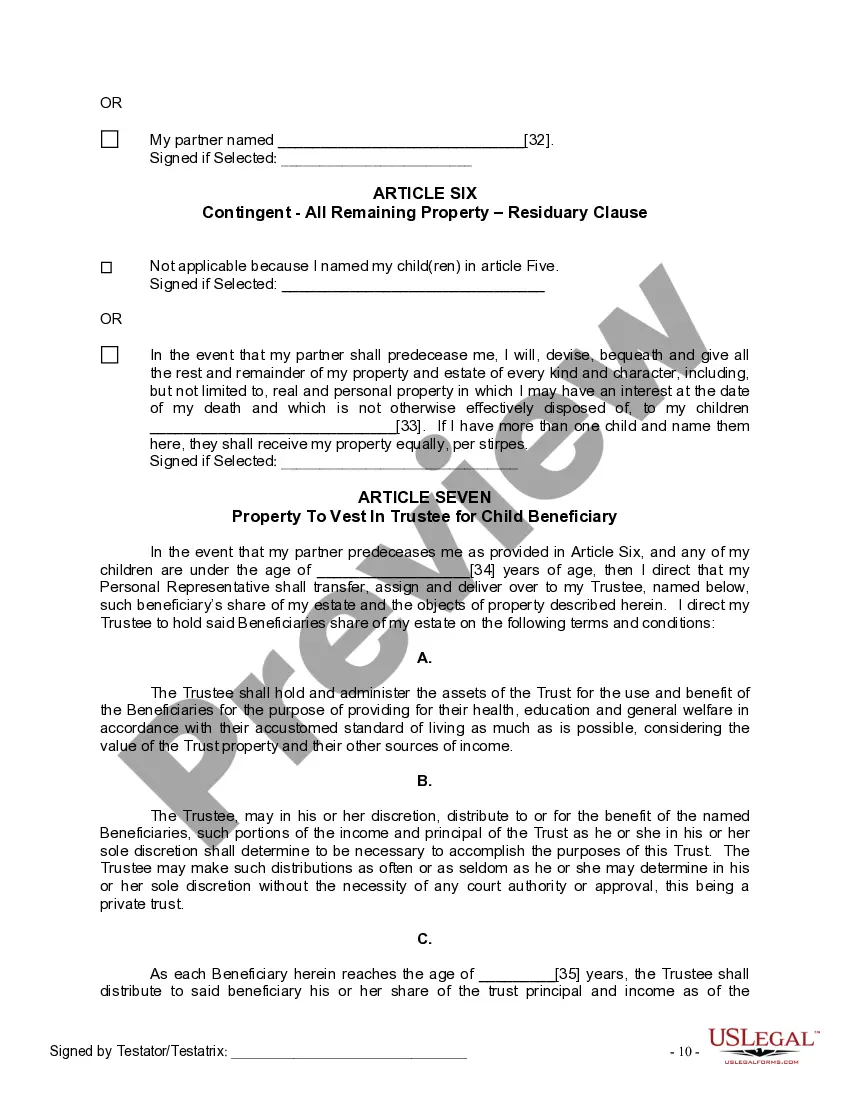
- Establishment of a trust for minor children until they reach a specified age.
- Nomination of a guardian for any minor children.
- Provisions for the appointment of a trustee and alternate trustee.




When this form is needed
This form is essential for domestic partners with minor children from a previous relationship who want to ensure their wishes for asset distribution and child care are legally documented. You should use this form if you want to prevent any potential disputes among heirs and ensure that your partner and children are adequately provided for in the event of your passing.
Who can use this document
- Individuals in a domestic partnership who have minor children from a previous marriage.
- Those who want to specify how their assets should be divided after their death.
- Anyone looking to establish a legal guardian for their children in the event of their death.
- Individuals seeking to appoint a personal representative or executor to handle their estate.
How to prepare this document
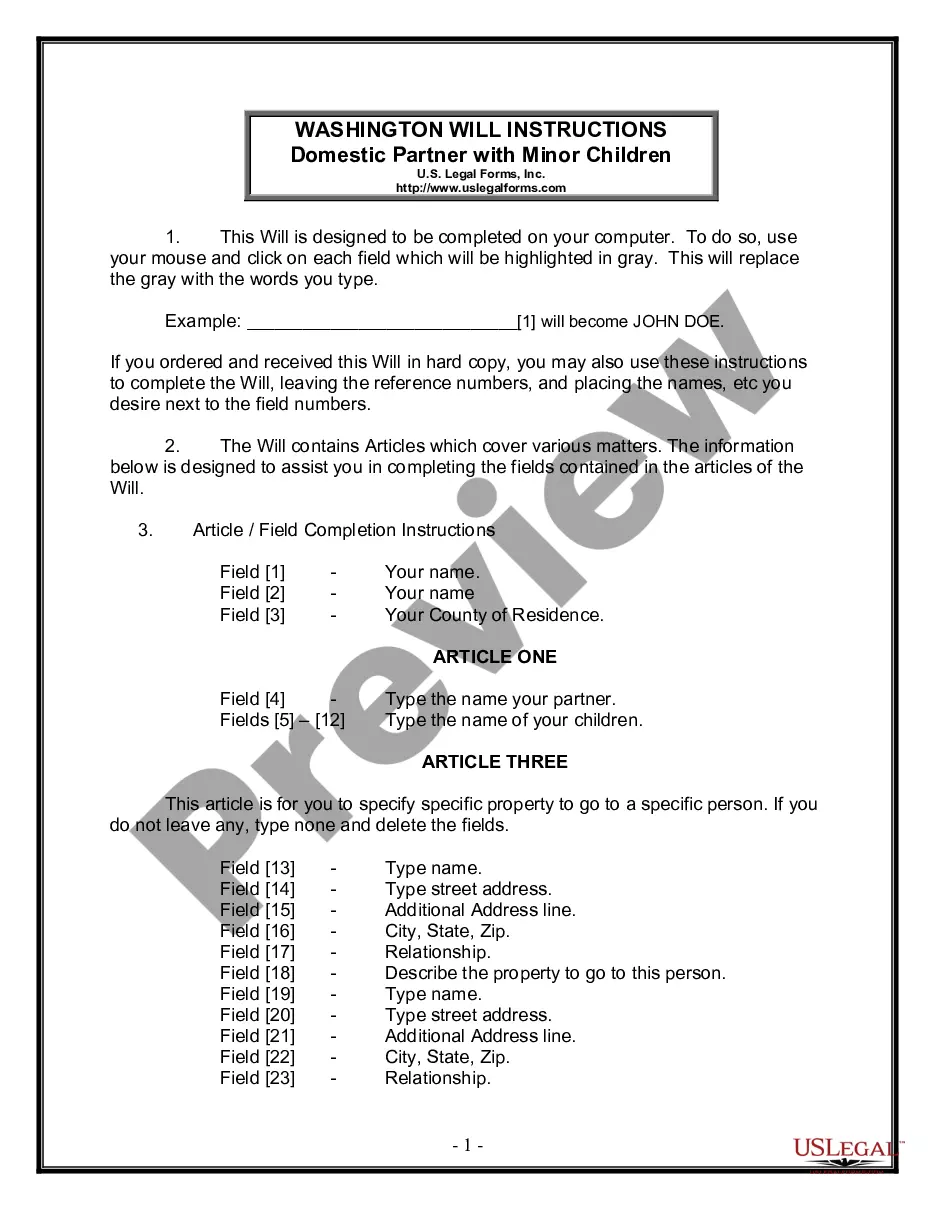
- Identify yourself and your partner in the designated fields.
- List the names and birth dates of all children from the prior marriage.
- Specify your property and name beneficiaries for each asset.
- Designate a trustee for any assets left to minor children and establish trust conditions.
- Sign the document in front of two witnesses who are not named in the will.
Notarization requirements for this form
Yes, this form must be notarized to be legally valid, especially if it includes a self-proving affidavit. It is advisable to have a notary public available when signing the will to complete the necessary notarization at the same time.
Get your form ready online
Our built-in tools help you complete, sign, share, and store your documents in one place.
Make edits, fill in missing information, and update formatting in US Legal Forms—just like you would in MS Word.
Download a copy, print it, send it by email, or mail it via USPS—whatever works best for your next step.
Sign and collect signatures with our SignNow integration. Send to multiple recipients, set reminders, and more. Go Premium to unlock E-Sign.
If this form requires notarization, complete it online through a secure video call—no need to meet a notary in person or wait for an appointment.
We protect your documents and personal data by following strict security and privacy standards.

Make edits, fill in missing information, and update formatting in US Legal Forms—just like you would in MS Word.

Download a copy, print it, send it by email, or mail it via USPS—whatever works best for your next step.

Sign and collect signatures with our SignNow integration. Send to multiple recipients, set reminders, and more. Go Premium to unlock E-Sign.

If this form requires notarization, complete it online through a secure video call—no need to meet a notary in person or wait for an appointment.

We protect your documents and personal data by following strict security and privacy standards.
Common mistakes
- Failing to have the will signed in the presence of two qualified witnesses.
- Not designating an alternate personal representative or guardian.
- Overlooking the need to update the will after changes in circumstances (e.g., marriage, divorce, or additional children).
- Leaving items in the will that are not actually owned at the time of death, resulting in confusion.
Benefits of completing this form online
- Convenience of completing the form at your own pace.
- Editable fields allow for easy updates to your information as needed.
- Reliable legal template drafted by licensed attorneys to ensure compliance.
- Immediate access to a legal document that protects your wishes and beneficiaries.
What to keep in mind
- The form provides a comprehensive way to manage your estate as a domestic partner with children from a previous marriage.
- Itâs crucial to accurately fill out and sign the will to ensure it reflects your wishes.
- Seek legal advice if there are any uncertainties regarding your estate planning needs.
Looking for another form?
Form popularity
FAQ
Age: The testator must be at least 18 years old. Capacity: The testator must be of sound mind. Signature: The will must be signed by the testator or by someone else in the testator's name in his presence, by his direction.
Washington doesn't recognize holographic, or handwritten Wills, signed only by the testator. A valid Will in Washington needs to be signed by the testator in the presence of two disinterested witnesses who also sign.
Find an online template or service. Make a list of your assets. Be specific about who gets what. If you have minor children, choose a guardian. Give instructions for your pet. Choose an executor. Name a 'residuary beneficiary' List your funeral preferences.
Include personal identifying information. Include a statement about your age and mental status. Designate an executor. Decide who will take care of your children. Choose your beneficiaries. List your funeral details. Sign and date your Last Will and Testament.
Choose an online legal services provider or locate a will template. Carefully consider your distribution wishes. Identify a personal representative/executor. Understand the requirements to make your will legal. Make sure someone else knows about your will. Consult a lawyer if you have a more complicated estate.
Yes, under some circumstances. If no consideration is provided for the mutual wills, except the mutual agreement of the spouses, either spouse can change the will prior to the death of the first spouse.After the first spouse dies, however, the surviving spouse cannot change the will.
An adult can make a valid will without notifying their wife or husband. Not telling a spouse would be unusual, but not illegal.
When you marry, any existing will is automatically revoked (cancelled) and becomes no longer valid. If you do not make a new one, then when you die the law of intestacy decides how your assets are divided. Usually, your entire estate would go to your wife, husband or civil partner.
Joint wills are usually created by married couples. They often state that: After one spouse has died, all the couple's property will be left to the surviving spouse; and. After the surviving spouse dies, the remaining property will be left to the couple's children.