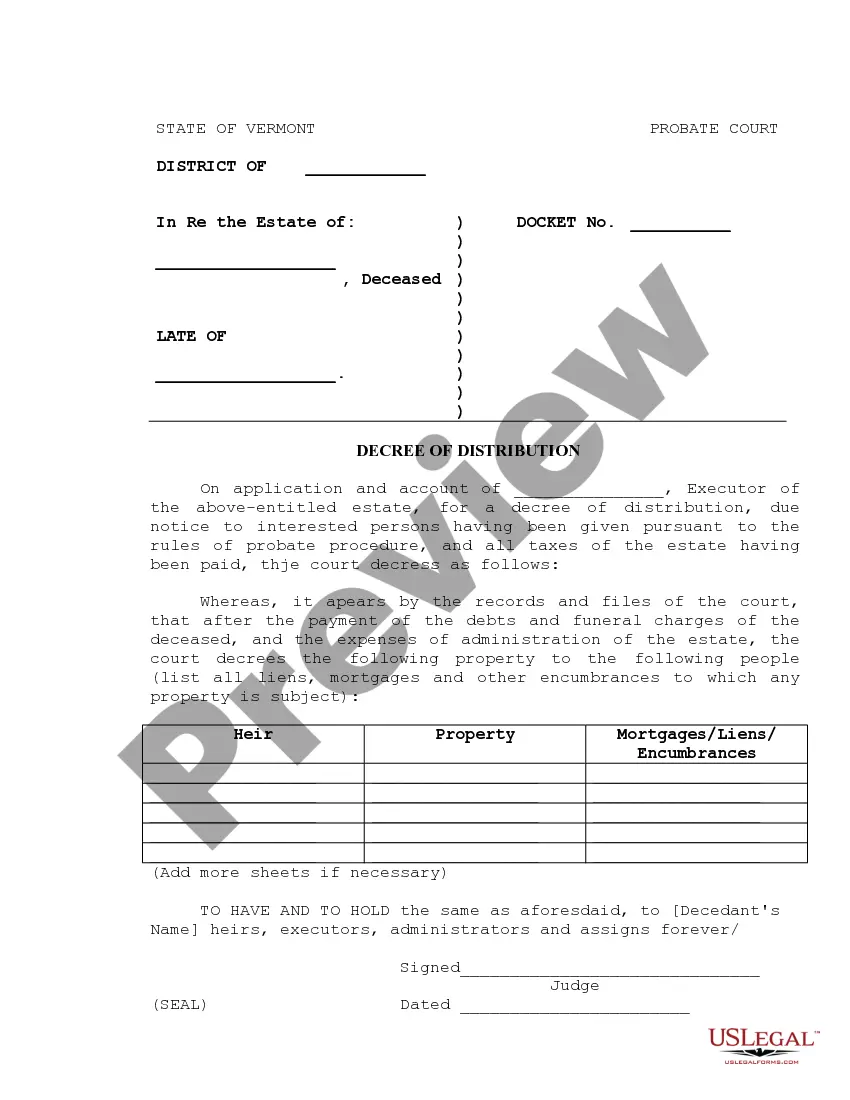
Missouri Discovery Interrogatories for Divorce Proceeding for either Plaintiff or Defendant - Another Form
Understanding this form
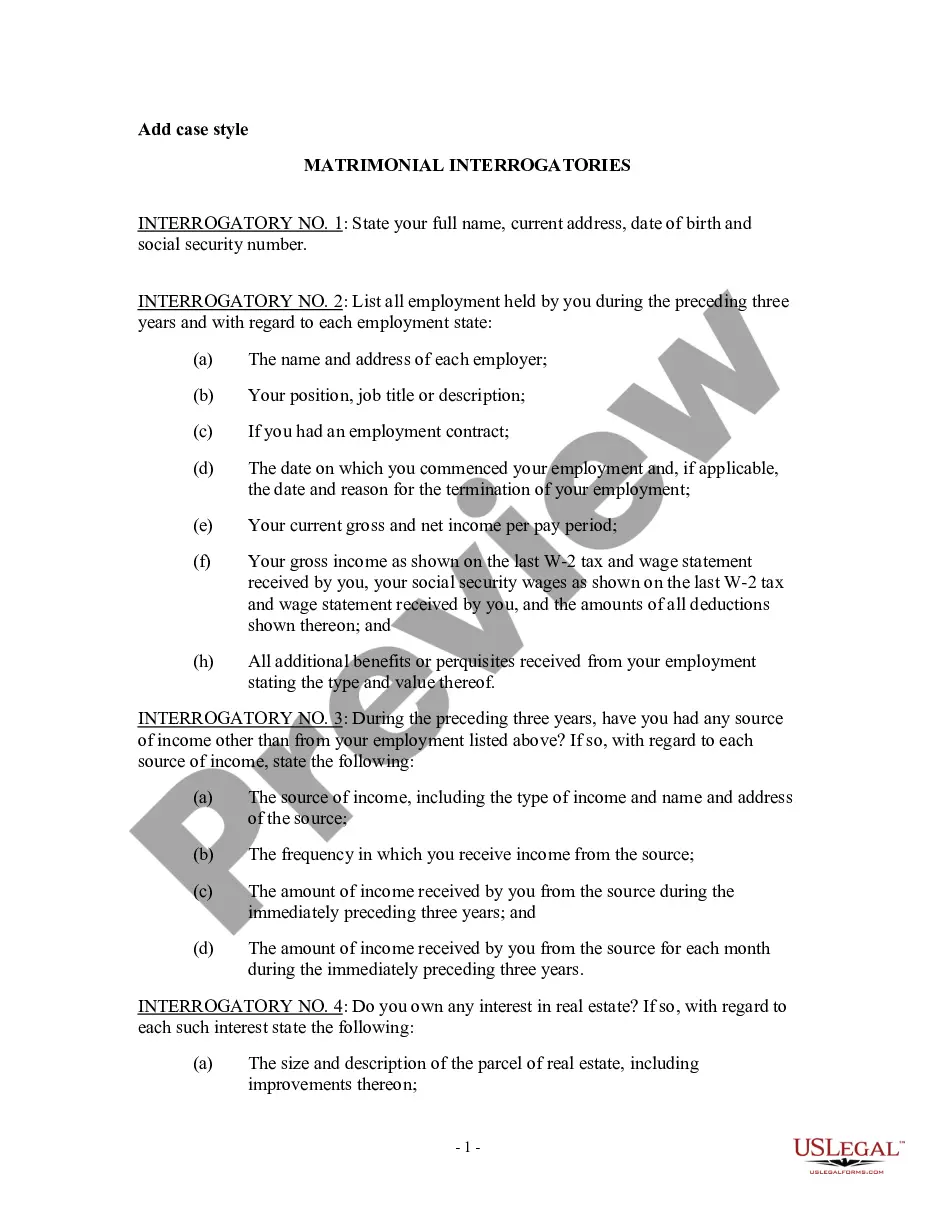
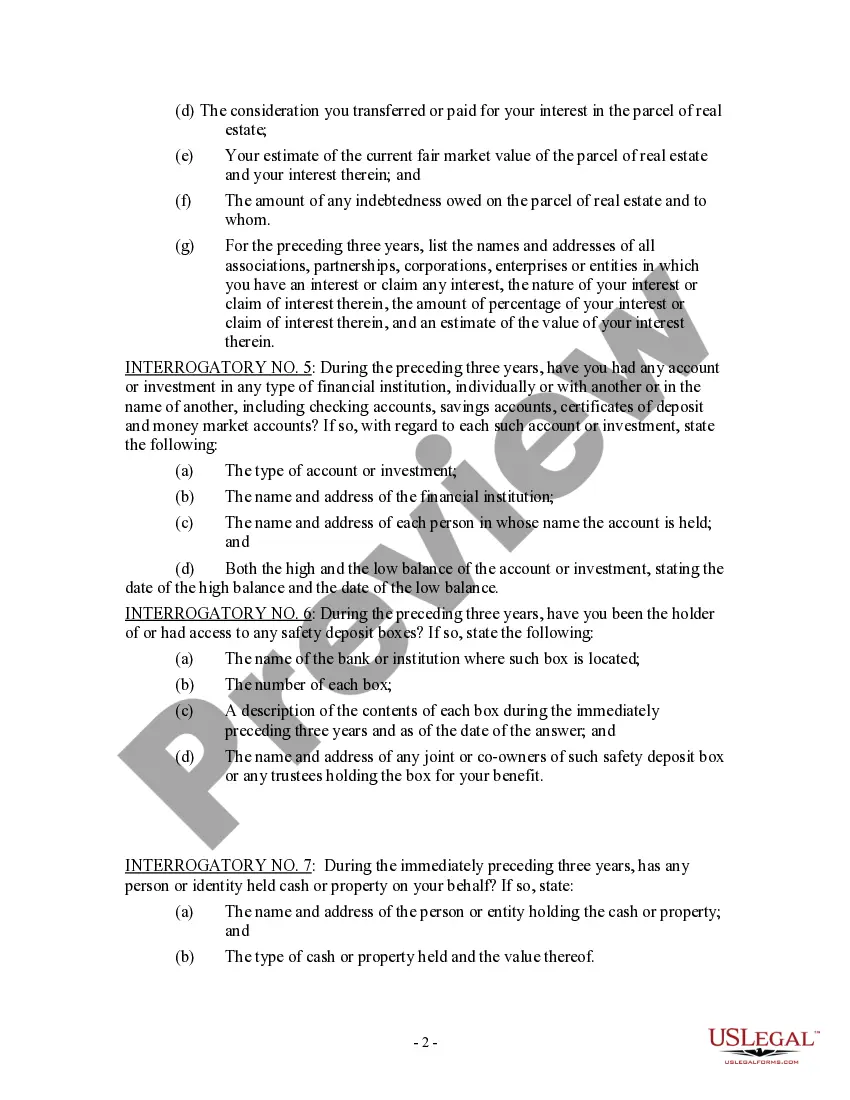
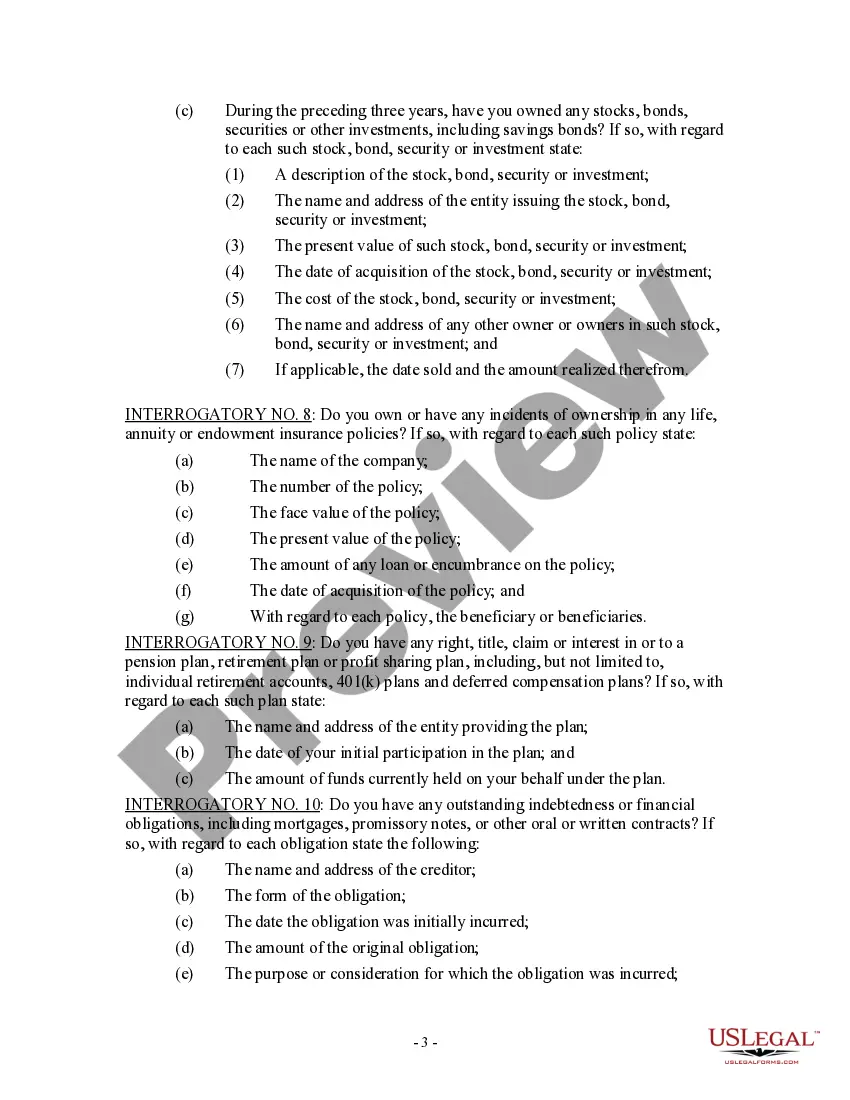
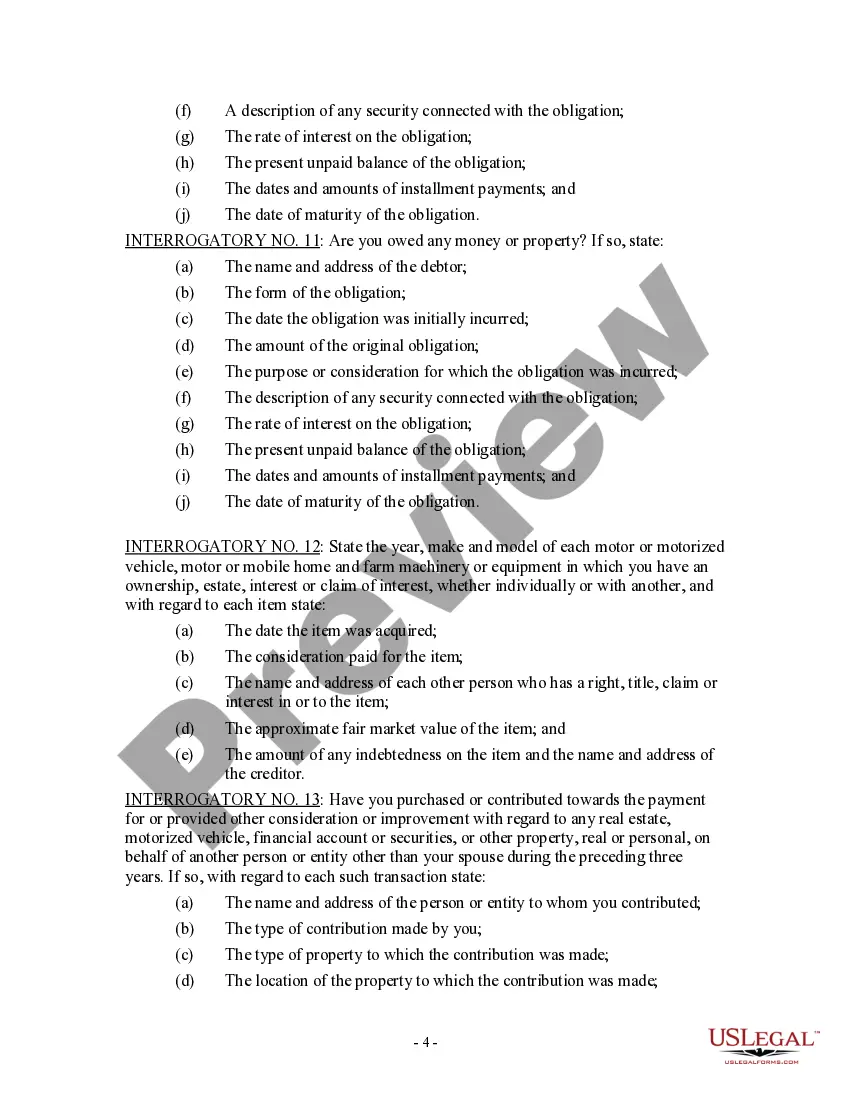
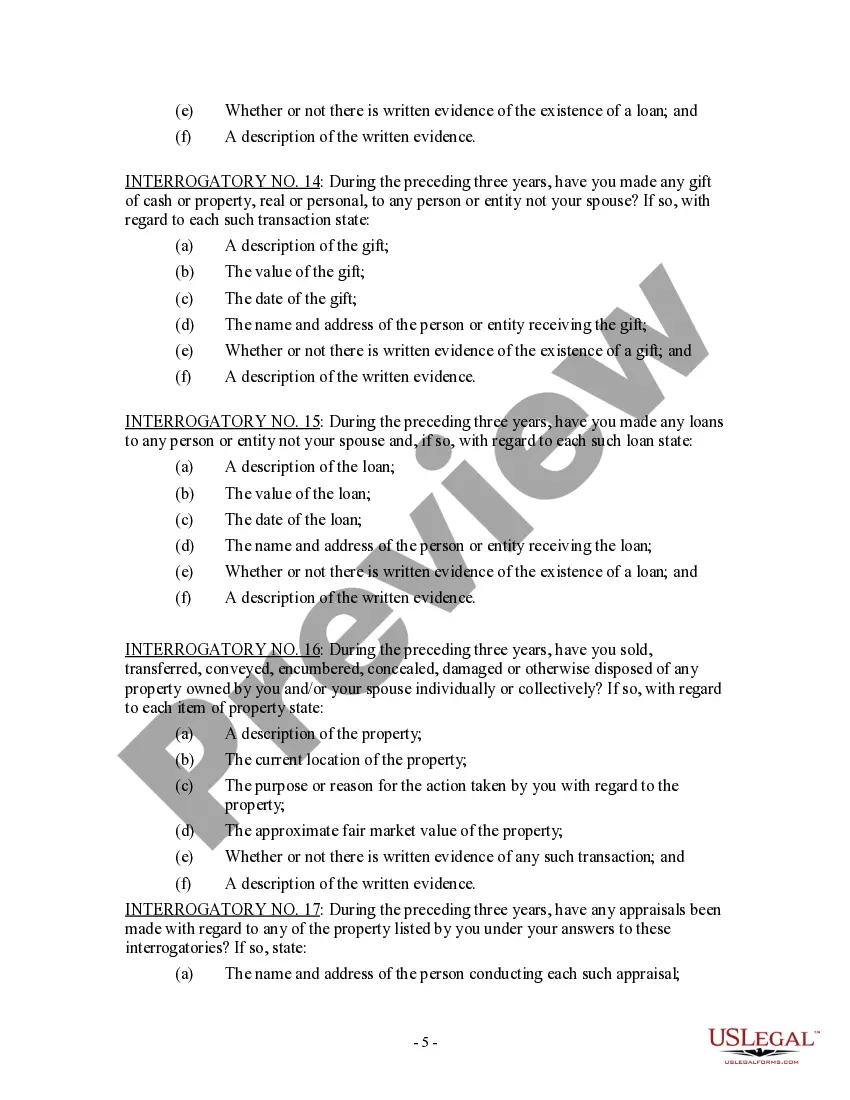
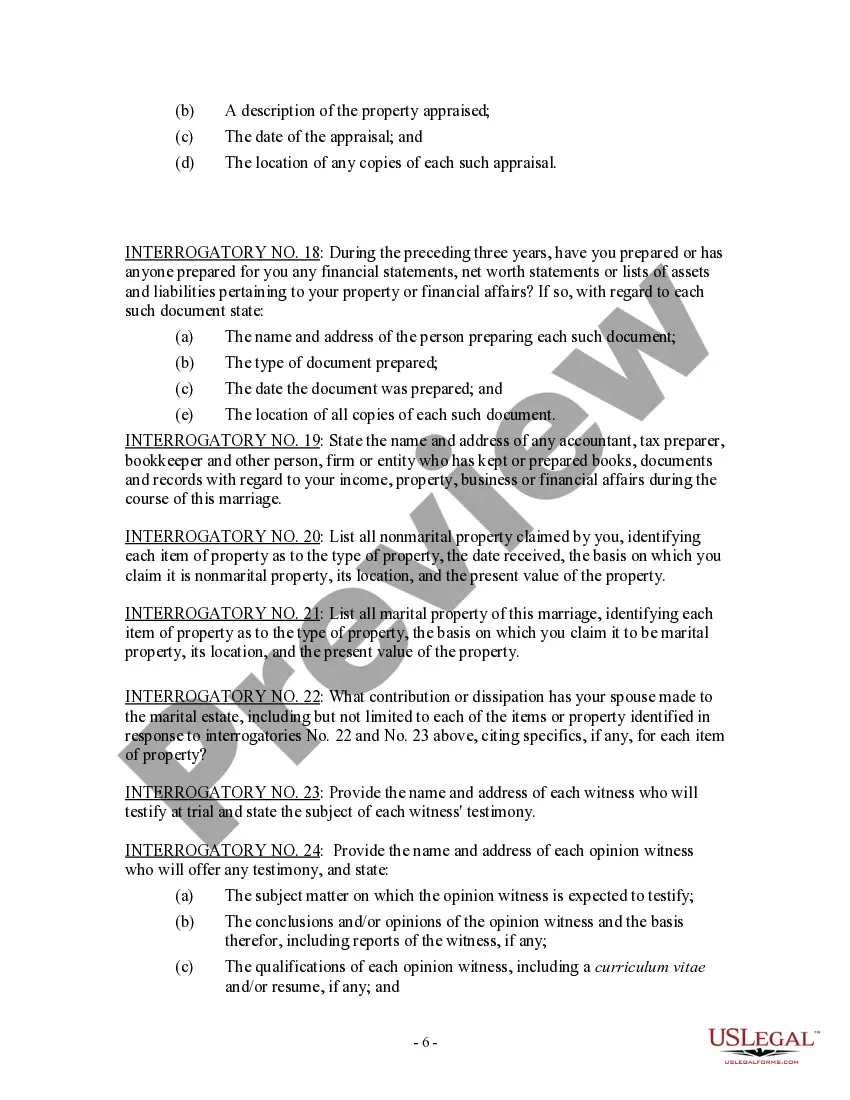
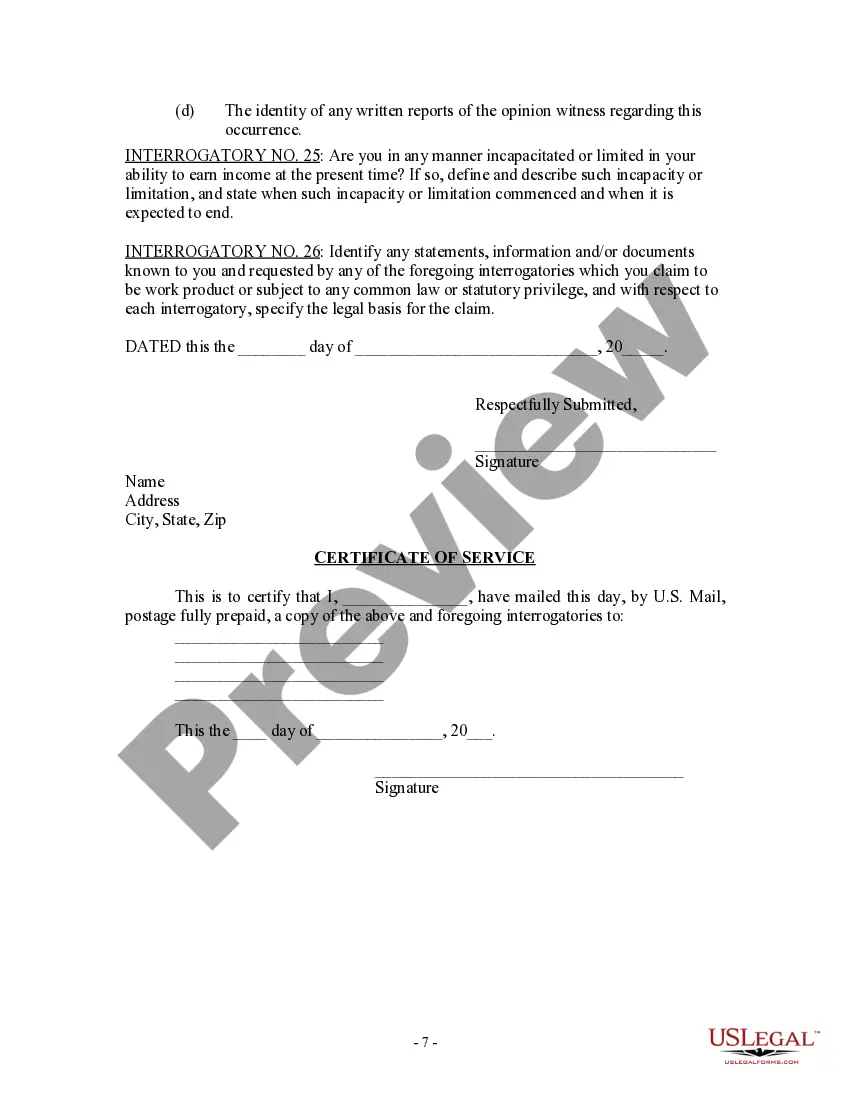
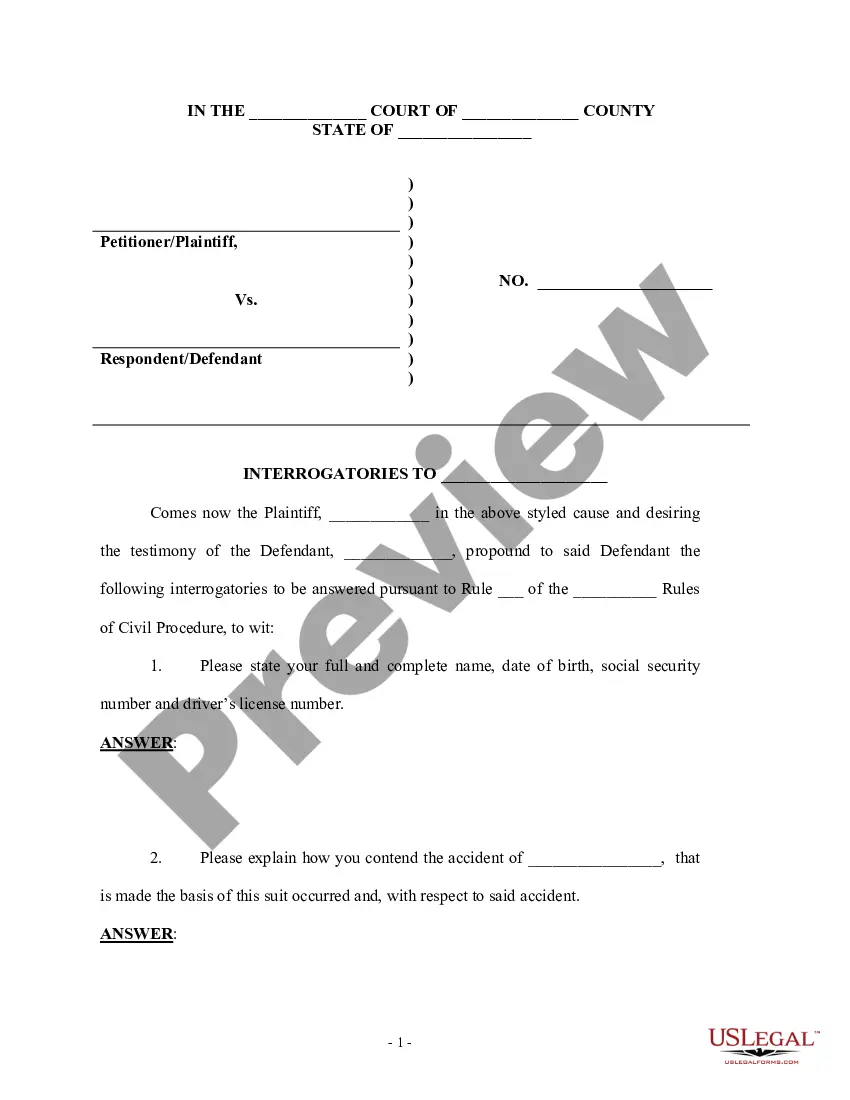
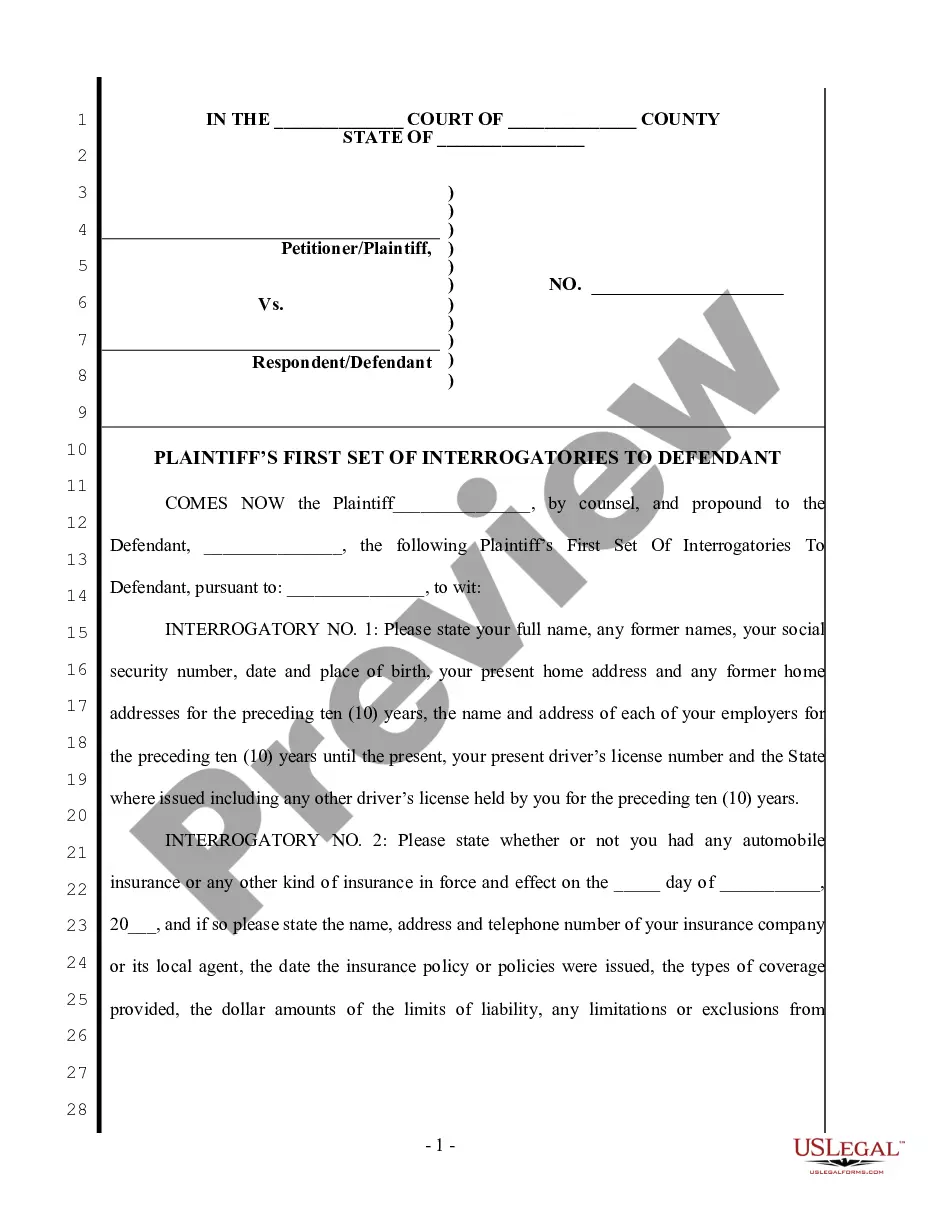
This form, known as Discovery Interrogatories for Divorce Proceeding, is a vital tool in divorce cases for both plaintiffs and defendants. It enables one party to obtain essential information from the other through a series of structured questions. This form is particularly focused on revealing financial and personal details that are often critical to divorce proceedings. Unlike other legal forms, it encompasses both interrogatories and requests for the production of documents, making it comprehensive for gathering evidence.
Form components explained
- Name and personal identification details of the responding party.
- Employment history over the last three years, including income and benefits.
- Assets, including real estate and financial accounts.
- Liabilities, including debts and outstanding financial obligations.
- Details of gifts, loans, and property transactions within the last three years.
- Witness information and any applicable appraisals related to assets.
Common use cases
This form should be used during the discovery phase of a divorce proceeding. It is crucial when one party needs detailed information about the other party's finances, assets, and liabilities. If you suspect that your spouse may be withholding information or if you simply need clarity regarding shared assets and debts, utilizing this form can help ensure transparency in the divorce process.
Who needs this form
- Divorce plaintiffs seeking information from defendants.
- Divorce defendants who need to respond to the plaintiff's inquiries.
- Attorneys representing clients in divorce cases.
- Individuals preparing for litigation in a divorce situation.
How to prepare this document
- Identify the parties involved in the divorce and enter their full names and contact information.
- Complete each interrogatory by providing detailed information, especially regarding income, assets, and debts.
- Review the form carefully to ensure each section is answered accurately and completely.
- Sign and date the form at the designated area before submitting it to the court.
- Make copies of the completed form for your records and any required submissions to the other party.
Notarization requirements for this form
This form does not typically require notarization unless specified by local law. However, confirming the jurisdiction's rules can ensure compliance and validity in court proceedings.
Get your form ready online
Our built-in tools help you complete, sign, share, and store your documents in one place.
Make edits, fill in missing information, and update formatting in US Legal Forms—just like you would in MS Word.
Download a copy, print it, send it by email, or mail it via USPS—whatever works best for your next step.
Sign and collect signatures with our SignNow integration. Send to multiple recipients, set reminders, and more. Go Premium to unlock E-Sign.
If this form requires notarization, complete it online through a secure video call—no need to meet a notary in person or wait for an appointment.
We protect your documents and personal data by following strict security and privacy standards.

Make edits, fill in missing information, and update formatting in US Legal Forms—just like you would in MS Word.

Download a copy, print it, send it by email, or mail it via USPS—whatever works best for your next step.

Sign and collect signatures with our SignNow integration. Send to multiple recipients, set reminders, and more. Go Premium to unlock E-Sign.

If this form requires notarization, complete it online through a secure video call—no need to meet a notary in person or wait for an appointment.

We protect your documents and personal data by following strict security and privacy standards.
Common mistakes to avoid
- Failing to answer each interrogatory completely, which can lead to legal complications.
- Omitting required documents when answering requests for production.
- Not keeping a copy of the completed form for personal records.
- Ignoring deadlines for submitting the form to the court or responding to the other party.
Advantages of online completion
- Immediate access to professionally drafted legal content tailored for your needs.
- The ability to edit and customize the document to fit the particulars of your case.
- Simple download process allows for convenient filing without delays.
- Increased reliability through the use of forms created by licensed attorneys.
- This form is legally binding in divorce proceedings, contingent upon accurate completion and filing.
- Failure to respond to interrogatories can result in legal penalties or adverse inferences in court.
Main things to remember
- Discovery Interrogatories are essential in divorce cases for transparency and fairness.
- Complete all sections thoroughly to avoid delays in your divorce process.
- Consult with a legal professional if you're unsure about any specific questions.
Looking for another form?
Form popularity
FAQ
The 57.01 rule in Missouri pertains to discovery procedures and specifically addresses the use of interrogatories in civil cases, including divorce. This rule allows parties to request written questions to gain necessary information from each other. Understanding the 57.01 rule is vital when utilizing Missouri Discovery Interrogatories for Divorce Proceeding for either Plaintiff or Defendant - Another Form, as it guides how these questions should be structured and submitted. For assistance with this process, consider using US Legal Forms to access compliant templates and resources.
Interrogatories are written questions sent by one party in a divorce case to the other party. These questions aim to gather relevant information and clarify facts that are crucial for the divorce proceeding. In the context of Missouri Discovery Interrogatories for Divorce Proceeding for either Plaintiff or Defendant - Another Form, completing these interrogatories can help both parties understand their rights and obligations better. Using a platform like US Legal Forms can simplify this process and ensure you have the right format and guidance.
Respond Truthfully. You should answer each interrogatory honestly, even if it involves an uncomfortable topic. Submit Your Responses on Time. Answer Every Interrogatory. Save the Sarcasm. You Can Object When Appropriate.
You can object to an interrogatory if the information sought is known by the requesting party or available to both parties equally. For example, you should raise this objection if the answers are publicly available or in a third-party's custody or control.
What is the discovery phase of a divorce? By definition, discovery is part of the pre-trial phase of a divorce in which each side obtains evidence and information from the other side.Discovery can include interrogatories, requests for production of documents, requests for admissions, depositions and subpoenas.
Your answers to the interrogatories should usually be short, clear, and direct and should answer only the question that is being asked. This is not the time to set out your entire case or defense to the other side. Take the time to make sure your answers are correct and truthful.
You must answer each interrogatory separately and fully in writing under oath, unless you object to it. You must explain why you object. You must sign your answers and objections.
You must answer each interrogatory separately and fully in writing under oath, unless you object to it. You must explain why you object. You must sign your answers and objections.
Responding to Form InterrogatoriesAnswer each question, being careful to answer each subpart, if one exists. Read the question carefully, and answer only what it asks. You may attach exhibits, if necessary. The response must be verified, meaning you must swear that the responses given are true.
Written questions called interrogatories or requests for admission. Using these discovery tools, your spouse must answer questions in writing, or admit specific statements that you believe are true. Inspection demands. You can ask to inspect property like a safe deposit box or wine collection.