Reasonable Development
Overview of this form
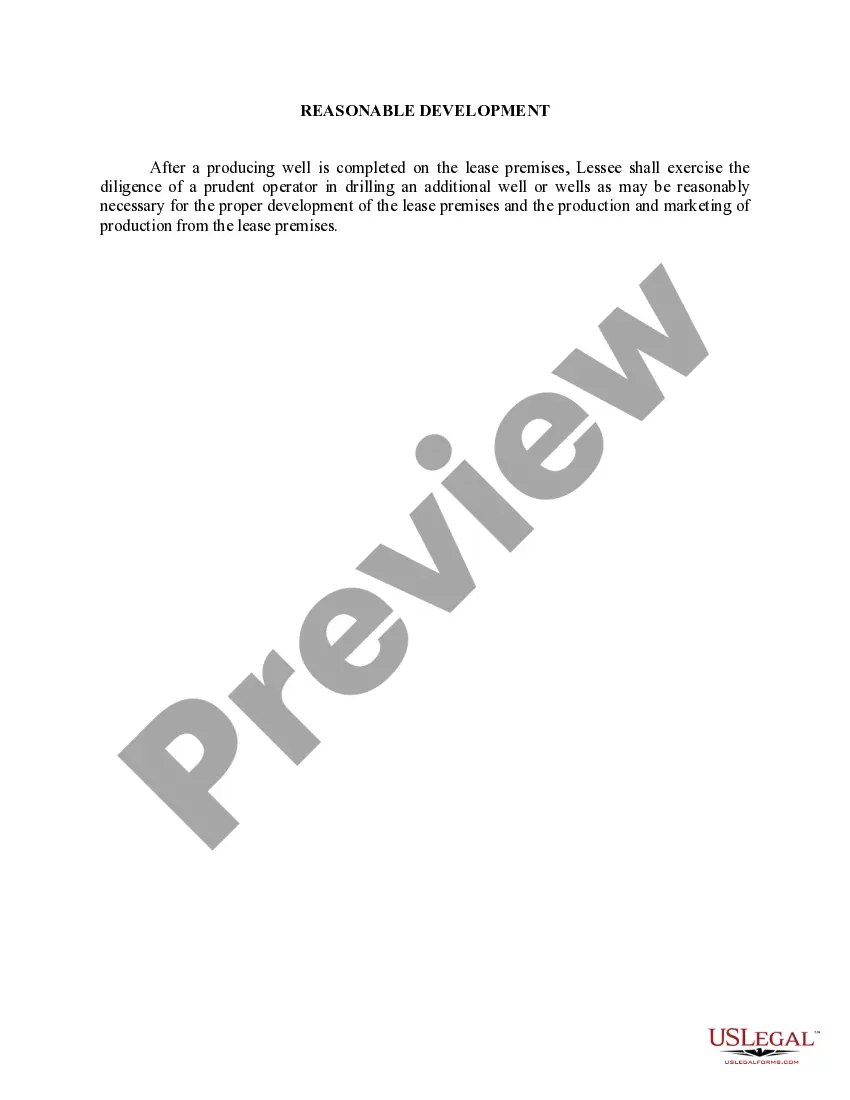
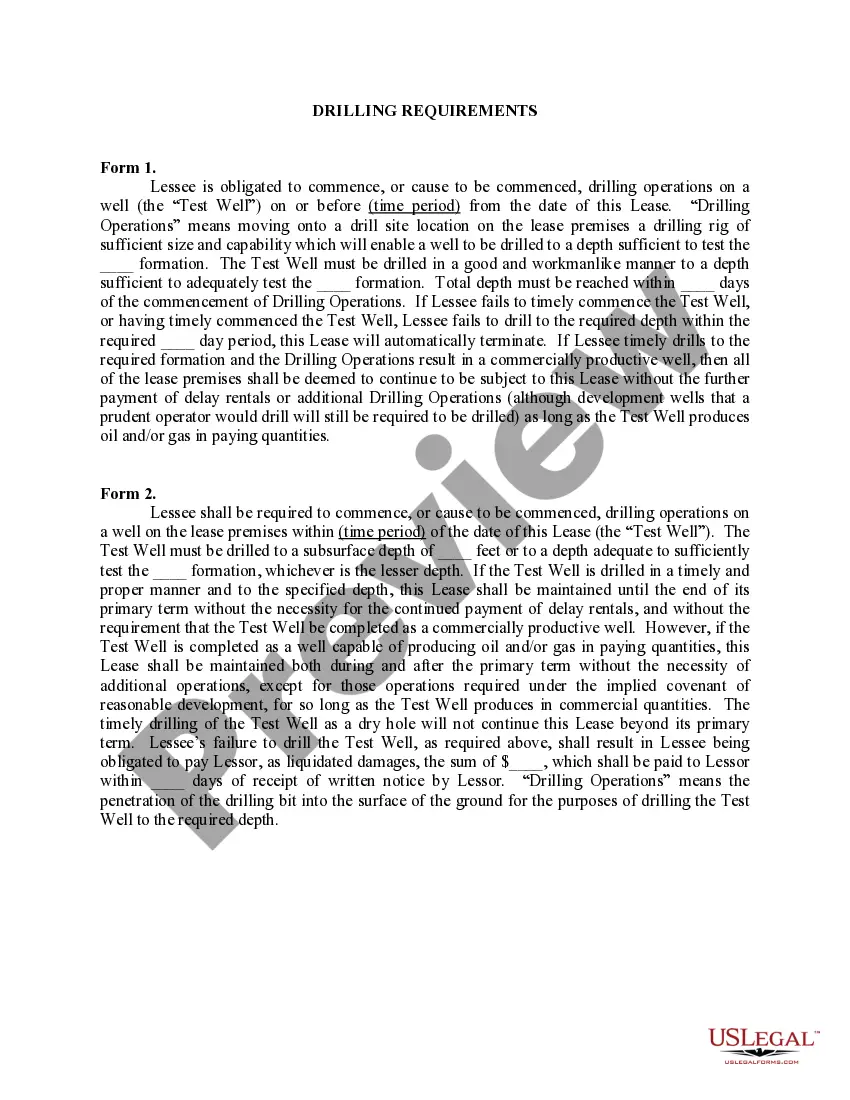
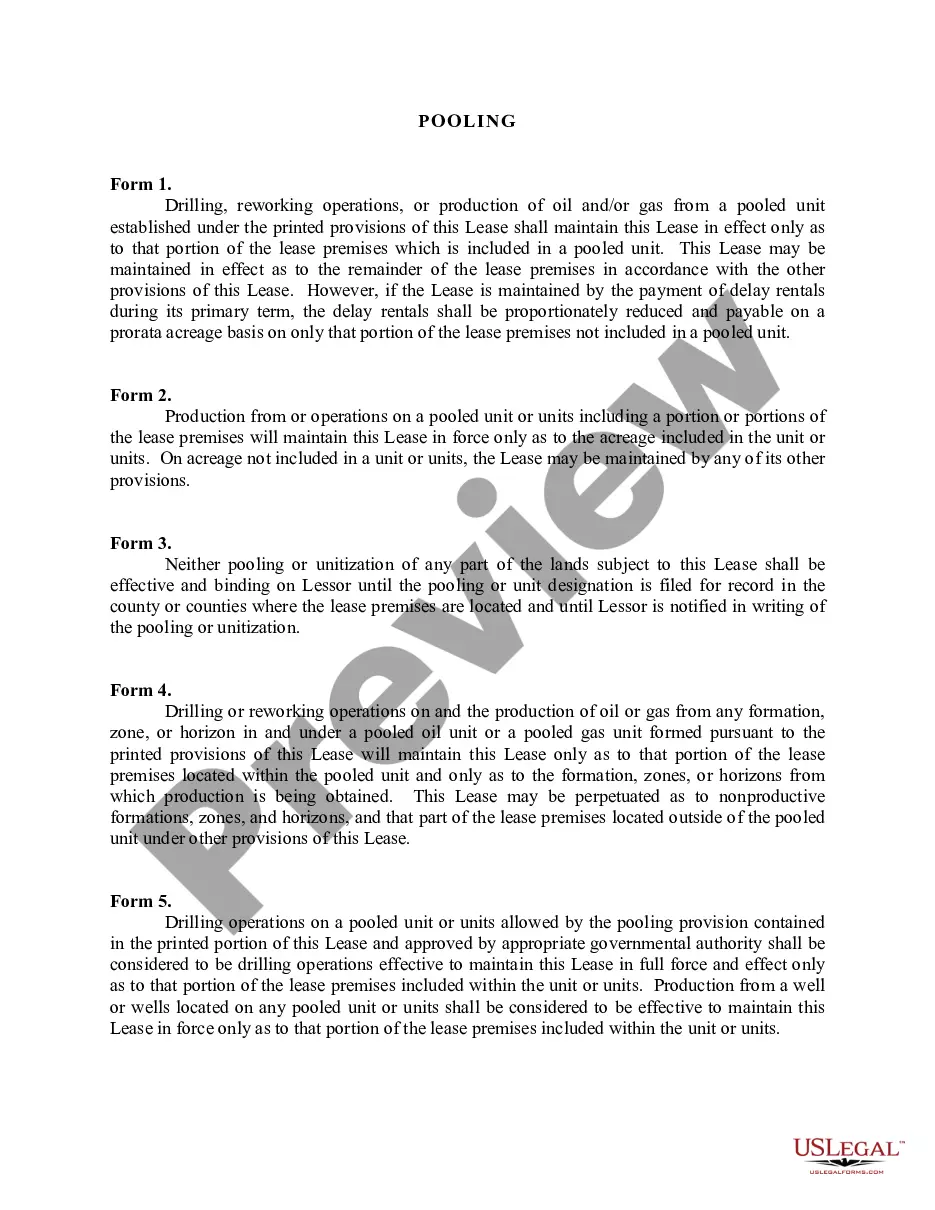
The Reasonable Development form is a lease rider used in oil and gas lease transactions. It allows lessors to add provisions that address specific concerns or limitations on the rights granted to the lessee in a standard lease agreement. This ensures that the lessor's interests are prioritized while still facilitating the development of the lease premises.
Key components of this form
- Stipulates the lessee's obligation to drill additional wells as necessary for proper development.
- Emphasizes the duty of the lessee to act as a prudent operator in developing the lease premises.
- Outlines specific terms to protect the lessor's interests while allowing for the lessee's operations.
Situations where this form applies
This form should be used when you are negotiating an oil and gas lease and have specific concerns about how the lease may impact your property. It is particularly helpful in situations where additional well development may be required after the completion of the first well to maximize production and protect your interests as a lessor.
Who this form is for
- Property owners leasing land for oil and gas exploration.
- Individuals who want to negotiate specific terms in their oil and gas leases.
- Lessors seeking to protect their rights and ensure responsible development of their land.
Steps to complete this form
- Identify the parties involved in the lease agreement.
- Specify the lease premises that are subject to the agreement.
- Enter details about the obligations related to drilling additional wells.
- Include any additional provisions that reflect the lessor's concerns.
- Sign and date the form to finalize the agreement.
Does this form need to be notarized?
This form does not typically require notarization unless specified by local law. It's essential to check your state's requirements to ensure compliance.
Get your form ready online
Our built-in tools help you complete, sign, share, and store your documents in one place.
Make edits, fill in missing information, and update formatting in US Legal Forms—just like you would in MS Word.
Download a copy, print it, send it by email, or mail it via USPS—whatever works best for your next step.
Sign and collect signatures with our SignNow integration. Send to multiple recipients, set reminders, and more. Go Premium to unlock E-Sign.
If this form requires notarization, complete it online through a secure video call—no need to meet a notary in person or wait for an appointment.
We protect your documents and personal data by following strict security and privacy standards.

Make edits, fill in missing information, and update formatting in US Legal Forms—just like you would in MS Word.

Download a copy, print it, send it by email, or mail it via USPS—whatever works best for your next step.

Sign and collect signatures with our SignNow integration. Send to multiple recipients, set reminders, and more. Go Premium to unlock E-Sign.

If this form requires notarization, complete it online through a secure video call—no need to meet a notary in person or wait for an appointment.

We protect your documents and personal data by following strict security and privacy standards.
Avoid these common issues
- Failing to include specific concerns or additional provisions in the lease rider.
- Not ensuring that all parties understand their obligations under the lease.
- Using vague language that may lead to disputes over interpretation.
Benefits of completing this form online
- Convenience of accessing and downloading the form anytime, anywhere.
- Easy to edit to reflect your specific needs and concerns.
- Reliable legal templates drafted by licensed attorneys, ensuring compliance with legal standards.
Legal use & context
- This form is enforceable as part of a lease agreement once properly completed and signed.
- It is crucial to ensure that the form complies with local regulations related to oil and gas leasing.
Summary of main points
- The Reasonable Development form is crucial for protecting lessors' rights in oil and gas leases.
- It provides a framework for additional well development to enhance production efforts.
- Customizing the lease rider can minimize future disputes and clarify obligations for all parties.
Looking for another form?
Form popularity
FAQ
Identify yourself as a person with a disability. State that you are requesting accommodations under the ADA (or the Rehabilitation Act of 1973 if you are a federal employee) Identify your specific problematic job tasks. Identify your accommodation ideas.
A reasonable accommodation is any change to the application or hiring process, to the job, to the way the job is done, or the work environment that allows a person with a disability who is qualified for the job to perform the essential functions of that job and enjoy equal employment opportunities.
Generally, under the Fair Housing Act, the housing provider is responsible for the costs associated with a reasonable accommodation unless it is an undue financial and administrative burden, while the tenant or someone acting on the tenant's behalf, is responsible for costs associated with a reasonable modification.
Providing an assistant as needed may be a reasonable accommodation for a person with a disability, if this does not impose an undue hardship. Examples include: An assistant may be needed to retrieve items on shelves, file, or selectively assist a person with quadriplegia with other clerical duties.
Your name and position. The date. Information about your disability. A request for accommodation. Accommodation ideas. Medical information.