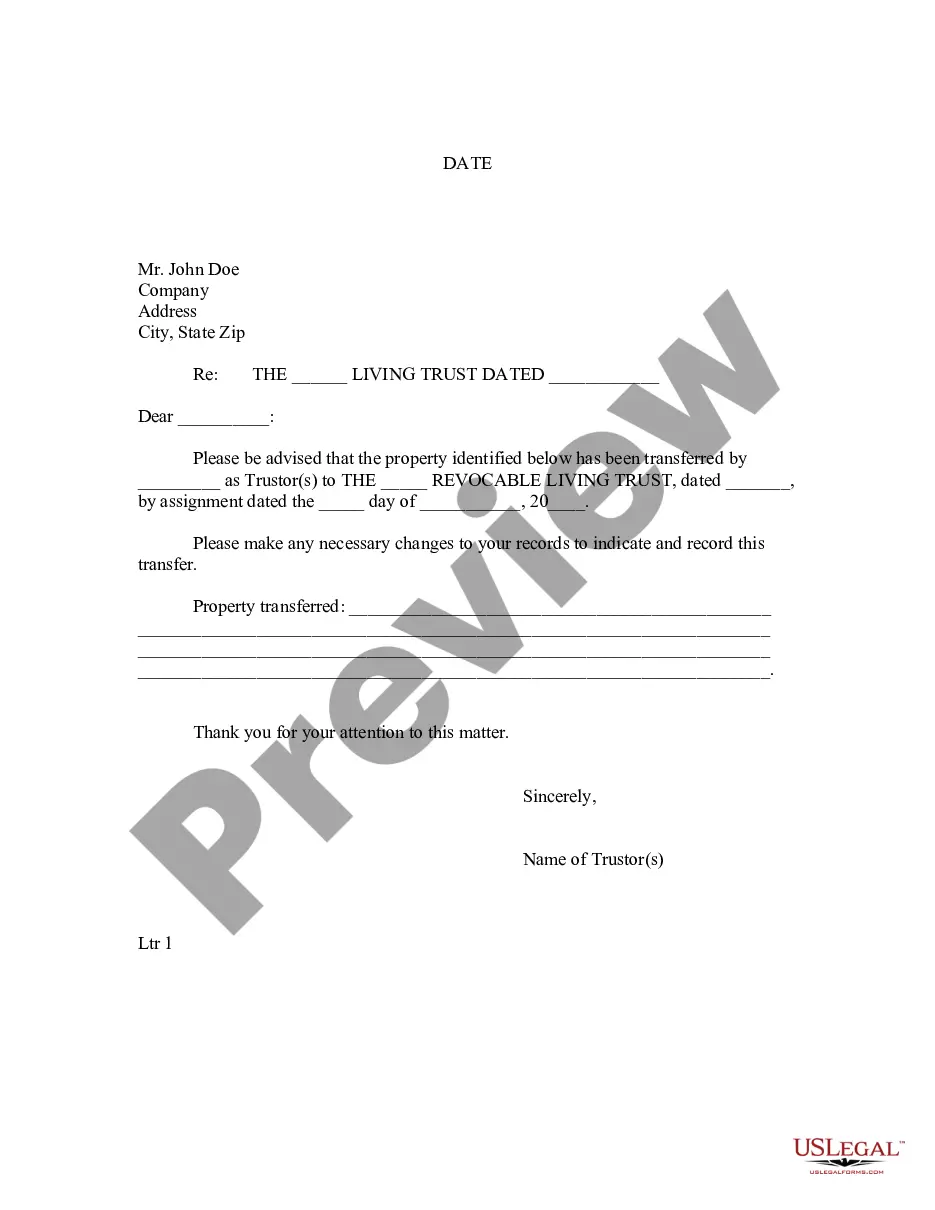
Purchase And Intellectual Property Assignment For Software
What this document covers
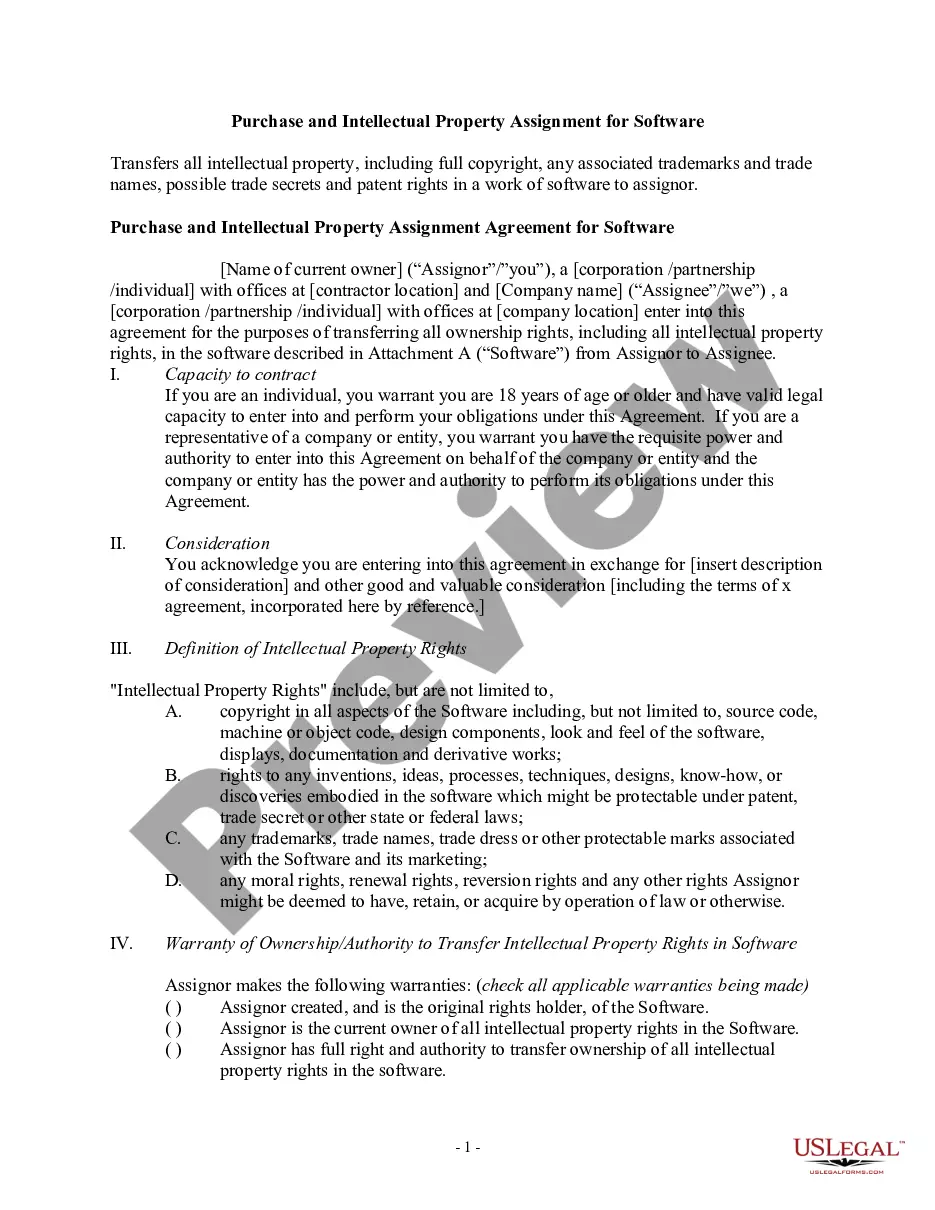
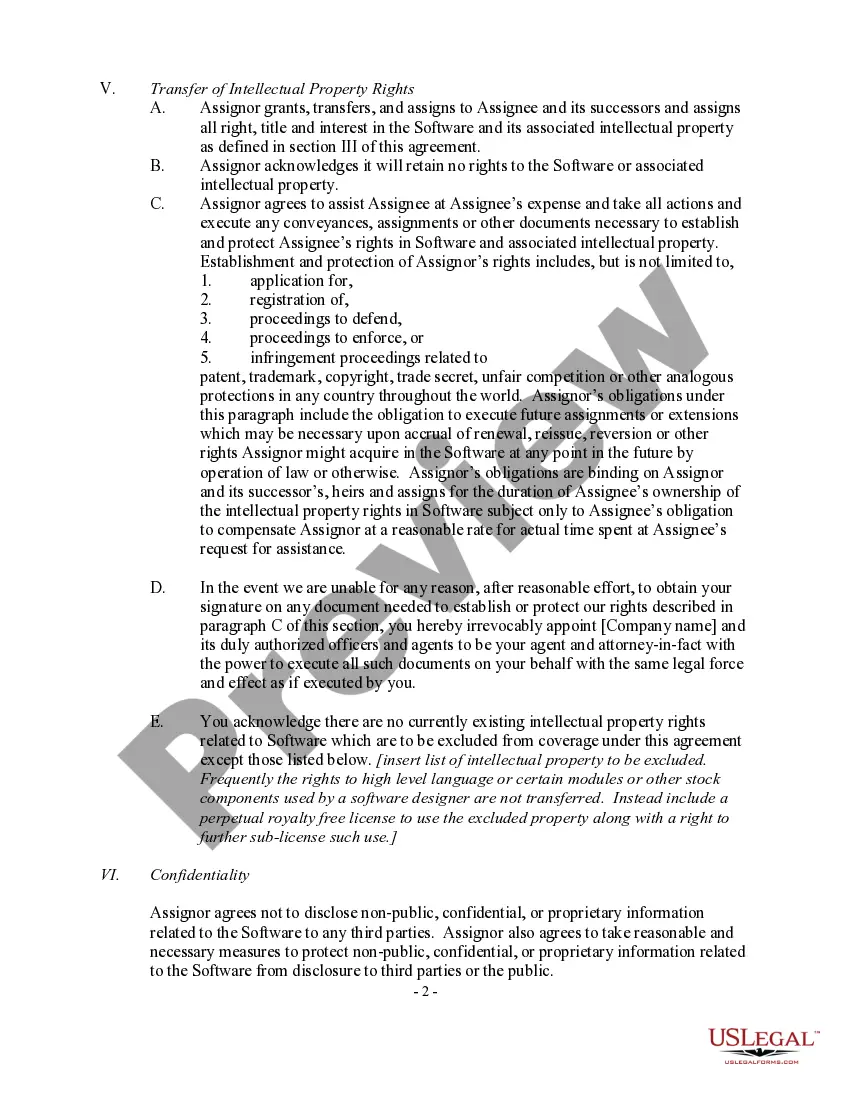
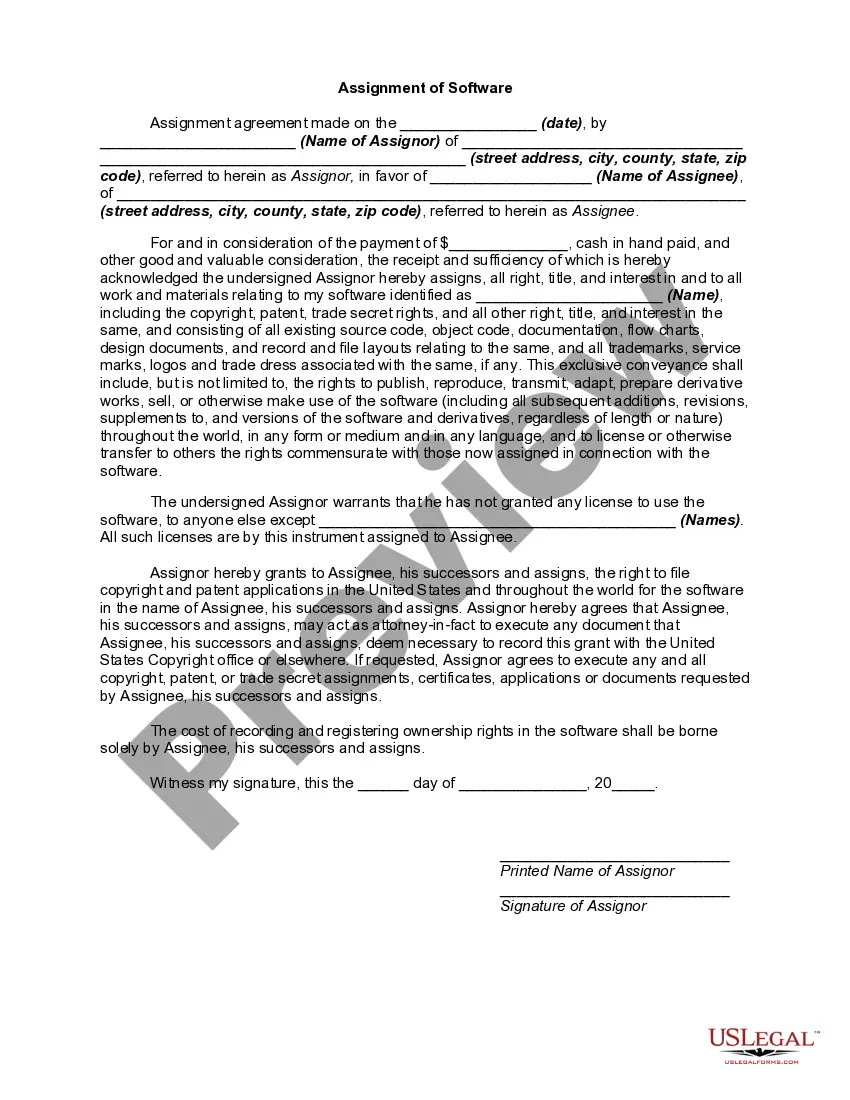
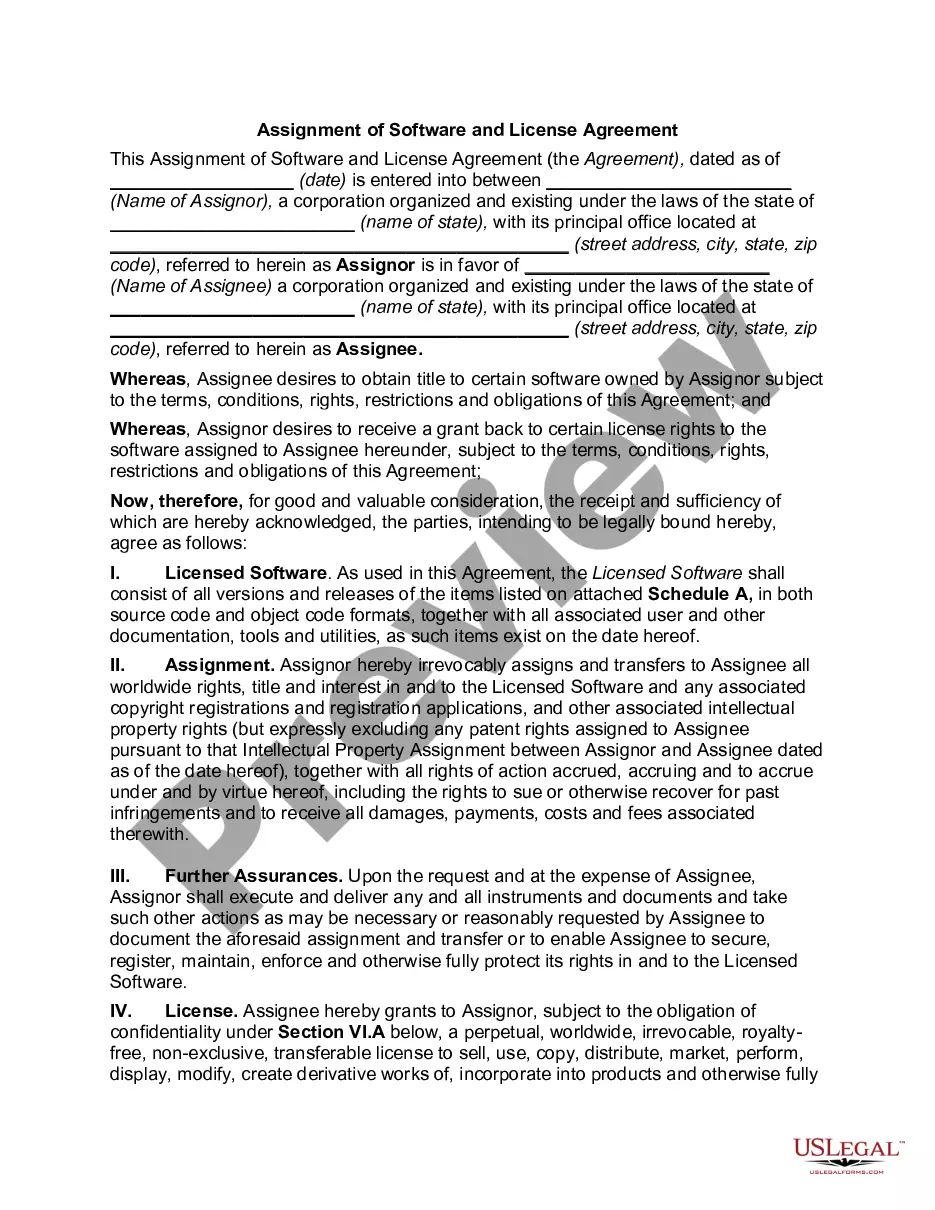
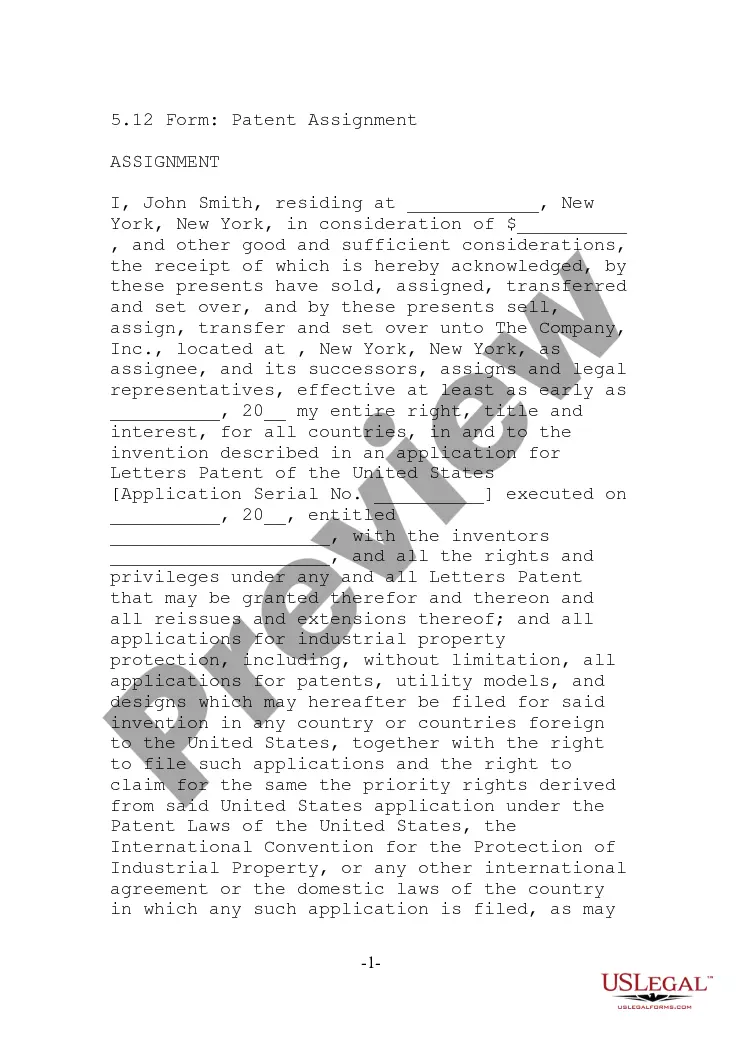
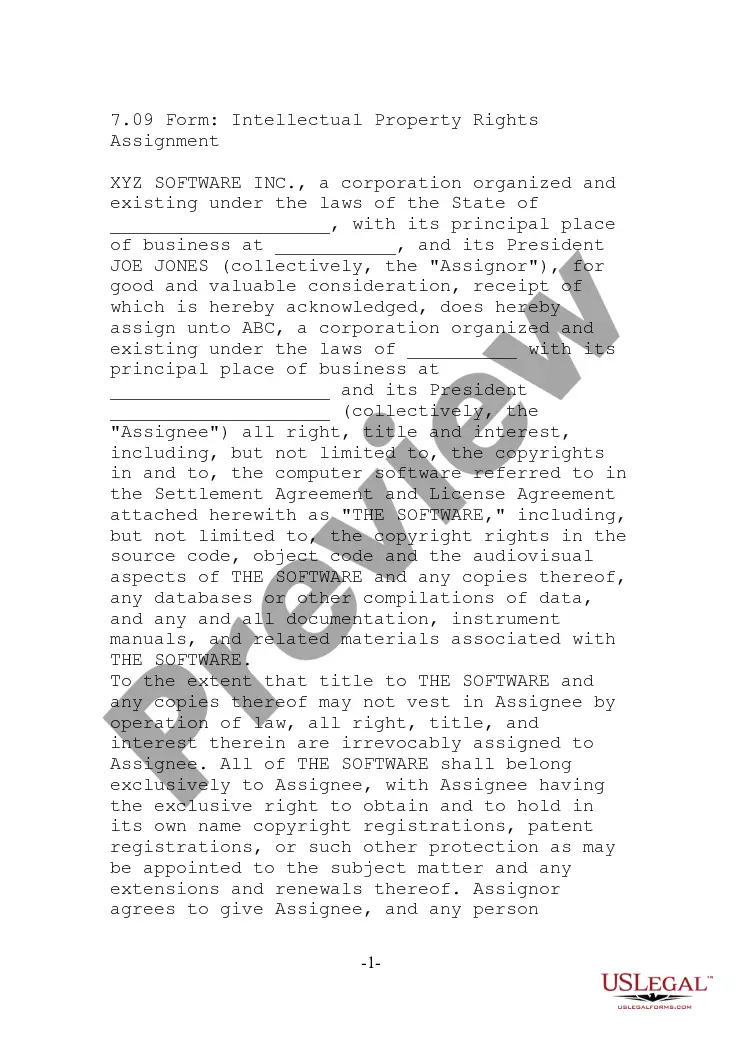
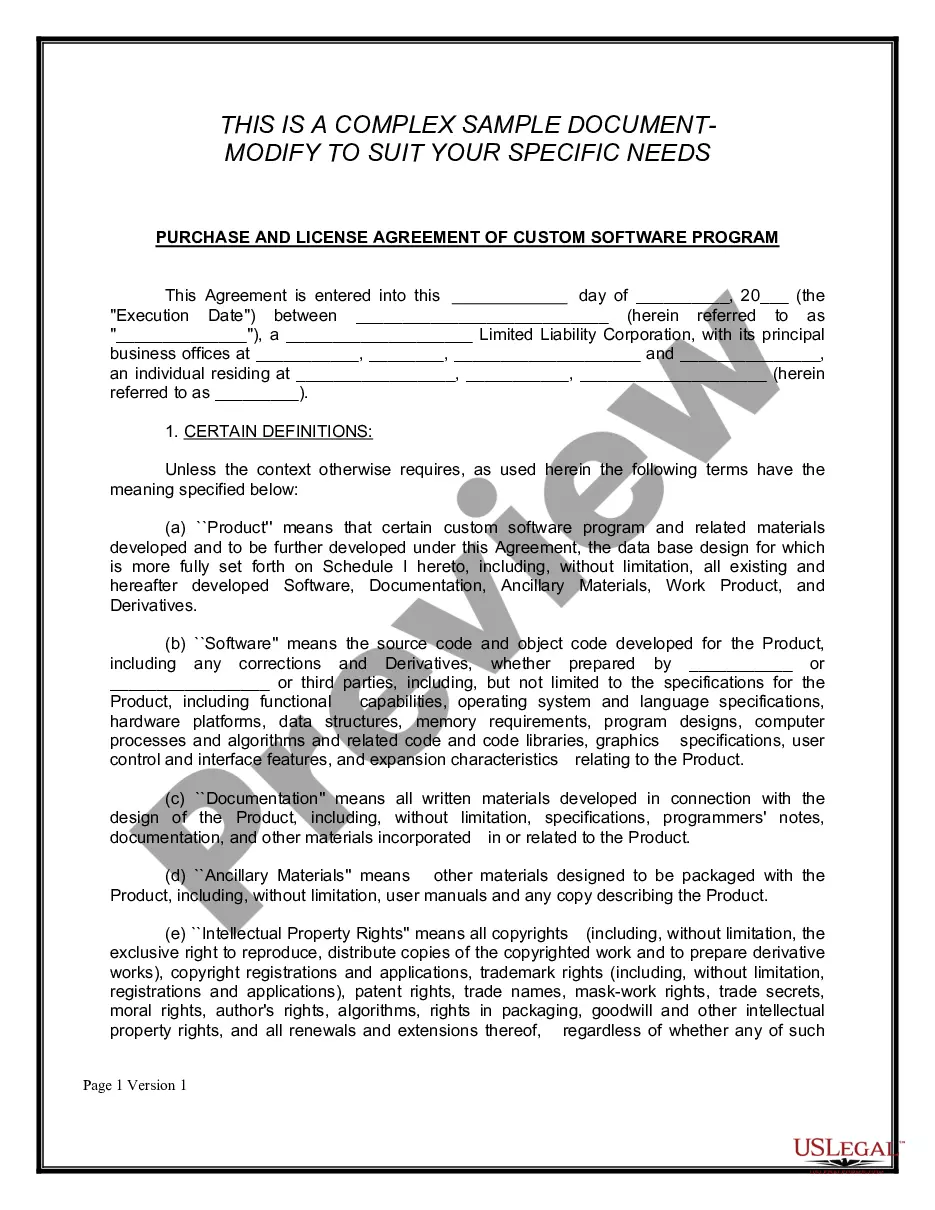
The Purchase and Intellectual Property Assignment for Software is a legal document that facilitates the transfer of ownership and all associated intellectual property rights from the current owner (Assignor) to a new owner (Assignee). This form is essential for software developers and companies in contexts where ownership of software, trademarks, and trade secrets needs to be legally assigned. Unlike simple purchase agreements, this form ensures comprehensive coverage of all intellectual rights related to the software being sold.
Key parts of this document
- Identification of parties involved in the agreement (Assignor and Assignee).
- Warranties regarding the ownership and authority to transfer the intellectual property rights.
- Detailed definition of the intellectual property rights being transferred.
- Specific clauses related to the transfer of rights and confidentiality obligations.
- Indemnification provisions protecting the Assignee against potential claims.
- Provisions for the modification or construction of the agreement.



When to use this document
This form should be used when a software developer or company wishes to sell their software and transfer all related intellectual property rights. It is ideal for scenarios such as startup acquisitions, software licensing agreements, or when finalizing partnerships that require a clear transfer of ownership to protect all intellectual property assets.
Who can use this document
- Software developers looking to sell their software.
- Businesses acquiring software from a third party.
- Entrepreneurs entering into partnerships involving software development.
- Legal representatives managing contracts involving intellectual property.
Instructions for completing this form
- Identify the parties: Fill in the names and addresses of the Assignor and Assignee.
- Define the software: Clearly describe the software being transferred in Attachment A.
- Complete the ownership warranties: Ensure the Assignor checks all applicable warranties regarding ownership.
- Outline the terms of transfer: Include details of consideration being exchanged for the software.
- Sign and date the agreement: Both parties must sign and date the document for it to be legally binding.
Is notarization required?
In most cases, this form does not require notarization. However, some jurisdictions or signing circumstances might. US Legal Forms offers online notarization powered by Notarize, accessible 24/7 for a quick, remote process.
Get your form ready online
Our built-in tools help you complete, sign, share, and store your documents in one place.
Make edits, fill in missing information, and update formatting in US Legal Forms—just like you would in MS Word.
Download a copy, print it, send it by email, or mail it via USPS—whatever works best for your next step.
Sign and collect signatures with our SignNow integration. Send to multiple recipients, set reminders, and more. Go Premium to unlock E-Sign.
If this form requires notarization, complete it online through a secure video call—no need to meet a notary in person or wait for an appointment.
We protect your documents and personal data by following strict security and privacy standards.

Make edits, fill in missing information, and update formatting in US Legal Forms—just like you would in MS Word.

Download a copy, print it, send it by email, or mail it via USPS—whatever works best for your next step.

Sign and collect signatures with our SignNow integration. Send to multiple recipients, set reminders, and more. Go Premium to unlock E-Sign.

If this form requires notarization, complete it online through a secure video call—no need to meet a notary in person or wait for an appointment.

We protect your documents and personal data by following strict security and privacy standards.
Common mistakes to avoid
- Failing to clearly identify the software being transferred.
- Not checking all relevant warranties regarding ownership.
- Neglecting to specify the consideration given for the software.
- Not having both parties sign the document.
Benefits of using this form online
- Convenience of downloading and filling the form quickly.
- Editable fields allow for customization to suit specific agreements.
- Reliability ensured through templates drafted by licensed attorneys.
Legal use & context
- This form establishes a legal basis for ownership transfer, ensuring enforceability of intellectual property rights.
- Both parties are protected from future claims of infringement or ownership disputes through clear documentation.
What to keep in mind
- The Purchase and Intellectual Property Assignment for Software transfers all ownership rights of software.
- It is critical for clarifying ownership in software transactions and protecting intellectual property rights.
- Completing the form accurately helps avoid future legal disputes regarding ownership.
Looking for another form?





Form popularity
FAQ
Intellectual property (IP) refers to the ownership of an idea or design by the person who came up with it. It is a term used in property law. It gives a person certain exclusive rights to a distinct type of creative design, meaning that nobody else can copy or reuse that creation without the owner's permission.
The assignment of intellectual property (IP) refers to the process by which ownership of work product created for a company by an employee or consultant is transferred to the entity.
In copyright legislation around the world, source code is considered the intellectual property of the creator. Source code is protected in the same way as a literary work, which means it is copyrightable from the moment that the first line of code is created.
Intellectual property (IP) refers to creations of the mind, such as inventions; literary and artistic works; designs; and symbols, names and images used in commerce.
Intellectual property (IP) is ideas, information and knowledge. In the University context IP can be viewed as the results and outcomes of research 'intellectual' because it is creative output and 'property' because it is viewed as a tradable commodity.
Intellectual property rights are at the foundation of the software industry. The term refers to a range of intangible rights of ownership in an asset such as a software program.There are essentially four types of intellectual property rights relevant to software: patents, copyrights, trade secrets and trademarks.
Why Intellectual Property for Software Is Important When you treat your software as intellectual property, you have more control over who gets to use it and how it gets to the public. Otherwise, people might use it without permission, and you'll lose the chance to get paid when people use your software.
Intellectual property rights are legal rights that provide creators protection for original works, inventions, or the appearance of products, artistic works, scientific developments, and so on. There are four types of intellectual property rights (IP): patents, trademarks, copyrights, and trade secrets.
File a Copyright. A copyright is the protection of an idea or other information that has been developed by the copyright holder. File for a Patent. A patent grants property rights to the inventor of a new invention. Think Hard About Source Code Licenses. Have Developers Sign an IP Assignment Agreement.