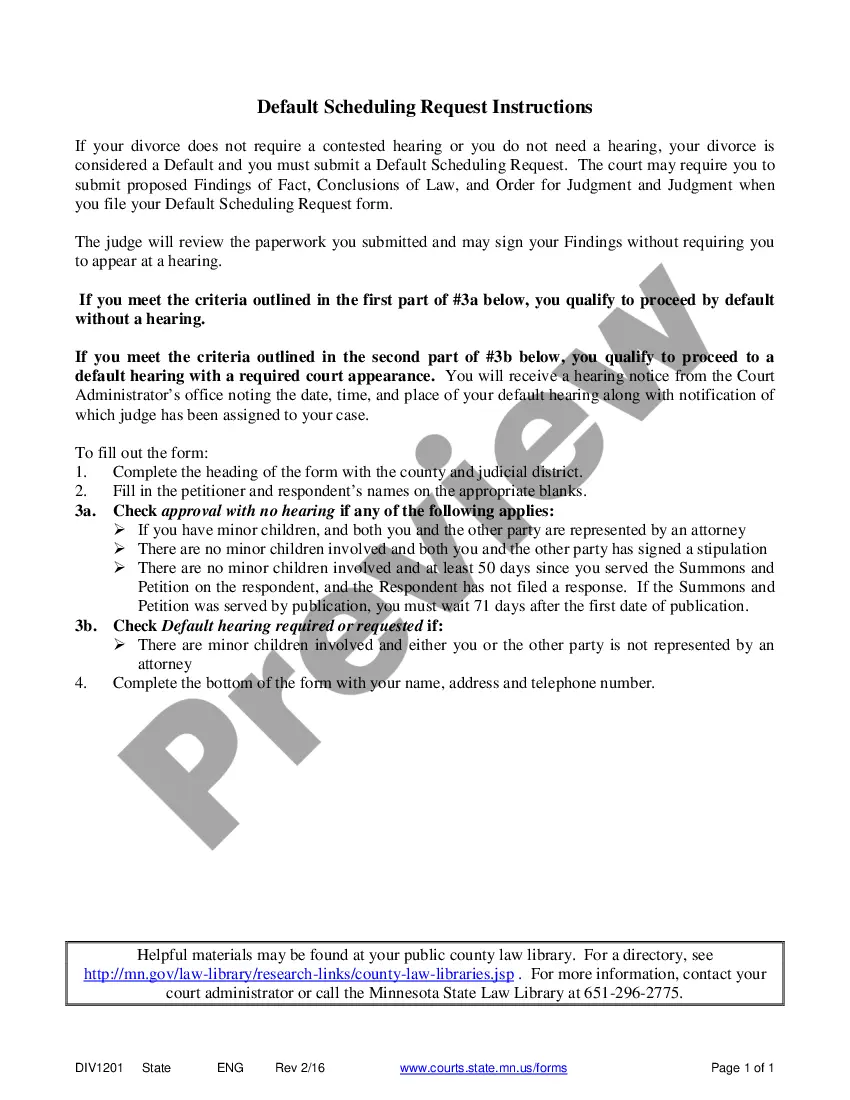
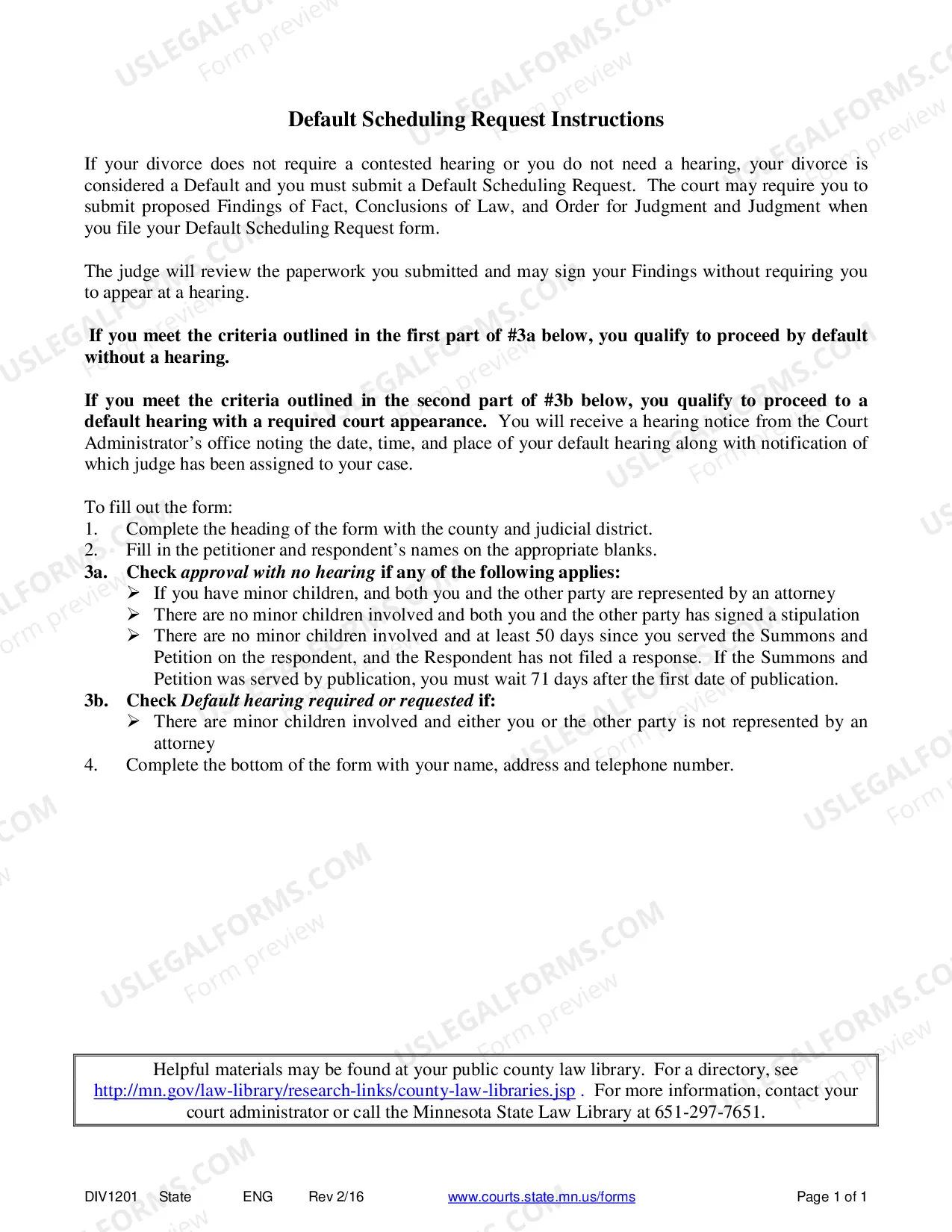
This is an official Minnesota court form for use in a divorce case, Instructions for Default Scheduling Request. USLF amends and updates these forms as is required by Minnesota Statutes and Law.
Minnesota Instructions for Default Scheduling Request
Instant download
This website is not affiliated with any governmental entity
Public form
Description
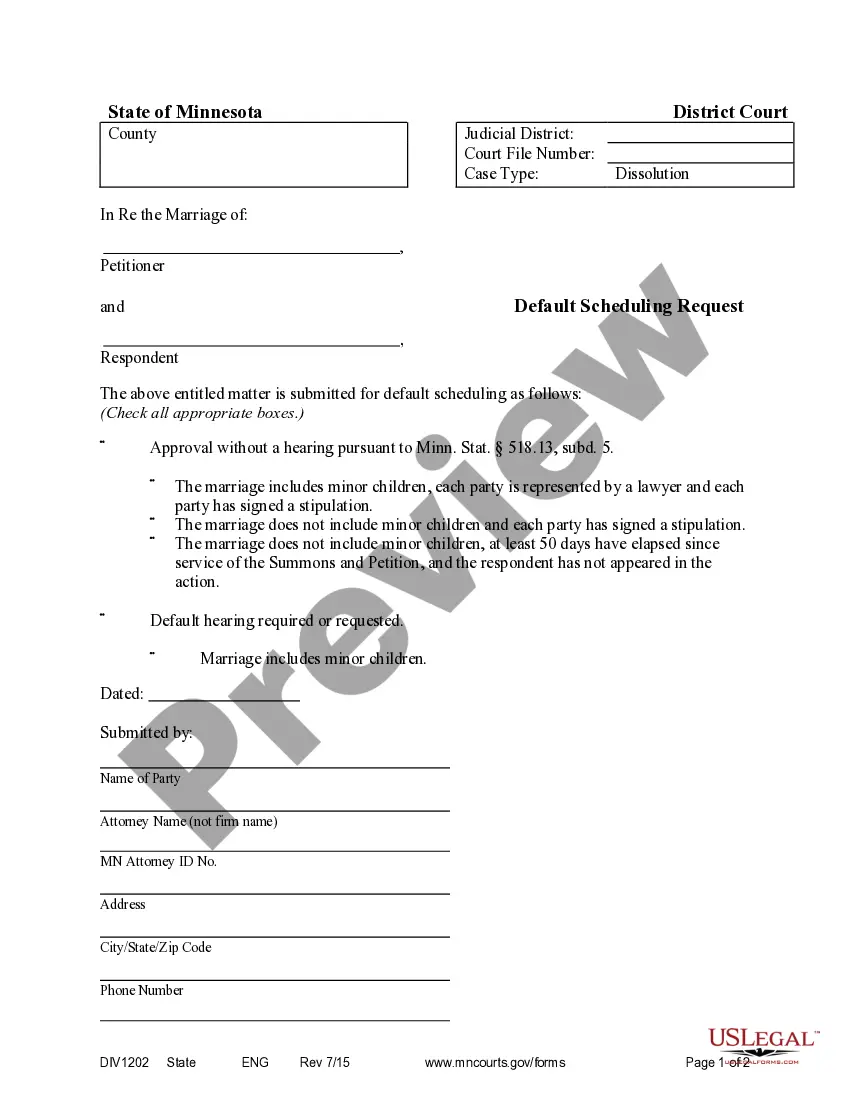
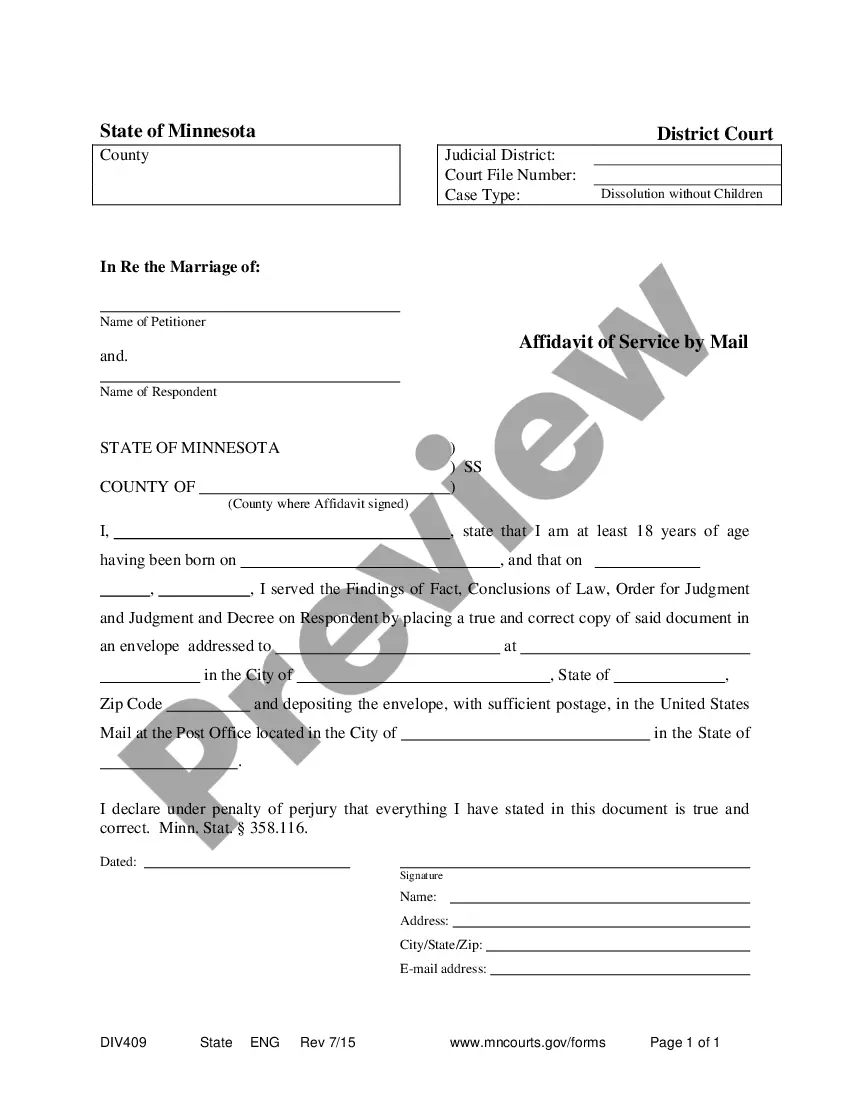
Get your form ready online
Our built-in tools help you complete, sign, share, and store your documents in one place.
Built-in online Word editor
Make edits, fill in missing information, and update formatting in US Legal Forms—just like you would in MS Word.
Export easily
Download a copy, print it, send it by email, or mail it via USPS—whatever works best for your next step.
E-sign your document
Sign and collect signatures with our SignNow integration. Send to multiple recipients, set reminders, and more. Go Premium to unlock E-Sign.
Notarize online 24/7
If this form requires notarization, complete it online through a secure video call—no need to meet a notary in person or wait for an appointment.
Store your document securely
We protect your documents and personal data by following strict security and privacy standards.

Make edits, fill in missing information, and update formatting in US Legal Forms—just like you would in MS Word.

Download a copy, print it, send it by email, or mail it via USPS—whatever works best for your next step.

Sign and collect signatures with our SignNow integration. Send to multiple recipients, set reminders, and more. Go Premium to unlock E-Sign.

If this form requires notarization, complete it online through a secure video call—no need to meet a notary in person or wait for an appointment.

We protect your documents and personal data by following strict security and privacy standards.
Looking for another form?

How to fill out Minnesota Instructions For Default Scheduling Request?
Obtain any template from 85,000 legal documents including Minnesota Instructions for Default Scheduling Request online with US Legal Forms. Each template is crafted and refreshed by state-certified attorneys.
If you possess a subscription, Log In. Once you are on the form’s page, click on the Download button and navigate to My documents to access it.
If you haven’t subscribed yet, follow the guidelines below.
With US Legal Forms, you will always have immediate access to the suitable downloadable template. The platform provides access to documents and categorizes them to facilitate your search. Utilize US Legal Forms to acquire your Minnesota Instructions for Default Scheduling Request quickly and effortlessly.
- Verify the state-specific requirements for the Minnesota Instructions for Default Scheduling Request you wish to utilize.
- Browse through the description and preview the sample.
- Once you are confident the sample meets your needs, simply click Buy Now.
- Choose a subscription plan that fits your financial situation.
- Establish a personal account.
- Make a payment using one of two convenient methods: by credit card or via PayPal.
- Select a format to download the document in; two options are available (PDF or Word).
- Retrieve the file in the My documents section.
- After your reusable document is prepared, print it or save it to your device.
Form popularity
FAQ
Rule 69 in Minnesota outlines the procedure for executing judgments and enforcing court orders. This rule details how a party can collect a judgment and the necessary steps to take if the order is not followed. Understanding this process is crucial for enforcing your rights, and the Minnesota Instructions for Default Scheduling Request can provide essential information. Consider using USLegalForms for comprehensive resources that simplify these legal procedures.
Rule of General Practice 117 in Minnesota pertains to the protocols judges follow for scheduling cases and managing court calendars. This rule aims to promote efficiency and ensure timely hearings. If you are involved in a legal matter, the Minnesota Instructions for Default Scheduling Request can guide you through the scheduling process effectively. Accessing templates and resources through USLegalForms can enhance your understanding of these practices.
In Minnesota, employers must give employees reasonable notice before changing their work schedules, although the law does not specify an exact time frame. Typically, best practices suggest providing at least 7 days' notice, allowing employees to adjust their plans. If you encounter scheduling issues, referring to the Minnesota Instructions for Default Scheduling Request may help you understand your rights. Resources like USLegalForms can assist you in navigating these employment matters.
A Rule 60 motion in Minnesota allows a party to ask the court to relieve them from a prior judgment or order. This motion can be filed for various reasons, such as mistake, newly discovered evidence, or fraud. If you need guidance on how to file this motion, the Minnesota Instructions for Default Scheduling Request can provide clarity. Utilizing resources like USLegalForms can simplify the process and ensure you follow the correct procedures.