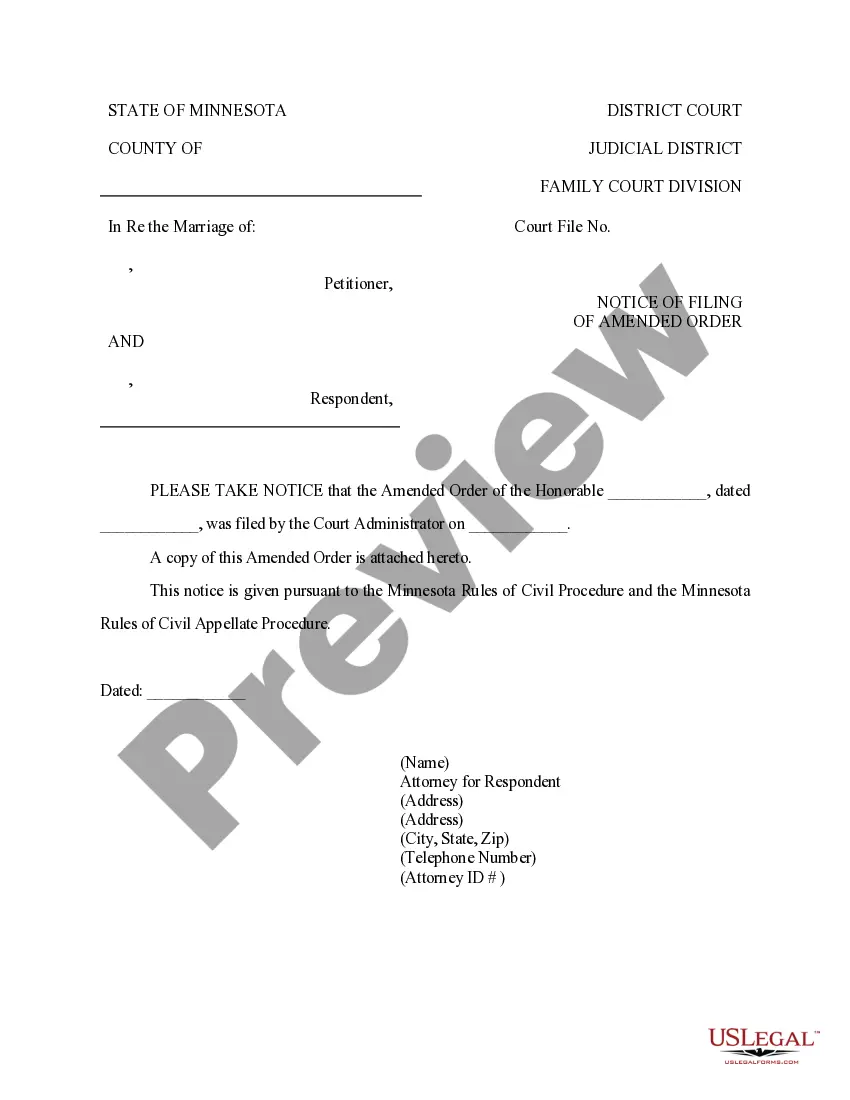
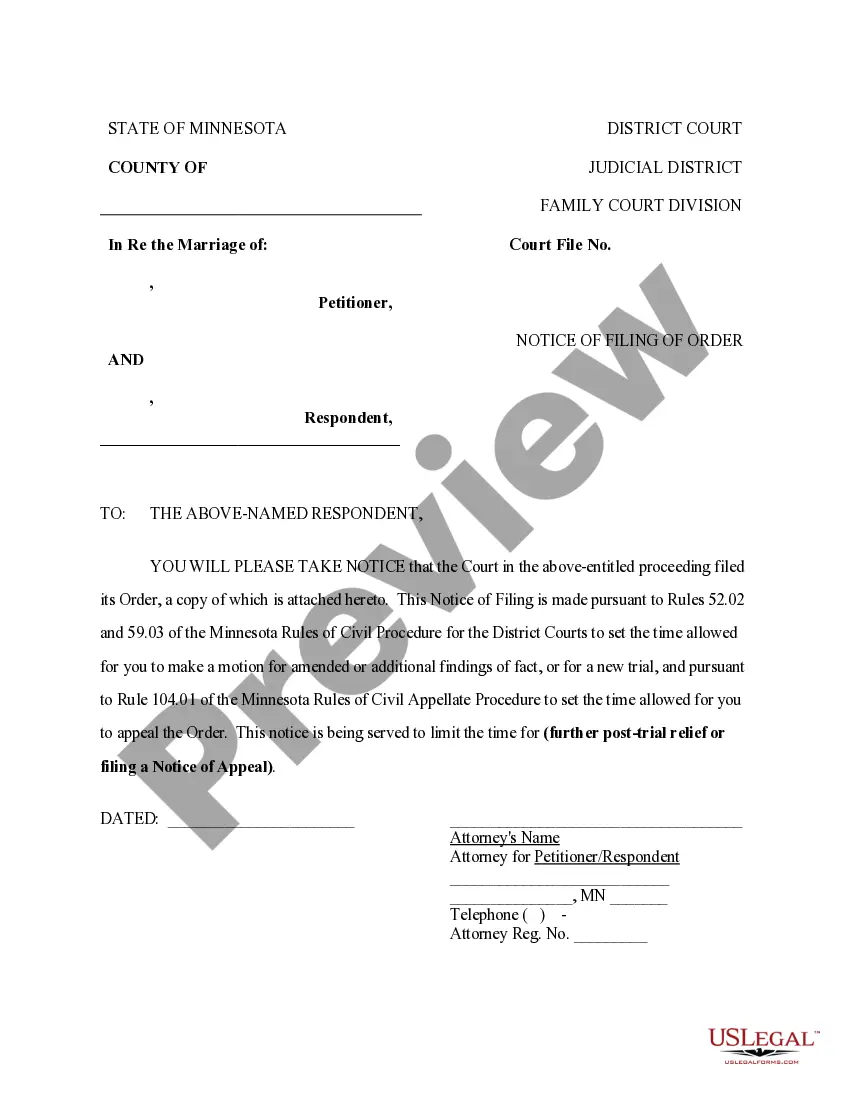
A notice of filing of an amended order in the proceeding.
Minnesota Notice of Filing of Amend Order
Category:
State:
Minnesota
Control #:
MN-8588D
Format:
Word;
Rich Text
Instant download
Description
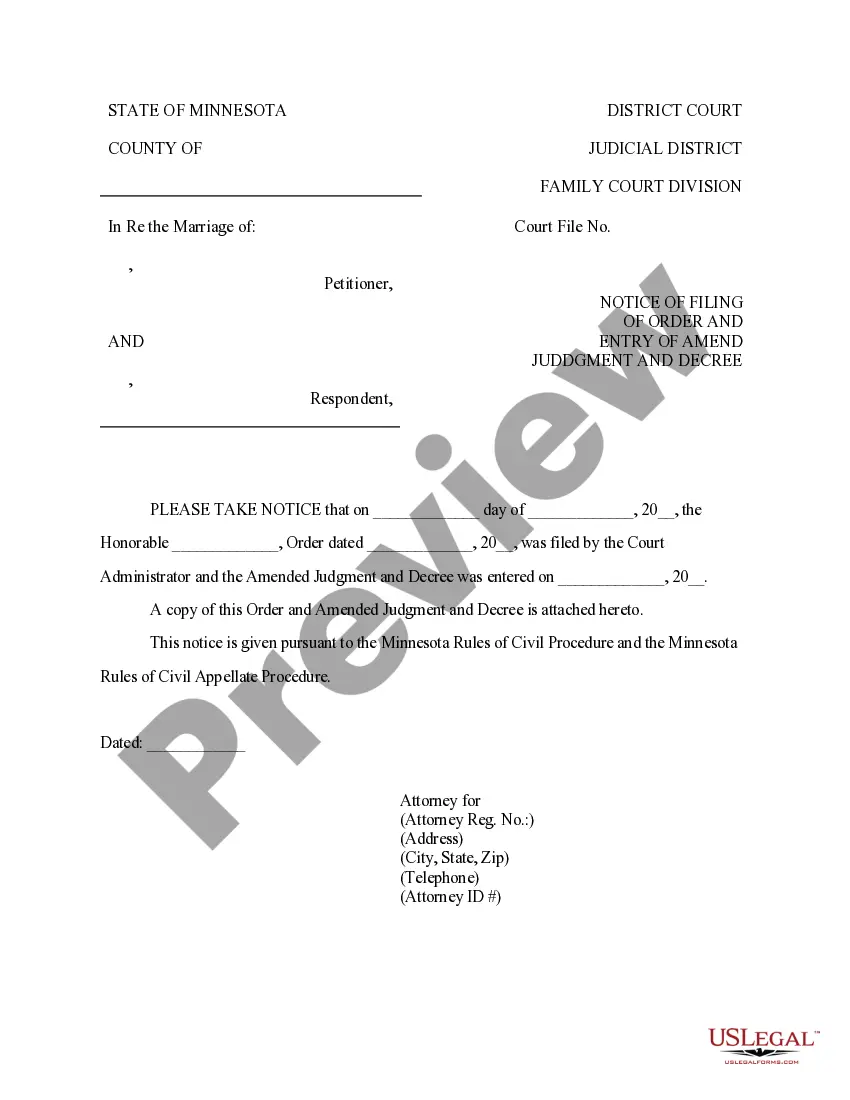
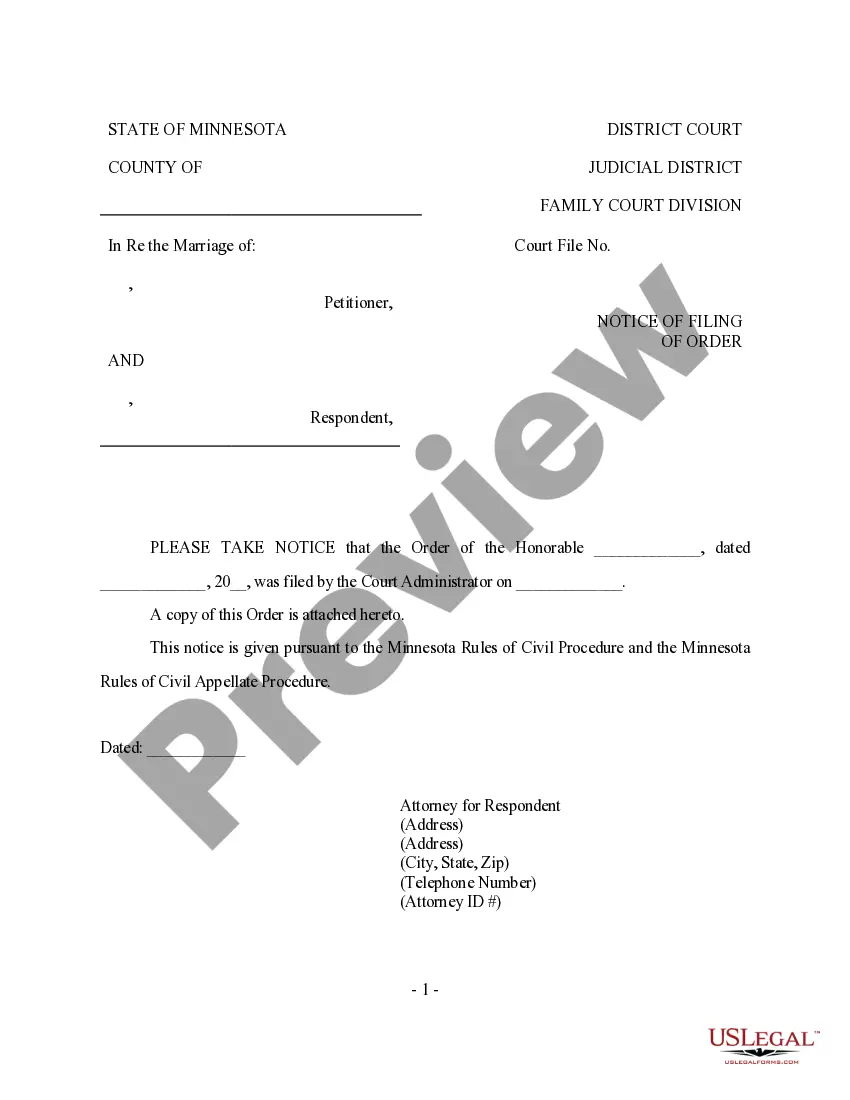
How to fill out Minnesota Notice Of Filing Of Amend Order?
Obtain any template from 85,000 legal documents including the Minnesota Notice of Filing of Amend Order online with US Legal Forms. Every form is composed and refreshed by state-licensed lawyers.
If you already possess a subscription, Log In. Once you are on the form’s page, click on the Download button and navigate to My documents for access.
If you haven’t subscribed yet, follow the instructions outlined below: Check the state-specific criteria for the Minnesota Notice of Filing of Amend Order you wish to use. Review the description and preview the example. When you’re assured the template is what you need, simply click Buy Now. Choose a subscription plan that truly fits your financial plan. Create a personal account. Complete payment using one of two convenient methods: by card or through PayPal. Choose a format to download the file in; two choices are available (PDF or Word). Download the document to the My documents tab. Once your reusable form is downloaded, print it out or save it to your device.
With US Legal Forms, you’ll always have immediate access to the appropriate downloadable template. The platform will provide you with forms and categorize them to simplify your search. Utilize US Legal Forms to obtain your Minnesota Notice of Filing of Amend Order quickly and effortlessly.
- Obtain any template from 85,000 legal documents including the Minnesota Notice of Filing of Amend Order online with US Legal Forms.
- Every form is composed and refreshed by state-licensed lawyers.
- If you already possess a subscription, Log In.
- Once you are on the form’s page, click on the Download button.
- Navigate to My documents for access.
- If you haven’t subscribed yet, follow the instructions outlined below.
- Check the state-specific criteria for the Minnesota Notice of Filing of Amend Order.
- Review the description and preview the example.
- When you’re assured the template is what you need, simply click Buy Now.
Form popularity
FAQ
To amend your divorce decree in Minnesota, you must file a motion with the court that issued the original decree. This process requires you to provide valid reasons for the amendment and may involve serving notice to your ex-spouse. A Minnesota Notice of Filing of Amend Order is a key document in this procedure, ensuring that all parties are informed of the changes. US Legal Forms can assist you in preparing the necessary paperwork and navigating the legal requirements.
The 55.01 rule in Minnesota pertains to the notice requirements for filing certain legal documents, including the Minnesota Notice of Filing of Amend Order. This rule ensures that parties involved in legal cases receive proper notification about changes or amendments to court orders. Adhering to this rule is essential to maintain transparency and uphold legal standards. For those needing assistance in navigating these requirements, US Legal Forms provides comprehensive resources and templates to simplify the process.
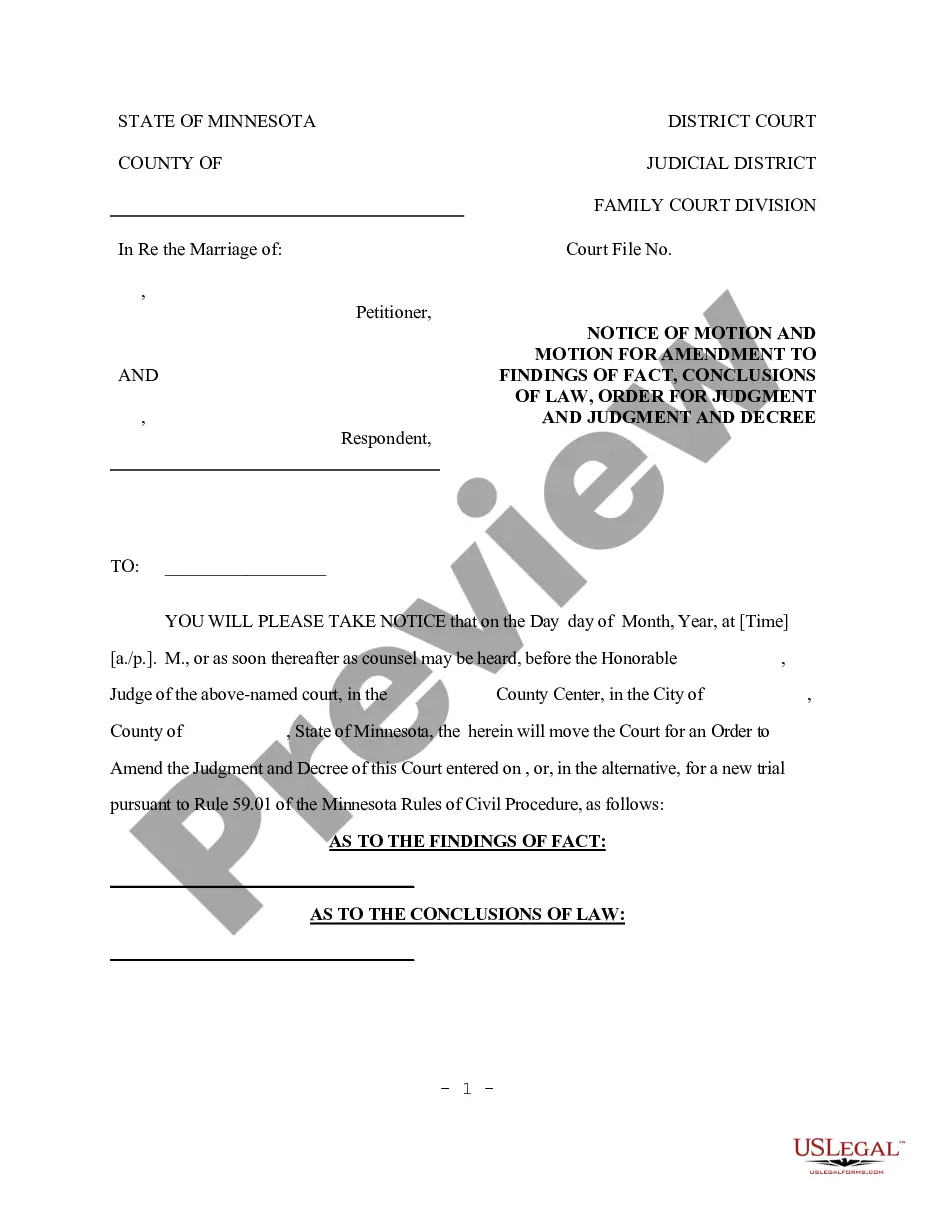
A motion for amended findings in Minnesota requests the court to revise its original findings based on new facts or legal arguments. This motion can be essential for correcting any misinterpretations or inaccuracies that may affect the outcome of a case. Utilizing a Minnesota Notice of Filing of Amend Order can streamline this process, allowing you to clearly present your request and support your case effectively.
Rule 77.04 in Minnesota addresses the procedures for filing and serving certain documents in court. This rule outlines how parties must notify others of motions, orders, and judgments, ensuring transparency in legal proceedings. Understanding this rule is crucial when dealing with a Minnesota Notice of Filing of Amend Order, as it helps ensure that all parties are adequately informed and able to respond.
In Minnesota, the grounds for leave to amend typically include the need to correct errors, add necessary parties, or clarify claims or defenses. Courts generally allow amendments when they serve the interests of justice and do not unfairly prejudice the opposing party. Filing a Minnesota Notice of Filing of Amend Order can help facilitate this process, allowing you to formally request the necessary changes and ensure a fair hearing.
A motion to amend findings in Minnesota is a request made to the court to change or clarify its previous findings in a case. This motion allows parties to address any perceived errors or omissions in the court's ruling. When you submit a Minnesota Notice of Filing of Amend Order, it serves as a formal step in this process, ensuring that the court reevaluates its decisions based on new evidence or arguments.
The appeal before the high court from any decree or judgment passed by the subordinate court shall be made within 90 days from the date of the decree or the order but if the appeal is filed within 30 days before the high court which has passed the decree or the judgment.
In most cases permission to appeal to the Court of Appeal is required. The lower court may grant permission, but this is unusual as it is a way of saying that the judge accepts the decision may not be right. More often, permission is refused and one has to apply for permission from the Court of Appeal itself.
This document is required to notify all parties of the court's order or judgment and to trigger important deadlines for post-ruling procedures, such as filing an appeal, amending a complaint, or filing a motion for reconsideration.
You must file the original, signed notice of appeal and statement of the case (not copies) with the Clerk of the Appellate Courts. You must file all documents relating to your appeal with the Clerk of the Appellate Courts. You cannot file papers by sending them directly to the judges of the court.