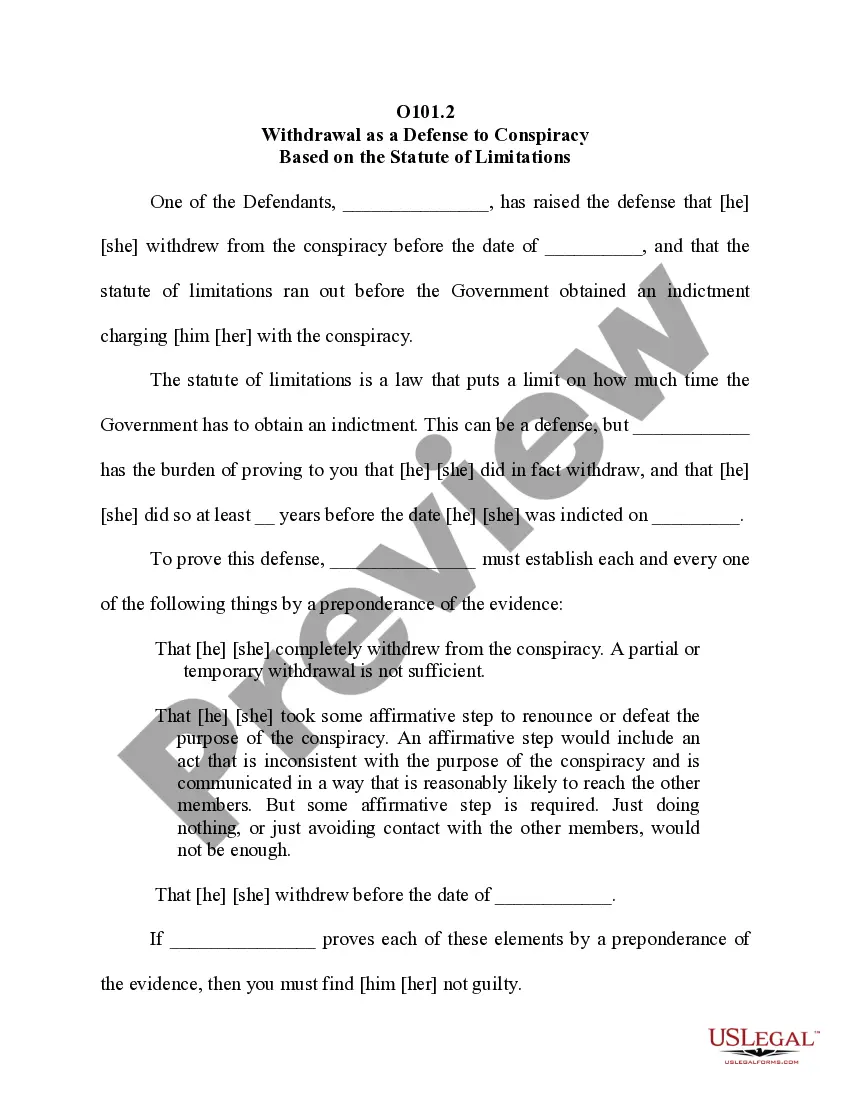
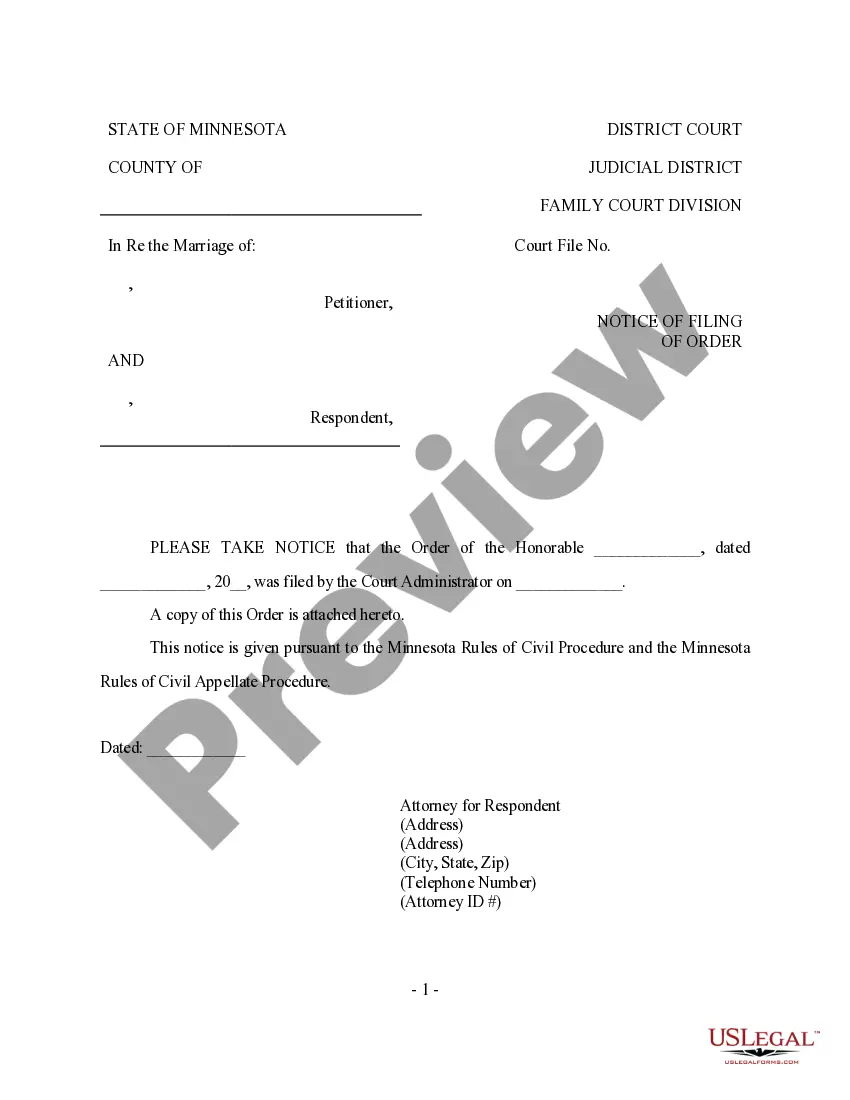
Minnesota Notice of Filing and Order
What is this form?
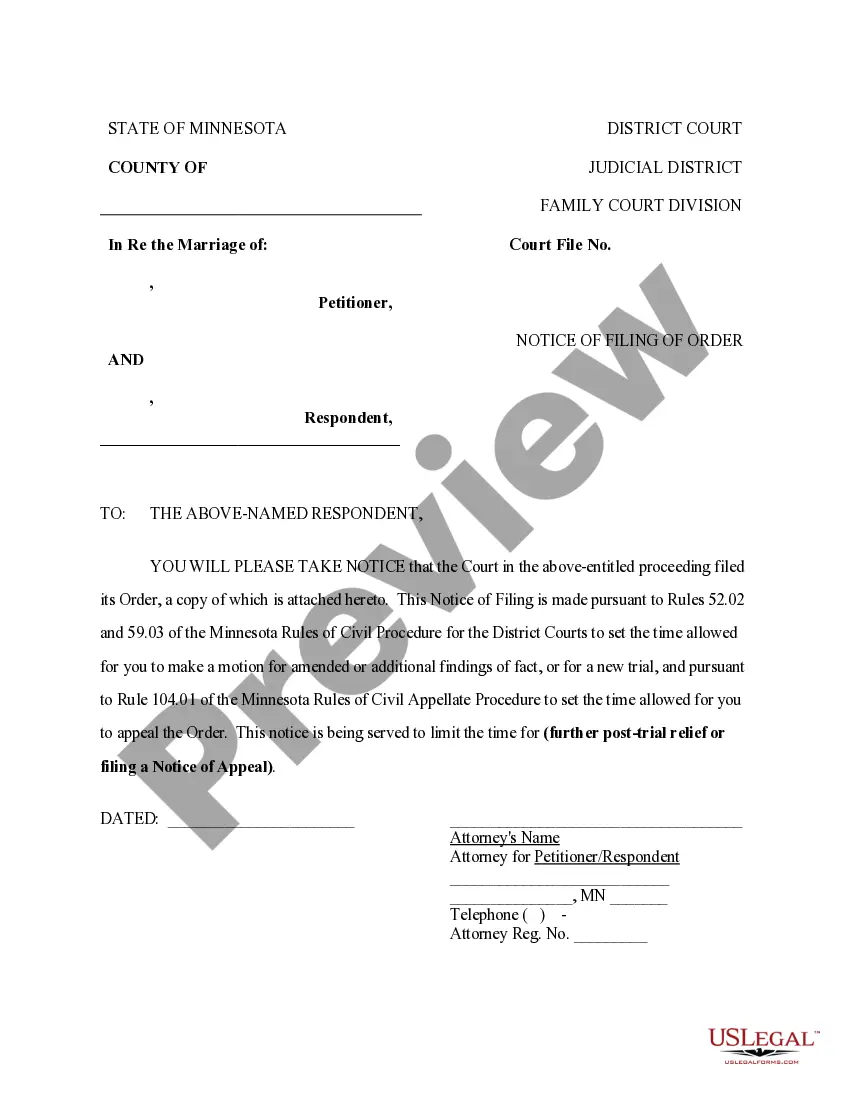
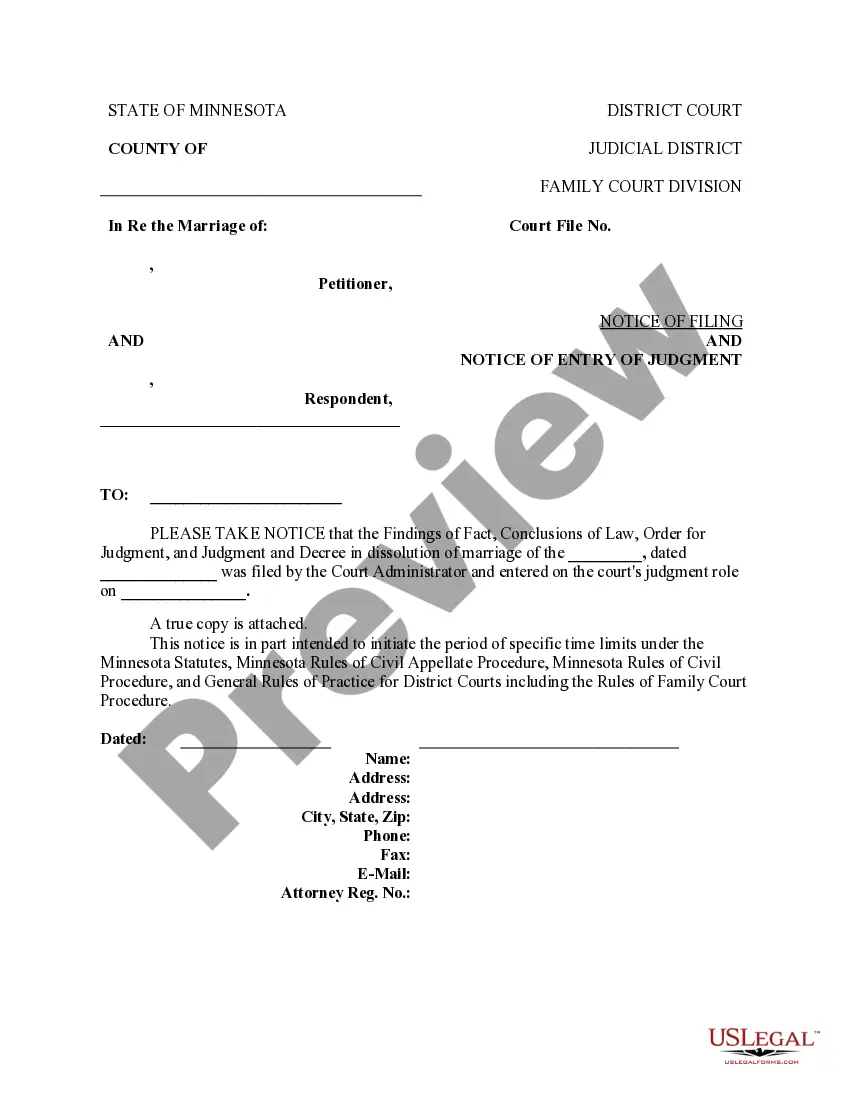
The Notice of Filing and Order is a legal document that informs the involved parties about the filing of an order issued by a court. This form serves to provide formal notification of the order's filing and is essential in the context of legal proceedings. Unlike other notices, this document is specifically tailored to comply with Minnesota's civil and appellate procedures, ensuring that all parties are adequately informed of relevant court actions.
Key parts of this document
- Court Administrator: The name of the court representative who filed the order.
- Date of the Order: The date when the order was issued by the court.
- Filing Date: The date the order was filed in the court records.
- Attached Order: A copy of the order referenced in the notice is included for reference.
- Attorney Information: Contact details for the attorney representing the respondent.
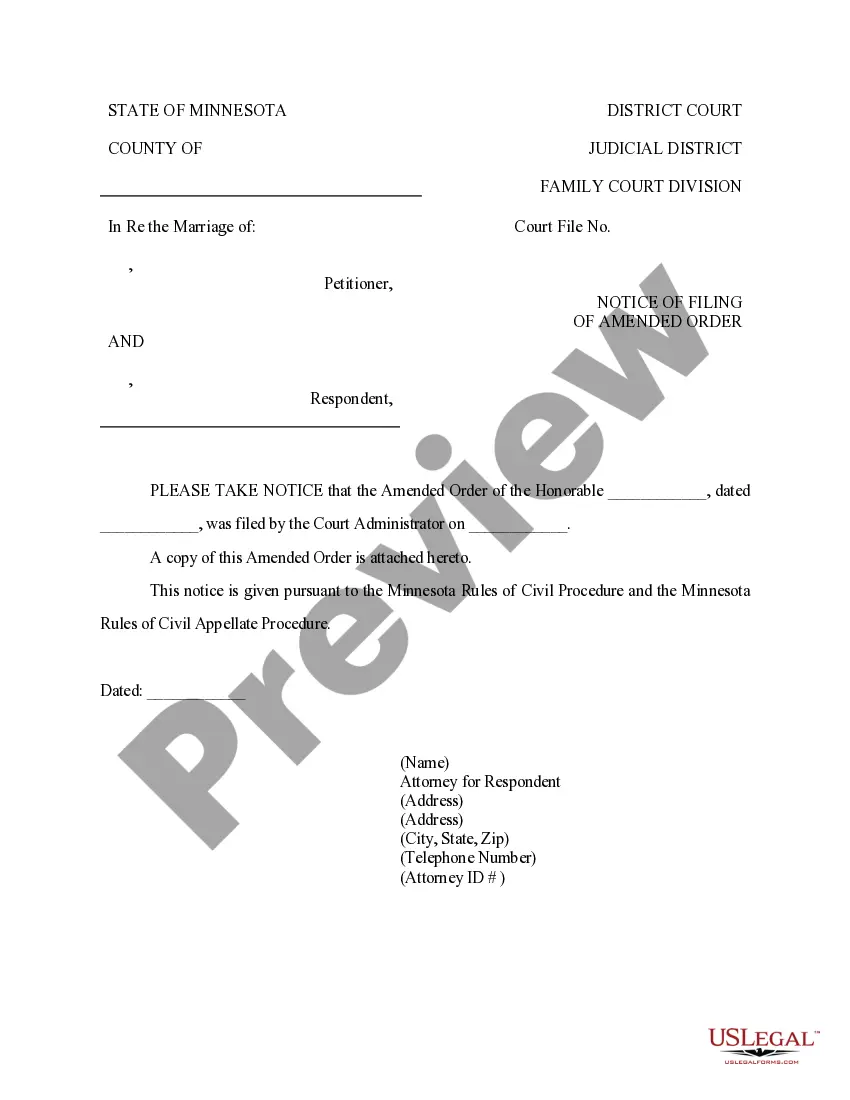
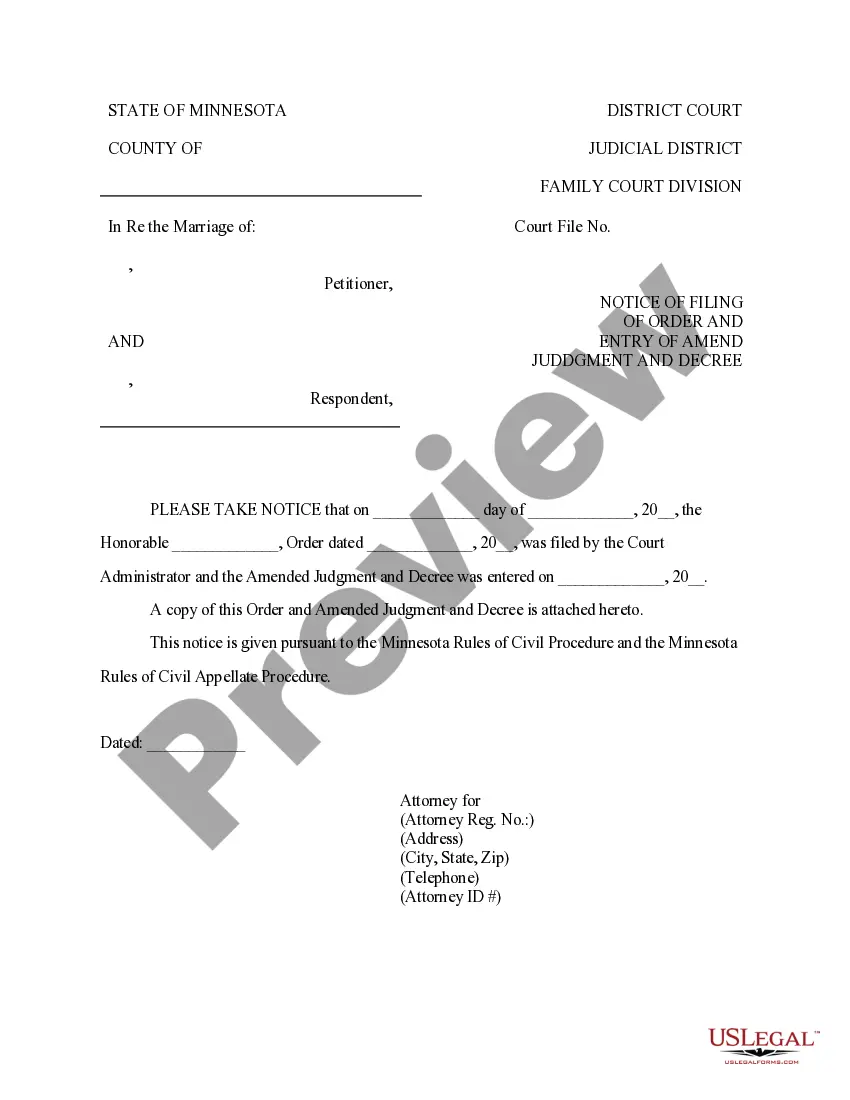
When this form is needed
This form should be used in situations where a court order has been issued and filed. It is important for notifying all parties involved in the legal proceeding, ensuring they are aware of the order's contents and any subsequent actions required. Typical scenarios include family law cases, civil disputes, or any litigation where court orders are issued.
Who this form is for
- Respondents in legal proceedings who need to notify parties about a court order.
- Attorneys representing clients involved in litigation where a court order has been issued.
- Individuals seeking clarity on the status of their case following an order from the court.
How to complete this form
- Start by filling in the name of the Honorable judge who issued the order.
- Enter the date of the issued order.
- Indicate the filing date of the order by the court administrator.
- Attach a copy of the order being referenced in the notice.
- Provide your name and contact information as the attorney for the respondent.
Does this document require notarization?
Notarization is not commonly needed for this form. However, certain documents or local rules may make it necessary. Our notarization service, powered by Notarize, allows you to finalize it securely online anytime, day or night.
Get your form ready online
Our built-in tools help you complete, sign, share, and store your documents in one place.
Make edits, fill in missing information, and update formatting in US Legal Forms—just like you would in MS Word.
Download a copy, print it, send it by email, or mail it via USPS—whatever works best for your next step.
Sign and collect signatures with our SignNow integration. Send to multiple recipients, set reminders, and more. Go Premium to unlock E-Sign.
If this form requires notarization, complete it online through a secure video call—no need to meet a notary in person or wait for an appointment.
We protect your documents and personal data by following strict security and privacy standards.

Make edits, fill in missing information, and update formatting in US Legal Forms—just like you would in MS Word.

Download a copy, print it, send it by email, or mail it via USPS—whatever works best for your next step.

Sign and collect signatures with our SignNow integration. Send to multiple recipients, set reminders, and more. Go Premium to unlock E-Sign.

If this form requires notarization, complete it online through a secure video call—no need to meet a notary in person or wait for an appointment.

We protect your documents and personal data by following strict security and privacy standards.
Mistakes to watch out for
- Failing to attach the order referenced in the notice.
- Incorrectly entering the dates, which can lead to misunderstandings.
- Not providing accurate attorney contact information, which can hinder communication.
- Neglecting to follow specific state requirements when completing the form.
Why use this form online
- Convenience: Download and fill out the form from home at any time.
- Editability: Easily make adjustments to your form as needed.
- Reliability: Ensure you are using the most current version of the form designed by legal professionals.
Looking for another form?
Form popularity
FAQ
Rule 69 in Minnesota pertains to the enforcement of judgments and provides guidelines for executing a judgment. This rule outlines the processes available for creditors to collect on debts owed to them. Knowing Rule 69 can be beneficial for understanding your rights and responsibilities under the Minnesota Notice of Filing and Order.
The 48-hour rule in criminal procedure requires that a defendant be brought before a judge within 48 hours of their arrest. This ensures that the accused receives a timely hearing and can challenge their detention. Understanding this rule is vital for anyone involved in a legal situation, particularly in relation to the Minnesota Notice of Filing and Order.
Yes, Minnesota is a notice pleading state. This means that the initial complaint must provide enough information to notify the other party about the claims being made against them. Familiarity with notice pleading is important for anyone involved in civil litigation, especially when dealing with documents like the Minnesota Notice of Filing and Order.
The 48-hour rule in Minnesota is often associated with the timeframe in which a defendant must be brought to court after an arrest. This rule is designed to protect the rights of the accused and prevent unlawful detention. Knowing your rights under this rule can aid in navigating legal processes effectively, including those involving the Minnesota Notice of Filing and Order.
The 36 48-hour rule in Minnesota refers to the requirement that law enforcement must bring a person arrested without a warrant before a judge within 36 hours. This rule is essential for protecting individual rights and ensuring timely judicial review. Understanding this rule can be crucial, especially when dealing with legal documents like the Minnesota Notice of Filing and Order.
In Minnesota, law enforcement can detain you for a reasonable amount of time while they investigate suspicious activity. Generally, this period should not exceed 20 minutes unless further circumstances arise. However, you should be aware of your rights and the procedures surrounding detentions, especially in relation to the Minnesota Notice of Filing and Order.
Rule 77.04 in Minnesota pertains to the Notice of Filing and Order. This rule mandates that certain documents be filed with the court and that parties involved in a case are notified. It ensures transparency in legal proceedings, allowing all parties to stay informed about the status of their case.