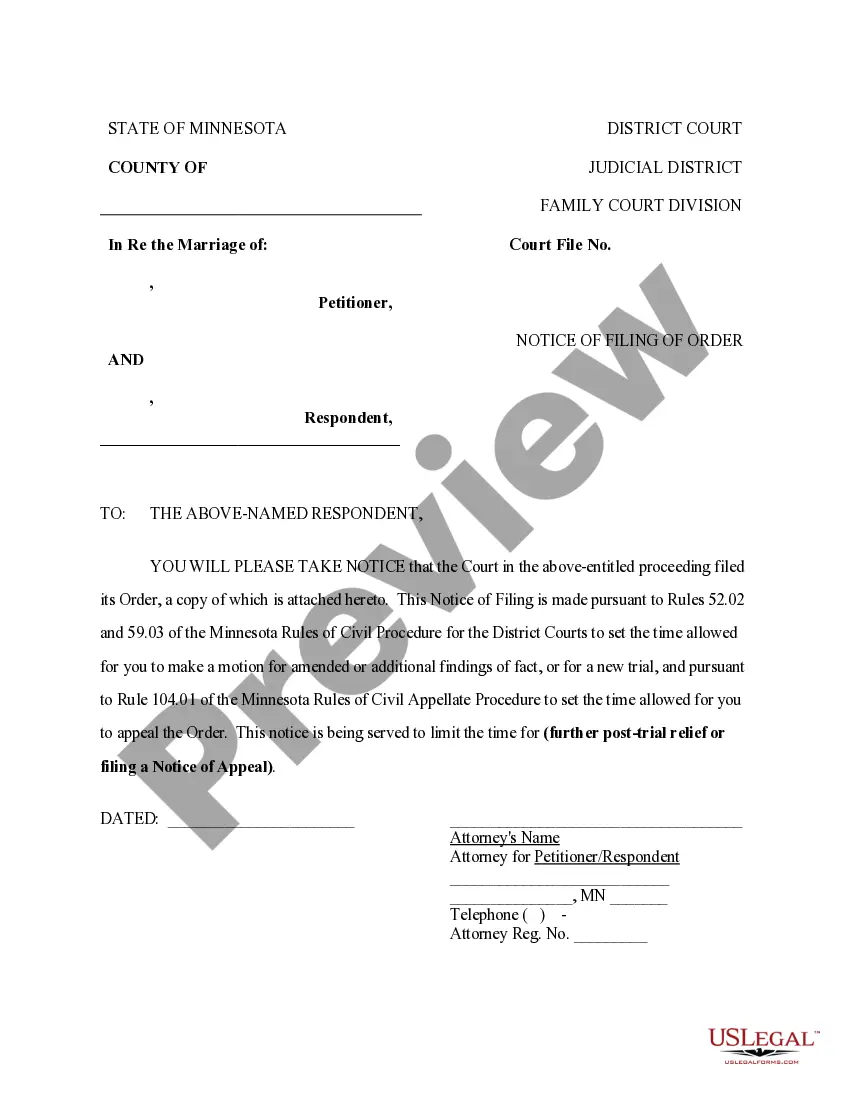
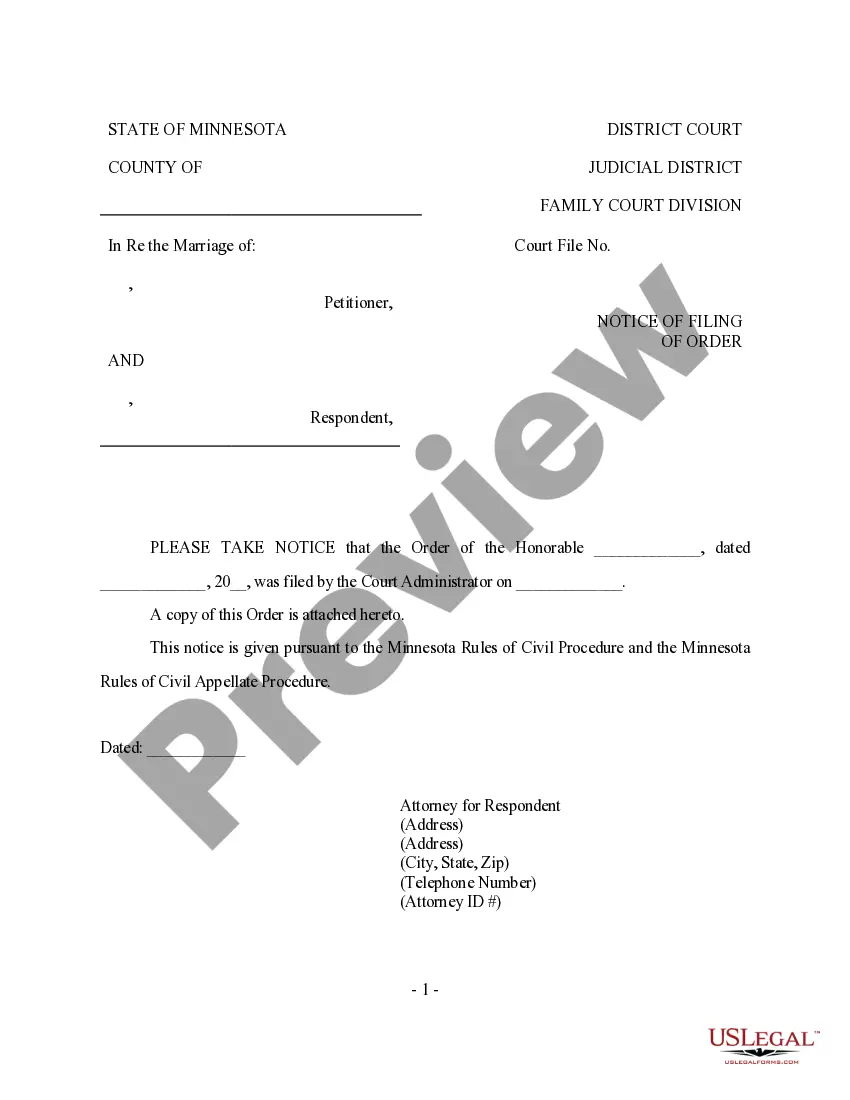
A Notice of Filing pursuant to Rules 52.02 and 59.03 of the Minnesota Rules of Civil Procedure for the District Courts to set the time allowed for any motion for amended or additional findings of fact, or for a new trial, and pursuant to Rule 104.01 of the Minnesota Rules of Civil Appellate Procedure to set the time allowed appeal of the Order.
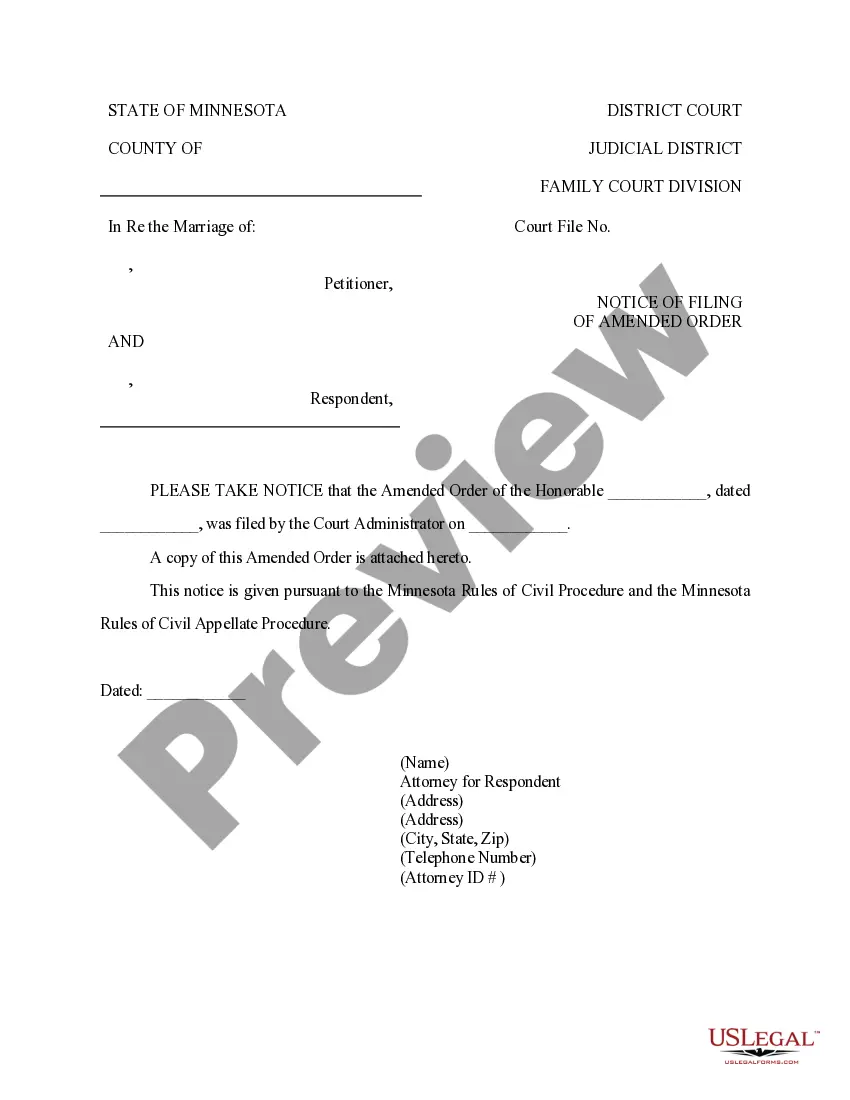
Minnesota Notice of Filing of Order
Category:
State:
Minnesota
Control #:
MN-8609D
Format:
Word;
Rich Text
Instant download
Description

How to fill out Minnesota Notice Of Filing Of Order?
Obtain any version from 85,000 legal documents like the Minnesota Notice of Filing of Order online with US Legal Forms. Each template is crafted and refreshed by state-certified legal experts.
If you possess a subscription already, Log In. Once you are on the form’s webpage, click the Download button and navigate to My documents to access it.
If you haven't subscribed yet, follow the instructions below.
With US Legal Forms, you will consistently have instant access to the suitable downloadable sample. The service provides you access to forms and categorizes them to simplify your search. Use US Legal Forms to acquire your Minnesota Notice of Filing of Order quickly and efficiently.
- Verify the state-specific stipulations for the Minnesota Notice of Filing of Order you wish to utilize.
- Go through the description and preview the template.
- Once you are confident that the sample meets your requirements, click on Buy Now.
- Choose a subscription plan that fits your budget.
- Establish a personal account.
- Make a payment using one of two suitable methods: by credit card or through PayPal.
- Select a format to download the file in; two choices are available (PDF or Word).
- Download the document to the My documents section.
- After your reusable form is downloaded, print it out or save it to your device.
Form popularity
FAQ
Yes, you can look up restraining orders online in Minnesota through various court websites and legal databases. These resources provide a convenient way to access information about restraining orders and related legal documents. However, it is important to ensure that you are using official and secure platforms for these searches. For assistance with the Minnesota Notice of Filing of Order and other legal matters, USLegalForms can guide you through the process.
Most court records in Minnesota are indeed public, which includes civil and criminal cases. However, certain records may be sealed or restricted due to privacy concerns or specific legal protections. Being aware of what information is accessible can empower you in legal situations. To find relevant documents, including those related to the Minnesota Notice of Filing of Order, USLegalForms can simplify your search.
The 48 hour rule in Minnesota pertains to the timeframe in which a defendant must be brought before a judge after being arrested. This rule is designed to protect the rights of individuals by ensuring a swift judicial review. Understanding this rule is crucial for anyone involved in legal matters to ensure proper procedures are followed. For more information about Minnesota Notice of Filing of Order, USLegalForms offers comprehensive guides and templates.
Yes, restraining orders are generally considered public records in Minnesota. This means that anyone can request access to them, although there may be specific circumstances that allow for confidentiality. The availability of these records helps promote accountability and transparency within the legal system. If you need help navigating the process of obtaining a Minnesota Notice of Filing of Order, USLegalForms can provide the necessary resources.
Rule 77.04 in Minnesota establishes the guidelines for the notice of filing of an order in court proceedings. It requires courts to provide notice to affected parties, ensuring transparency in legal processes. Understanding this rule is vital for anyone involved in court cases, as it governs how orders are communicated. For personalized assistance with Minnesota Notice of Filing of Order, consider using USLegalForms for easy access to relevant forms.
Filing the Notice of Appeal. Abandonment or Settlement. Waiver of Fees. Designating the Record. Civil Case Information Sheet. Briefs. Oral Argument. The Court's Decision.
After you complete your motion, you must file it with the court.You must then serve (mail) a copy of your filed motion (including all exhibits and the date, time, and place of hearing) to all other parties in the case. If a party is represented by an attorney, mail the motion directly to the attorney's office.
If you disagree with a determination you received, you can file an appeal. When you file an appeal, a hearing with an Unemployment Law Judge will be scheduled. Appeal hearings are done by phone. Appeals can be filed online by logging in to your account, by fax, or by mail.
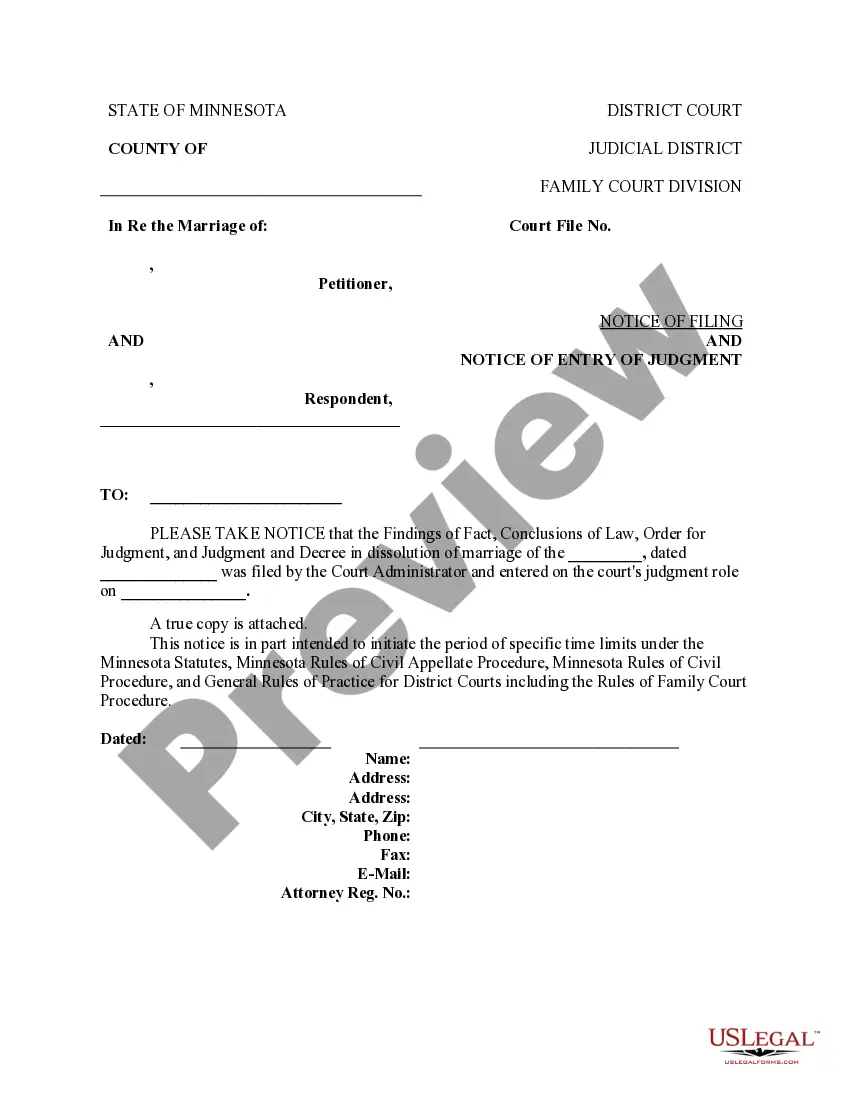
This document is required to notify all parties of the court's order or judgment and to trigger important deadlines for post-ruling procedures, such as filing an appeal, amending a complaint, or filing a motion for reconsideration.
The appeal before the high court from any decree or judgment passed by the subordinate court shall be made within 90 days from the date of the decree or the order but if the appeal is filed within 30 days before the high court which has passed the decree or the judgment.