Telemarketing Agreement - Self-Employed Independent Contractor
Understanding this form
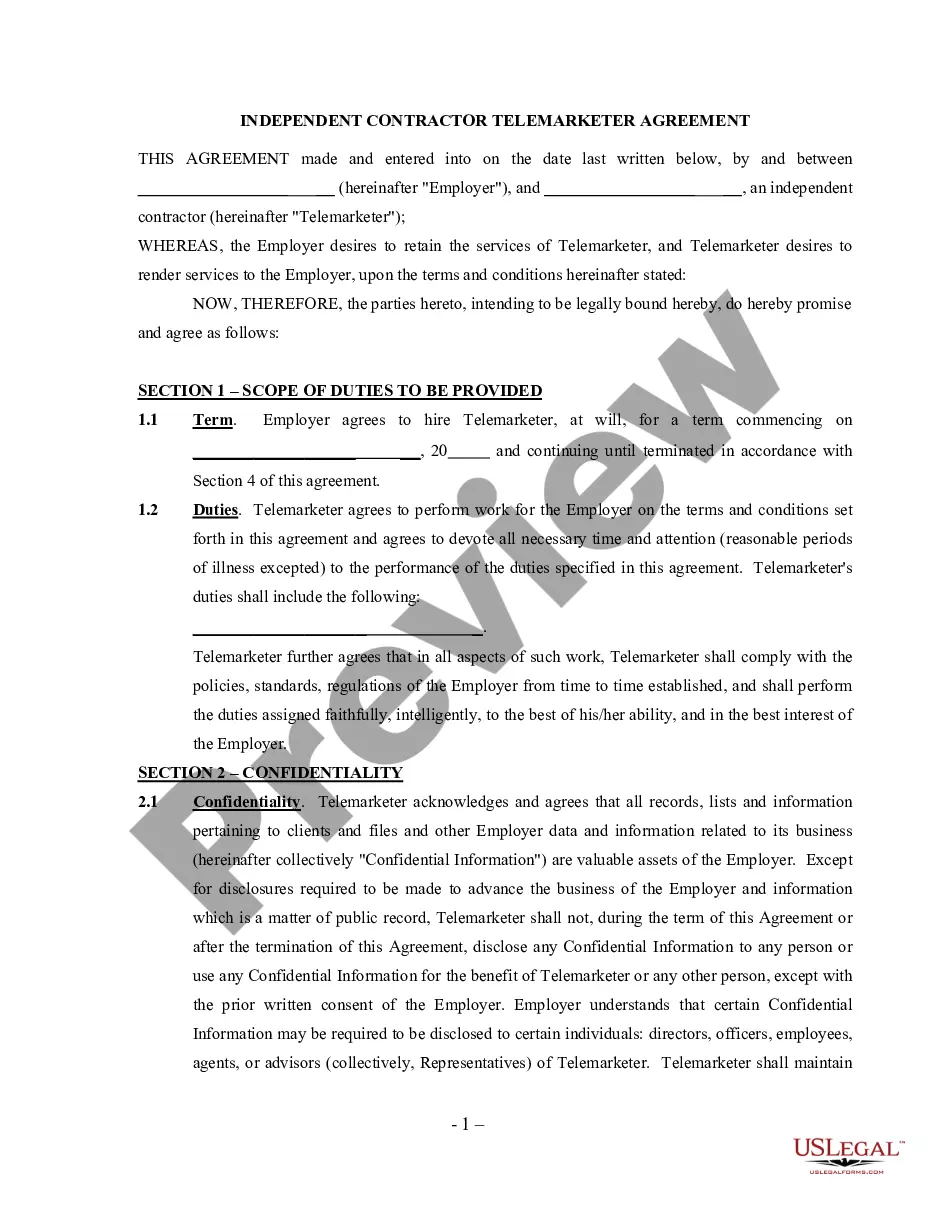
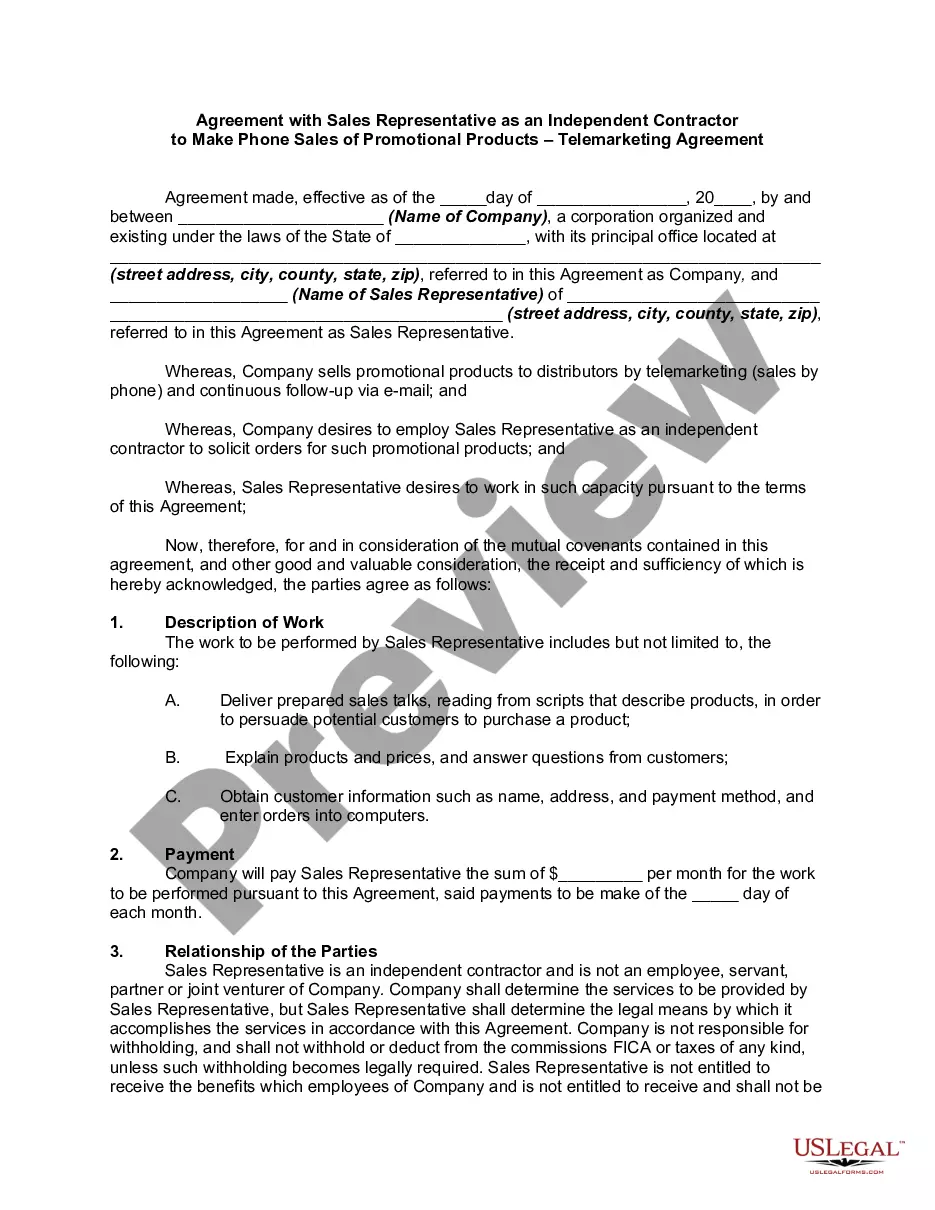
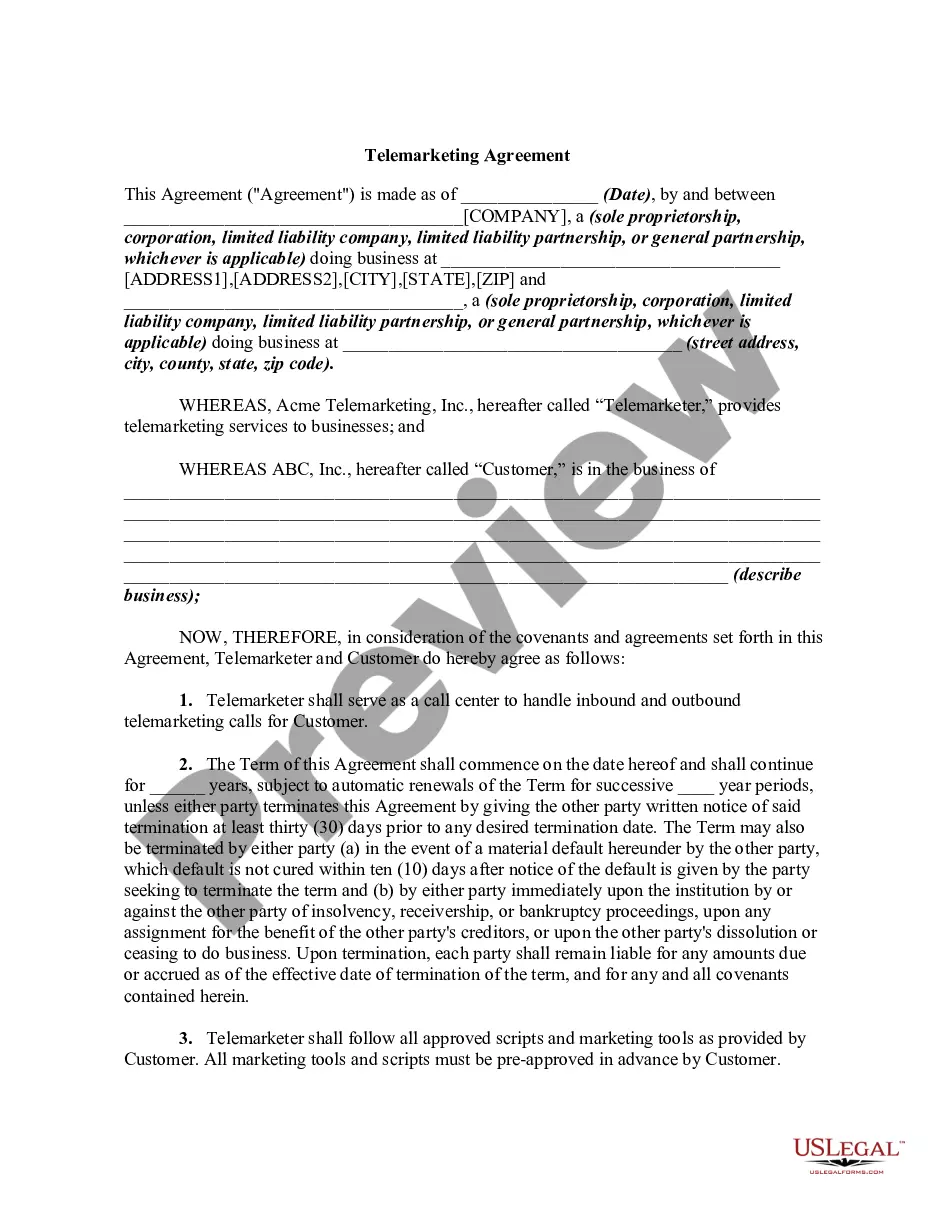
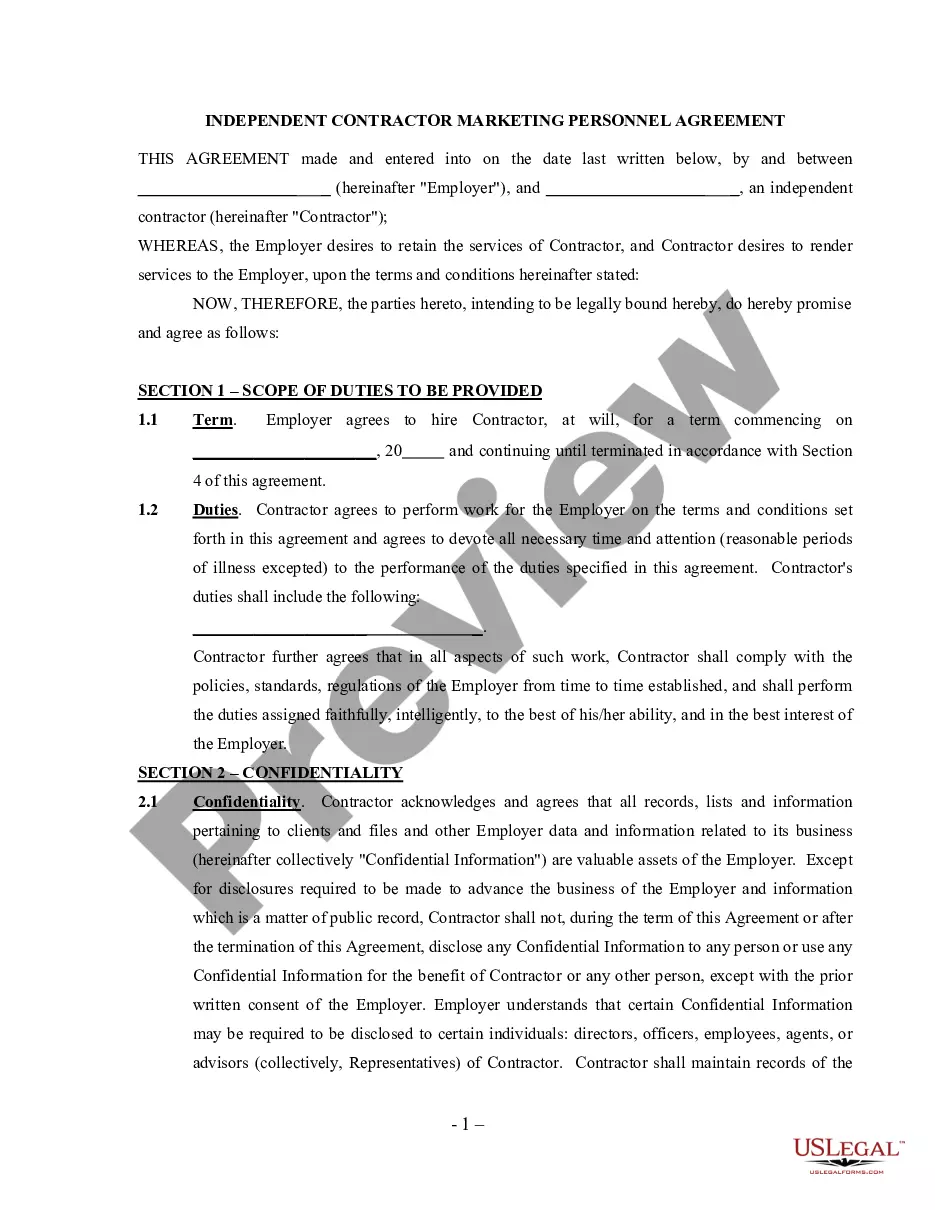
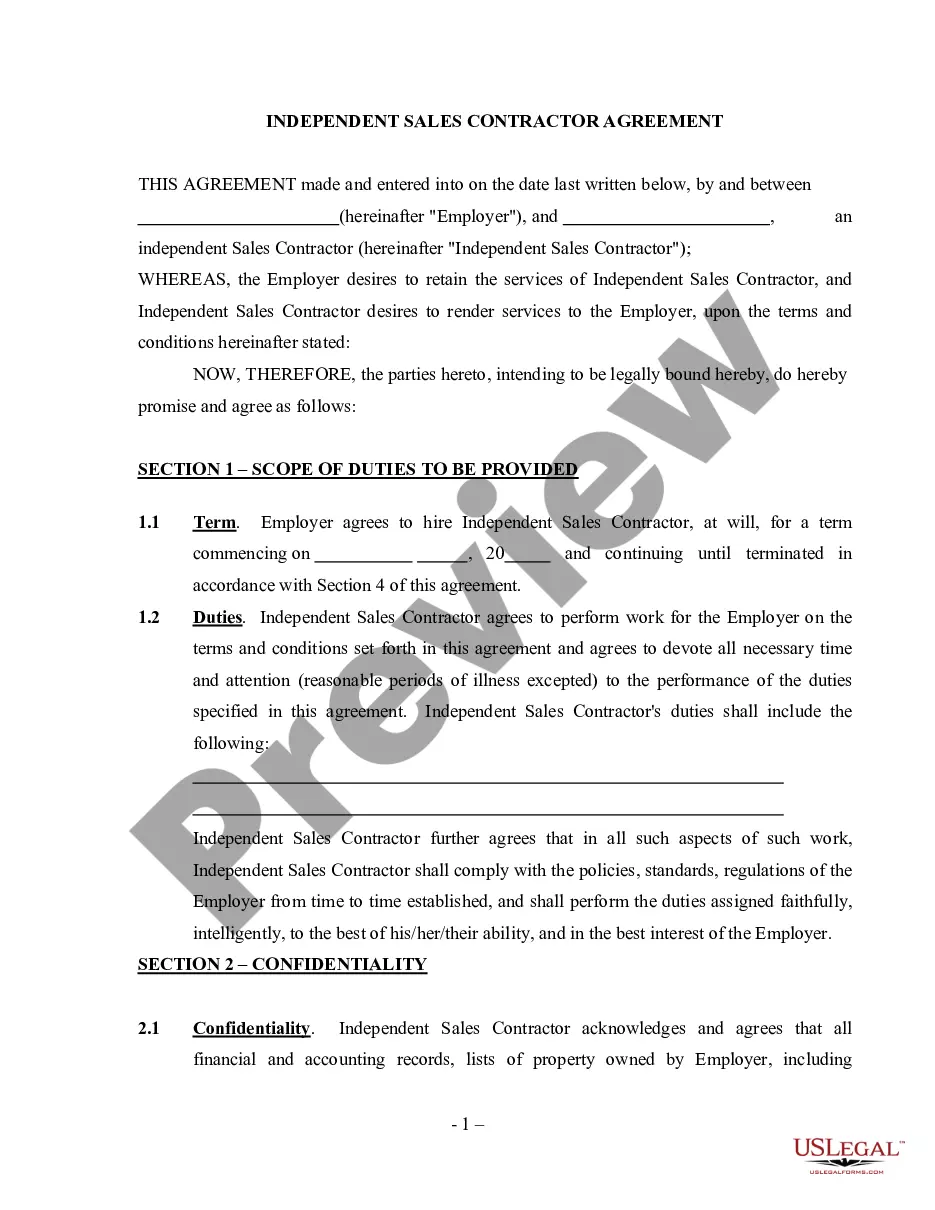
The Telemarketing Agreement - Self-Employed Independent Contractor is a legal document that outlines the relationship between an employer and a self-employed telemarketer. This agreement governs the terms of engagement, specifying the telemarketer's responsibilities, confidentiality obligations, and compensation. Unlike standard employment contracts, this agreement distinctly classifies the telemarketer as an independent contractor, which impacts tax obligations, benefits, and job security.
Key components of this form
- Introduction: Identifies the employer and the telemarketer along with their respective roles.
- Scope of Duties: Outlines the services the telemarketer is expected to provide.
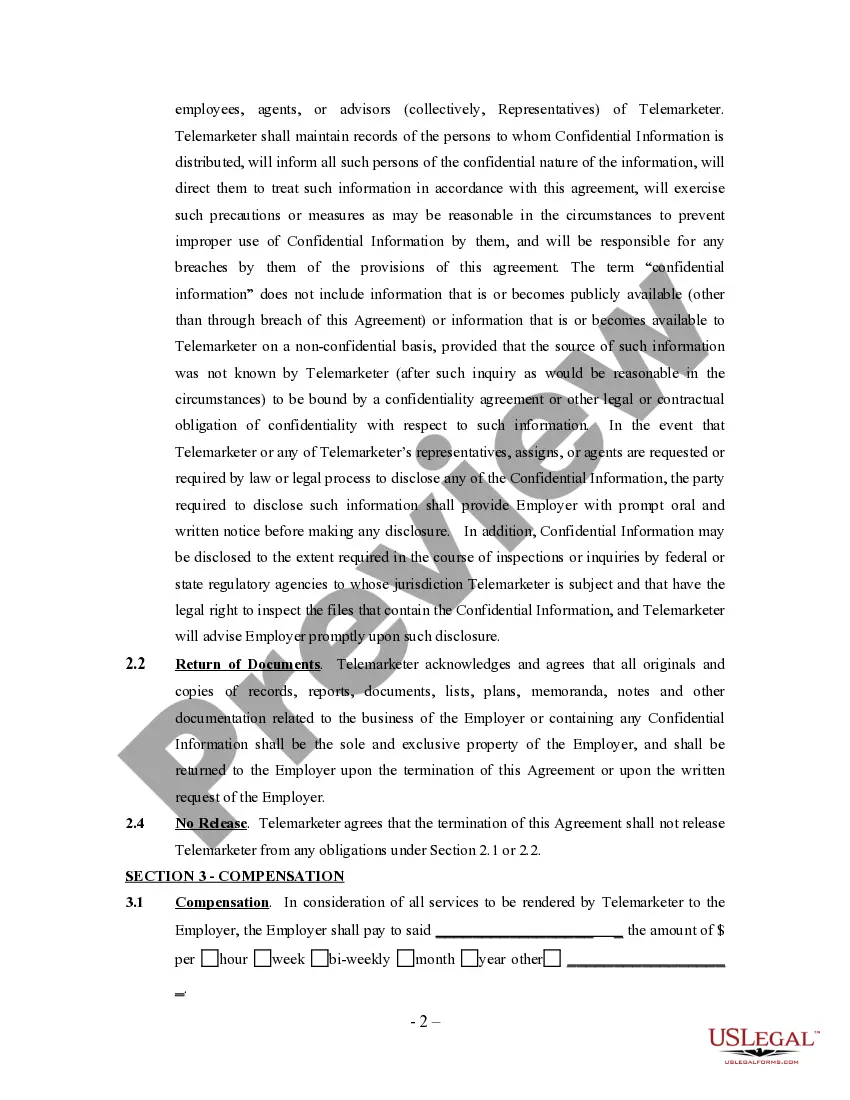
- Confidentiality Clause: Specifies obligations regarding the keeping of confidential information.
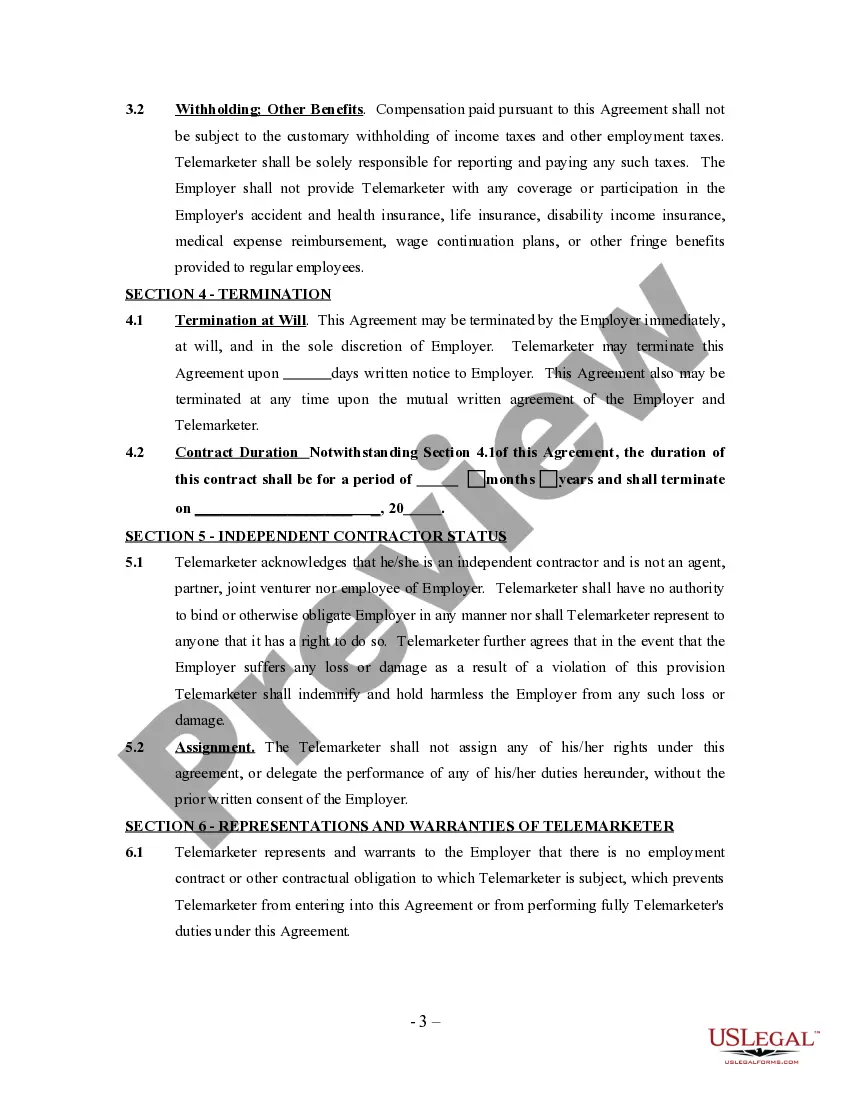
- Compensation: Details how and when the telemarketer will be compensated for their work.
- Termination Conditions: Outlines how either party can terminate the agreement.
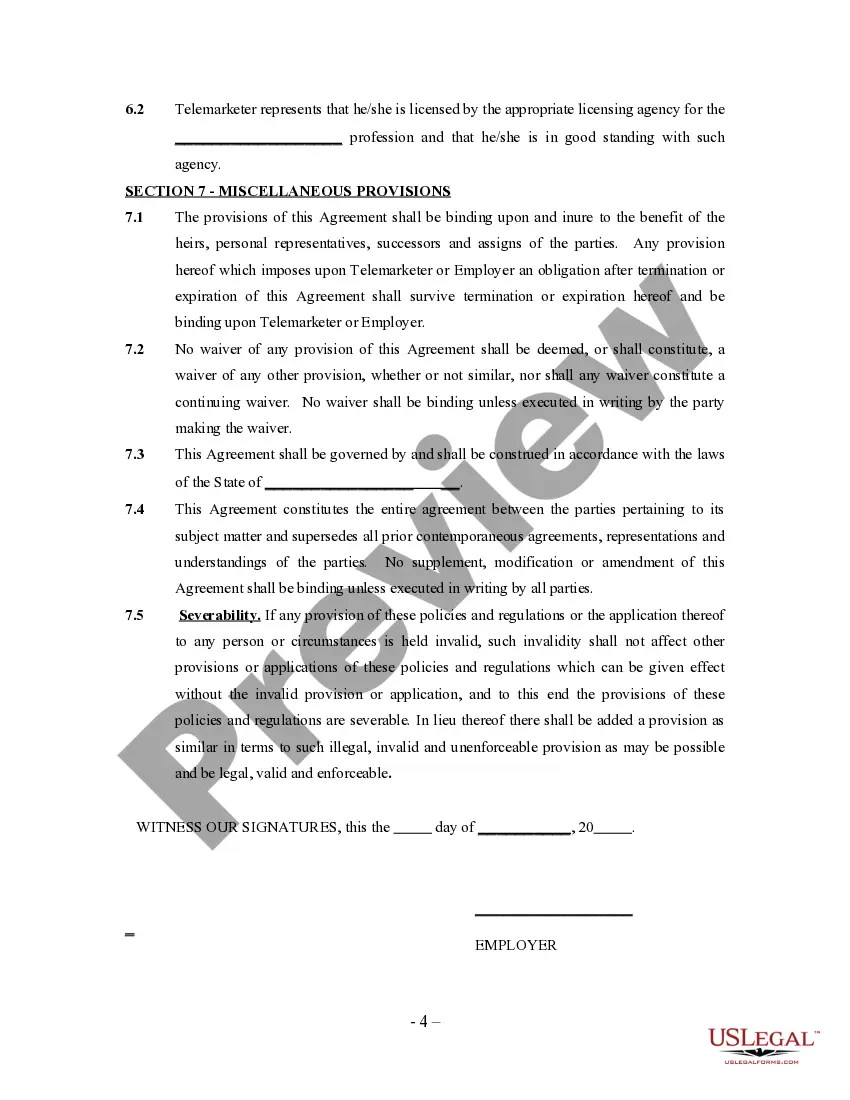
- Miscellaneous Provisions: Includes various legal clauses that ensure the agreement is enforceable and well-regulated.

When this form is needed
This form is useful when an employer seeks to hire a telemarketer as an independent contractor rather than as an employee. It is ideal in situations where the employer wants to ensure compliance with regulations and confidentiality about business practices while maintaining flexibility in hiring practices. Use this agreement to clarify the terms of work, especially in industries that rely heavily on telemarketing services.
Who needs this form
- Employers seeking to hire telemarketers as independent contractors.
- Telemarketers looking to establish clear professional agreements with their clients.
- Businesses that require confidentiality for sensitive customer information during telemarketing activities.
How to complete this form
- Identify the parties by entering the names of the employer and the telemarketer.
- Define the scope of work by detailing the specific telemarketing services to be provided.
- Specify the terms of confidentiality to protect sensitive information shared during the agreement.
- Outline the compensation structure to clarify payment details and schedules.
- Include termination clauses to state how and when the agreement can be ended by either party.
Notarization guidance
This form does not typically require notarization unless specified by local law. However, it is advisable to seek signature verification to enhance the enforceability of the agreement, ensuring both parties are legally bound.
Get your form ready online
Our built-in tools help you complete, sign, share, and store your documents in one place.
Make edits, fill in missing information, and update formatting in US Legal Forms—just like you would in MS Word.
Download a copy, print it, send it by email, or mail it via USPS—whatever works best for your next step.
Sign and collect signatures with our SignNow integration. Send to multiple recipients, set reminders, and more. Go Premium to unlock E-Sign.
If this form requires notarization, complete it online through a secure video call—no need to meet a notary in person or wait for an appointment.
We protect your documents and personal data by following strict security and privacy standards.

Make edits, fill in missing information, and update formatting in US Legal Forms—just like you would in MS Word.

Download a copy, print it, send it by email, or mail it via USPS—whatever works best for your next step.

Sign and collect signatures with our SignNow integration. Send to multiple recipients, set reminders, and more. Go Premium to unlock E-Sign.

If this form requires notarization, complete it online through a secure video call—no need to meet a notary in person or wait for an appointment.

We protect your documents and personal data by following strict security and privacy standards.
Mistakes to watch out for
- Failing to clearly define the scope of services expected from the telemarketer.
- Omitting important confidentiality provisions that protect valuable business information.
- Not including a clear compensation plan, which can lead to disputes over payments.
Advantages of online completion
- Convenient access; forms can be downloaded anytime and anywhere.
- Editability; users can tailor the agreement to their specific needs easily.
- Reliability; ensure compliance with legal standards set for independent contractor agreements.
Legal use & context
- This agreement serves as a legally binding document that governs the relationship between the employer and the telemarketer.
- Enforceability may vary by state, so local laws should be considered when using this form.
- Compliance with contractual obligations is essential to avoid legal disputes.
Summary of main points
- The Telemarketing Agreement outlines the relationship between an employer and a telemarketer as an independent contractor.
- It includes clauses on duties, compensation, and confidentiality to protect business interests.
- This form is useful for businesses looking to define the parameters of their engagement with telemarketers.
Looking for another form?



Form popularity
FAQ
Get it in writing. Keep it simple. Deal with the right person. Identify each party correctly. Spell out all of the details. Specify payment obligations. Agree on circumstances that terminate the contract. Agree on a way to resolve disputes.
Name of contractor and contact information. Name of homeowner and contact information. Describe property in legal terms. List attachments to the contract. The cost. Failure of homeowner to obtain financing. Description of the work and the completion date. Right to stop the project.
An Independent Contractor Agreement is a written contract that spells out the terms of the working arrangement between a contractor and client, including: A description of the services provided. Terms and length of the project or service. Payment details (including deposits, retainers, and other billing details)
1. Not Having a Written Contract.The taxing, labor and employment, and insurance authorities expect a written contract that states that the worker is an independent contractor and will be paid as such with no tax withholding, no benefits, etc.
Terms. This is the first section of any agreement or contract and states the names and locations of the parties involved. Responsibilities & Deliverables. Payment-Related Details. Confidentiality Clause. Contract Termination. Choice of Law.
Simply put, being an independent contractor is one way to be self-employed. Being self-employed means that you earn money but don't work as an employee for someone else. An independent contractor is someone who provides a service on a contractual basis.
For every independent contractor who works for your company, you should a signed contract on file, signed by both parties.Ownership of the work the contractor or the hiring company.
Form W-9. The IRS requires contractors to fill out a Form W-9, request for Taxpayer Identification Number and Certification, which you should keep on file for at least four years after the hiring. This form is used to request the correct name and Taxpayer Identification Number, or TIN, of the worker or their entity.
A. No. Being labeled an independent contractor, being required to sign an agreement stating that one is an independent contractor, or being paid as an independent contractor (that is, without payroll deductions and with income reported by an IRS Form 1099 rather than a W-2), is not what determines employment status.