Minnesota Notice of Motion To Amend Judgment
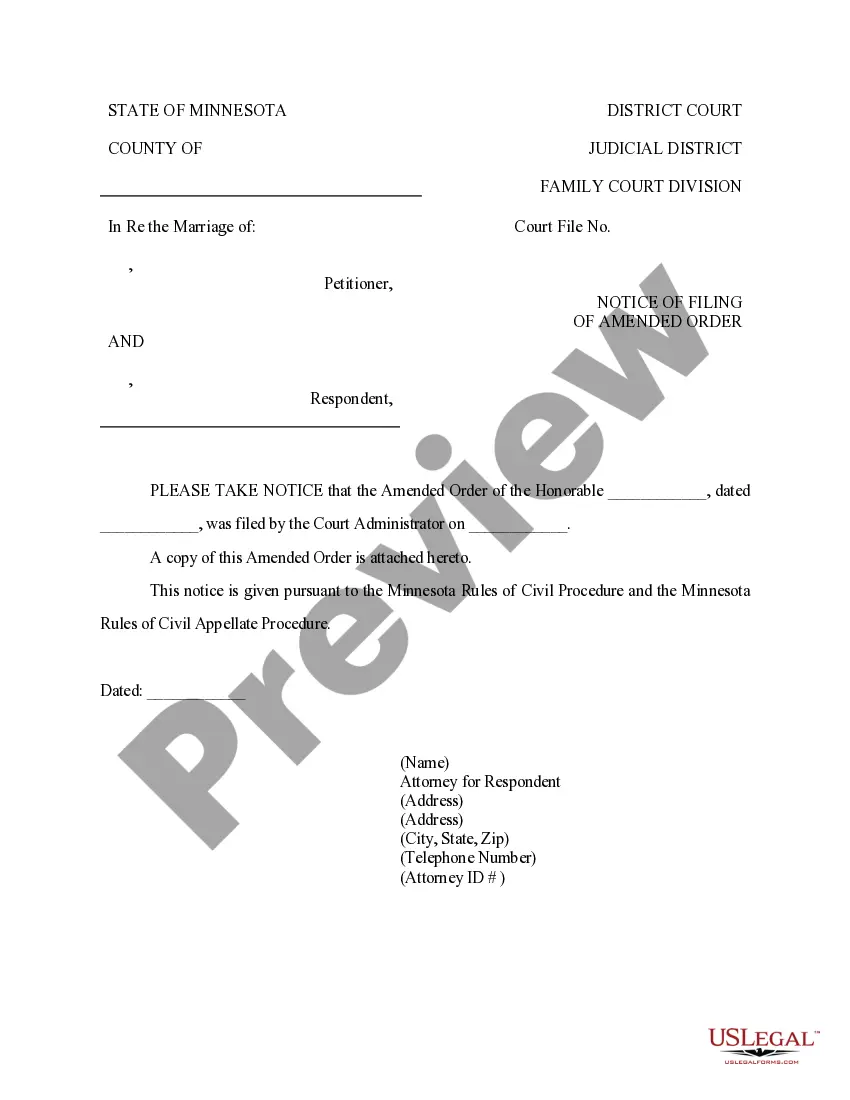
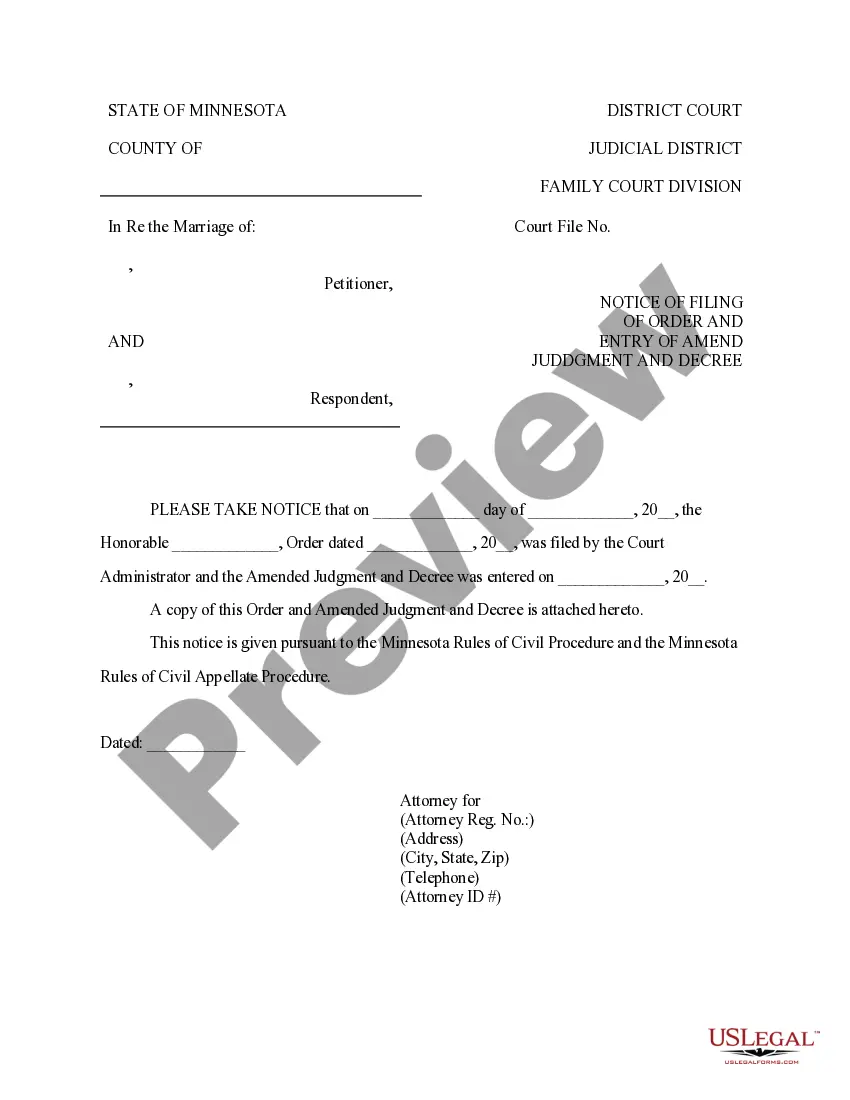
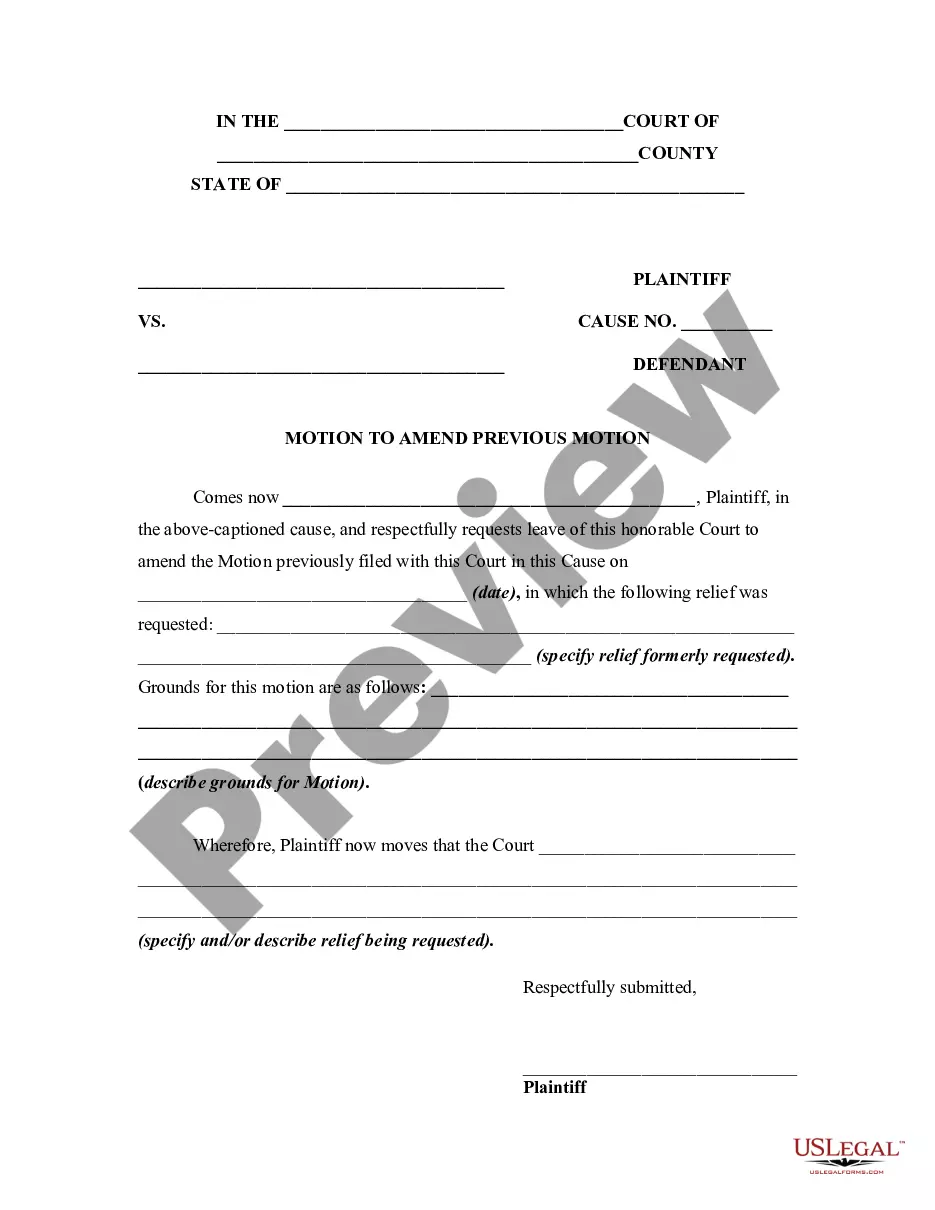
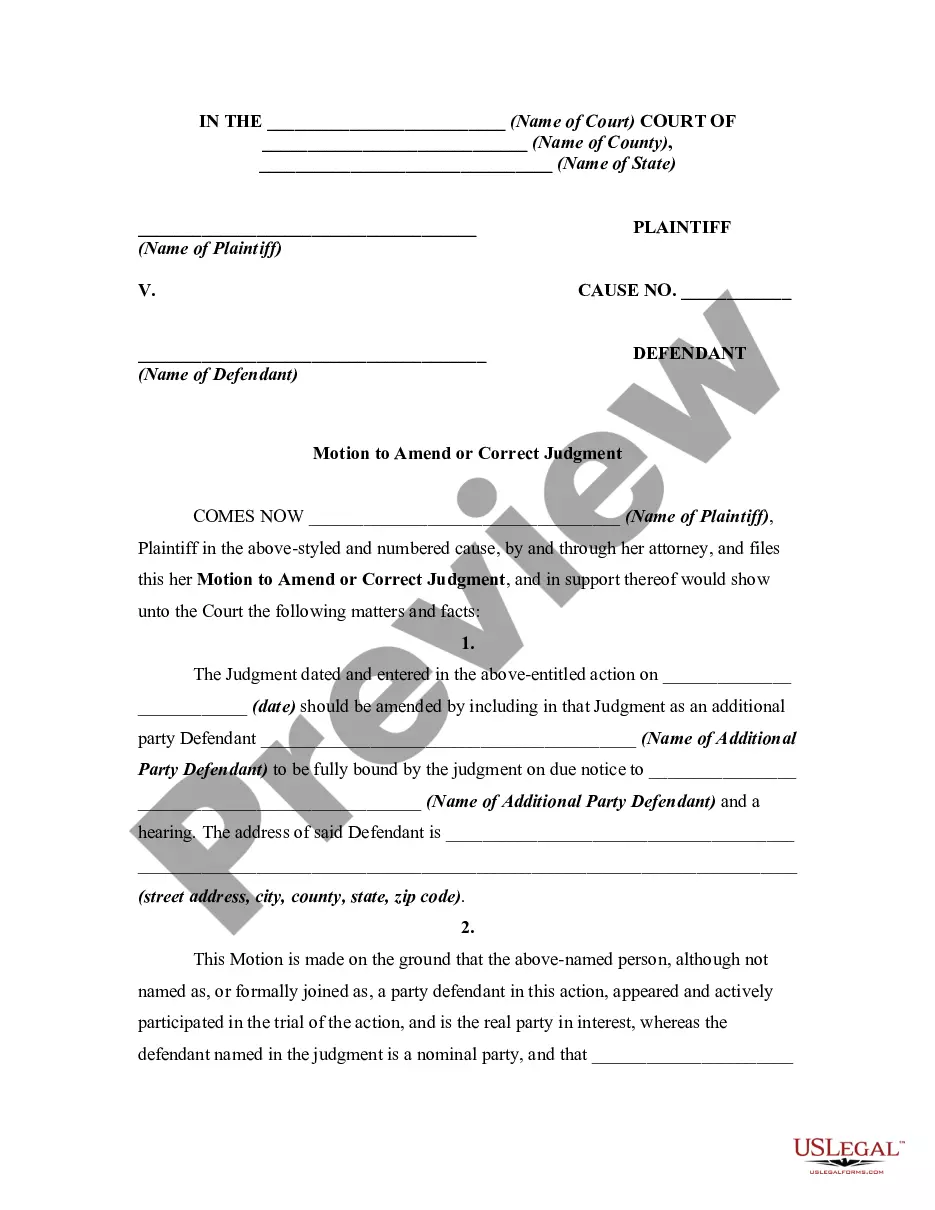
What is this form?
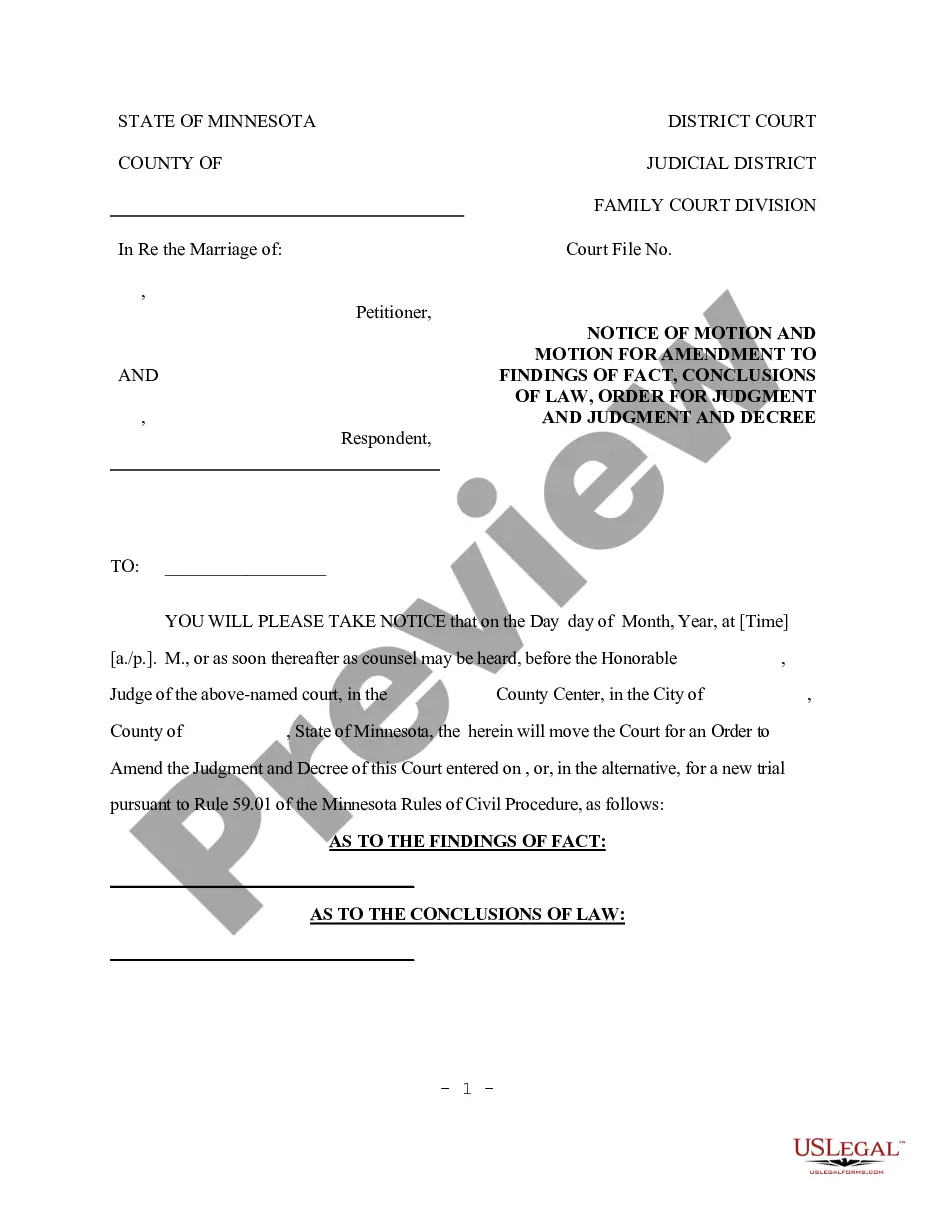
The Notice of Motion To Amend Judgment is a legal document used to request a change to a court's findings, conclusions, or judgments. This form allows a party to formally ask the court to modify its earlier decision or, alternatively, to grant a new trial under specific rules. It is essential for parties seeking to correct errors or misinterpretations in previous judgments.
Key parts of this document
- Notice informing the court of the motion and the scheduled hearing date.
- Request to amend Findings of Fact with space for new language and comments.
- Request to amend Conclusions of Law with appropriate wording and explanations.
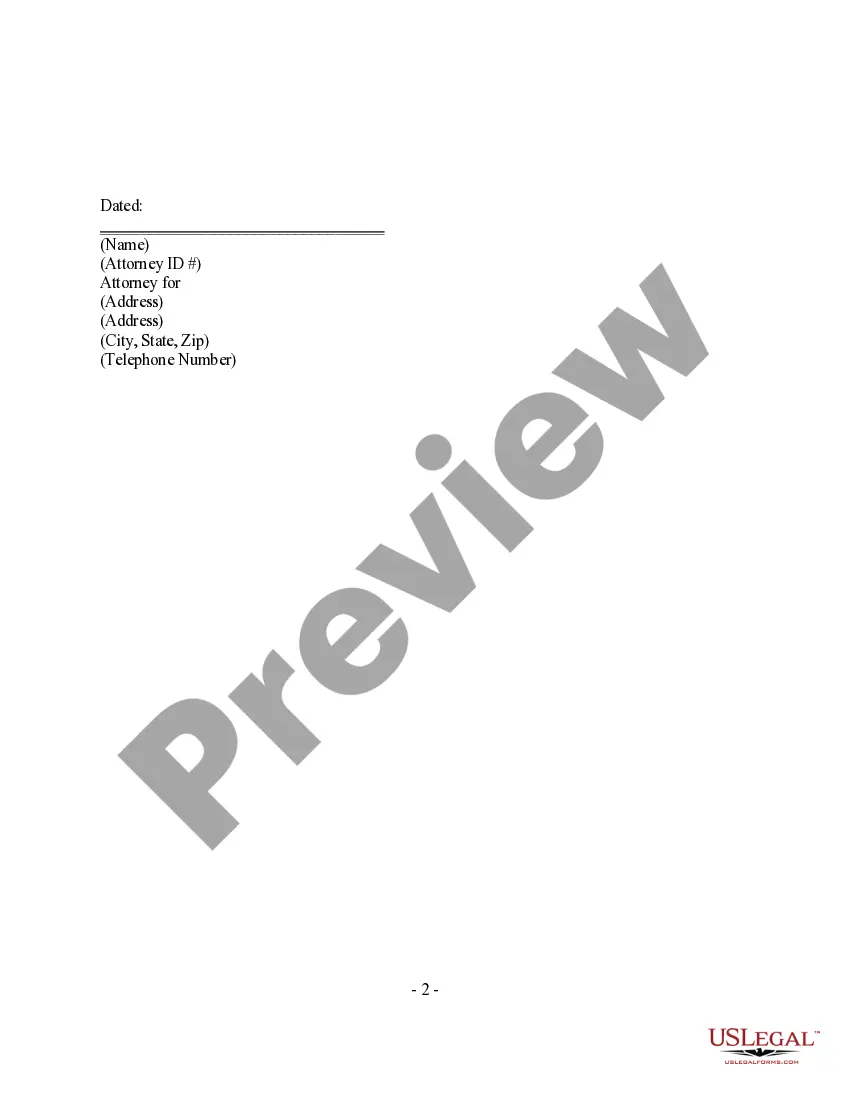
- Identifying information for the attorney representing the moving party, including name, address, and contact details.
- Signature fields for the attorney and date of filing.
When this form is needed
This form is typically used following a court ruling when a party believes that the court made an error in its findings of fact or conclusions of law. If a party finds that specific aspects of the judgment require correction or amendment, or if new evidence has surfaced that warrants a reconsideration of the case, they should use this form. It can also be applied if the party seeks a new trial based on the grounds specified in the relevant rules of civil procedure.
Who needs this form
- Individuals or parties who have received a judgment in a legal matter and believe it contains errors.
- Attorneys representing clients who wish to amend a court's findings or seek a new trial.
- Litigants looking to challenge specific conclusions made by a court in their case.
Instructions for completing this form
- Provide the date and time of the motion hearing.
- Enter the court's name and the location of the hearing.
- State the specific findings or conclusions you wish to amend, along with your reasons for the changes.
- Fill in your contact information as the attorney for the moving party.
- Sign and date the form to finalize your request.
Does this form need to be notarized?
This form does not typically require notarization to be legally valid. However, some jurisdictions or document types may still require it. US Legal Forms provides secure online notarization powered by Notarize, available 24/7 for added convenience.
Get your form ready online
Our built-in tools help you complete, sign, share, and store your documents in one place.
Make edits, fill in missing information, and update formatting in US Legal Forms—just like you would in MS Word.
Download a copy, print it, send it by email, or mail it via USPS—whatever works best for your next step.
Sign and collect signatures with our SignNow integration. Send to multiple recipients, set reminders, and more. Go Premium to unlock E-Sign.
If this form requires notarization, complete it online through a secure video call—no need to meet a notary in person or wait for an appointment.
We protect your documents and personal data by following strict security and privacy standards.

Make edits, fill in missing information, and update formatting in US Legal Forms—just like you would in MS Word.

Download a copy, print it, send it by email, or mail it via USPS—whatever works best for your next step.

Sign and collect signatures with our SignNow integration. Send to multiple recipients, set reminders, and more. Go Premium to unlock E-Sign.

If this form requires notarization, complete it online through a secure video call—no need to meet a notary in person or wait for an appointment.

We protect your documents and personal data by following strict security and privacy standards.
Typical mistakes to avoid
- Failing to provide a clear explanation for the requested amendments.
- Not including the correct date and details of the court hearing.
- Neglecting to sign the form before submission.
Why complete this form online
- Convenient access to the form for downloading and completing at your convenience.
- Edit the form directly on your device before printing.
- Ensures you have the latest version of the form, drafted by licensed attorneys.
Key takeaways
- The Notice of Motion To Amend Judgment is essential for correcting court errors.
- Provide clear reasons for any requested changes in findings or conclusions.
- Ensure all parties are notified of the hearing for your motion.
Looking for another form?
Form popularity
FAQ
A motion to amend judgment is a legal request to change or modify a court's previous decision. This motion is essential for correcting errors or addressing new evidence that may affect the judgment. If you need to file a Minnesota Notice of Motion To Amend Judgment, it is crucial to understand the specific grounds on which you can base your request. Utilizing resources like USLegalForms can simplify the process and provide the necessary forms to ensure your motion is correctly filed.
Rule 55.01 in Minnesota governs default judgments in civil cases. It establishes the conditions under which a party may file for a default judgment, including the need to provide notice to the other party. If you are considering a Minnesota Notice of Motion To Amend Judgment, knowing this rule can help clarify your options for challenging a default decision. Proper application of this rule can significantly impact the outcome of your case.
Rule 77.04 in Minnesota relates to the procedures for filing motions and orders in civil cases. Specifically, it outlines how a party can bring a Minnesota Notice of Motion To Amend Judgment before the court. This rule ensures that all parties receive proper notification and that the court processes motions efficiently. Understanding this rule is essential for anyone looking to amend a judgment.
Amend. v. to alter or change by adding, subtracting, or substituting. One can amend a statute, a contract or a written pleading filed in a law -suit. The change is usually called an amendment.
Amending a Charge means the user Adds an Amended Charge which supersedes the original Charge. Amending Charges are most often done when a Prosecutor files documentation of a change in the Original Charge. Amending a Charge correctly will show the progression and historical documentation/reason for the change.
Yes, a judge can change his mind before he signs fhe Judgment of Conviction.
An amended judgment refers to a trial court correcting a substantive error in an original judgment. Usually a judgment is amended to correct a manifest error of law or fact. Such amendments are made to clear any misconceptions in the original judgment.
The court shall grant summary judgment if the movant shows that there is no genuine dispute as to any material fact and the movant is entitled to judgment as a matter of law. The court should state on the record the reasons for granting or denying the motion. (b) Time to File a Motion.
The State website is: www.mncourts.gov . Click on For Court Users and then Court Forms. This form must be presented to the Court Administrator's office along with the Stipulation to Amend the Judgment and Decree and the Order to Amend the Judgment and Decree.
2090 of 1985 praying...at all any amendment is to be made, it can be done only by filing application to amend the decree and not by filing execution application.