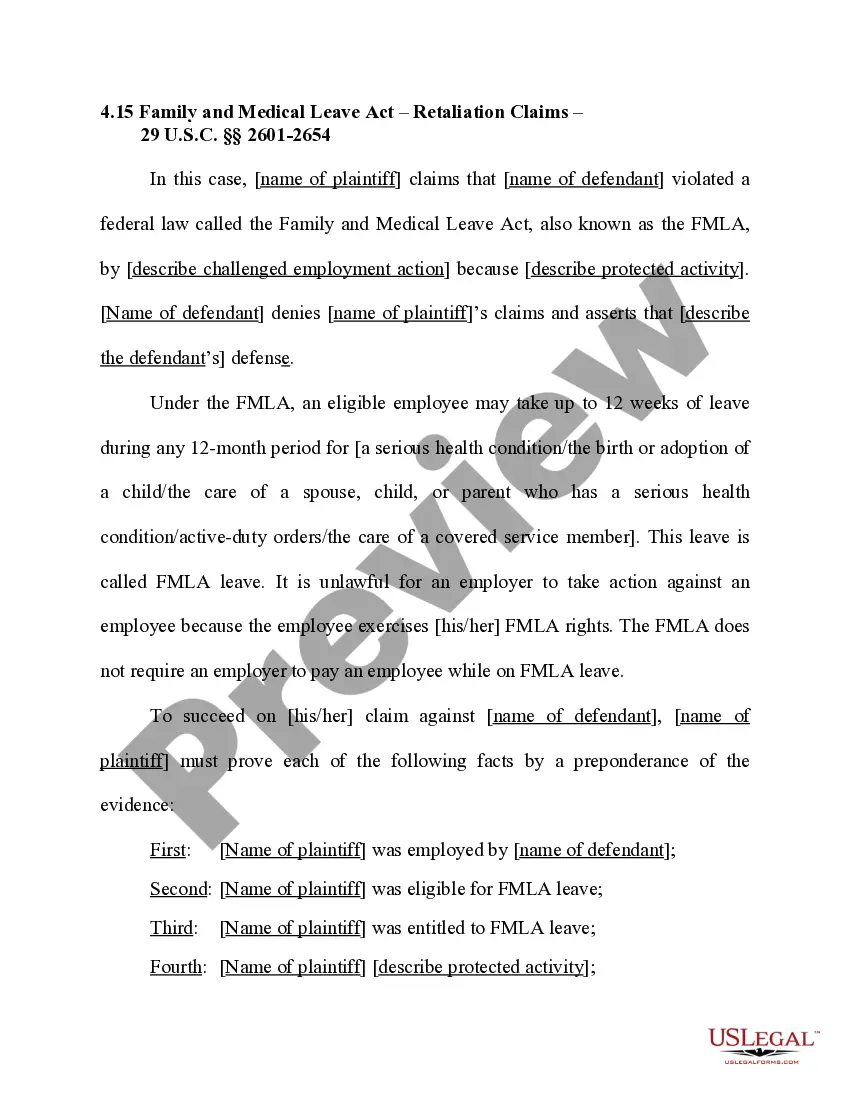
Minnesota Joint Disposition Conference Report regarding Dissolution
What is this form?
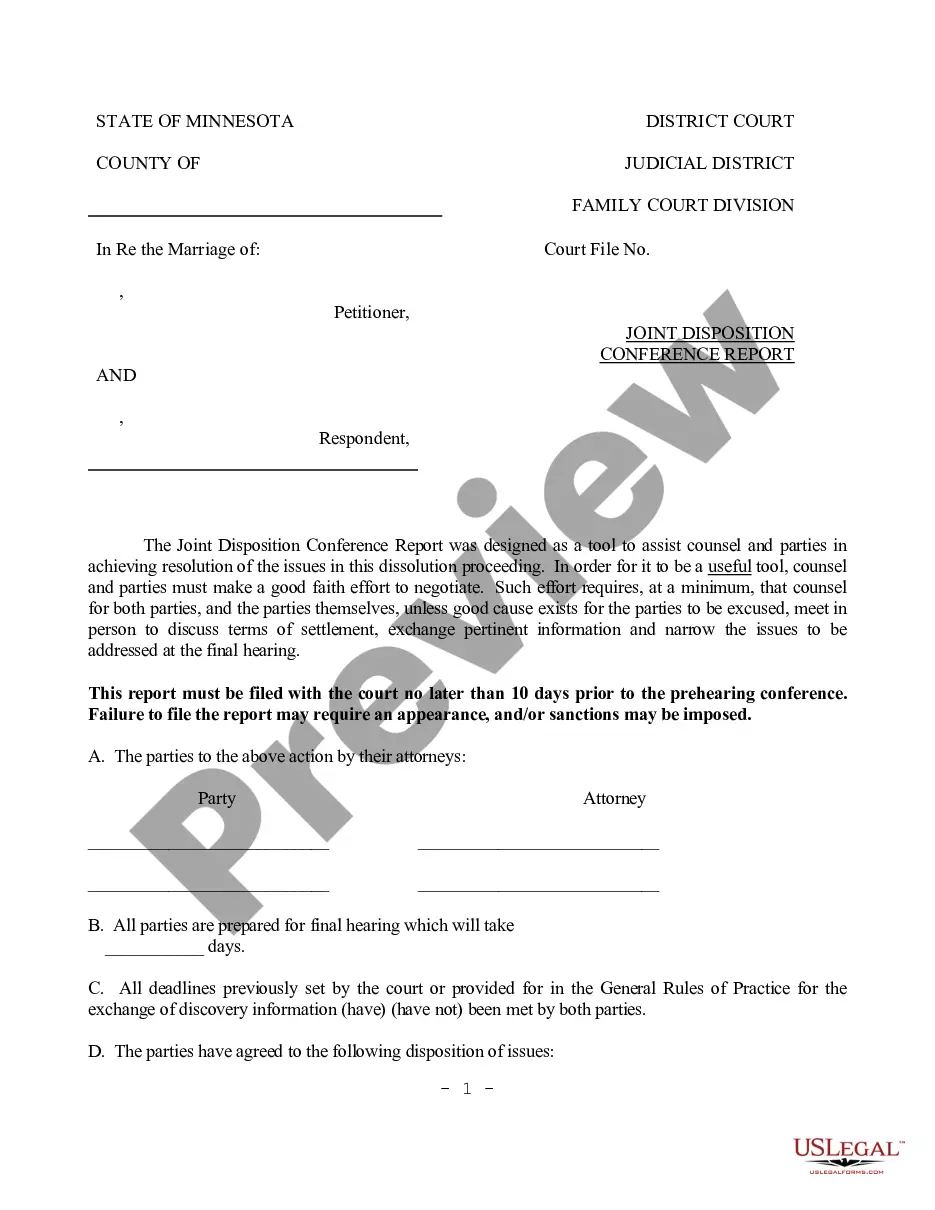
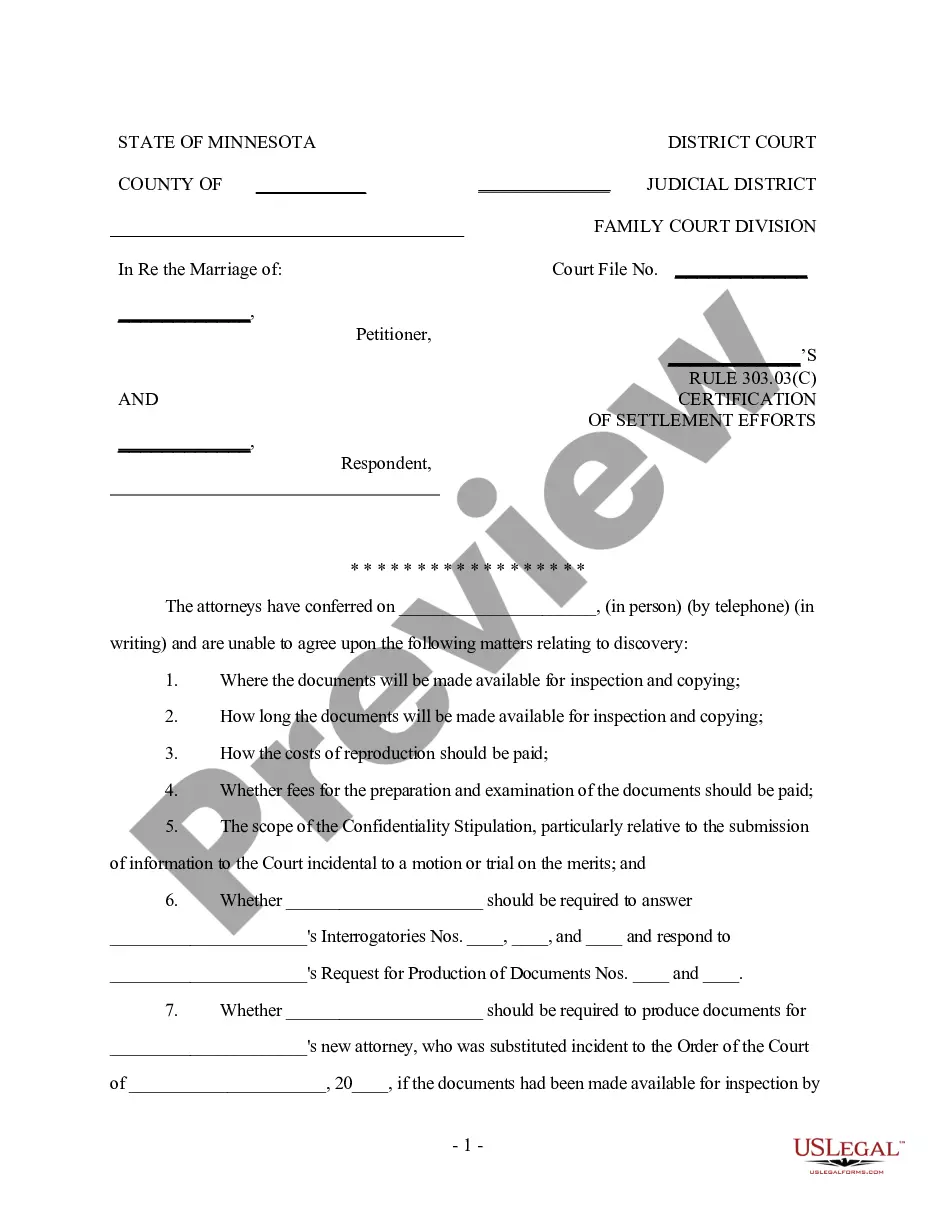
The Joint Disposition Conference Report regarding Dissolution is a legal template designed for use in generating a report for filing with the court following a joint disposition conference in a dissolution proceeding. This form facilitates communication between parties, ensuring they make a good faith effort to resolve issues before final hearings. Its primary role is to summarize negotiations and anticipated testimony, differentiating it from other legal reports by focusing specifically on the outcomes of negotiations related to dissolution cases.
Key parts of this document
- Parties involved: Identification of the parties and their attorneys.
- Preparedness for final hearing: Statement regarding the number of days anticipated for the hearing.
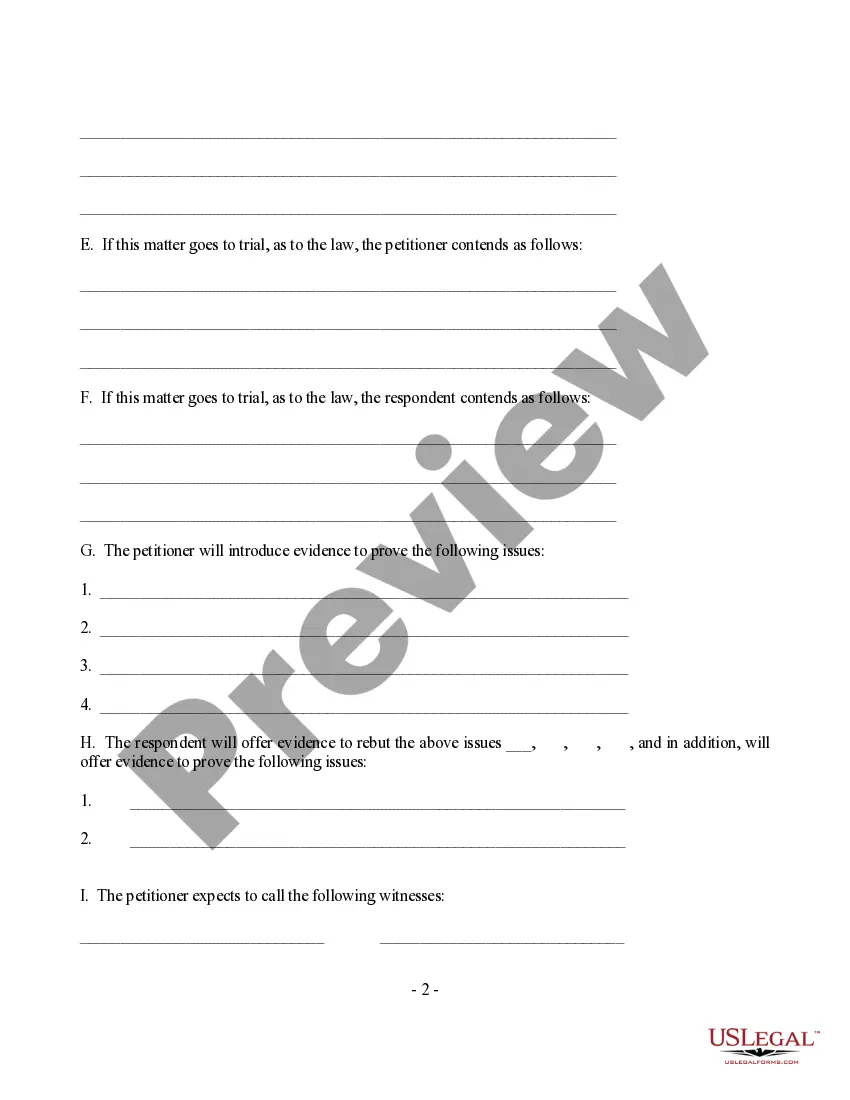
- Agreement on issues: Sections for detailing agreed and disputed issues.
- Evidence presentation: Fields for outlining evidence each party plans to present.
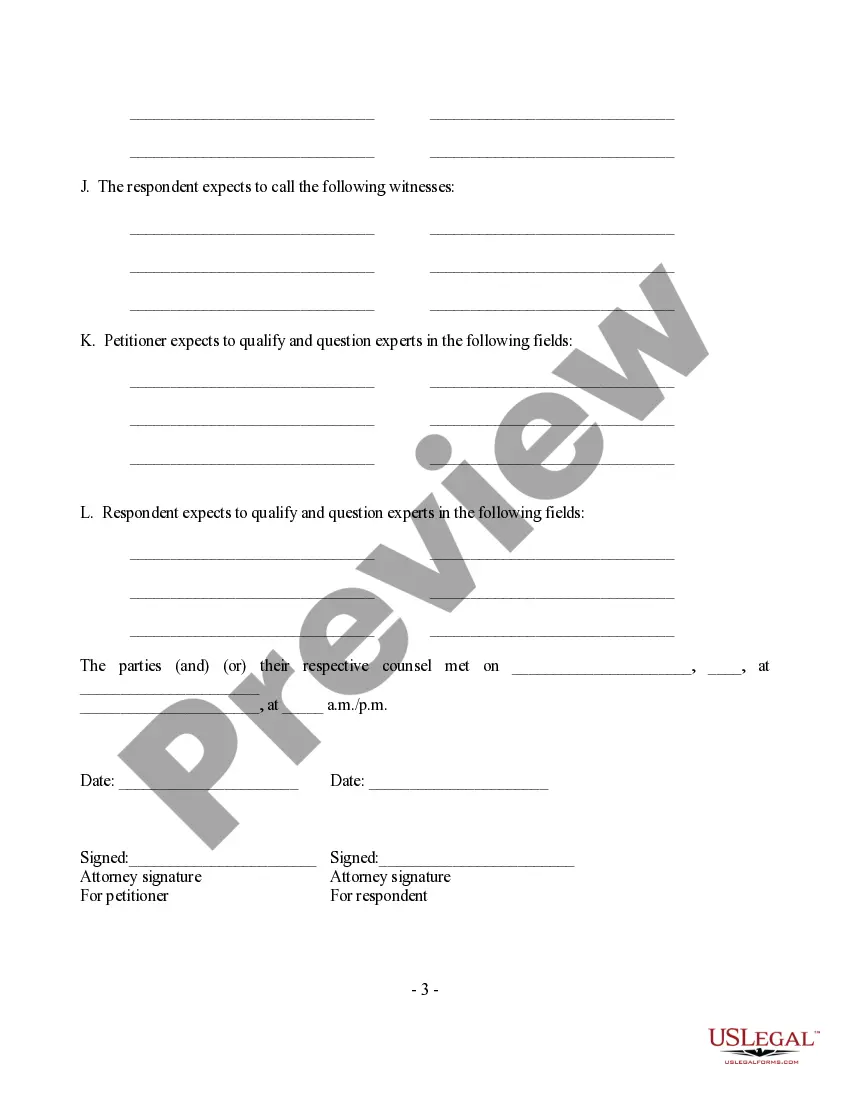
- Witness information: Documenting witnesses expected to be called by each party.
- Expert testimony: Sections for indicating expert qualifications and fields relevant to the case.
When to use this document
This form should be utilized in any dissolution proceeding where a joint disposition conference is held. It is particularly relevant when parties seek to narrow down issues, exchange information, or negotiate terms before a final hearing. Legal representatives should file this report with the court at least ten days before the prehearing conference to ensure compliance with court deadlines.
Who can use this document
- Attorneys representing either party in a dissolution proceeding.
- Parties involved in a dissolution case who have reached a point of negotiation.
- Individuals or legal representatives needing to summarize negotiations for court submission.
How to prepare this document
- Identify the parties and their attorneys by filling in the necessary names.
- Indicate the expected duration of the final hearing.
- Complete the sections regarding agreed and disputed issues to represent both parties' positions clearly.
- Detail the evidence and witnesses each party plans to present at the hearing.
- Ensure all necessary signatures are obtained from representing attorneys prior to submission.
Does this document require notarization?
This form usually doesn’t need to be notarized. However, local laws or specific transactions may require it. Our online notarization service, powered by Notarize, lets you complete it remotely through a secure video session, available 24/7.
Get your form ready online
Our built-in tools help you complete, sign, share, and store your documents in one place.
Make edits, fill in missing information, and update formatting in US Legal Forms—just like you would in MS Word.
Download a copy, print it, send it by email, or mail it via USPS—whatever works best for your next step.
Sign and collect signatures with our SignNow integration. Send to multiple recipients, set reminders, and more. Go Premium to unlock E-Sign.
If this form requires notarization, complete it online through a secure video call—no need to meet a notary in person or wait for an appointment.
We protect your documents and personal data by following strict security and privacy standards.

Make edits, fill in missing information, and update formatting in US Legal Forms—just like you would in MS Word.

Download a copy, print it, send it by email, or mail it via USPS—whatever works best for your next step.

Sign and collect signatures with our SignNow integration. Send to multiple recipients, set reminders, and more. Go Premium to unlock E-Sign.

If this form requires notarization, complete it online through a secure video call—no need to meet a notary in person or wait for an appointment.

We protect your documents and personal data by following strict security and privacy standards.
Mistakes to watch out for
- Failing to file the report on time, as required by court rules.
- Not having all parties present for negotiations, leading to incomplete agreements.
- Neglecting to specify evidence and witnesses, which can weaken a party's position.
Why use this form online
- Convenience of accessing a ready-to-use template that can be easily filled out.
- Editability allows users to customize the report to fit their specific circumstances.
- Reliability of receiving a document drafted in accordance with legal standards.
Key takeaways
- The Joint Disposition Conference Report is essential for summarizing negotiations in a dissolution case.
- Timely filing is crucial to avoid court sanctions.
- Both parties must actively participate and agree to issues to ensure an effective resolution process.
Looking for another form?
Form popularity
FAQ
In Minnesota, many court records are available online, but not all of them. You can access certain documents through the Minnesota Judicial Branch website, including the Minnesota Joint Disposition Conference Report regarding Dissolution. However, for some records, you may need to visit the courthouse in person or request them through official channels. Using platforms like USLegalForms can help you navigate these processes easily and efficiently.
To obtain a copy of a divorce decree in Minnesota, you can start by contacting the court that issued the decree. You may need to provide details such as the case number, the names of the parties involved, and the date of the divorce. Additionally, using services like USLegalForms can streamline the process by offering access to necessary forms and guidance related to the Minnesota Joint Disposition Conference Report regarding Dissolution. This can save you time and ensure you have the correct information.
Rule 521 of the Minnesota General Rules of Practice addresses the process and requirements for legal representation in certain cases. This rule emphasizes the importance of proper legal procedures to ensure fair treatment in court. Understanding this rule can be crucial for anyone navigating the legal system, especially in matters of dissolution. For comprehensive insights, the Minnesota Joint Disposition Conference Report regarding Dissolution is a valuable resource.
Yes, Minnesota does allow a partner to dissociate from a partnership without necessarily dissolving the entire partnership. This can happen under certain conditions outlined in the Minnesota Uniform Partnership Act. It’s important to follow the proper procedures to ensure that the rights and obligations of the remaining partners are upheld. For additional details, you can refer to the Minnesota Joint Disposition Conference Report regarding Dissolution.
The 55.01 rule in Minnesota pertains to the rules of civil procedure, specifically regarding the service of pleadings and other documents. It ensures that parties involved in a case receive proper notification and access to all relevant documents. Understanding this rule can significantly impact legal proceedings, especially in cases of dissolution. The Minnesota Joint Disposition Conference Report regarding Dissolution may provide further clarification on this rule.
A summary Dissolution of Marriage in Minnesota provides a simplified process for couples who meet specific criteria, such as having no children and limited marital assets. This option allows for a quicker and less costly divorce process. Both parties must agree to the terms, and it requires filing certain forms with the court. The Minnesota Joint Disposition Conference Report regarding Dissolution offers insights into this streamlined process.
In Minnesota, you can refuse jury duty under certain circumstances, such as financial hardships or personal emergencies. However, you need to provide valid reasons and may need to submit documentation to the court for approval. Ignoring a jury summons can lead to penalties, so it’s best to address your concerns with the court directly. For more information, consult the Minnesota Joint Disposition Conference Report regarding Dissolution.
To dissolve your Minnesota LLC, start by holding a meeting with the members to discuss and agree on the decision to dissolve. Next, you must file the Articles of Dissolution with the Minnesota Secretary of State. Additionally, ensure you settle any outstanding debts and obligations of the LLC before finalizing the dissolution. You can refer to the Minnesota Joint Disposition Conference Report regarding Dissolution for detailed guidance.
Choosing between a dissolution and a divorce depends on your unique circumstances. A dissolution is often simpler and less contentious, which can lead to a quicker resolution. However, if there are complex issues such as custody or significant assets, a divorce may be more appropriate. Utilizing the Minnesota Joint Disposition Conference Report regarding Dissolution can help you understand the best path forward based on your situation.
A summary dissolution in Minnesota is a simplified divorce process for couples who meet specific criteria. This option is available for parties without children, certain financial assets, and a marriage duration of less than eight years. It can expedite the process significantly, allowing for a smoother transition. If you need assistance navigating this option, consider using the Minnesota Joint Disposition Conference Report regarding Dissolution to ensure all necessary steps are covered.