Minnesota Certification of Prehearing Settlement Efforts regarding Discovery Dispute
Overview of this form
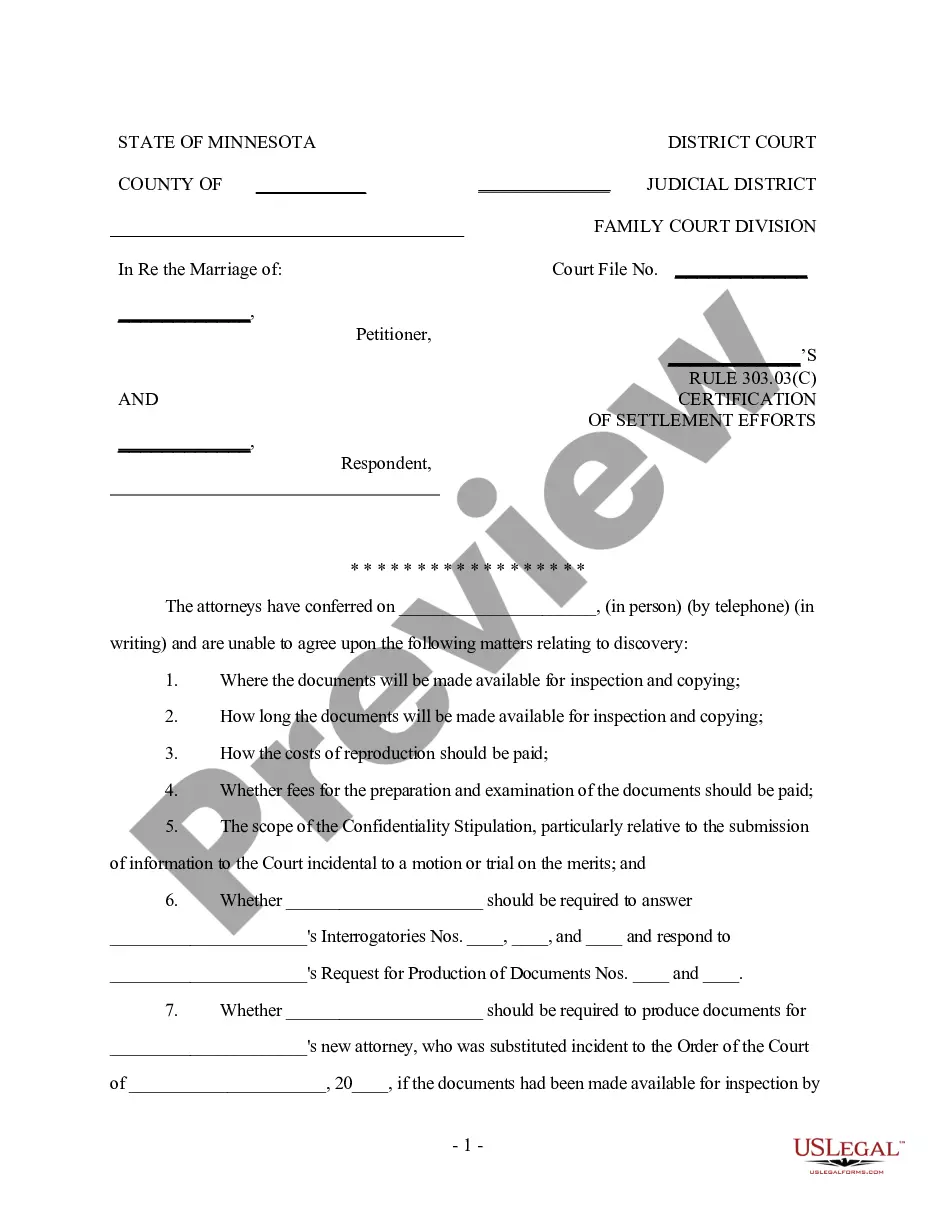
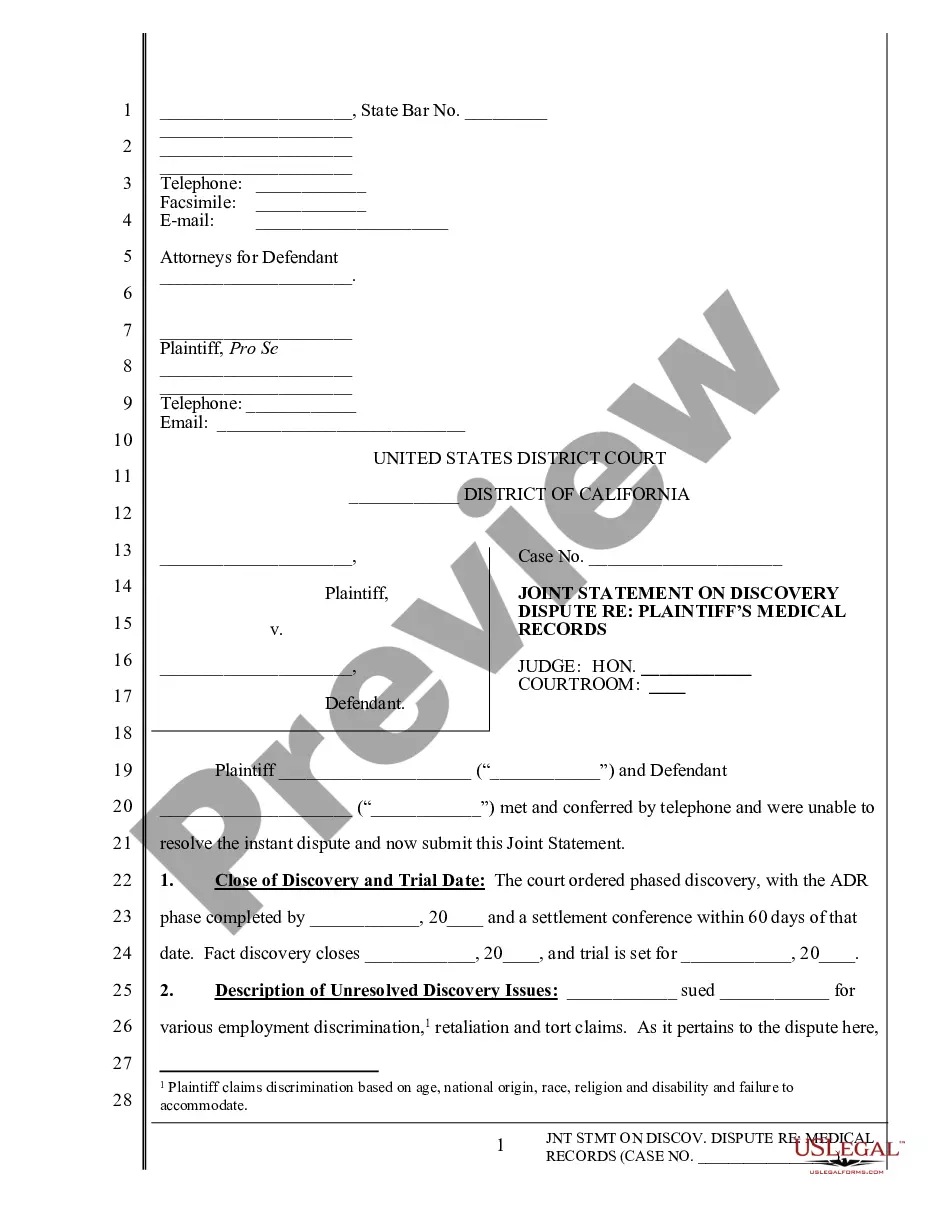
The Certification of Prehearing Settlement Efforts regarding Discovery Dispute is a legal document used by attorneys to formalize discussions and attempts at resolving discovery-related disputes before a hearing. This form certifies that the attorneys have met and conferred on specific discovery issues but were unable to reach an agreement. It helps facilitate clear communication on unresolved matters, ensuring that all parties are aware of the issues at hand and promoting the resolution process.
What’s included in this form
- Date of attorney conference
- Method of communication (in person, by telephone, or in writing)
- Details of unresolved discovery matters
- Terms for document inspection and copying
- Responsibilities for reproduction costs
- Scope of any confidentiality stipulations
- Response requirements for interrogatories and requests for production
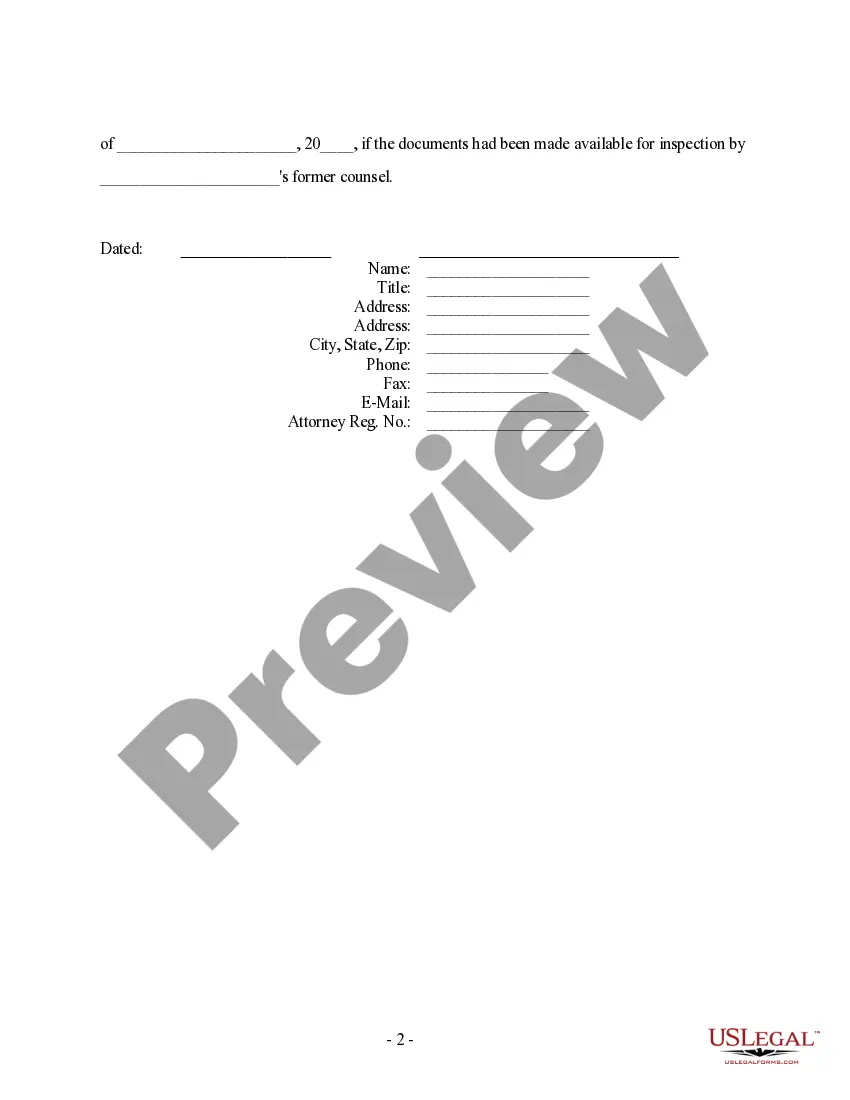
- Contact information of the attorneys involved
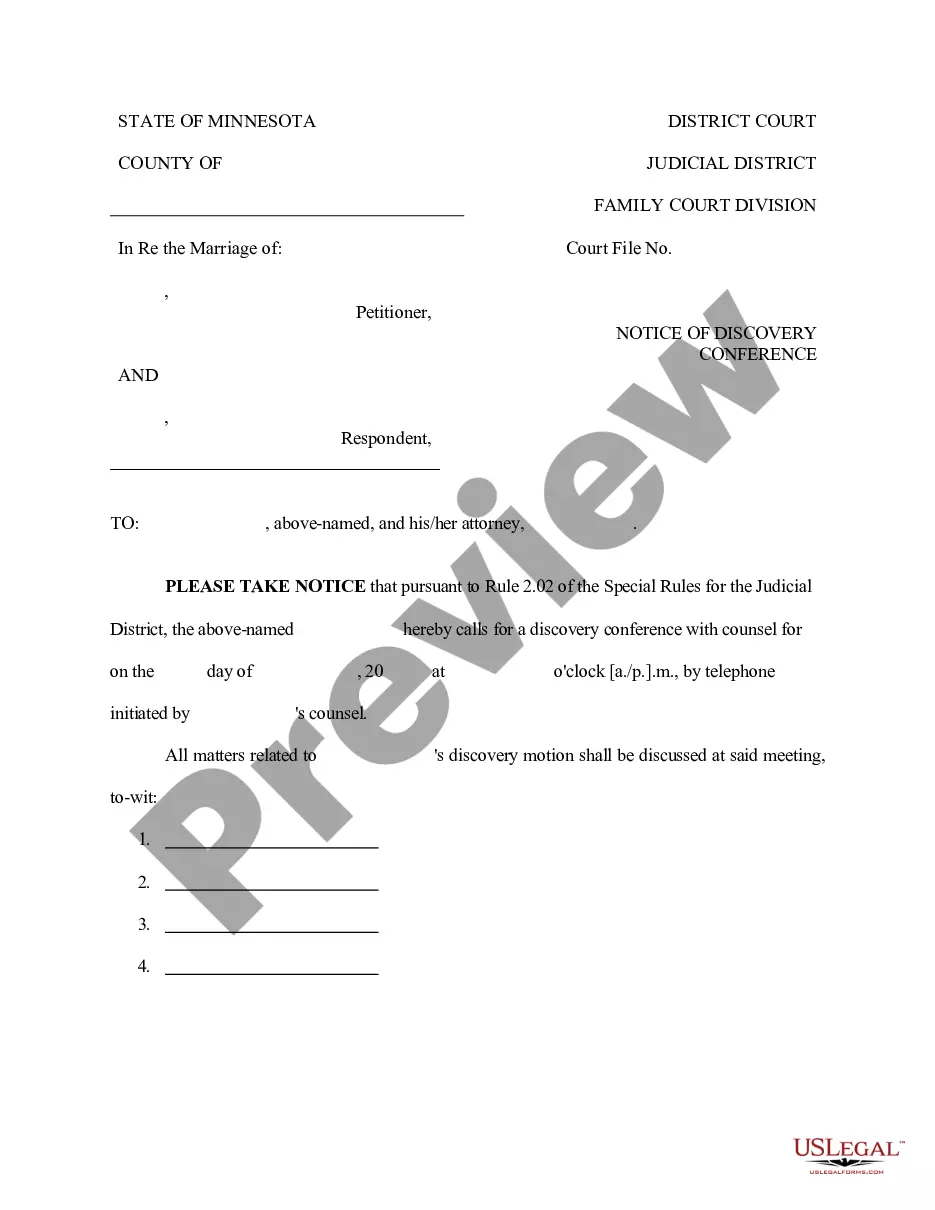
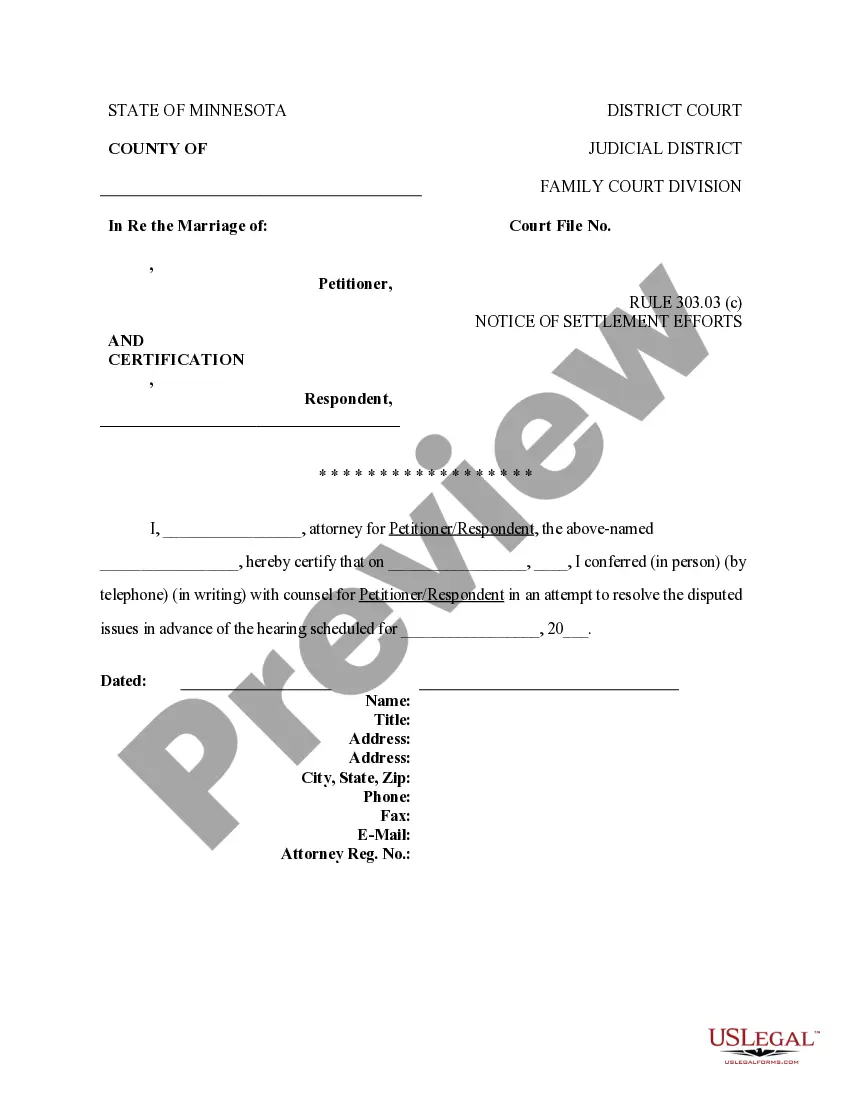
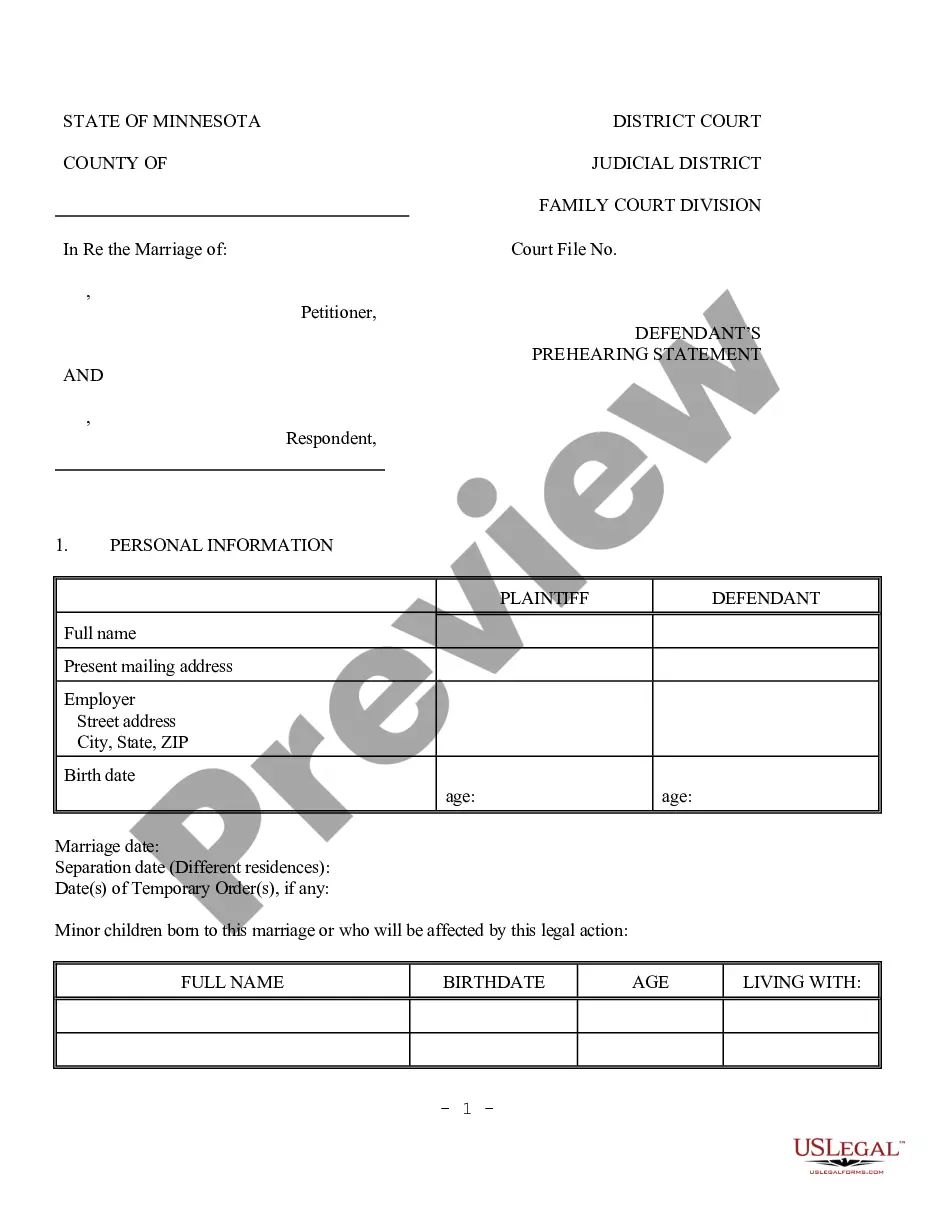
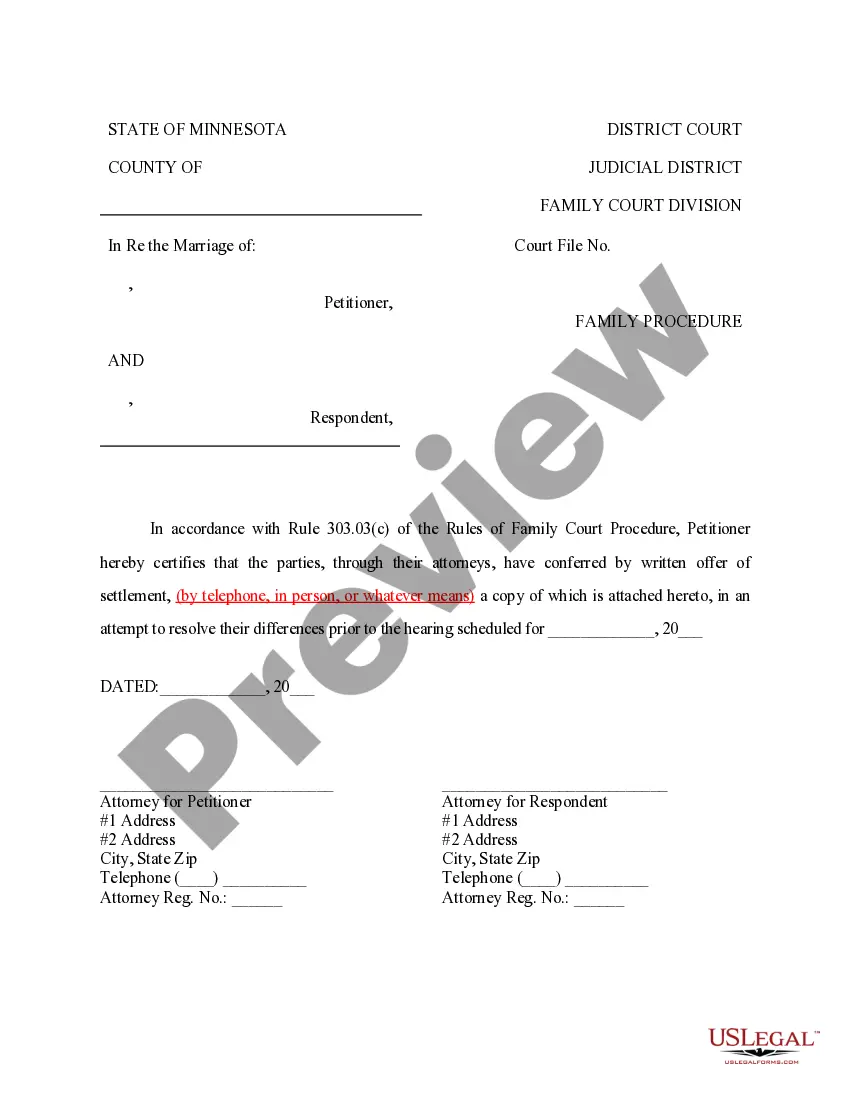
Situations where this form applies
This form should be used when attorneys have engaged in discussions regarding discovery disputes and have failed to come to an agreement on specific matters. It is particularly relevant in situations where there are disagreements about the inspection of documents, payment for reproduction, or responses to discovery requests. Utilizing this form can help document these efforts and may be required by the court before a hearing on discovery issues occurs.
Who this form is for
- Attorneys representing clients in a legal matter involving discovery disputes
- Law firms seeking to formalize settlement efforts before a court hearing
- Parties involved in litigation requiring clarity on unresolved discovery issues
Instructions for completing this form
- Enter the date when the attorneys conferred.
- Indicate the method of communication used for the conference.
- List each unresolved issue related to discovery in the designated sections.
- Provide details on the arrangement for document inspection, copying, and costs.
- Include contact information for all attorneys involved.
- Sign and date the form as required.
Is notarization required?
Notarization is not commonly needed for this form. However, certain documents or local rules may make it necessary. Our notarization service, powered by Notarize, allows you to finalize it securely online anytime, day or night.
Get your form ready online
Our built-in tools help you complete, sign, share, and store your documents in one place.
Make edits, fill in missing information, and update formatting in US Legal Forms—just like you would in MS Word.
Download a copy, print it, send it by email, or mail it via USPS—whatever works best for your next step.
Sign and collect signatures with our SignNow integration. Send to multiple recipients, set reminders, and more. Go Premium to unlock E-Sign.
If this form requires notarization, complete it online through a secure video call—no need to meet a notary in person or wait for an appointment.
We protect your documents and personal data by following strict security and privacy standards.

Make edits, fill in missing information, and update formatting in US Legal Forms—just like you would in MS Word.

Download a copy, print it, send it by email, or mail it via USPS—whatever works best for your next step.

Sign and collect signatures with our SignNow integration. Send to multiple recipients, set reminders, and more. Go Premium to unlock E-Sign.

If this form requires notarization, complete it online through a secure video call—no need to meet a notary in person or wait for an appointment.

We protect your documents and personal data by following strict security and privacy standards.
Common mistakes
- Failing to list all unresolved matters clearly.
- Not including the date of the attorney conference.
- Omitting the method of communication used during the discussions.
- Incorrectly filling in contact information for attorneys.
Why use this form online
- Immediate access to a correctly formatted legal document.
- Ability to fill out and edit the document before downloading.
- Convenience of downloading from anywhere, at any time.
- Designed by licensed attorneys to ensure compliance with legal standards.
Looking for another form?


Form popularity
FAQ
The Rule 33 in Minnesota Rules of Civil Procedure pertains to the use of interrogatories as a tool for discovery during litigation. This rule is designed to facilitate the exchange of information and streamline the legal process. By engaging with Rule 33, parties can significantly benefit from the Minnesota Certification of Prehearing Settlement Efforts regarding Discovery Dispute, enhancing their chances for a favorable resolution.
Rule 33 of Civil Procedure generally governs the discovery process in civil litigation, specifically focusing on written interrogatories. It allows parties to seek information necessary for their case and ensures transparency between disputing parties. By adhering to Rule 33, individuals can effectively participate in the Minnesota Certification of Prehearing Settlement Efforts regarding Discovery Dispute, ultimately leading to more amicable settlements.
Rule 114 of the Minnesota General Rules of Practice addresses alternative dispute resolution methods, such as mediation and arbitration. This rule encourages parties to explore these options to resolve disputes without resorting to trial. Utilizing the Minnesota Certification of Prehearing Settlement Efforts regarding Discovery Dispute can complement this rule by promoting earlier resolutions through settlement discussions.
Common examples of Rule 33 include interrogatories, which are written questions one party sends to another to gather essential information. Rule 33 also allows parties to request admissions of facts, helping to clarify issues before trial. Engaging in these practices aligns with the Minnesota Certification of Prehearing Settlement Efforts regarding Discovery Dispute, fostering a more efficient resolution process.
Order 33 of the Civil Procedure Code outlines the procedures for dealing with prehearing settlement efforts in civil disputes. It emphasizes the importance of parties attempting to resolve their issues before formal litigation. This is particularly relevant in the context of the Minnesota Certification of Prehearing Settlement Efforts regarding Discovery Dispute, which encourages cooperation and communication between parties.
Rule 69 execution refers to the process of enforcing a court judgment in Minnesota. This involves various legal steps to ensure that a judgment is satisfied, such as seizing assets or garnishing wages. Understanding how to navigate this process is vital for those dealing with legal disputes, especially when obtaining a Minnesota Certification of Prehearing Settlement Efforts regarding Discovery Dispute. US Legal Forms can provide the necessary tools to help you through this execution process.
Rule 77.04 in Minnesota deals with the requirements for settling cases and entering judgments in the court. It emphasizes the importance of proper documentation and procedures during the settlement phase. This rule is particularly relevant when seeking a Minnesota Certification of Prehearing Settlement Efforts regarding Discovery Dispute. US Legal Forms offers a variety of forms and information to assist you in complying with these requirements.
The rule of civil procedure 69 in Minnesota outlines the mechanisms for enforcing court judgments. It details how a creditor can collect on a judgment after it has been granted. Knowing this rule can empower you to take appropriate actions in your case, particularly when pursuing a Minnesota Certification of Prehearing Settlement Efforts regarding Discovery Dispute. Resources from US Legal Forms can simplify this process.
Rule 69 in Minnesota specifically addresses the execution process for judgments. This rule allows a party to enforce a judgment through various means, including wage garnishments or property seizures. Understanding Rule 69 is essential for anyone involved in a legal dispute, especially when considering the Minnesota Certification of Prehearing Settlement Efforts regarding Discovery Dispute. US Legal Forms can offer guidance in navigating these procedures.
Rule 68 in Minnesota pertains to offers of judgment. This rule allows a party to make a formal offer to settle a case, which can influence the final judgment and costs. Familiarity with Rule 68 can enhance your approach to resolving disputes, including obtaining a Minnesota Certification of Prehearing Settlement Efforts regarding Discovery Dispute. US Legal Forms provides templates to assist you in making these offers effectively.