Joint Statement on Discovery Dispute
Overview of this form
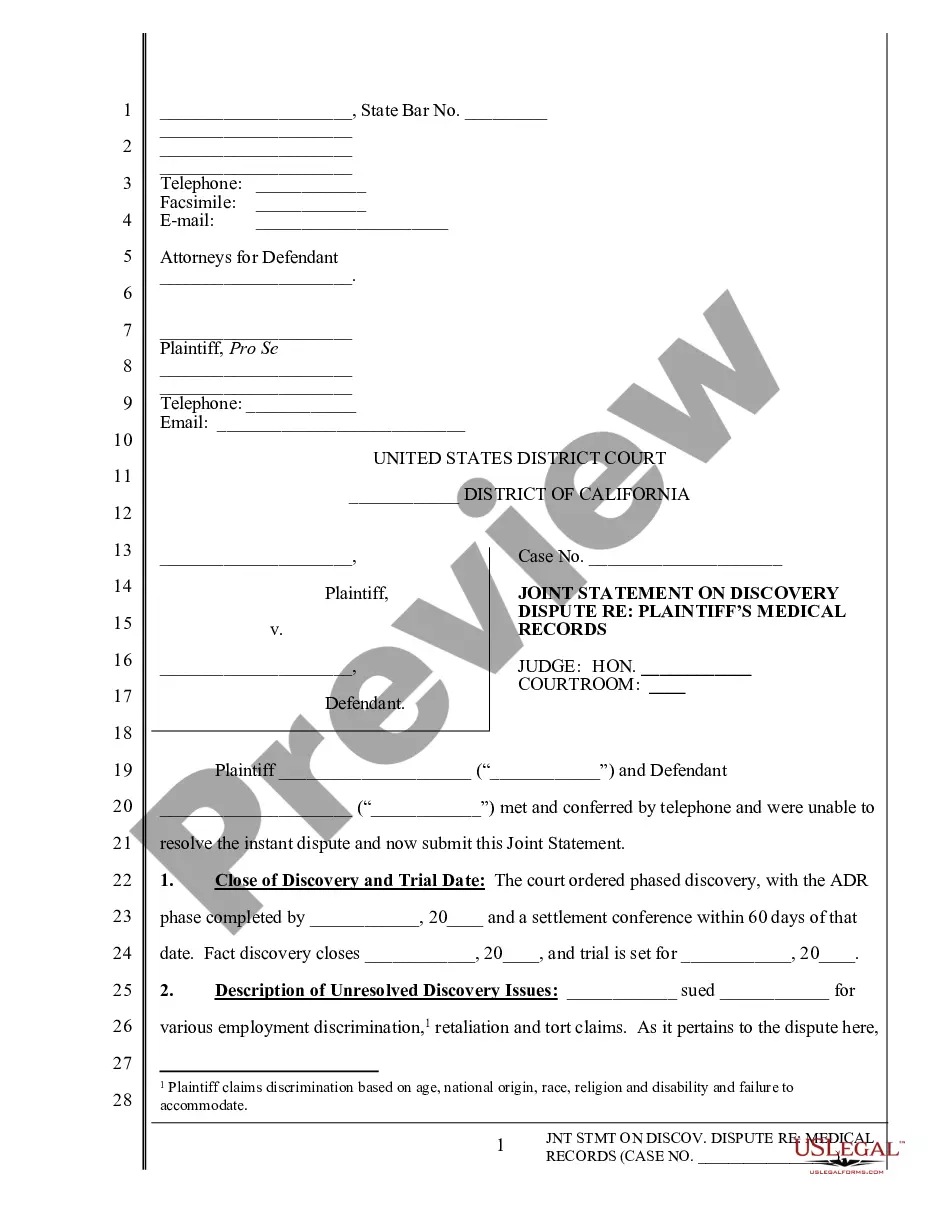
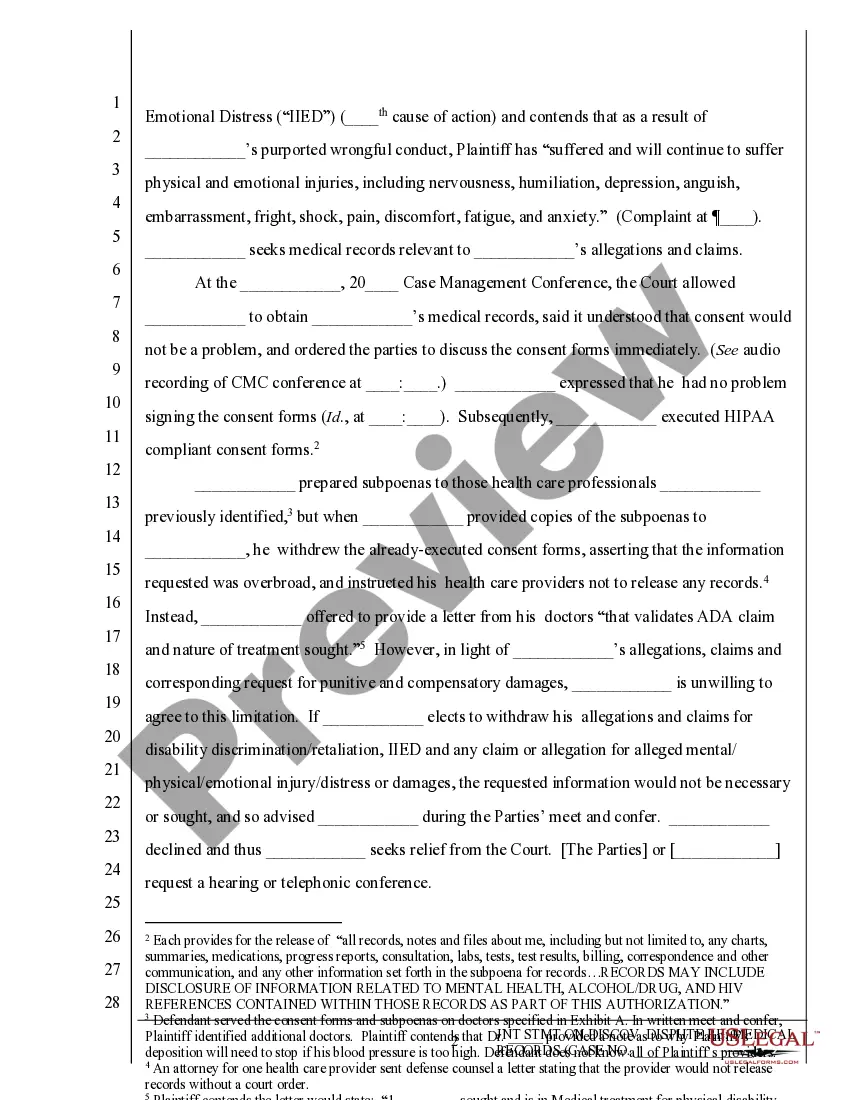
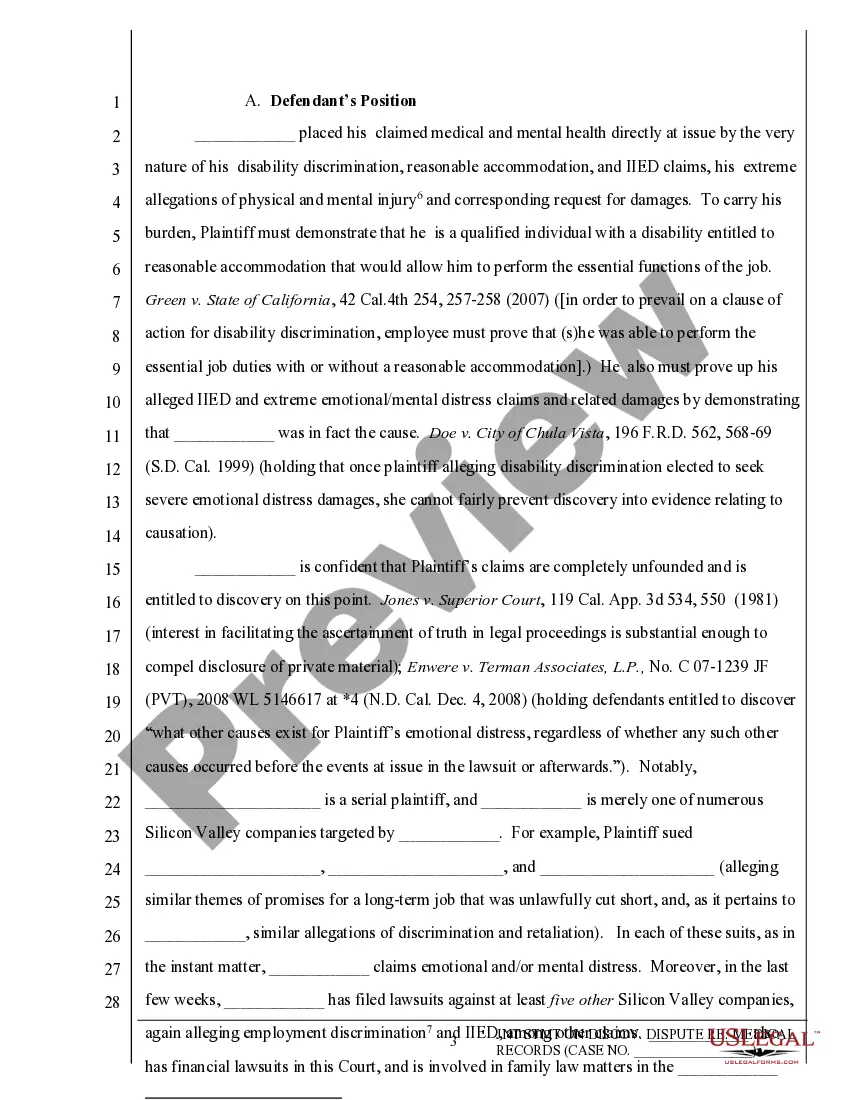
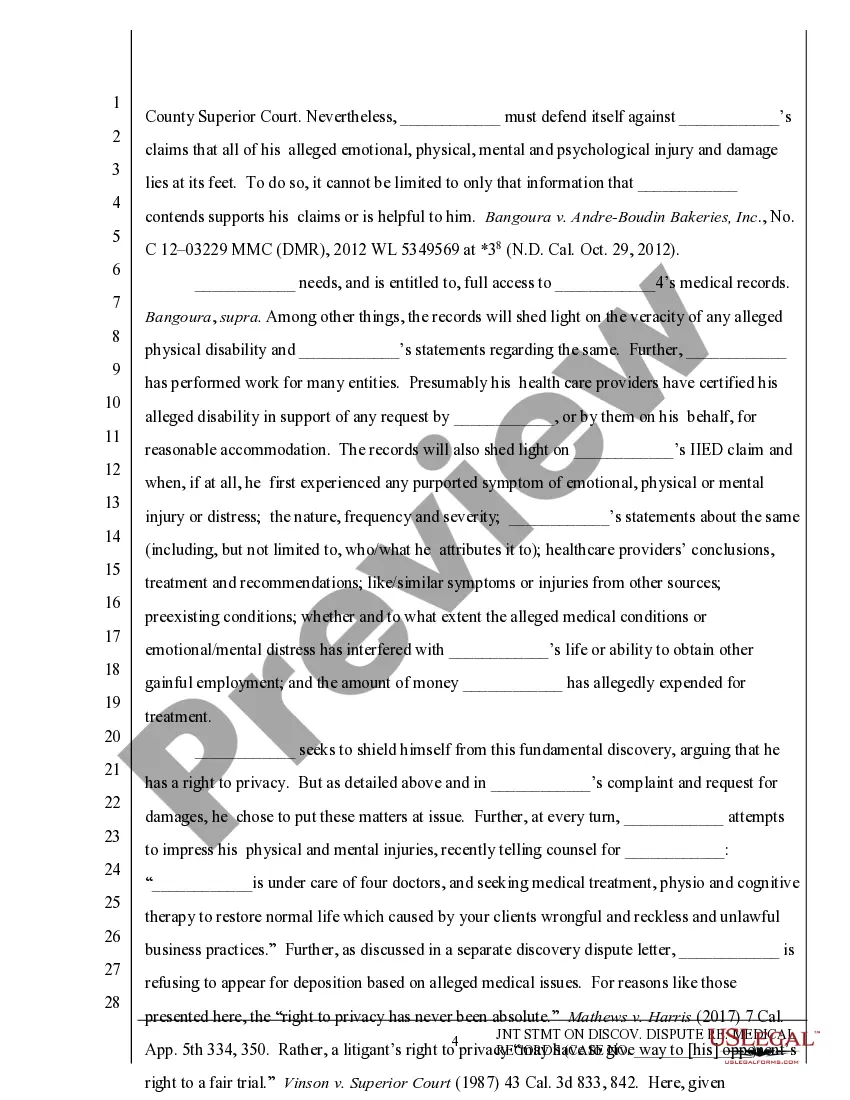
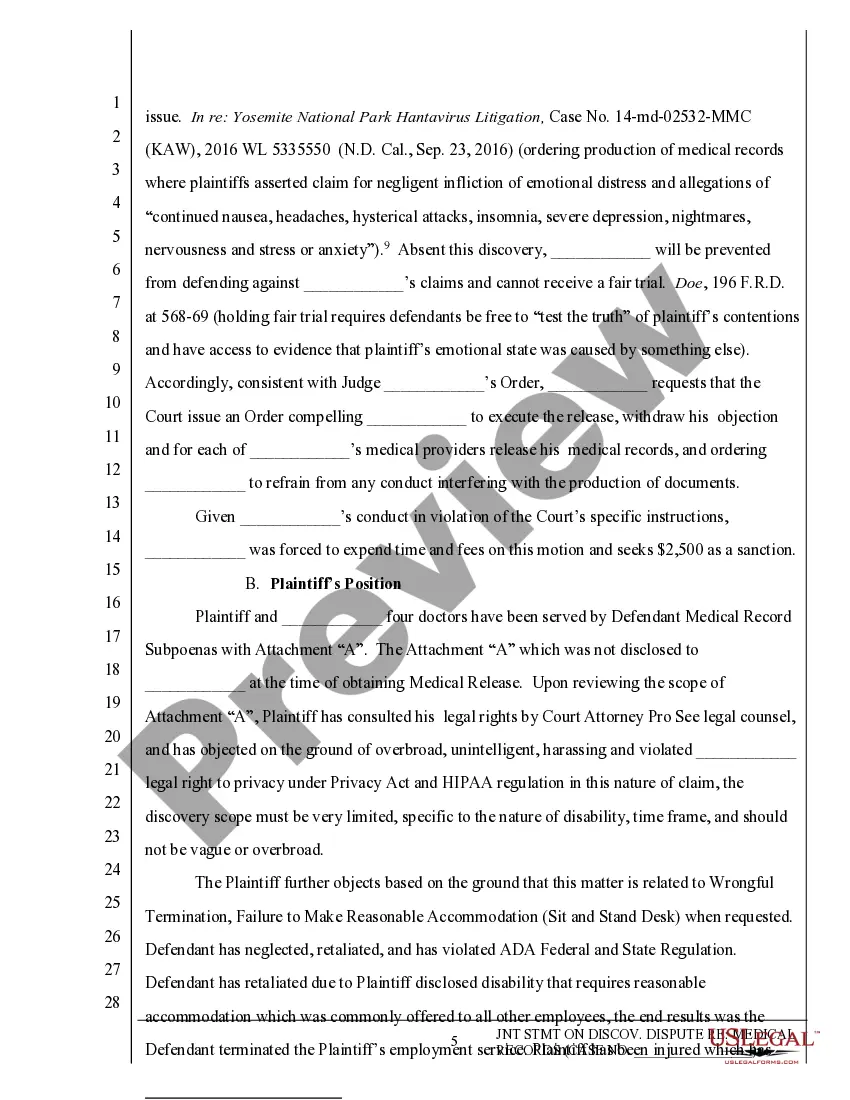
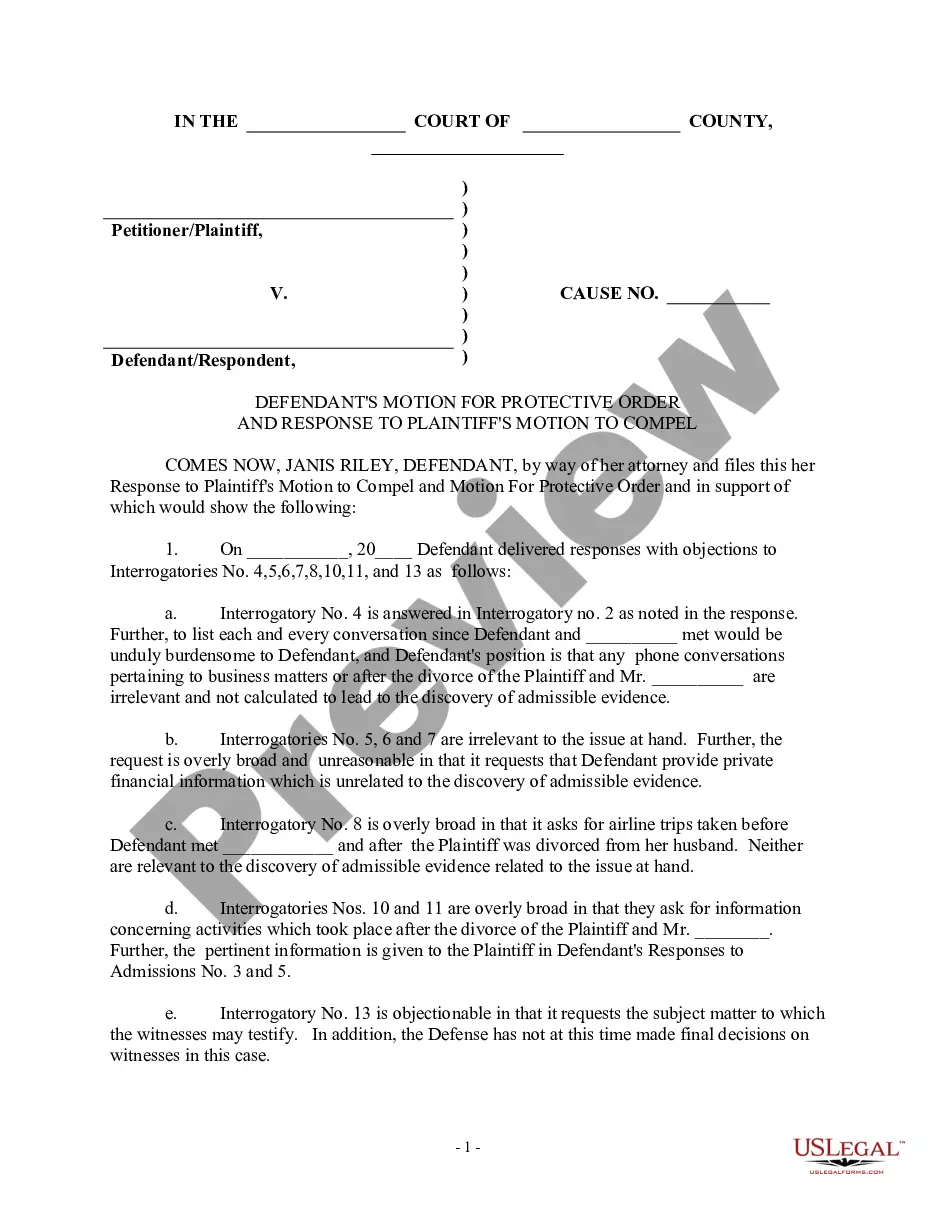
The Joint Statement on Discovery Dispute is a legal document submitted to the District Court by both the Plaintiff and Defendant during a dispute over the discovery of medical records. This form outlines the issues that could not be resolved through prior discussions between the parties and presents a proposed compromise to the court regarding the release of these records. Unlike other discovery forms, this joint statement specifically addresses the complexities surrounding medical documentation in a legal case, particularly in employment-related disputes.
Key components of this form
- Parties' Information: Names and contact details of the Plaintiff and Defendant, including attorney information.
- Case Information: Basic details about the case, including relevant court, judge, and case number.
- Discovery Issues: A detailed description of the unresolved discovery disputes concerning the Plaintiff's medical records and the reasons behind them.
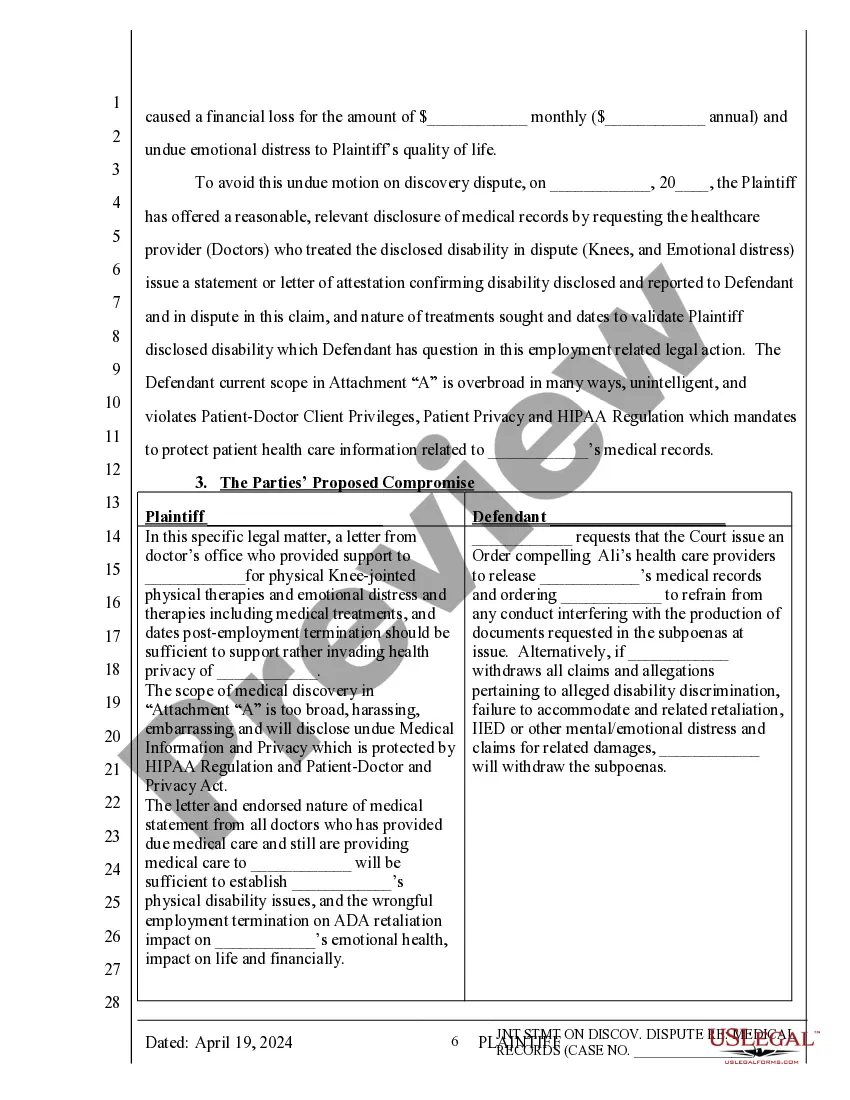
- Opponents' Positions: Separate sections for each party's stance on the issues at hand, outlining their arguments and justifications.
- Proposed Compromise: Suggestions for resolving the dispute regarding the medical records, including any limitations on the information requested.
Situations where this form applies
This form is used when parties in a legal dispute have attempted to resolve disagreements over the discovery of medical records but have been unsuccessful. It typically arises in cases involving employment discrimination, where medical history is pertinent to claims such as disability discrimination and emotional distress. The form serves as a formal request for the court's assistance in determining the appropriate scope of discovery.
Who can use this document
- Litigants involved in disputes related to employment law, particularly claims of discrimination or failure to accommodate disabilities.
- Attorneys representing parties who require medical records to support their case or defend against claims.
- Individuals (pro se litigants) who are navigating the legal system without an attorney and need to file a joint statement regarding discovery disputes.
How to prepare this document
Follow these steps to complete the Joint Statement on Discovery Dispute:
- Identify the parties involved: Clearly state the Plaintiff and Defendant's names and their representatives.
- Fill in the case details: Provide the case number, court name, judge's name, and any other pertinent information.
- Outline the discovery issues: Describe the medical records in dispute and the reasons why both parties were unable to reach an agreement.
- State each party's position: Include the arguments and rationale from both the Plaintiff and the Defendant regarding the requested medical records.
- Propose a compromise: Suggest a qualified offer or resolution that accounts for both parties' interests while addressing the court's expectations.
Notarization requirements for this form
Notarization is generally not required for this form. However, certain states or situations might demand it. You can complete notarization online through US Legal Forms, powered by Notarize, using a verified video call available anytime.
Get your form ready online
Our built-in tools help you complete, sign, share, and store your documents in one place.
Make edits, fill in missing information, and update formatting in US Legal Forms—just like you would in MS Word.
Download a copy, print it, send it by email, or mail it via USPS—whatever works best for your next step.
Sign and collect signatures with our SignNow integration. Send to multiple recipients, set reminders, and more. Go Premium to unlock E-Sign.
If this form requires notarization, complete it online through a secure video call—no need to meet a notary in person or wait for an appointment.
We protect your documents and personal data by following strict security and privacy standards.

Make edits, fill in missing information, and update formatting in US Legal Forms—just like you would in MS Word.

Download a copy, print it, send it by email, or mail it via USPS—whatever works best for your next step.

Sign and collect signatures with our SignNow integration. Send to multiple recipients, set reminders, and more. Go Premium to unlock E-Sign.

If this form requires notarization, complete it online through a secure video call—no need to meet a notary in person or wait for an appointment.

We protect your documents and personal data by following strict security and privacy standards.
Mistakes to watch out for
- Failing to clearly state the specific unresolved issues can lead to confusion in court.
- Not following court formatting rules for submissions, which may result in the form being rejected.
- Omitting necessary information about timelines or previous correspondence between the parties.
Benefits of completing this form online
- Convenience of online access to downloadable forms allows for quick and efficient preparation.
- Forms are drafted by licensed attorneys, ensuring legal compliance and validity.
- No need for in-person visits to a legal office, which saves time and travel costs.
- This form facilitates the legal process by clearly outlining the discovery issues at stake.
- It is enforceable once submitted to and approved by the court.
- However, it is important that the information provided does not violate privacy regulations, such as HIPAA.
Looking for another form?
Form popularity
FAQ
The Rule 26 provision regarding timing of the discovery conference requires that ?the parties must confer as soon as practicable ? and in any event at least 21 days before a scheduling conference is to be held or a scheduling order is due under Rule 16(b).? (Fed. Rules Civ. Proc., rule 26(f)(1).)
A sample report and discovery plan (discovery order) that parties may use to memorialize the results of their meet and confer required by Federal Rule of Civil Procedure (FRCP) 26(f). This Standard Document includes drafting notes with important explanations and drafting tips.
A joint discovery plan is a formal method of establishing a common discovery arrangement for related cases pending in federal courts.
Rule 26 covers a number of details related to the parties' duty to disclose certain information to one another. This rule includes the responsibility to disclose information about witnesses each party intends to call at trial.
This discovery deficiency letter is a standard form that attorneys can use in a federal court litigation to facilitate a discussion with opposing counsel concerning his or her failure to respond to discovery requests or provision of inadequate, incomplete, or otherwise deficient responses.
Joint Rule 26(f) Report. The Joint Rule 26(f) Report, which shall be filed not later than one week before the scheduling conference, shall be drafted by plaintiff (unless the parties agree otherwise), but shall be submitted and signed jointly.
This rule freely authorizes the taking of depositions under the same circumstances and by the same methods whether for the purpose of discovery or for the purpose of obtaining evidence.