Sample Partnership Agreement
About this form
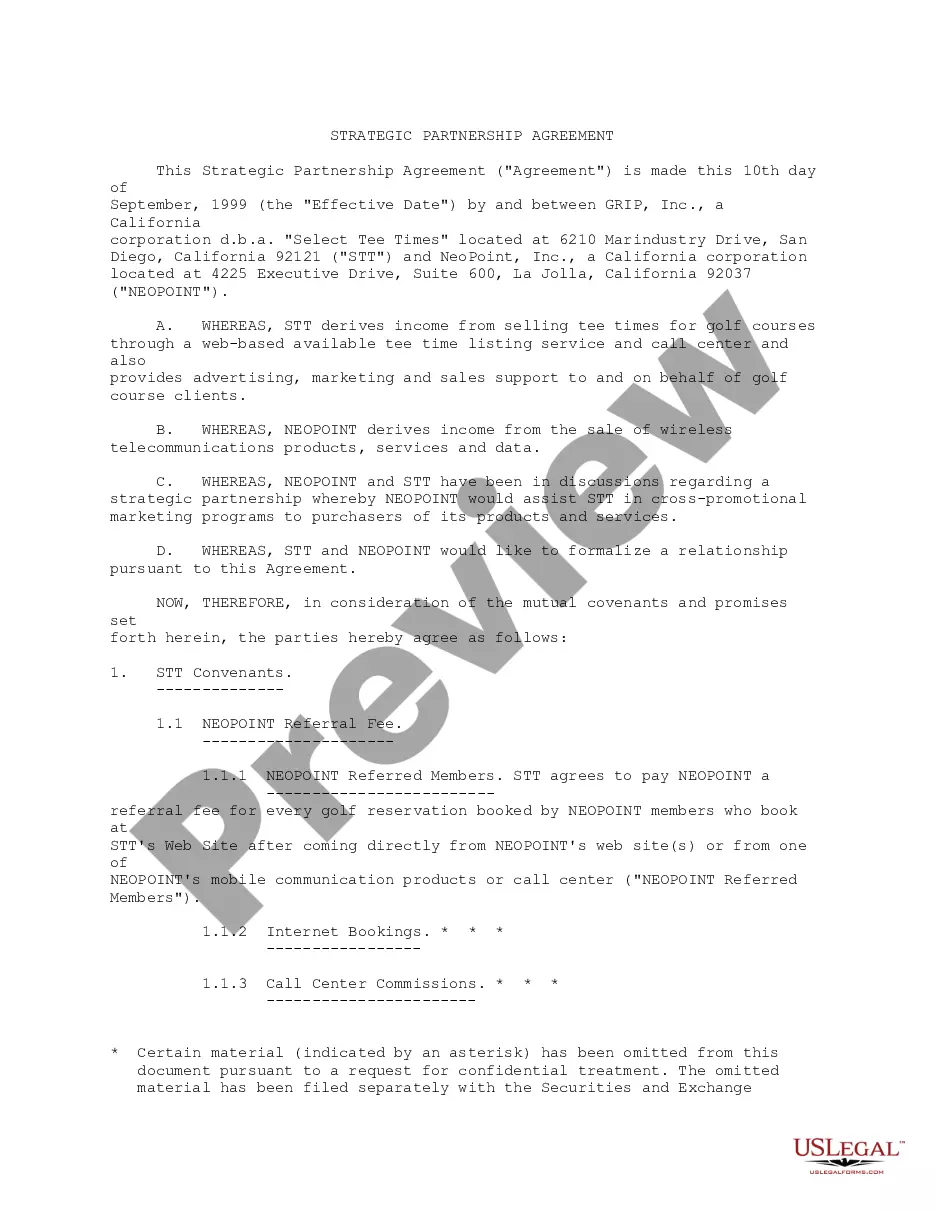
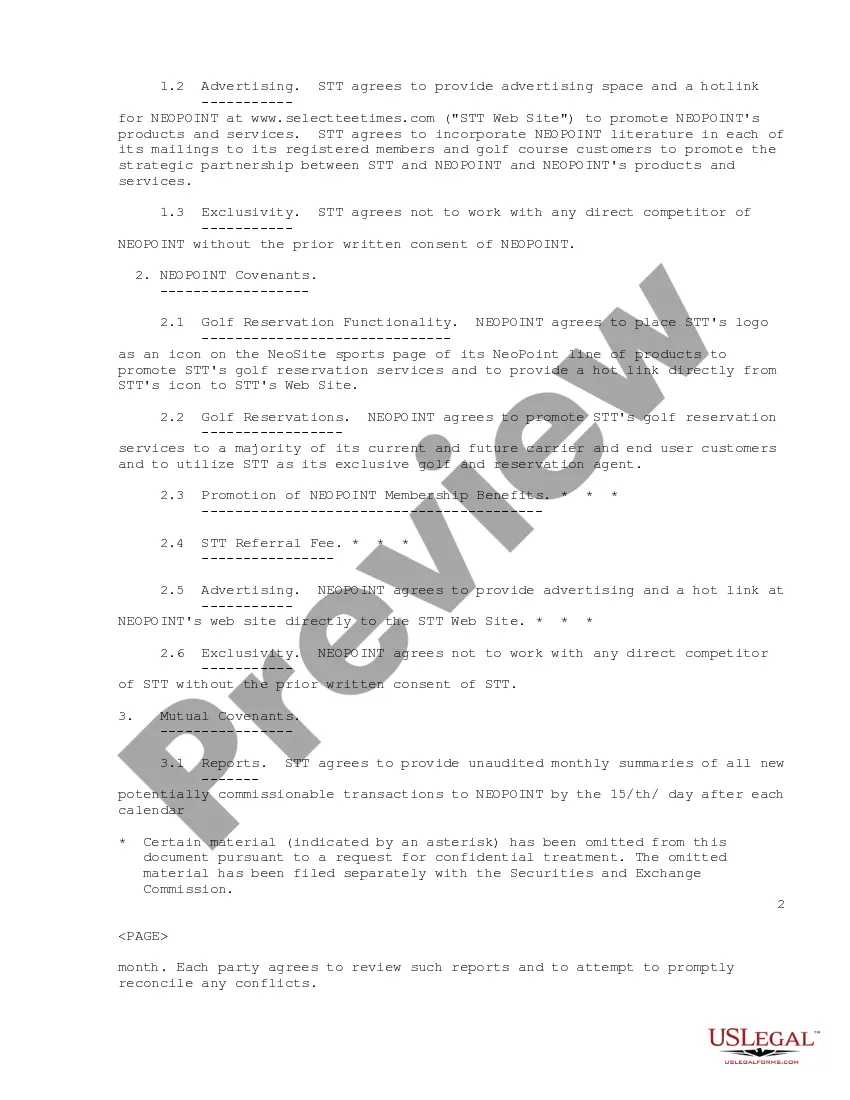
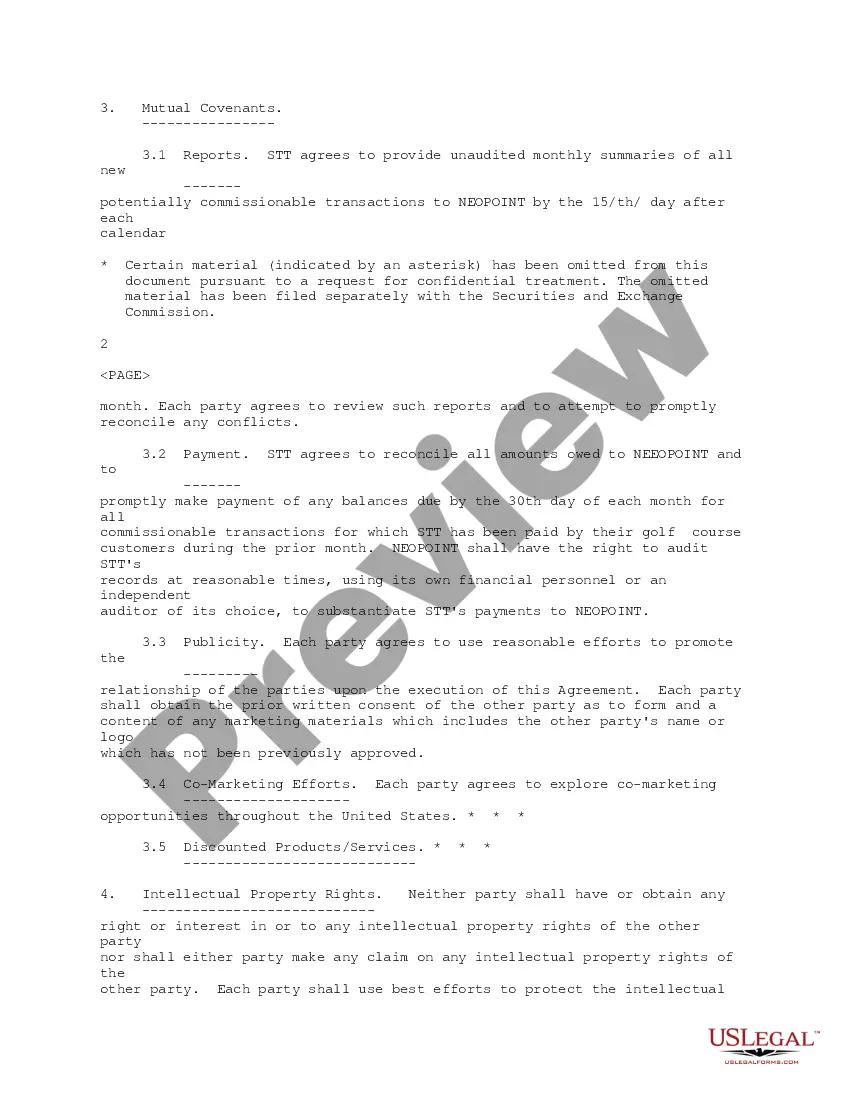
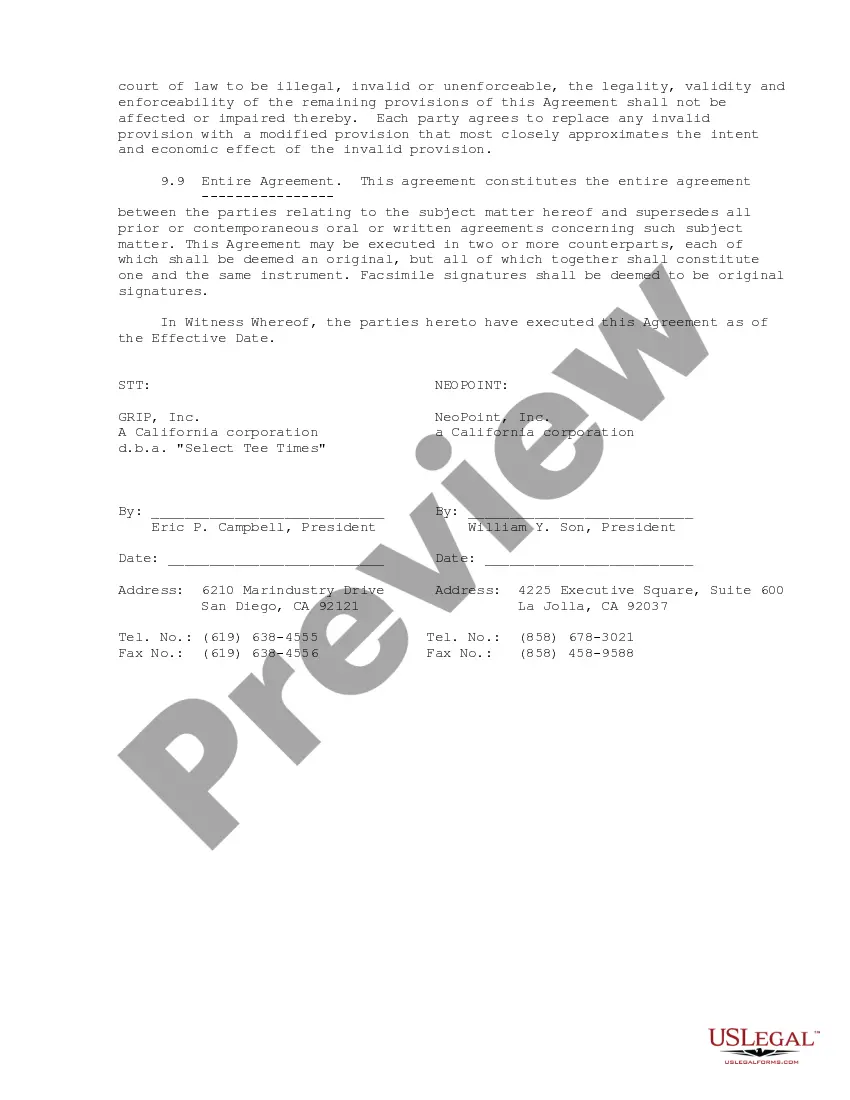
The Sample Partnership Agreement is a legal document that formalizes a strategic partnership between two entities, in this case, GRIP, Inc. and NeoPoint, Inc. This agreement outlines the responsibilities, benefits, and terms under which the parties will collaborate, especially in marketing and referral capacities. Unlike other legal forms that may simply outline terms of a basic partnership, this document is specifically tailored for strategic partnerships involving cross-promotion and marketing agreements in the telecommunications and golf industries.
Main sections of this form
- Definitions of the parties involved and their respective businesses.
- Details on referral fees and commission structures.
- Clauses outlining advertising agreements and obligations.
- Exclusivity agreements preventing competition within specified terms.
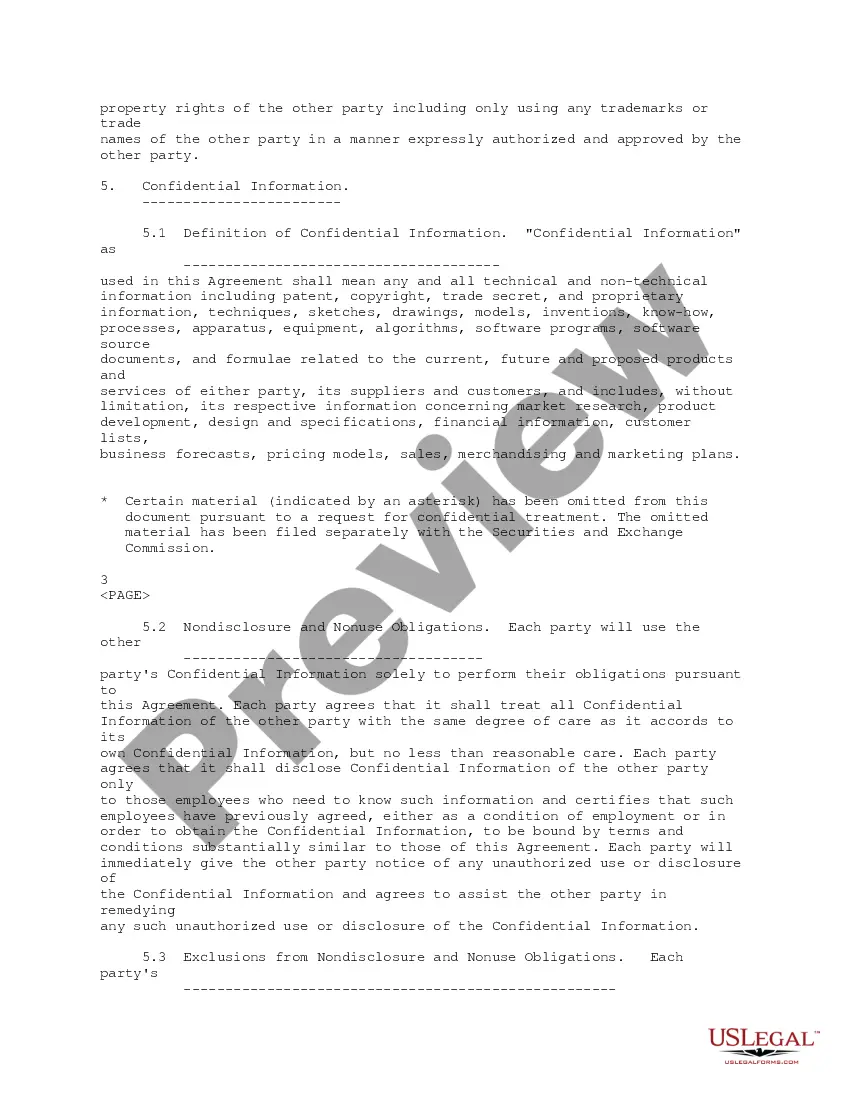
- Confidentiality obligations to protect sensitive business information.
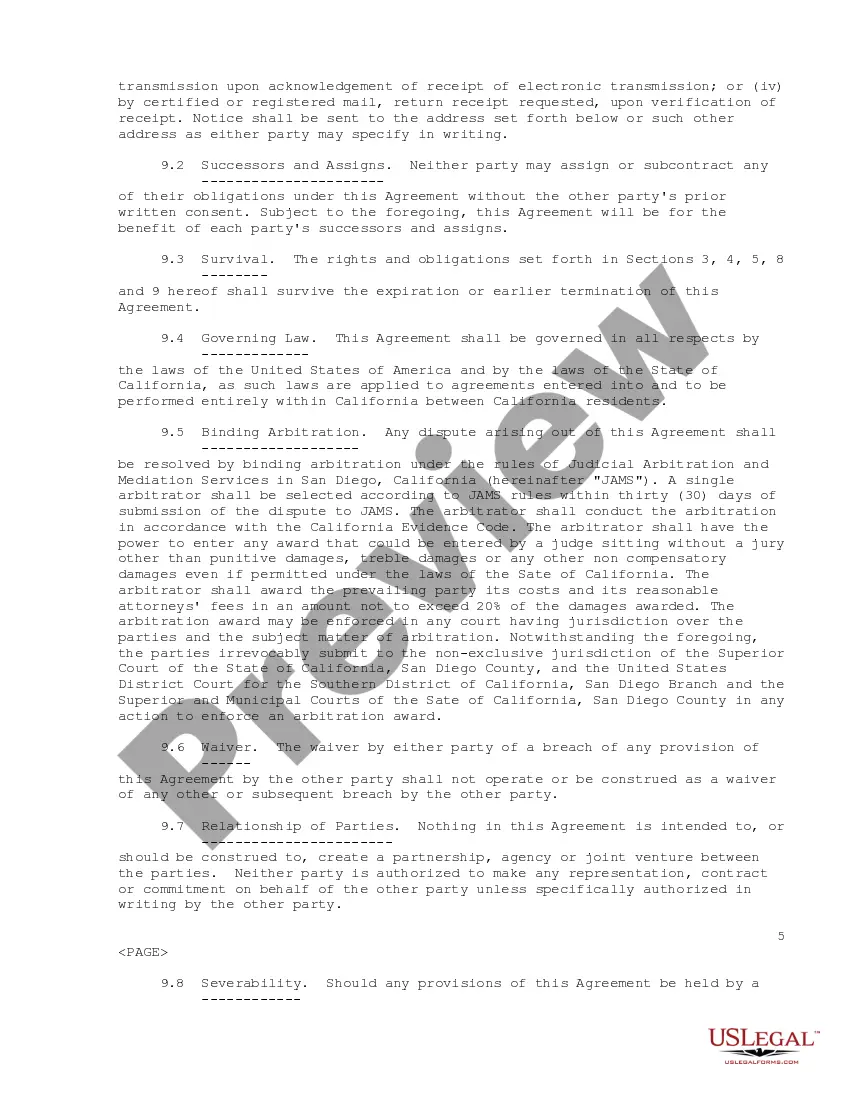
- Dispute resolution procedures through binding arbitration.
When to use this document
This form should be used when two businesses seek to enter a strategic partnership that involves mutual marketing efforts, referrals, or business collaborations. It is particularly useful for companies in industries where cross-promotional opportunities exist, such as technology and leisure services, like telecommunications and golf reservations. If you are looking to establish formal terms for such collaboration, this agreement is essential.
Who this form is for
This agreement is suitable for:
- Business owners looking to formalize a partnership with another company.
- Companies in the telecommunications and service industries seeking collaborative marketing operations.
- Entrepreneurs or executives responsible for establishing contractual agreements for strategic alliances.
Steps to complete this form
- Identify and specify the parties entering into the agreement.
- Clearly outline the terms regarding referral fees and commissions.
- Include details about advertising responsibilities and promotional efforts.
- Specify the duration of the agreement and conditions for renewal or termination.
- Ensure that all parties sign and date the agreement appropriately.
Does this document require notarization?
This form does not typically require notarization unless specified by local law. It is advisable to confirm specific state requirements related to notarization for partnership agreements.
Get your form ready online
Our built-in tools help you complete, sign, share, and store your documents in one place.
Make edits, fill in missing information, and update formatting in US Legal Forms—just like you would in MS Word.
Download a copy, print it, send it by email, or mail it via USPS—whatever works best for your next step.
Sign and collect signatures with our SignNow integration. Send to multiple recipients, set reminders, and more. Go Premium to unlock E-Sign.
If this form requires notarization, complete it online through a secure video call—no need to meet a notary in person or wait for an appointment.
We protect your documents and personal data by following strict security and privacy standards.

Make edits, fill in missing information, and update formatting in US Legal Forms—just like you would in MS Word.

Download a copy, print it, send it by email, or mail it via USPS—whatever works best for your next step.

Sign and collect signatures with our SignNow integration. Send to multiple recipients, set reminders, and more. Go Premium to unlock E-Sign.

If this form requires notarization, complete it online through a secure video call—no need to meet a notary in person or wait for an appointment.

We protect your documents and personal data by following strict security and privacy standards.
Mistakes to watch out for
- Failing to specify the terms of referral fees or commission percentages.
- Not including the full names and addresses of the involved parties.
- Overlooking confidentiality clauses which are critical for protecting business information.
- Not having all parties sign the agreement, making it potentially unenforceable.
Advantages of online completion
- Convenient access allows for easy modifications tailored to specific partnership needs.
- Quick downloads enable immediate use without waiting for physical copies.
- Documents are drafted by licensed attorneys to ensure legal validity and thoroughness.
Legal use & context
- A strategic partnership agreement helps legally protect both parties by clearly defining roles and expectations.
- This form can serve as evidence in court if disputes arise regarding the partnership.
- Proper execution of the agreement is essential for the enforceability of its terms in a legal context.
Key takeaways
- The Sample Partnership Agreement formalizes the relationship between two businesses.
- It includes essential components like covenants, payment terms, and confidentiality clauses.
- This agreement is ideal for businesses looking to collaborate on products or services.
- Using this form can save time and ensure legal compliance in partnership arrangements.
Looking for another form?
Form popularity
FAQ
Create a preliminary plan for an alliance. This plan should detail how the alliance will benefit both companies. Approach the key decision maker. Build a relationship with your contact first. Present your idea. Listen and adapt your proposal as necessary.
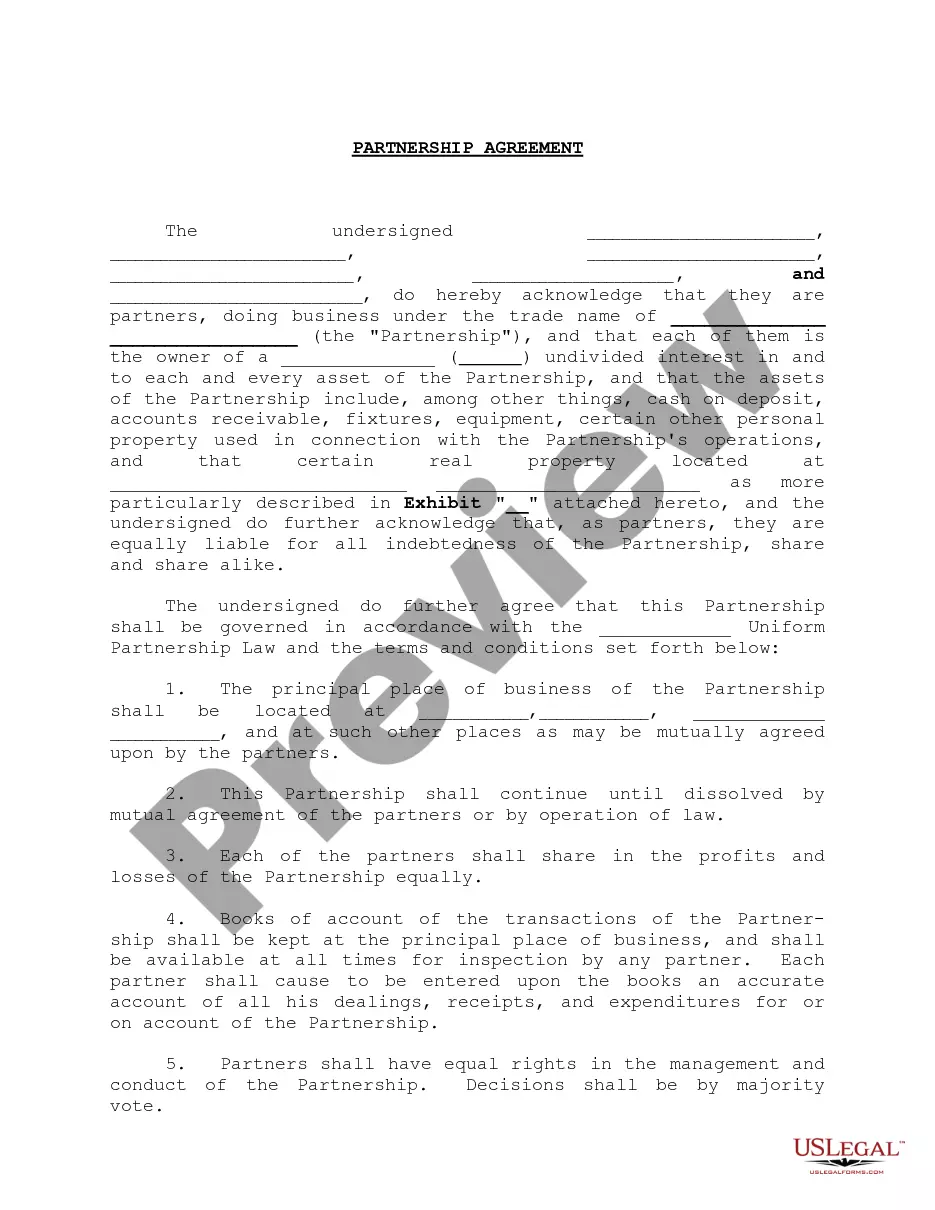
Name of the partnership. Contributions to the partnership. Allocation of profits, losses, and draws. Partners' authority. Partnership decision-making. Management duties. Admitting new partners. Withdrawal or death of a partner.
Although there's no requirement for a written partnership agreement, often it's a very good idea to have such a document to prevent internal squabbling (about profits, direction of the company, etc.) and give the partnership solid direction. Limited liability partnerships do have a writing requirement.
Although each partnership agreement differs based on business objectives, certain terms should be detailed in the document, including percentage of ownership, division of profit and loss, length of the partnership, decision making and resolving disputes, partner authority, and withdrawal or death of a partner.
Share the same values. Choose a partner with complementary skills. Have a track record together. Clearly define each partner's role and responsibilities. Select the right business structure. Put it in writing. Be honest with each other.
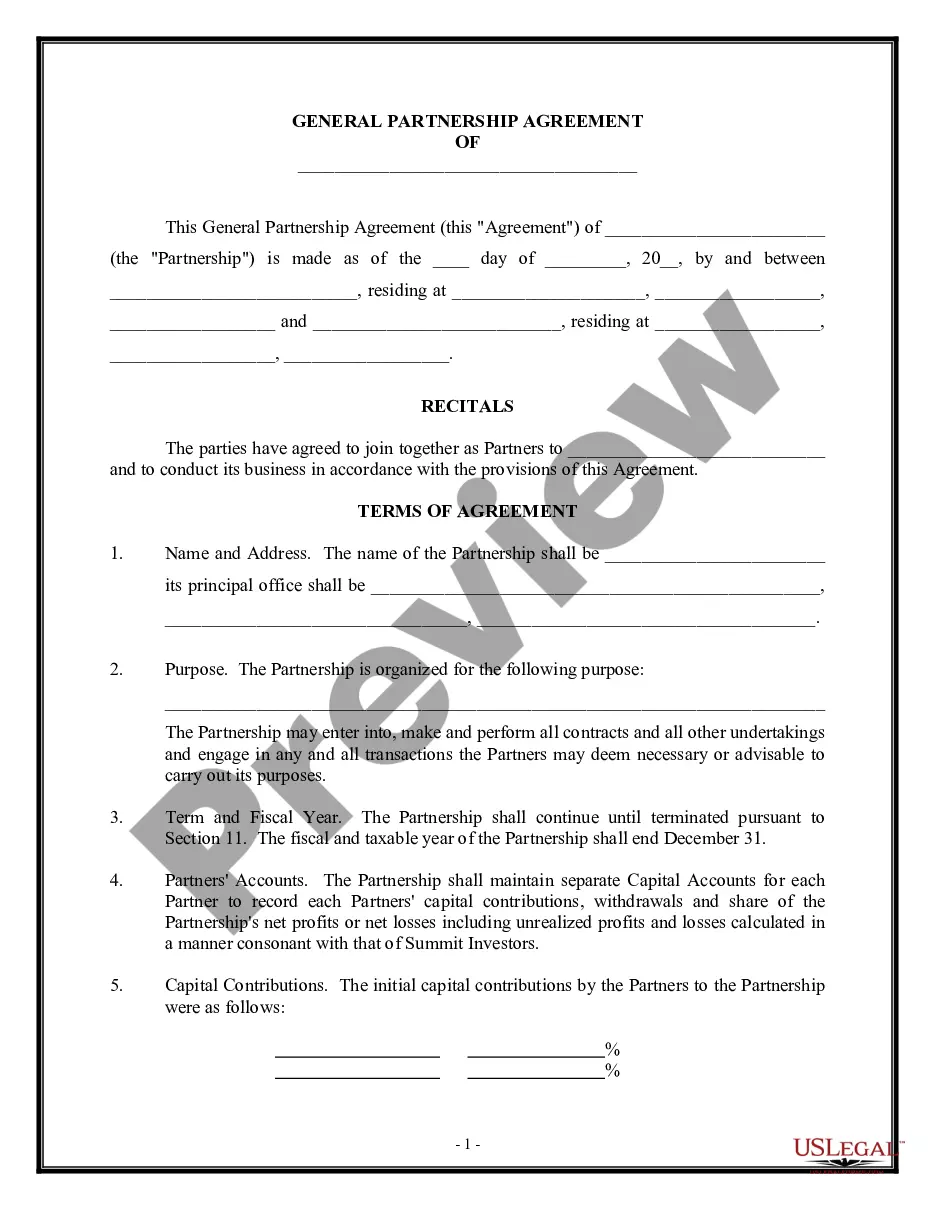
A partnership agreement is a contract between partners in a partnership which sets out the terms and conditions of the relationship between the partners, including: Percentages of ownership and distribution of profits and losses. Description of management powers and duties of each partner.
Name of your partnership. Contributions to the partnership and percentage of ownership. Division of profits, losses and draws. Partners' authority. Withdrawal or death of a partner.