Affidavit Verifying a Claim
What this document covers
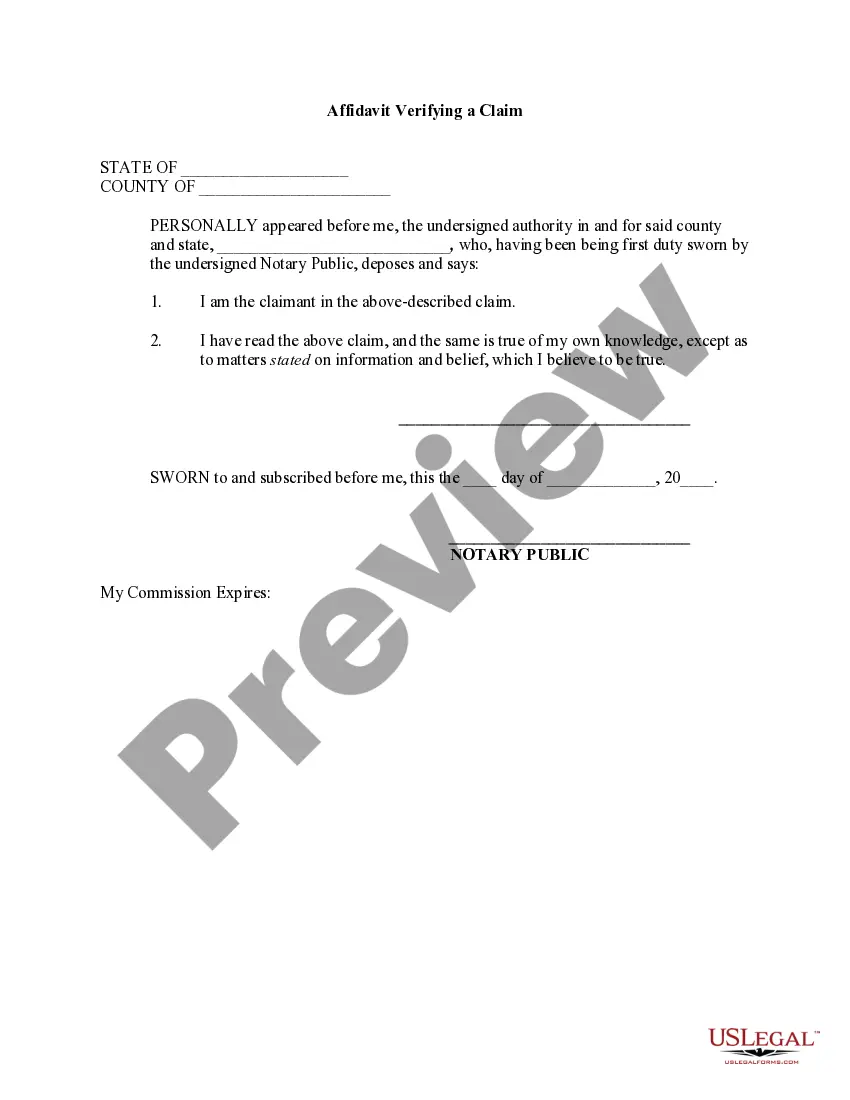
The Affidavit Verifying a Claim is a legal document where the affiant confirms the truth of a claim. This form serves as a formal declaration, establishing the affiant's knowledge and belief regarding the information presented. Unlike other affidavits, this specific form focuses on verifying the particulars of a claim, making it vital when supporting legal or financial assertions.
Key components of this form
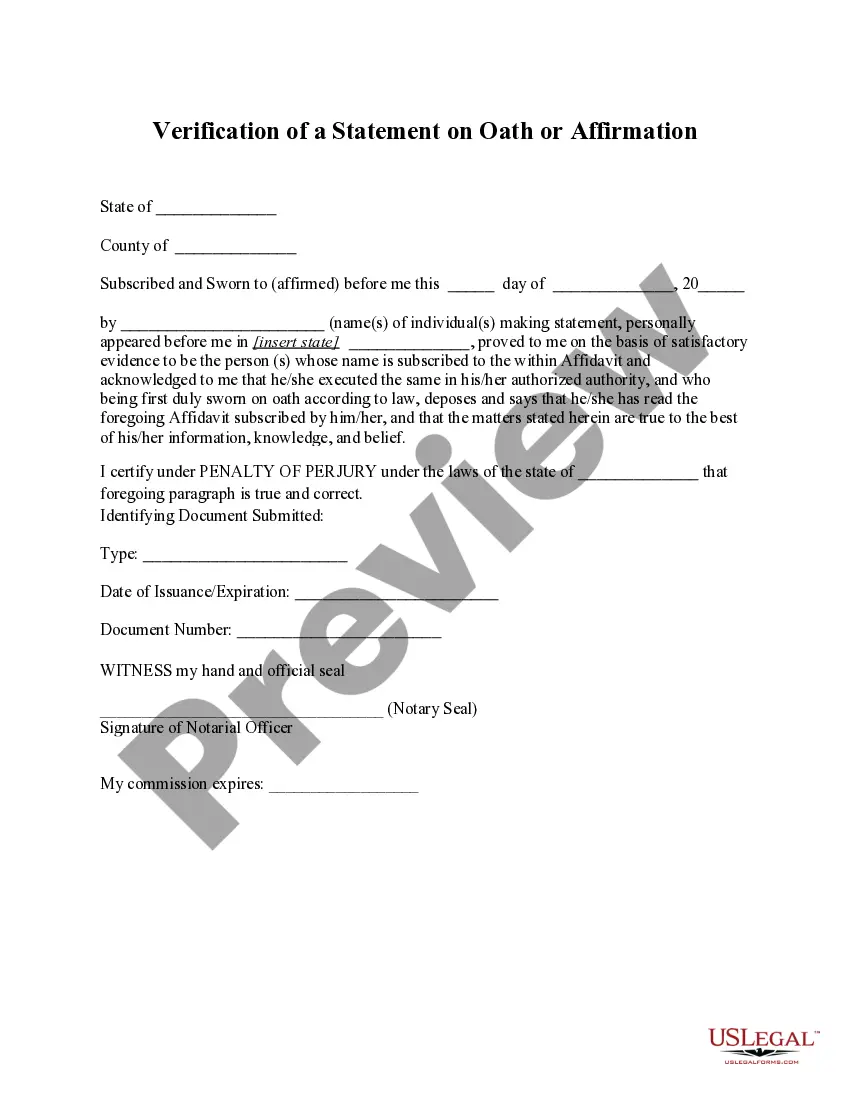
- Identification of the affiant as the claimant of the described claim.
- Statement affirming that the affiant has read and believes the accuracy of the claim.
- Space for the affiant's signature, requiring notarization.
- Notary public section for authentication of the affidavit.
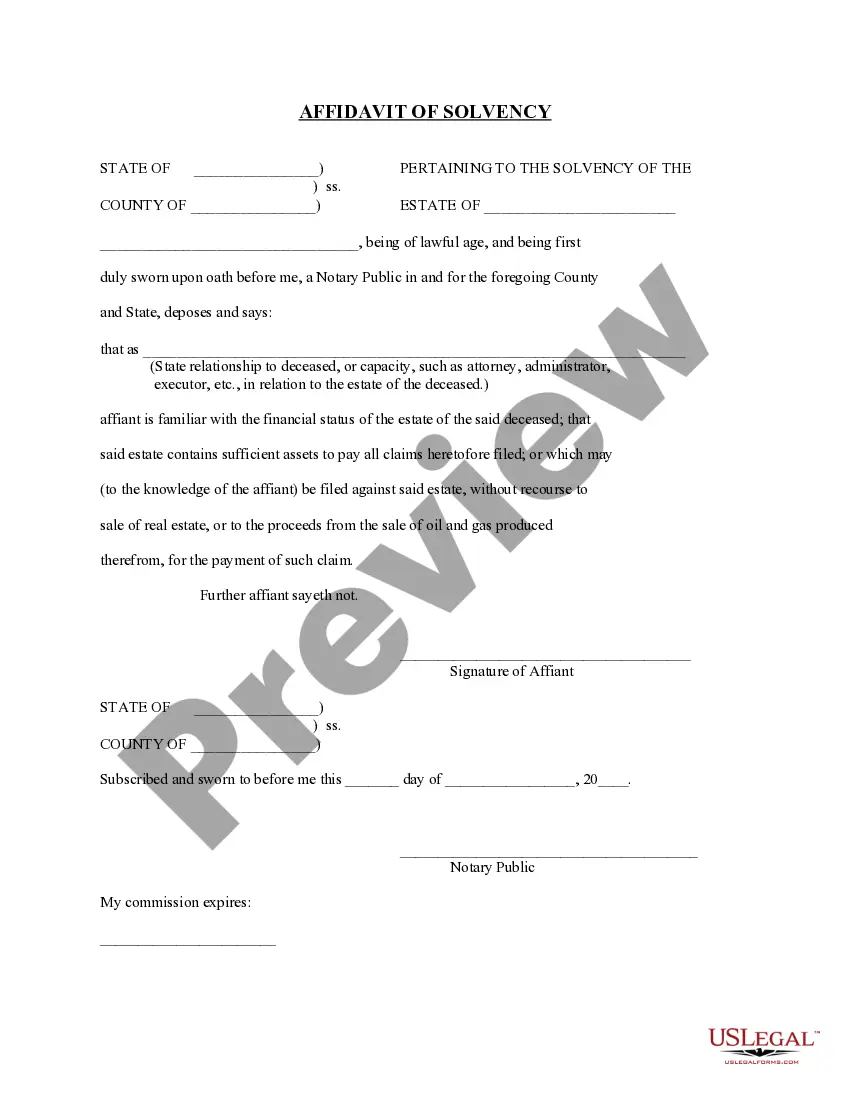
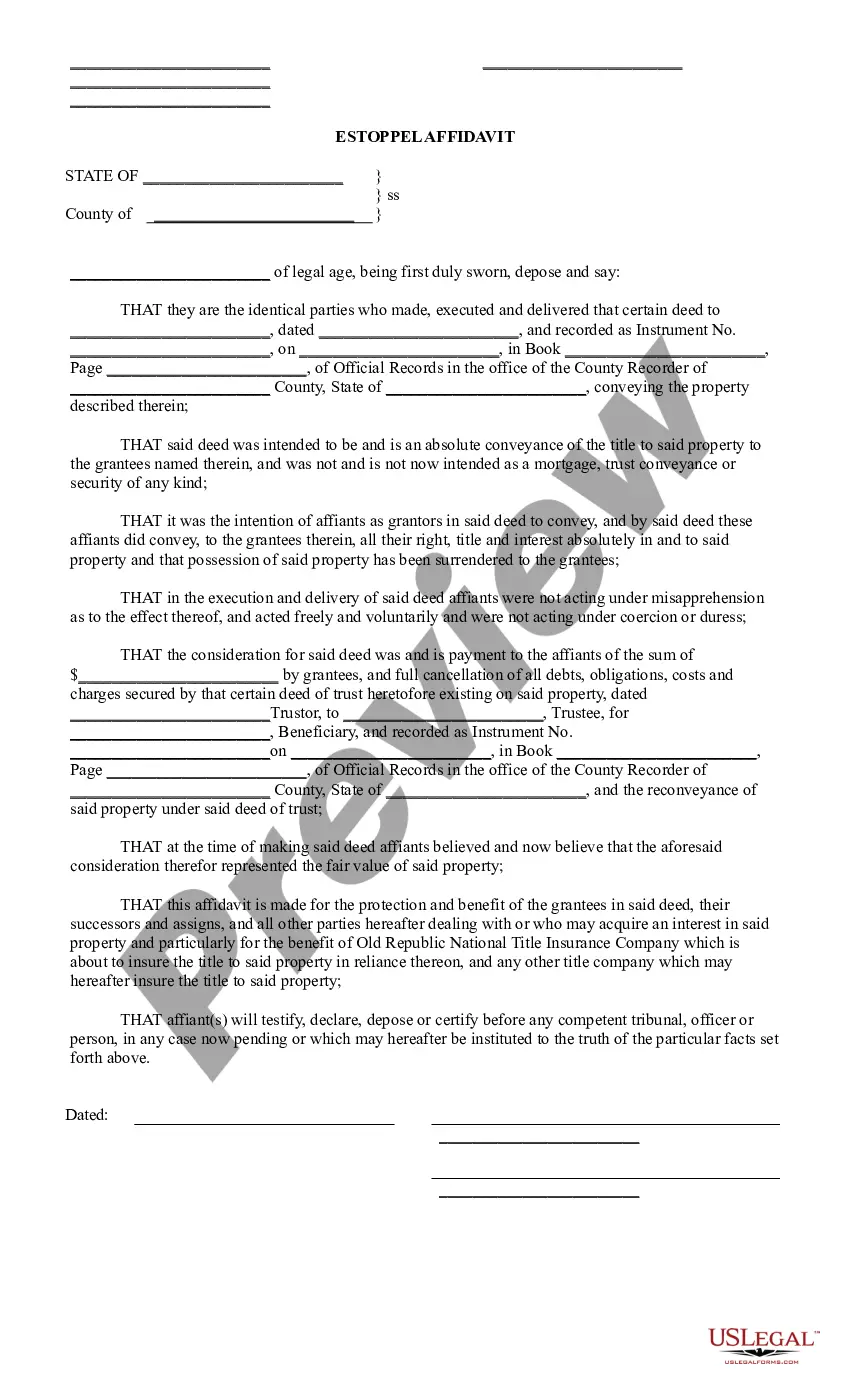
When to use this document
This form is typically used when an individual needs to provide a sworn statement to verify the details of a claim in situations such as legal disputes, insurance claims, or financial transactions. It may be required by courts or other authorities when establishing the validity of a claim is essential for proceeding with a case or recovering funds.
Who should use this form
This form is intended for:
- Individuals who are making a claim and need to affirm its validity.
- Claimants involved in legal proceedings requiring a sworn verification.
- Anyone needing to declare the truth of a statement under oath.
How to complete this form
- Identify the parties involved, particularly the affiant and the claim described.
- Read the claim thoroughly to ensure you can affirm its accuracy.
- Complete the date and venue sections as required, filling in the state and county.
- Sign the affidavit in front of a notary public to validate it.
- Ensure the notary public fills out their section and certifies the affidavit.
Notarization requirements for this form
Notarization is required for this form to take effect. Our online notarization service, powered by Notarize, lets you verify and sign documents remotely through an encrypted video session, available 24/7.
Get your form ready online
Our built-in tools help you complete, sign, share, and store your documents in one place.
Make edits, fill in missing information, and update formatting in US Legal Forms—just like you would in MS Word.
Download a copy, print it, send it by email, or mail it via USPS—whatever works best for your next step.
Sign and collect signatures with our SignNow integration. Send to multiple recipients, set reminders, and more. Go Premium to unlock E-Sign.
If this form requires notarization, complete it online through a secure video call—no need to meet a notary in person or wait for an appointment.
We protect your documents and personal data by following strict security and privacy standards.

Make edits, fill in missing information, and update formatting in US Legal Forms—just like you would in MS Word.

Download a copy, print it, send it by email, or mail it via USPS—whatever works best for your next step.

Sign and collect signatures with our SignNow integration. Send to multiple recipients, set reminders, and more. Go Premium to unlock E-Sign.

If this form requires notarization, complete it online through a secure video call—no need to meet a notary in person or wait for an appointment.

We protect your documents and personal data by following strict security and privacy standards.
Typical mistakes to avoid
- Failing to properly read the claim before signing the affidavit.
- Not having the affidavit notarized, if required by law.
- Leaving out important details, such as the date or venue.
Advantages of online completion
- Convenient access to a template created by licensed attorneys.
- Ability to download and customize the form for your specific needs.
- Streamlined process for obtaining notarization through integrated online services.
Looking for another form?
Form popularity
FAQ
Step 2: Write the purpose of the Affidavit or the Heading. Step 3: Write the name of the parties in case of an affidavit being filled in Court or Write the name of the Deponent in case of other affidavits. Step 4: Write the complete address of the deponent.
VERIFYING AFFIDAVIT - If the petitioner cannot depose that the truth of all the several statements in the petition is within his knowledge, he must set out the statements the truth of which he can depose to, and file a further affidavit by some person or persons who can depose to the truth of the remaining statements.
An affidavit is a written statement that is notarized.The information in an affidavit must be first-hand information. It cannot be second-hand information or speculation. Affidavits can be written in your own handwriting or typed.
I am _____ and my name _______, appearing on the enclosed ID proof, is single name.Both names denote one and the same person. I solemnly state that the contents of this affidavit are true to the best of my knowledge and belief and that it conceals nothing and that no part of it is false.
In the sentence, the person writing the statement must state that he or she is stating that the information is accurate. (Example: I, Jane Doe, solemnly swear that the contents of this document are true and correct, and that I agree to abide by the terms in this affidavit.)
Affidavits as an evidence:Affidavit is an admissible evidence, however some courts may need you to testify the affidavit or they may consider it as hearsay evidence. Since hearsay is not admissible as an evidence, the affidavit may not be used for evidence if anyone objects to it unless it is testified.
Step 3: Write the name of the parties in case of an affidavit being filled in Court or Write the name of the Deponent in case of other affidavits. Step 4: Write the complete address of the deponent. Step 5: Write the statements in point wise and state only the true facts.
Step 1: Name Your Document. Step 2: Identify the Deponent / Affiant. Step 3: Write a Statement of Truth. Step 4: State the Facts. Step 5: Sample Notary Public Statements for an Affidavit.