Verification of a Statement on Oath or Affirmation
What is this form?
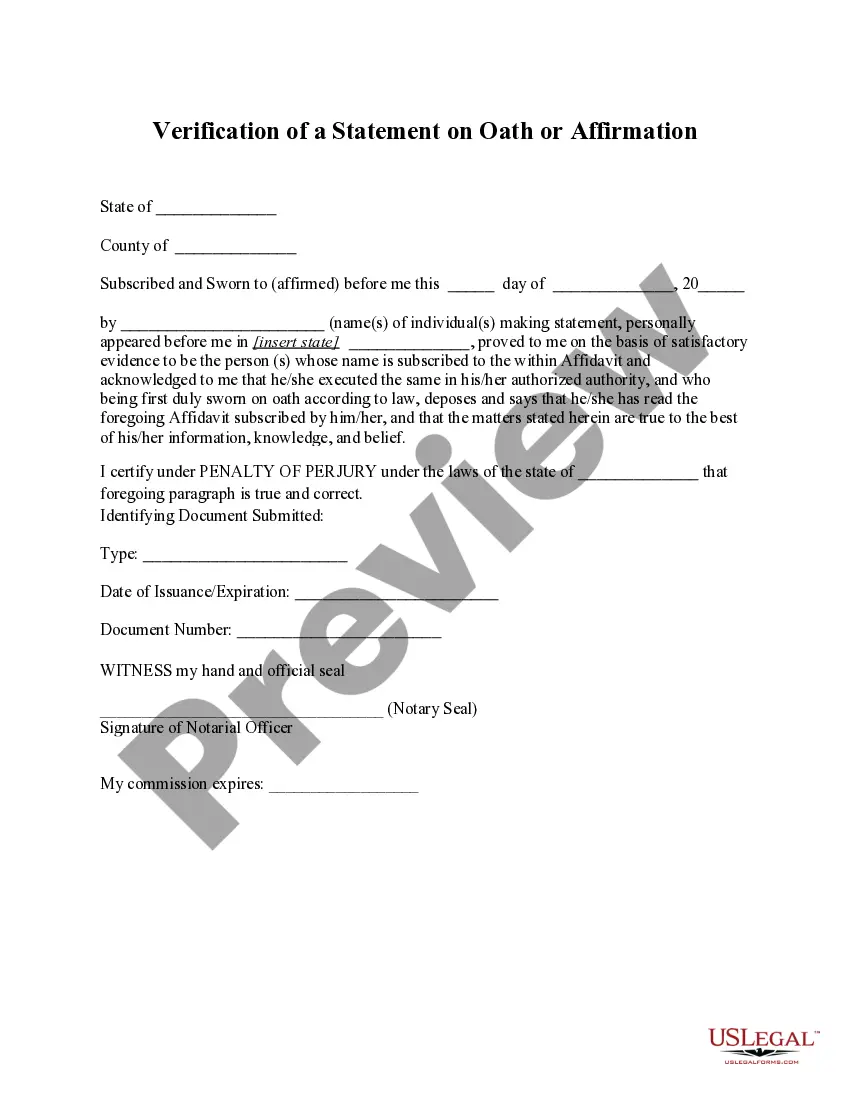
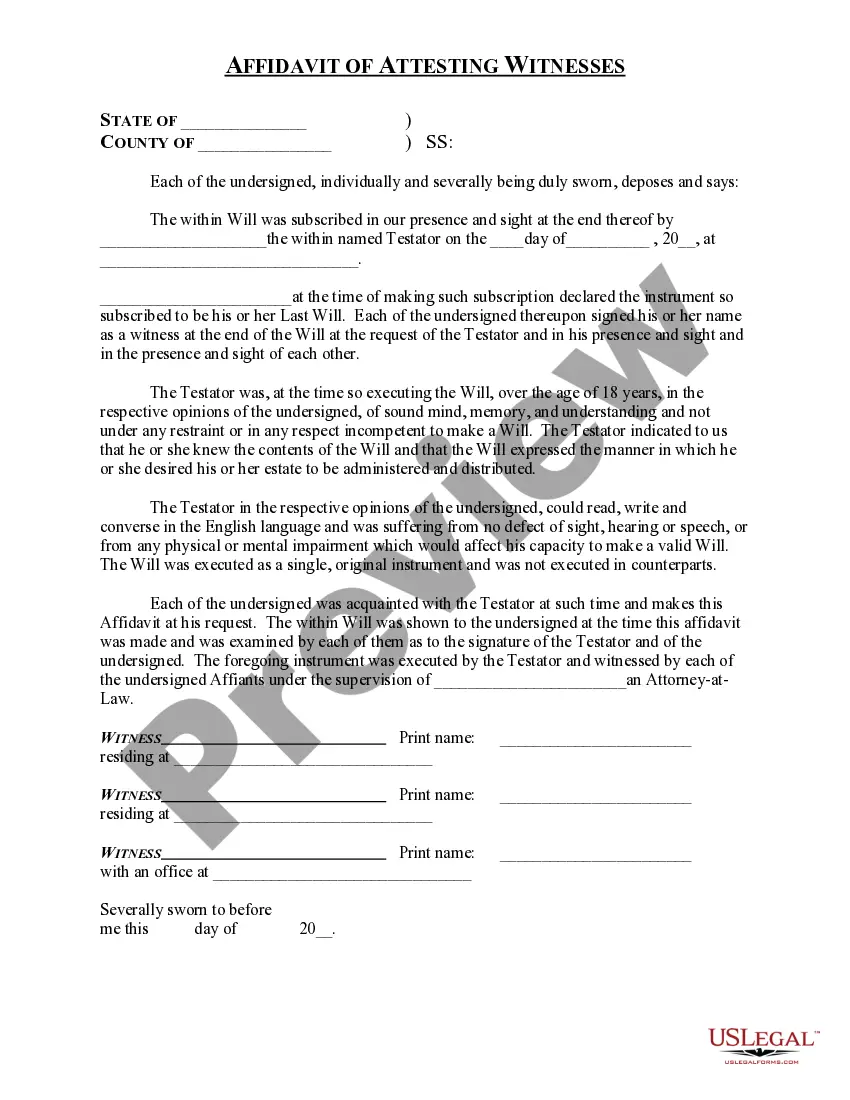
The Verification of a Statement on Oath or Affirmation is a legal document used to confirm the truthfulness of a statement made in another document. This form is essential when a customer needs to affirm that the contents of a document are accurate, typically in the presence of a notary. This formal verification process distinguishes it from less formal statements and serves to ensure that the affirmation is made under oath, providing a layer of legal credibility.
Form components explained
- State and County: Indicate the relevant jurisdiction where the oath is taken.
- Affirmation clause: A declaration that the individual has read and confirms the accuracy of the document.
- Notarization block: Space for the notary's signature and seal, confirming the individual's identity and acknowledgment.
- Penalties for false statements: A statement to affirm the legal repercussions of perjury.
- Identification: Details required about identifying documents, including type, issuance date, and document number.
When this form is needed
This form is typically used when legal documents require verification of statements made under oath. Examples include affidavits in court cases, applications for licenses, or any situation where a person must declare the truthfulness of their statements to be legally binding. It is essential in scenarios where the integrity of the information is critical to legal proceedings.
Who should use this form
- Individuals needing to affirm statements in legal documents.
- Notaries public performing verifications for clients.
- Legal professionals preparing documents that require oaths or affirmations.
- Anyone involved in legal proceedings where document verification is necessary.
Instructions for completing this form
- Identify the state and county where the oath is being taken.
- Fill out the names of individuals making the statement in the appropriate section.
- Indicate the date on which the affirmation is made.
- Provide details about the identifying document used for verification.
- Have the individual sign the form in front of the notary.
- The notary must then complete their section, including their signature and seal.
Is notarization required?
Yes, this form must be notarized to be legally valid. When completed, a notary public must witness the signing of the document to ensure that the individual affirming the statement is who they claim to be. US Legal Forms also offers integrated online notarization, allowing you to complete this process securely via video call at any time, ensuring convenience and legal equivalence without the need for travel.
Get your form ready online
Our built-in tools help you complete, sign, share, and store your documents in one place.
Make edits, fill in missing information, and update formatting in US Legal Forms—just like you would in MS Word.
Download a copy, print it, send it by email, or mail it via USPS—whatever works best for your next step.
Sign and collect signatures with our SignNow integration. Send to multiple recipients, set reminders, and more. Go Premium to unlock E-Sign.
If this form requires notarization, complete it online through a secure video call—no need to meet a notary in person or wait for an appointment.
We protect your documents and personal data by following strict security and privacy standards.

Make edits, fill in missing information, and update formatting in US Legal Forms—just like you would in MS Word.

Download a copy, print it, send it by email, or mail it via USPS—whatever works best for your next step.

Sign and collect signatures with our SignNow integration. Send to multiple recipients, set reminders, and more. Go Premium to unlock E-Sign.

If this form requires notarization, complete it online through a secure video call—no need to meet a notary in person or wait for an appointment.

We protect your documents and personal data by following strict security and privacy standards.
Mistakes to watch out for
- Failing to provide accurate state and county information.
- Omitting the date of the affirmation.
- Not clearly identifying the individuals making the statement.
- Not having the signer present during the notarization process.
- Neglecting to include the notary seal or signature.
Benefits of using this form online
- Convenient access that allows you to complete the form from anywhere.
- Editability enables customization based on your specific needs.
- Reliability, with the assurance that the forms are drafted by licensed attorneys.
Legal use & context
- This form serves as a formal declaration under penalty of perjury, adding weight to the statements made.
- It is important for various legal processes such as court cases, real estate transactions, and licensing applications.
- Understanding the legal implications of using this form can prevent issues related to fraud or misrepresentation.
Quick recap
- The Verification of a Statement on Oath or Affirmation confirms the truthfulness of a statement in a legal context.
- This form requires notarization to be valid.
- Properly completing the form is essential to avoid common mistakes and ensure legal effectiveness.
Looking for another form?
Form popularity
FAQ
The difference between an oath and an affirmation is that the oath is a religious commitment where as an affirmation is non-religious.
OATH OR AFFIRMATION The second type of oath is a statement before a Notary or other authorized person: 1) An oath is a promise to state the truth ? before a statement is given. Example: Do you swear or affirm that you will tell the truth, the whole truth and nothing but the truth?
An oath is a declaration made to God or a Supreme Being. In contrast, an affirmation is a solemn vow by the signer that has no pledge to a higher power but to the signer's personal honor. Since both have the same legal effect, it is up to the signer to choose to make an oath or affirmation.
Oath: I swear by Almighty God that I will tell the truth, the whole truth, and nothing but the truth. Affirmation: I solemnly, sincerely and truly declare and affirm that I will tell the truth, the whole truth, and nothing but the truth.
"I swear by Almighty God that the evidence I shall give will be the truth, the whole truth, and nothing but the truth". "I solemnly declare and affirm that the evidence I shall give will be the truth, the whole truth, and nothing but the truth".
An oath is a public declaration based on an appeal to a higher power that the person taking the oath will keep a promise or perform a duty faithfully. An affirmation is a pledge equivalent to an oath but without any reference to a higher being.