Sample Letter for Request for Payment Plan concerning Default
What this document covers
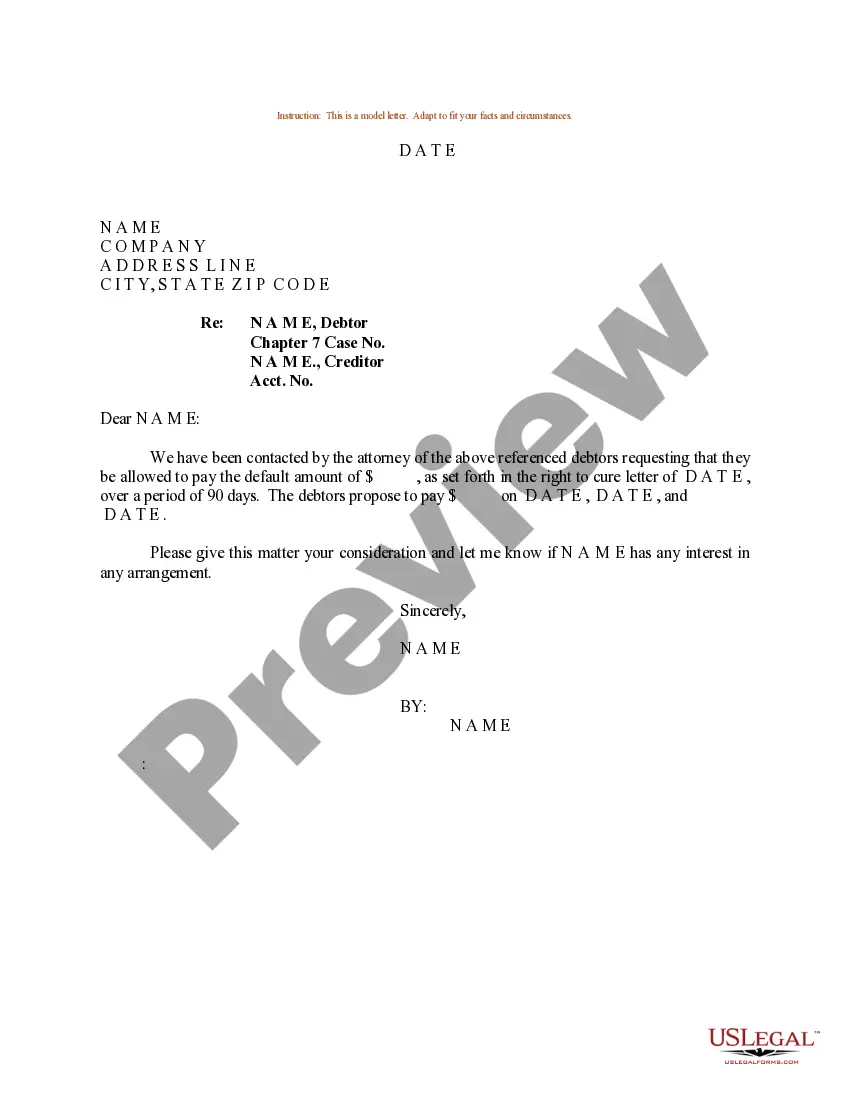
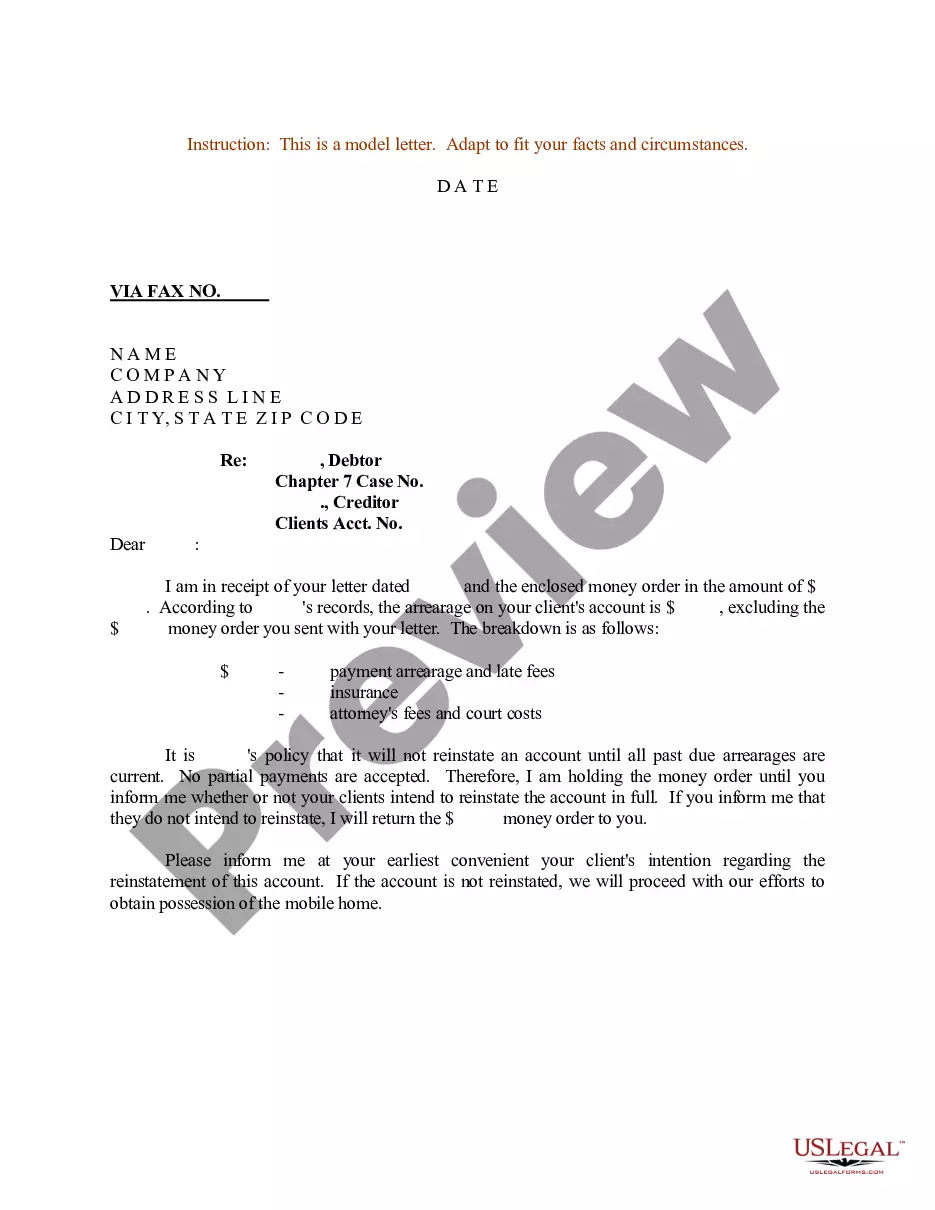
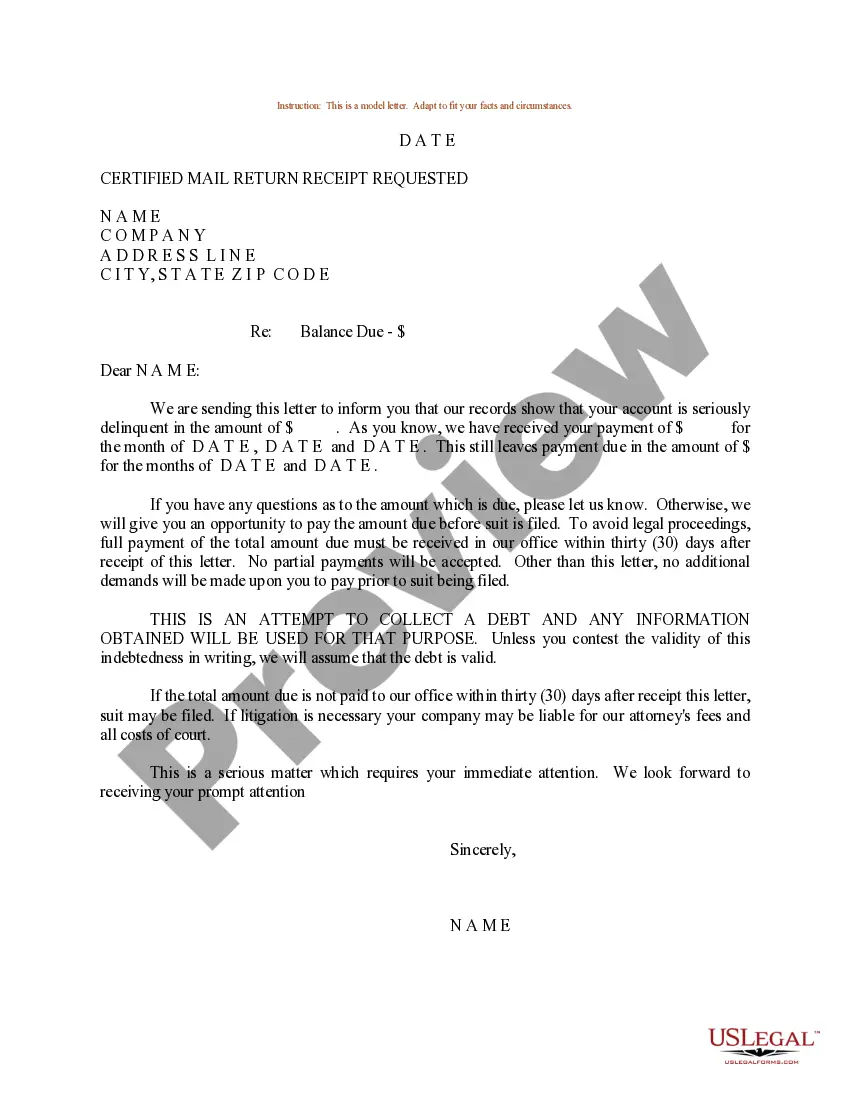
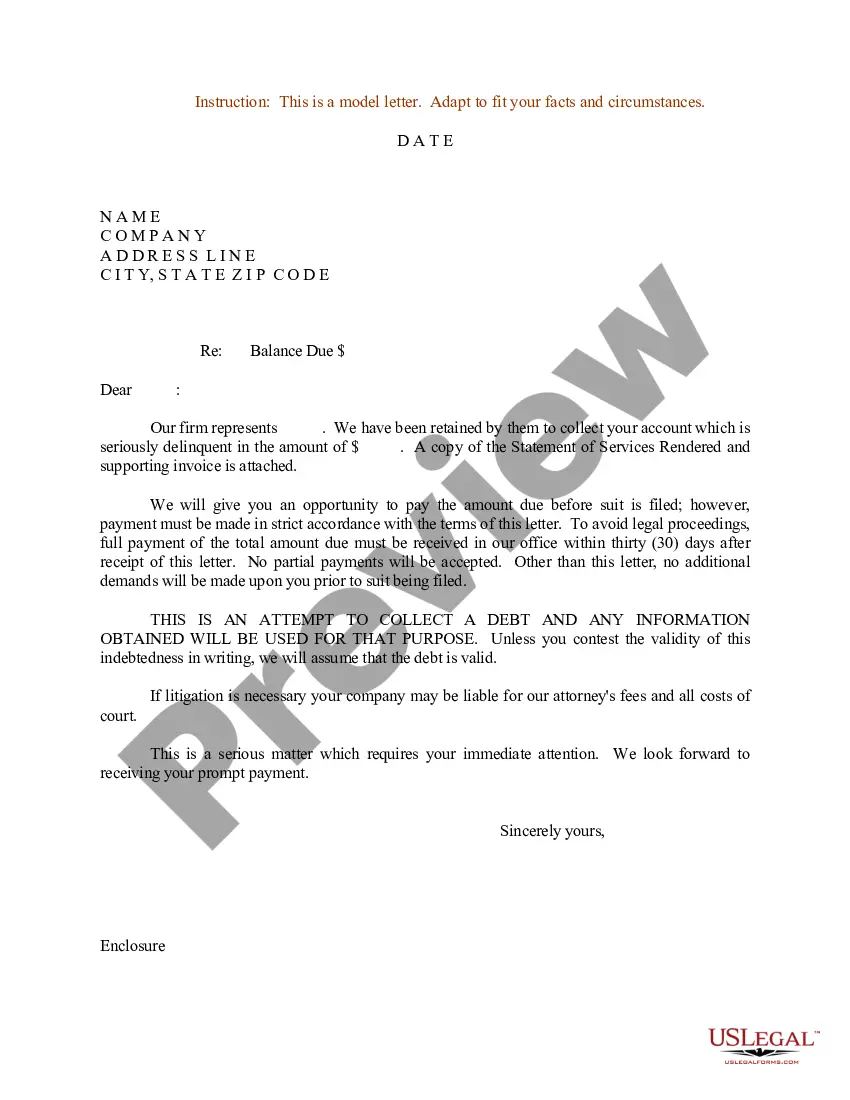
The Sample Letter for Request for Payment Plan concerning Default is a template letter designed to formally request a structured payment plan from a debtor who has defaulted on a loan or obligation. This form serves as a way to negotiate repayment terms and differs from other debt-related forms by focusing specifically on initiating a payment plan rather than demanding full payment or addressing other debt collection actions.
What’s included in this form
- Date: The date the letter is written.
- Creditor Information: Details about the creditor, including name and address.
- Debtor Information: Identification of the debtor with their name and any relevant account details.
- Subject Line: A clear indication of the letterâs purpose regarding the payment plan.
- Payment Terms: Specifics on proposed payment amounts and frequency.
- Contact Information: How the debtor can reach the creditor for further discussion.
Common use cases
This form is used when a creditor needs to reach out to a debtor who has fallen behind on payments. It is suitable for situations where the creditor prefers to establish a manageable repayment plan rather than pursuing more aggressive collection tactics. You may find this form useful if you are trying to maintain a positive relationship with the debtor while ensuring that you recover the owed amount over time.
Intended users of this form
This form is intended for:
- Creditors or collection agencies seeking to negotiate a payment plan with debtors.
- Businesses or individuals who have extended credit and wish to manage missed payments.
- Property owners or landlords dealing with tenants who have defaulted on rent obligations.
How to complete this form
- Identify the parties involved, including your name and contact information, and the debtor's details.
- Enter the date on which the letter is written.
- Clearly state the subject line, focusing on the request for a payment plan.
- Specify the proposed terms of the payment plan, including amounts and timelines.
- Provide your contact information for any questions or discussions.
Does this form need to be notarized?
This form does not typically require notarization unless specified by local law. It functions as a formal communication tool without the need for additional legal validation in most cases.
Get your form ready online
Our built-in tools help you complete, sign, share, and store your documents in one place.
Make edits, fill in missing information, and update formatting in US Legal Forms—just like you would in MS Word.
Download a copy, print it, send it by email, or mail it via USPS—whatever works best for your next step.
Sign and collect signatures with our SignNow integration. Send to multiple recipients, set reminders, and more. Go Premium to unlock E-Sign.
If this form requires notarization, complete it online through a secure video call—no need to meet a notary in person or wait for an appointment.
We protect your documents and personal data by following strict security and privacy standards.

Make edits, fill in missing information, and update formatting in US Legal Forms—just like you would in MS Word.

Download a copy, print it, send it by email, or mail it via USPS—whatever works best for your next step.

Sign and collect signatures with our SignNow integration. Send to multiple recipients, set reminders, and more. Go Premium to unlock E-Sign.

If this form requires notarization, complete it online through a secure video call—no need to meet a notary in person or wait for an appointment.

We protect your documents and personal data by following strict security and privacy standards.
Common mistakes
- Not including complete debtor information, which may cause confusion.
- Failing to specify clear payment terms, making it difficult for the debtor to respond.
- Overlooking the importance of a polite and professional tone, which can impact negotiations.
Why complete this form online
- Quick and easy access to a professionally drafted template.
- Editable format that allows customization to fit specific debt situations.
- Reliable source, ensuring the form meets basic legal standards.
Legal use & context
- This letter serves as a formal request and can strengthen your position in discussions regarding payment plans.
- Using a well-structured letter can lead to better communication and resolution outcomes with debtors.
Summary of main points
- The form is a tool for creditors to propose a payment plan to a defaulting debtor.
- It includes essential details, such as debtor information and proposed payment terms.
- Using this form can facilitate negotiations without resorting to legal action.
Looking for another form?
Form popularity
FAQ
The Sample Letter for Request for Payment Plan Concerning Default is a template to formally request a structured repayment plan from a debtor who has defaulted on a loan or obligation. It focuses on initiating terms rather than demanding full payment, and it provides fields for Date, Creditor Information, Debtor Information, Subject Line, Payment Terms, and Contact Information.
To write a letter asking for a payment plan using this form, fill in the date, creditor and debtor details, a clear subject line, proposed payment terms (amounts and frequency), and contact information. The template guides you to request a structured arrangement after a default and supports open negotiations.
A default letter using this form looks like a formal notice that acknowledges the missed payments and proposes a structured repayment plan. It includes a clear subject line, specific payment terms, and the creditor’s contact information to discuss terms and begin a manageable repayment schedule.
This form does not specify consequences for a default. It is a negotiation tool to restart a structured repayment plan after a default. If another default occurs, the creditor may pursue actions allowed by the original agreement and applicable law. For state-specific guidance, consult a licensed attorney.
Use this template by entering the date, creditor and debtor information, a clear subject line, and specific payment terms—amounts and frequency. Include your contact information and a professional tone to propose a structured repayment arrangement after a default.
It is specifically designed for defaults and focuses on initiating a structured repayment plan rather than demanding payment or pursuing other collection actions. It also lists the exact sections you’ll complete—Date, Creditor Information, Debtor Information, Subject Line, Payment Terms, and Contact Information—for creditors, collection agencies, and landlords.