Utah Paving Contract for Contractor
What is this form?
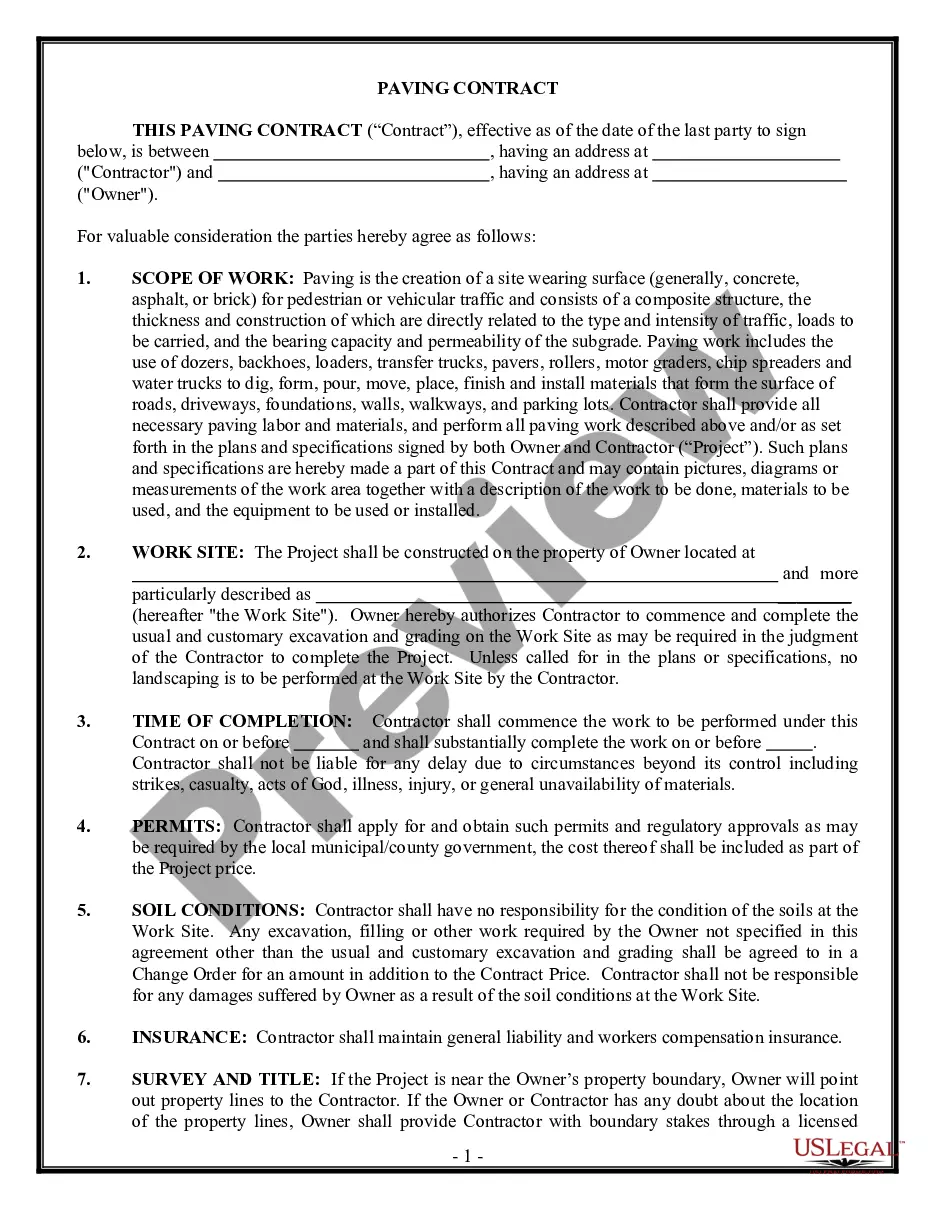
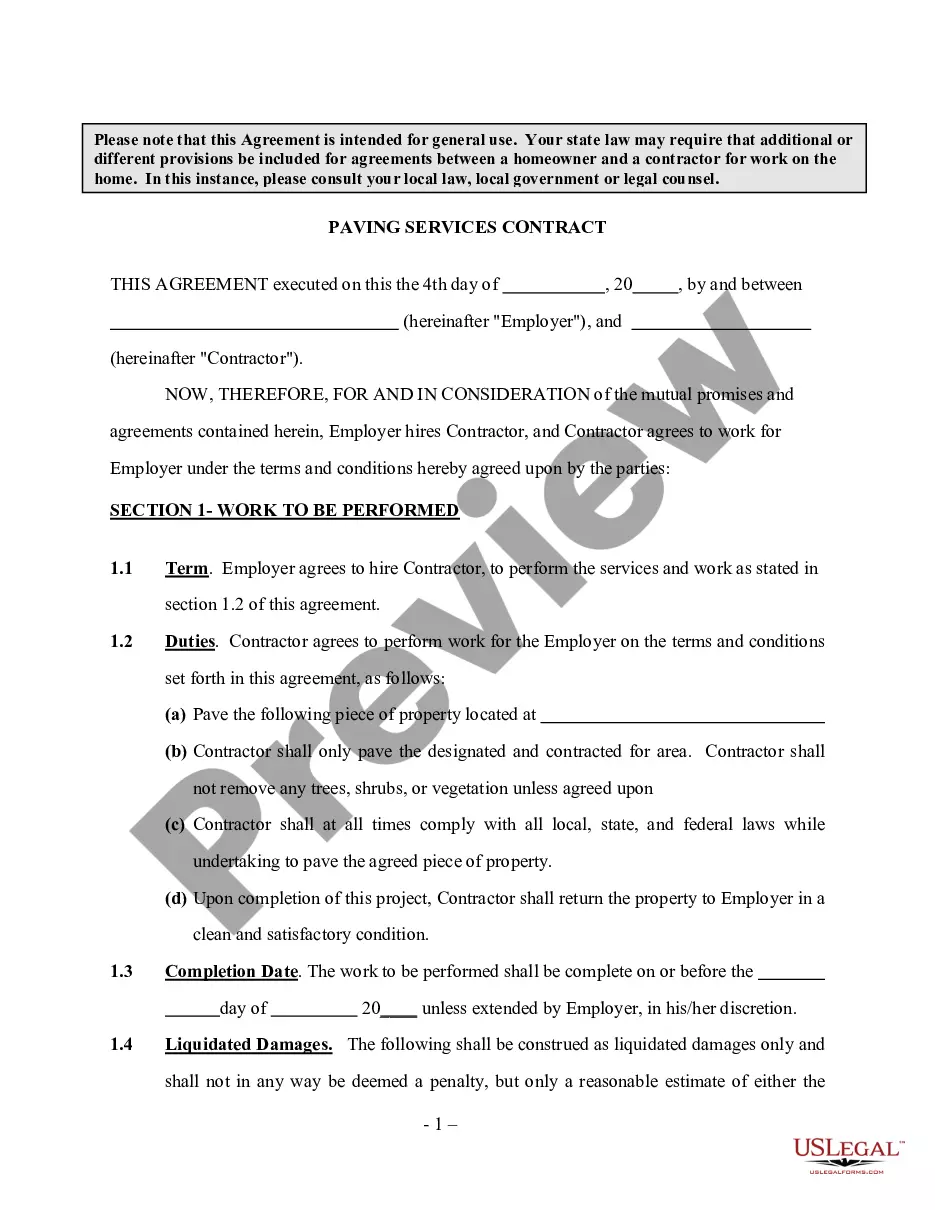
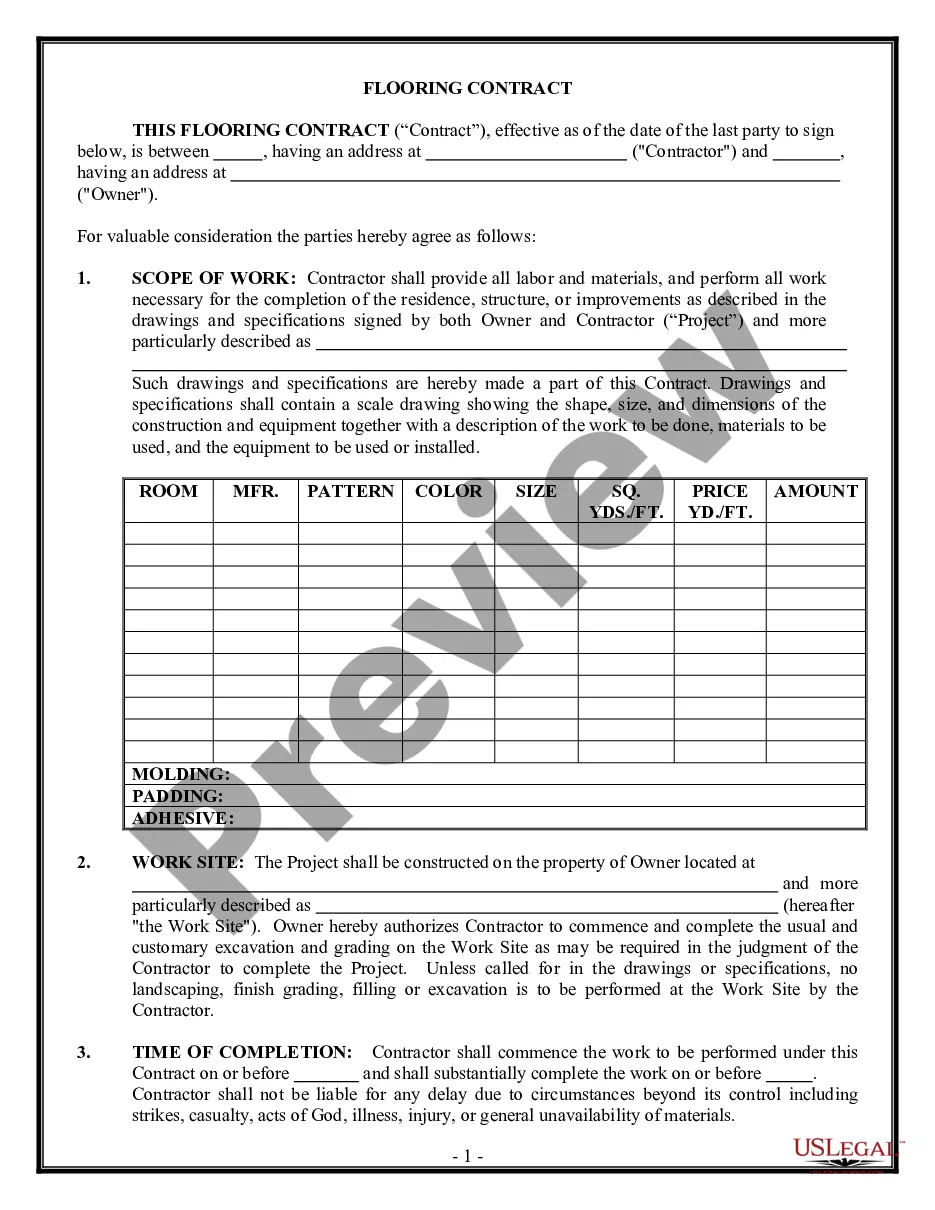
This Paving Contract for Contractor is a legally binding agreement between paving contractors and property owners. It outlines the terms of engagement for paving projects, including payment arrangements, change orders, work site conditions, warranty, and insurance. This contract is specifically tailored to comply with the laws of Utah, distinguishing it from similar contracts that may not address state-specific requirements.
What’s included in this form
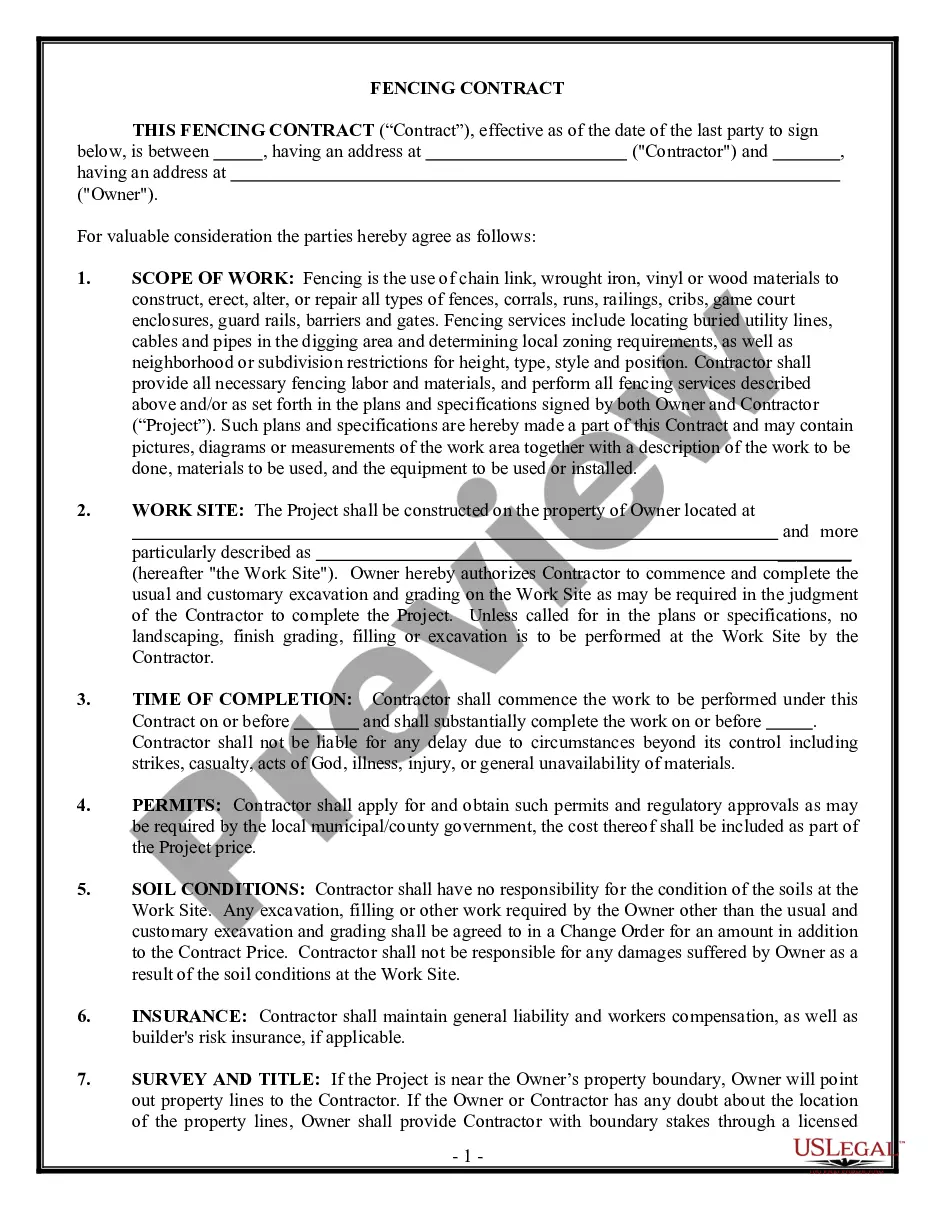
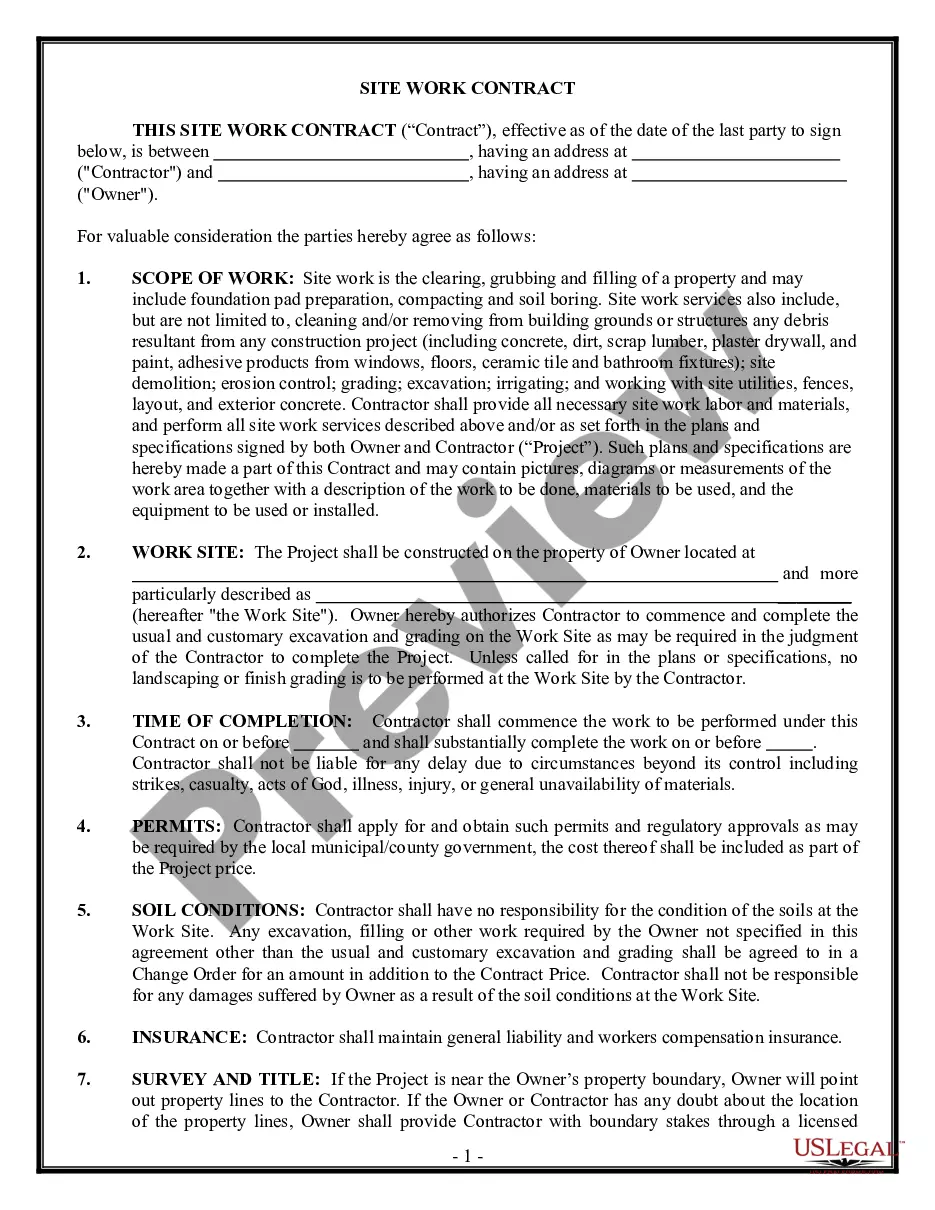
- Permits: Details on obtaining necessary permits and their costs.
- Soil Conditions: Clarifies the contractor's lack of liability for soil conditions at the work site.
- Insurance: Requirements for general liability and workers' compensation insurance.
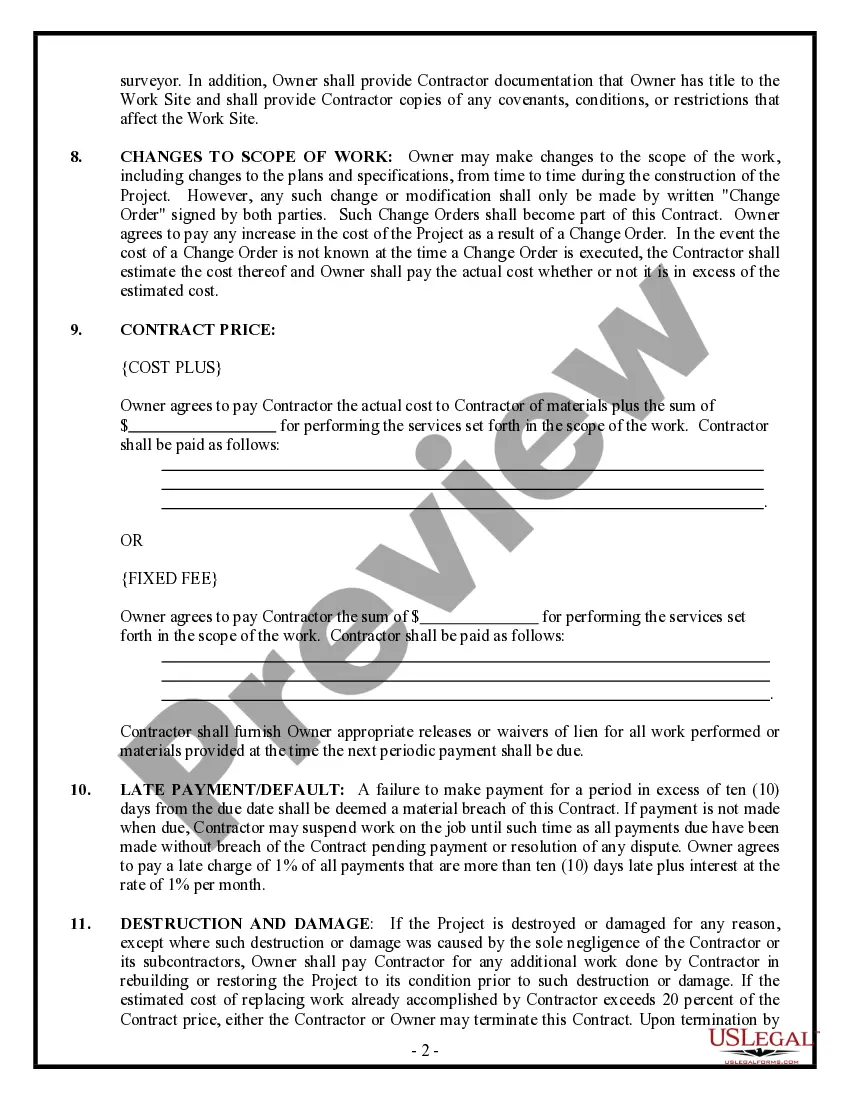
- Changes to Scope of Work: Process for making modifications to the work, documented through change orders.
- Payment Terms: Outlines conditions for late payments and potential breaches.
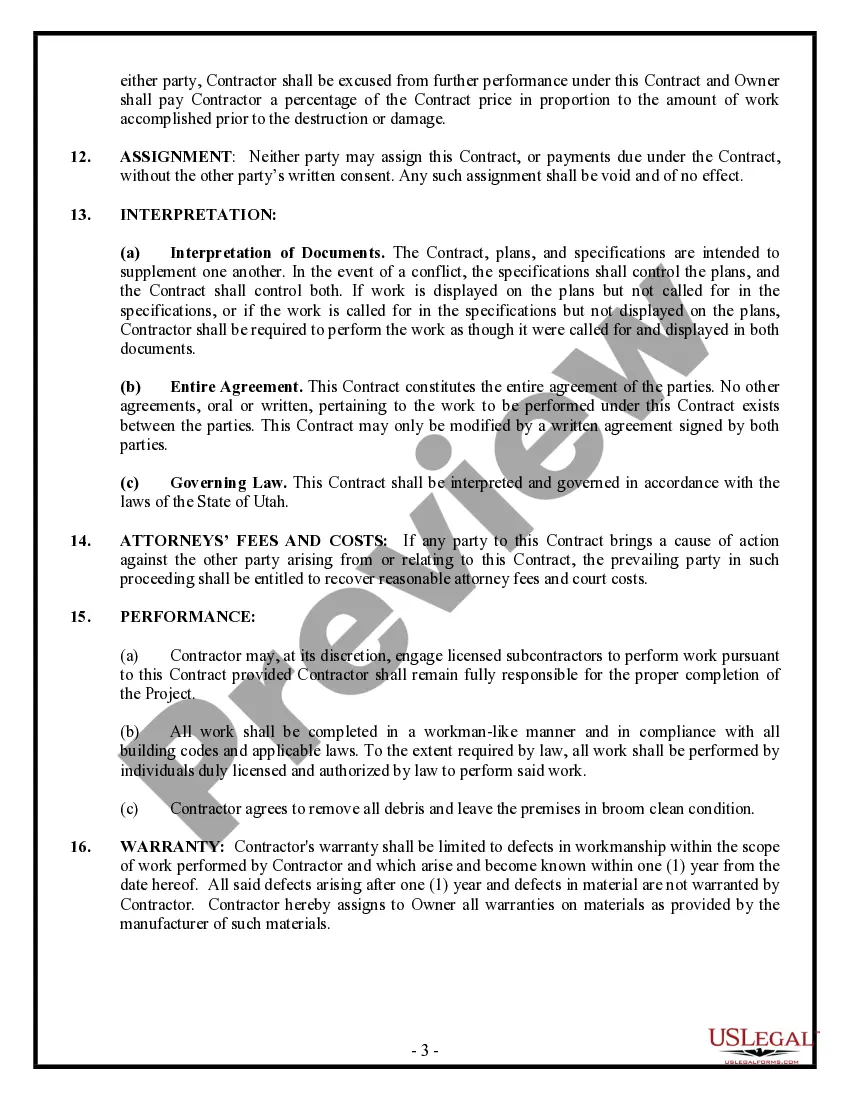
- Warranties: Covers warranty provisions related to workmanship and materials.
When to use this document
This form is essential when a property owner hires a paving contractor for projects such as driveways, parking lots, or pathways. It is crucial to use this contract to formalize the agreement, ensuring clarity on the scope of work, payment terms, and other legal obligations before the project begins.
Who can use this document
- Property owners seeking paving services.
- Paving contractors looking for a clear contractual framework.
- Individuals and businesses in Utah engaged in paving projects.
How to prepare this document
- Identify the parties involved: Enter the names and contact information of both the contractor and the property owner.
- Specify the project details: Outline the work to be completed, including dimensions and materials to be used.
- Define payment terms: Select either a cost plus or fixed fee arrangement and enter details regarding payments.
- Address permits and insurance: Confirm that permits will be obtained and insurance coverage will be maintained throughout the project.
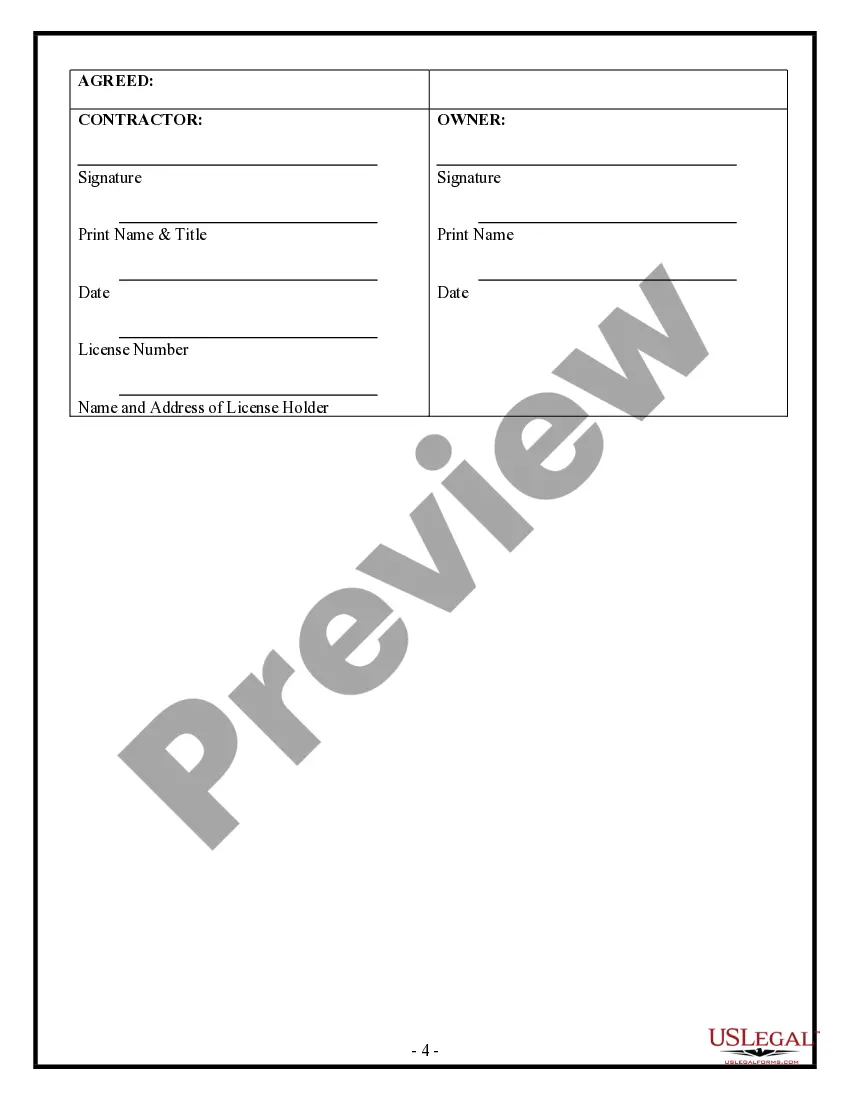
- Sign the contract: Ensure that both parties review and sign the contract to make it legally binding.
Notarization requirements for this form
This form does not typically require notarization unless specified by local law. However, having a notarized signature can add an extra layer of authenticity and security to the agreement.
Get your form ready online
Our built-in tools help you complete, sign, share, and store your documents in one place.
Make edits, fill in missing information, and update formatting in US Legal Forms—just like you would in MS Word.
Download a copy, print it, send it by email, or mail it via USPS—whatever works best for your next step.
Sign and collect signatures with our SignNow integration. Send to multiple recipients, set reminders, and more. Go Premium to unlock E-Sign.
If this form requires notarization, complete it online through a secure video call—no need to meet a notary in person or wait for an appointment.
We protect your documents and personal data by following strict security and privacy standards.

Make edits, fill in missing information, and update formatting in US Legal Forms—just like you would in MS Word.

Download a copy, print it, send it by email, or mail it via USPS—whatever works best for your next step.

Sign and collect signatures with our SignNow integration. Send to multiple recipients, set reminders, and more. Go Premium to unlock E-Sign.

If this form requires notarization, complete it online through a secure video call—no need to meet a notary in person or wait for an appointment.

We protect your documents and personal data by following strict security and privacy standards.
Typical mistakes to avoid
- Failing to clarify the scope of work, leading to disputes later on.
- Neglecting to obtain necessary permits before starting work.
- Not signing or dating the contract, which can invalidate it.
- Overlooking insurance requirements, potentially exposing both parties to risks.
Advantages of online completion
- Convenience of downloading and printing the contract at any time.
- Editability allows for quick adjustments based on project specifics.
- Access to a legally vetted document drafted by licensed attorneys.
Legal use & context
This contract ensures that both parties have a clear understanding of their obligations and rights. It acts as a legal safeguard in case disputes arise, outlining procedures for changes, damages, and compensation.
Main things to remember
- The Paving Contract for Contractor establishes clear terms between paving contractors and property owners.
- It includes essential provisions covering permits, insurance, and change orders.
- This form is specifically tailored for use in Utah, ensuring compliance with state regulations.
Looking for another form?
Form popularity
FAQ
All individuals or business entities intending to engage in construction work in Utah must obtain a state issued contractor license. At least one individual must be selected to act as the qualifier for the license, which requires the individual to pass the necessary tests prior to applying for the license.
#1: Review Your Bid. #2: Review Complete Plans. #3: Review All Specifications. #4: Visit the Job Site. #5: Review the Job Schedule. #6: Complete a Project Checklist. #7: Verify Project Funding. #8: Read Complete Contract.
A lien claimant must file a Preliminary Notice (commonly called a pre-lien) with the SCR within 20 days of when the contractor began work. Failure to file a preliminary notice may preclude you from claiming a valid Preconstruction or Construction Lien. UCA § 38-1a-401 and -501.
Among the data included in the SCR is the State's numerical FIPS code, the State's identification number (which must be unique to the case), the case type (IV-D vs.Non IV-D), locate information on persons listed in the case, in addition to other information.
Construction contracts do not necessarily have to be in writing.If contracts listed in the statute of frauds are not in writing, they cannot be enforced. Construction contracts sometimes fall within the terms of a state's statute of frauds and therefore must be in writing in some instances.
Name of contractor and contact information. Name of homeowner and contact information. Describe property in legal terms. List attachments to the contract. The cost. Failure of homeowner to obtain financing. Description of the work and the completion date. Right to stop the project.
The Utah Residence Lien Recovery Fund is an alternate payment source for contractors, laborers or suppliers whose liens are voided because a homeowner qualifies for protection under the Residence Lien Restriction and Lien Recovery Fund Act.
A contract is formed when one party makes an offer which is unconditionally accepted by the other.A purported acceptance which contains terms different to the offer is not acceptance. This is called a counter offer which may be accepted by the other party or subject to a further counter offer.
Identifying/Contact Information. Title and Description of the Project. Projected Timeline and Completion Date. Cost Estimate and Payment Schedule. Stop Work Clause and Stop Payment Clause. Act of God Clause. Change Order Agreement. Warranty.