Self-Defense
What this document covers
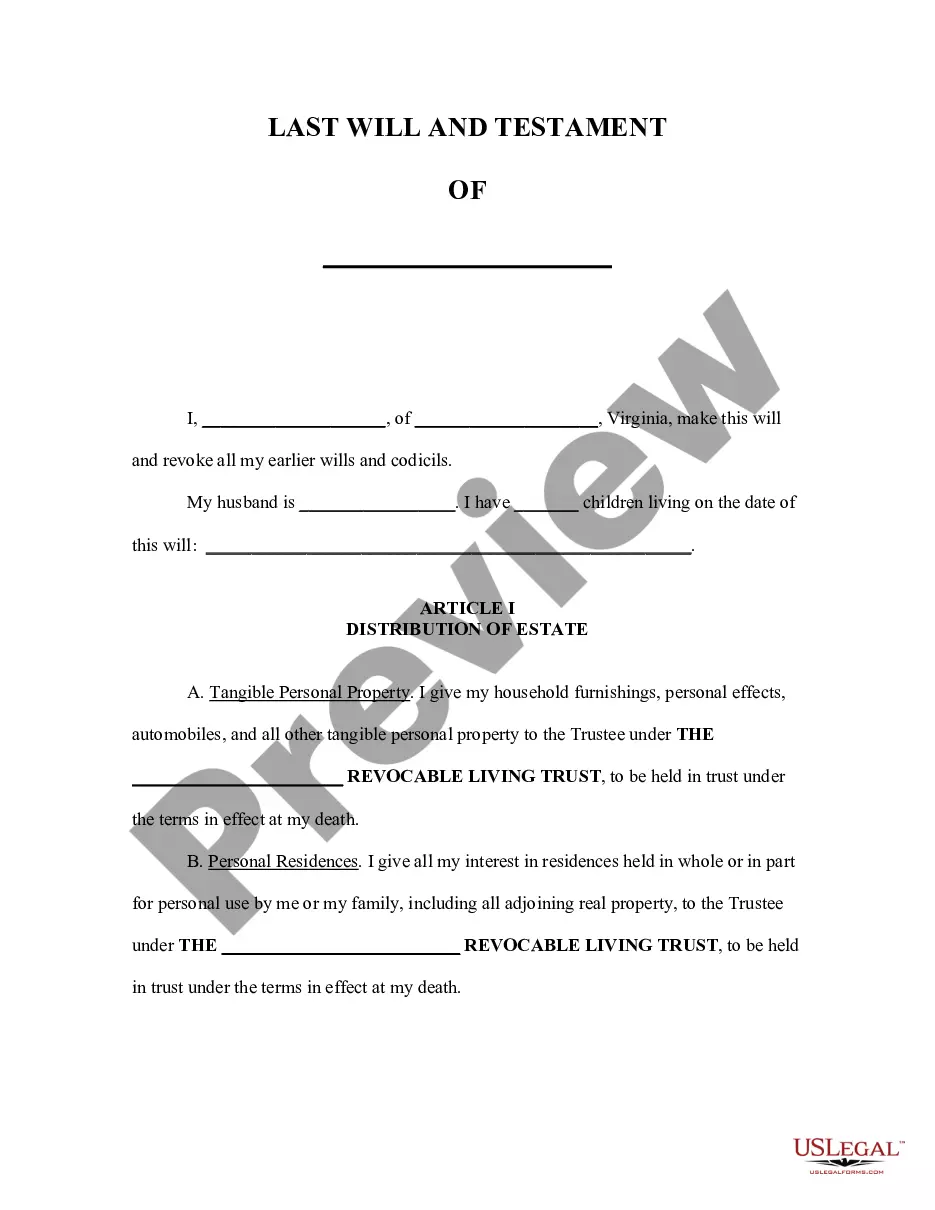
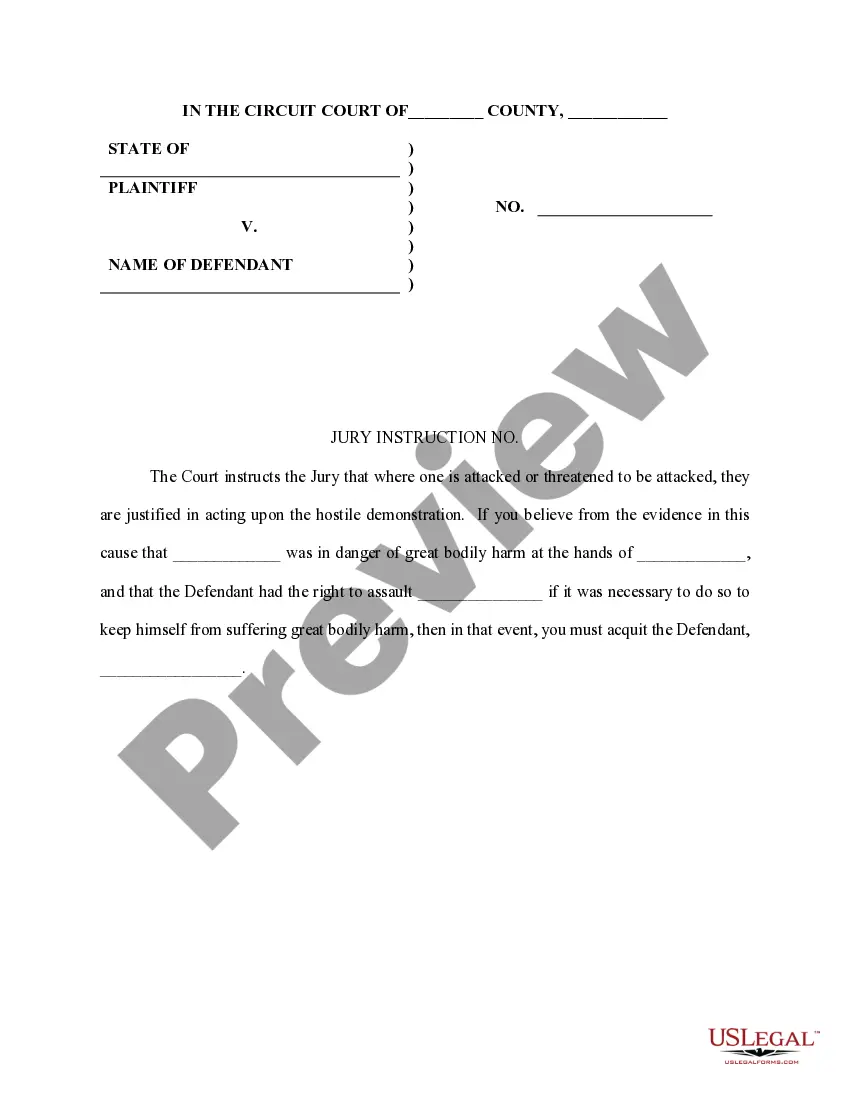
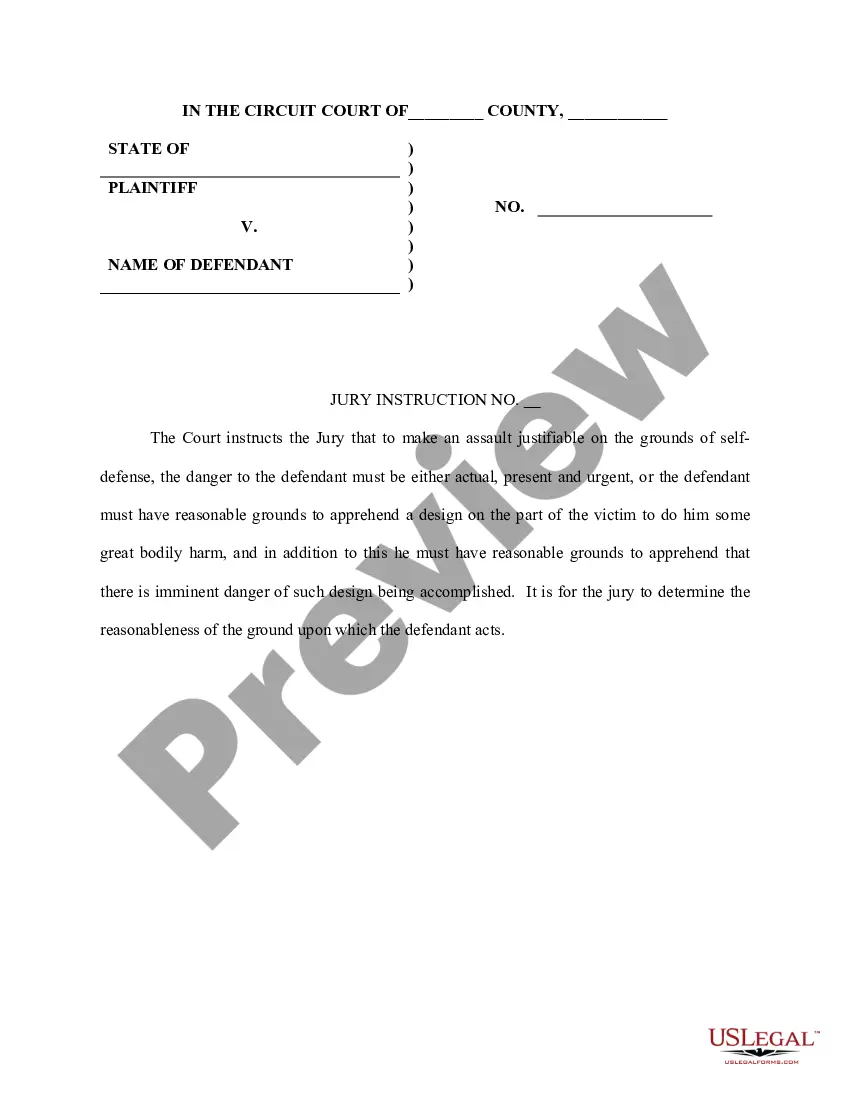
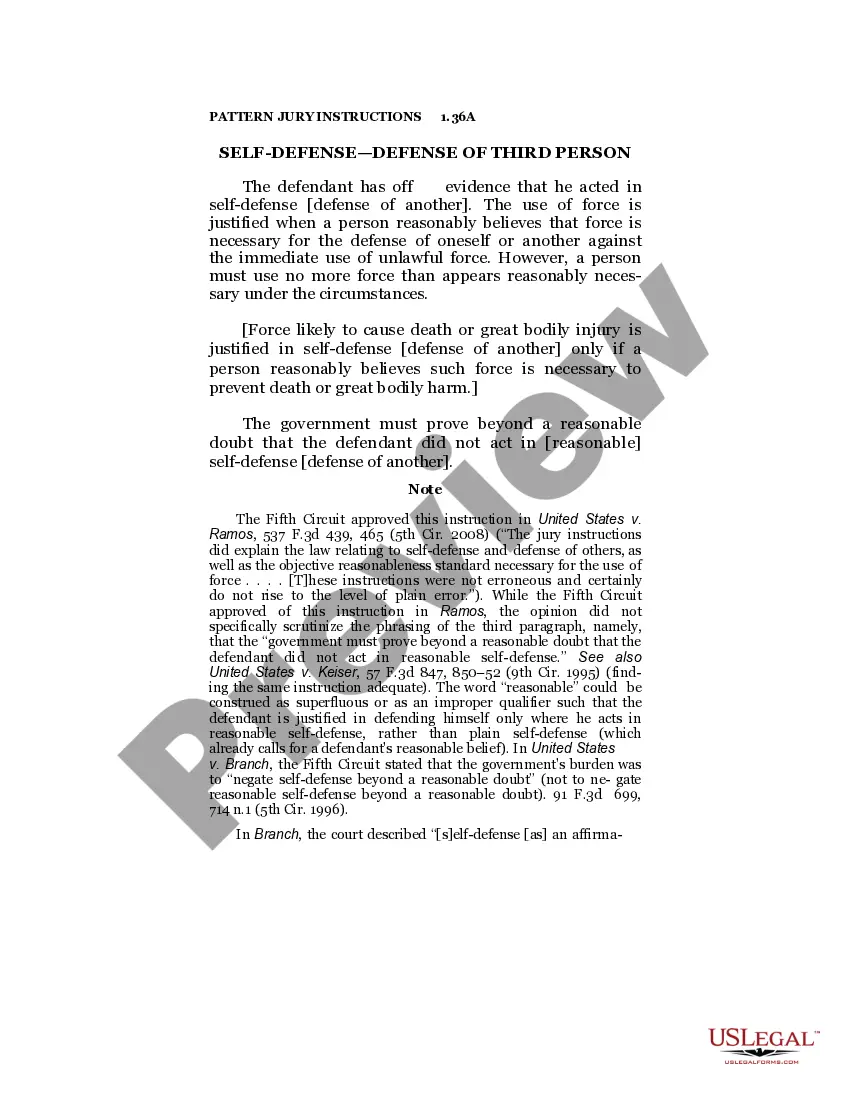
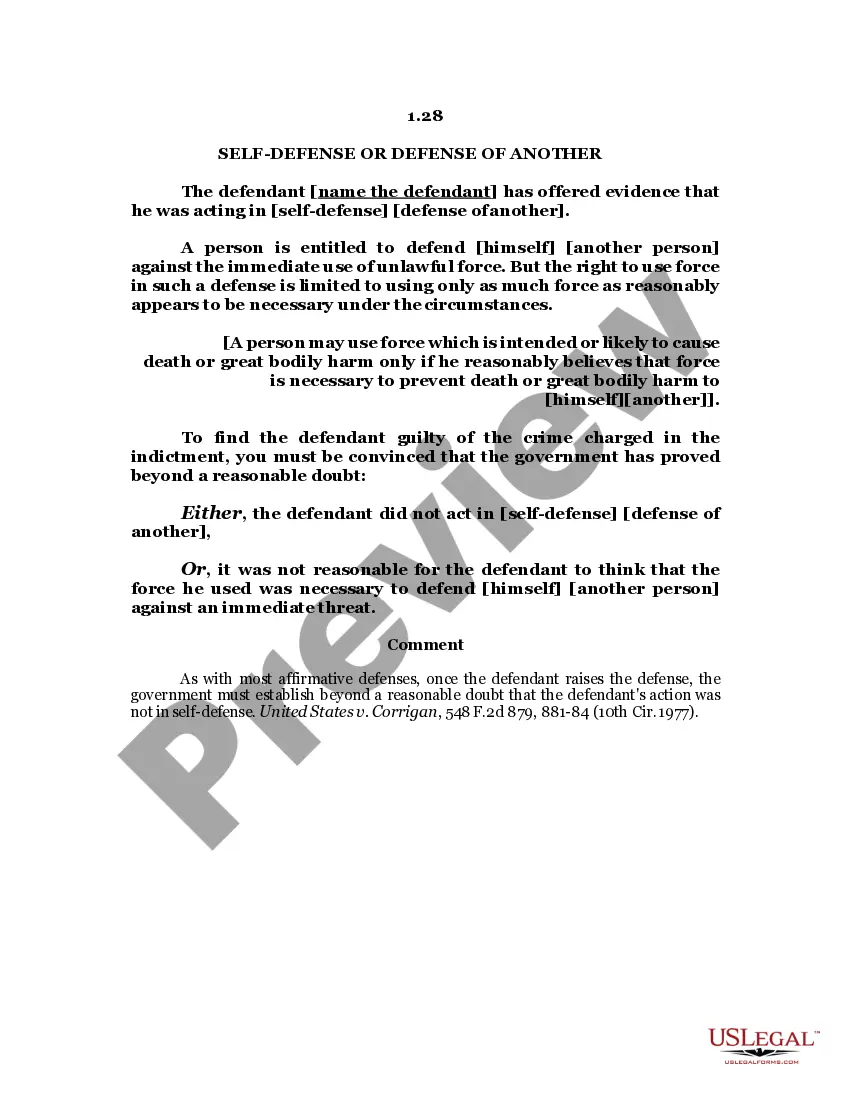
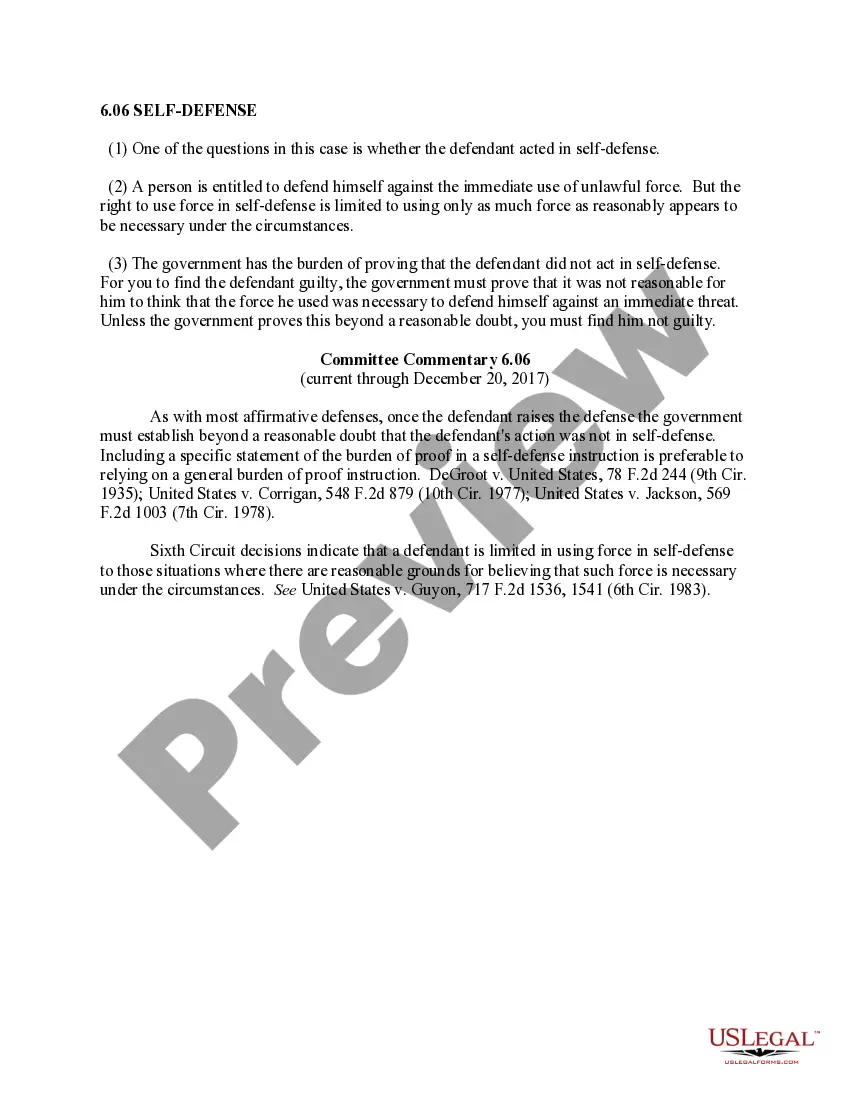
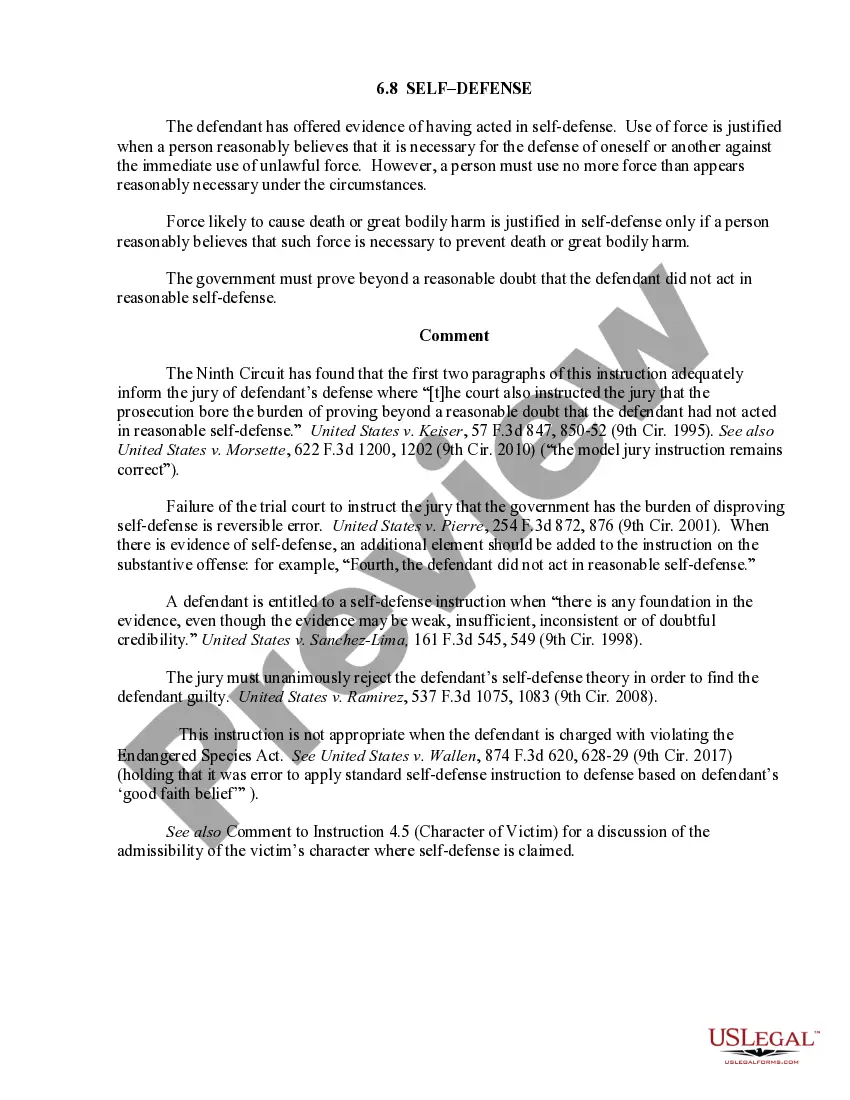
The Self-Defense form is a jury instruction used in legal proceedings to inform jurors about the legal principles surrounding self-defense in an assault case. This form clarifies that individuals have the right to protect themselves when reasonably confronted with a threat or actual attack. It is essential for ensuring that jury decisions are based on the appropriate standards of self-defense, distinguishing it from other legal concepts related to assault.
What’s included in this form
- Instruction on the legal justification for self-defense in assault situations.
- Clarification on the burden of proof required for a self-defense claim.
- Parameters defining when a defendant is justified in using force against an aggressor.
- Specific language and format required by your jurisdiction to avoid appeal issues.
When this form is needed
This form is relevant in situations where an individual faces criminal charges for assault and claims self-defense as a justification for their actions. It becomes particularly important in jury trials, where jurors must be properly instructed on how to evaluate evidence and the validity of a self-defense claim. Scenarios may include physical altercations, threats of violence, or instances where the defendant perceives imminent harm.
Who needs this form
- Defendants in criminal cases involving assault charges.
- Defense attorneys preparing for trial and seeking to instruct jurors properly.
- Legal professionals providing guidance on self-defense claims.
Steps to complete this form
- Begin by identifying the parties involved in the case and specifying their roles.
- Clearly outline the circumstances leading to the alleged attack.
- Fill in the blank spaces with relevant details regarding the incident and the threat.
- Ensure that the language used complies with your state's specific self-defense laws.
- Review the completed form for accuracy and legal appropriateness before submission.
Does this document require notarization?
This form usually doesn’t need to be notarized. However, local laws or specific transactions may require it. Our online notarization service, powered by Notarize, lets you complete it remotely through a secure video session, available 24/7.
Get your form ready online
Our built-in tools help you complete, sign, share, and store your documents in one place.
Make edits, fill in missing information, and update formatting in US Legal Forms—just like you would in MS Word.
Download a copy, print it, send it by email, or mail it via USPS—whatever works best for your next step.
Sign and collect signatures with our SignNow integration. Send to multiple recipients, set reminders, and more. Go Premium to unlock E-Sign.
If this form requires notarization, complete it online through a secure video call—no need to meet a notary in person or wait for an appointment.
We protect your documents and personal data by following strict security and privacy standards.

Make edits, fill in missing information, and update formatting in US Legal Forms—just like you would in MS Word.

Download a copy, print it, send it by email, or mail it via USPS—whatever works best for your next step.

Sign and collect signatures with our SignNow integration. Send to multiple recipients, set reminders, and more. Go Premium to unlock E-Sign.

If this form requires notarization, complete it online through a secure video call—no need to meet a notary in person or wait for an appointment.

We protect your documents and personal data by following strict security and privacy standards.
Common mistakes to avoid
- Failing to customize the form to align with state-specific legal definitions of self-defense.
- Leaving blanks unfilled, which may lead to misinterpretation by jurors.
- Using outdated or incorrect legal terms, risking appeal issues.
Advantages of online completion
- Convenience of downloading and customizing the form from anywhere.
- Access to quality templates drafted by licensed attorneys with legal expertise.
- Time-saving editing features that ensure a streamlined completion process.
Legal use & context
- This form serves as a legal guide for jurors to understand self-defense laws in their jurisdiction.
- Proper use of this instruction can significantly impact the outcome of an assault case.
- Failure to provide accurate jury instructions may lead to appeals and retrials.
Quick recap
- The Self-Defense form is crucial for informing jurors about self-defense rights in assault cases.
- Customization to state-specific laws is essential to avoid legal complications.
- Careful drafting and review of the form can help ensure it meets legal standards and provides accurate guidance to jurors.
Looking for another form?
Form popularity
FAQ
Self-defense can be a defense to assault, battery, and criminal homicide because it always involves the use of force.Most states have special requirements when the defendant uses deadly force in self-defense. Deadly force is defined as any force that could potentially kill.
Widely-considered one of the most effective and practical forms of self-defence is Krav Maga - not technically a martial art, but rather a tactical defence system.
A non-criminal homicide ruling, usually committed in self-defense or in defense of another, exists under United States law. A homicide may be considered justified if it is done to prevent a very serious crime, such as rape, armed robbery, manslaughter or murder.
Self-Defense BasicsSelf-defense is the act of using force to protect yourself from danger. Law enforcement officers do not actually arrest an individual for self-defense but for engaging in actions that, at face value, are criminal.
The five D's of security seek to do one or more of the following: Deter, Detect, Delay, Deny and Defend.
Hammer strike. Using your car keys is one of the easiest ways to defend yourself. Groin kick. Heel palm strike. Elbow strike. Alternative elbow strikes. Escape from a 'bear hug attack' Escape with hands trapped. Escape from side headlock.
No one wants to be the victim of a violent crime. For that reason, California law recognizes the need to protect yourself and others from harm. This right is known as self-defense. It can be used as a legal defense to actions that would otherwise be considered criminal, including assault, battery, and even murder.
According to California's self-defense laws, a person cannot be charged or found guilty of murder or a violent crime if said action was done to protect oneself or another person.It's treated as one of the more severe crimes.
Self-defense is defined as the right to prevent suffering force or violence through the use of a sufficient level of counteracting force or violence.