Agreement to Establish Committee to Wind up Partnership
Overview of this form
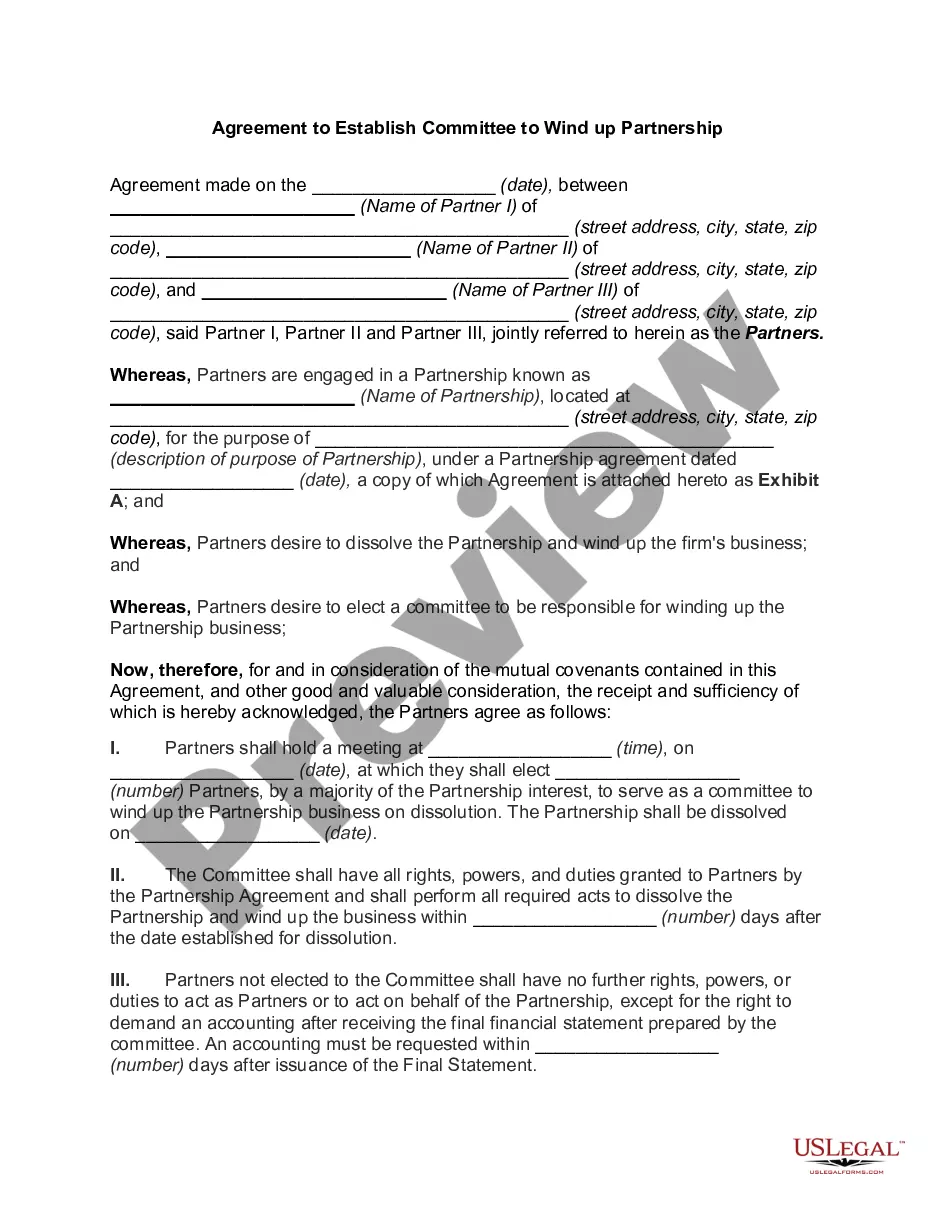
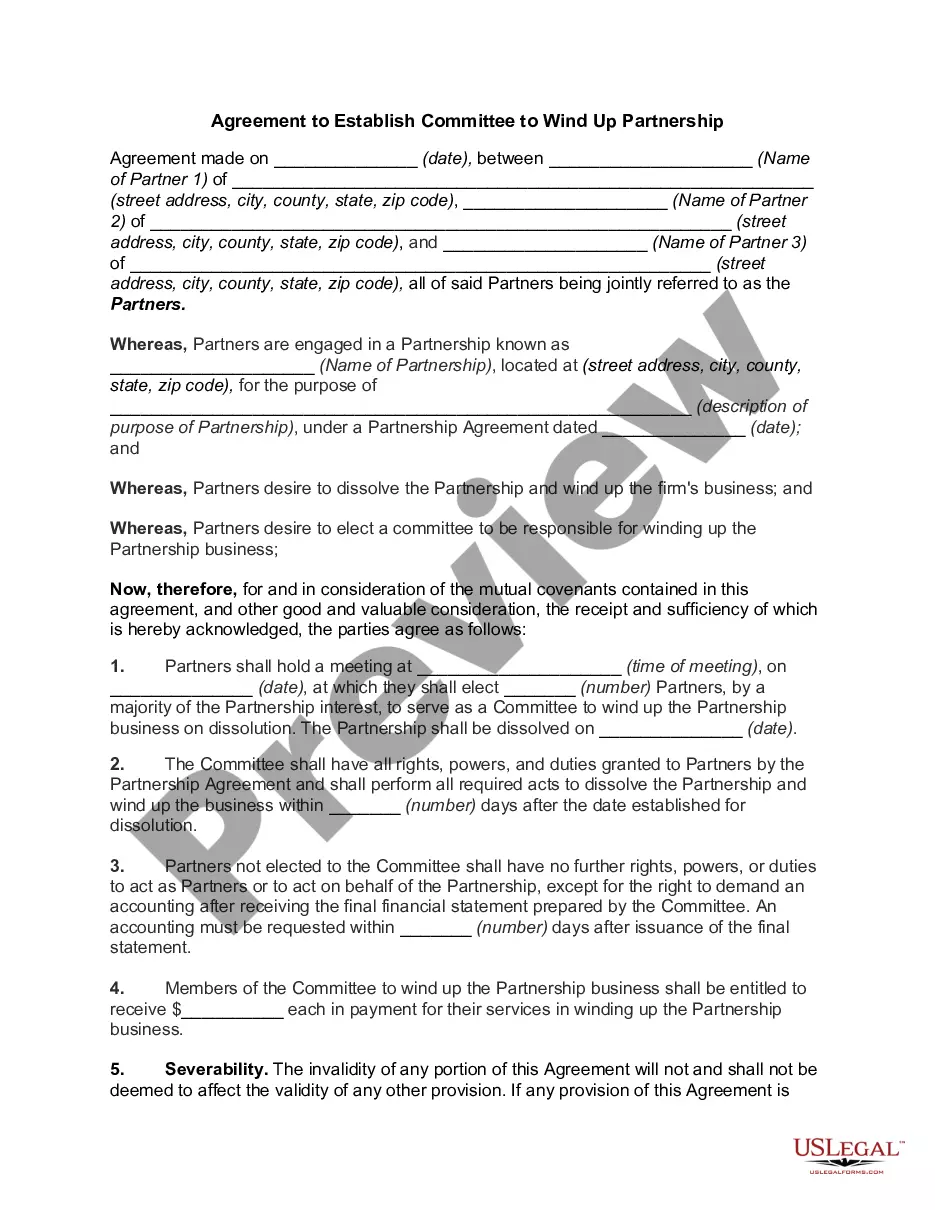
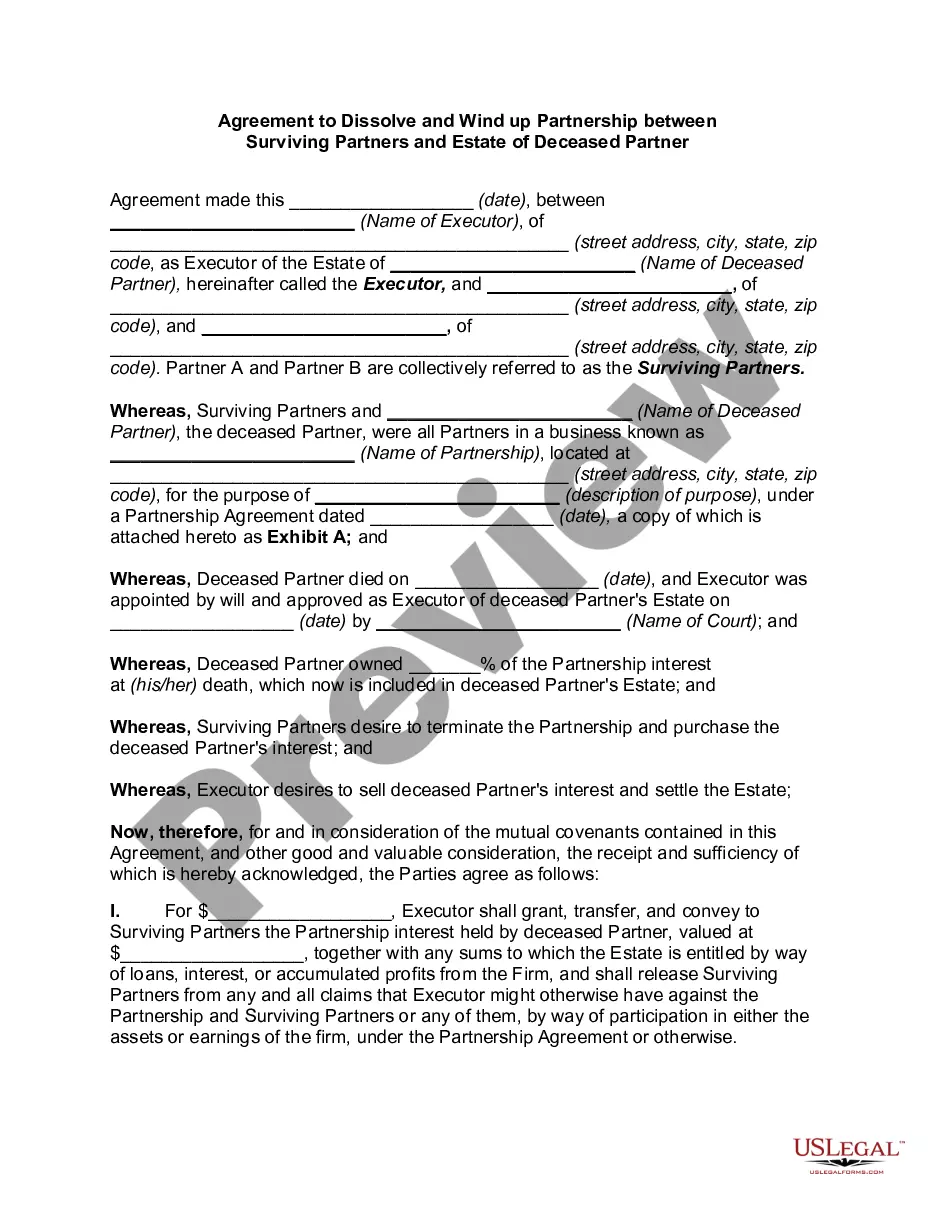
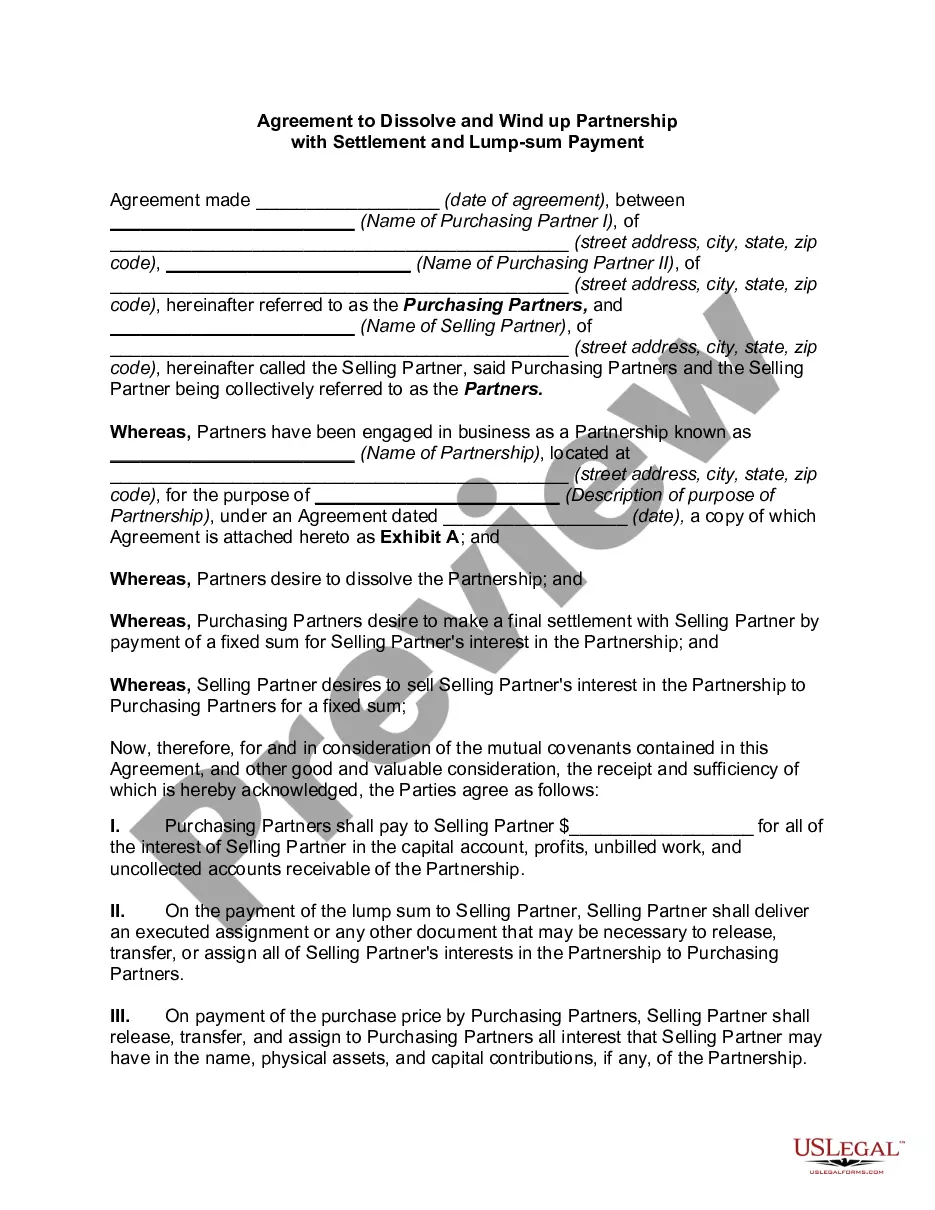
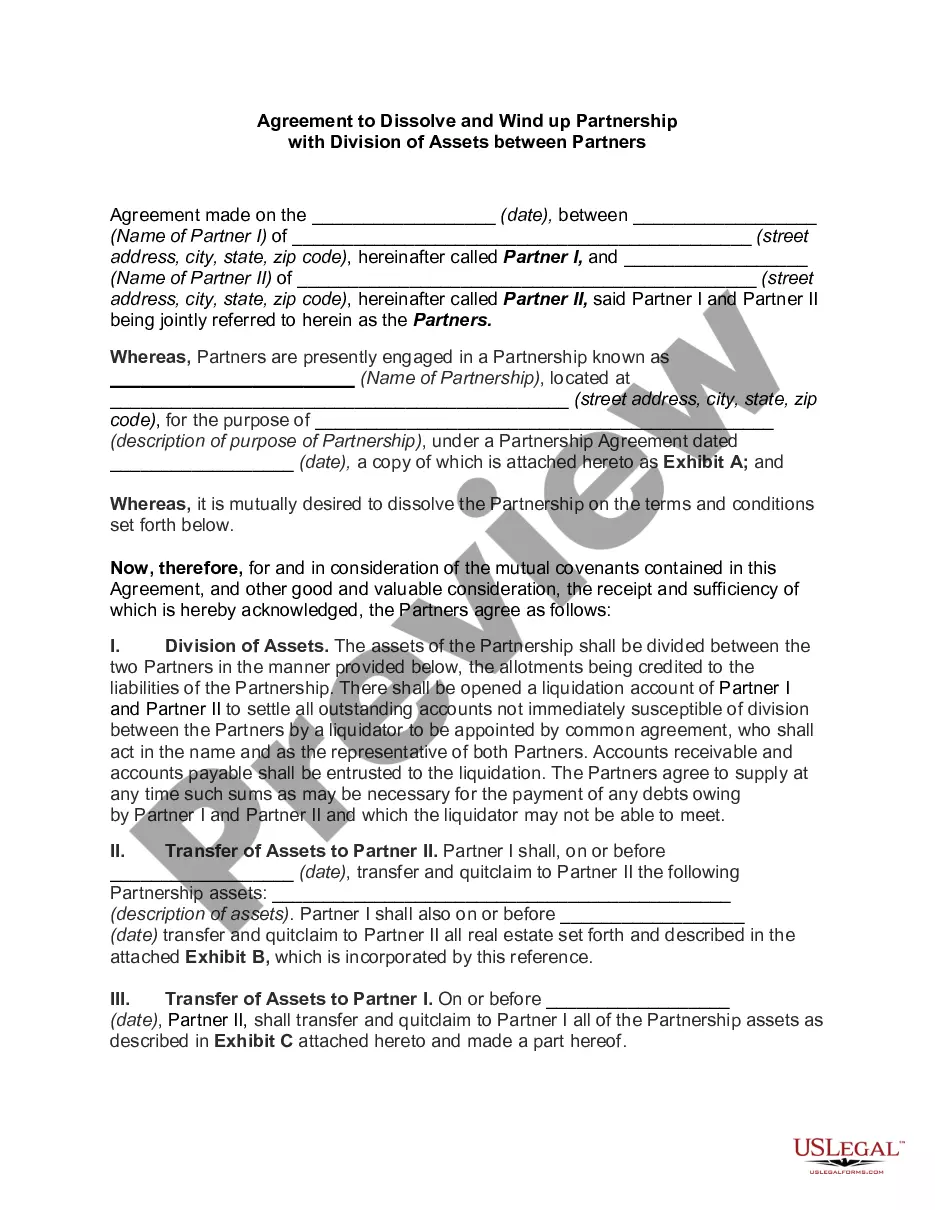
The Agreement to Establish Committee to Wind up Partnership is a legal document that outlines the process for dissolving a partnership business and defining the responsibilities of a designated committee to manage the winding-up process. This form is critical in ensuring that the dissolution of the partnership is carried out systematically and fairly, distinguishing it from general dissolution documents by focusing specifically on committee formation and the management of remaining assets and liabilities.
Main sections of this form
- Identification of partners involved in the partnership.
- Details about the partnership, including its name and purpose.
- Appointment of a committee to handle the winding-up process.
- Defined rights and duties of partners during the dissolution.
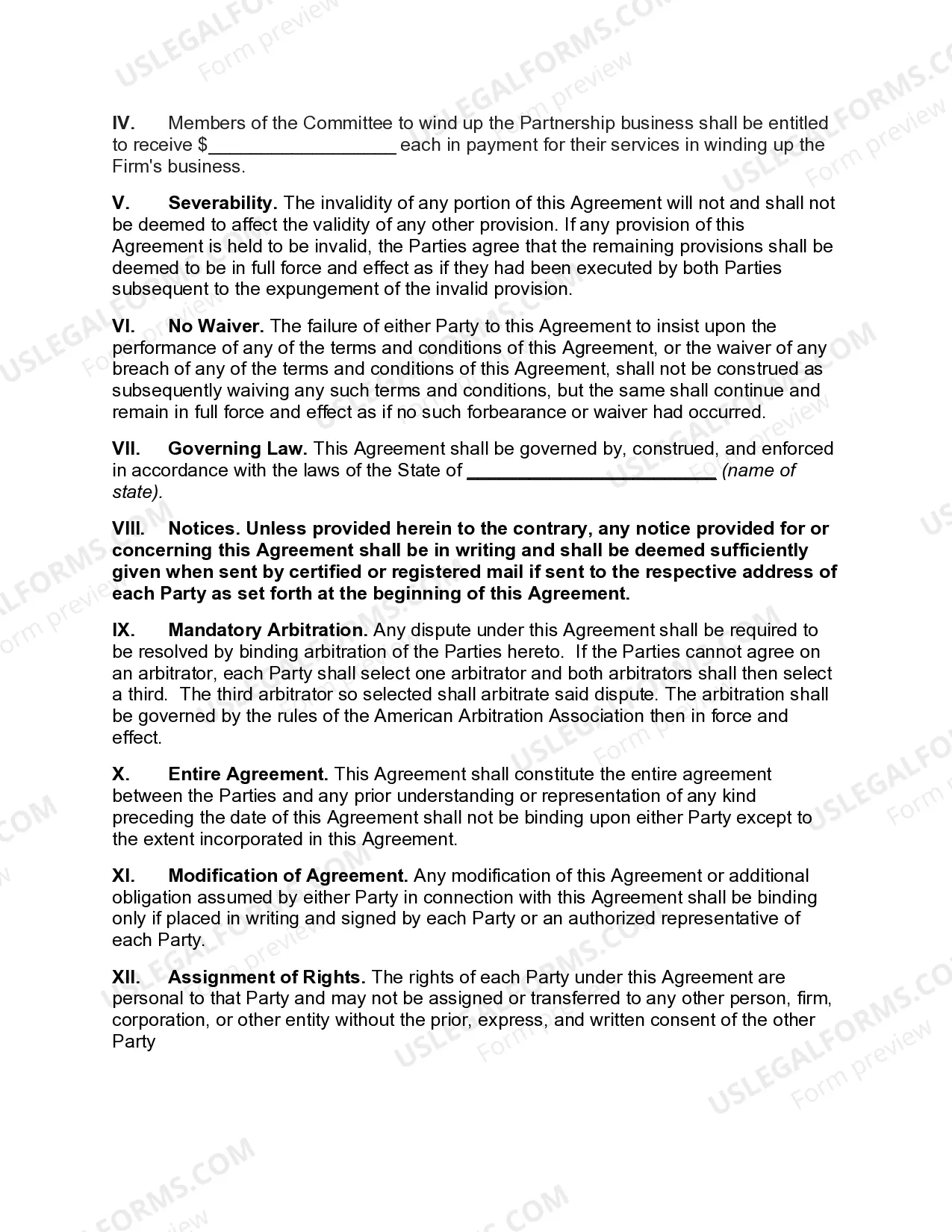
- Compensation for committee members for their services.
- Conditions for modification and assignment of rights under the agreement.
When to use this document
This form is used when partners in a business decide to dissolve their partnership and need to create a structured approach for winding up their affairs. It is particularly relevant when significant assets or obligations remain and a systematic process is essential to ensure all partners are treated equitably. This agreement provides clarity about who will oversee the final actions necessary to close the partnership, minimizing potential disputes among partners.
Who can use this document
This agreement is suitable for:
- Partners in a limited or general partnership looking to dissolve their business.
- Partners wishing to establish a committee with specific powers to manage the winding-up process.
- Individuals seeking a legally structured agreement to help divide remaining assets and liabilities.
How to prepare this document
- Identify and list the names and addresses of all partners involved in the agreement.
- Specify the name and purpose of the partnership that is being dissolved.
- Determine and document the date for holding the meeting to elect the committee.
- State the number of partners to be elected to the committee and record any agreed compensation.
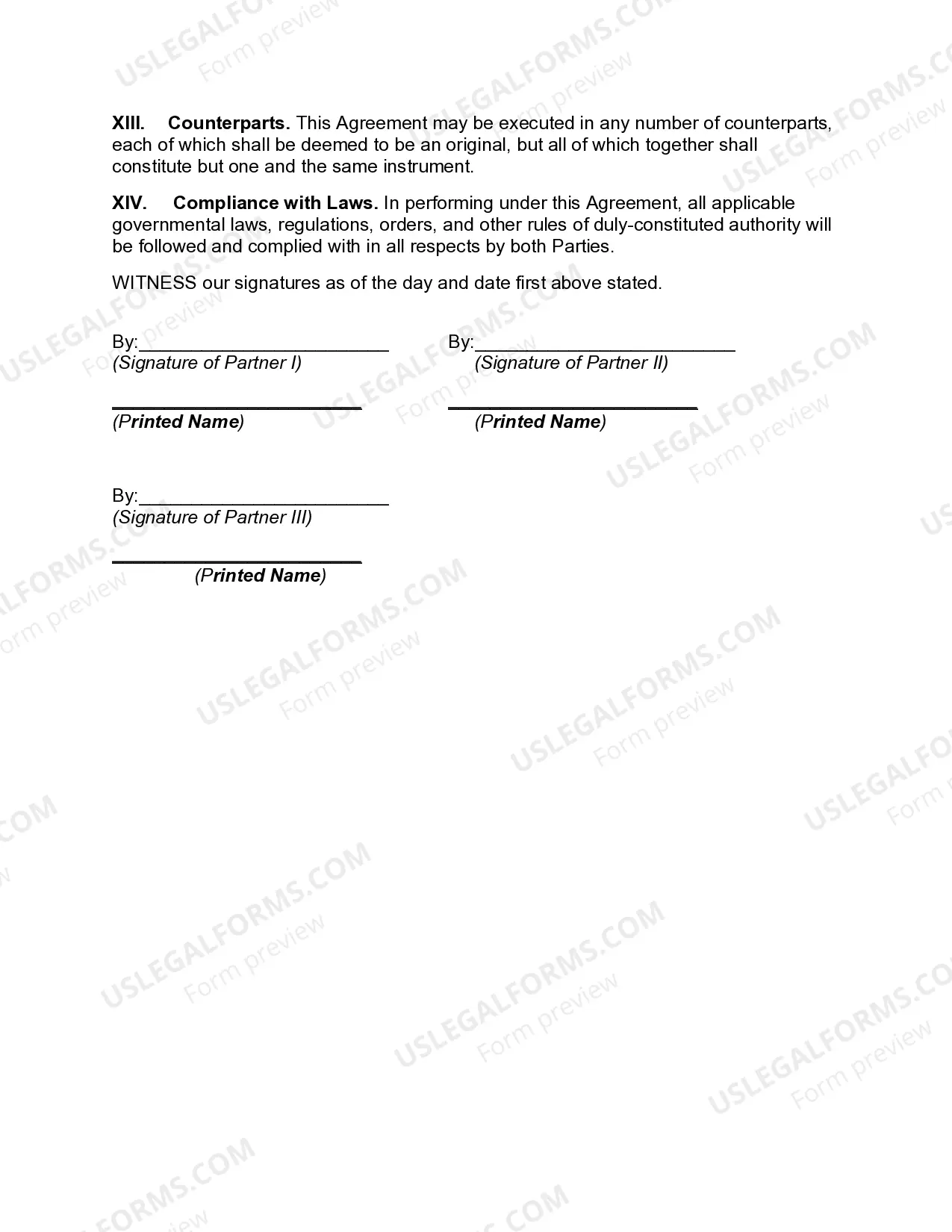
- Have all partners sign the document to validate the agreement.
Notarization guidance
This form does not typically require notarization unless specified by local law. However, it is recommended to consult with a legal professional to confirm if any additional requirements apply in your jurisdiction.
Get your form ready online
Our built-in tools help you complete, sign, share, and store your documents in one place.
Make edits, fill in missing information, and update formatting in US Legal Forms—just like you would in MS Word.
Download a copy, print it, send it by email, or mail it via USPS—whatever works best for your next step.
Sign and collect signatures with our SignNow integration. Send to multiple recipients, set reminders, and more. Go Premium to unlock E-Sign.
If this form requires notarization, complete it online through a secure video call—no need to meet a notary in person or wait for an appointment.
We protect your documents and personal data by following strict security and privacy standards.

Make edits, fill in missing information, and update formatting in US Legal Forms—just like you would in MS Word.

Download a copy, print it, send it by email, or mail it via USPS—whatever works best for your next step.

Sign and collect signatures with our SignNow integration. Send to multiple recipients, set reminders, and more. Go Premium to unlock E-Sign.

If this form requires notarization, complete it online through a secure video call—no need to meet a notary in person or wait for an appointment.

We protect your documents and personal data by following strict security and privacy standards.
Common mistakes to avoid
- Failing to include all partner names and addresses accurately.
- Not specifying the date and details of the final meeting.
- Neglecting to clearly define the roles and compensation of the committee members.
- Omitting signatures or misplacing them, which may invalidate the agreement.
Why complete this form online
- Convenience of filling out the form from anywhere at any time.
- Easy access to legal templates drafted by licensed attorneys.
- Allows for edits and updates before finalizing the agreement.
- Ensures compliance with state-specific requirements.
Looking for another form?
Form popularity
FAQ
Name of your partnership. Contributions to the partnership and percentage of ownership. Division of profits, losses and draws. Partners' authority. Withdrawal or death of a partner.
Although there's no requirement for a written partnership agreement, often it's a very good idea to have such a document to prevent internal squabbling (about profits, direction of the company, etc.) and give the partnership solid direction. Limited liability partnerships do have a writing requirement.
Although each partnership agreement differs based on business objectives, certain terms should be detailed in the document, including percentage of ownership, division of profit and loss, length of the partnership, decision making and resolving disputes, partner authority, and withdrawal or death of a partner.
So the document in writing containing the terms and conditions as agreed between the partners is called partnership deed.
Name of the partnership. Contributions to the partnership. Allocation of profits, losses, and draws. Partners' authority. Partnership decision-making. Management duties. Admitting new partners. Withdrawal or death of a partner.
Percentage of ownership. Allocation of profits and losses. Who can bind the partnership? Making decisions. The death of a partner. Resolving disputes.
Like any contractual agreement, partnership agreements do not have to be in writing, as verbal agreements are also legally binding.In a partnership, each person is liable for the debts and actions of the other partners, so the contractual relationship and obligations need to be completely transparent.
Your Partnership's Name. Partnership Contributions. Allocations profits and losses. Partners' Authority and Decision Making Powers. Management. Departure (withdrawal) or Death. New Partners. Dispute Resolution.