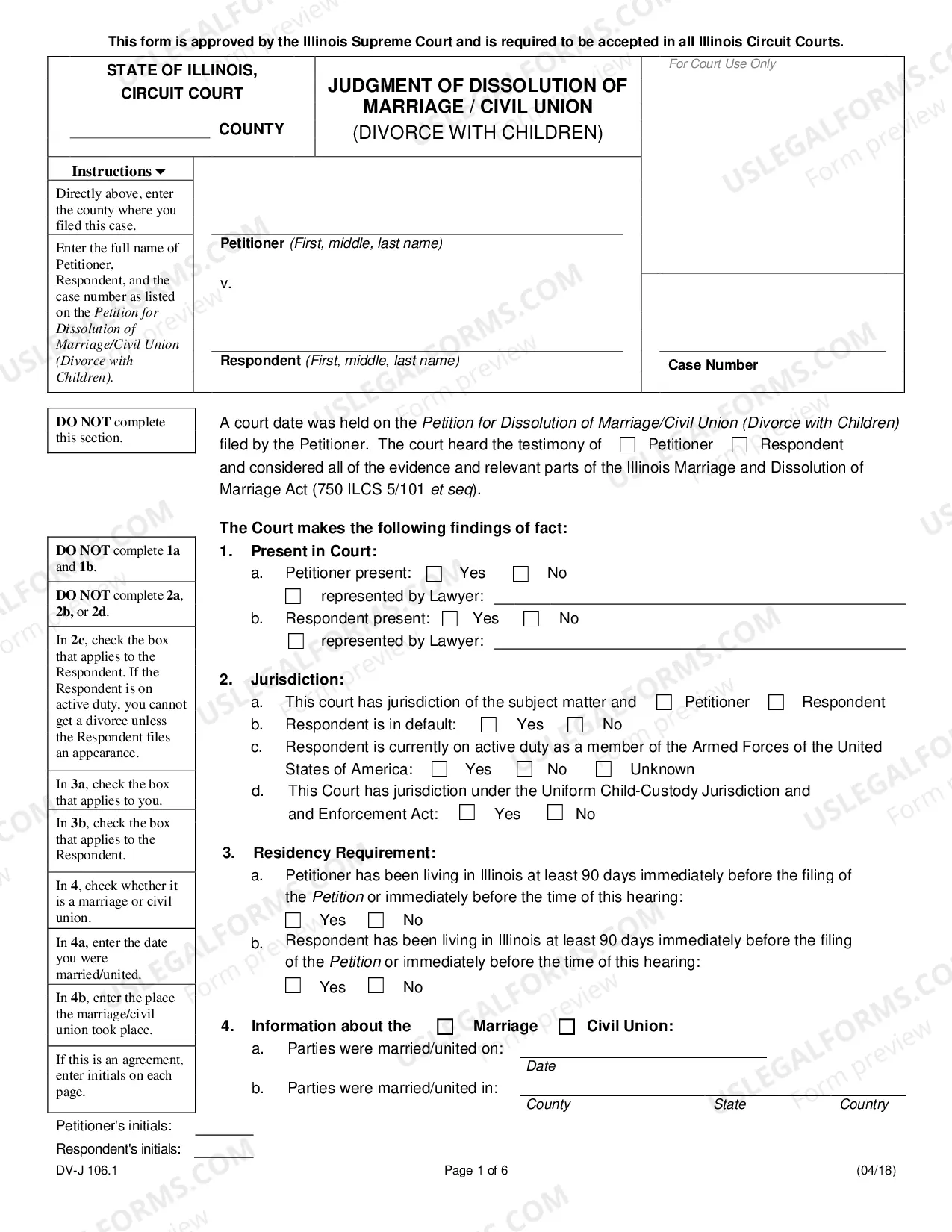
Agreement to Establish Committee to Wind Up Partnership
Overview of this form
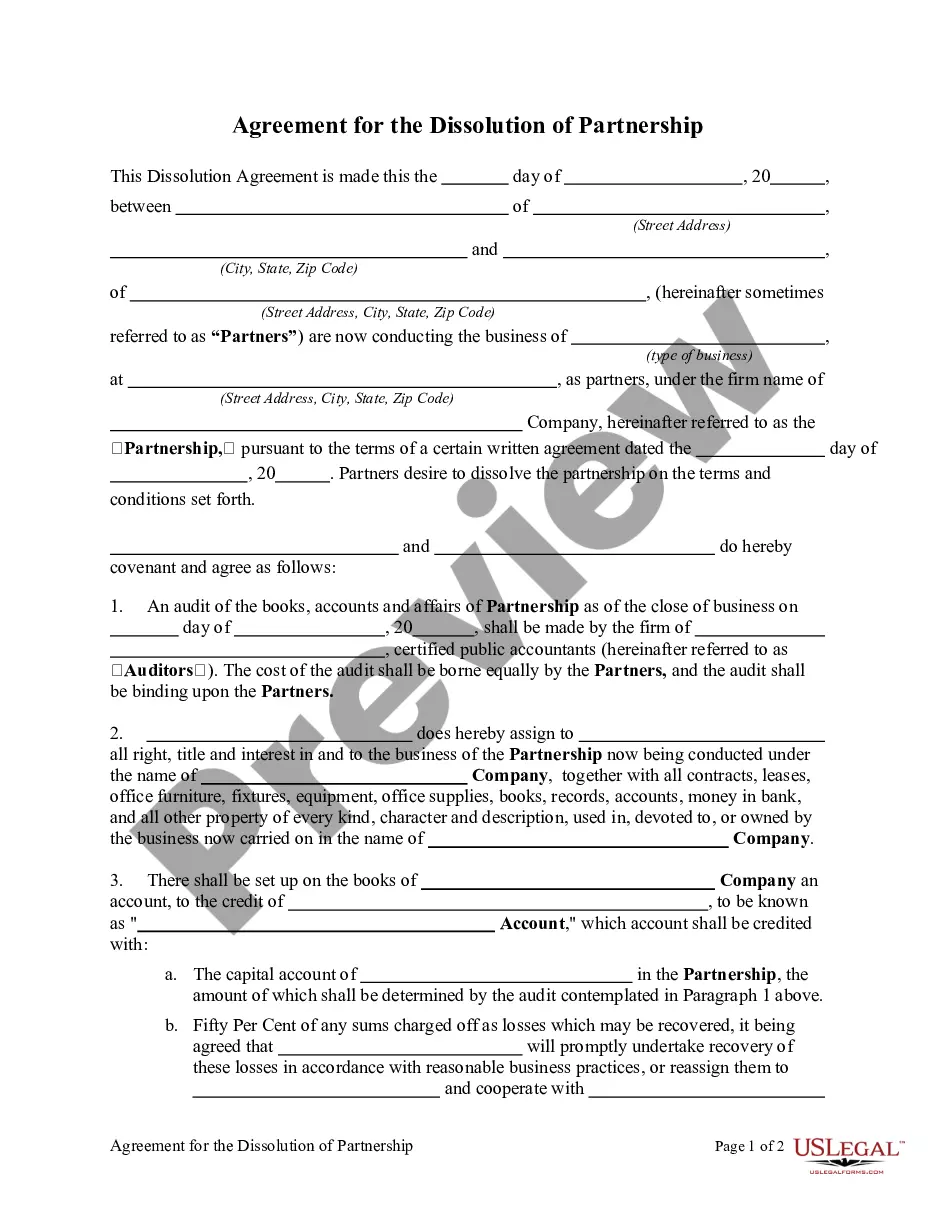
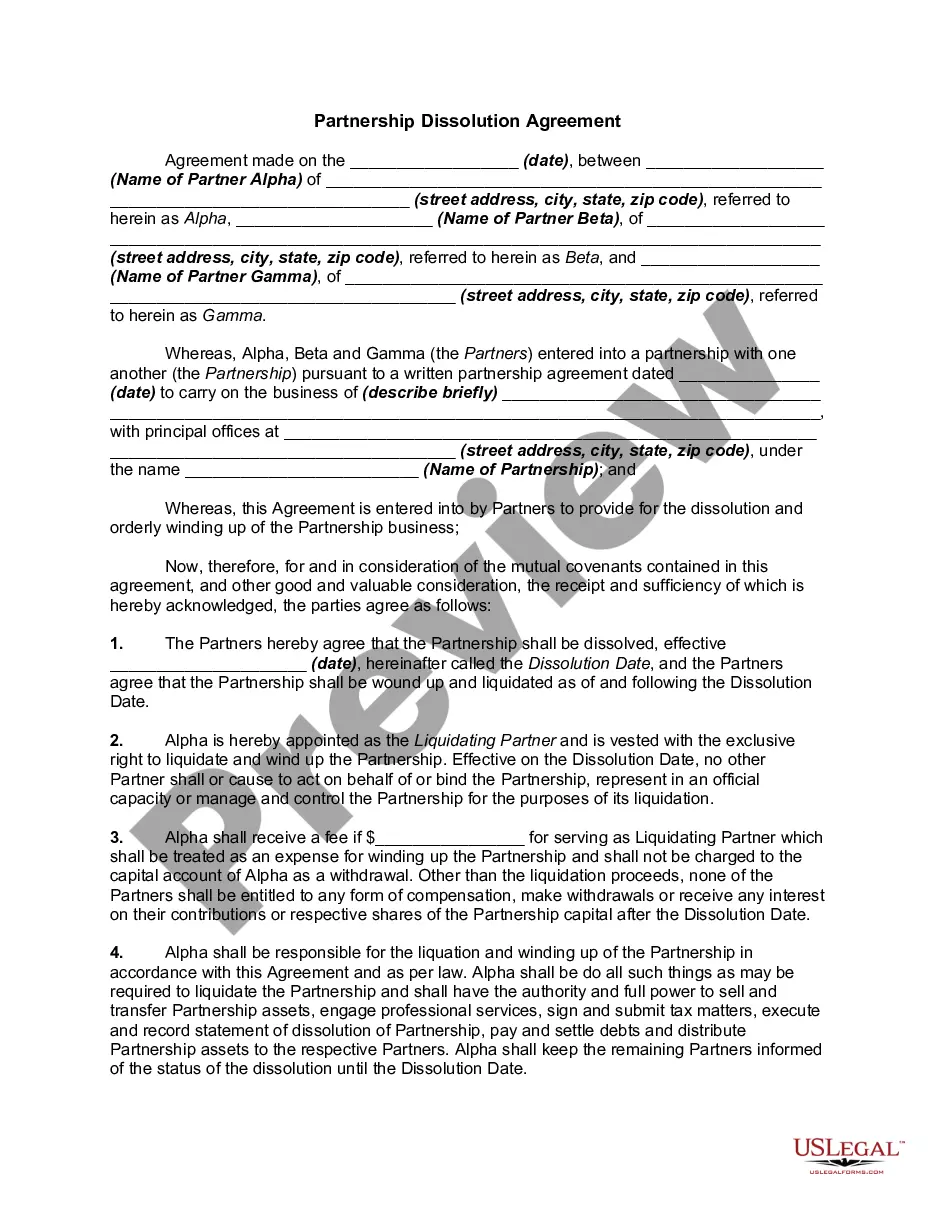
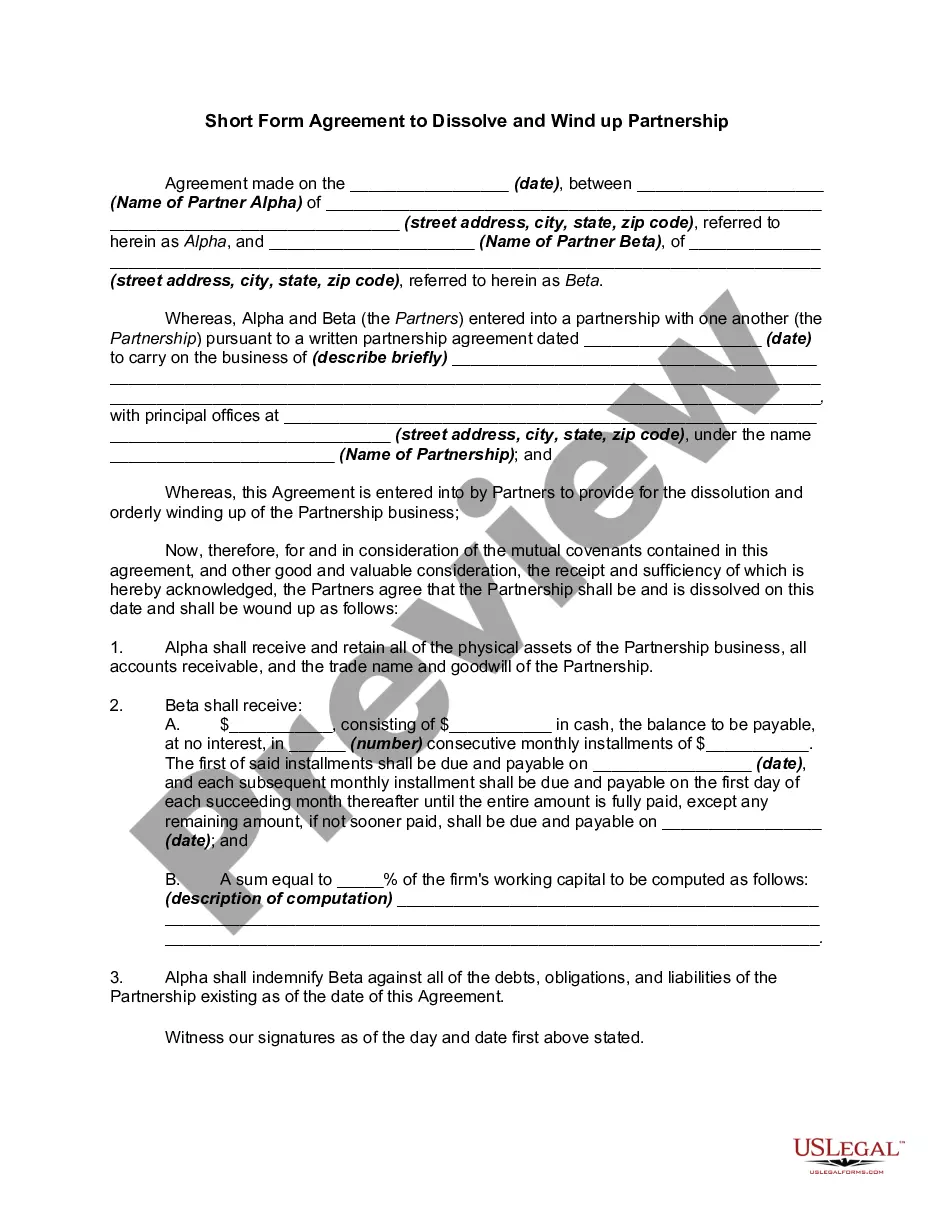
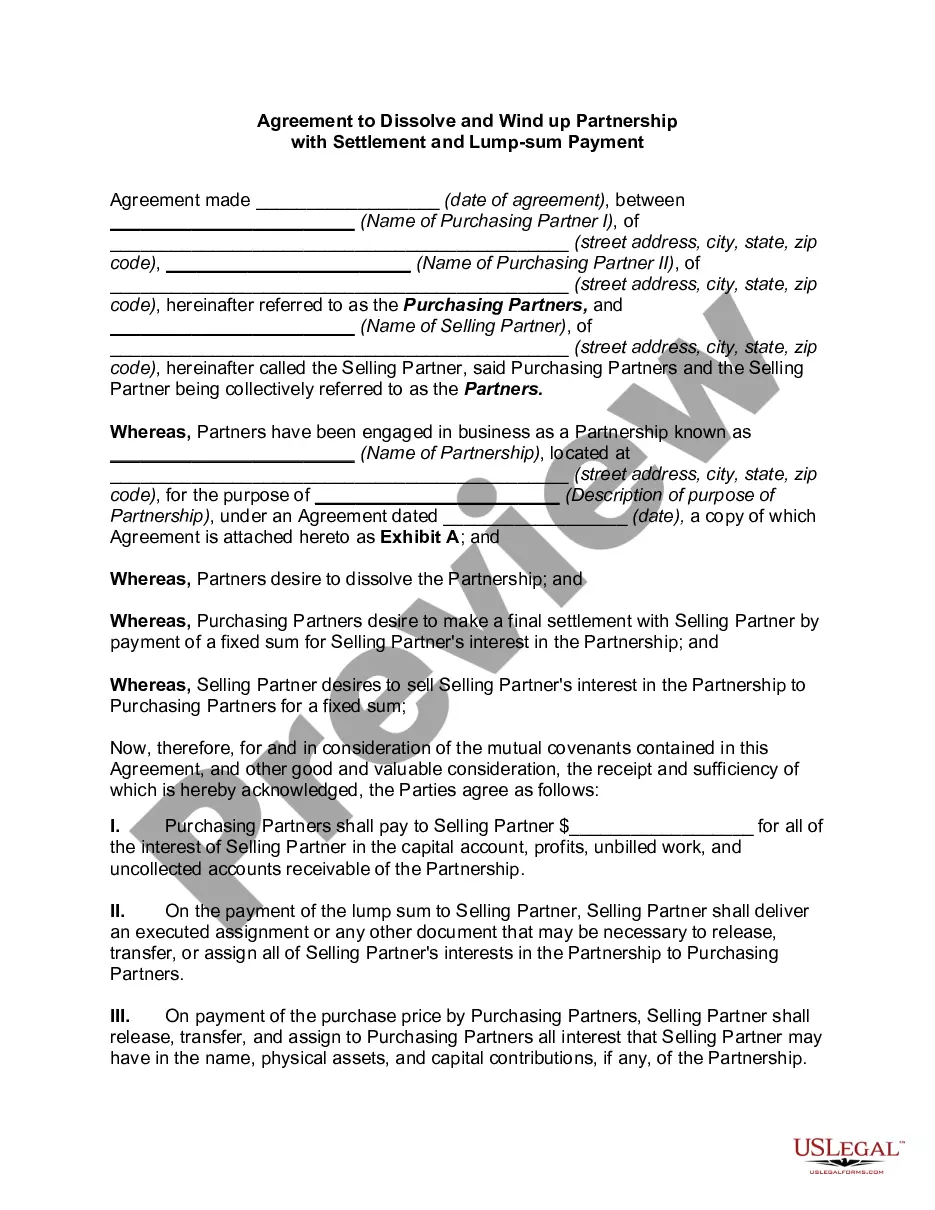
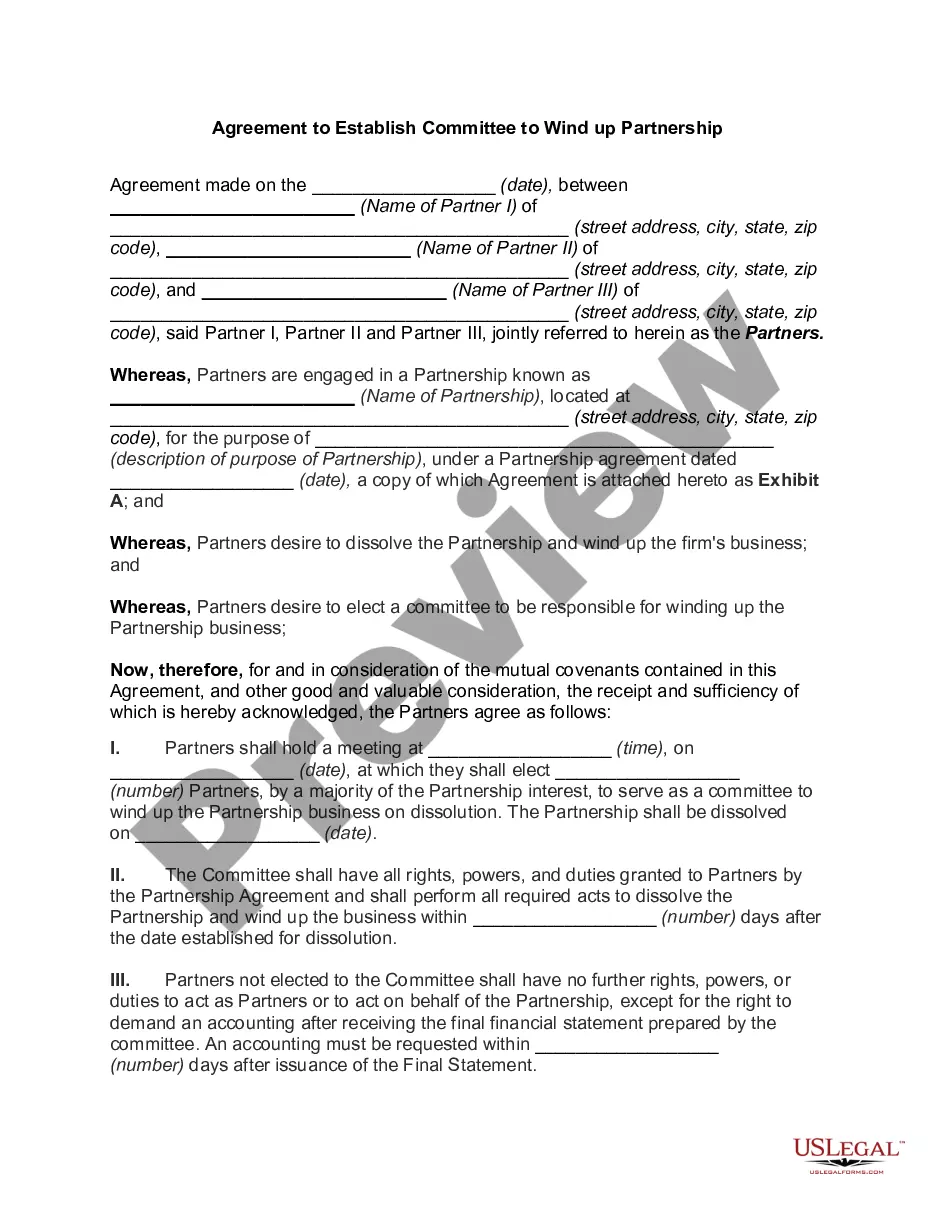
The Agreement to Establish Committee to Wind Up Partnership is a legal document used during the dissolution of a partnership. This form specifically outlines the process for "winding up," which includes liquidating assets, settling debts, and distributing remaining assets among partners. Unlike other partnership dissolution forms, this agreement appoints a committee responsible for overseeing the winding-up process in accordance with state partnership statutes.
Key parts of this document
- Meeting details for electing the winding-up committee, including date, time, and location.
- Committee members' powers, rights, and duties during the winding-up process.
- Provisions regarding the rights of partners not elected to the committee.
- Compensation details for committee members for their services.
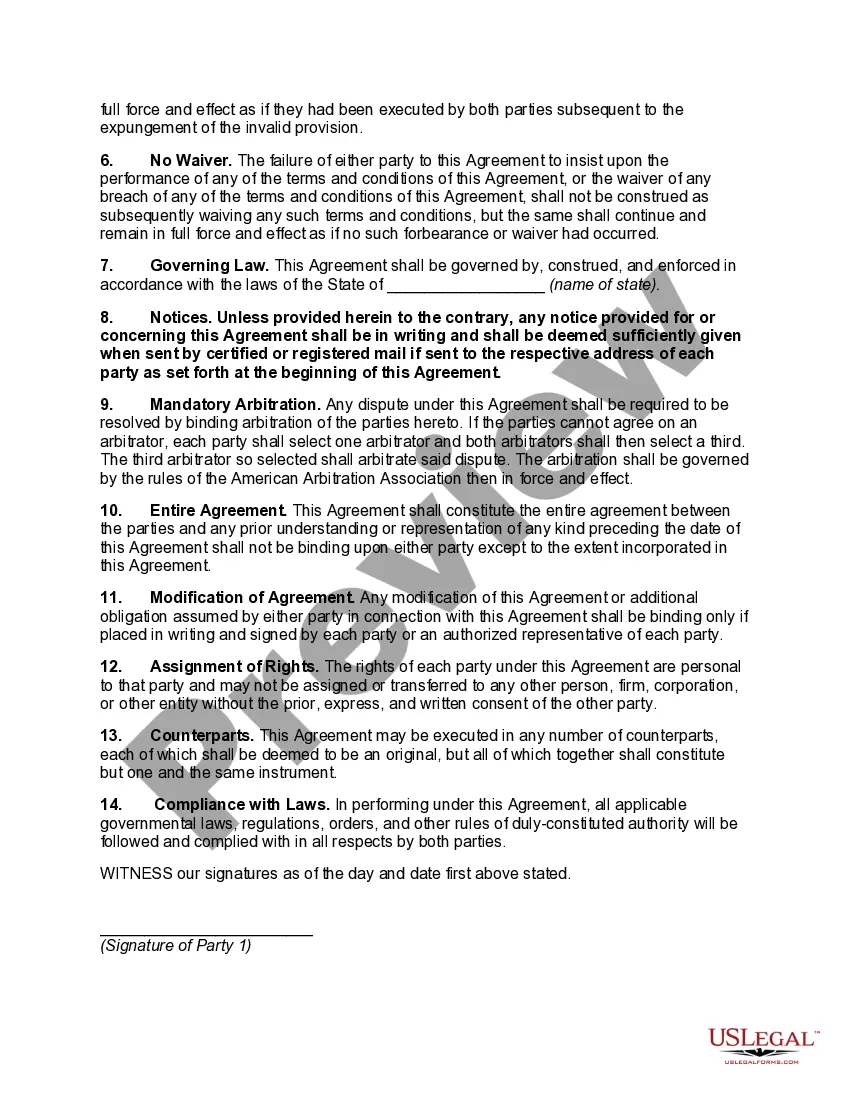
- Severability and waiver clauses to protect against invalid provisions.
- Details on governing law and arbitration for dispute resolution.
Common use cases
This form is used when partners in a business decide to dissolve their partnership and initiate the winding-up process. It is particularly useful in scenarios where partners agree to liquidate the partnershipâs assets, settle any outstanding debts, and distribute remaining funds or property to the partners. Utilizing this form ensures that all legal bases are covered and that the process follows applicable state laws.
Who can use this document
- All partners within a business that is undergoing dissolution.
- Newly elected members of the winding-up committee responsible for overseeing the partnership's closure.
- Partners seeking a formal agreement to outline the winding-up procedure.
- Parties who wish to protect their rights and interests during the dissolution process.
How to complete this form
- Identify the partners involved and fill in their names and addresses.
- Specify the name of the partnership and its business purpose.
- Enter the date of the meeting to elect the winding-up committee.
- Designate the number of partners to be elected to the committee.
- Set a date for the dissolution of the partnership.
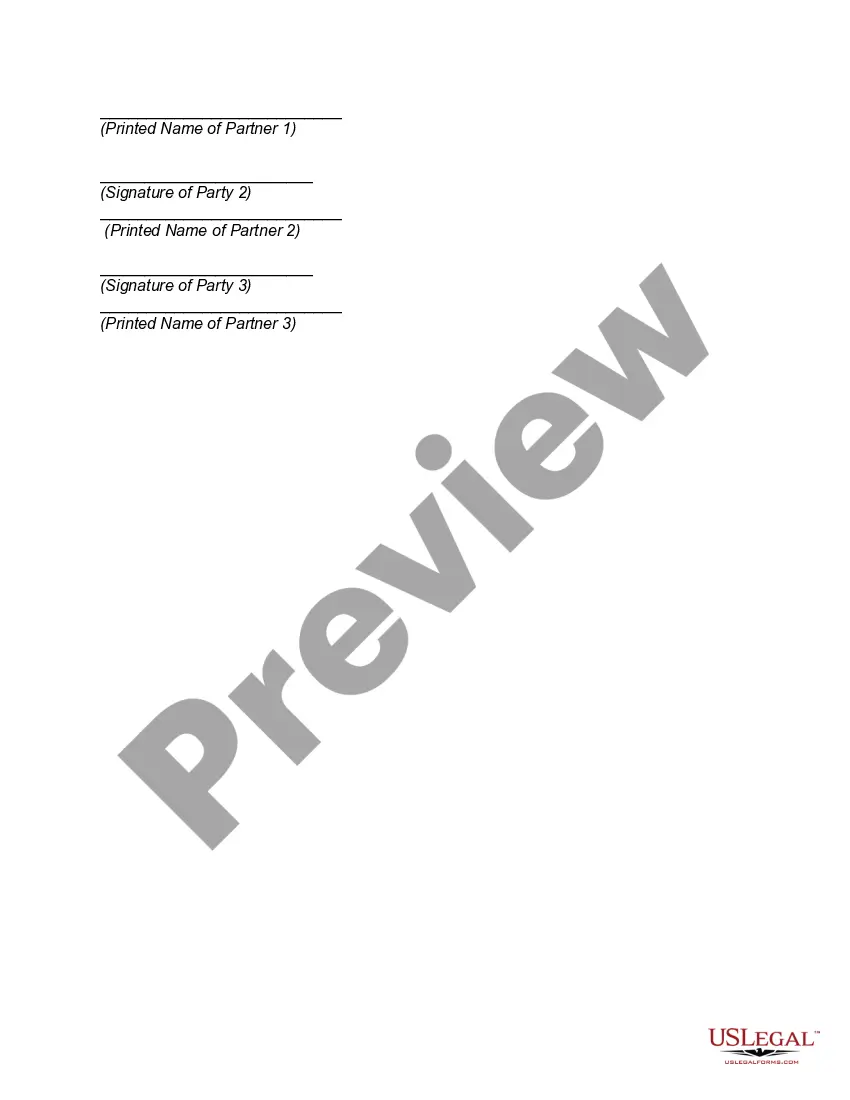
- Collect signatures from all partners, confirming their consent to the agreement.
Is notarization required?
This form does not typically require notarization unless specified by local law, making it easier for partners to finalize their agreement without additional legal procedures.
Get your form ready online
Our built-in tools help you complete, sign, share, and store your documents in one place.
Make edits, fill in missing information, and update formatting in US Legal Forms—just like you would in MS Word.
Download a copy, print it, send it by email, or mail it via USPS—whatever works best for your next step.
Sign and collect signatures with our SignNow integration. Send to multiple recipients, set reminders, and more. Go Premium to unlock E-Sign.
If this form requires notarization, complete it online through a secure video call—no need to meet a notary in person or wait for an appointment.
We protect your documents and personal data by following strict security and privacy standards.

Make edits, fill in missing information, and update formatting in US Legal Forms—just like you would in MS Word.

Download a copy, print it, send it by email, or mail it via USPS—whatever works best for your next step.

Sign and collect signatures with our SignNow integration. Send to multiple recipients, set reminders, and more. Go Premium to unlock E-Sign.

If this form requires notarization, complete it online through a secure video call—no need to meet a notary in person or wait for an appointment.

We protect your documents and personal data by following strict security and privacy standards.
Common mistakes
- Failing to specify the date and time for the committee meeting.
- Not clearly identifying all partners and their addresses.
- Omitting details of how remaining assets will be distributed.
- Neglecting to have all partners sign the agreement.
- Ignoring state-specific requirements that may apply to the form.
Benefits of using this form online
- Convenient accessâdownload and complete from anywhere.
- Editabilityâeasily modify entries as needed before finalizing.
- Reliabilityâforms are drafted by licensed attorneys to ensure legal compliance.
- Step-by-step guidance available during the completion process.
- Storage options available for future reference and record-keeping.
Looking for another form?
Form popularity
FAQ
Forming a PartnershipPartnerships exist between two or more people who want to go into business together. In most states, creating a legally binding partnership requires nothing more than a verbal agreement and a handshake.
Although there's no requirement for a written partnership agreement, often it's a very good idea to have such a document to prevent internal squabbling (about profits, direction of the company, etc.) and give the partnership solid direction. Limited liability partnerships do have a writing requirement.
Name of your partnership. Contributions to the partnership and percentage of ownership. Division of profits, losses and draws. Partners' authority. Withdrawal or death of a partner.
Create a preliminary plan for an alliance. This plan should detail how the alliance will benefit both companies. Approach the key decision maker. Build a relationship with your contact first. Present your idea. Listen and adapt your proposal as necessary.
In addition, any individual partner can usually bind the whole business to a contract or other business deal. For instance, if your partner signs a yearlong contract with a supplier to buy inventory at a price your business can't afford, you can be held personally responsible for the money owed under the contract.
All partners agree to dissolve the partnership; where there are only two partners, one partner wishing to leave gives written notice to the other partner of their intention; or. it is required under the partnership agreement or by law that you dissolve the partnership.
Share the same values. Choose a partner with complementary skills. Have a track record together. Clearly define each partner's role and responsibilities. Select the right business structure. Put it in writing. Be honest with each other.
Name of the partnership. Contributions to the partnership. Allocation of profits, losses, and draws. Partners' authority. Partnership decision-making. Management duties. Admitting new partners. Withdrawal or death of a partner.