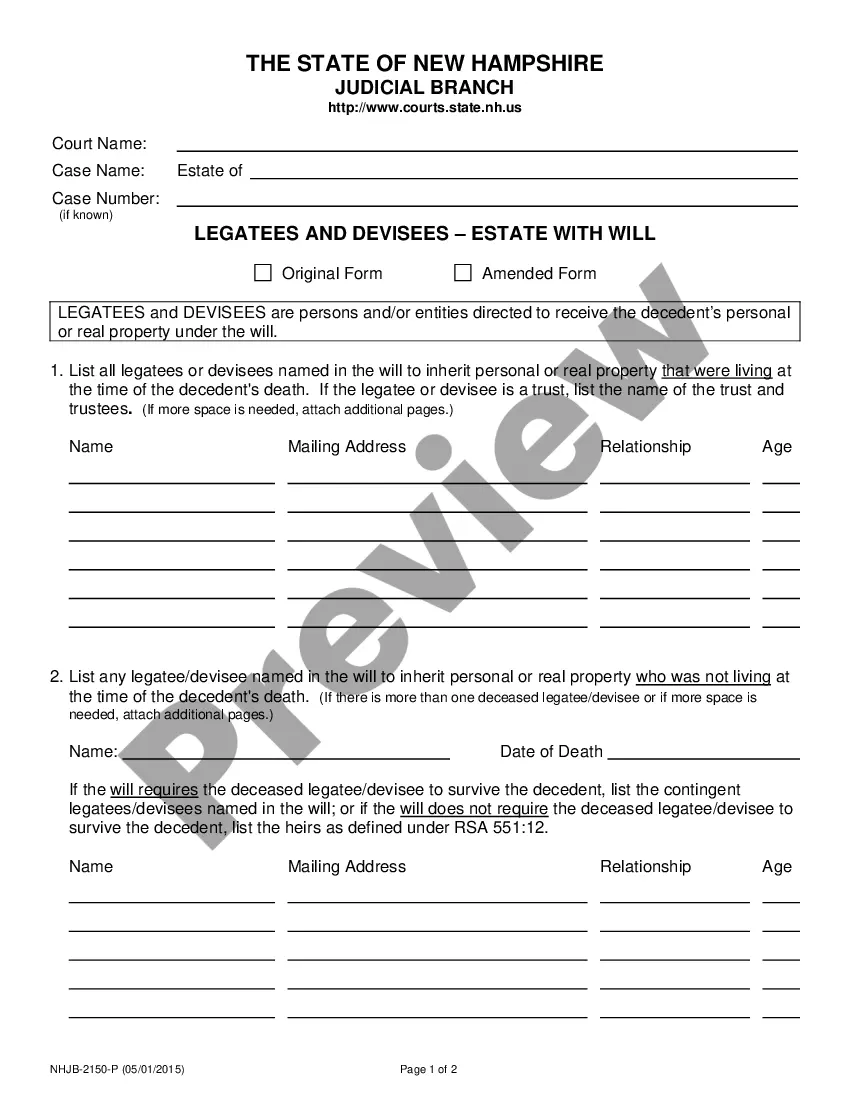
Cosmetologist Agreement - Self-Employed Independent Contractor
What is this form?
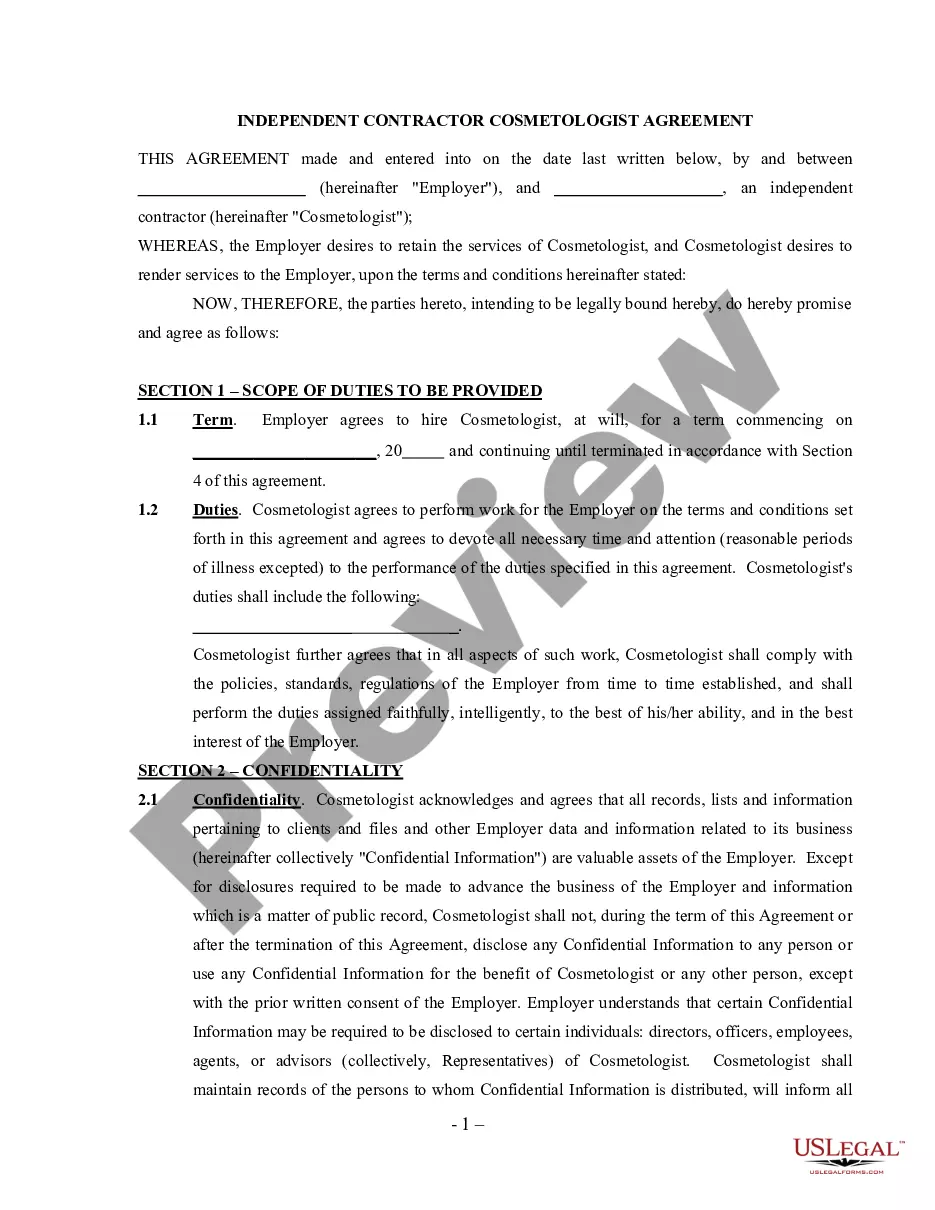
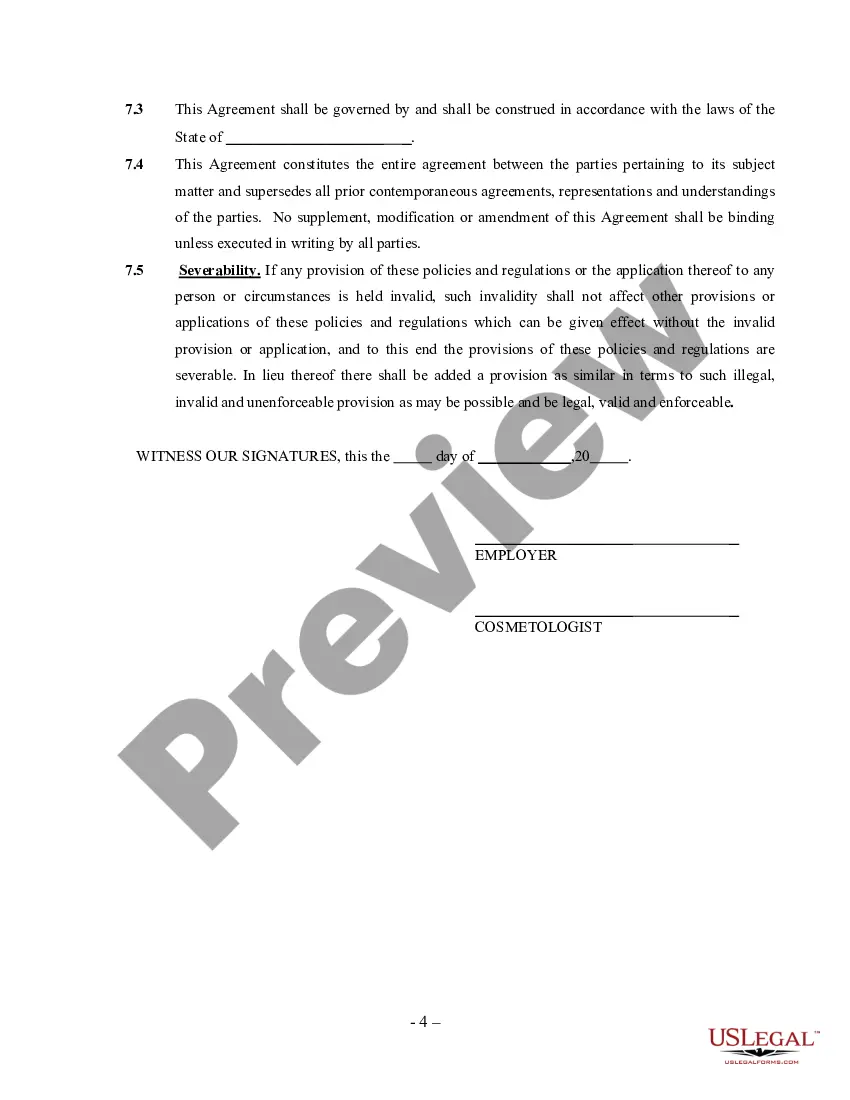
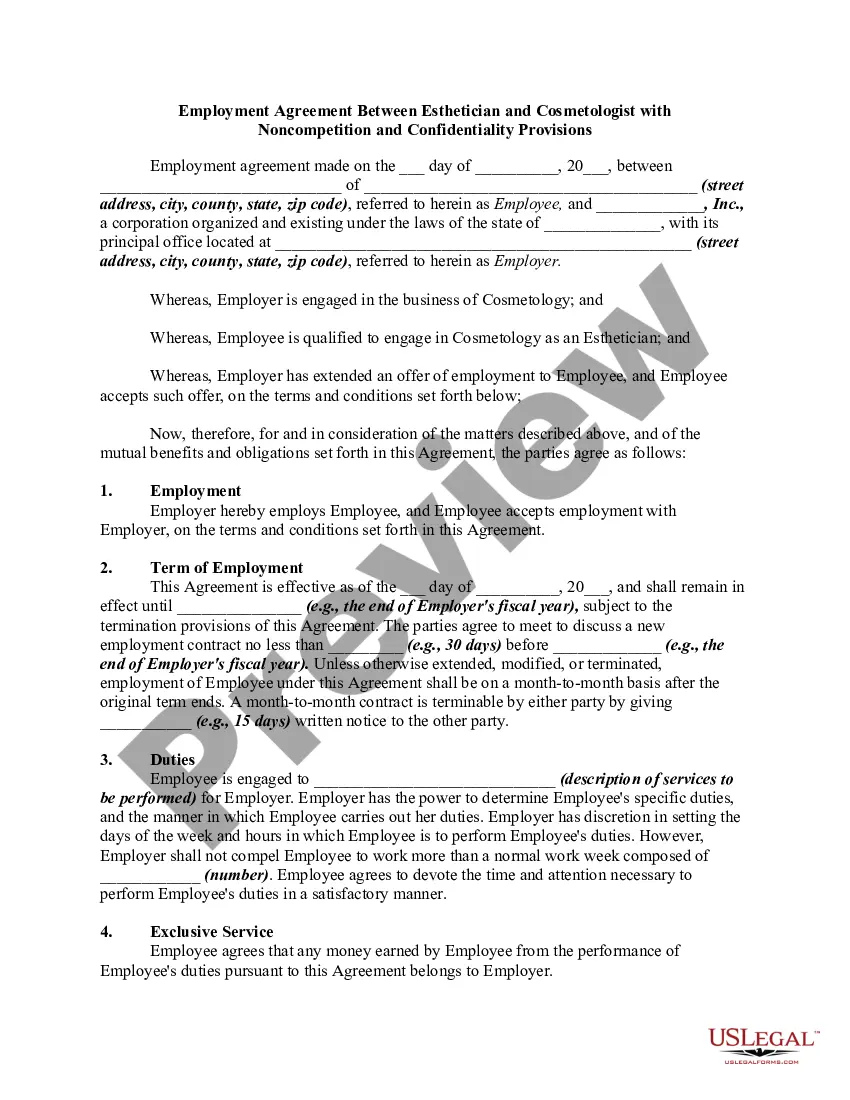
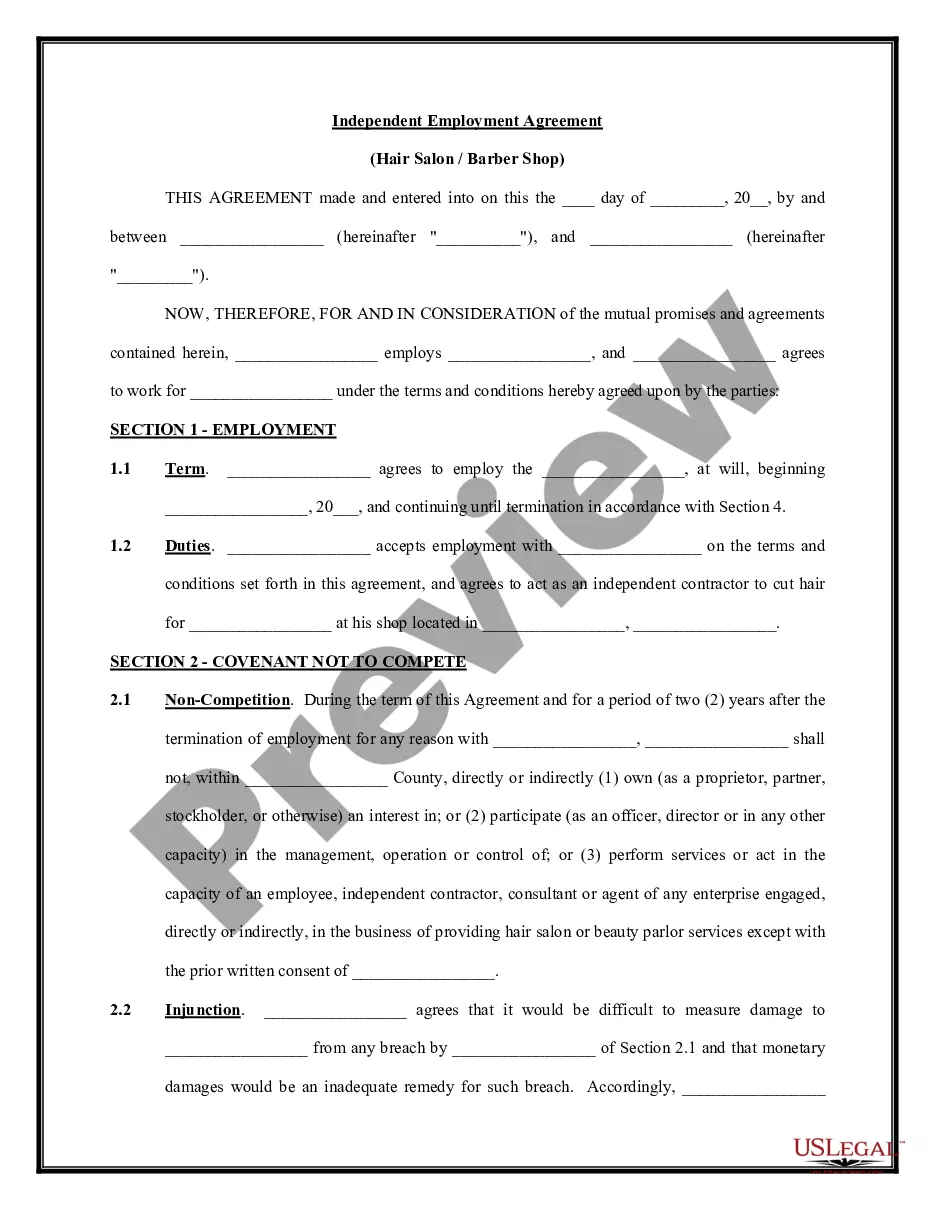
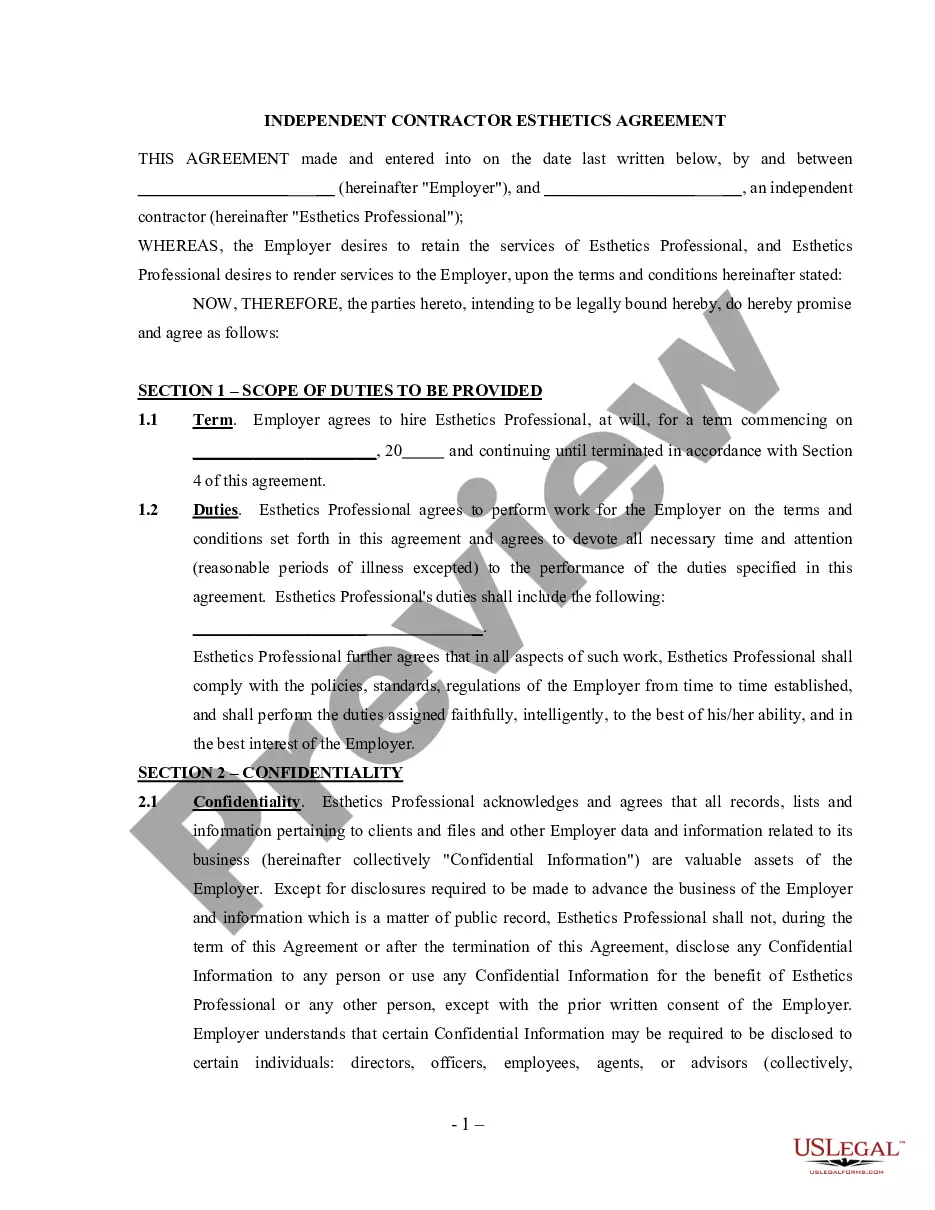
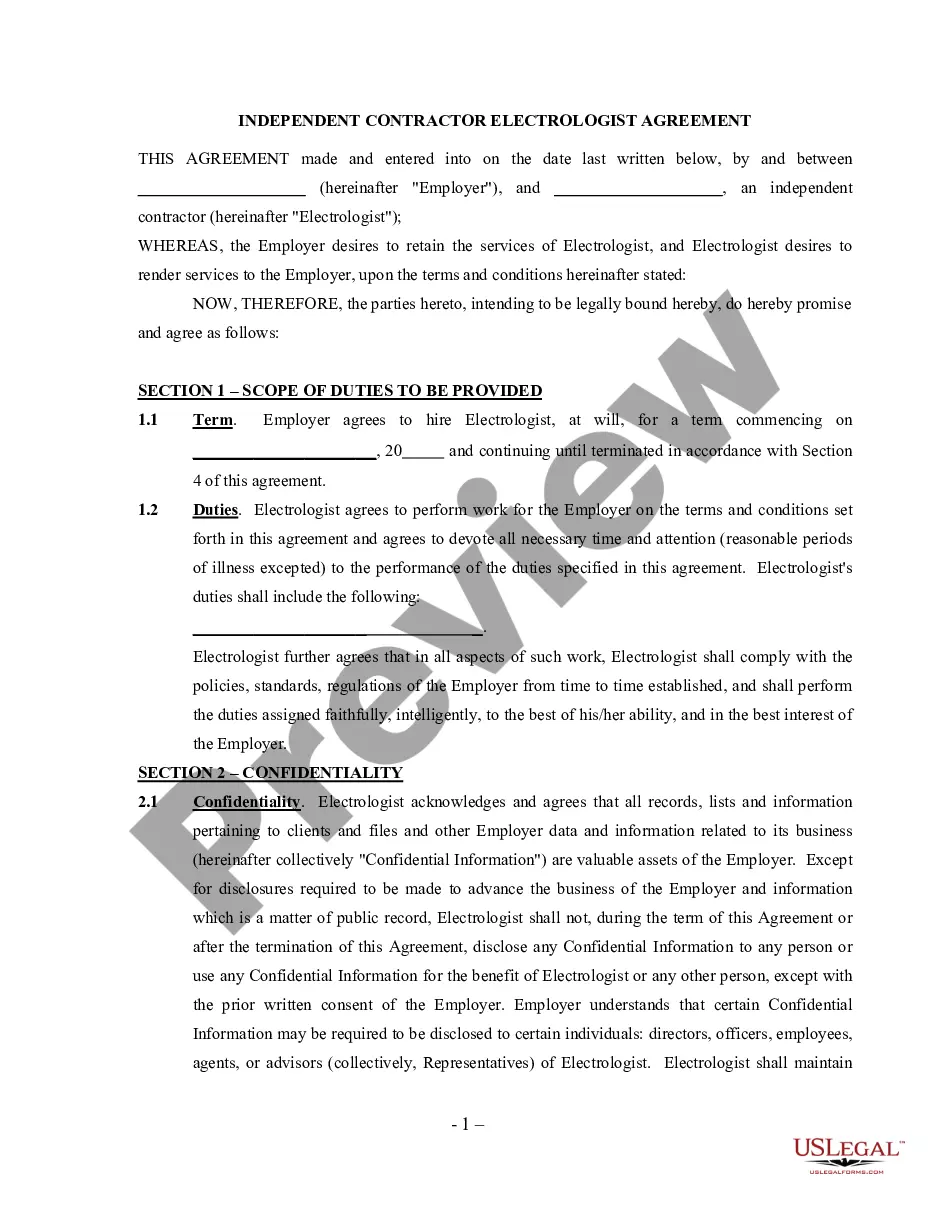
The Cosmetologist Agreement for Self-Employed Independent Contractor is a legal document that outlines the relationship between an employer and a cosmetologist working as an independent contractor. This agreement establishes the terms under which the cosmetologist will provide cosmetic services to the employer's clients, distinguishing it from employee-employer contracts that typically include more obligations and benefits for the employee.
Main sections of this form
- Parties Involved: Identifies the employer and the independent contractor (cosmetologist).
- Duties of the Cosmetologist: Specifies the work responsibilities and standards to be followed.
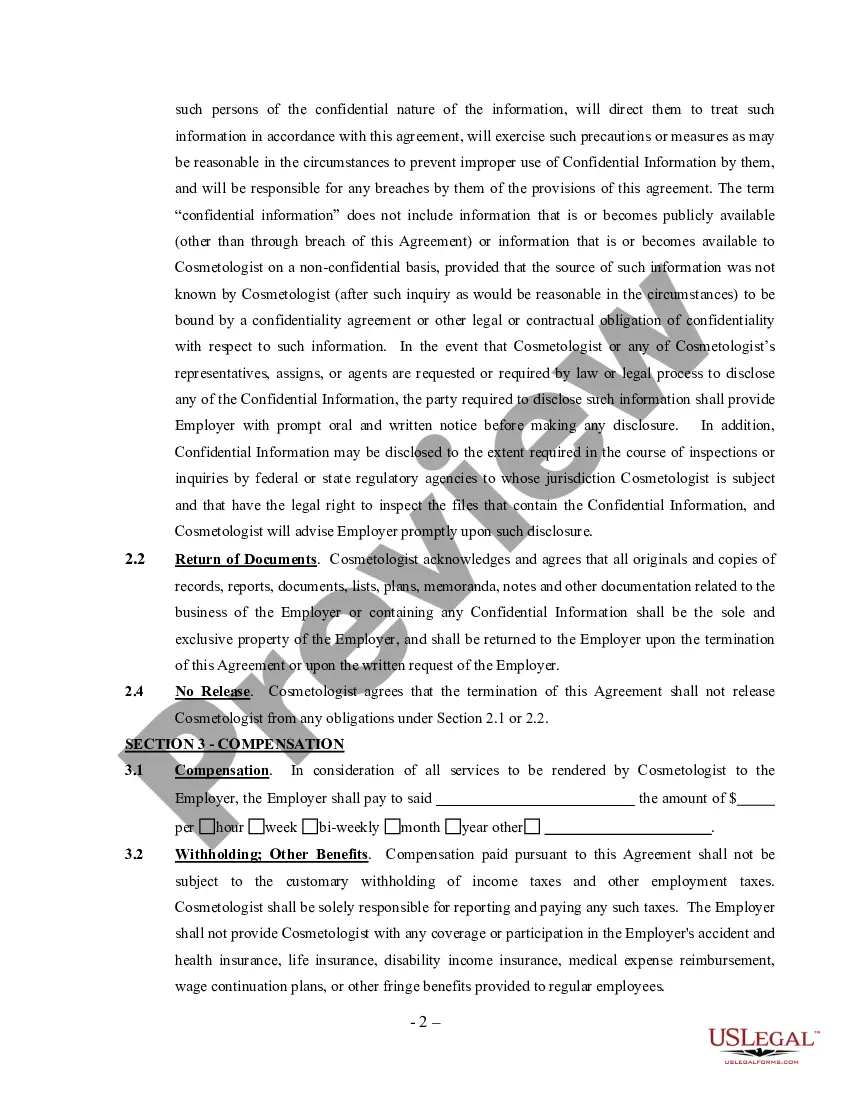
- Confidentiality Clause: Outlines the obligations regarding the protection of confidential information about the employer and clients.
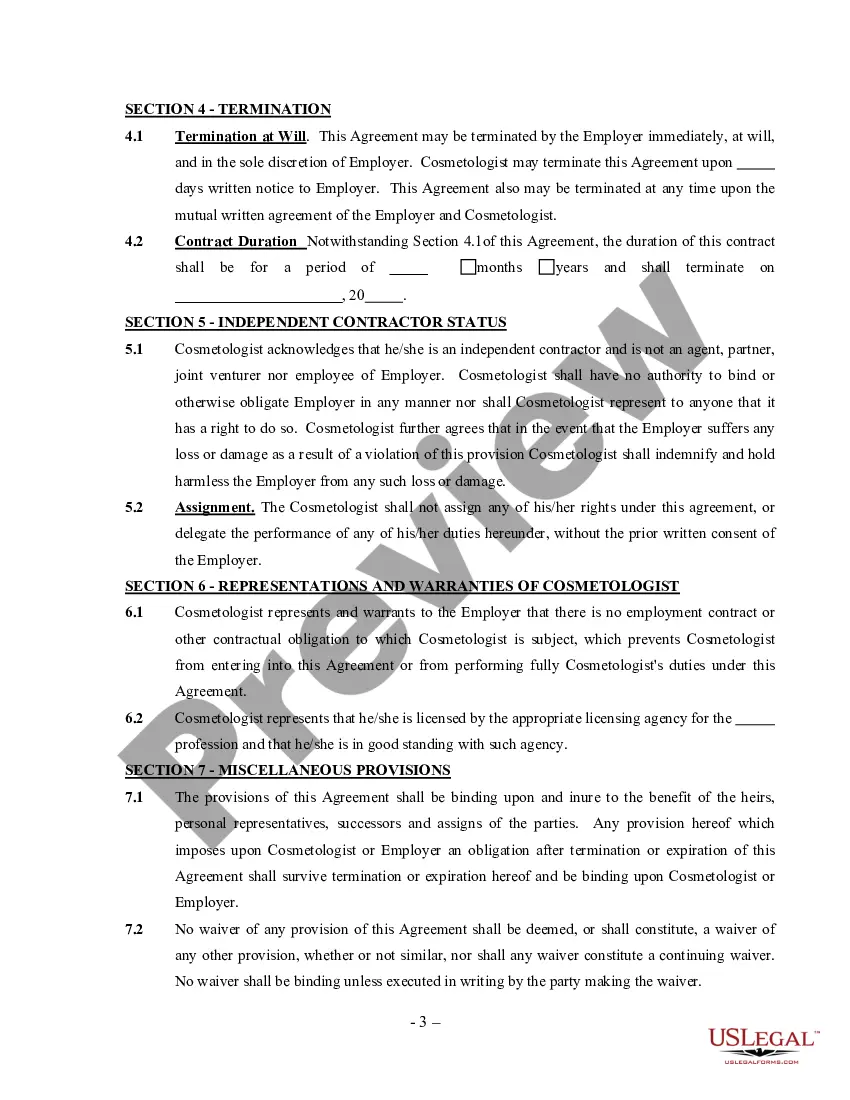
- Compensation Terms: Describes payment structure and tax responsibilities.
- Termination Conditions: Defines the grounds under which either party can terminate the agreement.
When to use this document
This form should be used when an employer wants to hire a cosmetologist as an independent contractor rather than an employee. It is applicable when the cosmetologist will be providing services to the employer's clients without the usual benefits or oversight associated with employment. This agreement helps to clarify the expectations and rights of both parties, making it essential for freelancers and salon owners alike.
Who should use this form
- Salon owners or managers looking to hire cosmetologists as independent contractors.
- Cosmetologists seeking to formalize their working relationship with employers.
- Freelance beauty professionals who offer services in a salon or similar setting.
Completing this form step by step
- Identify the parties involved: Enter the names of the employer and the cosmetologist.
- Define the scope of work: Specify the services the cosmetologist will provide.
- Include compensation details: Outline the payment terms and tax responsibilities.
- Detail confidentiality requirements: Mention how confidential information should be handled.
- State termination conditions: Clarify how the agreement may be terminated by either party.
Notarization requirements for this form
This form does not typically require notarization to be legally valid. However, some jurisdictions or document types may still require it. US Legal Forms provides secure online notarization powered by Notarize, available 24/7 for added convenience.
Get your form ready online
Our built-in tools help you complete, sign, share, and store your documents in one place.
Make edits, fill in missing information, and update formatting in US Legal Forms—just like you would in MS Word.
Download a copy, print it, send it by email, or mail it via USPS—whatever works best for your next step.
Sign and collect signatures with our SignNow integration. Send to multiple recipients, set reminders, and more. Go Premium to unlock E-Sign.
If this form requires notarization, complete it online through a secure video call—no need to meet a notary in person or wait for an appointment.
We protect your documents and personal data by following strict security and privacy standards.

Make edits, fill in missing information, and update formatting in US Legal Forms—just like you would in MS Word.

Download a copy, print it, send it by email, or mail it via USPS—whatever works best for your next step.

Sign and collect signatures with our SignNow integration. Send to multiple recipients, set reminders, and more. Go Premium to unlock E-Sign.

If this form requires notarization, complete it online through a secure video call—no need to meet a notary in person or wait for an appointment.

We protect your documents and personal data by following strict security and privacy standards.
Avoid these common issues
- Failing to clearly define the services offered by the cosmetologist.
- Not including specific payment terms and tax responsibilities.
- Ignoring confidentiality obligations, which can lead to legal disputes.
- Overlooking termination clauses that can create confusion later.
Advantages of online completion
- Convenient download options for quick access and completion.
- Editability allows customization to fit specific agreements.
- Reliability of professionally drafted content ensures legal compliance.
Looking for another form?


Form popularity
FAQ
Simply put, being an independent contractor is one way to be self-employed. Being self-employed means that you earn money but don't work as an employee for someone else.An independent contractor is someone who provides a service on a contractual basis.
Under the new test for independent contractor vs employee status in California, it is illegal to classify a barber or hair stylist as an independent contractor unless the salon can prove that: (1) the hair stylist is free the hair salon's control; (2) the job of cutting or styling hair falls outside the salon's usual
OSHA literature doesn't typically use the term "independent contractor." It uses "self-employed." There's a pretty simple reason self-employed are exempted from OSHA. OSHA exists to protect workers from unsafe or "unhealthful" conditions that their employer might force them into using economic leverage.
If you run your own hair salon, you already know you're self-employed. But if you're working at someone else's establishment, your status as either an employee or an independent contractor may not be so clear.If you're self-employed you'll need to pay self-employment tax, and you might need to pay taxes quarterly.
The earnings of a person who is working as an independent contractor are subject to Self-Employment Tax. If you are an independent contractor, you are self-employed. To find out what your tax obligations are, visit the Self-Employed Tax Center.
Make sure the contractor obtains a permit if the job requires one. Ask for a copy of the contractor's license and proof of insurance. Pay by check and get a receipt. Document any changes to the contract in writing.
Protect your social security number. Have a clearly defined scope of work and contract in place with clients. Get general/professional liability insurance. Consider incorporating or creating a limited liability company (LLC).
Finally, the new stimulus bill provides independent contractors with paid sick and paid family leave benefits through March 14, 2021.Under CARES Act II, unemployed or underemployed independent contractors who have an income mix from self-employment and wages paid by an employer are still eligible for PUA.
An independent contractor can be any type of business entity (sole proprietor, corporation, LLC, partnership), but most independent contractors are sole proprietors.