Minnesota Stipulation to Amend Judgment and Decree to Correct Clerical Errors
Overview of this form
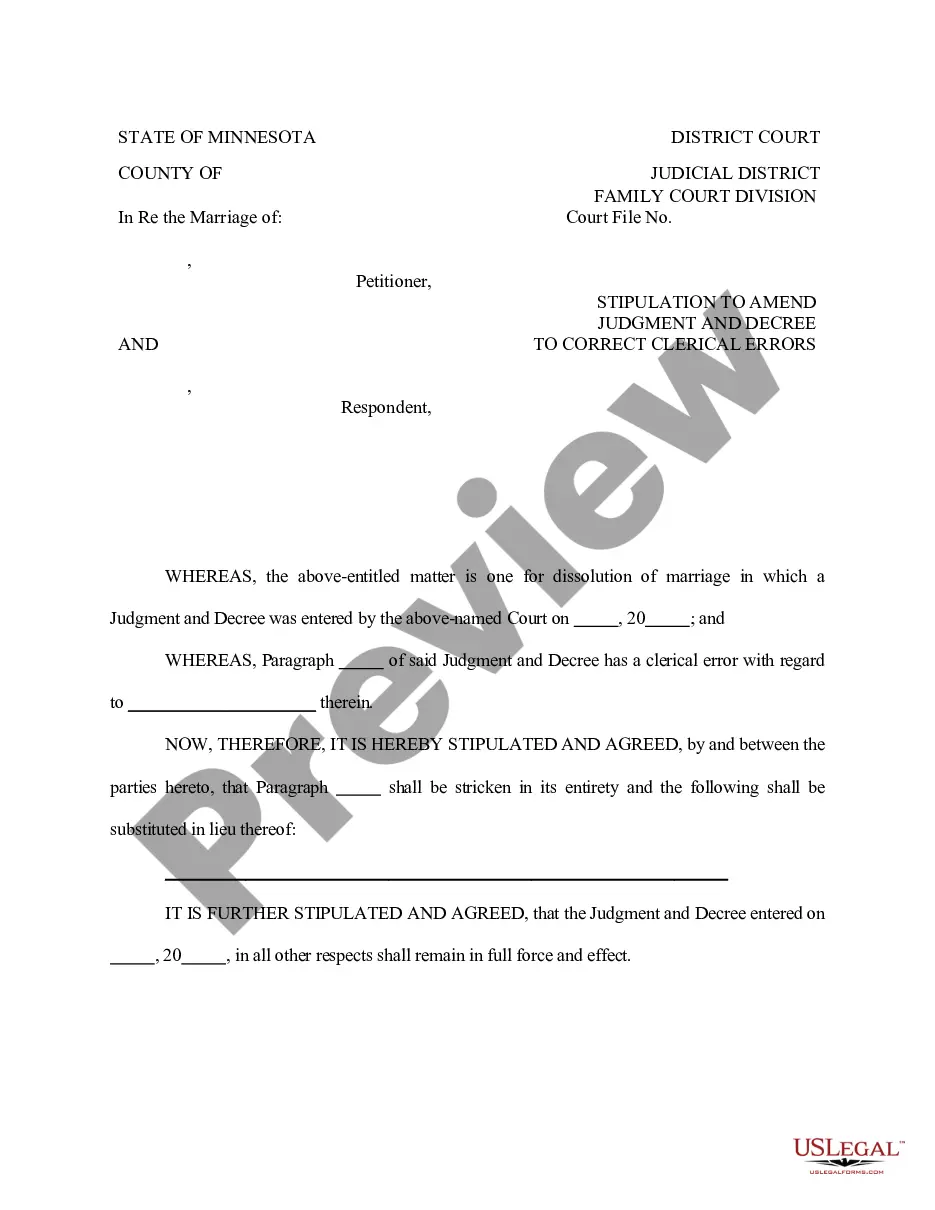
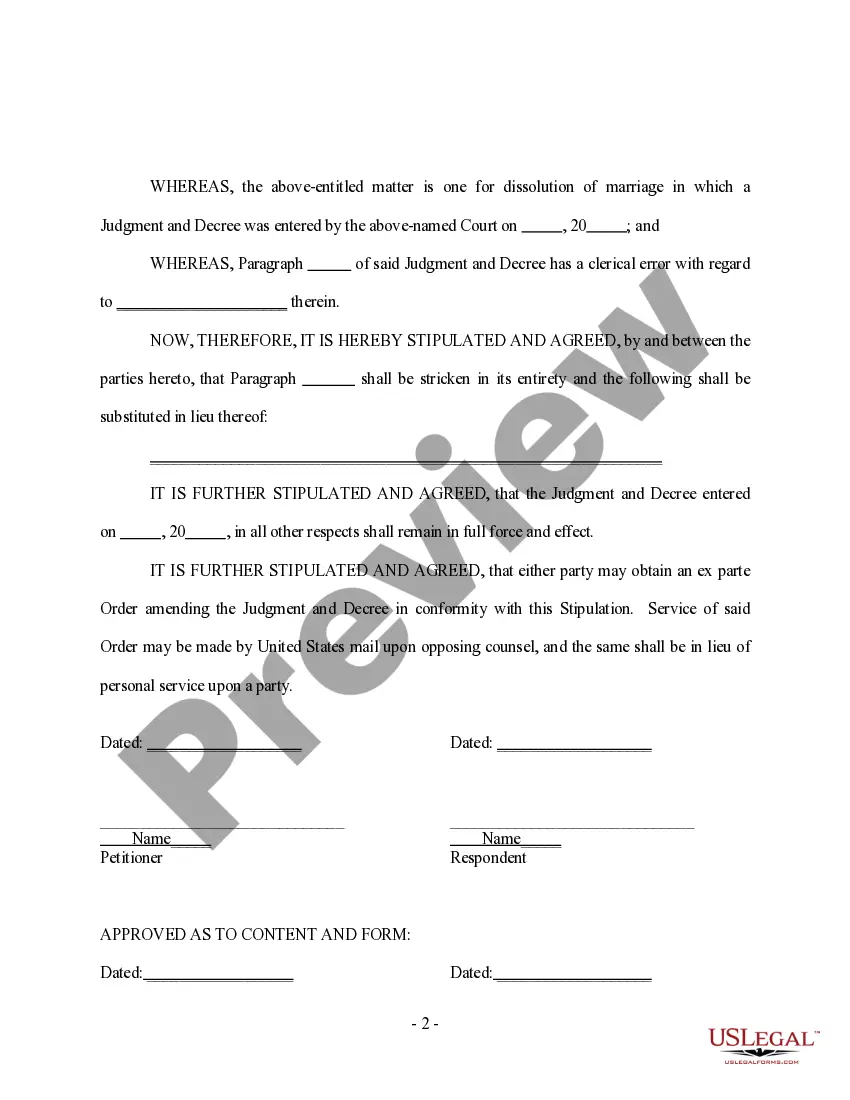
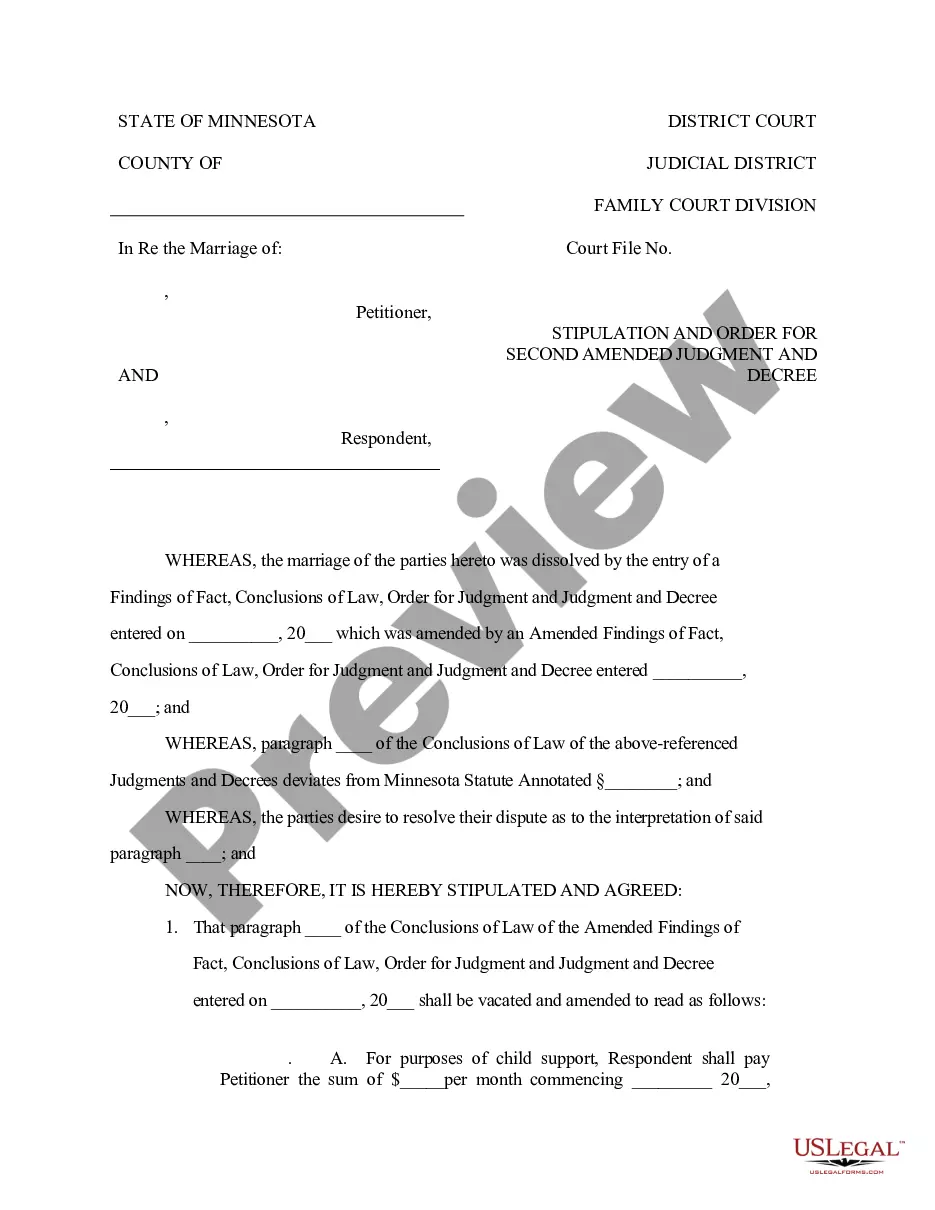
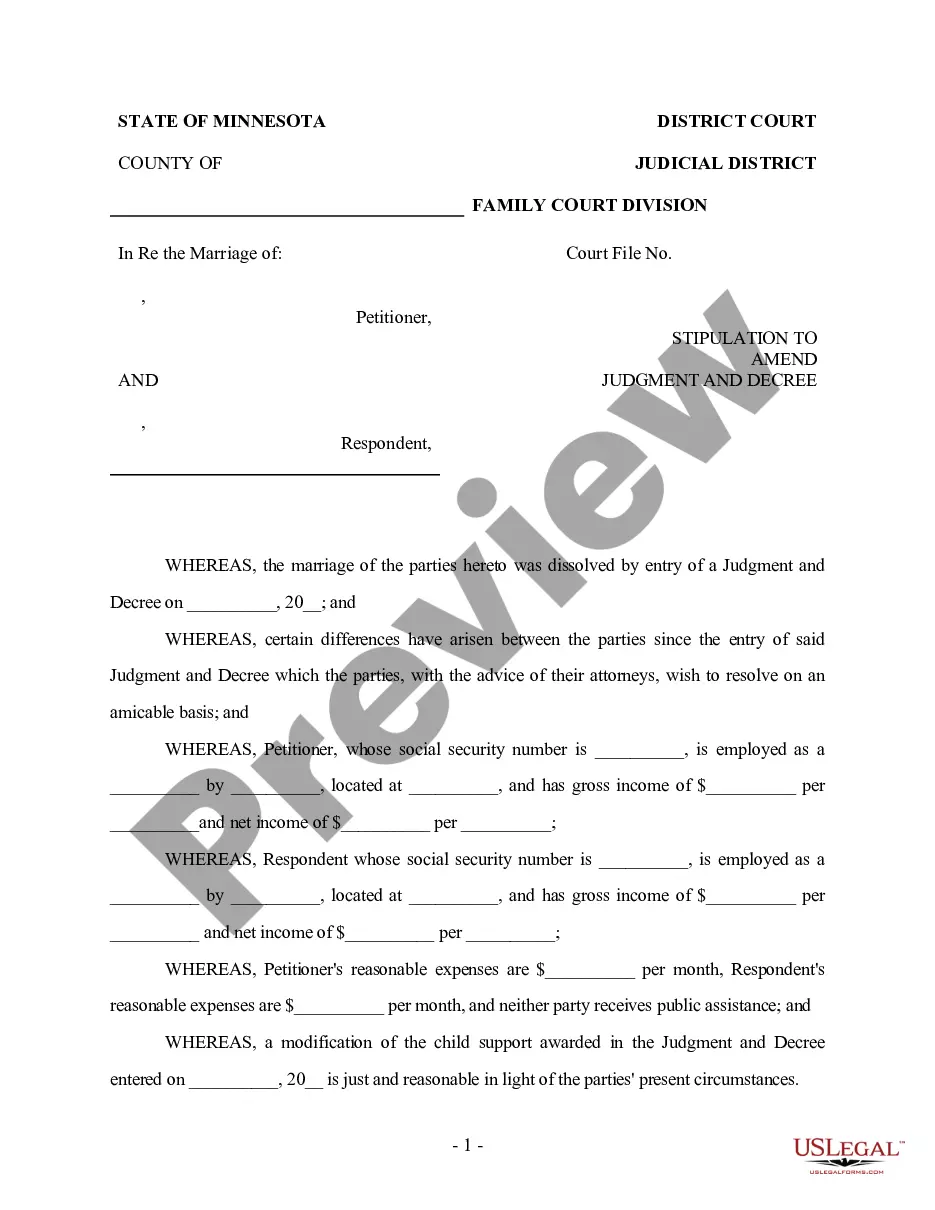
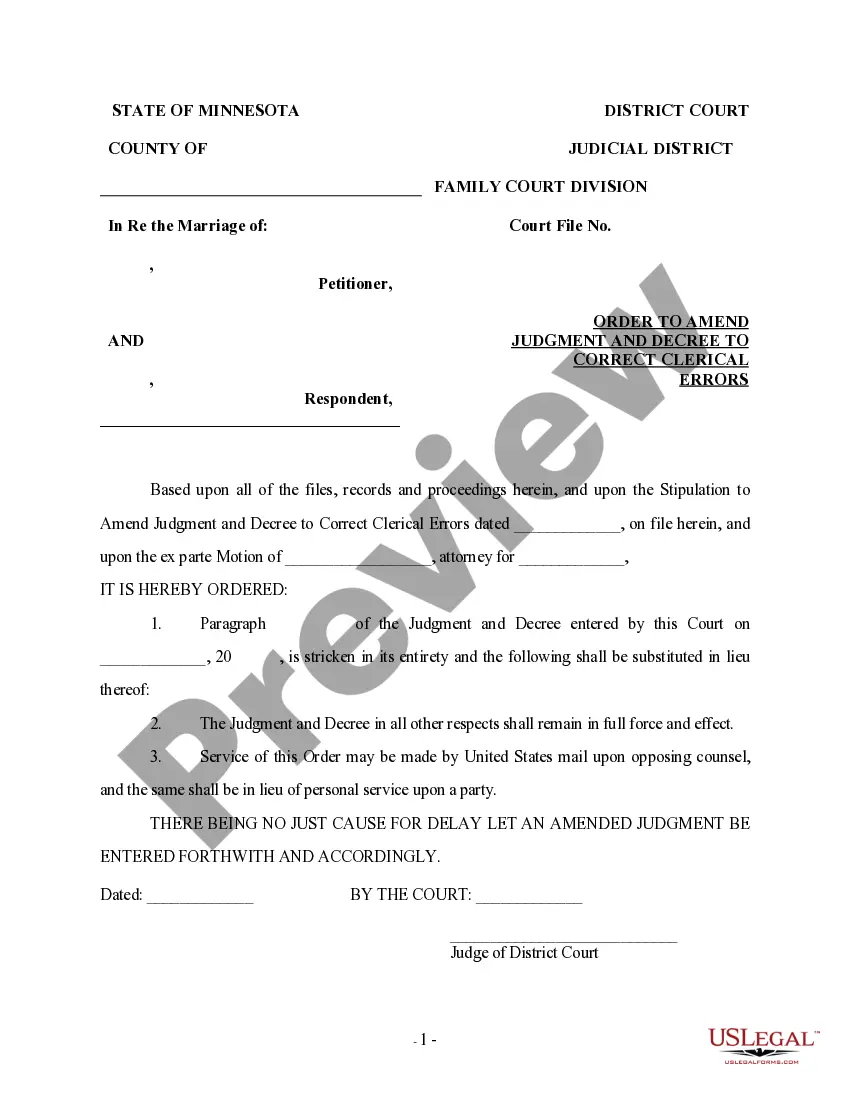
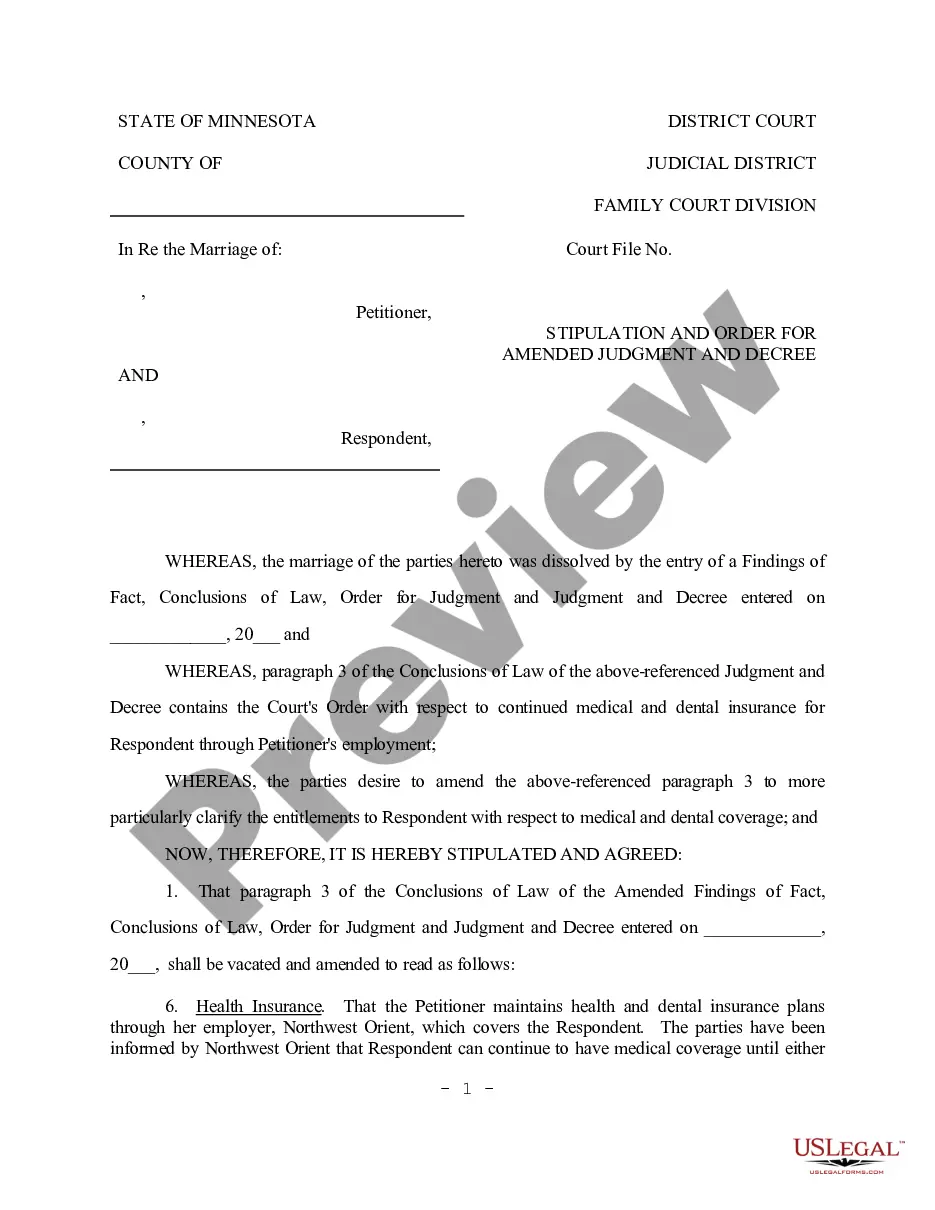
The Stipulation to Amend Judgment and Decree to Correct Clerical Errors is a legal document used to amend a judgment and decree due to clerical mistakes. This form allows both parties involved in a legal proceeding to agree on corrections, ensuring that the official record accurately reflects their agreement. It is particularly useful in cases where minor errors, such as typographical mistakes or incorrect details, need rectifying without the need for extensive court proceedings. This form differs from other amendment requests as it provides a streamlined process for obtaining corrections through the courts.
Form components explained
- Dates for signatures and filing.
- Name and designation of the petitioner and respondent.
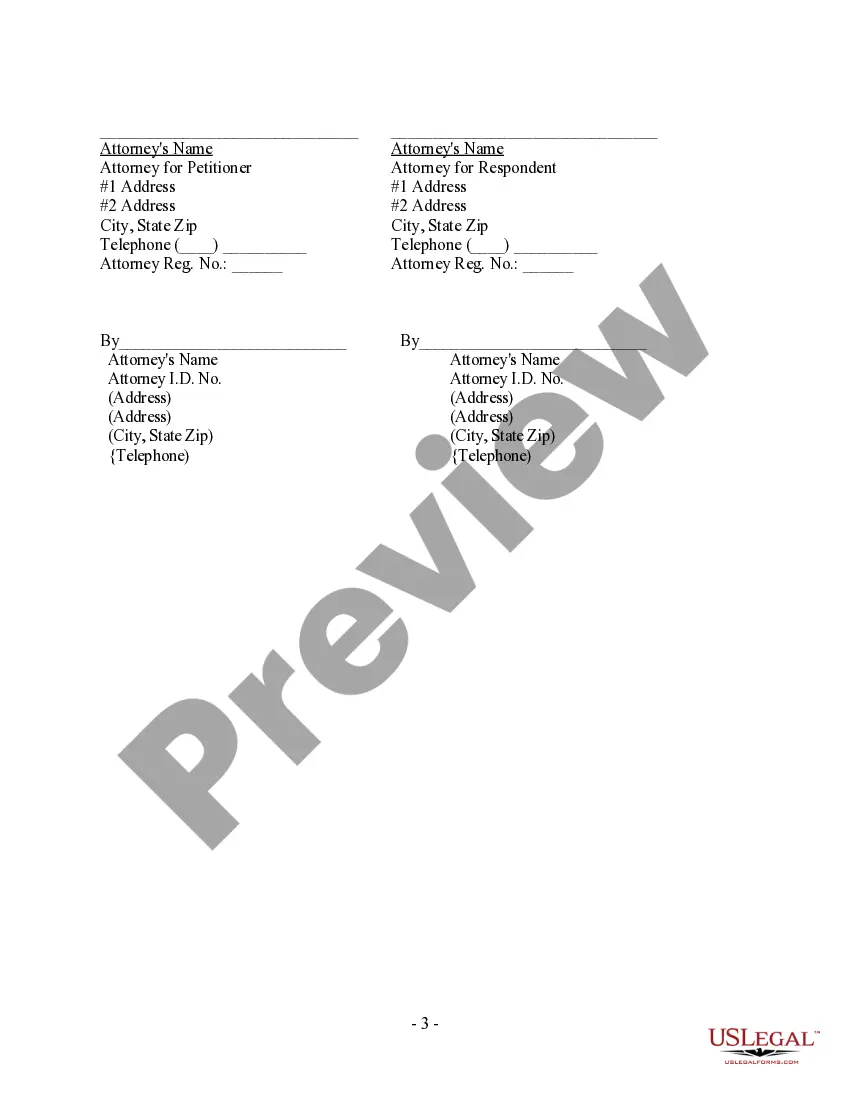
- Approval signature lines for attorneys representing both parties.
- Contact information including addresses and phone numbers for the attorneys.
- Attorney registration numbers for identification purposes.
Situations where this form applies
This form is applicable when either party in a legal case recognizes clerical errors in a judgment or decree. You may need to use this form if there are mistakes in names, dates, or other critical information that could lead to confusion or potential legal issues. It's especially useful when both parties agree on the amendments, allowing for an ex parte order to be filed for quick adjustments without needing a full hearing.
Who can use this document
This form is intended for:
- Parties in a legal proceeding who have identified clerical errors in a judgment or decree.
- Attorneys representing either the petitioner or respondent involved in the case.
- Individuals seeking to correct minor issues in legal documentation to ensure their court records are accurate.
How to prepare this document
- Identify the parties involved by entering the names of the petitioner and respondent.
- Specify the dates for the agreement and for attorney approvals.
- Fill in the address and telephone number for both attorneys.
- Ensure both parties' attorneys sign and date the form, confirming their approval of the stipulated corrections.
- Check for completeness before filing to ensure all required fields are filled accurately.
Does this form need to be notarized?
This form does not typically require notarization unless specified by local law. However, it is advisable to check local regulations to ensure compliance.
Get your form ready online
Our built-in tools help you complete, sign, share, and store your documents in one place.
Make edits, fill in missing information, and update formatting in US Legal Forms—just like you would in MS Word.
Download a copy, print it, send it by email, or mail it via USPS—whatever works best for your next step.
Sign and collect signatures with our SignNow integration. Send to multiple recipients, set reminders, and more. Go Premium to unlock E-Sign.
If this form requires notarization, complete it online through a secure video call—no need to meet a notary in person or wait for an appointment.
We protect your documents and personal data by following strict security and privacy standards.

Make edits, fill in missing information, and update formatting in US Legal Forms—just like you would in MS Word.

Download a copy, print it, send it by email, or mail it via USPS—whatever works best for your next step.

Sign and collect signatures with our SignNow integration. Send to multiple recipients, set reminders, and more. Go Premium to unlock E-Sign.

If this form requires notarization, complete it online through a secure video call—no need to meet a notary in person or wait for an appointment.

We protect your documents and personal data by following strict security and privacy standards.
Avoid these common issues
- Failing to provide complete contact information for attorneys.
- Not including signatures and dates for all parties involved.
- Incorrectly filling out the names of the petitioner and respondent.
- Leaving out the attorney registration numbers.
Why use this form online
- Convenient access to legal forms from anywhere at any time.
- Easy customization to suit your specific needs and circumstances.
- Reliable templates designed by licensed attorneys ensure quality and accuracy.
Key takeaways
- The Stipulation to Amend Judgment is essential for correcting clerical errors in court judgments.
- Both parties must agree to the amendments and provide signatures.
- The form helps expedite the amendment process through the court system.
Looking for another form?
Form popularity
FAQ
In Minnesota, you cannot simply refuse jury duty without a valid reason. Acceptable reasons include financial hardship or being unable to serve due to health issues. If you believe a clerical error has impacted your jury summons, you might consider filing a Minnesota Stipulation to Amend Judgment and Decree to Correct Clerical Errors to address it effectively.
Rule 37 addresses failure to make disclosures or cooperate in discovery. This rule allows courts to impose sanctions on parties who do not comply with discovery rules, affecting the outcome of a case. If clerical errors arise during this process, a Minnesota Stipulation to Amend Judgment and Decree to Correct Clerical Errors could help clarify any misunderstandings.
Rule 52.02 allows for amendments to findings of fact and conclusions of law in Minnesota. This means that if a court's original ruling contains errors, parties can request corrections. Utilizing a Minnesota Stipulation to Amend Judgment and Decree to Correct Clerical Errors can be instrumental in this process.
Rule 69 deals with the enforcement of judgments in Minnesota. This rule provides mechanisms for judgment creditors to collect what they are owed, including the use of discovery to identify assets. If clerical errors affect enforcement, a Minnesota Stipulation to Amend Judgment and Decree to Correct Clerical Errors may be necessary.
Clerical errors, while generally minor, can lead to significant confusion in legal documents. Courts often allow the correction of these errors through motions, such as a Minnesota Stipulation to Amend Judgment and Decree to Correct Clerical Errors. Addressing these mistakes promptly can help ensure that your case proceeds smoothly.
Rule 5.01 outlines the requirements for serving documents in civil cases. It specifies how and when parties must serve pleadings and motions to ensure that everyone involved in a case is informed. Understanding this rule is essential, especially if you're considering a Minnesota Stipulation to Amend Judgment and Decree to Correct Clerical Errors.
In Minnesota, you typically have 20 days to respond to a complaint after being served. If you fail to answer within this time frame, the court may issue a default judgment against you. It's crucial to understand your rights and obligations in this process, especially if you need to file a Minnesota Stipulation to Amend Judgment and Decree to Correct Clerical Errors later.
Rule of Practice 521 in Minnesota allows parties to file a Minnesota Stipulation to Amend Judgment and Decree to Correct Clerical Errors. This rule provides a straightforward process for addressing and rectifying any clerical mistakes found in court judgments and decrees. By utilizing this rule, individuals can ensure that their legal documents accurately reflect the intended decisions made by the court. For those looking for assistance, USLegalForms offers valuable resources and templates to help navigate this process effectively.
Yes, the court can correct clerical errors through a formal process. By filing a Minnesota Stipulation to Amend Judgment and Decree to Correct Clerical Errors, you can request the court's assistance in making the necessary adjustments. This process helps maintain the accuracy of legal documents and protects your rights. US Legal Forms offers resources to help you navigate this process effectively.
A motion to correct clerical mistakes is a formal request made to the court to rectify errors in legal documents, such as judgments or decrees. This motion can include the Minnesota Stipulation to Amend Judgment and Decree to Correct Clerical Errors, allowing you to detail the specific corrections needed. By following this procedure, you help ensure that all records accurately reflect the intended decisions. You can access helpful templates through US Legal Forms to streamline your motion preparation.