Maine Agent's Certification as to Validity of Power of Attorney and Agent's Authority
Overview of this form
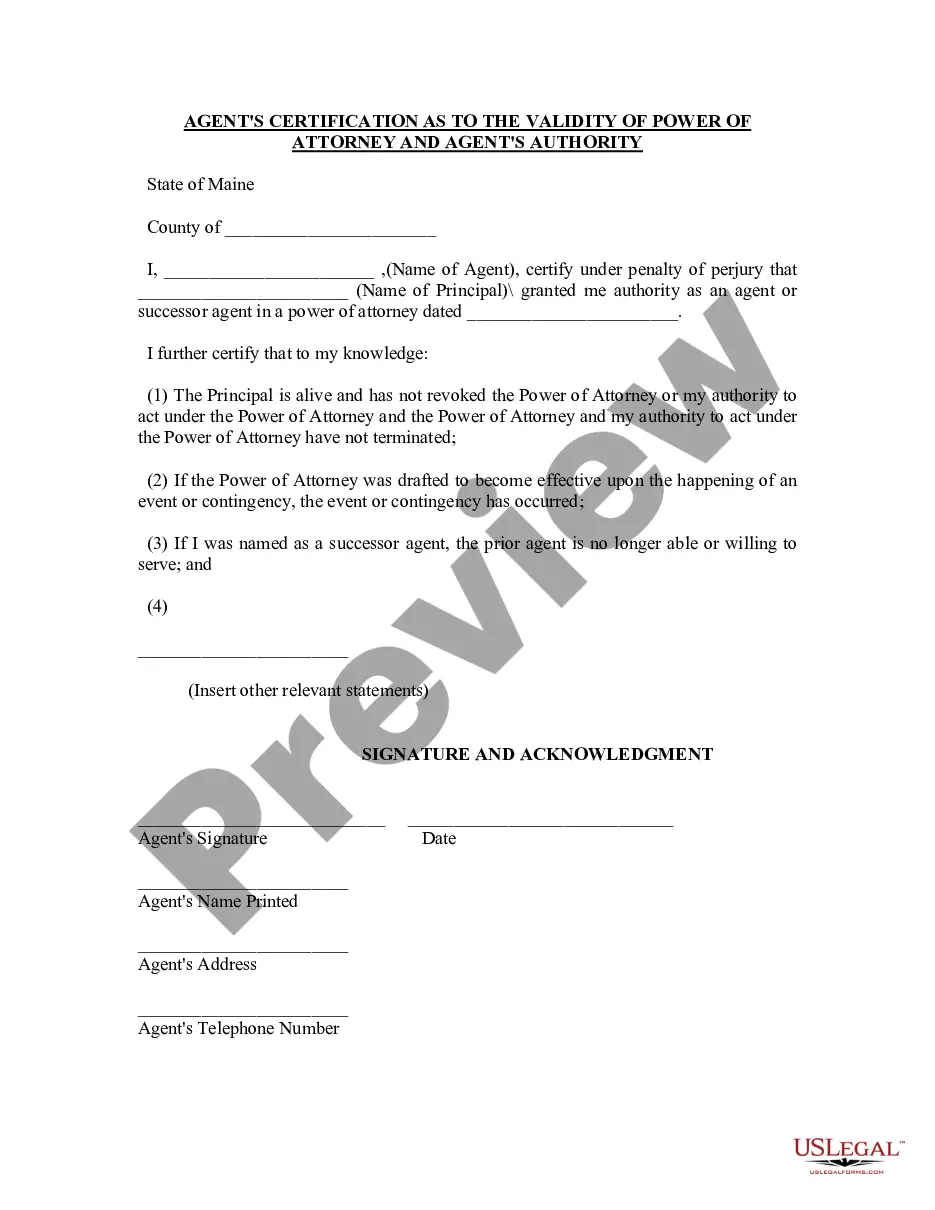
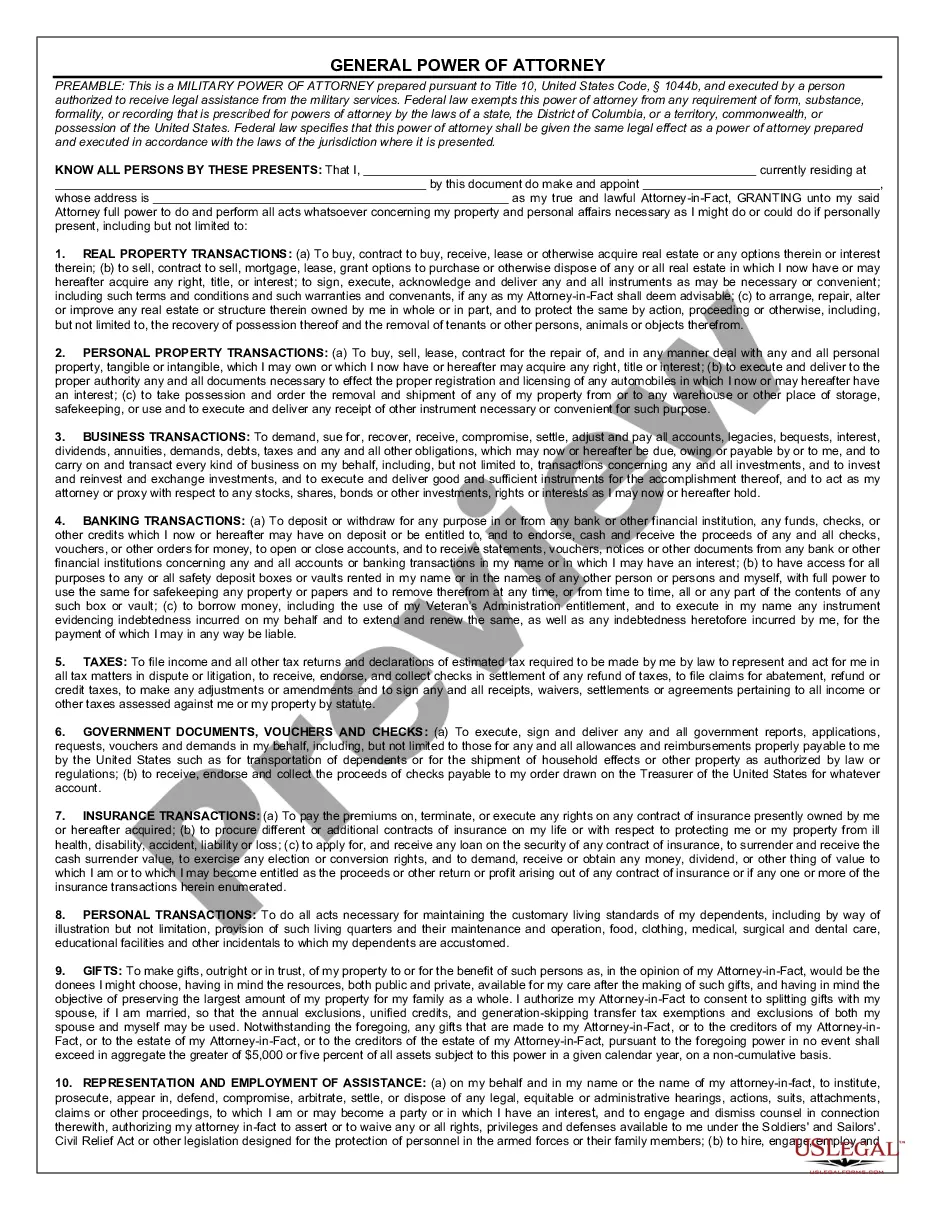
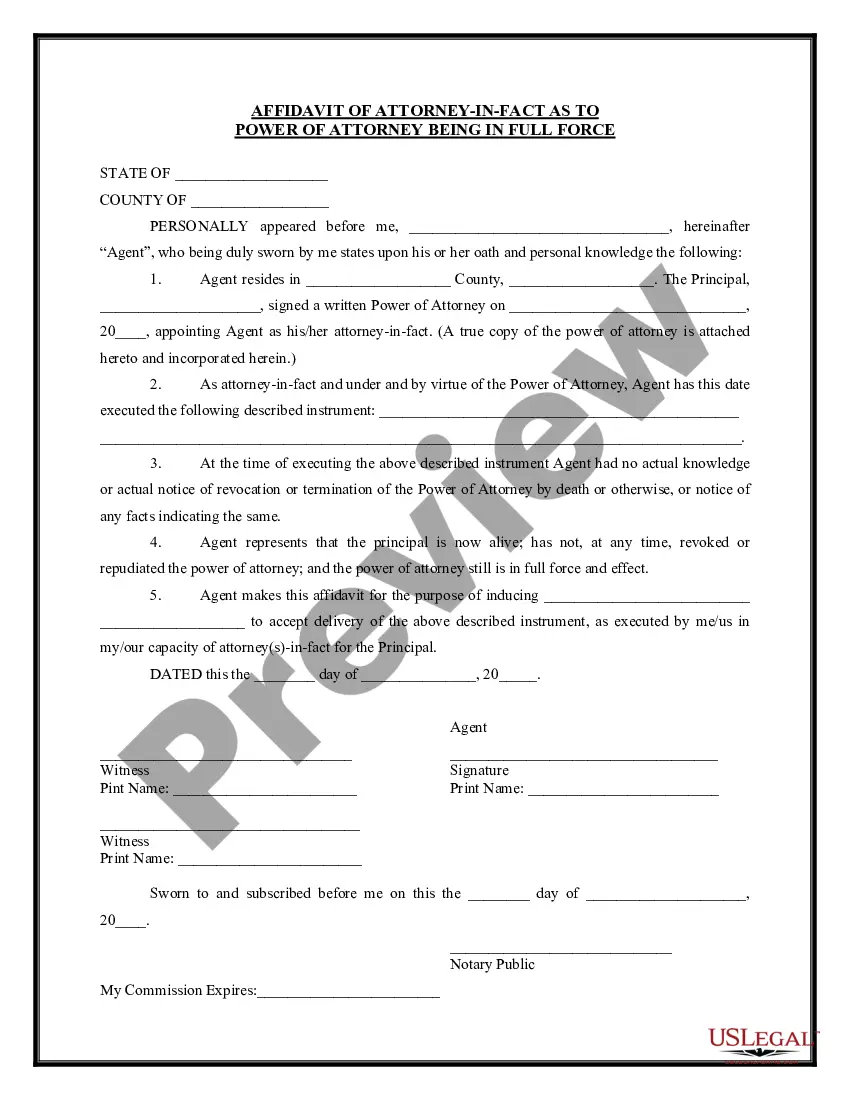
The Agent's Certification as to Validity of Power of Attorney and Agent's Authority is a legal document used to verify that an agent has the authority to act on behalf of a principal under a power of attorney. This form confirms the validity of the power granted and ensures that the agent's actions are recognized as legitimate. Unlike other power of attorney documents, this certification specifically focuses on confirming the status and authority of the agent, making it crucial when such verification is necessary for third parties, such as banks or healthcare providers.
Main sections of this form
- Name of Agent: The individual designated to act on behalf of the principal.
- Name of Principal: The person granting the authority to the agent.
- Date of Power of Attorney: The specific date when the power of attorney was executed.
- Authority Confirmation: Sections for the agent to certify the principal's status and the ongoing validity of the power.
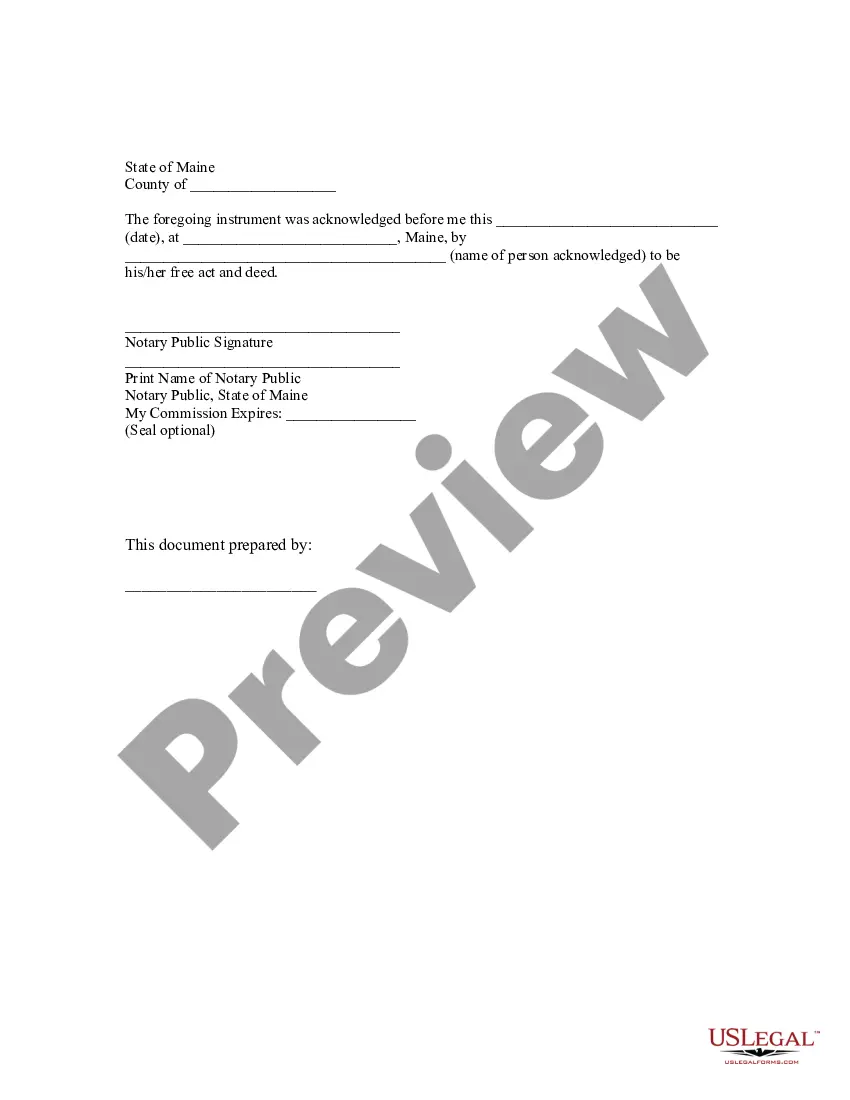
- Agent's Signature and Notary Acknowledgment: Necessary for legal recognition.
Situations where this form applies
This form is necessary when an agent needs to confirm their authority to act on behalf of a principal, particularly in dealings with financial institutions, healthcare providers, or any situation where legal validation of the agent's power of attorney is required. It may be used whether the agent is initiating a transaction, making healthcare decisions, or addressing any legal matters in the absence of the principal.
Who should use this form
- Agents designated under a power of attorney seeking to validate their authority.
- Principals who have created a power of attorney and need to confirm its use.
- Attorneys and legal professionals advising clients on the usage of power of attorney documents.
How to complete this form
- Fill in the name of the agent and the principal as stated in the original power of attorney.
- Provide the date when the power of attorney was executed.
- Certify that the principal is alive and the power of attorney has not been revoked.
- Sign and date the form where indicated.
- If required, have the form notarized by a licensed notary public.
Does this document require notarization?
Yes, this form must be notarized to be legally valid. Having a notary public witness the signing ensures that the document is recognized formally. US Legal Forms offers integrated online notarization services, allowing you to complete this step securely via a video call, making the process seamless without the need to travel.
Get your form ready online
Our built-in tools help you complete, sign, share, and store your documents in one place.
Make edits, fill in missing information, and update formatting in US Legal Forms—just like you would in MS Word.
Download a copy, print it, send it by email, or mail it via USPS—whatever works best for your next step.
Sign and collect signatures with our SignNow integration. Send to multiple recipients, set reminders, and more. Go Premium to unlock E-Sign.
If this form requires notarization, complete it online through a secure video call—no need to meet a notary in person or wait for an appointment.
We protect your documents and personal data by following strict security and privacy standards.

Make edits, fill in missing information, and update formatting in US Legal Forms—just like you would in MS Word.

Download a copy, print it, send it by email, or mail it via USPS—whatever works best for your next step.

Sign and collect signatures with our SignNow integration. Send to multiple recipients, set reminders, and more. Go Premium to unlock E-Sign.

If this form requires notarization, complete it online through a secure video call—no need to meet a notary in person or wait for an appointment.

We protect your documents and personal data by following strict security and privacy standards.
Common mistakes
- Failing to fill in all required fields, especially the dates and names.
- Not obtaining the necessary notarization, when applicable.
- Submitting the form without confirming the principal's status and that the power of attorney is still effective.
Why use this form online
- Convenience of immediate access and download from home.
- Editability to customize the form to fit individual situations.
- Reliability of receiving professionally drafted documents created by licensed attorneys.
Legal use & context
- This form helps protect both the principal and agent by providing legal proof of authority.
- It can be examined by third parties to confirm that the agent's authority is current.
- Using this form minimizes disputes regarding the agent's powers in legal or financial matters.
Main things to remember
- The Agent's Certification verifies an agent's authority under a power of attorney.
- This form should be used when third parties require proof of the agent's authority.
- Proper completion and notarization are crucial for legal validity.
Looking for another form?
Form popularity
FAQ
It is generally recommended that you revisit your estate plan at least once every five years, just to make sure that everything is still relevant and no changes are needed. If it has been a while since you looked at your power of attorney, here are some questions to consider when deciding whether you should update it.
Another important thing to note here is that a PoA remains valid only till the life of the principal. Within their lifetime also, one can revoke the PoA. An SPA gets revokes on its own as soon as the specific transaction for which it was executed is completed.
Springing Power of Attorney. A standard power of attorney gives the agent the authority to act on behalf of the principal in everyday legal and financial matters. The standard power of attorney expires when the principal dies, becomes incapacitated, or revokes the power of attorney in writing.
Once the power of attorney is invoked, it usually is irrevocable unless the principal regains their capacity to make decisions for themselves and can revoke the power of attorney; otherwise it does not expire until the principal's death.
After the principal's name, write by and then sign your own name. Under or after the signature line, indicate your status as POA by including any of the following identifiers: as POA, as Agent, as Attorney in Fact or as Power of Attorney.
A General Power of Attorney can be witnessed by anyone over the age of 18 years who is not an attorney appointed under the document. (iii) the person is not an attorney under the power of attorney. - a medical practitioner. - not be a care worker; or accommodation provider for the principal.
These certificates are valid for 30 days. As per a recent order of the inspector general of registration, the new rules are applicable to all POAs registered from February 4. By law, POA is not valid once the principal dies.
A California POA can only be created by a principal who is 18 years of age or older. The principal must also have the legal capacity to enter into a contract. A general or limited POA must be signed by the principal and two witnesses or a notary.The agent listed in the POA cannot be a witness to the document.
After the principal's name, write by and then sign your own name. Under or after the signature line, indicate your status as POA by including any of the following identifiers: as POA, as Agent, as Attorney in Fact or as Power of Attorney.