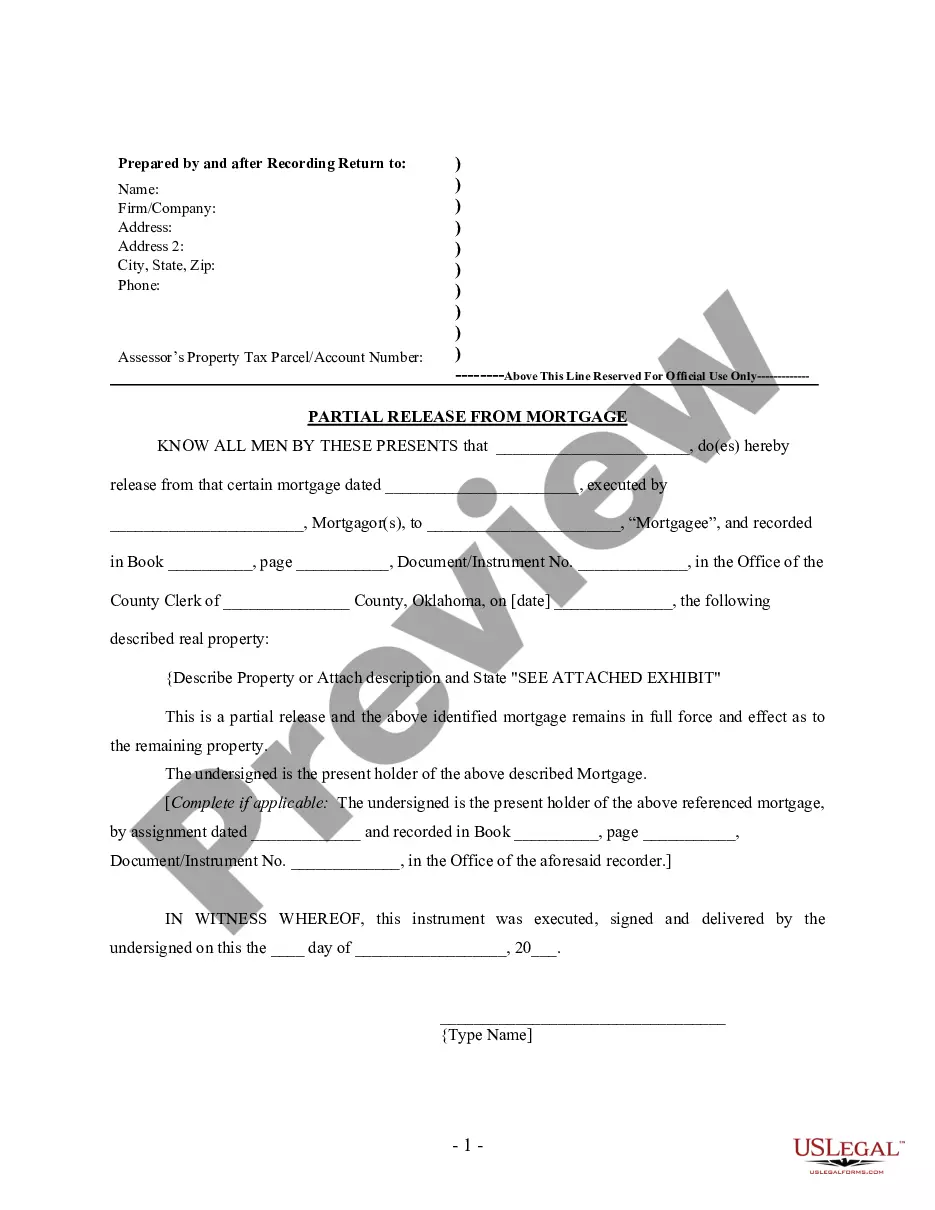
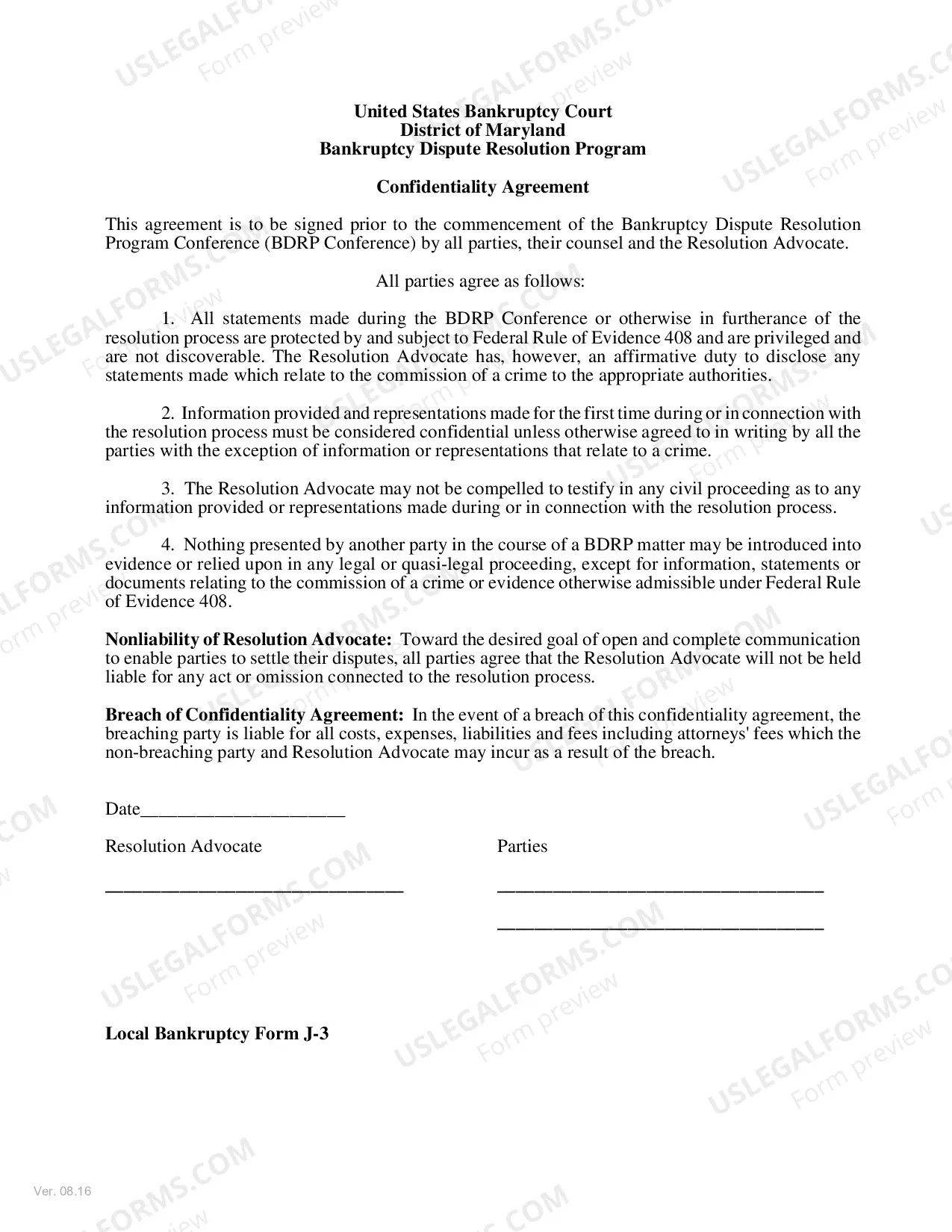
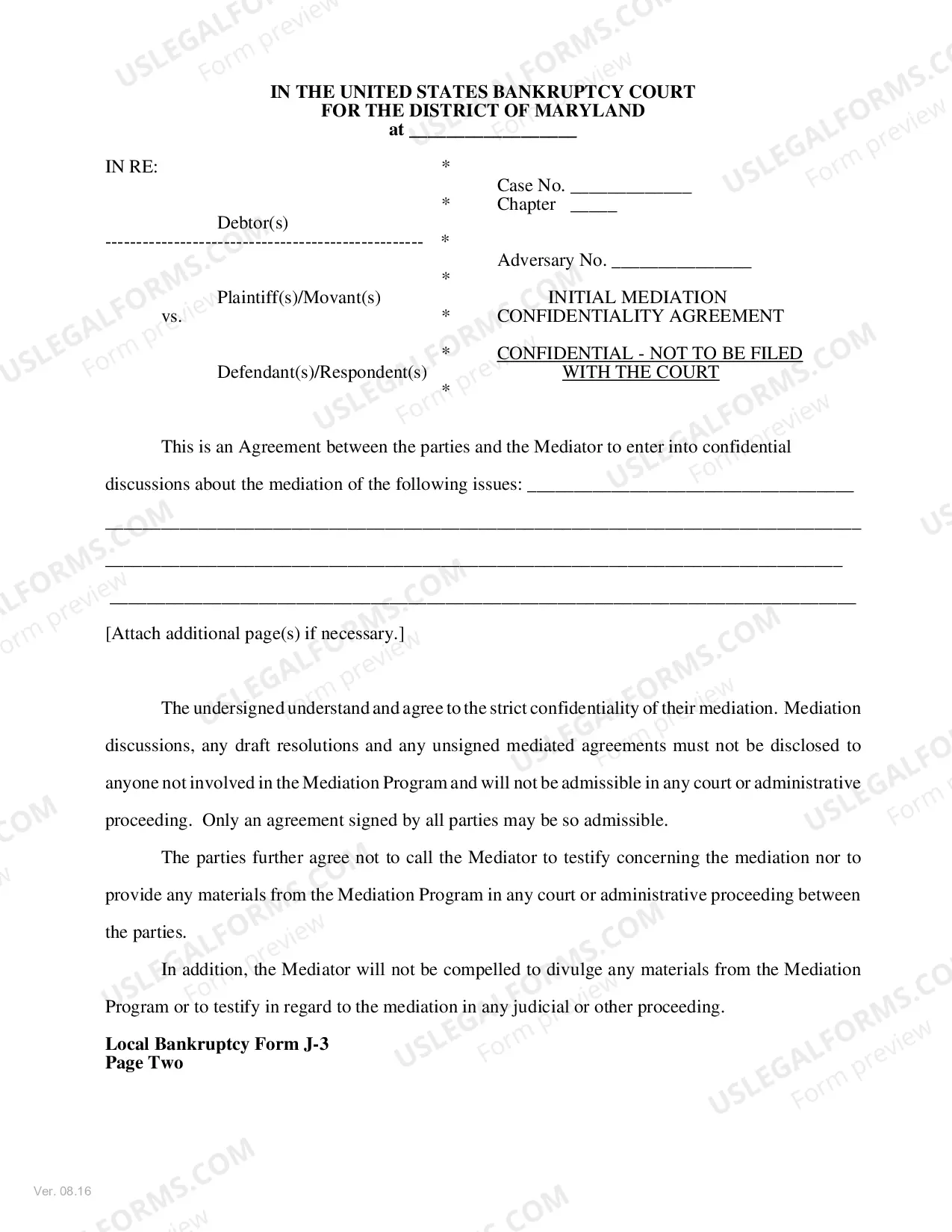
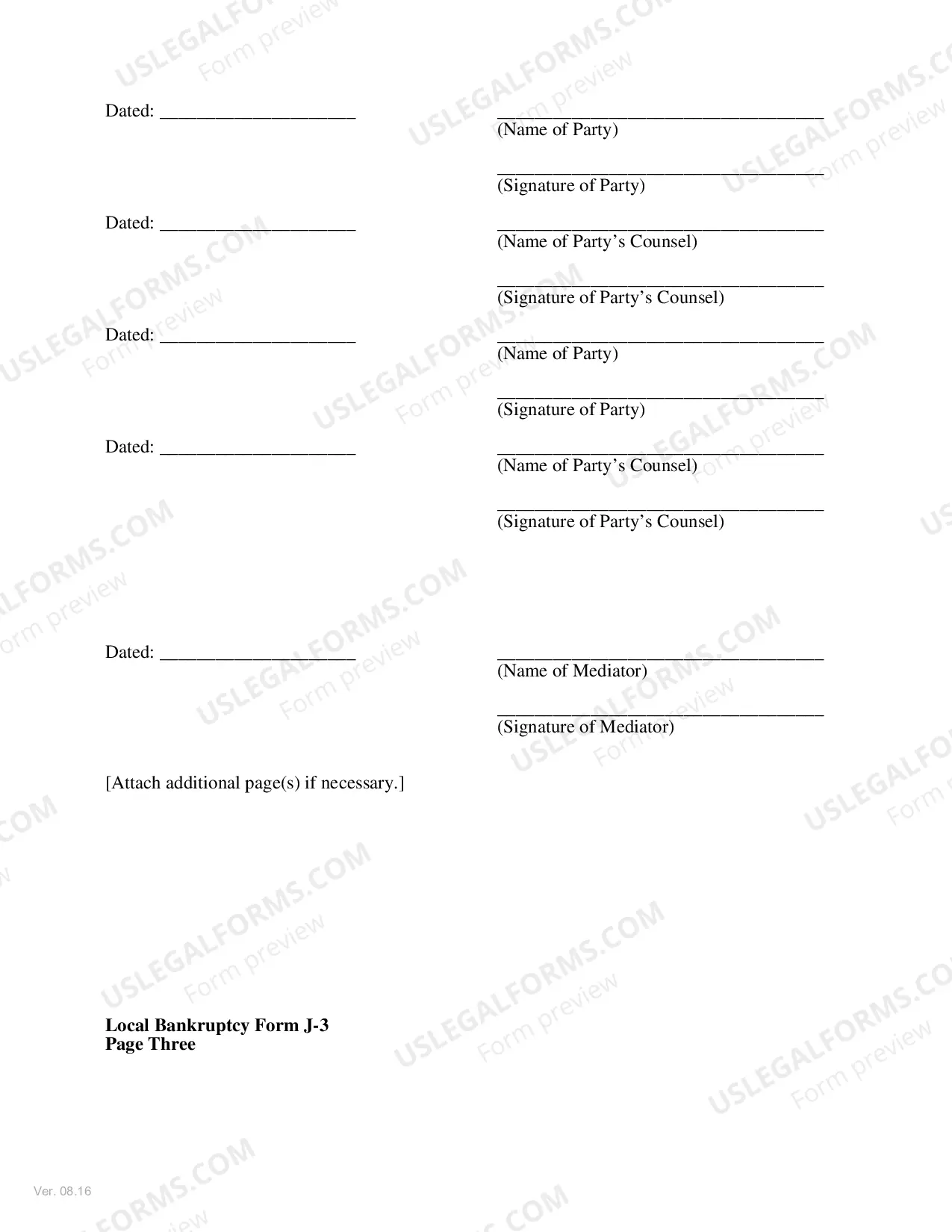
The Maryland Initial Mediation Confidentiality Agreement is a legal document that is used to ensure the confidentiality of information disclosed during a mediation process. It is designed to protect the interests of all parties involved in the mediation process and ensure that confidential information remains private. The agreement outlines the scope and limits of confidentiality, and it is signed by all parties involved in the mediation process. There are two types of Maryland Initial Mediation Confidentiality Agreements: the Mutual Non-Disclosure Agreement and the Limited Non-Disclosure Agreement. The Mutual Non-Disclosure Agreement applies to all parties involved in the mediation process, while the Limited Non-Disclosure Agreement is specific to one party. Both agreements require all parties to keep any and all information disclosed during the mediation process confidential and not to use it for any purpose other than the mediation process.
Maryland Initial Mediation Confidentiality Agreement
Description
Get your form ready online
Our built-in tools help you complete, sign, share, and store your documents in one place.
Make edits, fill in missing information, and update formatting in US Legal Forms—just like you would in MS Word.
Download a copy, print it, send it by email, or mail it via USPS—whatever works best for your next step.
Sign and collect signatures with our SignNow integration. Send to multiple recipients, set reminders, and more. Go Premium to unlock E-Sign.
If this form requires notarization, complete it online through a secure video call—no need to meet a notary in person or wait for an appointment.
We protect your documents and personal data by following strict security and privacy standards.

Make edits, fill in missing information, and update formatting in US Legal Forms—just like you would in MS Word.

Download a copy, print it, send it by email, or mail it via USPS—whatever works best for your next step.

Sign and collect signatures with our SignNow integration. Send to multiple recipients, set reminders, and more. Go Premium to unlock E-Sign.

If this form requires notarization, complete it online through a secure video call—no need to meet a notary in person or wait for an appointment.

We protect your documents and personal data by following strict security and privacy standards.
Looking for another form?


How to fill out Maryland Initial Mediation Confidentiality Agreement?
Completing official documentation can be quite a hassle if you lack accessible fillable templates. With the US Legal Forms online repository of formal documents, you can trust the forms you acquire, as each one adheres to federal and state statutes and has been vetted by our specialists.
Acquiring your Maryland Initial Mediation Confidentiality Agreement from our collection is as easy as pie. Previously registered users with an active subscription need only Log In and click the Download button after finding the correct template. Subsequently, if desired, users can retrieve the same blank from the My documents section of their account. Still, even if you are new to our service, registering with a valid subscription will only take a few minutes. Here’s a brief guide for you.
Haven’t you utilized US Legal Forms yet? Sign up for our service today to access any official document promptly and effortlessly whenever you need to, and keep your documentation organized!
- Document compliance check. You should carefully examine the content of the form you are interested in and confirm if it meets your requirements and complies with your state laws. Reviewing your document and checking its overall details will assist you in doing just that.
- Alternative search (optional). If there are any discrepancies, explore the library using the Search tab located at the top of the page until you discover a suitable template, and click Buy Now when you identify the one you wish.
- Account registration and form purchase. Create an account with US Legal Forms. After verifying your account, Log In and select your desired subscription plan. Make a payment to continue (options for PayPal and credit cards are available).
- Template download and further usage. Pick the file format for your Maryland Initial Mediation Confidentiality Agreement and click Download to save it to your device. Print it for manual paperwork completion or utilize a feature-rich online editor to prepare an electronic version more swiftly and efficiently.
Form popularity
FAQ
The parties may not disclose discussions or other communications with the mediator unless all parties agree, because it is required by law, or because otherwise confidential communications are relevant to a complaint against a mediator or the Mediation Program arising out of the mediation.
Mediation communications that are confidential under this Rule are not subject to discovery, but information that is otherwise admissible or subject to discovery does not become inadmissible or protected from disclosure solely by reason of its use in mediation. Cross reference: See Rule 5-408(b).
The mediator must remain impartial, both in perception and in fact (Freedman & Prigoff, 1986; Brown, 1991). This protects the parties involved in the conflict, so that neither can be penalized over what was discussed in what was supposed to be a confidential mediation.
As a general rule, mediation communications are privileged and not subject to discovery or admissible in evidence in a proceeding unless waived by all the parties to a mediation, as well as the mediator and the third party participants.
(1) Confidentiality: The proceedings are confidential both as between the parties and as between the parties and the mediator. As a result even if the parties agree that matters can be referred to outside the mediation, the mediator can enforce the confidentiality provision.
Some of the statutory exceptions include (1) when disclosure is necessary for criminal prosecution; (2) when necessary to prove coercion or fraud that led to the mediated settlement; (3) in order to establish the existence or terms of a settlement agreement; and (4) when necessary to impose sanctions or to discipline
Confidentiality is at the heart of a mediation session and is critical to a successful resolution. The parties must be assured that they can share sensitive information at the session, where it is necessary to see that their true needs and interests may be met, without fear of subsequent disclosure to their detriment.
As stated above, in California state proceedings, mediation confidentiality is enforced through evidentiary rules of exclusion.