Confidential Settlement Agreement
What is this form?
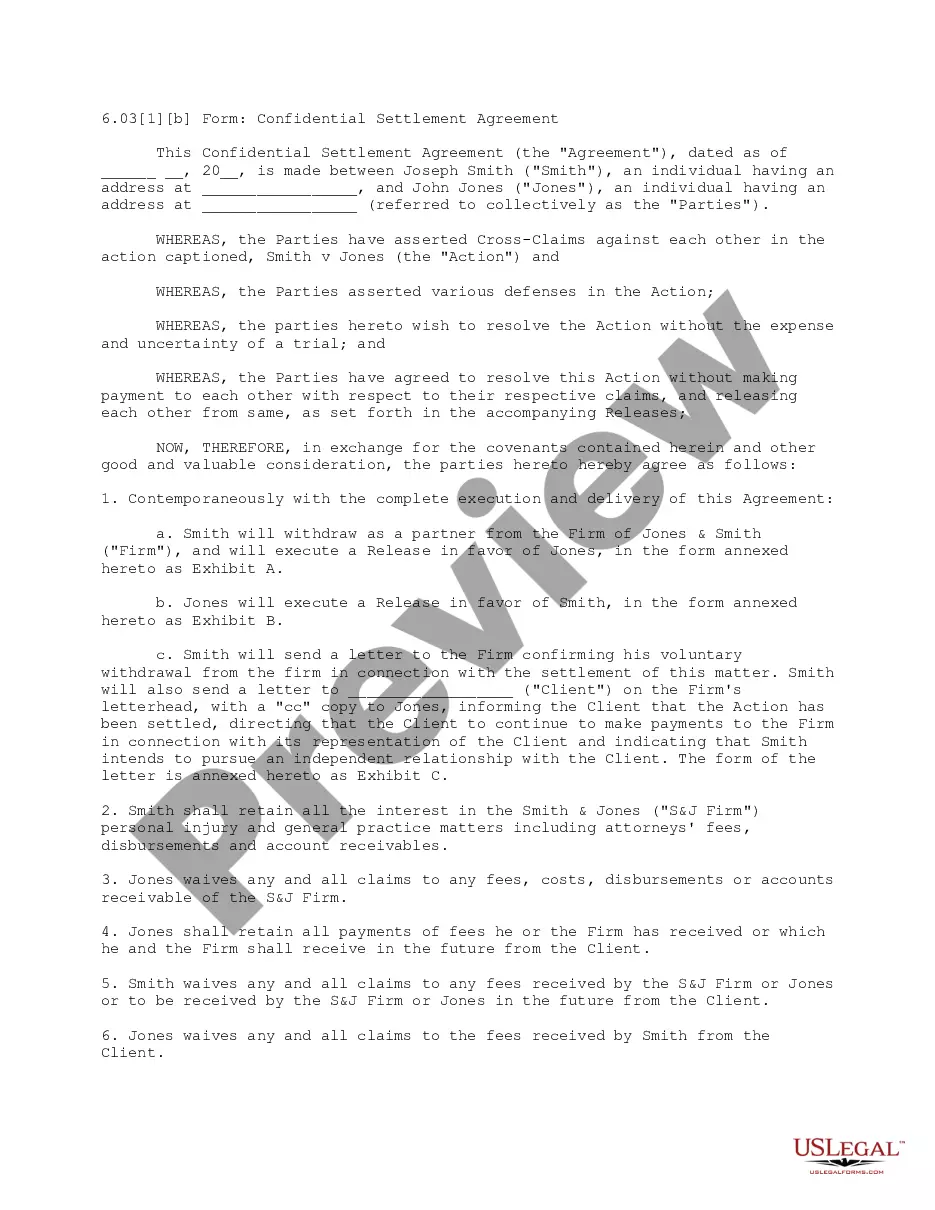
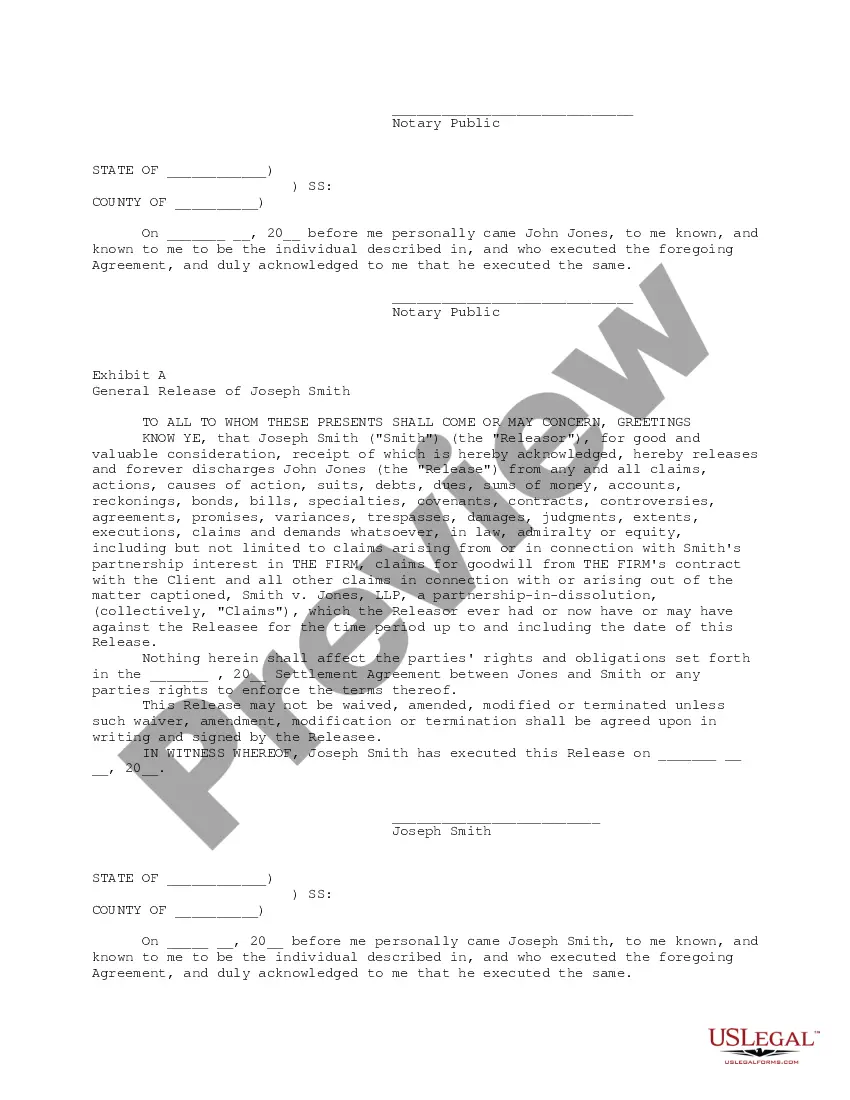
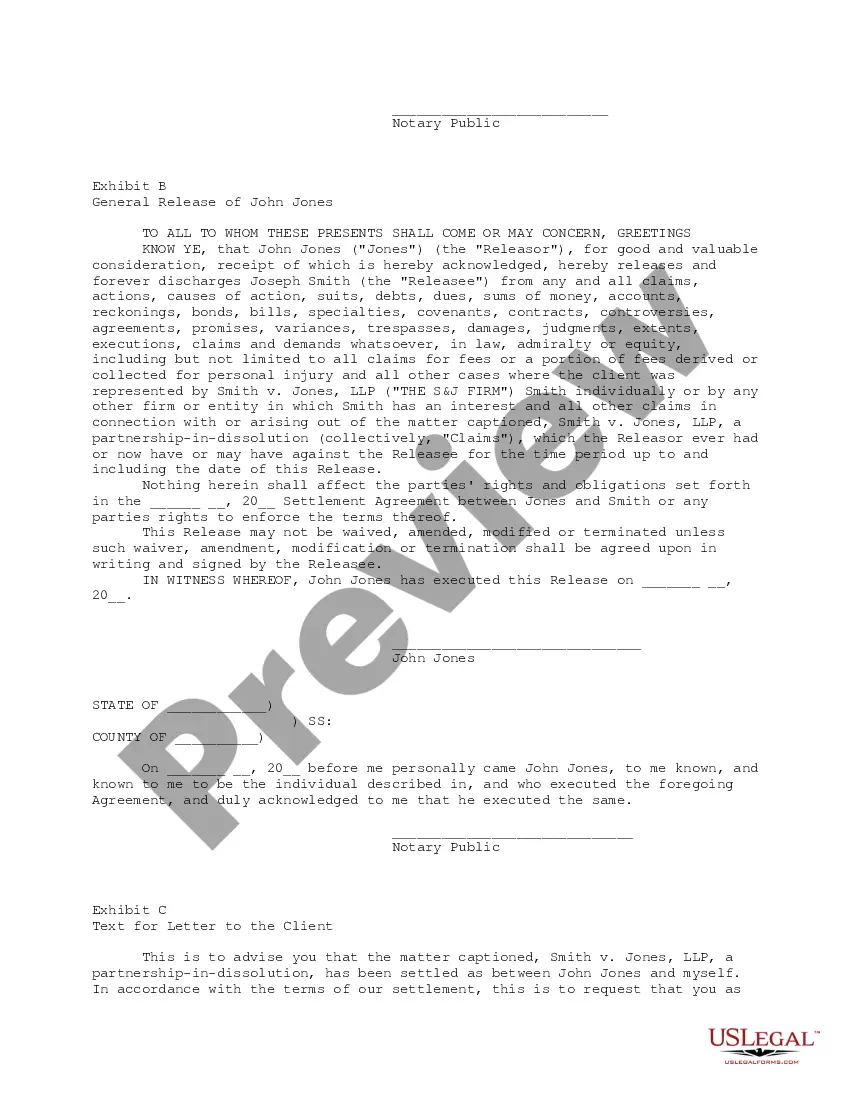
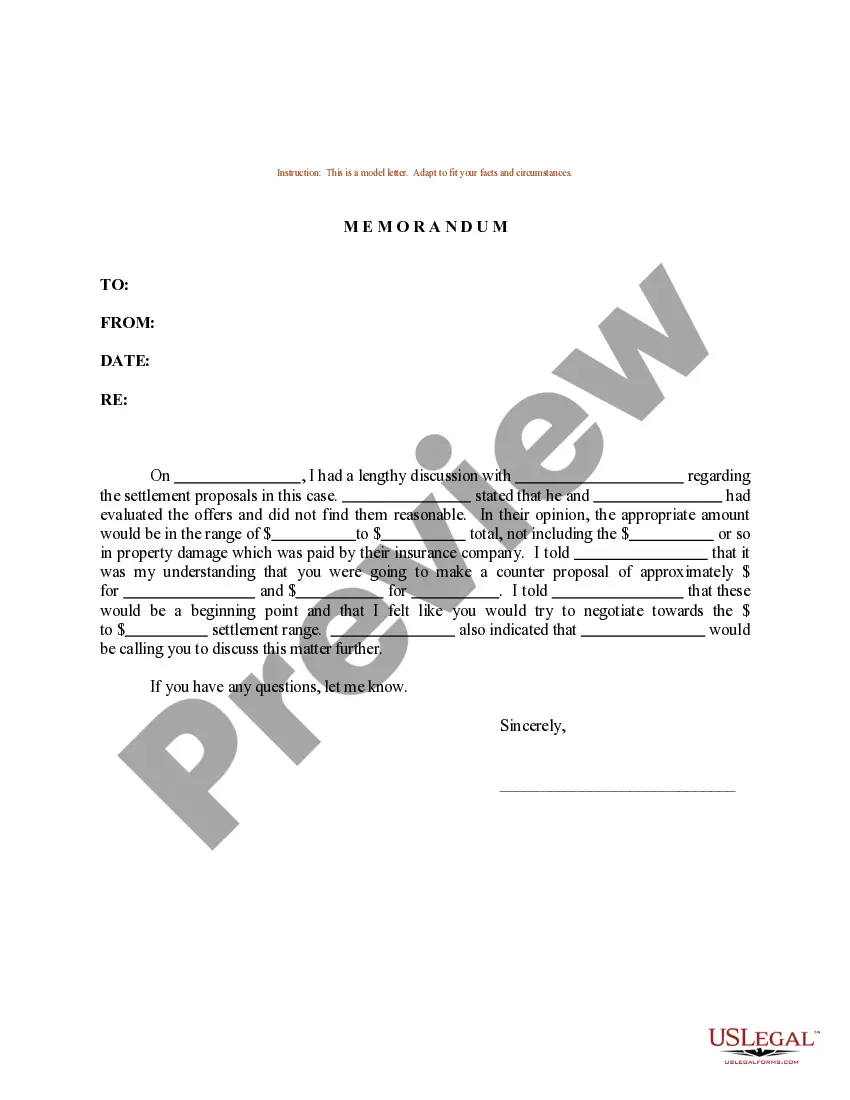
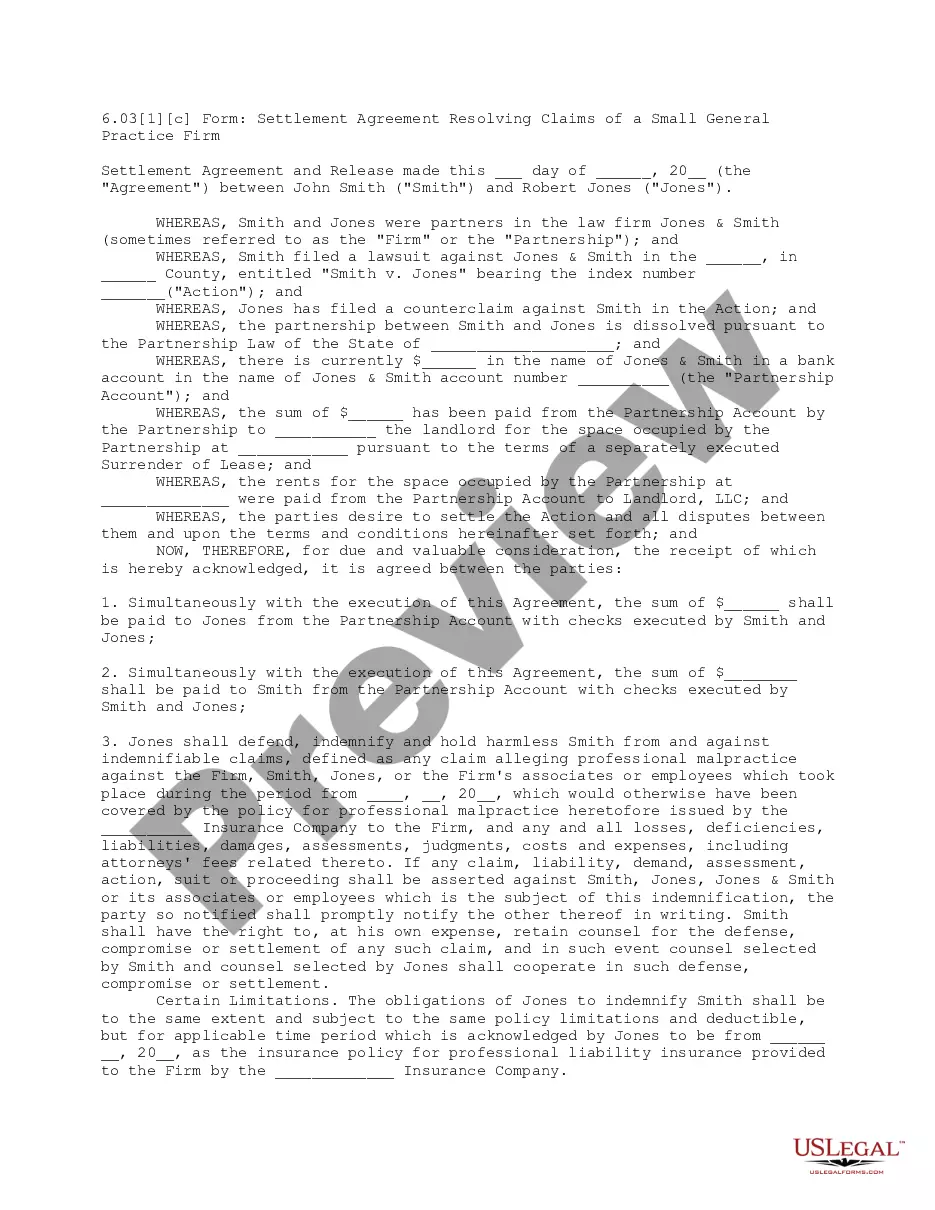
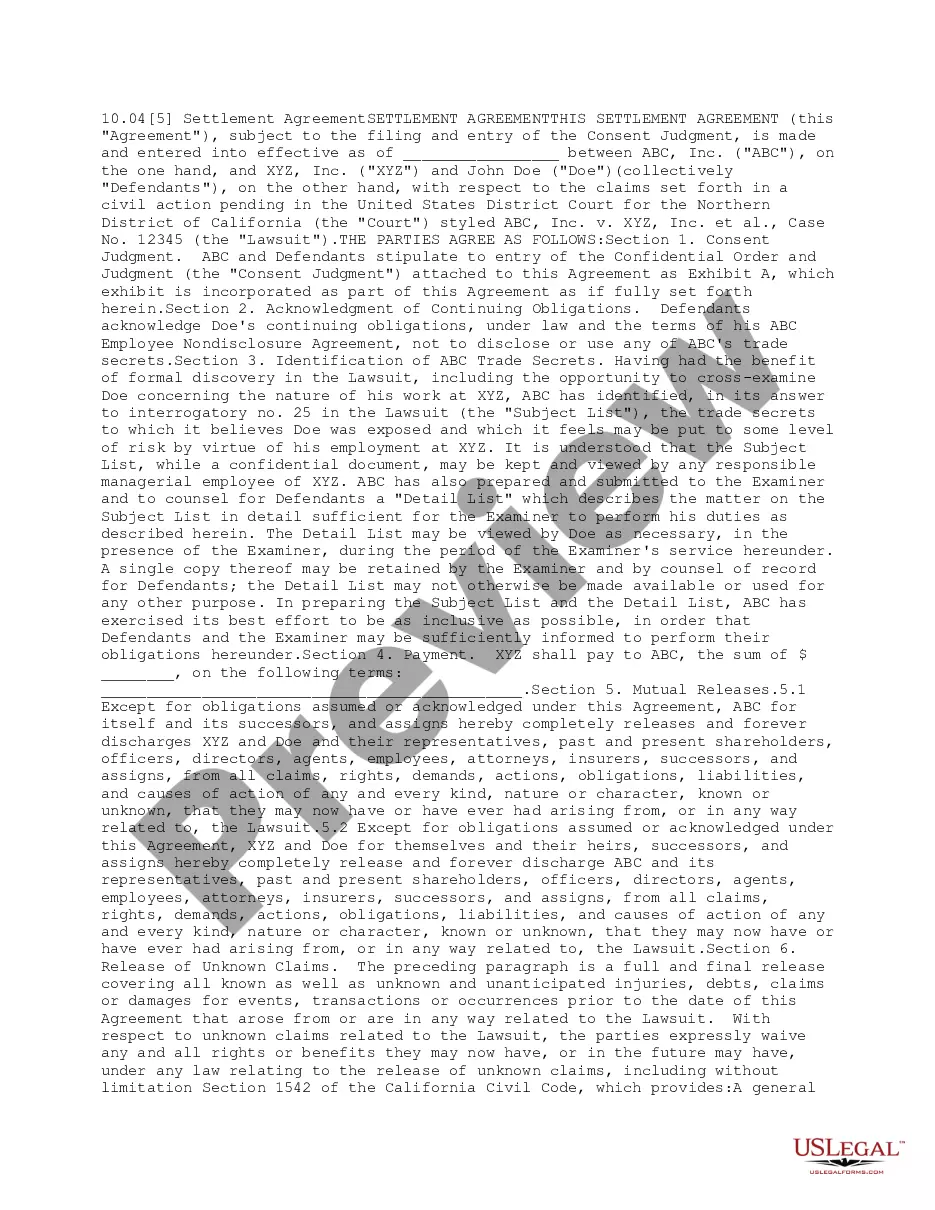
The Confidential Settlement Agreement is a legal document used to resolve disputes between parties without proceeding to trial. It outlines the terms under which one or more parties agree to settle issues, such as claims resulting from a business partnership dissolution, in this case involving two partners. This agreement helps both parties avoid the costs and uncertainty associated with litigation while ensuring that all claims are addressed amicably and confidentially.
Key components of this form
- Identification of the parties involved and their addresses.
- Details of any cross-claims and defenses asserted by the parties.
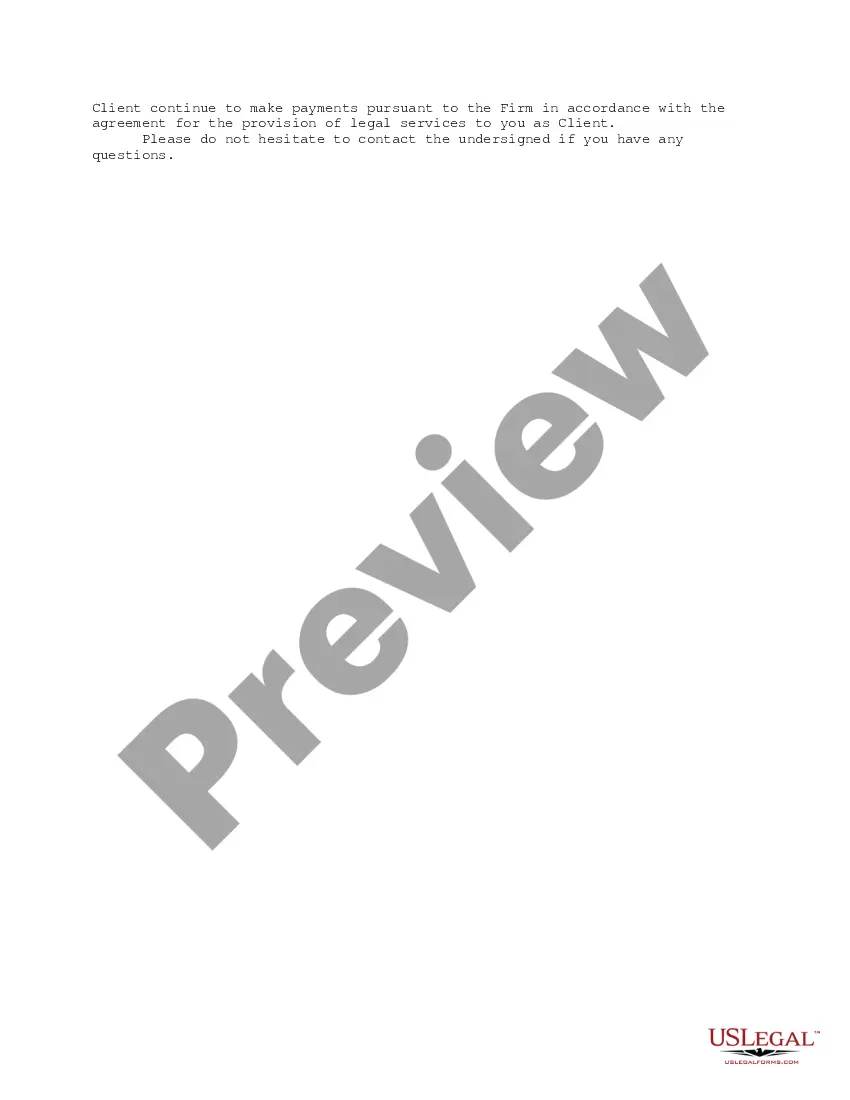
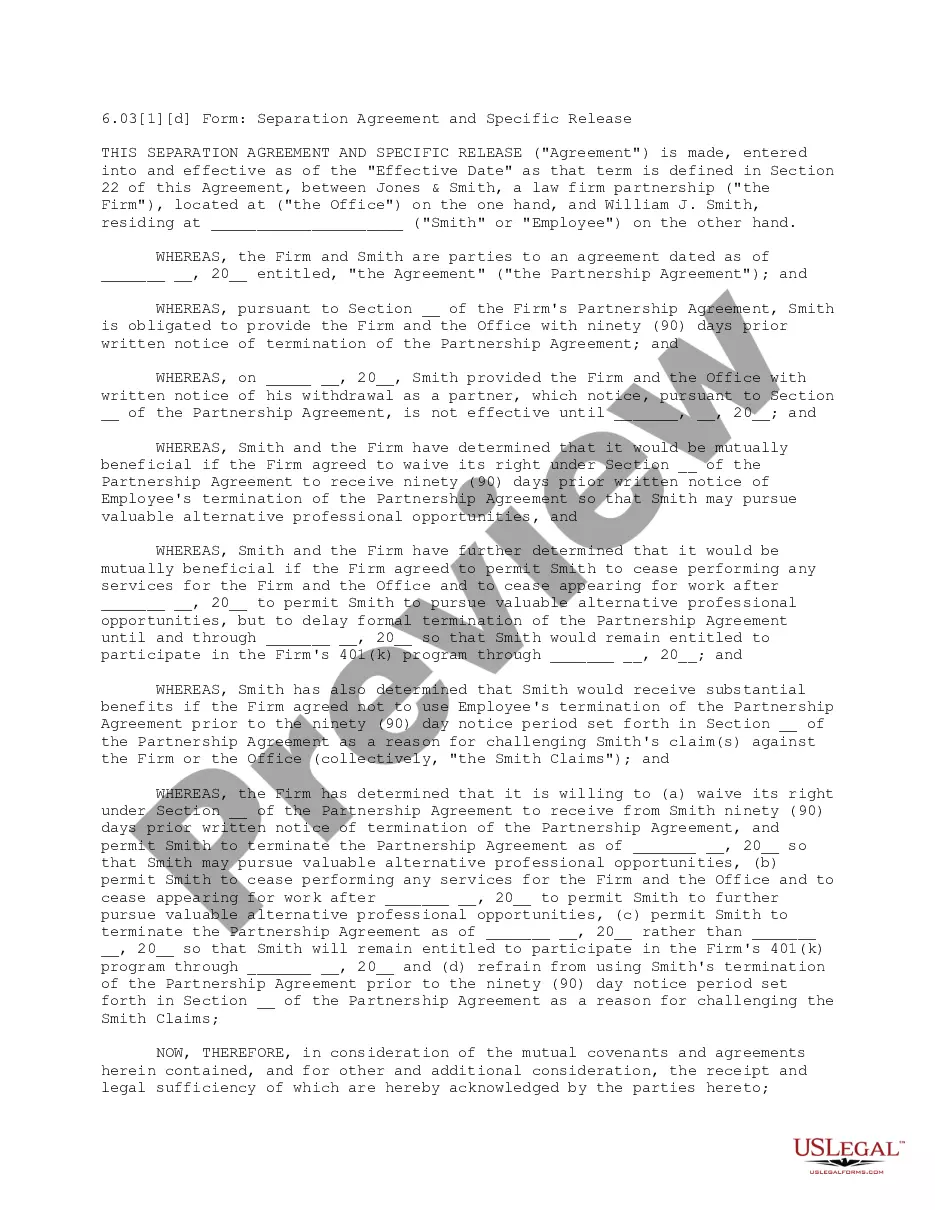
- Terms regarding the withdrawal of a partner and necessary releases.
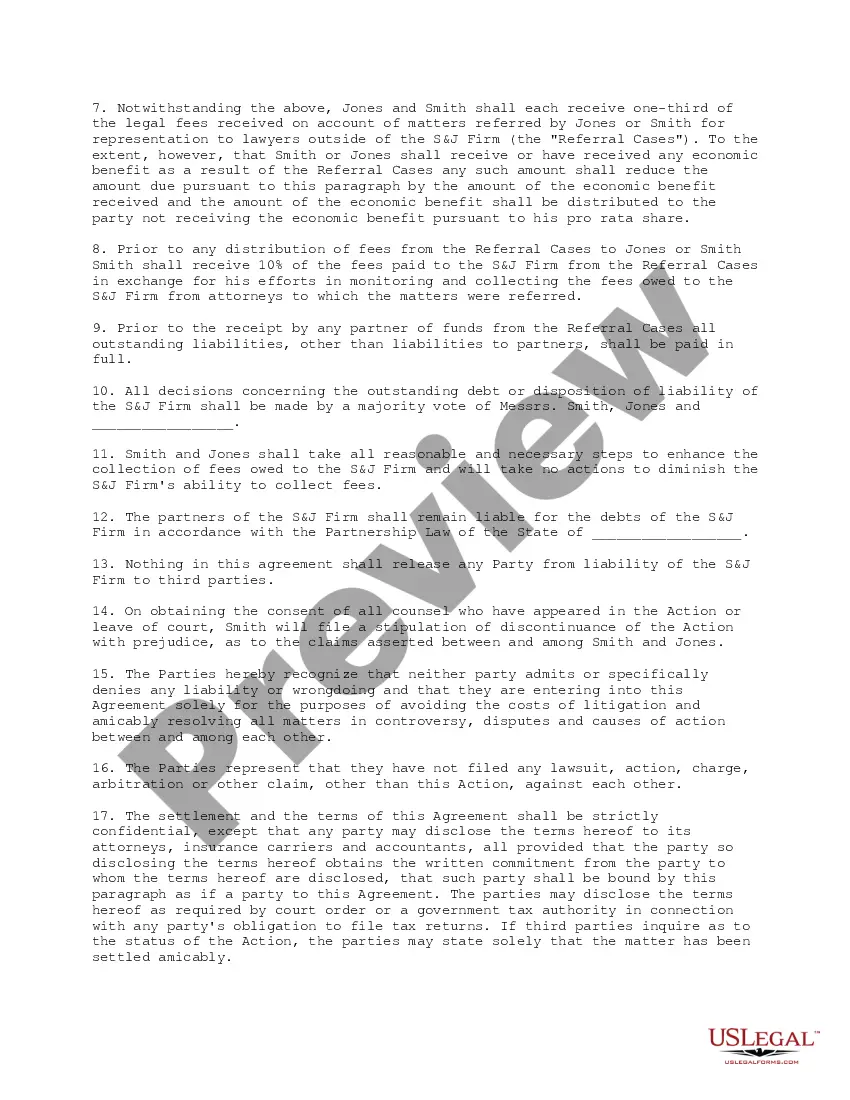
- Distribution of fees and obligations related to referrals and collections.
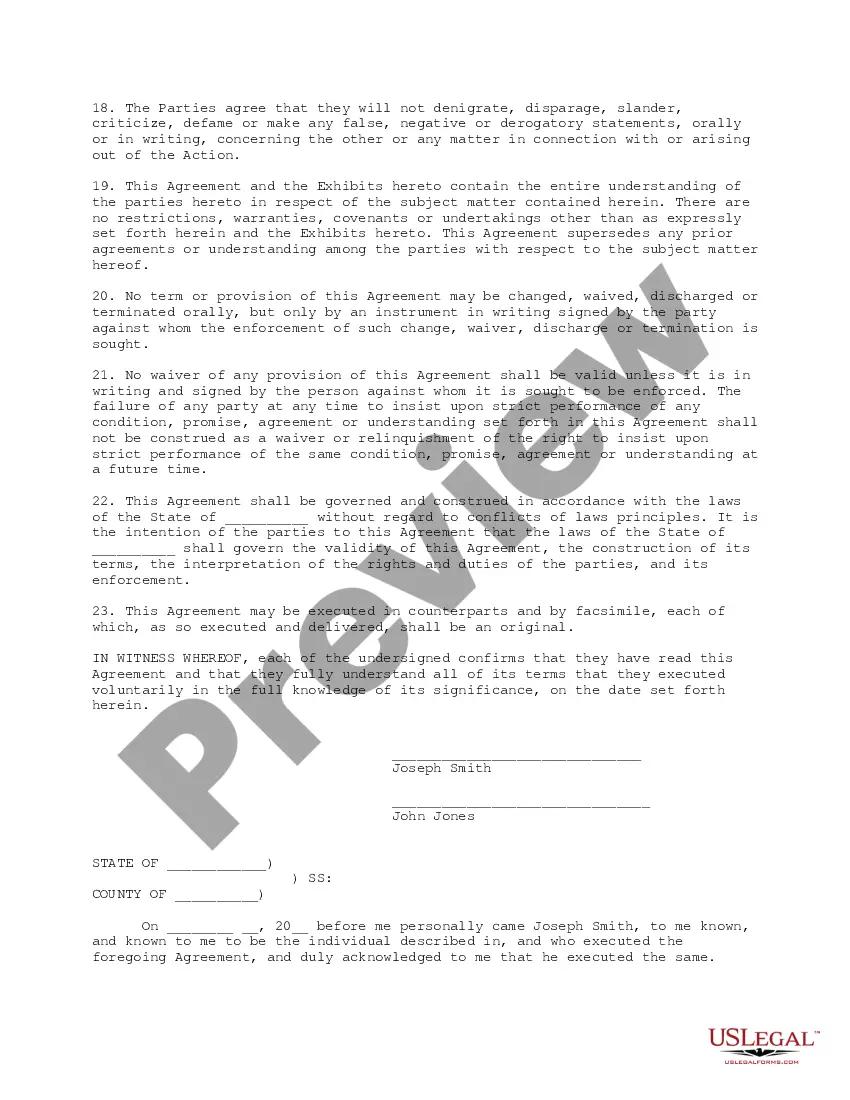
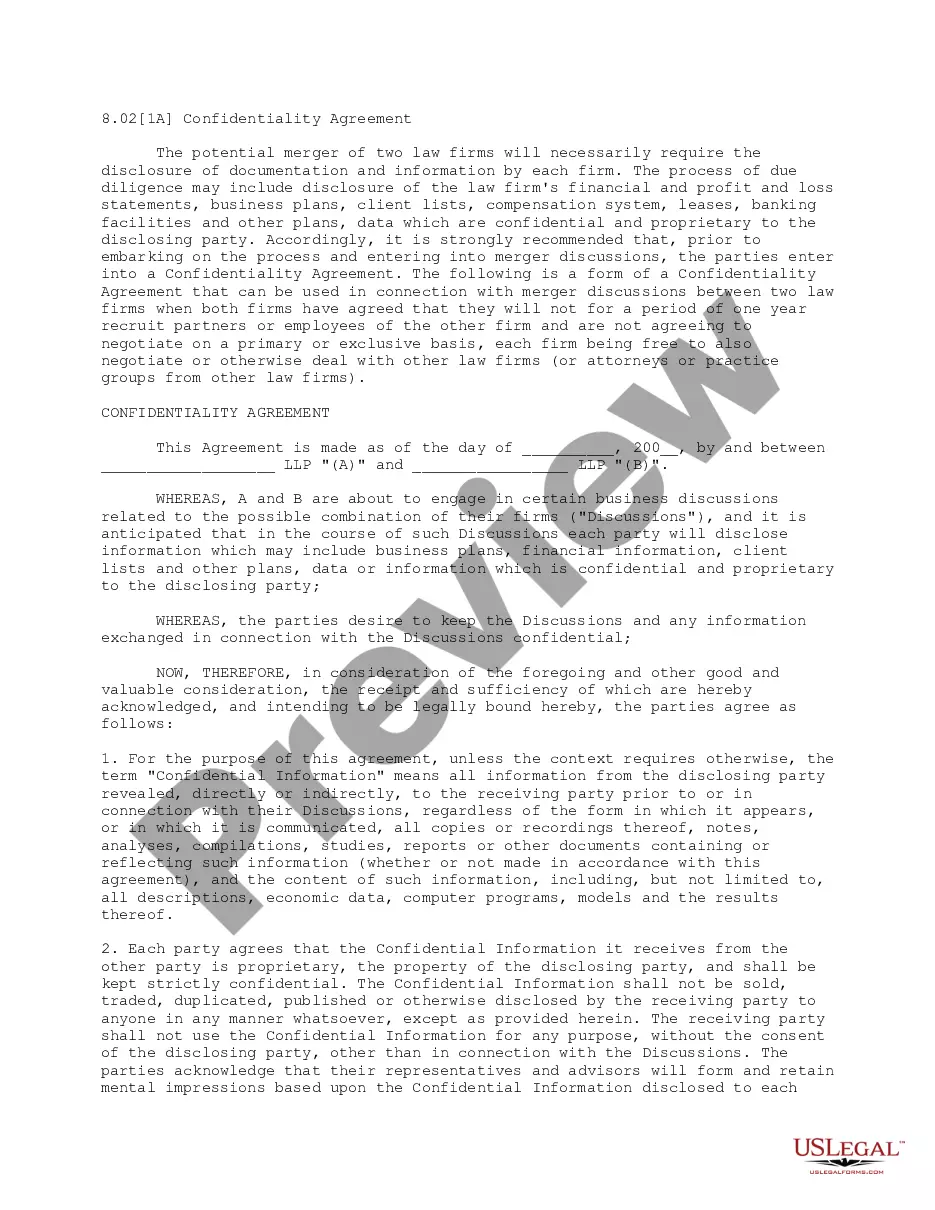
- Confidentiality agreement enforcing non-disparagement.
- Signatures from both parties, witnessed by a notary public.
Common use cases
This form is used in scenarios where two partners in a business wish to settle disputes without engaging in a lawsuit. Common situations include a disagreement over partnership terms, financial distributions, or allegations of misconduct. This agreement is particularly useful for avoiding the costs and time associated with litigation, especially when both parties seek to maintain their professional relationship or reputation.
Who should use this form
This Confidential Settlement Agreement is ideal for:
- Business partners involved in a partnership dispute.
- Individuals looking to settle cross-claims without going to trial.
- Parties wanting to ensure confidentiality regarding the settlement terms.
- Attorneys representing clients in business dissolution matters.
How to prepare this document
- Identify the parties involved by entering their full names and addresses at the beginning of the document.
- Fill in the date of the agreement and title it appropriately.
- Specify the terms of withdrawal and any mutual releases required from both parties.
- Detail the fee distribution agreement, including provisions regarding referral fees.
- Both parties should sign the agreement in the presence of a notary to execute it legally.
Does this form need to be notarized?
This document requires notarization to meet legal standards. US Legal Forms provides secure online notarization powered by Notarize, allowing you to complete the process through a verified video call, available 24/7.
Get your form ready online
Our built-in tools help you complete, sign, share, and store your documents in one place.
Make edits, fill in missing information, and update formatting in US Legal Forms—just like you would in MS Word.
Download a copy, print it, send it by email, or mail it via USPS—whatever works best for your next step.
Sign and collect signatures with our SignNow integration. Send to multiple recipients, set reminders, and more. Go Premium to unlock E-Sign.
If this form requires notarization, complete it online through a secure video call—no need to meet a notary in person or wait for an appointment.
We protect your documents and personal data by following strict security and privacy standards.

Make edits, fill in missing information, and update formatting in US Legal Forms—just like you would in MS Word.

Download a copy, print it, send it by email, or mail it via USPS—whatever works best for your next step.

Sign and collect signatures with our SignNow integration. Send to multiple recipients, set reminders, and more. Go Premium to unlock E-Sign.

If this form requires notarization, complete it online through a secure video call—no need to meet a notary in person or wait for an appointment.

We protect your documents and personal data by following strict security and privacy standards.
Avoid these common issues
- Failing to notarize the document, which may affect enforceability.
- Omitting the parties' addresses or full legal names.
- Not clearly defining the terms of any releases or fee distributions.
- Neglecting to include confidentiality clauses where required.
Benefits of completing this form online
- Convenient access to professionally drafted templates at any time.
- Editable fields allow for customization specific to your situation.
- Secure PDF download ensures you have a permanent copy of your settlement agreement.
- Stay informed about updates to legal standards and practices.
Legal use & context
- This form is legally binding once it is signed and notarized by both parties.
- Confidentiality clauses ensure that the specifics of the settlement remain private unless disclosure is required by law.
- It is important to consult with an attorney if you have complex issues regarding settlements, especially involving significant financial interests.
Key takeaways
- The Confidential Settlement Agreement is essential for resolving disputes amicably without litigation.
- Ensure all parties understand and agree to the terms before signing.
- Notarization is essential for legal enforceability.
- Use this form if both parties wish to maintain confidentiality about their settlement terms.
Key terms explained
- Settlement Agreement: A legally binding contract resolving disputes between parties.
- Cross-Claims: Claims made by one party against another in a legal action.
- Notarization: The official witnessing of a document's signing by a notary public, verifying the identity of the signers.
Looking for another form?
Form popularity
FAQ
A Settlement Agreement (formerly known as a Compromise Agreement) is a legally binding agreement between you and your employer. This usually provides for a severance payment by the employer in return for your agreement not to pursue any claims in a Tribunal or a Court.
Some people wonder if they can save even more by money by writing their own settlement agreement and not seeking the help of a divorce attorney at all. While there is no legal requirement that you have a lawyer draft your settlement agreement, it is certainly a good idea to do so.
You need to have your written agreement notarized. Make sure, when you sign the agreement, that you understand everything you are agreeing to. This type of agreement is often called a marital settlement agreement or MSA.
Unless you have already have another job to go to, it is not easy to ascertain how long you will be out of work, but as a general rule of thumb, a payment equivalent to six month's salary is considered to be a good settlement.
The settlement agreement is an enforceable contract that almost always contains a clause that the terms of the settlement will remain confidential, barring the plaintiff and his or her attorneys from publicly discussing the facts of the case or terms of the settlement.
Writing the Agreement First, give the document a title that describes the settlement. Next, write a paragraph that identifies all parties involved in the lawsuit and indicates their roles. This should also include their addresses and note that they have the authority and capacity to sign the agreement.
The agreement should list the rights, claims, obligations, or interests that will be released in the settlement as well as any claims or obligations that are not part of the settlement.
2714 Retain relevant documents. 2714 Decide whether (and when) to make offer. 2714 Evaluate the reasons for settling. 2714 Assess motivating factors to settle. 2714 Confirm client's ability to settle. 2714 List all covered parties. 2714 List all legal issues to be settled.