Confidentiality and Non-Disclosure Agreement - Real Estate transactions
Understanding this form
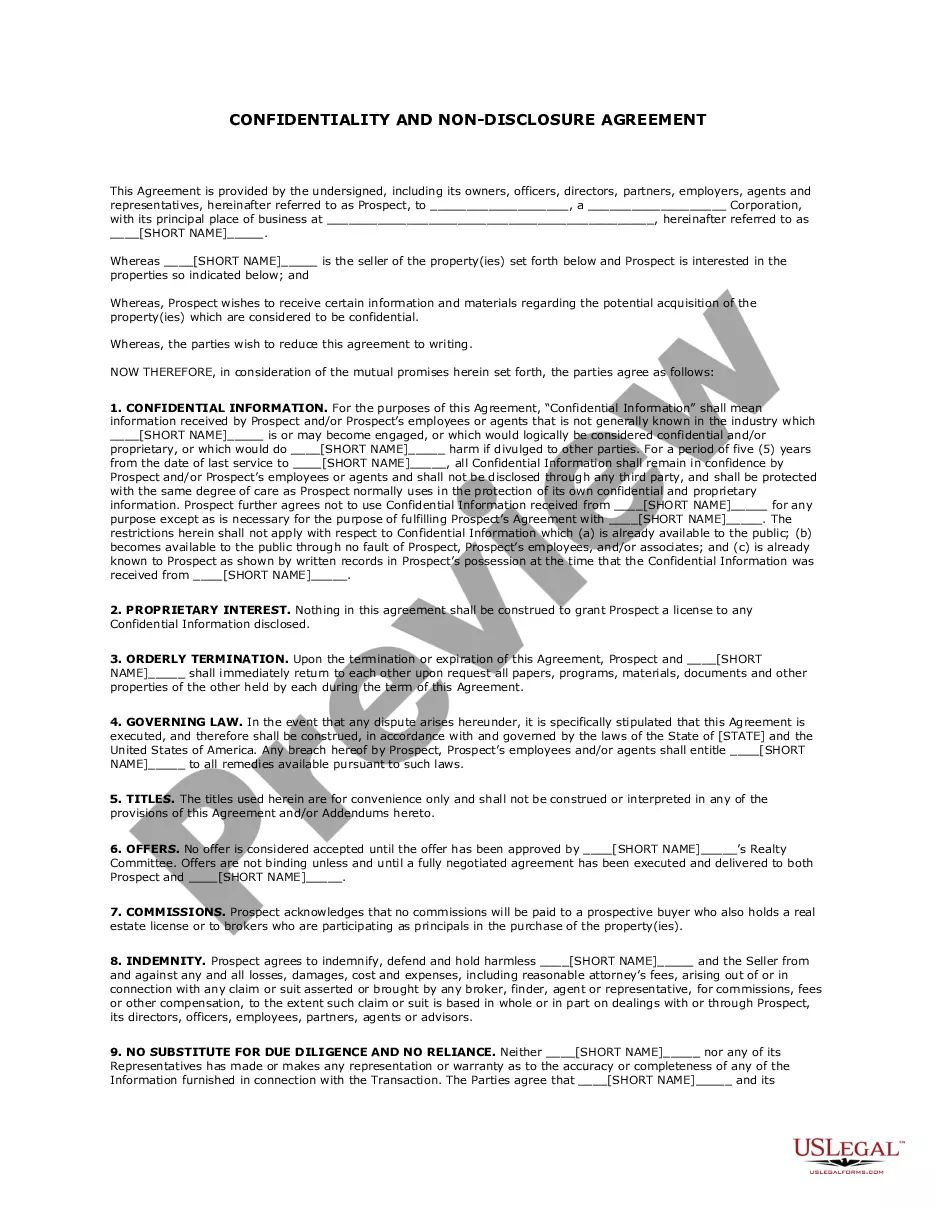
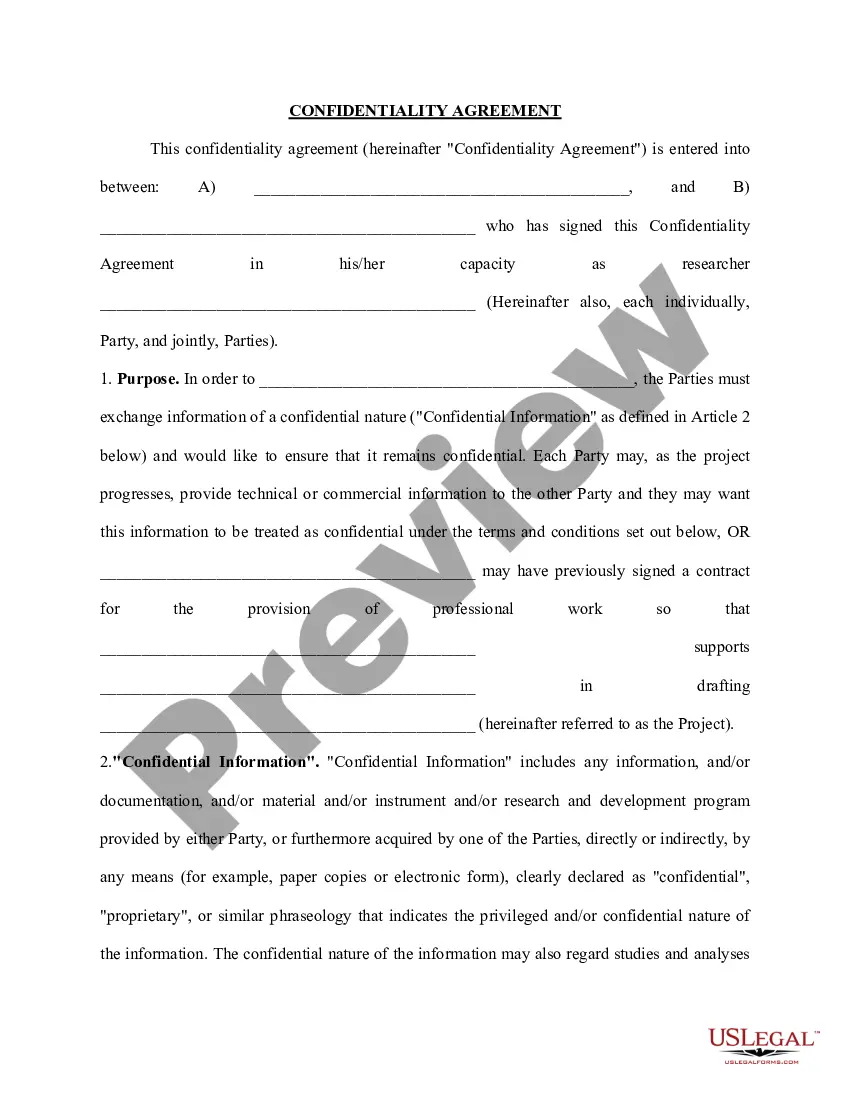
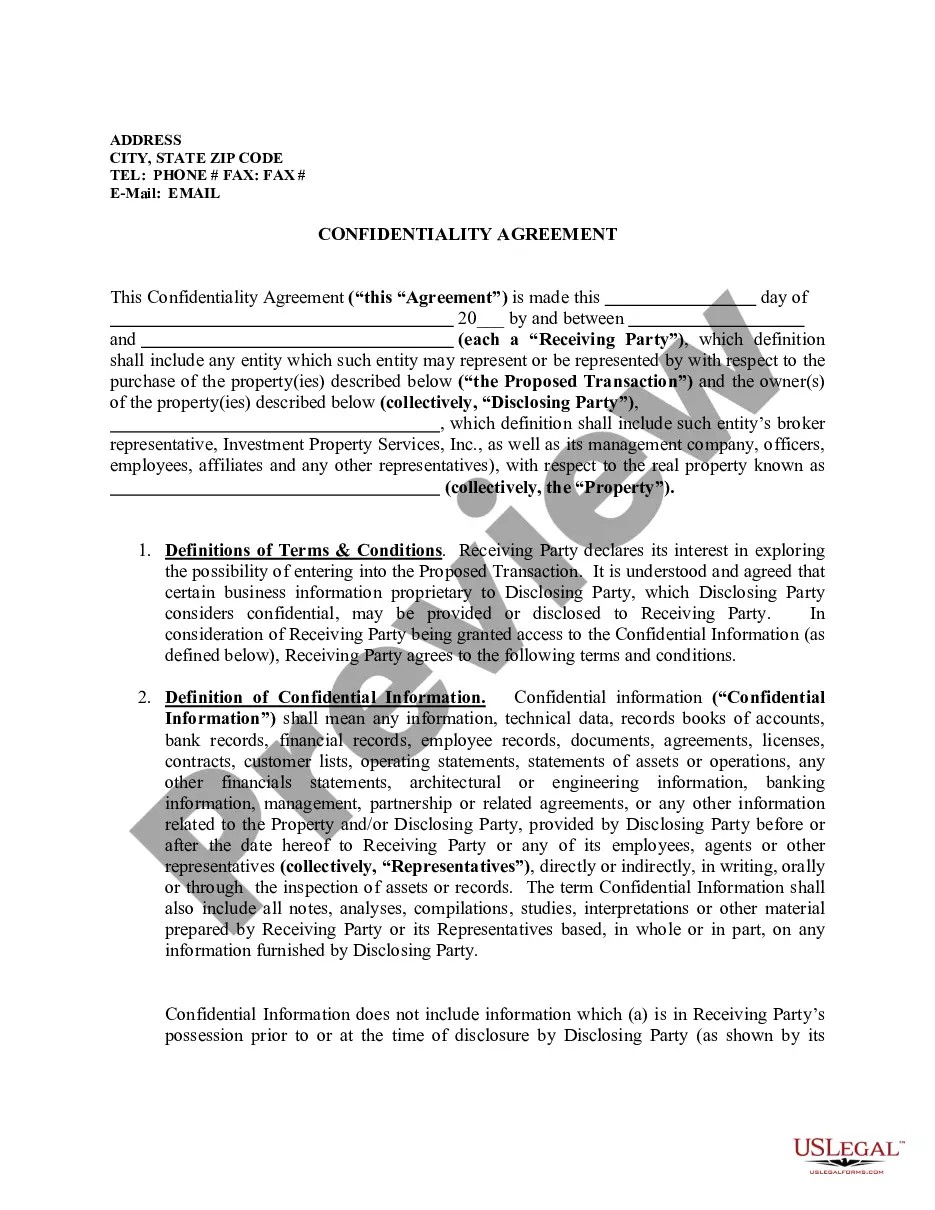
This Confidentiality and Non-Disclosure Agreement is a legal document designed for real estate transactions. It protects sensitive information shared during the property acquisition process between a prospective buyer and the seller. This form ensures that confidential details about the properties remain private and outlines the responsibilities and obligations of both parties, distinguishing it from other forms that don't specifically address property transactions.
Main sections of this form
- Confidential Information: Defines what constitutes confidential information and sets terms for its protection.
- Proprietary Interest: Clarifies that no licenses to confidential information are granted.
- Orderly Termination: Outlines the procedure for returning confidential materials upon agreement termination.
- Governing Law: Specifies the jurisdiction that governs the agreement.
- Indemnity Clause: Protects the seller from claims related to commissions arising from the prospective buyerâs actions.

Situations where this form applies
This form is used when a prospective buyer is interested in acquiring real estate properties and needs to review sensitive information related to those properties. It is essential when negotiations are underway and parties want to ensure that any disclosed information is not shared with third parties.
Intended users of this form
- Prospective buyers looking to acquire real estate properties.
- Investors wanting to evaluate potential investments securely.
- Property sellers seeking to protect their proprietary information during the transaction process.
- Real estate agents representing buyers in property negotiations.
Completing this form step by step
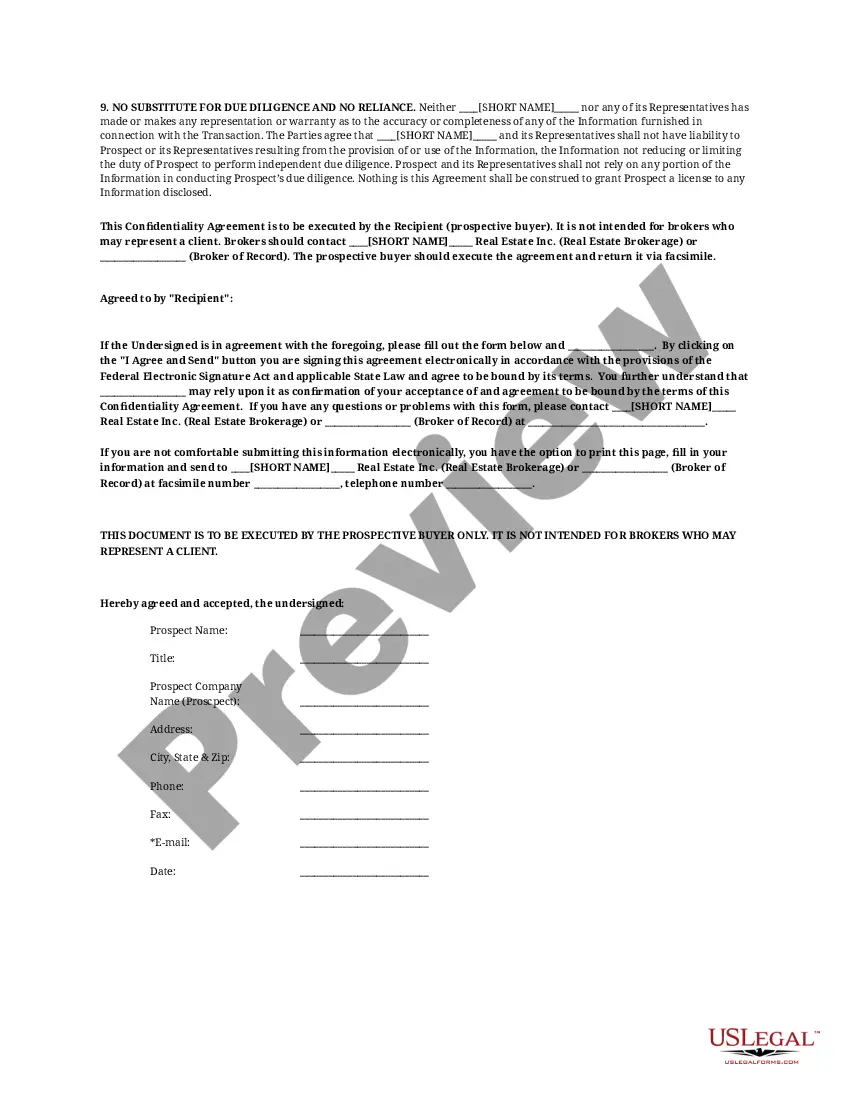
- Identify and enter the name and address of the seller and prospective buyer.
- Clearly outline the properties involved in the transaction.
- Specify the duration of the confidentiality obligations, typically five years.
- Include signatures from both parties to legally execute the agreement.
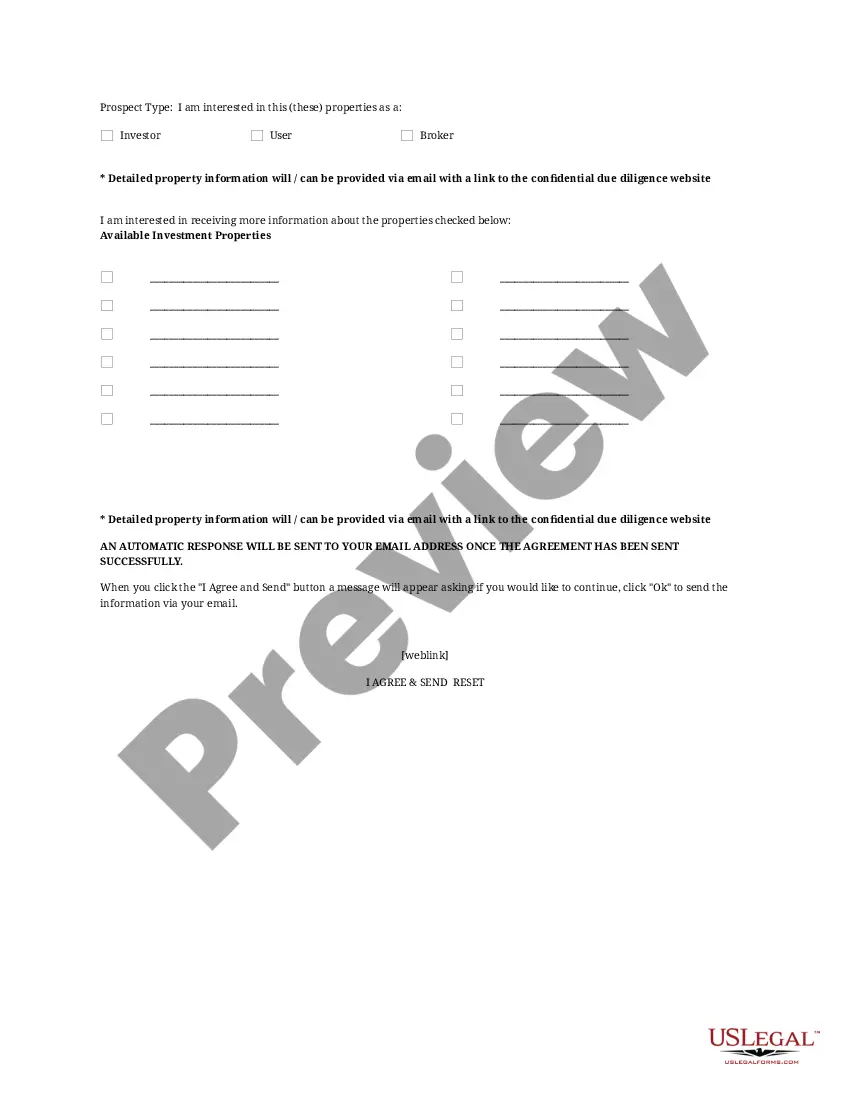
- If applicable, indicate whether you are an investor, user, or broker interested in the properties.
Is notarization required?
Notarization is generally not required for this form. However, certain states or situations might demand it. You can complete notarization online through US Legal Forms, powered by Notarize, using a verified video call available anytime.
Get your form ready online
Our built-in tools help you complete, sign, share, and store your documents in one place.
Make edits, fill in missing information, and update formatting in US Legal Forms—just like you would in MS Word.
Download a copy, print it, send it by email, or mail it via USPS—whatever works best for your next step.
Sign and collect signatures with our SignNow integration. Send to multiple recipients, set reminders, and more. Go Premium to unlock E-Sign.
If this form requires notarization, complete it online through a secure video call—no need to meet a notary in person or wait for an appointment.
We protect your documents and personal data by following strict security and privacy standards.

Make edits, fill in missing information, and update formatting in US Legal Forms—just like you would in MS Word.

Download a copy, print it, send it by email, or mail it via USPS—whatever works best for your next step.

Sign and collect signatures with our SignNow integration. Send to multiple recipients, set reminders, and more. Go Premium to unlock E-Sign.

If this form requires notarization, complete it online through a secure video call—no need to meet a notary in person or wait for an appointment.

We protect your documents and personal data by following strict security and privacy standards.
Mistakes to watch out for
- Failing to define what constitutes confidential information.
- Not including the governing law applicable to the agreement.
- Omitting signatures, which can render the agreement unenforceable.
- Neglecting to clearly outline the specifics of the real estate properties involved.
- Using vague language that may lead to misunderstandings about confidentiality obligations.
Advantages of online completion
- Convenience of accessing and downloading the form without visiting a physical location.
- Editability allows users to customize the agreement to their specific needs.
- Reliability of attorney-drafted templates that meet legal standards.
- Instant access allows for quick completion, which is essential in real estate transactions.
Legal use & context
- This agreement is enforceable under contract law, provided both parties agree to its terms.
- It helps prevent the unauthorized disclosure of sensitive information during real estate negotiations.
- Properly executed, it serves as a legal safeguard for disclosing parties against potential information breaches.
Looking for another form?

Form popularity
FAQ
NDA vs confidentiality agreement: What is the difference? A confidentiality agreement binds all parties to keep secret information confidential, while an NDA upholds secrecy by creating a confidential relationship between the parties who sign it.
What is a Real Estate Confidentiality Agreement? A Confidentiality Agreement is a legal agreement that binds one or more parties to keep proprietary or other information confidential.
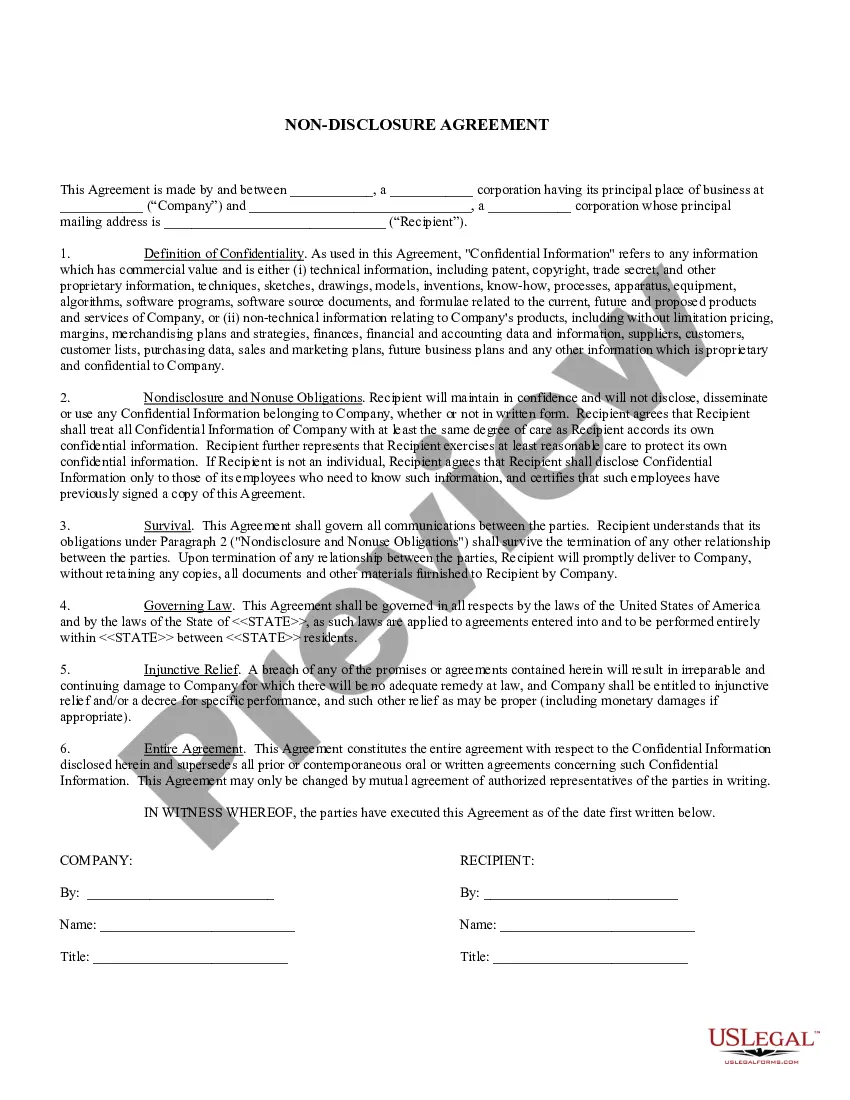
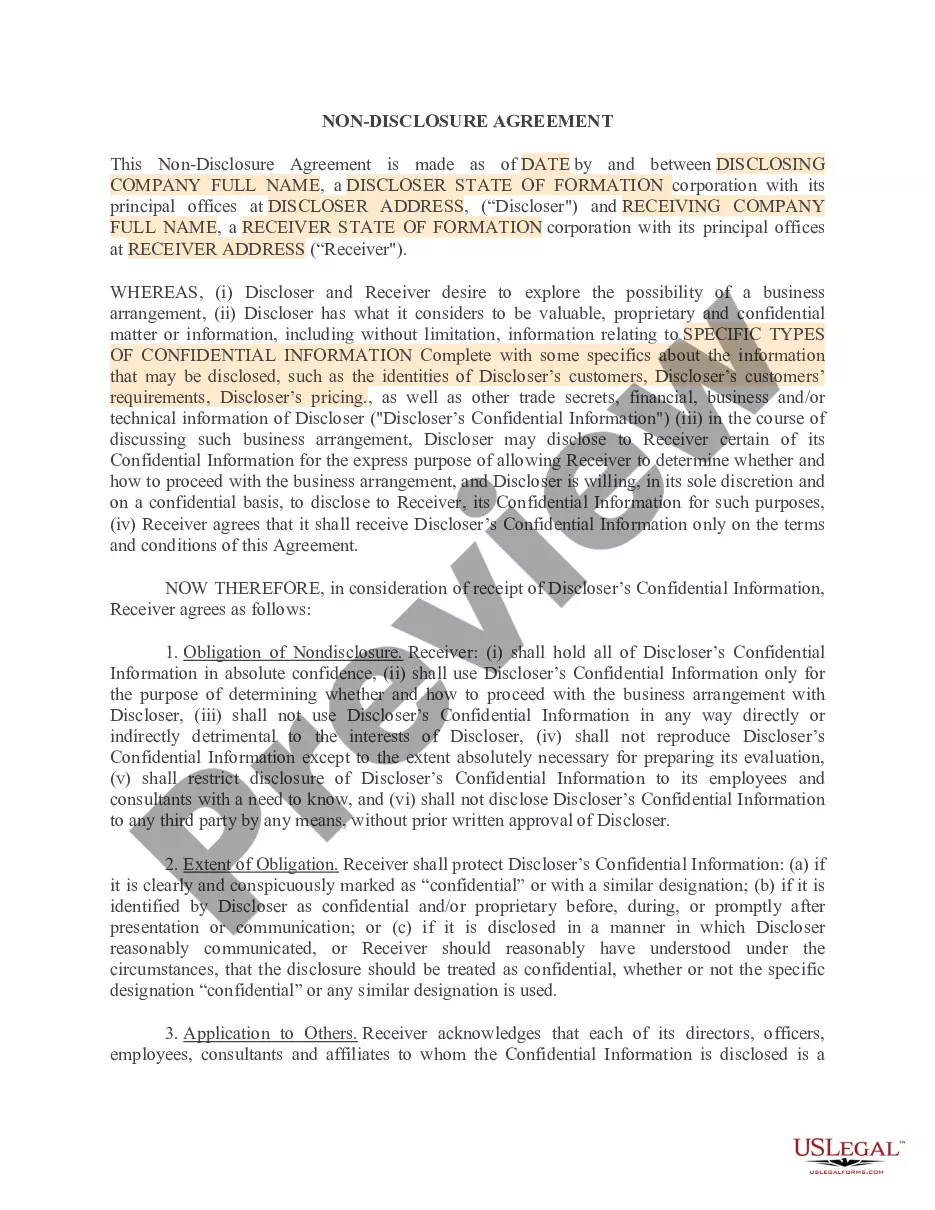
A Confidential Disclosure Agreement (CDA), also referred to as non-disclosure agreement (NDA) or secrecy agreement, is a legal agreement between a minimum of two parties which outlines information the parties wish to share with one another for certain evaluation purposes, but wish to restrict from wider use and
Here are the two types of NDAs to choose from: Unilateral (NDA) Unilateral nondisclosure agreements are the most common NDAs available.Mutual (MNDA) Mutual nondisclosure agreements (MNDA), also known as bilateral agreements, are used when two parties disclose confidential information to each other.
There are three types of NDAs: unilateral, bilateral, and multilateral.
A real estate NDA should clearly identify what information is intended to remain confidential. For example, this could include: Property income and expense reports. Environmental reports.
And while NDAs are known by many names ? including confidentiality agreements (CAs), confidential disclosure agreements (CDAs), and proprietary information agreements (PIAs) ? they typically have one very important thing in common: once an individual signs an NDA, they cannot discuss any information protected by the
A real estate buyer non-disclosure agreement (NDA) protects a seller that shares confidential information with a prospective buyer. This is common in commercial real estate when there are leases and other contracts with 3rd parties that are prohibited to be shared with the general public.