Non-Disclosure Agreement by Disclosing Company and Receiving Company
Understanding this form
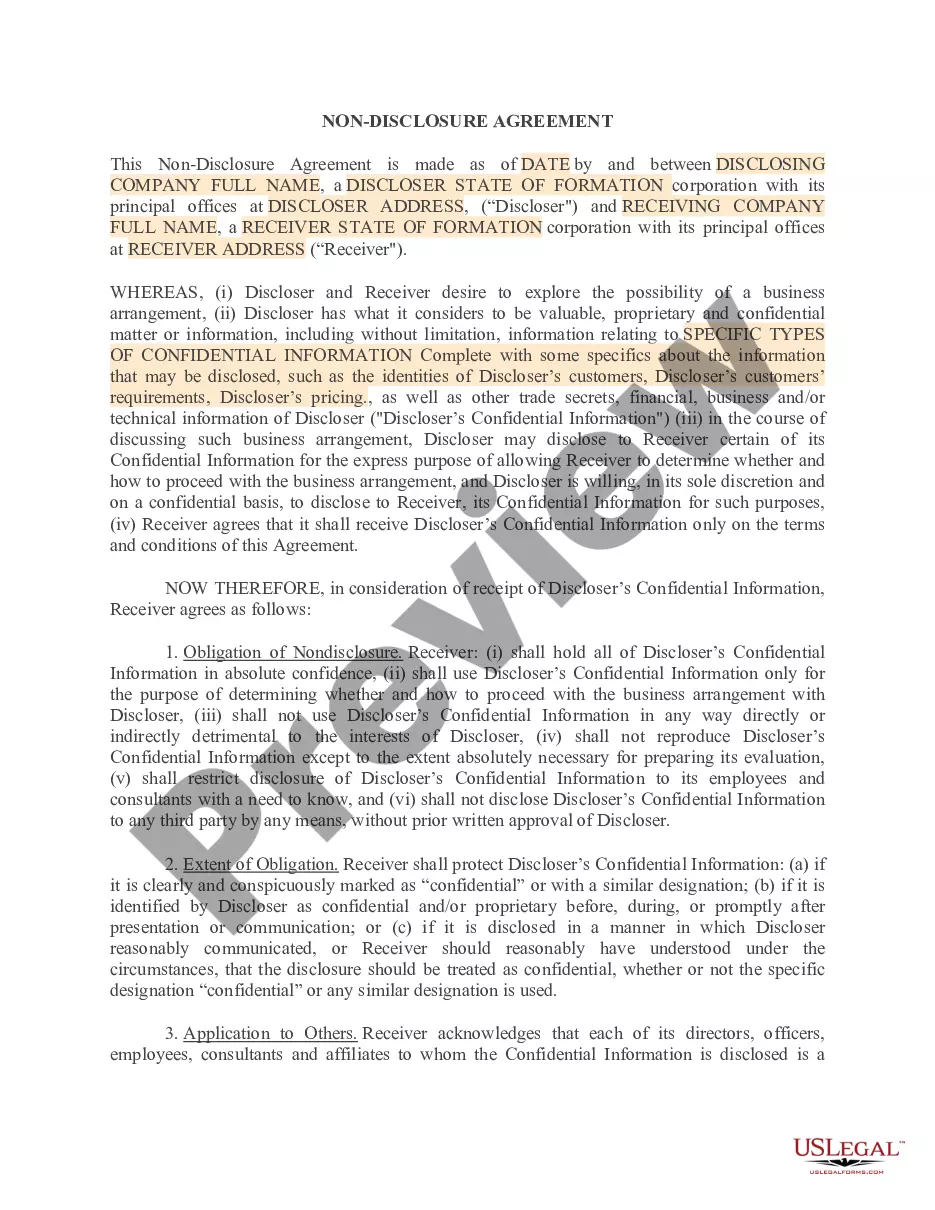
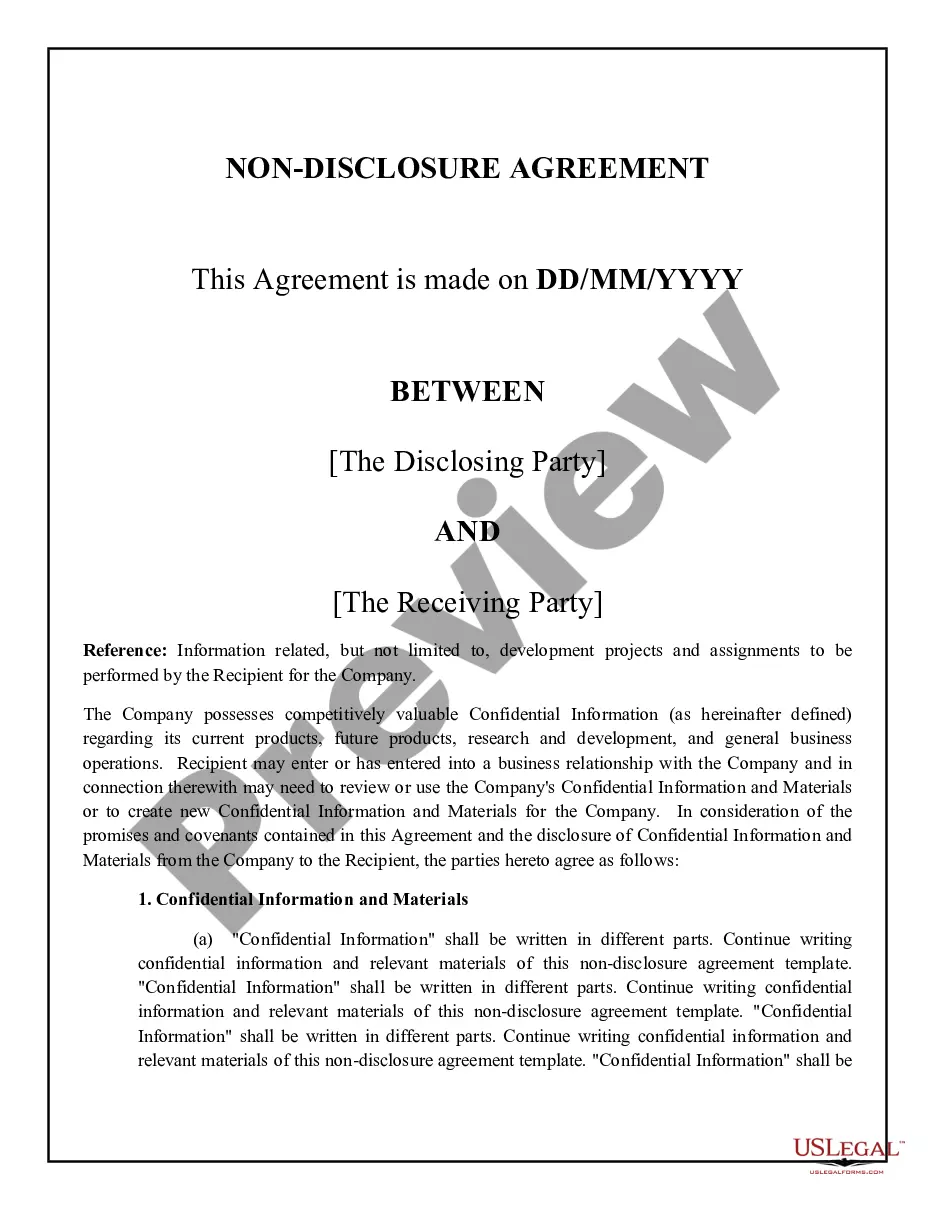
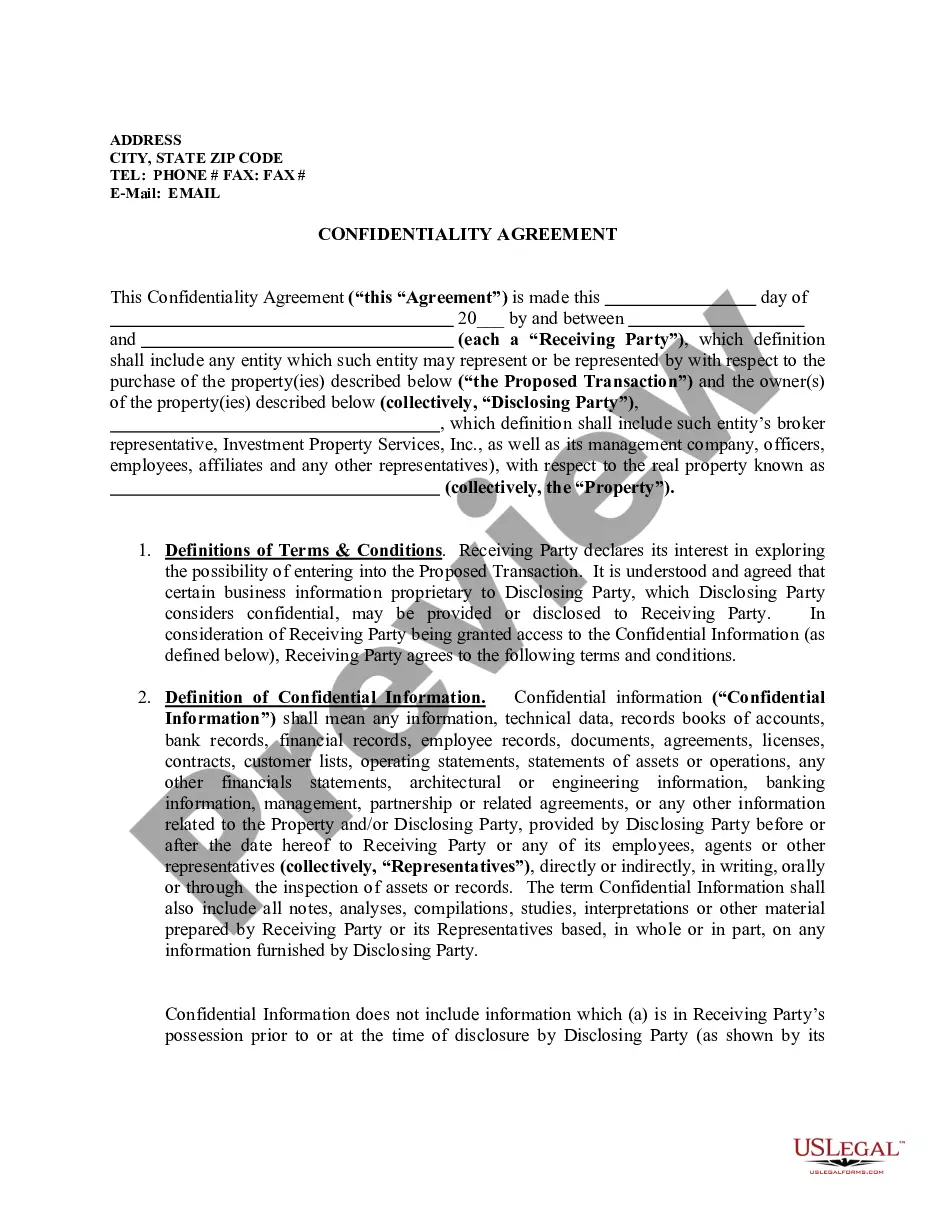
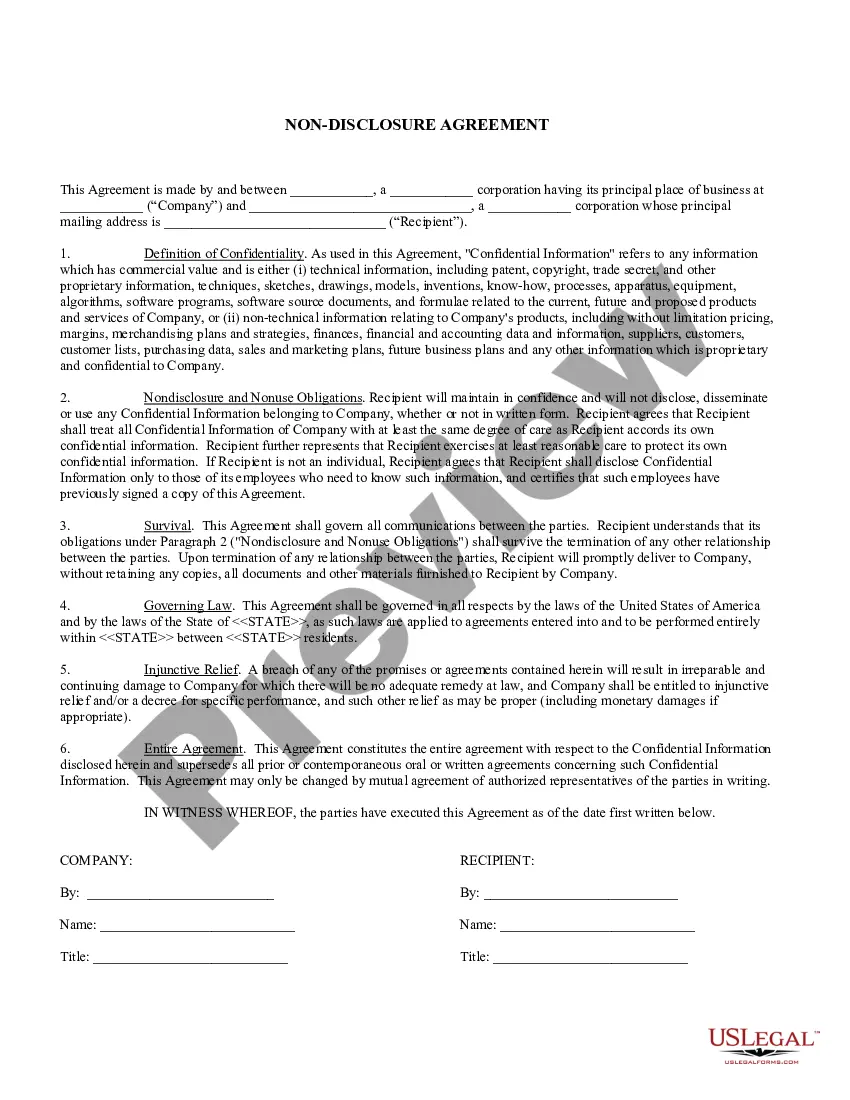
This Non-Disclosure Agreement (NDA) is a legally binding document between a disclosing company and a receiving company. It is designed to protect confidential information shared during discussions about a potential business arrangement. Unlike general confidentiality agreements, this NDA specifically outlines the obligations of both parties regarding the handling of shared information, ensuring proprietary details remain secure and confidential.
Key parts of this document
- Identification of the parties involved, including the disclosing and receiving companies.
- Definitions of what constitutes confidential information.
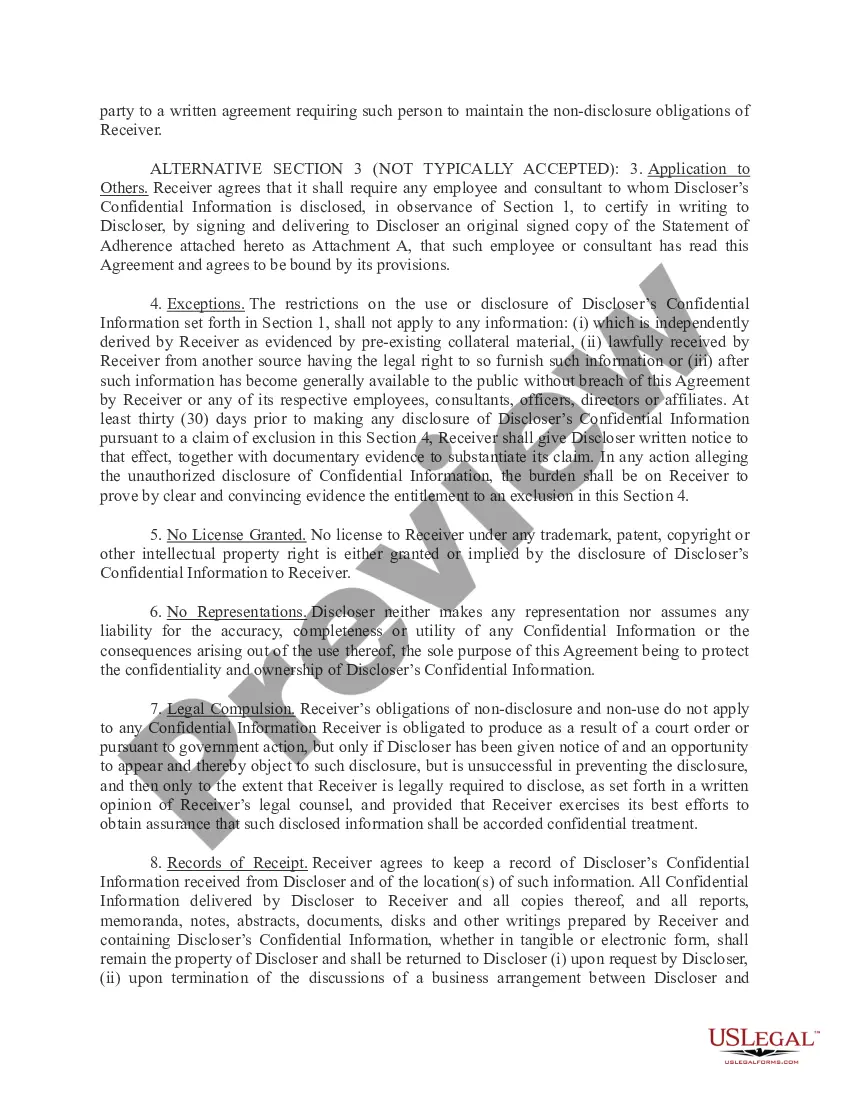
- Obligations of the receiving party regarding the handling and protection of confidential information.
- Exceptions to the confidentiality obligations.
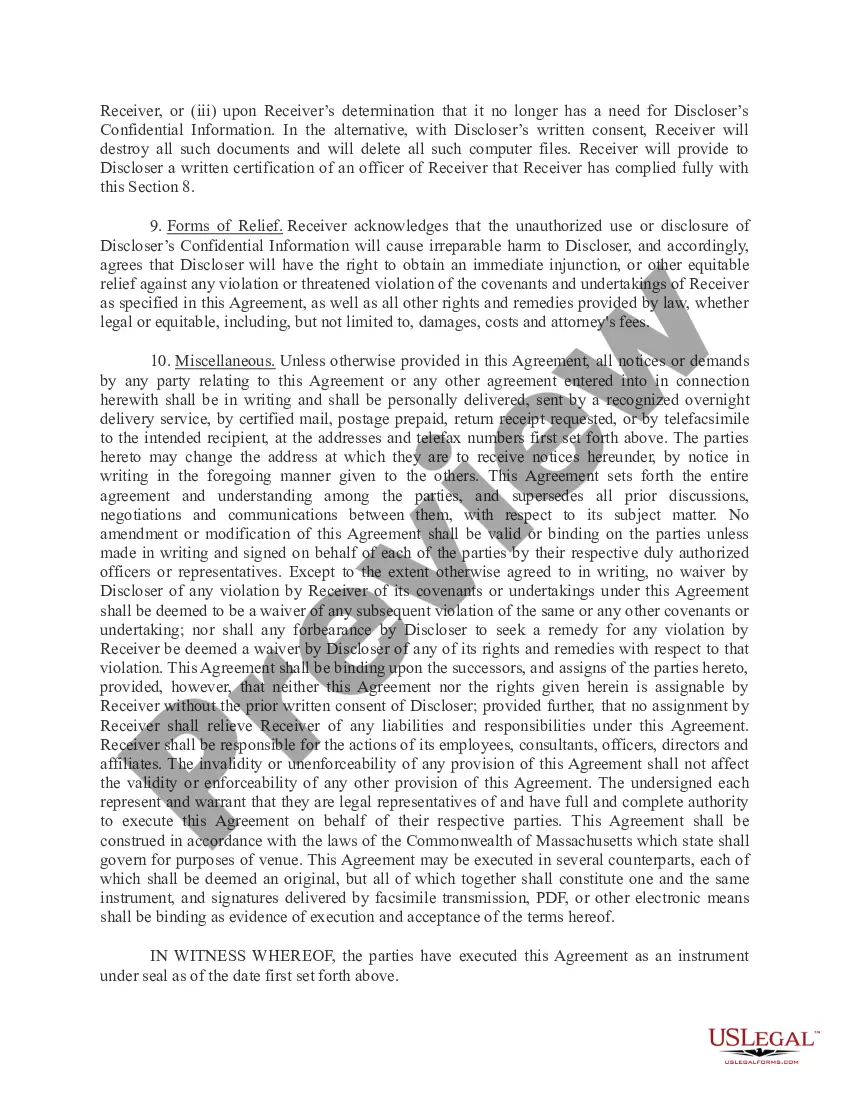
- Procedures for returning or destroying confidential information once the agreement ends.
- Legal recourse for breach of the agreement.
Common use cases
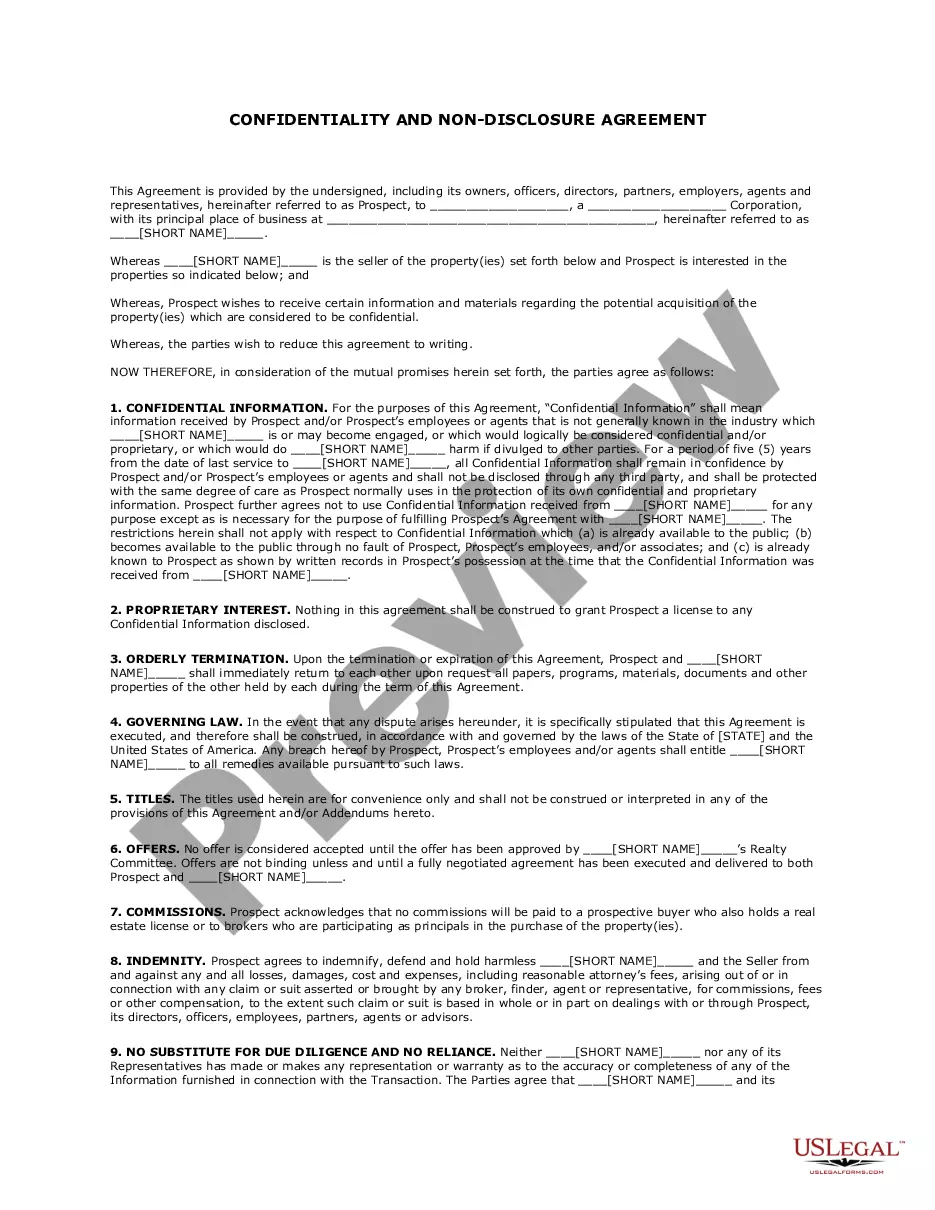
This form should be used when two companies are considering a business partnership, investment, or any transaction that requires the exchange of sensitive information. It establishes clear guidelines on how confidential information can be shared and protected, thereby reducing the risk of unintentional disclosure.
Who needs this form
- Business owners or executives who wish to protect proprietary information before discussions with potential partners.
- Companies entering into joint ventures or collaborations that involve sharing sensitive data.
- Startups seeking to secure their business plans, customer lists, or trade secrets.
- Consultants or contractors needing access to confidential information for project evaluation.
How to prepare this document
- Identify and enter the full names of the disclosing and receiving companies.
- Specify the date when the agreement comes into effect.
- Clearly outline the types of confidential information that will be shared.
- Obtain signatures from authorized representatives of both companies, along with their titles.
- Include any additional provisions or modifications as needed based on the specific business arrangement.
Is notarization required?
This form usually doesn’t need to be notarized. However, local laws or specific transactions may require it. Our online notarization service, powered by Notarize, lets you complete it remotely through a secure video session, available 24/7.
Get your form ready online
Our built-in tools help you complete, sign, share, and store your documents in one place.
Make edits, fill in missing information, and update formatting in US Legal Forms—just like you would in MS Word.
Download a copy, print it, send it by email, or mail it via USPS—whatever works best for your next step.
Sign and collect signatures with our SignNow integration. Send to multiple recipients, set reminders, and more. Go Premium to unlock E-Sign.
If this form requires notarization, complete it online through a secure video call—no need to meet a notary in person or wait for an appointment.
We protect your documents and personal data by following strict security and privacy standards.

Make edits, fill in missing information, and update formatting in US Legal Forms—just like you would in MS Word.

Download a copy, print it, send it by email, or mail it via USPS—whatever works best for your next step.

Sign and collect signatures with our SignNow integration. Send to multiple recipients, set reminders, and more. Go Premium to unlock E-Sign.

If this form requires notarization, complete it online through a secure video call—no need to meet a notary in person or wait for an appointment.

We protect your documents and personal data by following strict security and privacy standards.
Common mistakes
- Failing to define what constitutes confidential information clearly.
- Not having all relevant parties sign the NDA, including employees or consultants who will access the information.
- Neglecting to check for specific state laws that may affect the NDA's enforceability.
- Forgetting to include a method of returning or destroying the confidential information after its use.
Why complete this form online
- Convenience of immediate download and customization according to specific needs.
- Easy integration into digital workflows and storage systems.
- Access to templates drafted by licensed attorneys, ensuring legal accuracy.
- 24/7 availability, allowing users to create documents at their convenience.
Legal use & context
- This Non-Disclosure Agreement is enforceable under contract law, providing legal protection to both parties involved.
- It establishes clear obligations, allowing for anticipated legal recourse in case of unauthorized disclosure.
- Proper execution of the agreement is crucial for its enforceability; therefore, all parties should review the terms thoroughly.
Looking for another form?
Form popularity
FAQ
More Definitions of The Discloser The Discloser means the revealing party of the ?Confidential Information?. ?The Recipient? shall mean the receiving party of the ?Confidential Information?.
As to any particular Confidential Information (as hereinafter defined), the ?Discloser? is the party disclosing such Confidential Information and the ?Recipient? is the party receiving such Confidential Information.
There are three types of NDAs: unilateral, bilateral, and multilateral. Read on to learn when you should use each type.
The Discloser or the Disclosing Party, obviously, is the party who's releasing the private or confidential information while the Recipient, the Receiver Party, is the party who's being trusted with the big secret.
On face value, there are two main parties, the promisor, who makes a promise, and the promisee, who receives the benefits of a contract. Both parties also hold an obligation to the contract. Sometimes, a third-party beneficiary benefits from a contract.
Understanding Non-Disclosure Agreements (NDAs) The NDA serves a purpose in a variety of situations. NDAs are generally required when two companies enter into discussions about doing business together but want to protect their own interests and the details of any potential deal.
To make known; reveal or uncover: to disclose a secret. to cause to appear; allow to be seen; lay open to view: In spring the violets disclose their fragrant petals.
3 NDAs are a must whenever confidential information needs to be shared. In my experience, NDAs are typically between two parties and are either mutual (both parties' information is protected) or unilateral (only one party's information is protected).