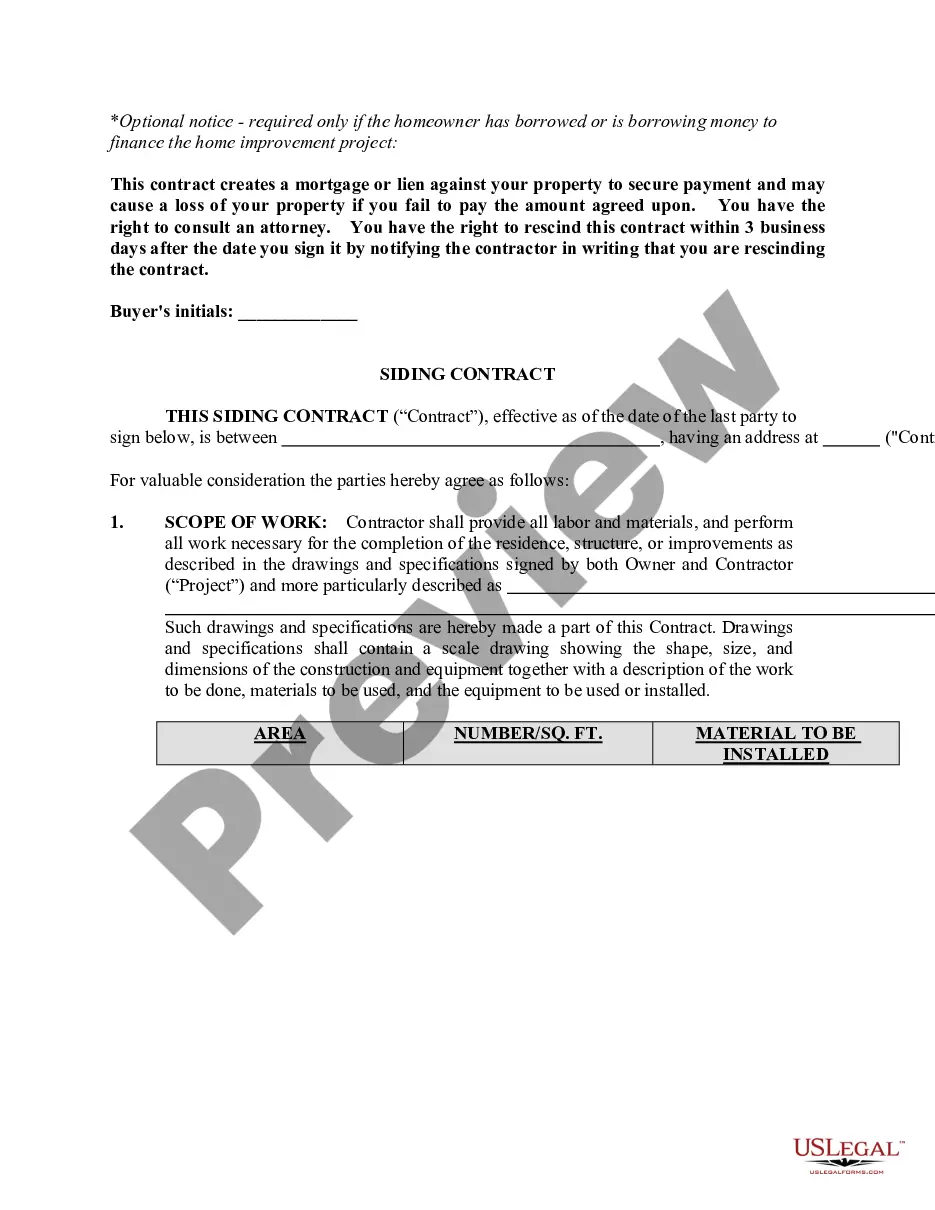
Pennsylvania Revocation of Postnuptial Property Agreement
What this document covers
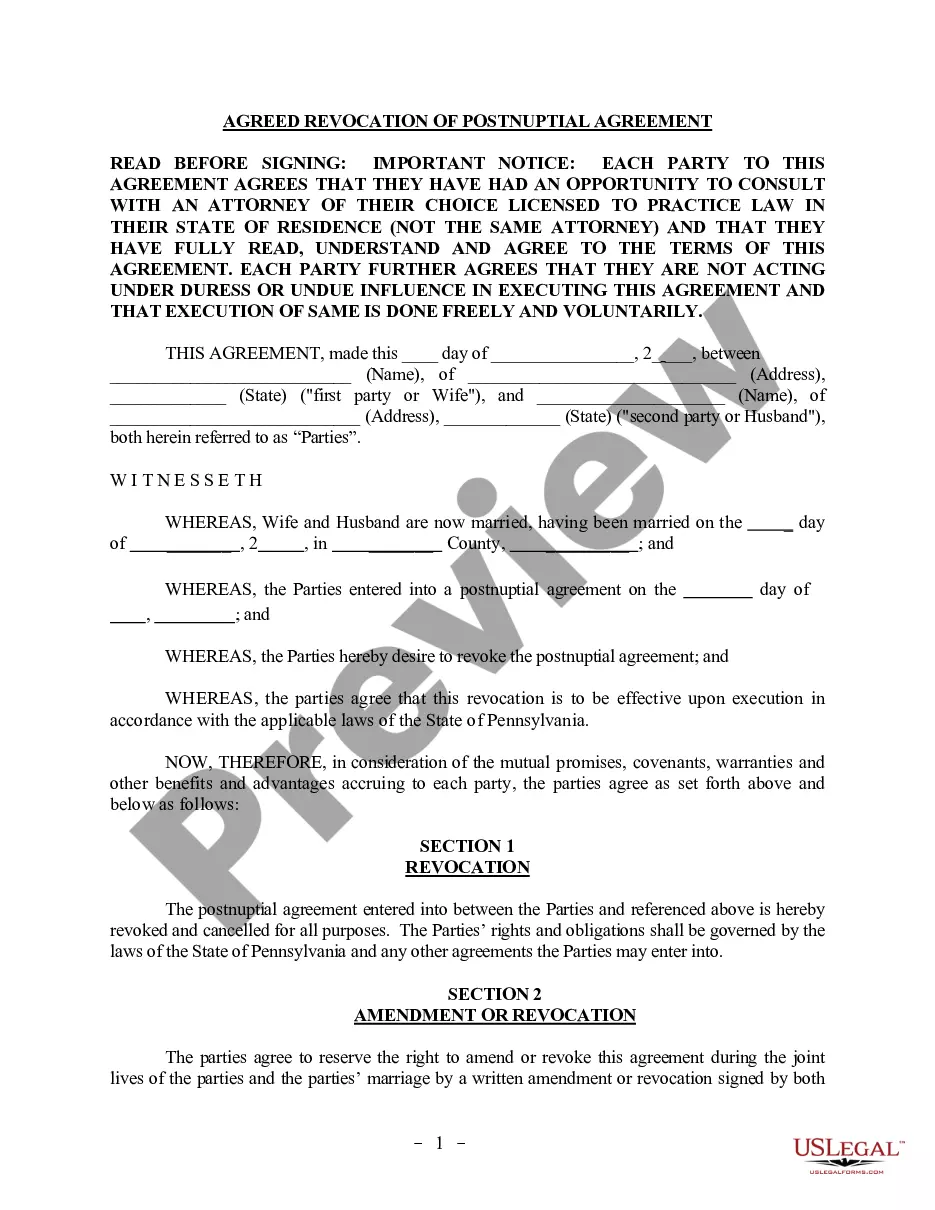
The Revocation of Postnuptial Property Agreement is a legal document used by married couples who wish to cancel an existing postnuptial agreement. Unlike other agreements, this form serves to nullify prior stipulations regarding property and financial obligations established in the postnuptial contract. Both parties must sign this revocation in front of a notary public, ensuring its legal validity.
Main sections of this form
- SECTION 1: States the revocation of the existing postnuptial agreement.
- SECTION 2: Allows for the possibility of future amendments or revocation.
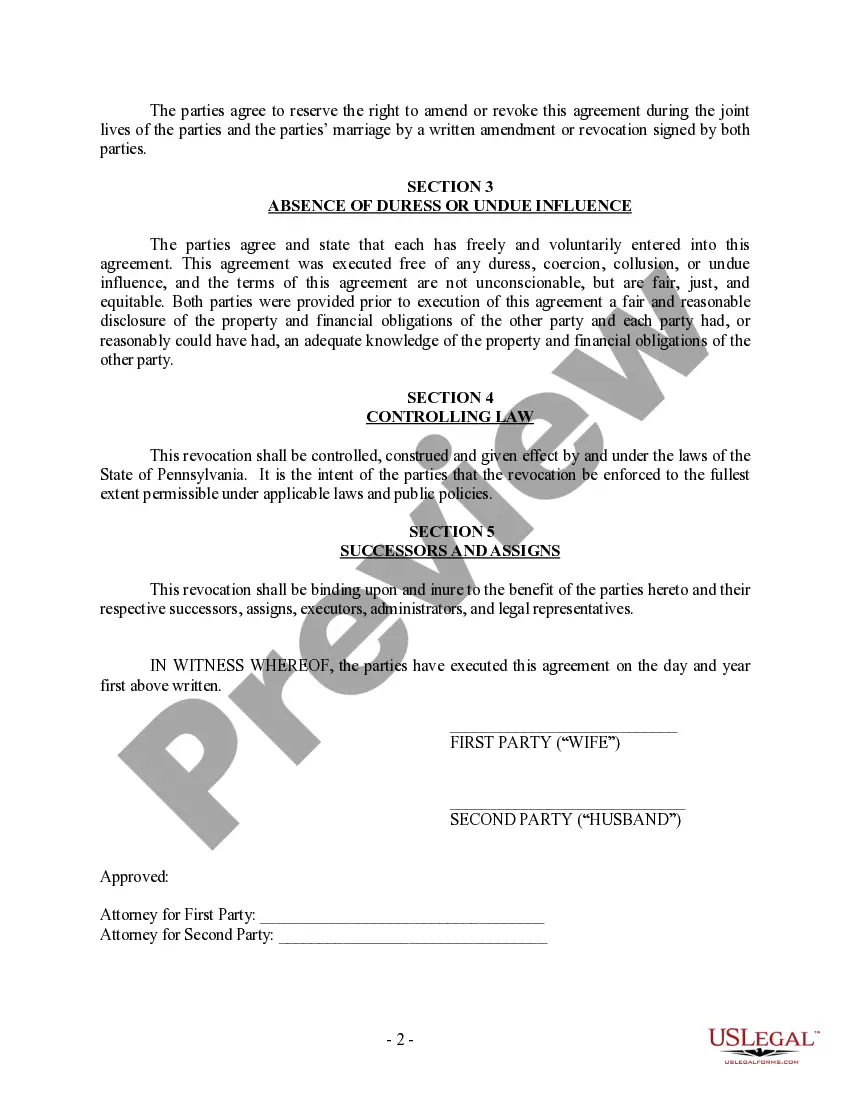
- SECTION 3: Affirms that both parties are entering into the agreement voluntarily and without outside pressure.
- SECTION 4: Establishes that the laws of Pennsylvania govern this revocation.
- SECTION 5: Ensures the agreement is binding for both parties and their successors.

When to use this document
This form should be utilized when both parties decide they no longer wish to be bound by an existing postnuptial property agreement. Situations may arise such as a change in financial circumstances, reconciliation of marital issues, or simply reassessing their legal obligations that necessitate the termination of the postnuptial agreement.
Intended users of this form
- Married couples who have an existing postnuptial agreement they wish to revoke.
- Parties who wish to ensure that their property and financial rights revert to their default legal status.
- Individuals who seek a clean slate in their legal documents regarding marital property.
Completing this form step by step
- Identify the parties involved in the agreement.
- Fill in the date of revocation and any reference to the original postnuptial agreement.
- Ensure both parties read and understand the terms outlined in the document.
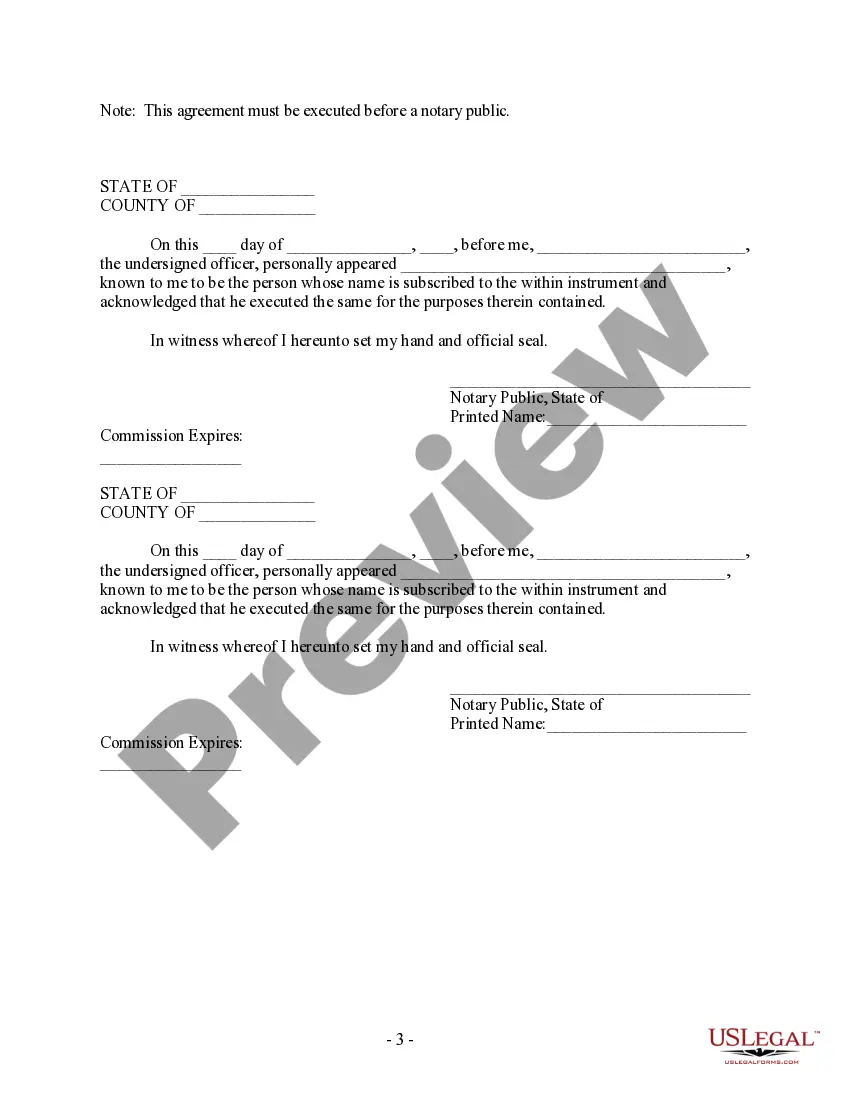
- Sign the form in front of a notary public to validate the revocation.
- Keep a copy of the signed and notarized document for your records.
Does this document require notarization?
Yes, this form must be notarized to be legally valid. This ensures that both parties' signatures are authenticated, adding an extra layer of legal protection. US Legal Forms offers integrated online notarization services, allowing you to complete this process through secure video calls at any time.
Get your form ready online
Our built-in tools help you complete, sign, share, and store your documents in one place.
Make edits, fill in missing information, and update formatting in US Legal Forms—just like you would in MS Word.
Download a copy, print it, send it by email, or mail it via USPS—whatever works best for your next step.
Sign and collect signatures with our SignNow integration. Send to multiple recipients, set reminders, and more. Go Premium to unlock E-Sign.
If this form requires notarization, complete it online through a secure video call—no need to meet a notary in person or wait for an appointment.
We protect your documents and personal data by following strict security and privacy standards.

Make edits, fill in missing information, and update formatting in US Legal Forms—just like you would in MS Word.

Download a copy, print it, send it by email, or mail it via USPS—whatever works best for your next step.

Sign and collect signatures with our SignNow integration. Send to multiple recipients, set reminders, and more. Go Premium to unlock E-Sign.

If this form requires notarization, complete it online through a secure video call—no need to meet a notary in person or wait for an appointment.

We protect your documents and personal data by following strict security and privacy standards.
Common mistakes
- Failing to have the document notarized, which can lead to unenforceability.
- Not ensuring both parties have independently consulted with an attorney.
- Leaving fields, such as names or dates, incomplete.
Benefits of completing this form online
- Convenience of immediate download and accessibility from home.
- Editability to customize the document as needed before printing.
- Reliability of a template drafted by licensed attorneys to ensure legal standards are met.
Key takeaways
- The Revocation of Postnuptial Property Agreement allows couples to formally cancel an existing agreement.
- Both parties must sign the document in front of a notary public for it to be valid.
- It's essential for both parties to understand the implications of revoking their postnuptial agreement.
- This document is legally governed by Pennsylvania law, ensuring proper legal context for enforcement.
Looking for another form?
Form popularity
FAQ
In general, you should expect that a postnuptial agreement will receive scrutiny from the court before it decides to enforce the agreement. As your family law attorney would advise you, these agreements are not usually signed under the best of circumstances in the marriage.
Per , since postnuptial agreements generally handle the same issues that prenuptial agreements address, the same circumstances that can cause a court to void part or all of a prenuptial agreement also apply to a postnuptial. Like a prenuptial, a postnuptial agreement should be in written form.
One other scenario is that a prenuptial agreement is deemed not enforceable in Pennsylvania if the party opposing the agreement can establish, by clear and convincing evidence that the party did not execute the agreement voluntarily. Lack of full disclosure of assets is also a reason that a prenup can be voided.
Postnuptial agreements are generally enforceable if the parties of the document adhere to all state laws regarding inheritance, child custody, visitation and monetary support if a divorce does occur.This may also come with a will or other legal document.
A final note: In Pennsylvania, postnuptial agreements clearly are enforceable so long as the statutory requirements of a marital agreement are met. These requirements are set forth with specificity in the Pennsylvania Divorce Code.
What is a revocation hearing? A hearing held for parolees who committed a criminal act while on parole or while delinquent on parole and are convicted or found guilty by a judge or jury, OR the parolee pleads guilty or no contest in a court of record of a crime punishable by imprisonment.
If you decide that you no longer want or need a Power of Attorney, or if you change your mind about who your agent is, you can terminate a Power of Attorney by giving written notice to your agent. You should also give notice to your bank, your doctor, or anyone else who got a copy of your Power of Attorney.
If a bail is revoked, there is a chance that the bail bondsman may be unable to get their money back. Upon revocation, the defendant can decide to go to the court and explain why his bail should not be revoked. The judge will then make a decision if the court will give them back the money.
While any new power of attorney should state that old powers of attorney are revoked, you should also put the revocation in writing. The revocation should include your name, a statement that you are of sound mind, and your wish to revoke the power of attorney.