Louisiana Partition of Community Property
About this form
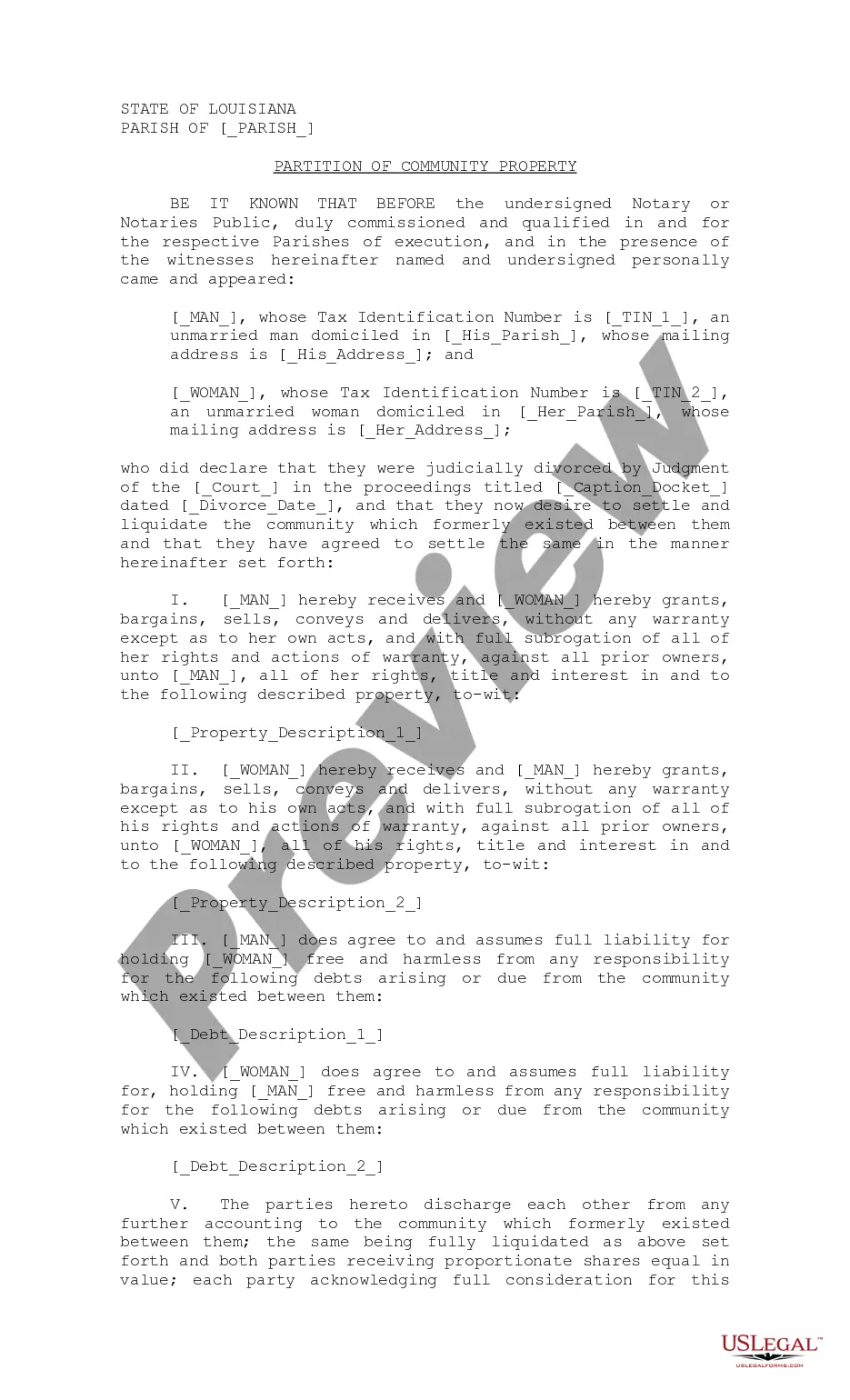
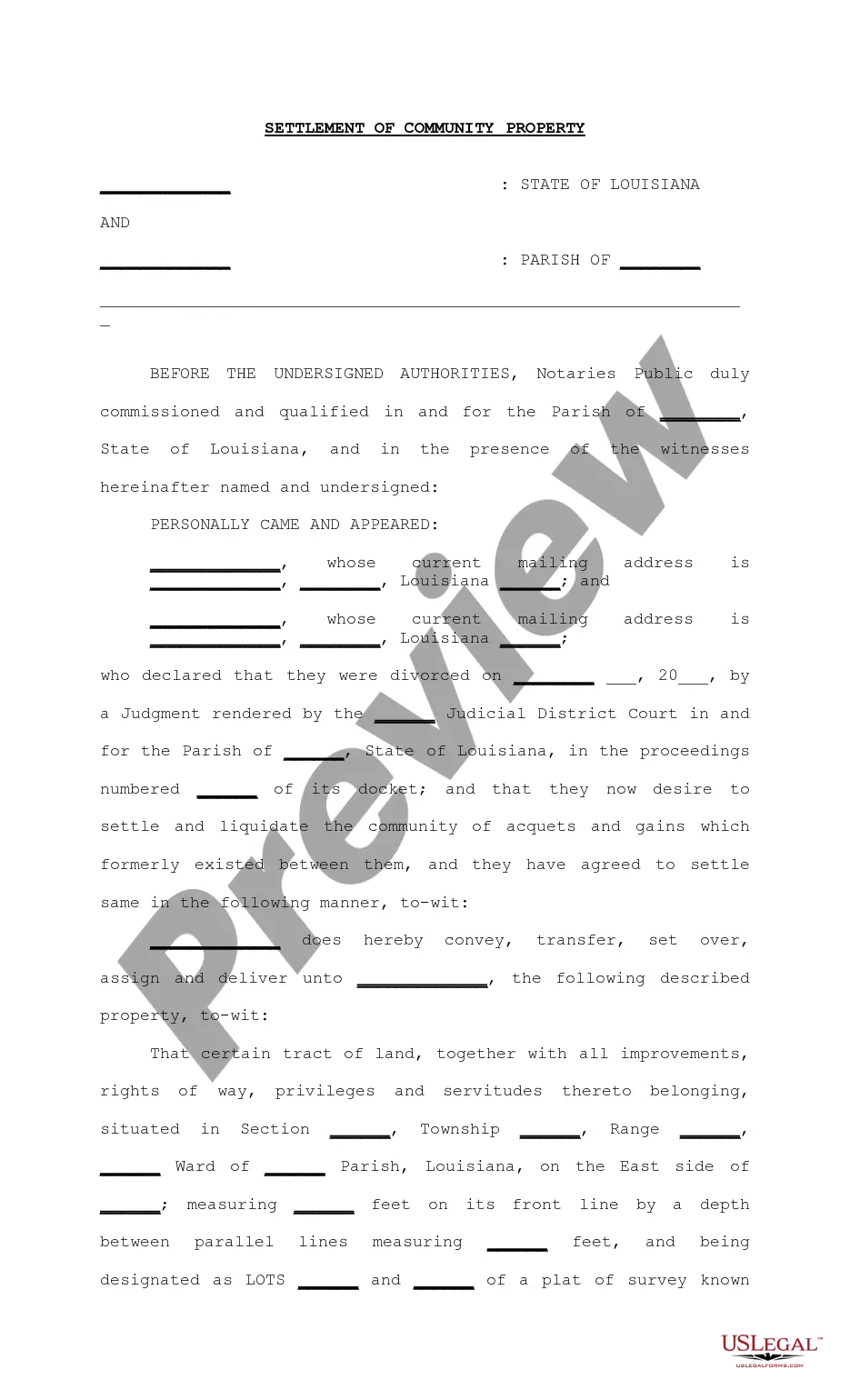
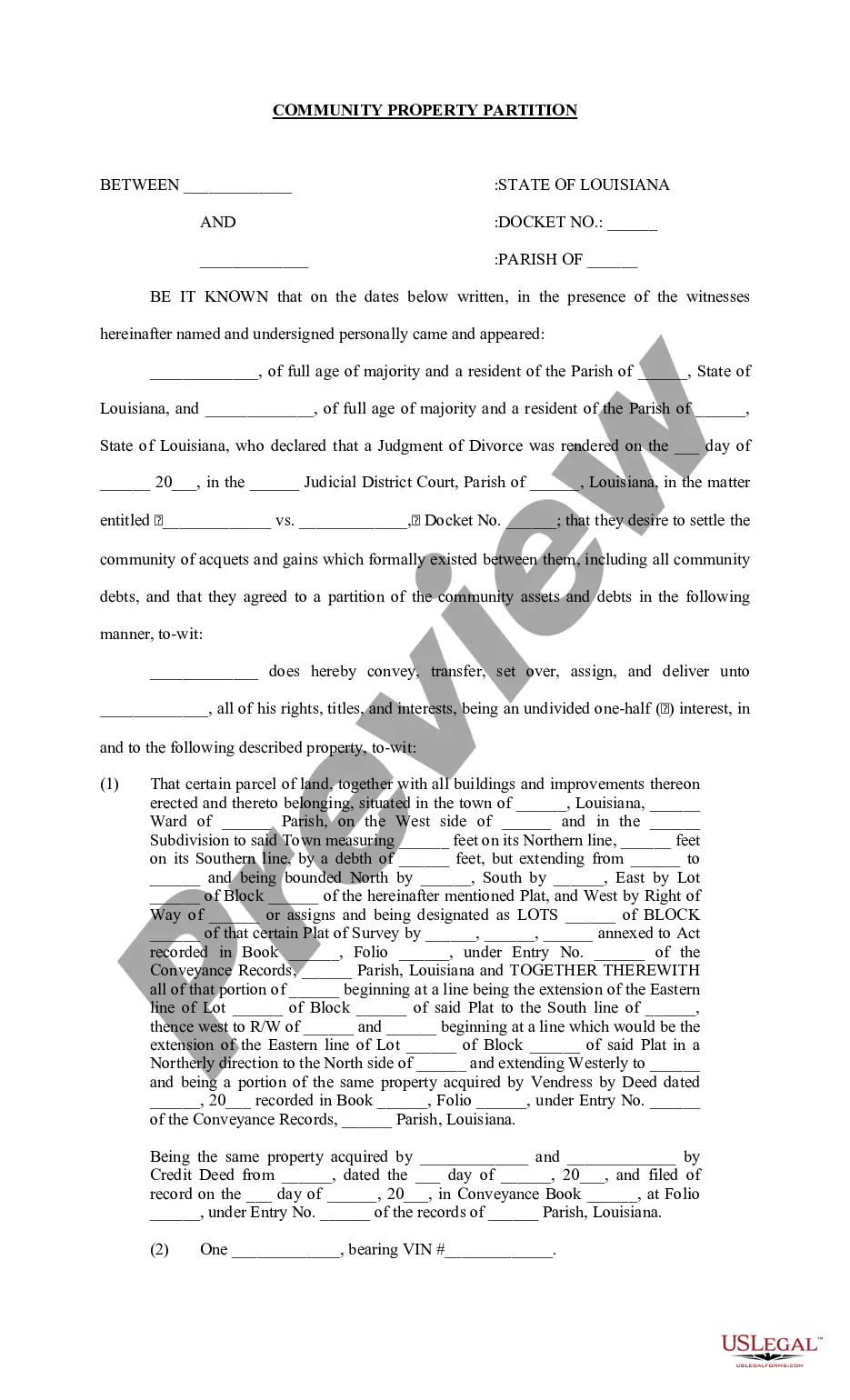
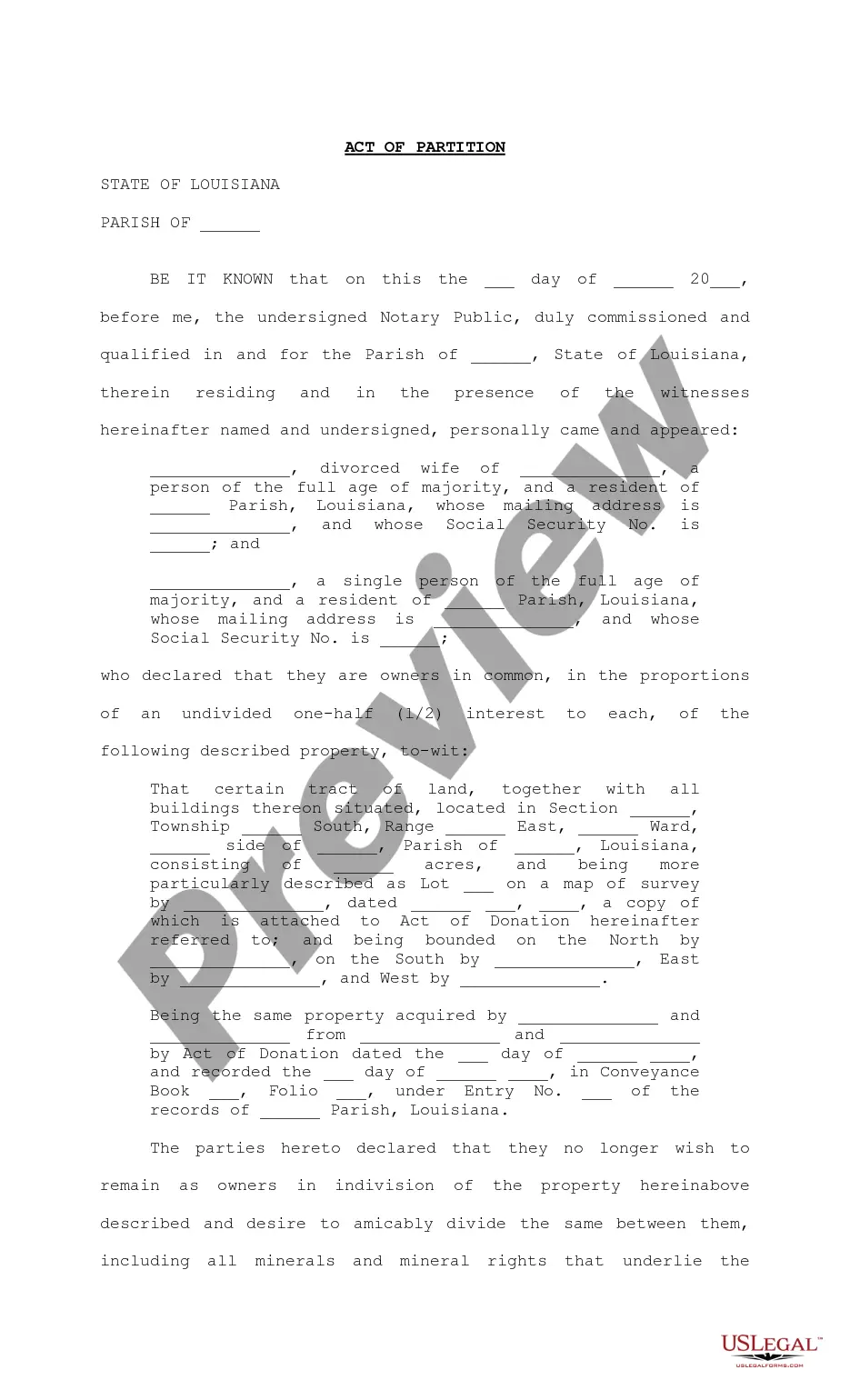
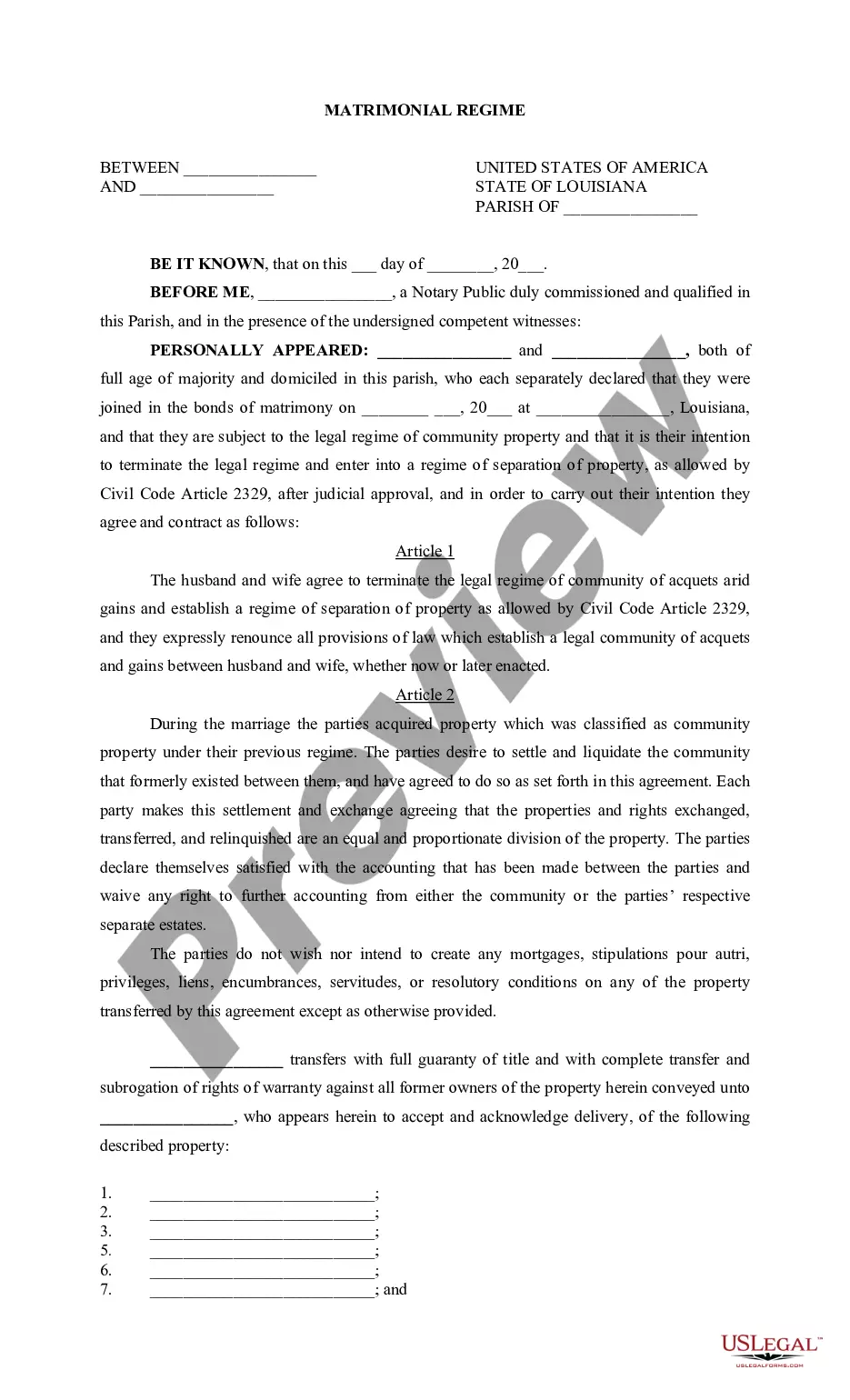
The Partition of Community Property form is a legal document used to divide property previously owned jointly by spouses during their marriage. This form establishes clear individual ownership of the property and outlines the handling of any associated debts post-divorce. Unlike other divorce-related forms, this document specifically addresses the equitable distribution of community property in a structured manner, ensuring both parties agree on the partition and any debt assumptions.
What’s included in this form
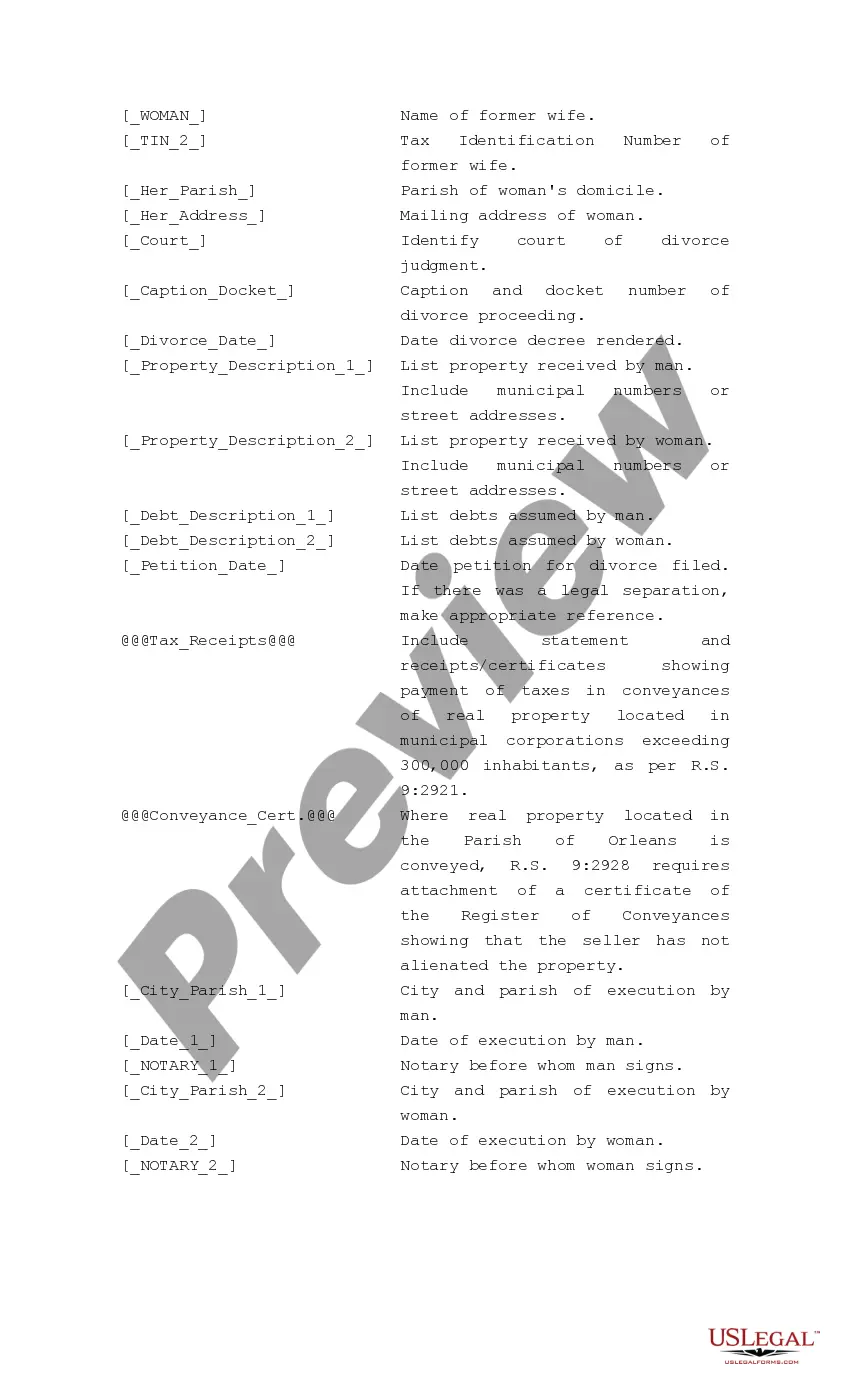
- Identification of the parties involved, including names and Tax Identification Numbers.
- Details of the community property being partitioned, with descriptions of what each party will receive.
- Provisions for the assumption of debts by each party, specifying who will be liable for which debts.
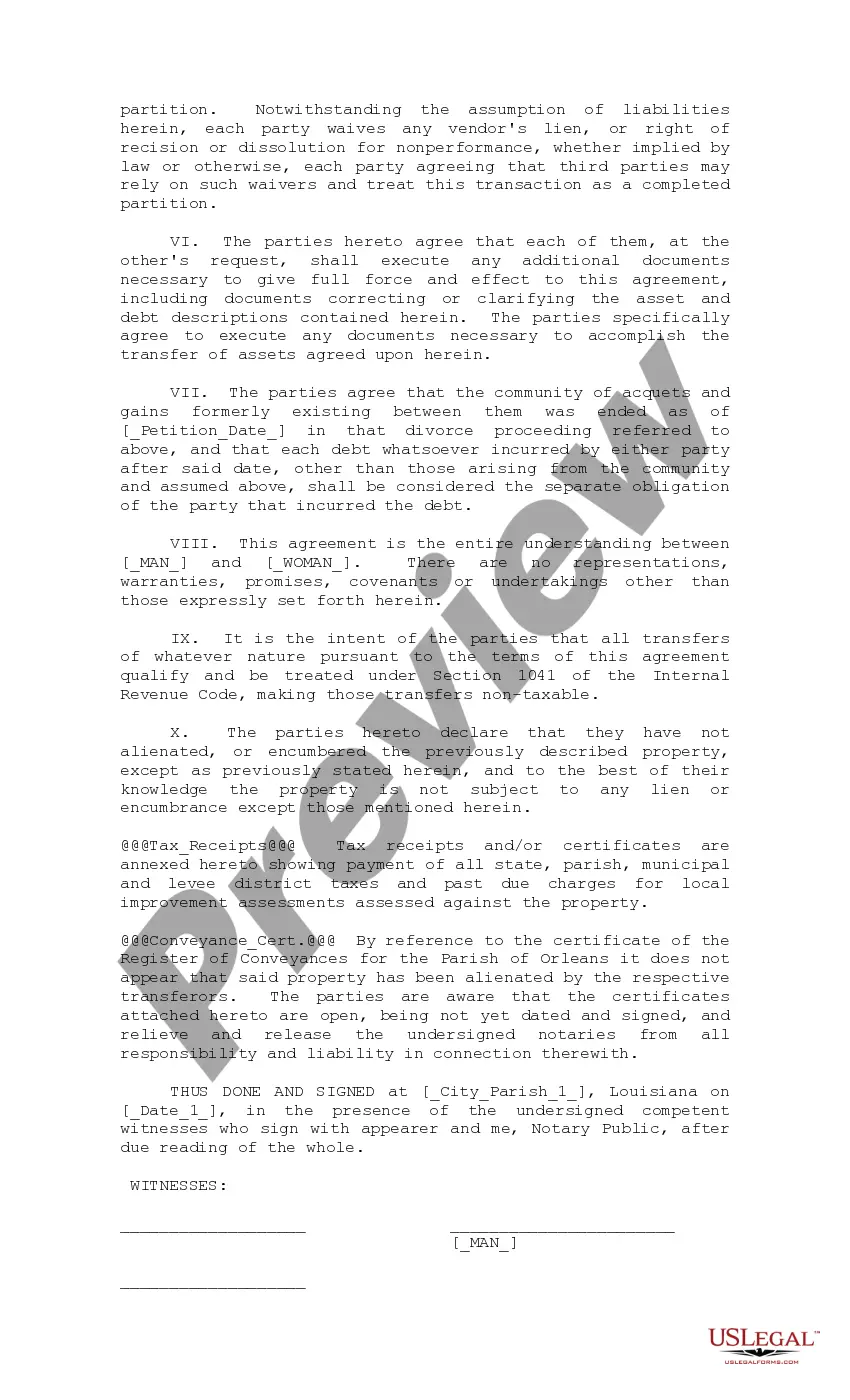
- Waiver of rights and releases between the parties, ensuring neither can claim further debts or properties post-partition.
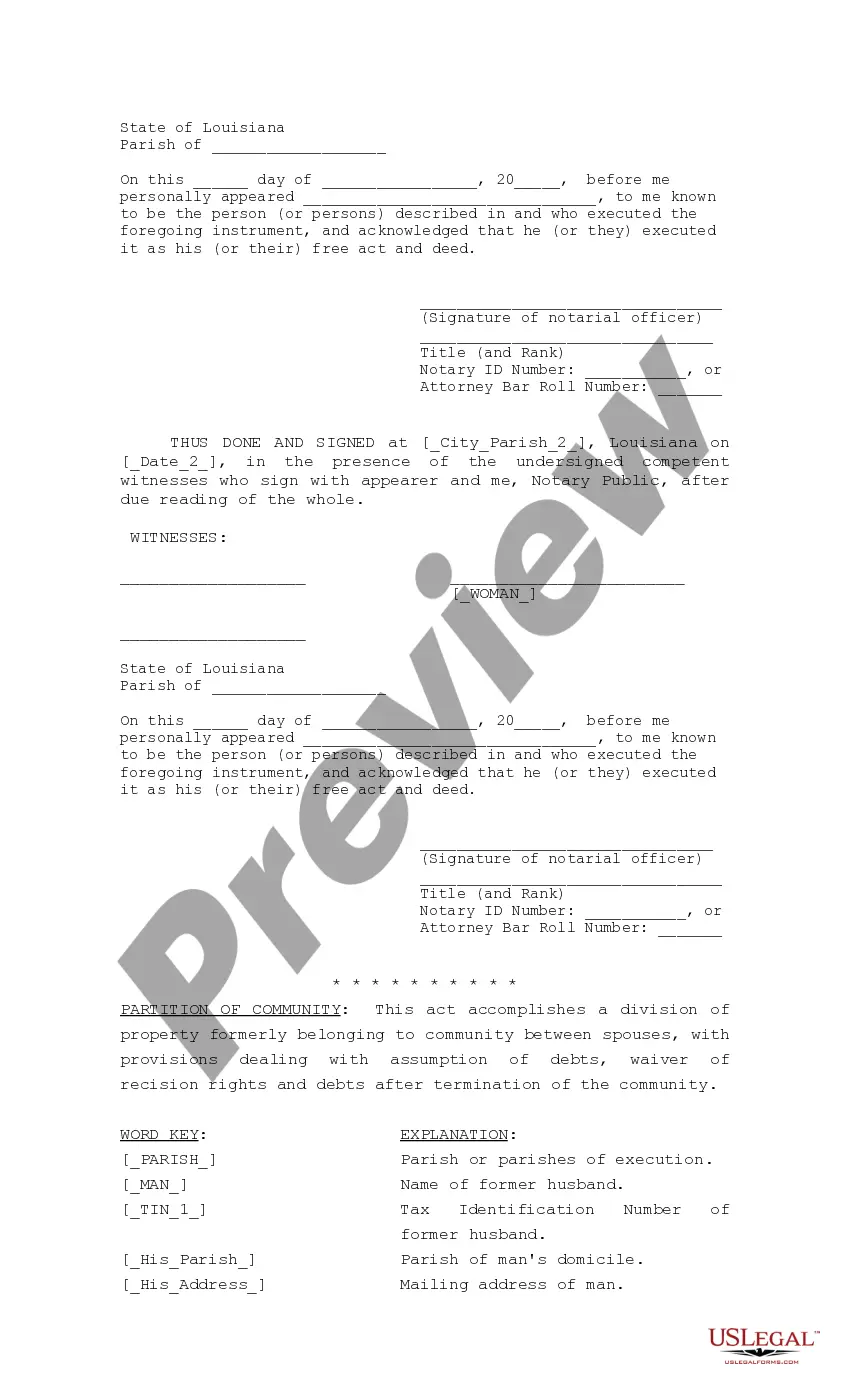
- Signature and notarization requirements to validate the agreement.
Common use cases
This form is typically used after a divorce when former spouses need to settle their joint property and debts. It is particularly useful when both parties want to avoid future disputes over the ownership of property or when establishing clear financial independence following the dissolution of their marriage. If you and your ex-spouse have agreed on how to divide your community property and assume responsibilities for debts, this form serves to document that agreement legally.
Who needs this form
- Divorced individuals who previously owned property together as community property.
- Parties looking to settle their property rights and debt obligations amicably and legally.
- Anyone wishing to establish clear ownership and eliminate future disputes over property.
How to prepare this document
- Identify the parties by entering the names, Tax Identification Numbers, and domiciles of both spouses.
- Clearly describe the community property being divided, specifying what each party receives.
- List the debts each party will assume to clarify their financial obligations.
- Include the date of the divorce judgment and the petition for divorce, ensuring all dates are accurate.
- Ensure both parties sign the document in the presence of a notary public for validation.
Notarization requirements for this form
This form must be notarized to be legally valid. US Legal Forms provides secure online notarization powered by Notarize, allowing you to complete the process through a verified video call.
Get your form ready online
Our built-in tools help you complete, sign, share, and store your documents in one place.
Make edits, fill in missing information, and update formatting in US Legal Forms—just like you would in MS Word.
Download a copy, print it, send it by email, or mail it via USPS—whatever works best for your next step.
Sign and collect signatures with our SignNow integration. Send to multiple recipients, set reminders, and more. Go Premium to unlock E-Sign.
If this form requires notarization, complete it online through a secure video call—no need to meet a notary in person or wait for an appointment.
We protect your documents and personal data by following strict security and privacy standards.

Make edits, fill in missing information, and update formatting in US Legal Forms—just like you would in MS Word.

Download a copy, print it, send it by email, or mail it via USPS—whatever works best for your next step.

Sign and collect signatures with our SignNow integration. Send to multiple recipients, set reminders, and more. Go Premium to unlock E-Sign.

If this form requires notarization, complete it online through a secure video call—no need to meet a notary in person or wait for an appointment.

We protect your documents and personal data by following strict security and privacy standards.
Typical mistakes to avoid
- Failing to provide complete and accurate descriptions of community property.
- Incorrectly listing debts or assumptions without clarity on responsibilities.
- Not properly notarizing the document, leading to potential legal challenges.
- Neglecting to review local laws for compliance before execution.
Advantages of online completion
- Convenience of downloading and filling out the form at your own pace.
- Editability to customize the form based on your specific asset and debt situations.
- Access to legally reviewed templates ensures the document's compliance with state laws.
Looking for another form?
Form popularity
FAQ
At divorce, community property is generally divided equally between the spouses, while each spouse keeps his or her separate property. Equitable distribution. In all other states, assets and earnings accumulated during marriage are divided equitably (fairly), but not necessarily equally.
In California, each spouse or partner owns one-half of the community property. And, each spouse or partner is responsible for one-half of the debt. Community property and community debts are usually divided equally.If the debt was incurred during your marriage or domestic partnership, it belongs to you too.
At divorce, community property is generally divided equally between the spouses, while each spouse keeps his or her separate property. Equitable distribution. In all other states, assets and earnings accumulated during marriage are divided equitably (fairly), but not necessarily equally.
Separate property is property belongs exclusively to one of two spouses. Under Louisiana law, assets acquired by a deceased person while unmarried, or acquired during the marriage by gift, is considered to be separate property.
Louisiana is a community property state. This means that spouses generally share equally in the assets, income and debt acquired by either spouse during the marriage. However, some income and some property may be separate income or separate property.
In California, each spouse or partner owns one-half of the community property. And, each spouse or partner is responsible for one-half of the debt. Community property and community debts are usually divided equally. You may have more community property than you realize.
Under Louisiana law, marital property, or property acquired during the marriage, is distributed equally (50-50) to each party unless the court finds such a division to be inequitable or parties agree to a different formula under which to divide property.
Louisiana's community property laws assert that all debts and assets acquired during a couple's marriage belong equally to both spouses. A judge dividing community property must make sure that each spouse receives property of equal net value.
Agreement; Jointly titling property in the name of both spouses; and/or.