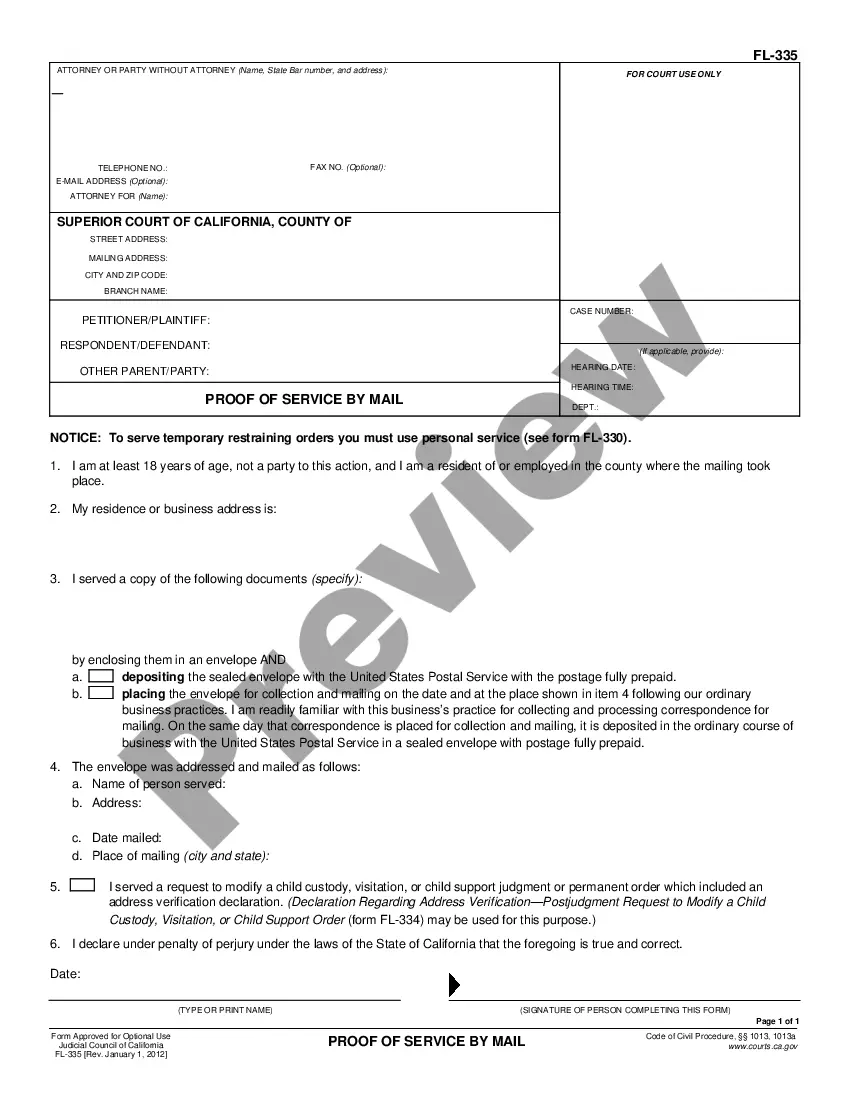
Mississippi Judgment Approving the Report of Commissioners and Granting Partition
What this document covers
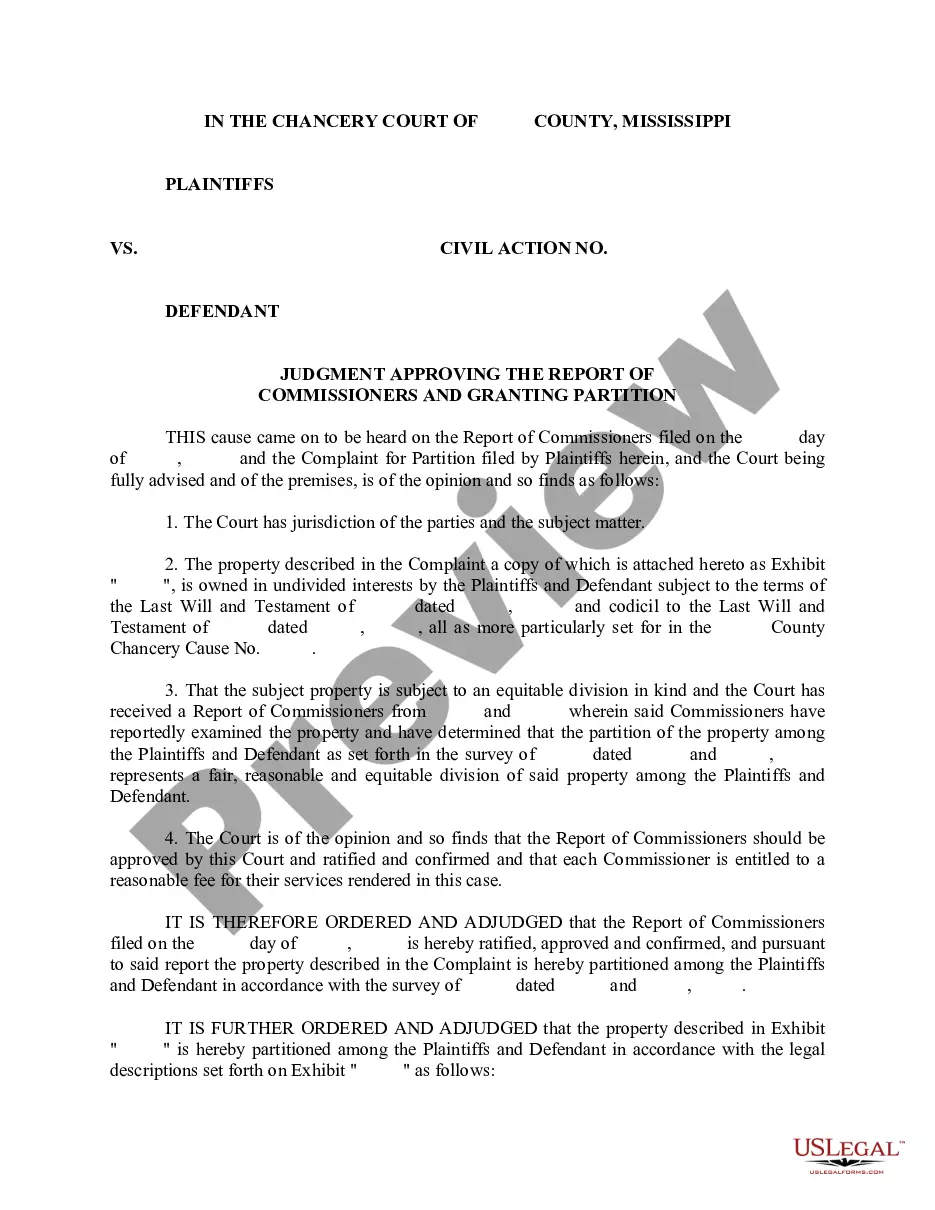
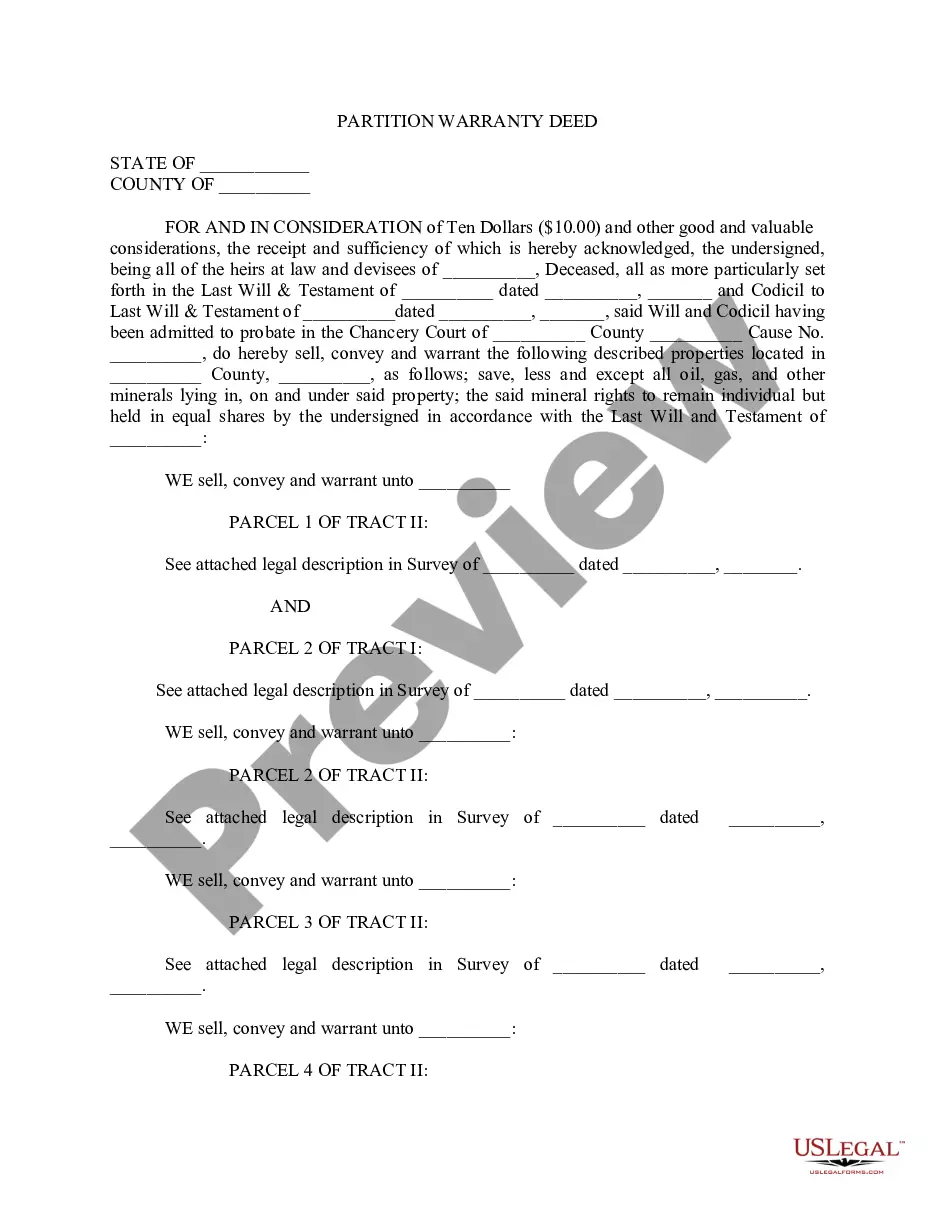
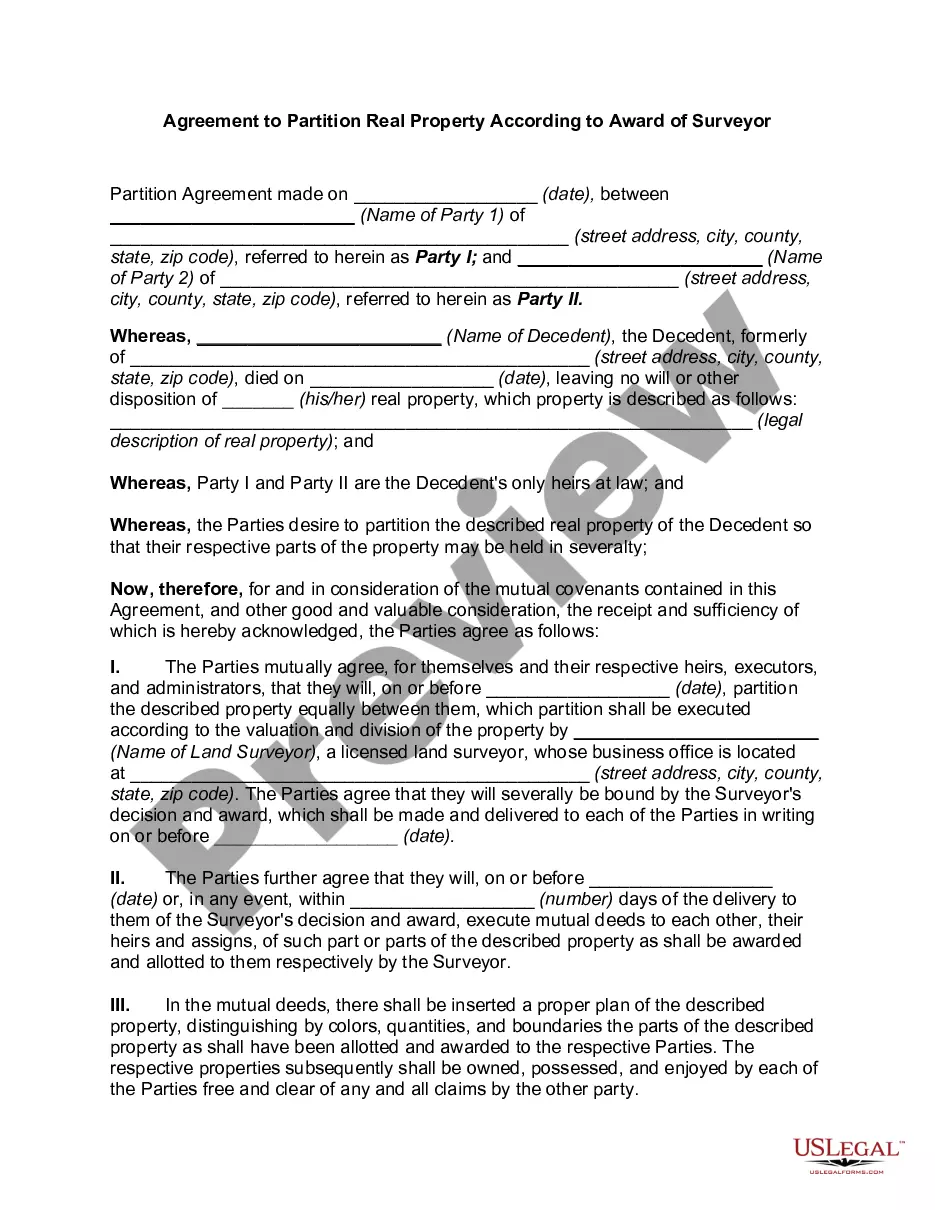
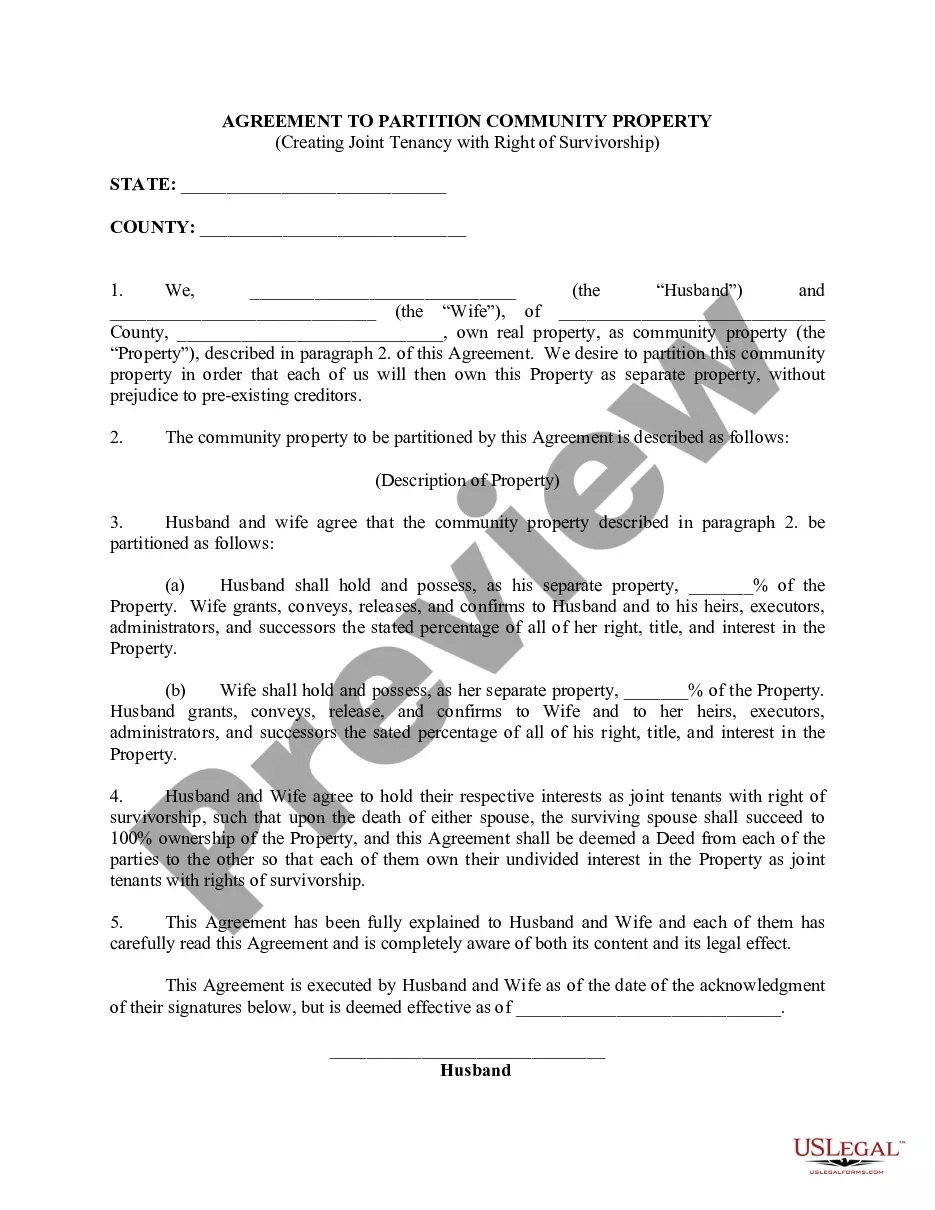
The Judgment Approving the Report of Commissioners and Granting Partition is a legal document used to formalize a court's decision regarding the division of property among co-owners. This form outlines the terms of the partition based on a report prepared by commissioners. Once signed by the judge, this judgment becomes legally binding, ensuring that the distribution of property is executed as specified. Unlike other legal judgments, this form specifically addresses partitions and the approval of commissioners' reports to resolve property disputes.
What’s included in this form
- Title of the case, including the names of all parties involved.
- Findings of fact and conclusions of law as determined by the court.
- The commissioners' report detailing the proposed partition of the property.
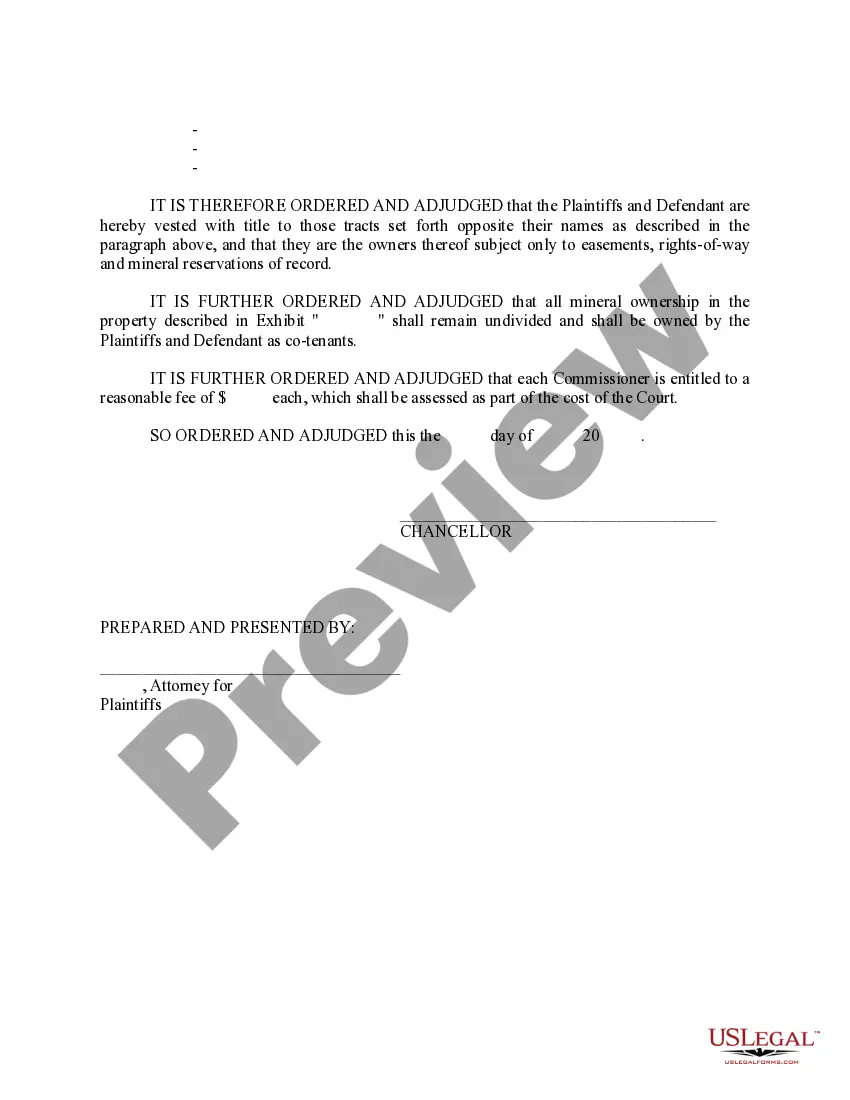
- Instructions for executing the partition, including any necessary actions by parties.
- Signature area for the judge to formally approve the judgment.

When this form is needed
This form should be used when a court has ordered the partition of property among co-owners and a report has been submitted by appointed commissioners. It is essential in scenarios where parties cannot amicably agree on how to divide property, such as inherited land, business partnerships, or real estate disputes. Utilizing this form ensures the courtâs decision is documented and enforceable.
Who should use this form
- Parties involved in a property dispute requiring legal partition.
- Individuals or entities that have received a report from court-appointed commissioners.
- Attorneys representing clients in partition actions within the courtroom.
- Co-owners of property seeking clarification on distribution as mandated by the court.
Completing this form step by step
- Identify the parties involved, ensuring that all co-owners are listed.
- Include the details of the courtâs prior rulings and the commissioners' findings.
- Document the specifics of the partition as proposed in the commissioners' report.
- Enter the date and location for the signing of the judgment.
- Secure the signature of the judge to finalize the document.
Notarization guidance
This form does not typically require notarization unless specified by local law. Check with an attorney to confirm if notarization is needed in your case.
Get your form ready online
Our built-in tools help you complete, sign, share, and store your documents in one place.
Make edits, fill in missing information, and update formatting in US Legal Forms—just like you would in MS Word.
Download a copy, print it, send it by email, or mail it via USPS—whatever works best for your next step.
Sign and collect signatures with our SignNow integration. Send to multiple recipients, set reminders, and more. Go Premium to unlock E-Sign.
If this form requires notarization, complete it online through a secure video call—no need to meet a notary in person or wait for an appointment.
We protect your documents and personal data by following strict security and privacy standards.

Make edits, fill in missing information, and update formatting in US Legal Forms—just like you would in MS Word.

Download a copy, print it, send it by email, or mail it via USPS—whatever works best for your next step.

Sign and collect signatures with our SignNow integration. Send to multiple recipients, set reminders, and more. Go Premium to unlock E-Sign.

If this form requires notarization, complete it online through a secure video call—no need to meet a notary in person or wait for an appointment.

We protect your documents and personal data by following strict security and privacy standards.
Mistakes to watch out for
- Failing to include all relevant parties in the case title.
- Not properly documenting the commissionersâ findings or recommendations.
- Leaving signature fields blank when submitting for the judgeâs approval.
Benefits of completing this form online
- Immediate access to a legally vetted template drafted by licensed attorneys.
- Convenience to complete the form at your own pace, anytime.
- Edit and customize the form to fit your specific legal needs without hassle.
Legal use & context
- The judgment approved by this form is enforceable in court, allowing for the legal division of the property.
- Failure to properly complete and file the judgment may delay or complicate the partitioning process.
Summary of main points
- The Judgment Approving the Report of Commissioners and Granting Partition is crucial for legally dividing property among co-owners.
- Ensure accuracy in detailing property and parties involved to avoid common mistakes.
- Review your stateâs specific laws concerning partition judgments for proper compliance.
Looking for another form?
Form popularity
FAQ
To sell the whole piece, all owners must agree to sell. Joint tenancy gives rights of survivorship to the surviving co-owner when one of the owners dies. Consult a real estate attorney and review the conditions under which you can sell your property. Offer to sell your interest in the property to your partners.
A California partition action happens when one co-owner of real property wants to sell but other co-owners do not want to sell their ownership rights. Partition means division. The opposing co-owners have the absolute right by law to divide the property and sell their portion with the legal remedy of Partition.
How much does a partition action cost? In California, the cost of partition action and attorneys fees can vary greatly, depending on the complexity of the property and issues involved and the resistance of your opposing party. Attorney's fees can range from $20,000 to $100,000+ per party.
To legally partition property means to bring a proceeding in court to force the physical division or sale of the property and division of the proceeds among the co owners.The right to partition can be waived if the correct agreement is executed.
A court-ordered sale or physical division of property, usually real estate, that's owned by more than one person as tenants in common or joint tenancy. Any co-owner has the right to demand a partition.
A petition for partition can take 6 months to one year if ordered sold at the courthouse. The parties can always decide to sell through a realtor and the time will depend on when a buyer makes the offer.
Can A Partition Be Stopped? Typically, a partition action cannot be stopped once a lawsuit is filed because anyone who wants to dissolve ownership that is jointly owned with another person has a legal right to sell his/her interest if desired.
How much does a partition action cost? In California, the cost of partition action and attorneys fees can vary greatly, depending on the complexity of the property and issues involved and the resistance of your opposing party. Attorney's fees can range from $20,000 to $100,000+ per party.
A California partition action happens when one co-owner of real property wants to sell but other co-owners do not want to sell their ownership rights. Partition means division. The opposing co-owners have the absolute right by law to divide the property and sell their portion with the legal remedy of Partition.