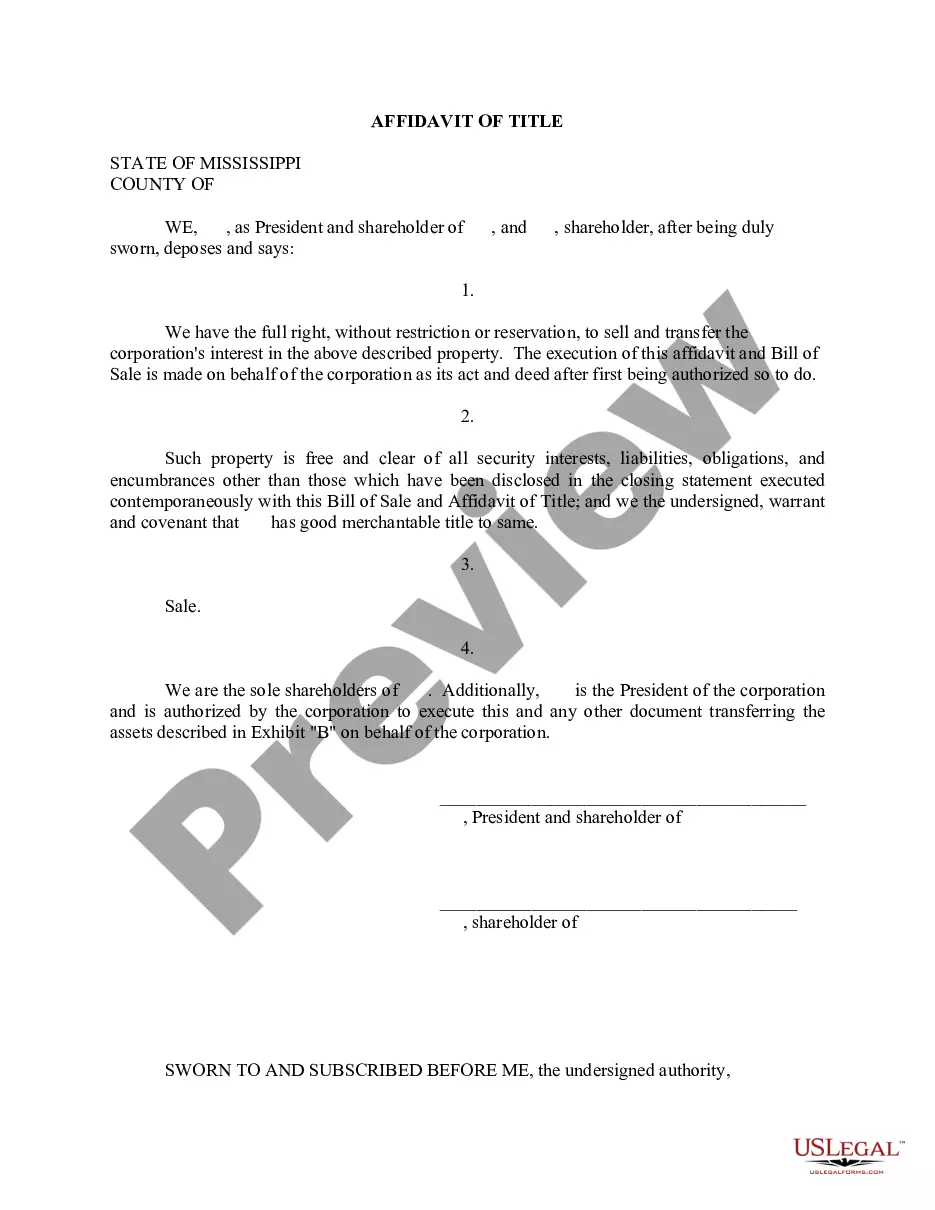
Louisiana Act of Partition
What this document covers
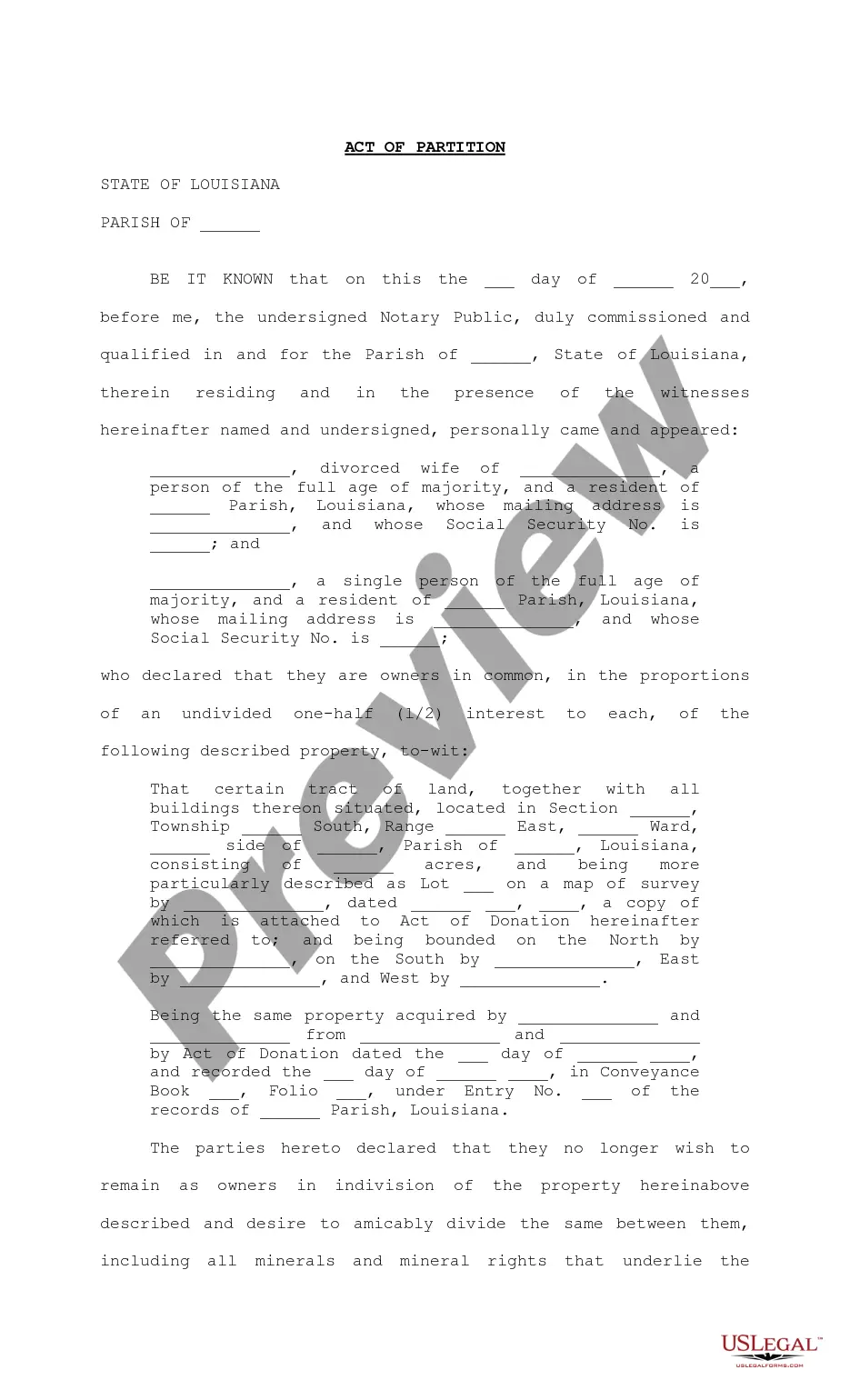
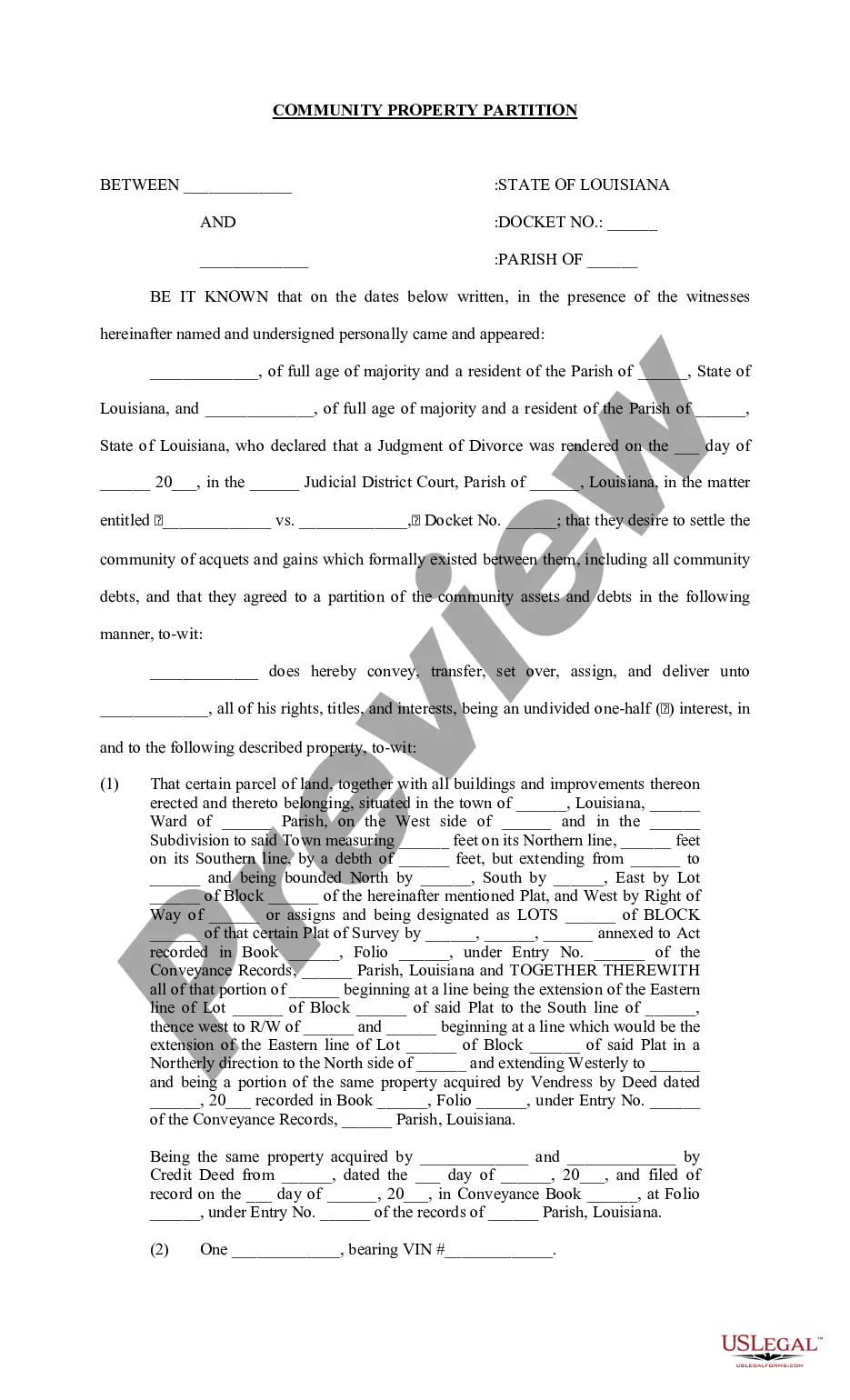
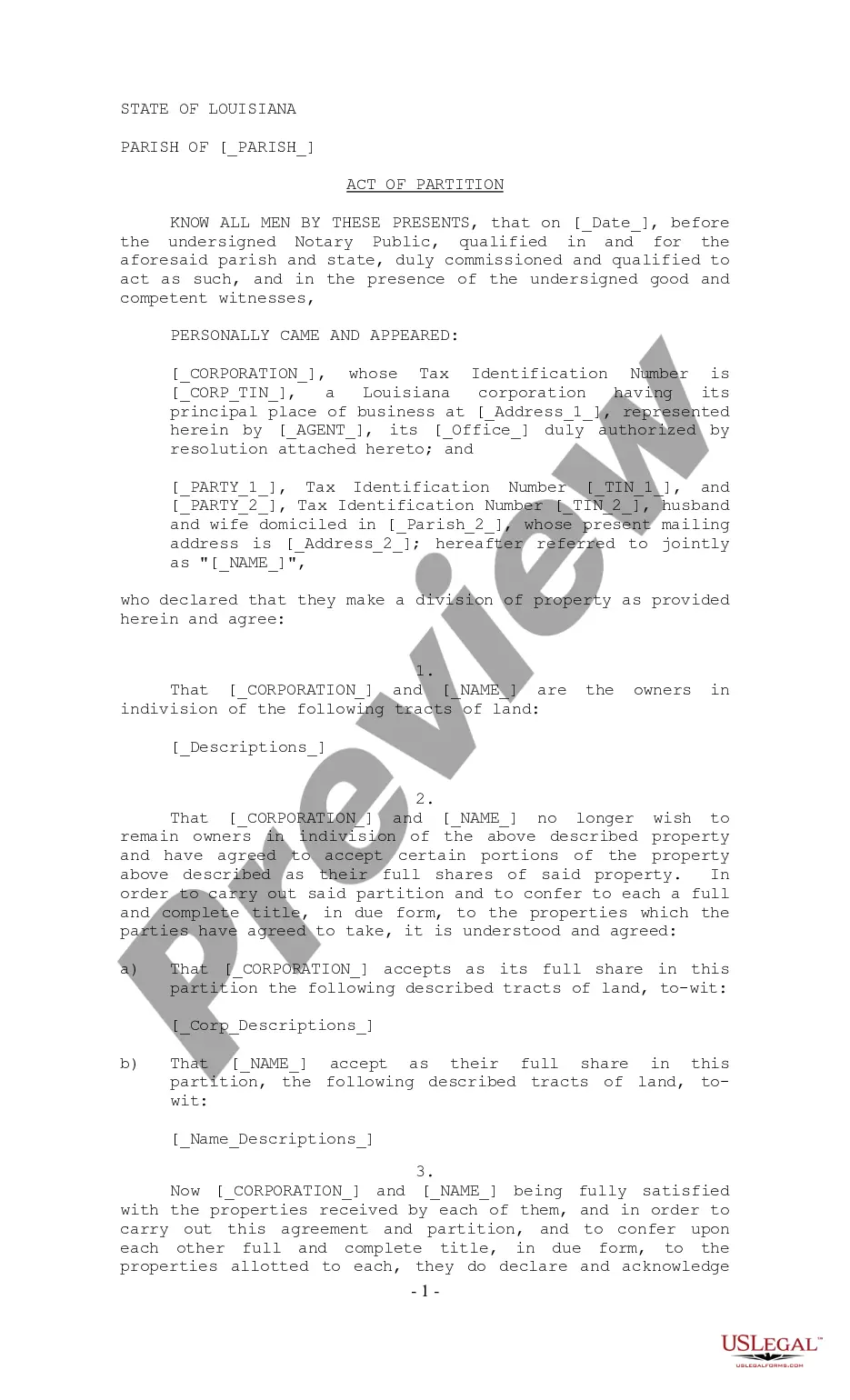
The Act of Partition is a legal document used to divide real property between co-owners. This form is specifically designed for scenarios where two individuals wish to separate their interests in a property and ensures they each receive a share that is of equal value. It differs from other property transfer forms by focusing on the division of ownership rather than a sale or gift of property.
Key components of this form
- Identification of the co-owners and their respective interests in the property.
- Description of the property being partitioned, including geographic and legal details.
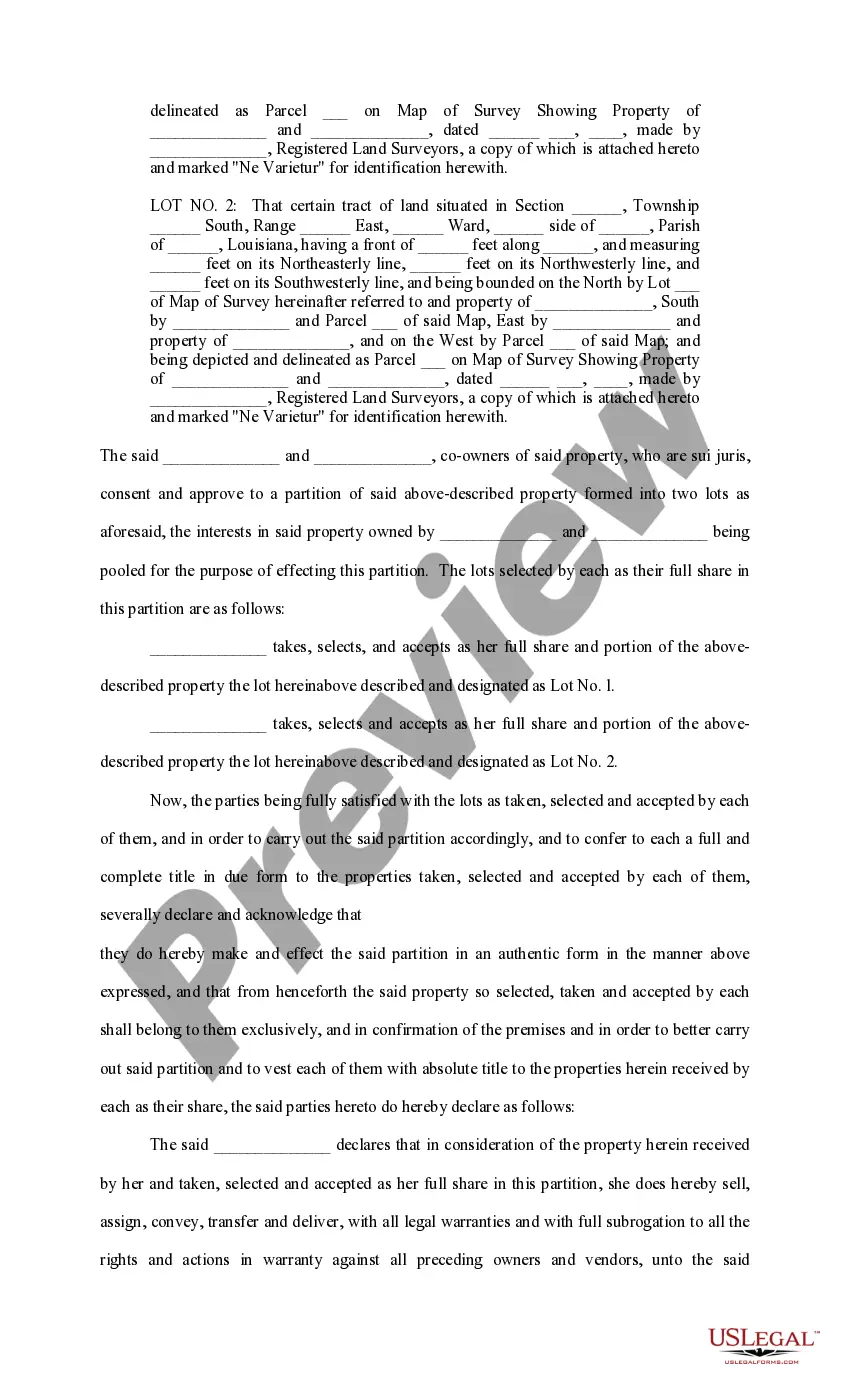
- Specification of how the property will be divided into distinct lots.
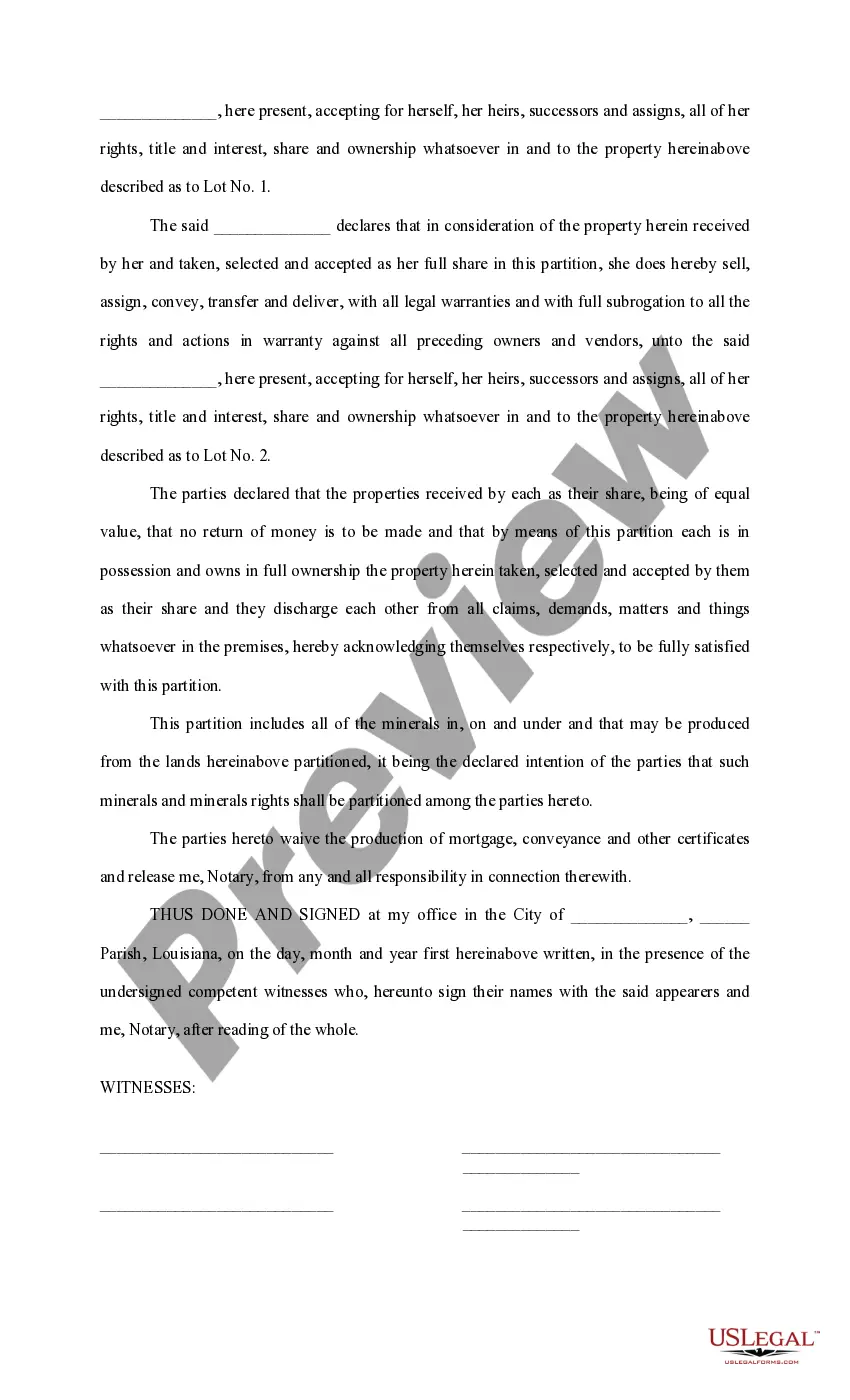
- Declarations of agreement by each co-owner to the partition and their acceptance of designated lots.
- Signatures of co-owners and witnesses to validate the document.
- Notary acknowledgment, confirming the authenticity of the signatures and the document.


When to use this document
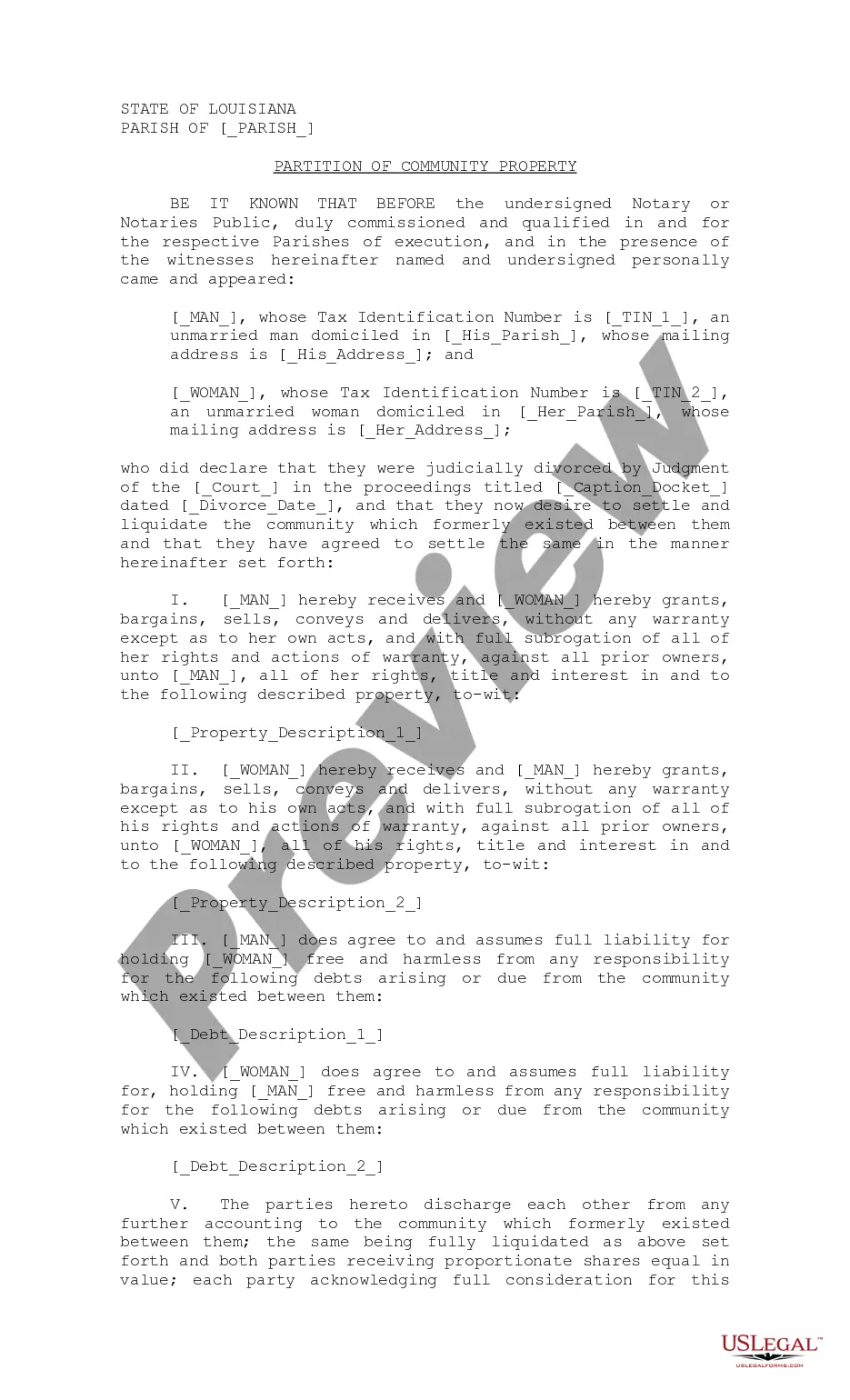
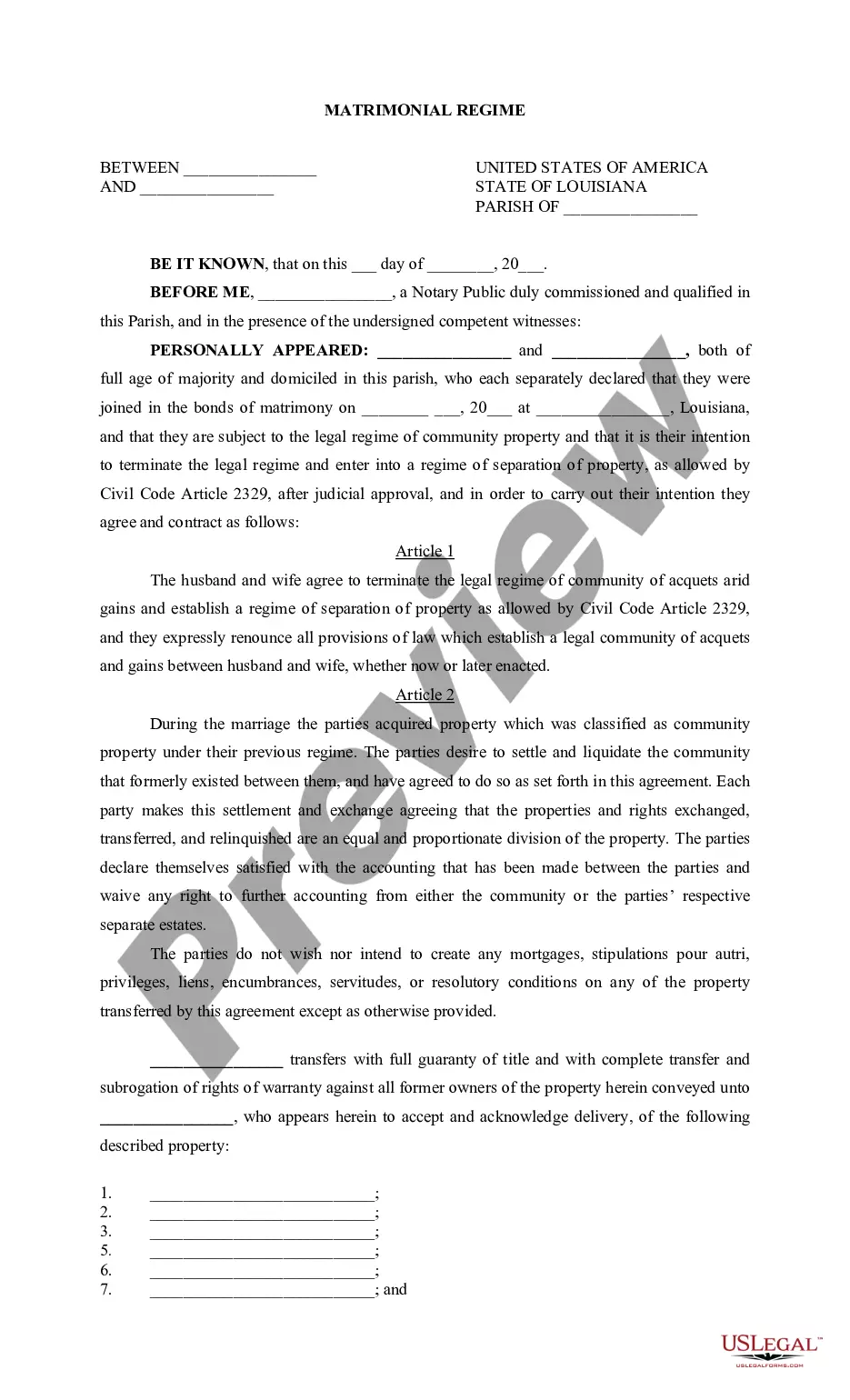
This form should be used when two co-owners of real property wish to end their joint ownership and create individual titles to their respective portions of the property. Situations may include divorce, inheritance, or simply a desire to manage property independently. It is particularly useful when both parties agree on the division and value of their interests.
Who should use this form
This form is intended for:
- Co-owners of real property who wish to partition their property.
- Individuals navigating a divorce where property division is required.
- Heirs of an estate looking to divide inherited land among siblings.
- Any parties wishing to formalize the division of co-owned property amicably.
Steps to complete this form
- Identify the co-owners and provide their full names and contact information.
- Describe the property in detail, including legal descriptions and boundaries.
- Clearly outline how the property will be divided into separate lots.
- Each party should indicate their acceptance of the designated lot by signing the document.
- Obtain signatures from witnesses, if required, and have the document notarized.
Notarization requirements for this form
This form needs to be notarized to ensure legal validity. US Legal Forms provides secure online notarization powered by Notarize, allowing you to complete the process through a verified video call, available anytime.
Get your form ready online
Our built-in tools help you complete, sign, share, and store your documents in one place.
Make edits, fill in missing information, and update formatting in US Legal Forms—just like you would in MS Word.
Download a copy, print it, send it by email, or mail it via USPS—whatever works best for your next step.
Sign and collect signatures with our SignNow integration. Send to multiple recipients, set reminders, and more. Go Premium to unlock E-Sign.
If this form requires notarization, complete it online through a secure video call—no need to meet a notary in person or wait for an appointment.
We protect your documents and personal data by following strict security and privacy standards.

Make edits, fill in missing information, and update formatting in US Legal Forms—just like you would in MS Word.

Download a copy, print it, send it by email, or mail it via USPS—whatever works best for your next step.

Sign and collect signatures with our SignNow integration. Send to multiple recipients, set reminders, and more. Go Premium to unlock E-Sign.

If this form requires notarization, complete it online through a secure video call—no need to meet a notary in person or wait for an appointment.

We protect your documents and personal data by following strict security and privacy standards.
Common mistakes to avoid
- Failing to accurately describe the property, which can lead to legal disputes.
- Not including all required signatures, including those of witnesses if necessary.
- Leaving blank fields that should be filled out to ensure clarity in the partition.
- Not obtaining notarization if it is required for the document to be legally binding.
Benefits of completing this form online
- Convenience: Access and complete the form from anywhere without needing to visit a lawyer.
- Editability: Easily make changes to reflect the specific terms of your partition.
- Reliability: The form is drafted by licensed attorneys to ensure legal soundness and compliance.
Looking for another form?
Form popularity
FAQ
The Louisiana Act of Partition is a legal document used to divide real property between co-owners, ensuring each receives an equal-value share. It is used when two people want to end joint ownership and create individual titles, describing the property, how it will be split into lots, and including signatures and a notary acknowledgment.
It requires identification of the co-owners and their interests, description of the property including geographic and legal details, specification of how the property will be divided into distinct lots, declarations of agreement by each co-owner to the partition and acceptance of designated lots, signatures of co-owners and witnesses, and notary acknowledgment.
The co-owners must sign the act to acknowledge their agreement to the partition, witnesses must also sign to validate the document, and a notary must provide an acknowledgment to confirm the authenticity of the signatures and the document. This sequence helps ensure enforceability and a clear record of mutual consent.
The act is designed for co-owners who want to partition property and obtain individual titles. It is appropriate in a divorce where property division is required, when heirs divide inherited land, or any situation where amicable co-ownership termination is preferred. It focuses on equalizing value and providing clearly designated lots rather than selling the property.
Consulting an attorney is advisable for complex partitions or disputes over value or lot boundaries. This form includes co-owner identification, division into lots, signatures, and a notary acknowledgment to validate the document. Filing or recording requirements are not specified and may vary by local practice, so check applicable local rules.
The act differs from a quitclaim deed or similar transfer by partitioning co-owned property into separate lots with equal-value shares and mutual agreement, rather than transferring ownership to another party. It emphasizes ending joint ownership and creating individual titles, with specific steps like declarations of agreement, signatures, and a notary acknowledgment.