Mississippi Performance Horse Lease Agreement
Overview of this form
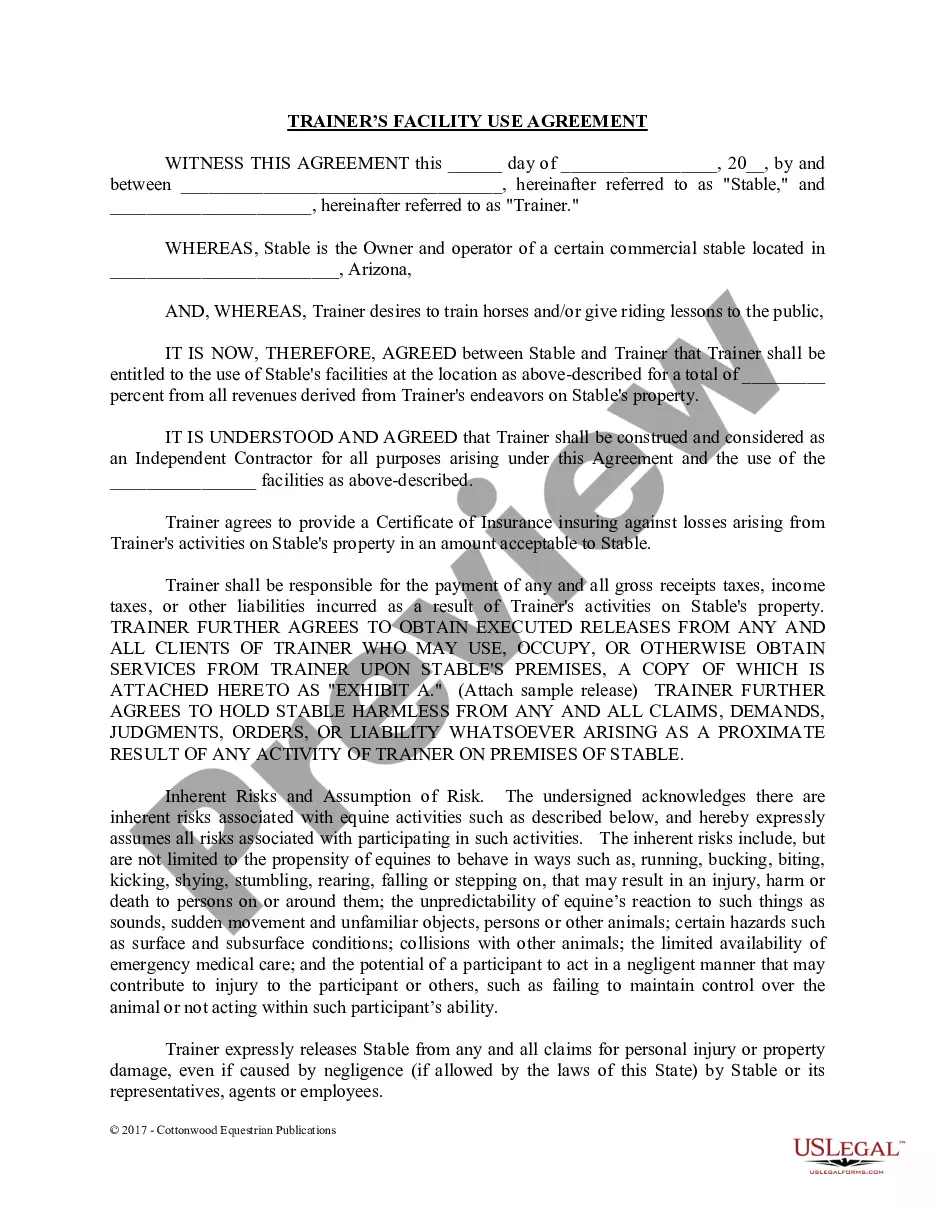
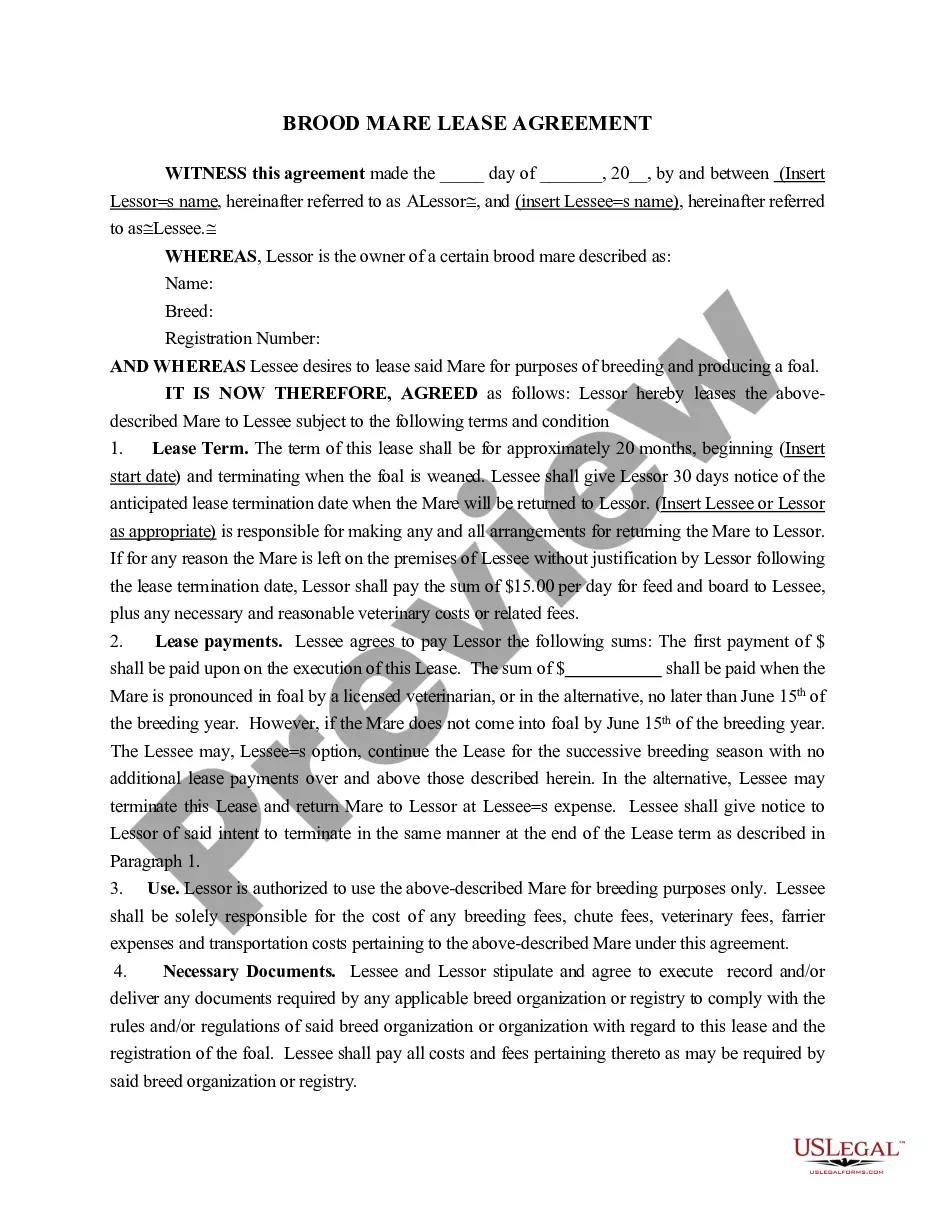
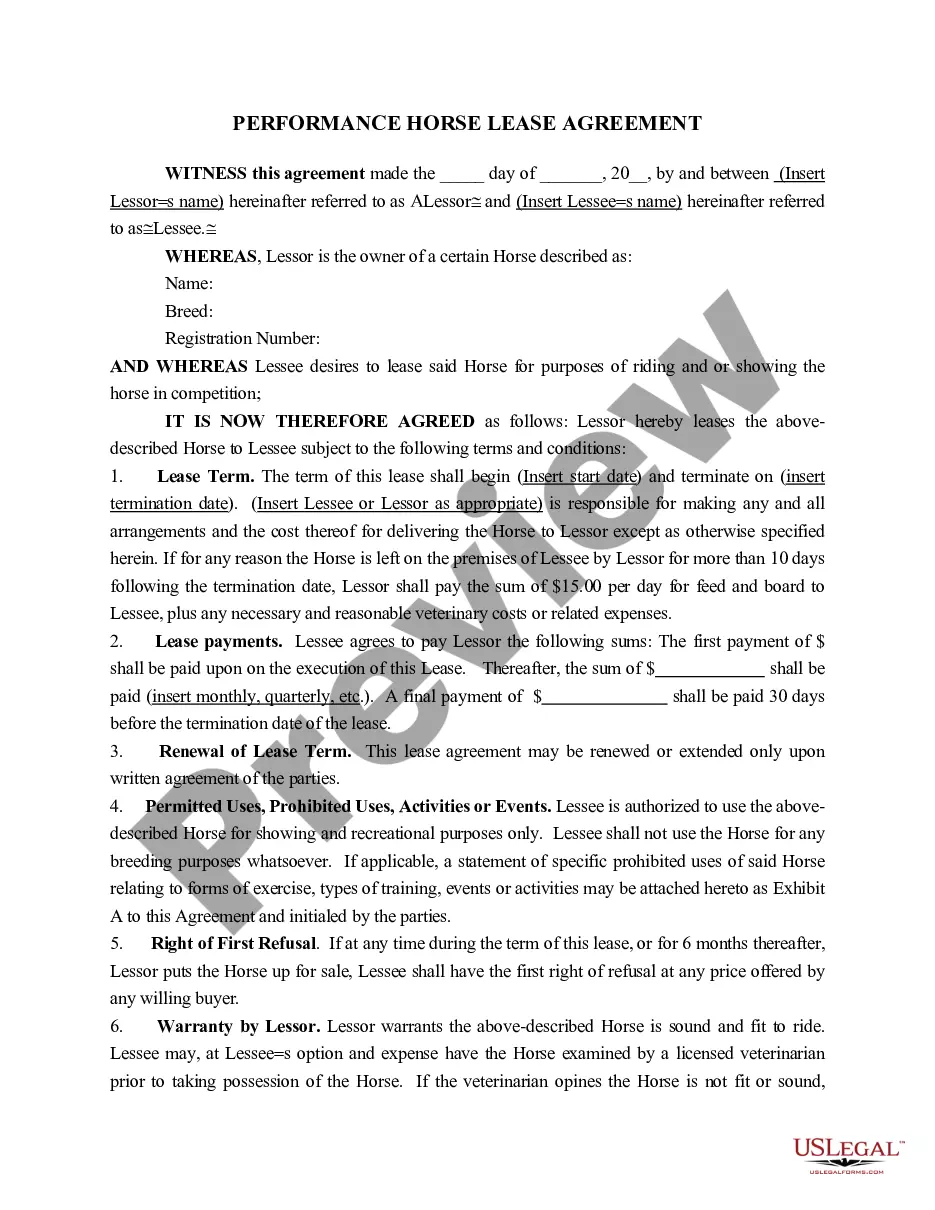
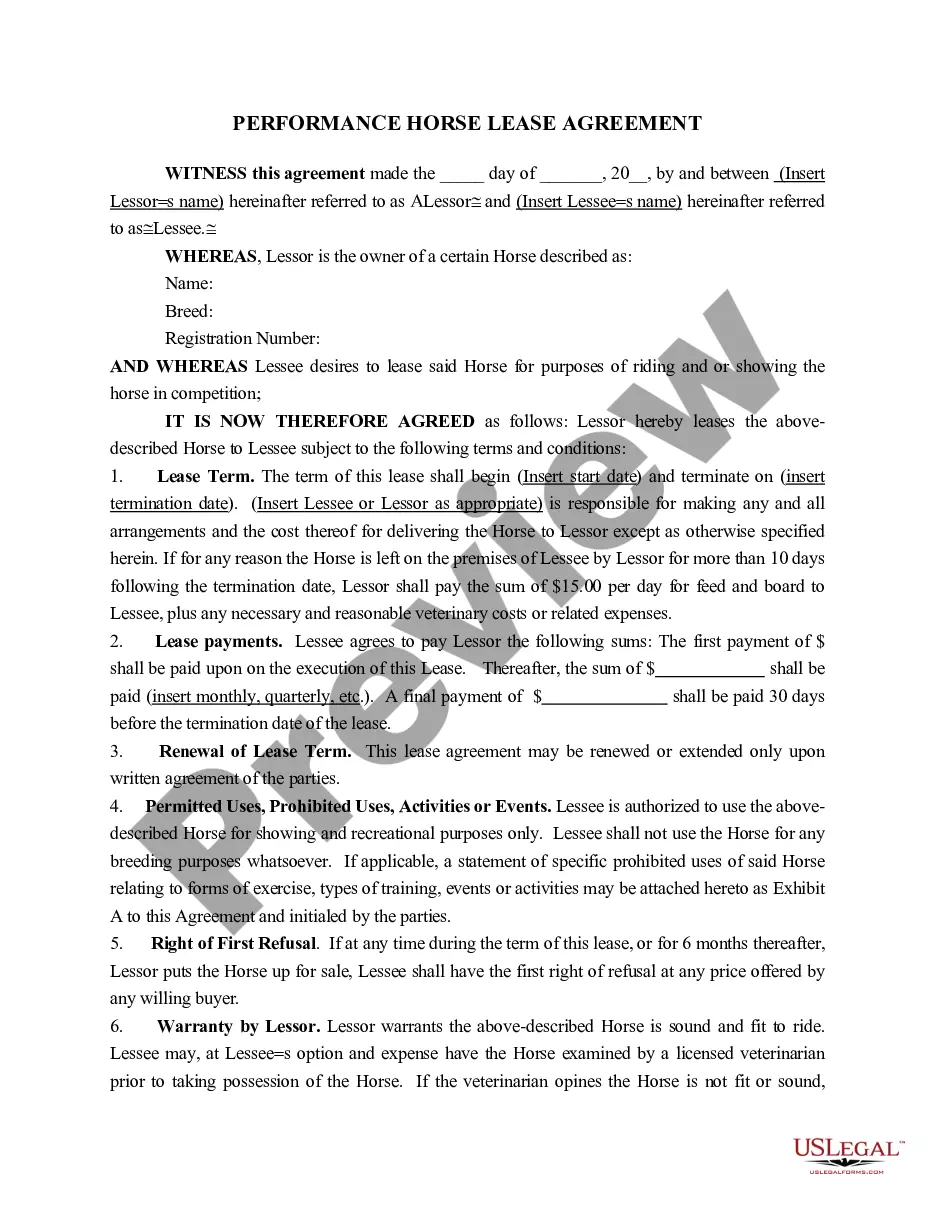
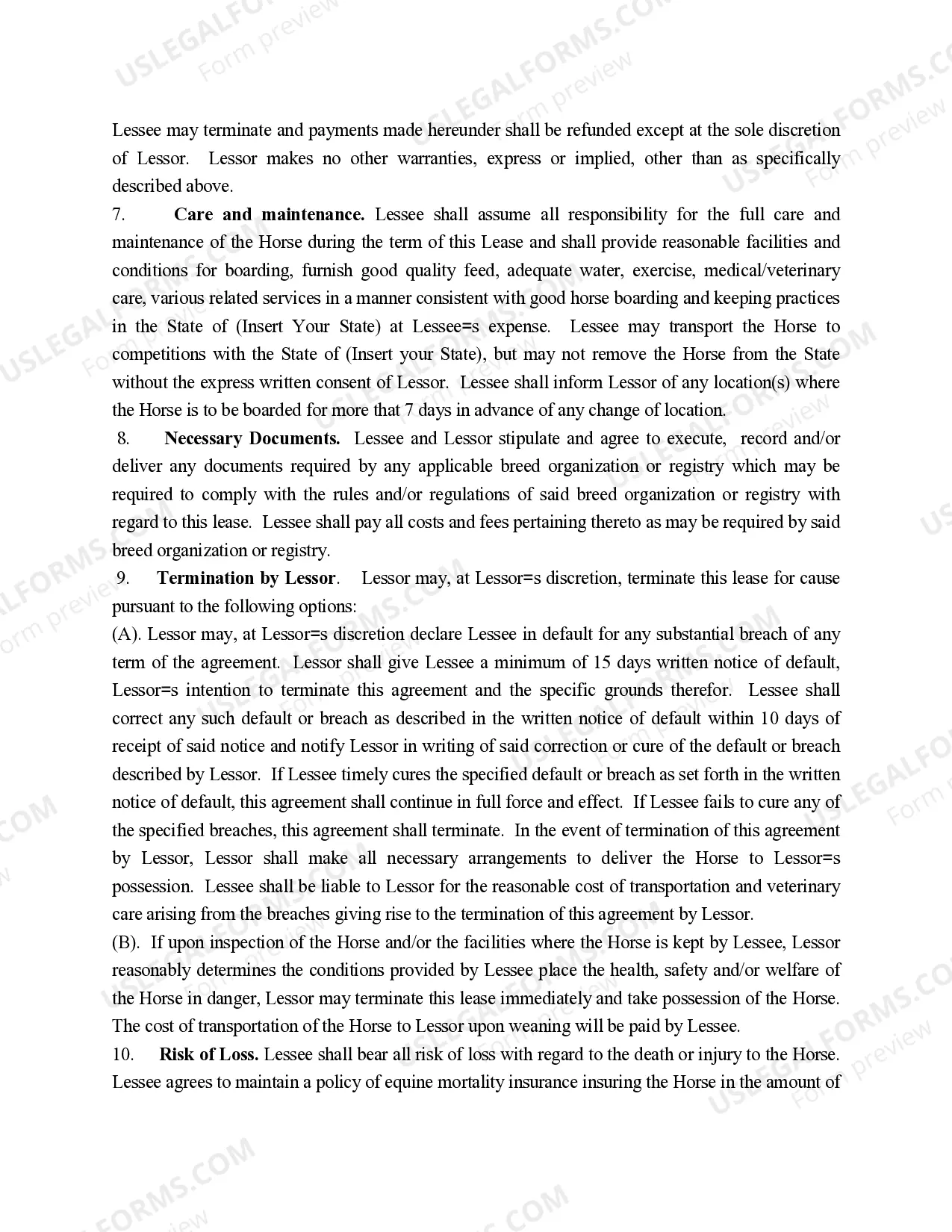
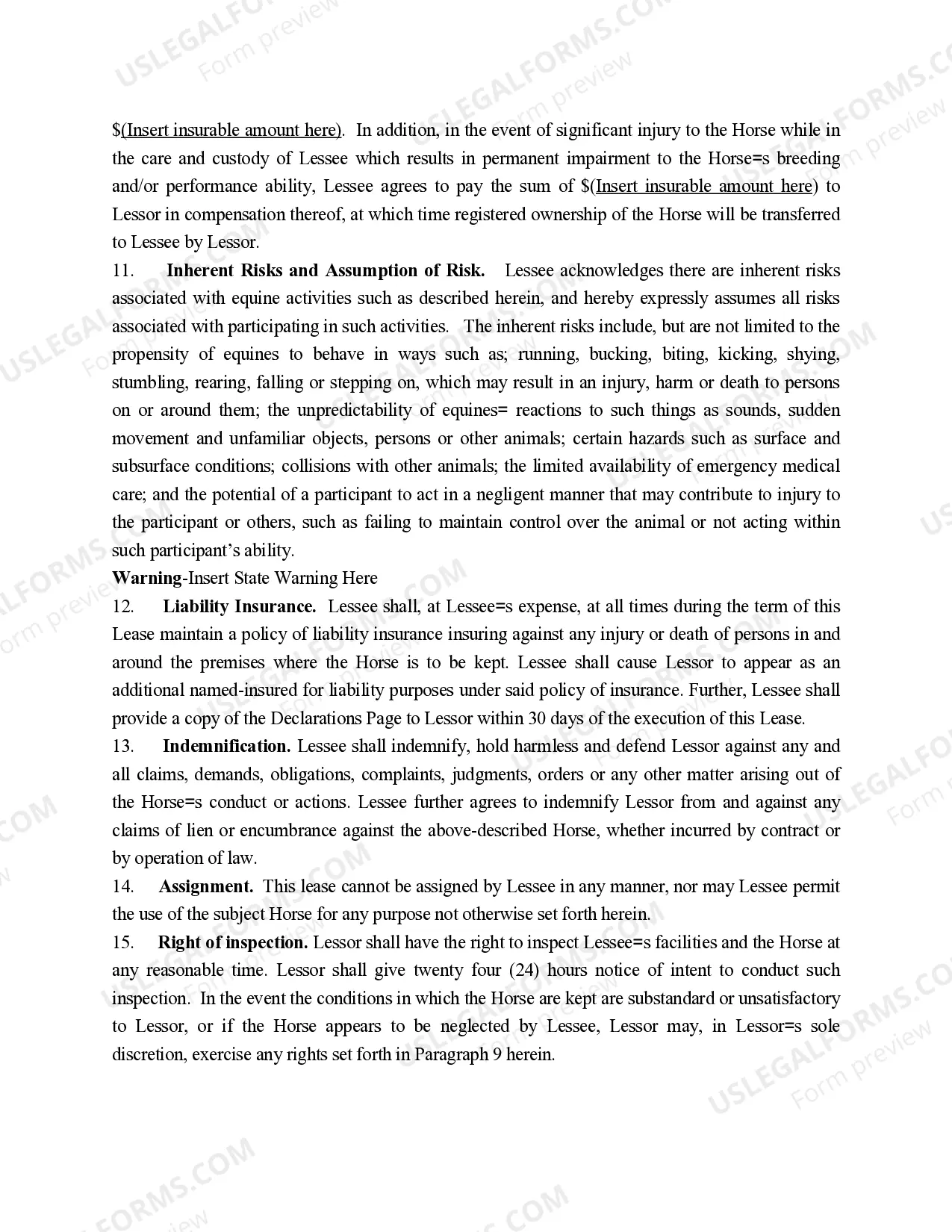
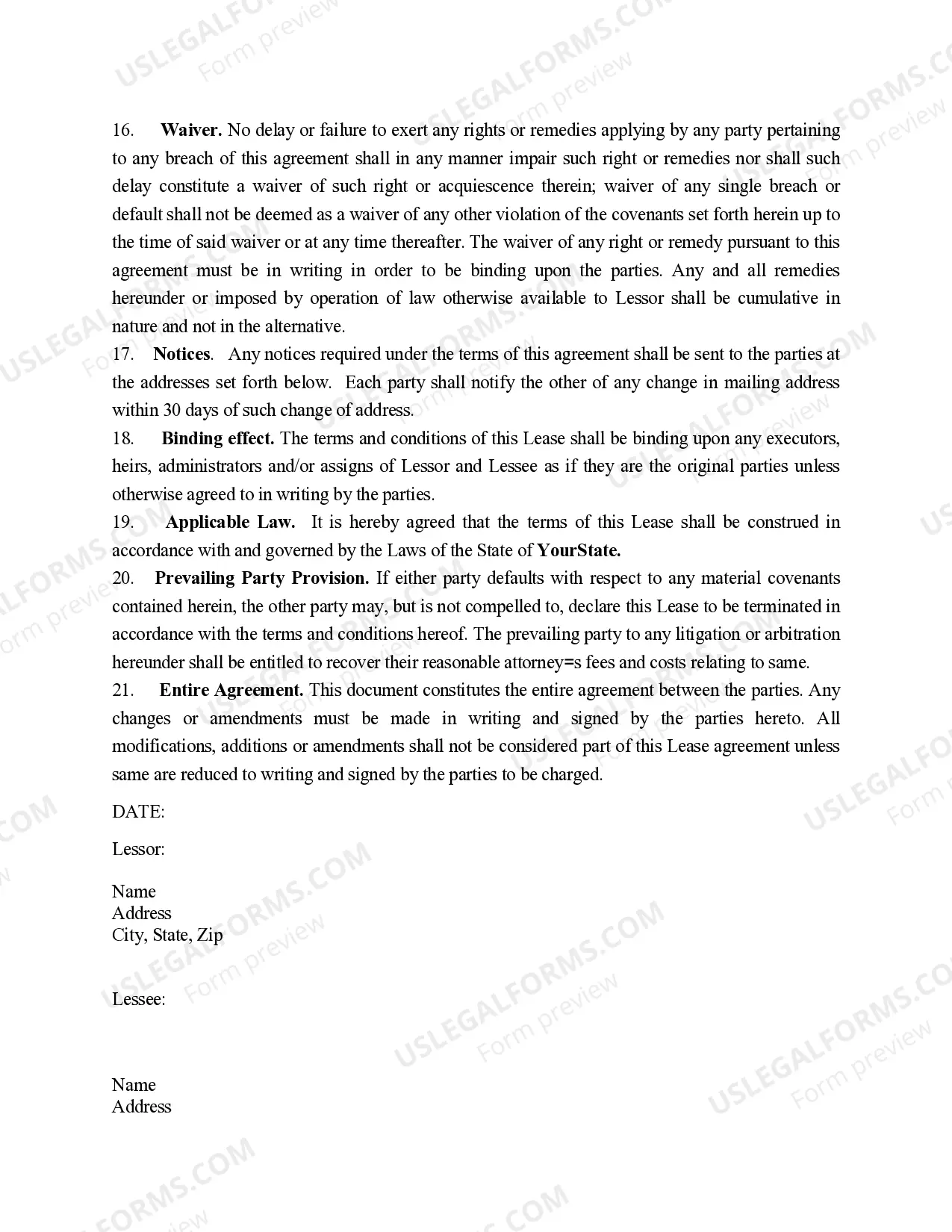
The Performance Horse Lease Agreement is a legal document that allows an individual, known as the lessee, to lease a horse owned by another individual, referred to as the lessor. This agreement outlines the terms under which the horse can be used for riding or showing in competitions. Unlike other leasing agreements, this contract includes specific provisions regarding lease payments, care and maintenance, risk management, and insurance obligations. This ensures that both parties understand their responsibilities and rights throughout the leasing period.
Key components of this form
- Lease Term: Specifies the duration of the lease and delivery responsibilities.
- Lease Payments: Details the amounts and schedule for payment during the lease term.
- Permitted Uses: Defines the activities the lessee can engage in with the horse, prohibiting breeding.
- Right of First Refusal: Grants the lessee the option to purchase the horse if the lessor decides to sell.
- Termination Clauses: Outlines the conditions under which the lease can be terminated by either party.
- Applicable Law: Indicates that the lease will be governed by the laws of a specified state.

When to use this document
This Performance Horse Lease Agreement is essential when an individual wishes to lease a horse for activities such as riding, training, or competing in horse shows. It is often utilized by equestrians looking to access high-quality horses for a limited time without the commitment of purchase. Whether for personal enjoyment or competitive pursuits, this form provides the necessary legal framework to protect both the horse owner and the lessee.
Who should use this form
This agreement is intended for:
- Horse owners (lessors) looking to lease out their horses for specific uses.
- Individuals or trainers (lessees) seeking to use a horse for recreation or competition.
- Equestrian facilities that facilitate leases to their clients.
Instructions for completing this form
- Identify the parties: Enter the names and addresses of both the lessor and the lessee.
- Specify the horse: Fill in the breed, name, and registration number of the horse being leased.
- Enter lease dates: Indicate the start and end dates of the lease period.
- Outline payment details: Clearly state the amounts and schedule for lease payments.
- Review permitted uses: Ensure that both parties agree on how the horse will be used and any prohibitions.
- Sign and date: Both the lessor and lessee must sign and date the agreement to finalize it.
Is notarization required?
This form does not typically require notarization unless specified by local law. However, having a notarized signature can add an additional layer of verification and trust between the parties involved.
Get your form ready online
Our built-in tools help you complete, sign, share, and store your documents in one place.
Make edits, fill in missing information, and update formatting in US Legal Forms—just like you would in MS Word.
Download a copy, print it, send it by email, or mail it via USPS—whatever works best for your next step.
Sign and collect signatures with our SignNow integration. Send to multiple recipients, set reminders, and more. Go Premium to unlock E-Sign.
If this form requires notarization, complete it online through a secure video call—no need to meet a notary in person or wait for an appointment.
We protect your documents and personal data by following strict security and privacy standards.

Make edits, fill in missing information, and update formatting in US Legal Forms—just like you would in MS Word.

Download a copy, print it, send it by email, or mail it via USPS—whatever works best for your next step.

Sign and collect signatures with our SignNow integration. Send to multiple recipients, set reminders, and more. Go Premium to unlock E-Sign.

If this form requires notarization, complete it online through a secure video call—no need to meet a notary in person or wait for an appointment.

We protect your documents and personal data by following strict security and privacy standards.
Avoid these common issues
- Failing to specify lease payment details, leading to disputes over payment schedules.
- Not defining permitted uses of the horse, causing misunderstandings about how the horse can be used.
- Forgetting to include an end date for the lease, which may complicate the return process.
- Neglecting to address care and maintenance responsibilities, which can affect the horse's health.
Advantages of online completion
- Convenience: Instantly download the form and fill it out at your own pace.
- Editability: Easily customize the form to suit specific leasing arrangements or local requirements.
- Reliability: Access to professionally drafted templates ensures legal compliance and protection for both parties.
Legal use & context
- The agreement establishes clear legal terms for both lessee and lessor.
- It serves as a legal reference in case of disputes or misunderstandings.
- Effectively outlines responsibilities for care and maintenance of the horse.
Summary of main points
- The Performance Horse Lease Agreement protects the interests of both parties involved.
- Clearly defined terms can prevent misunderstandings and disputes.
- This form facilitates leasing arrangements for horse enthusiasts and owners alike.
Looking for another form?
Form popularity
FAQ
A free lease means that the horse is leased to someone without any payment to the owner. When you have a free lease you retain ownership and control of your horse but your horse, in best case scenarios, is still cared for and loved. Everyone wins. The owner has good care for the horse they love.
Option #1: The person leasing the horse is responsible for all of the horse's expenses (board, feed, veterinary, farrier, etc). The person leasing the horse may ride or use the horse any time they'd like. Full leases rarely restrict riding days, times, or horse-related events, like attending a horse show.
Lease-to-Buy Equine Contract To purchase the horse, the buyer will pay the full purchase price during the lease term. During this time, the buyer will continue making lease payments per the parties' agreement, which will potentially go toward the total purchase price of the horse.
When you full lease a horse you pay an agreed upon fee for exclusive access to the horse. This means you are the only one riding the horse. It won't be used for lessons, the owner will not ride it, and you'll be responsible for making sure the horse gets the attention & exercise it deserves.
Full Leasing a Horse When you full lease a horse you pay an agreed upon fee for exclusive access to the horse. This means you are the only one riding the horse.
The Half-Lease Contract.In this type of agreement, the owner of the horse or lessor splits the horse's care expenses and riding time with a lessee. It can be a beneficial way to save money on board, feed, vet bills, etc., and it can be great for your horse if your own saddle time is limited.
Collect each party's information. Include specifics about your property. Consider all of the property's utilities and services. Know the terms of your lease. Set the monthly rent amount and due date. Calculate any additional fees. Determine a payment method. Consider your rights and obligations.
FULL LEASE: For $400 per month, you will have full, exclusive use of the horse. Full-leases require that you also pay to the costs of routine farrier and health care, which will vary according to the horse's needs.