Arizona Subordination Agreement
Overview of this form
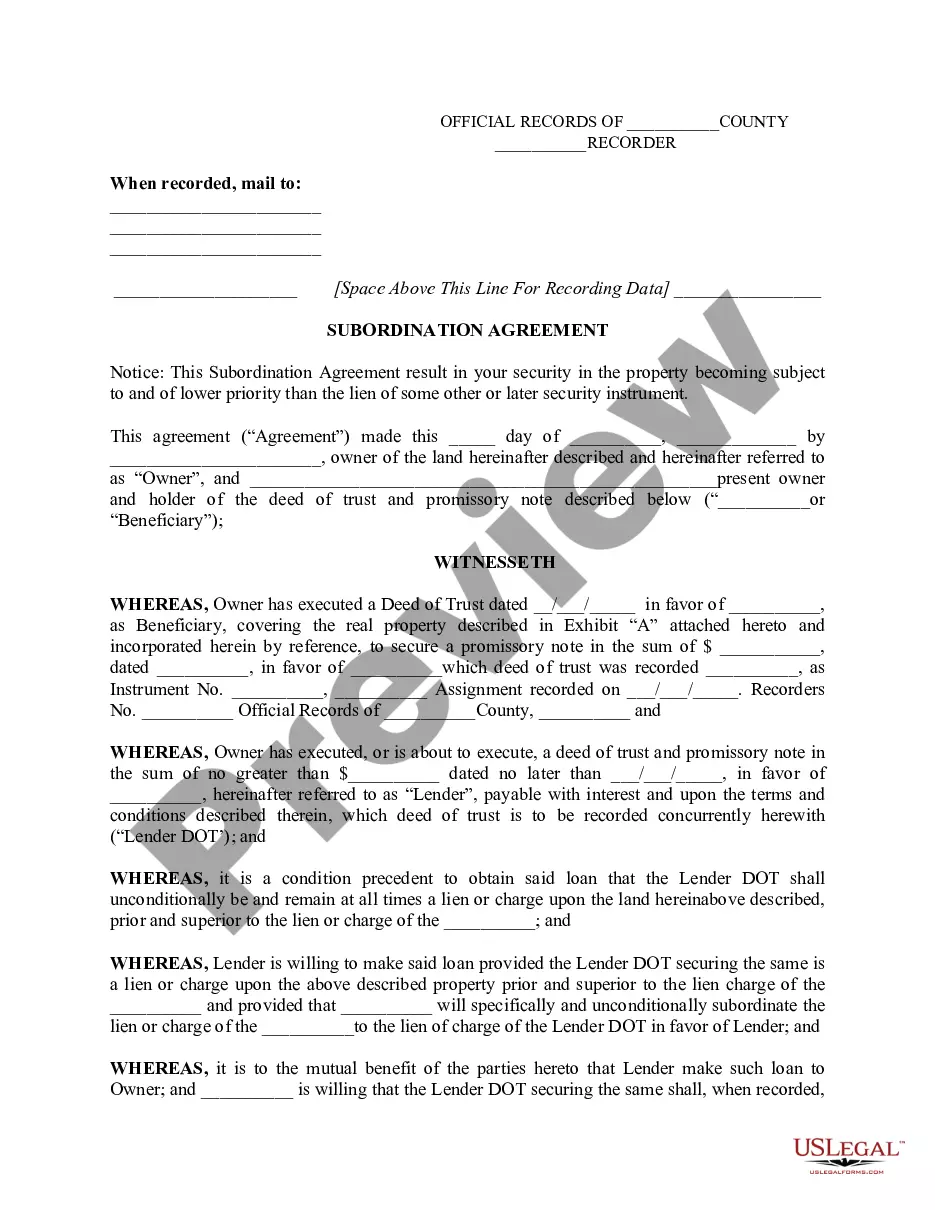
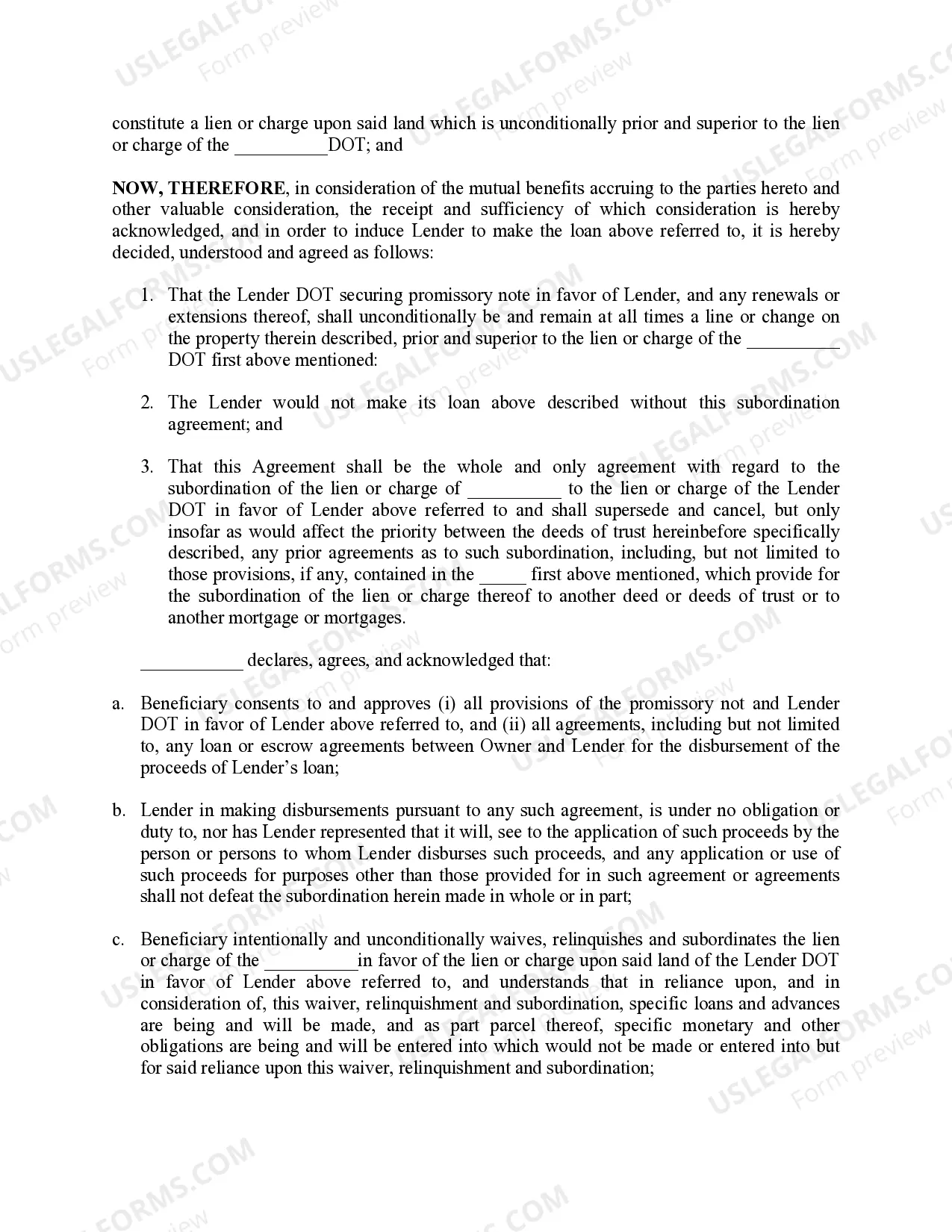
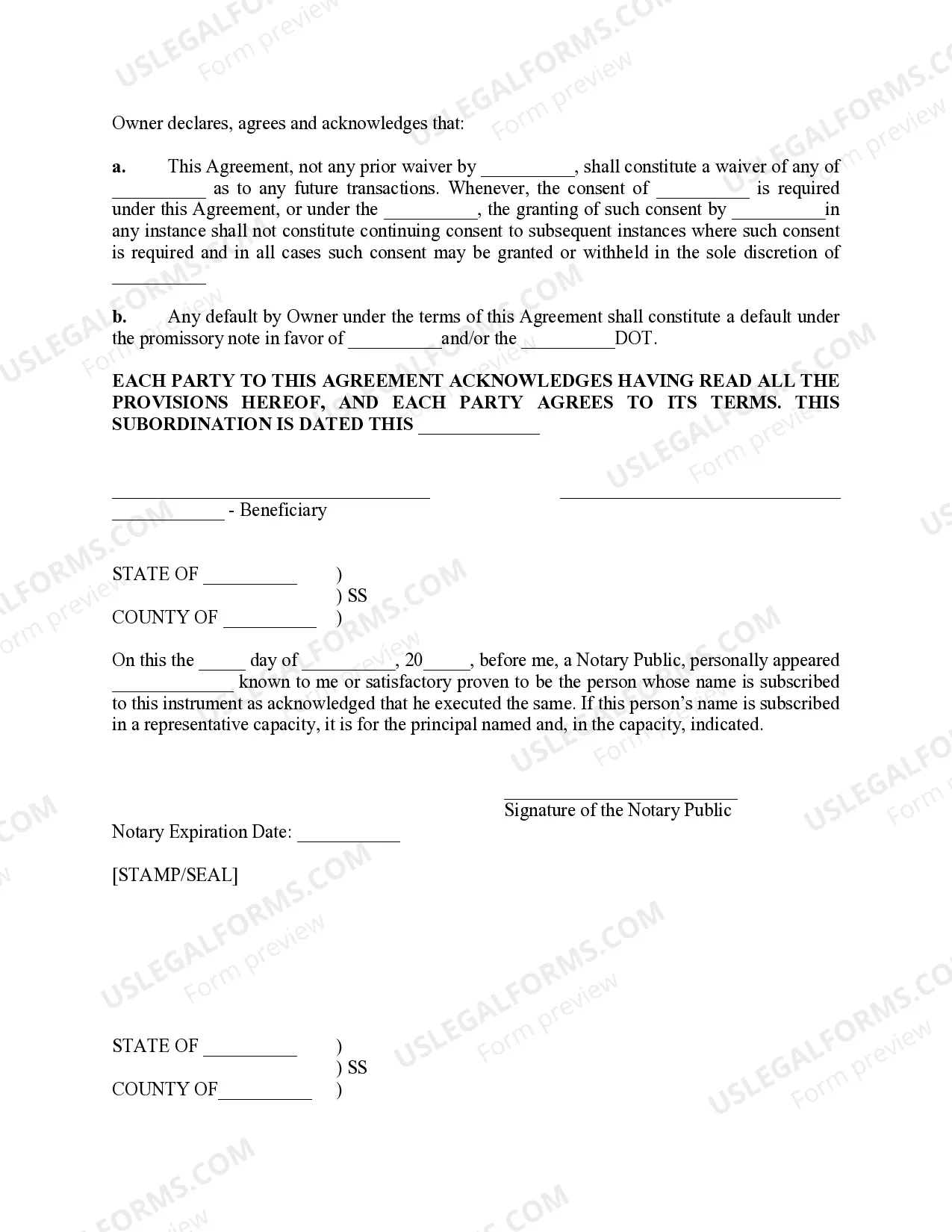
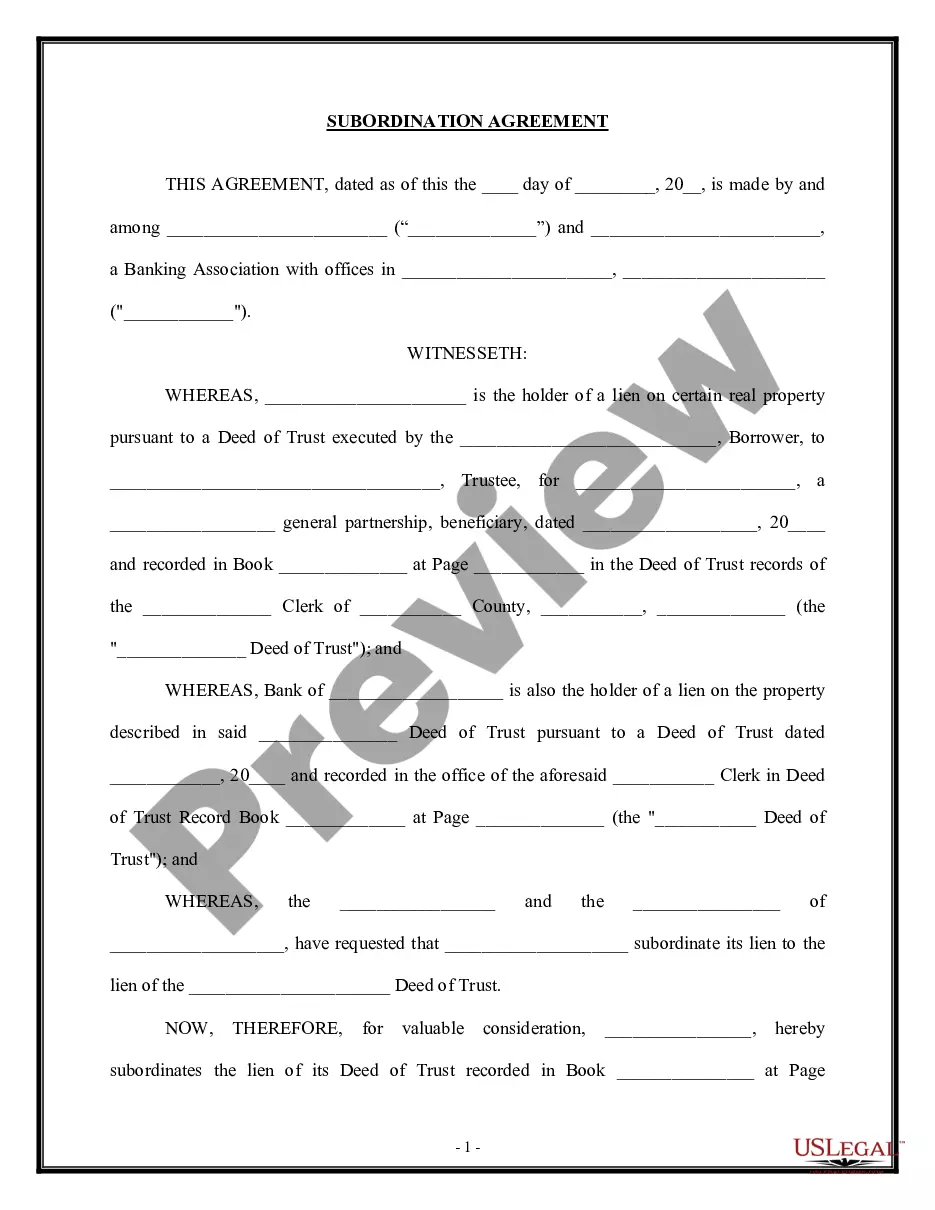
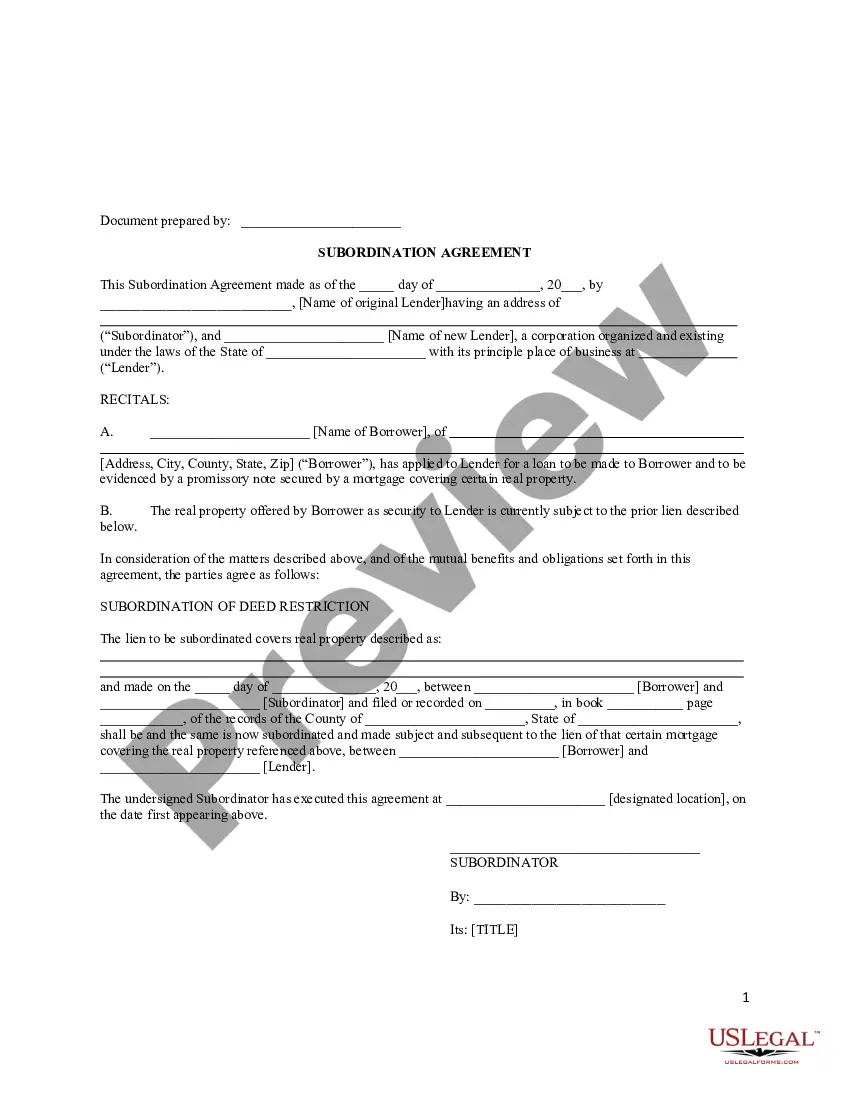
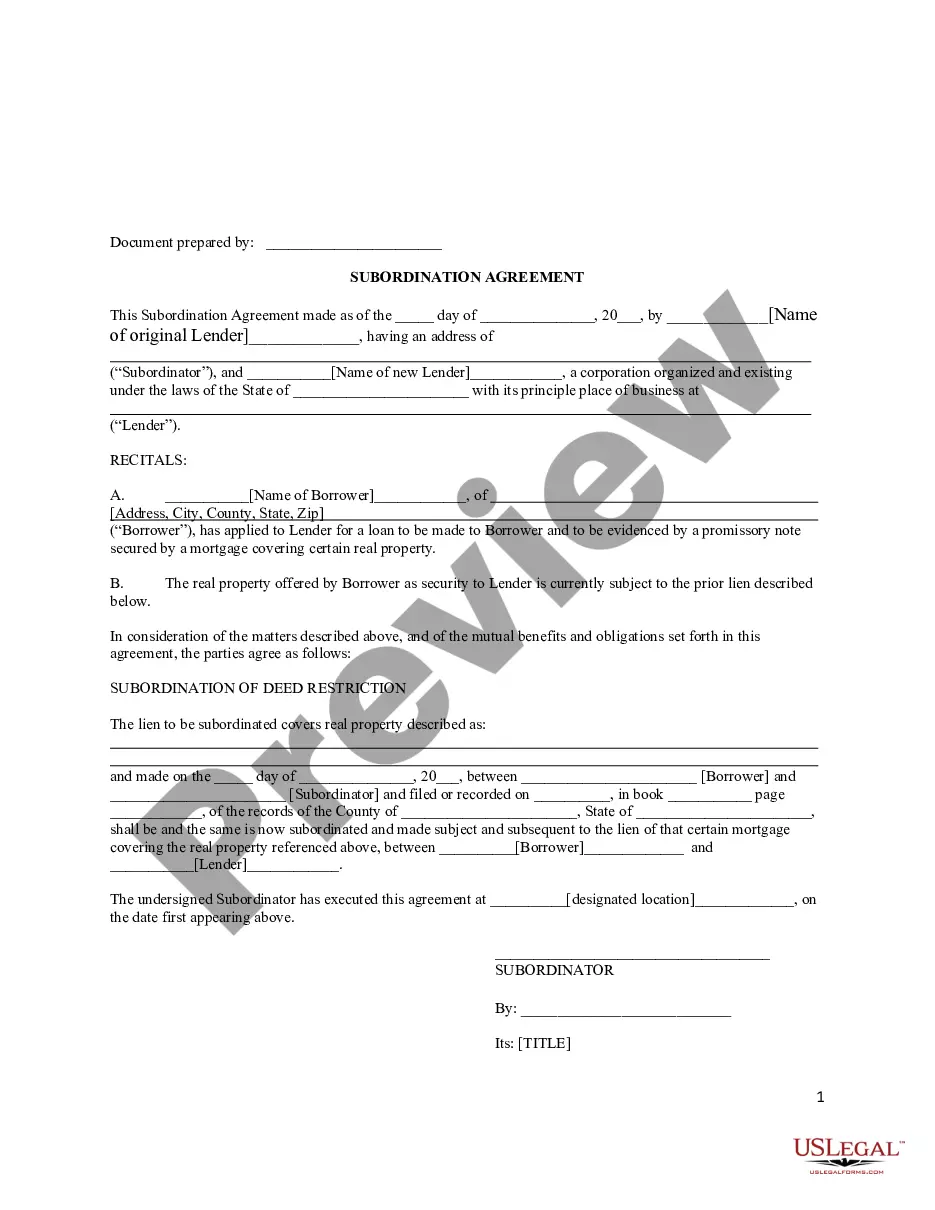
The Subordination Agreement is a legal document that allows a debtor's existing debt or claim to be placed behind another debt in terms of priority. This agreement is essential when obtaining a new loan, as it ensures that the lender's security interest in the property takes precedence over other existing liens or claims. It is particularly useful in real estate and financing contexts where multiple lenders may have competing claims on a property.
Key parts of this document
- Identification of parties involved: Owner, Beneficiary, and Lender.
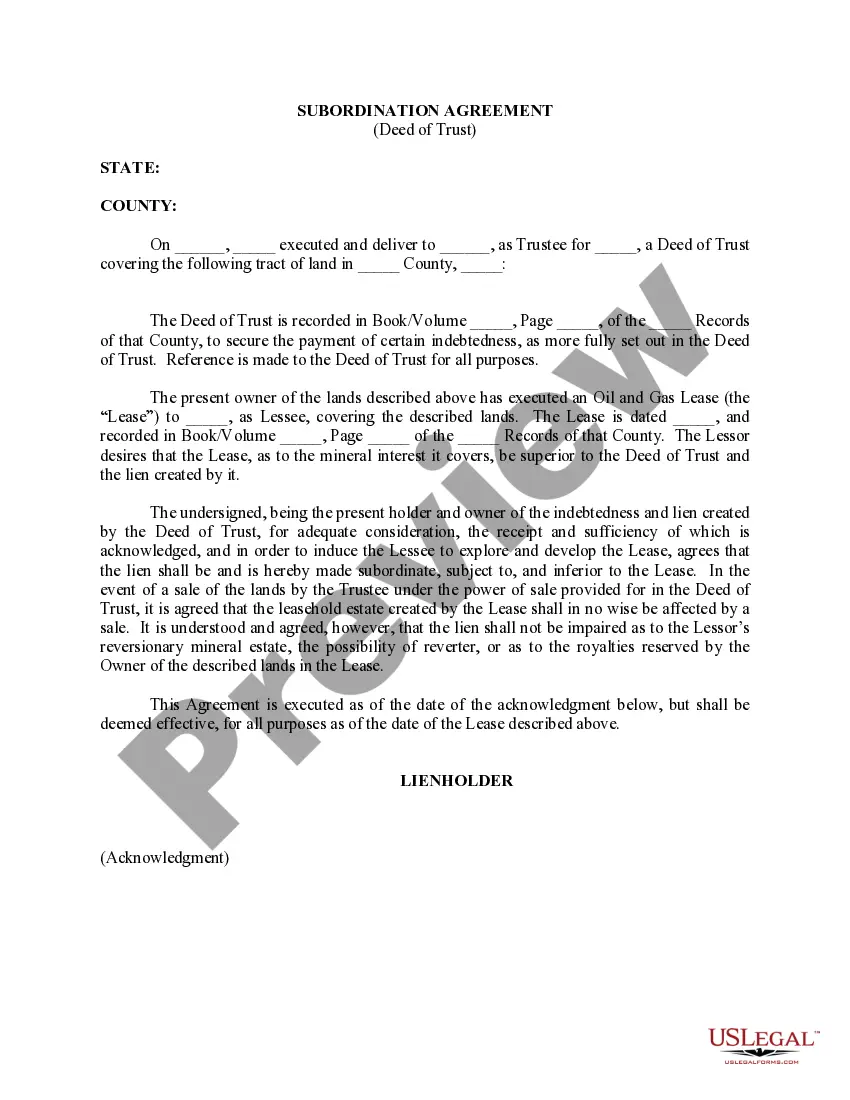
- Details about the existing Deed of Trust and any new loans.
- Provision for subordination of existing liens to the new loan.
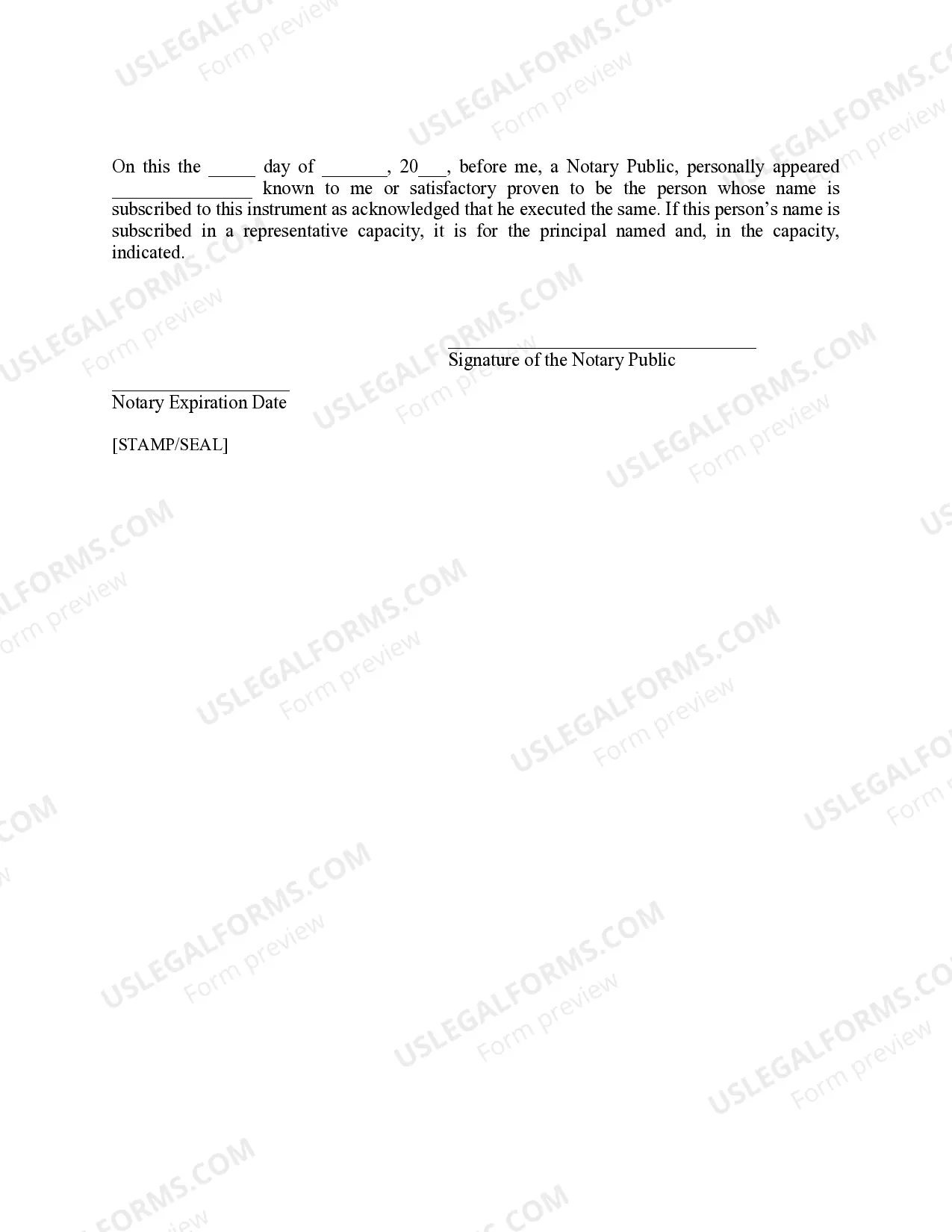
- Signatures and notary acknowledgments for validity.
- Clauses addressing mutual agreements and specific consents related to the loans.
When to use this document
This form is commonly used when a property owner wishes to secure a new loan while having an existing mortgage or trust deed. It is essential when the new lender requires a subordination agreement to ensure their loan is positioned as the primary lien against the property, particularly if the existing lien holder's consent is necessary for the new financing.
Who should use this form
- Property owners looking to refinance or take out additional loans.
- Lenders who require assurance that their loan will take precedence over existing debts.
- Individuals or parties involved in real estate transactions with existing liens.
How to prepare this document
- Identify and clearly state the names of the Owner, Beneficiary, and Lender.
- Detail the existing Deed of Trust and specify the new loan amount and terms.
- Clearly outline the conditions of subordination and the property details.
- Include all necessary dates for the agreement and signatures from all parties.
- Ensure the document is signed in the presence of a notary public if required.
Is notarization required?
Yes, this form must be notarized to be legally valid. The notarization provides an official witness to the identities of the parties involved and their agreement to the terms of the document. US Legal Forms offers integrated online notarization services for your convenience, including secure video calls and 24/7 availability.
Get your form ready online
Our built-in tools help you complete, sign, share, and store your documents in one place.
Make edits, fill in missing information, and update formatting in US Legal Forms—just like you would in MS Word.
Download a copy, print it, send it by email, or mail it via USPS—whatever works best for your next step.
Sign and collect signatures with our SignNow integration. Send to multiple recipients, set reminders, and more. Go Premium to unlock E-Sign.
If this form requires notarization, complete it online through a secure video call—no need to meet a notary in person or wait for an appointment.
We protect your documents and personal data by following strict security and privacy standards.

Make edits, fill in missing information, and update formatting in US Legal Forms—just like you would in MS Word.

Download a copy, print it, send it by email, or mail it via USPS—whatever works best for your next step.

Sign and collect signatures with our SignNow integration. Send to multiple recipients, set reminders, and more. Go Premium to unlock E-Sign.

If this form requires notarization, complete it online through a secure video call—no need to meet a notary in person or wait for an appointment.

We protect your documents and personal data by following strict security and privacy standards.
Typical mistakes to avoid
- Failing to include all parties in the agreement.
- Not providing accurate details about existing debts.
- Omitting necessary signatures or notarization.
- Using incorrect property descriptions.
Benefits of using this form online
- Convenient access to legal forms from anywhere at any time.
- Editable templates that can be customized to meet specific needs.
- Reliable forms drafted by licensed attorneys to ensure compliance with legal standards.
Quick recap
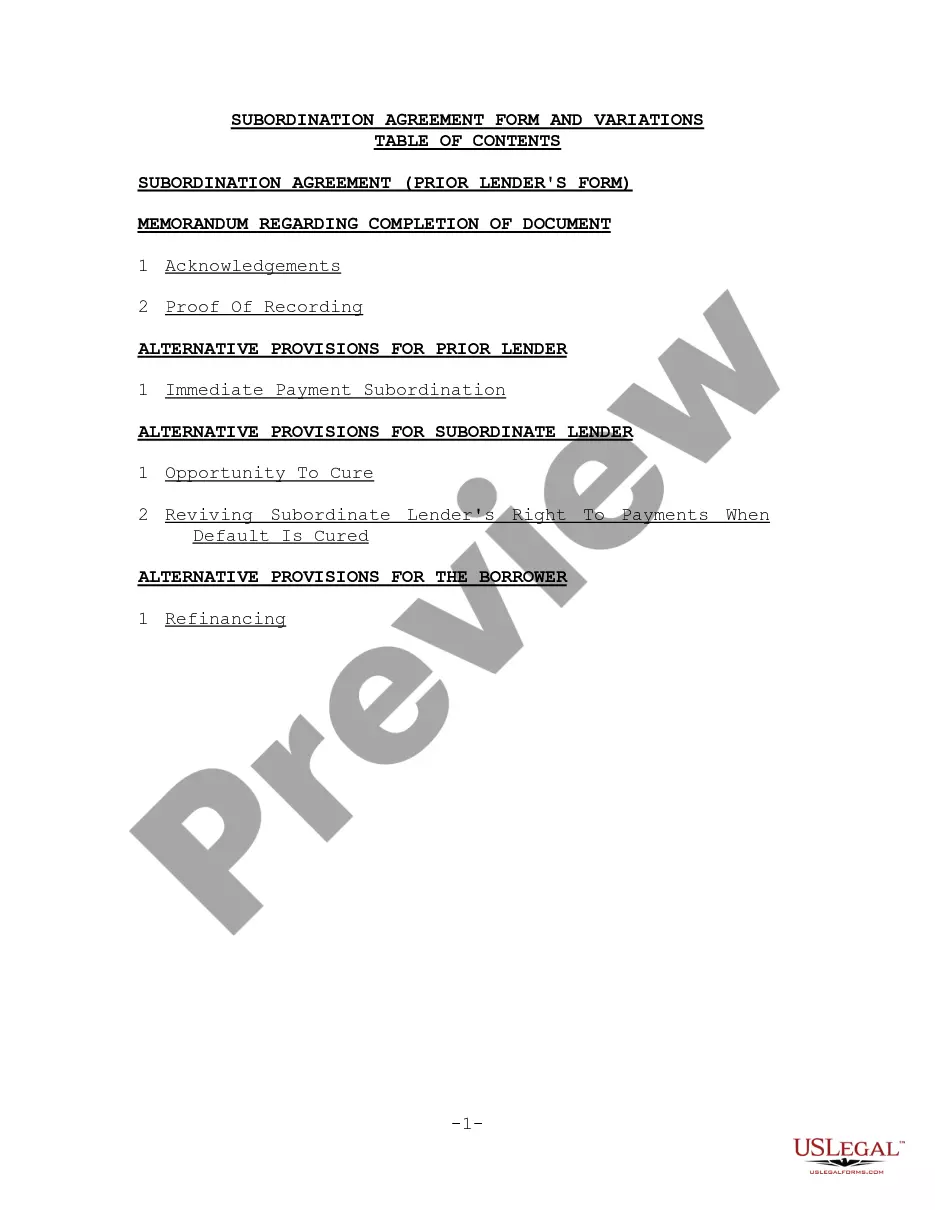
- A Subordination Agreement ensures the priority of a new loan over existing claims.
- Accurate and complete information is crucial for the validity of the document.
- Notarization is typically required for legal enforceability.
- Using online resources streamlines the process and ensures legal adequacy.
Looking for another form?

Form popularity
FAQ
A subordination clause clearly defines the priorities of different creditors in a contract. In Arizona, this clause is particularly useful in real estate transactions, ensuring that one lender's rights are subordinate to another's. By incorporating a subordination clause, you can mitigate risks and protect your investment interests more effectively.
A subordination of a management agreement refers to an arrangement where the interests of property management are placed below those of the financing lender. In Arizona, this type of subordination can protect lenders by ensuring their rights come before the management fees or responsibilities. This arrangement is often crucial during refinancing or securing new loans.
A subordination agreement is a legal document that establishes the order of claims against a property. In Arizona, this agreement allows one creditor to take precedence over another regarding the mortgage or property interest. Typically, lenders will require a subordination agreement to ensure that their rights to repayment are protected.
To obtain an Arizona Subordination Agreement, contact your lender or legal professional for guidance. You can also find customizable templates on platforms like UsLegalForms. These resources can help you create an agreement tailored to your needs. Ensure you understand the terms and conditions before signing to protect your interests.
The subordination rule determines the order in which claims against an asset are addressed in Arizona. Lenders may agree to subordinate their interests to facilitate additional financing for a property. This rule helps create more favorable conditions for borrowing by allowing a new lender to take precedence. Understanding this rule is crucial for navigating the complexities of real estate financing.
An Arizona Subordination Agreement can be provided by lenders, legal professionals, or title companies. Lenders often issue the agreement as part of the financing terms. Additionally, legal experts can help draft custom agreements that protect your interests. Using a trusted platform like UsLegalForms can simplify this process and ensure compliance with local laws.
While not strictly required, it is advisable to record an Arizona Subordination Agreement. Recording serves as a public record, making the agreement enforceable against future lenders and buyers. This action clarifies the priority of liens and helps avoid potential legal disputes. Protect your interests by ensuring your agreement is properly recorded.
Yes, you typically record an Arizona Subordination Agreement to ensure its validity against third parties. Recording the agreement with your local county recorder's office provides public notice of the lien priorities. This protects the interests of the involved parties and lends credibility to the agreement. It is important to follow proper recording procedures to safeguard your rights.
Subordinated debt can take several forms, such as subordinated notes, preferred equity, and mezzanine debt. Each type involves different risks and reward structures for the lending party. For a better understanding and to access templates related to Arizona Subordination Agreements, US Legal Forms offers valuable resources that can simplify the process for you.
An Arizona Subordination Agreement typically addresses the rank of claims among creditors, whereas an Intercreditor Agreement defines the relationship between two or more creditors. The latter outlines how payments are prioritized when a borrower defaults. Understanding these differences can help you determine which document better suits your needs.