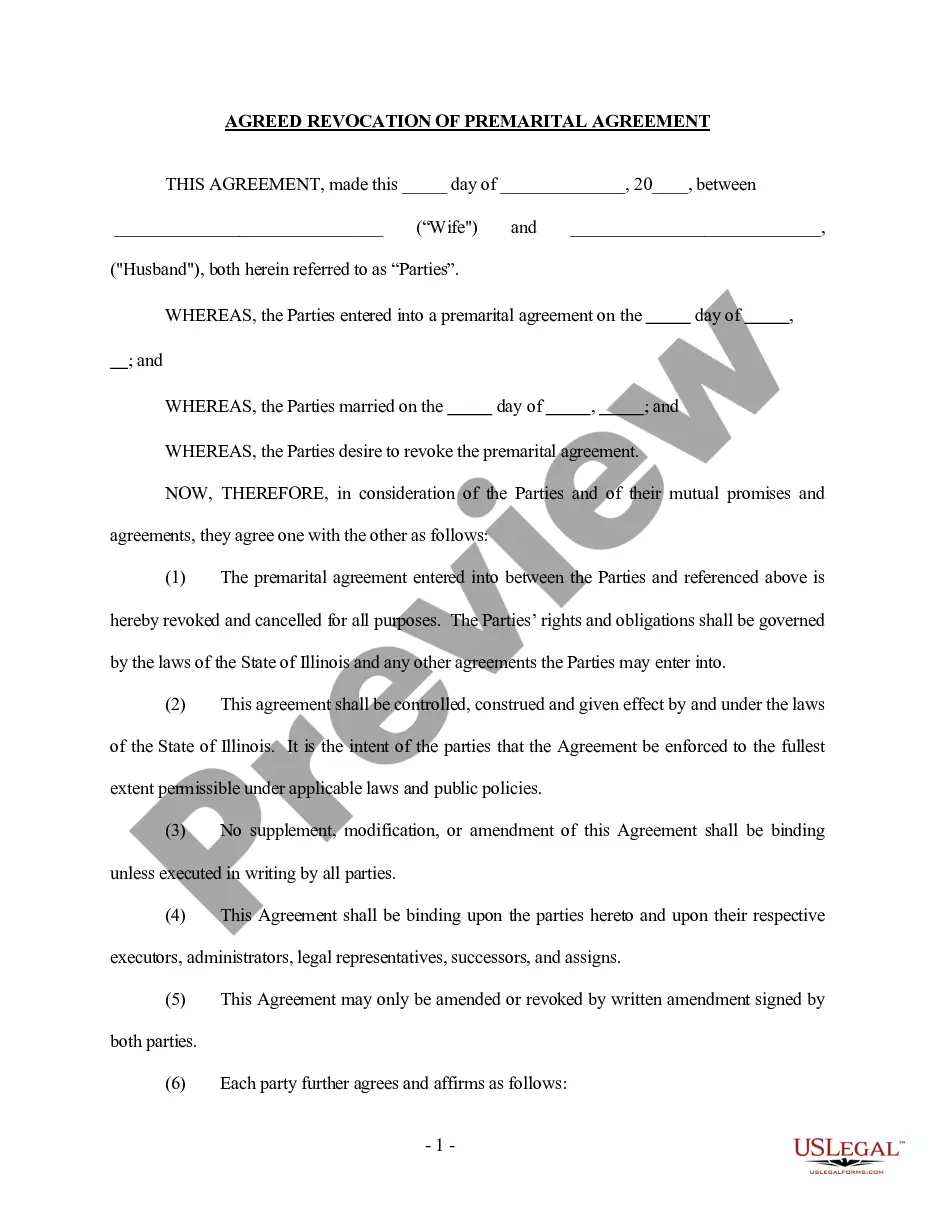
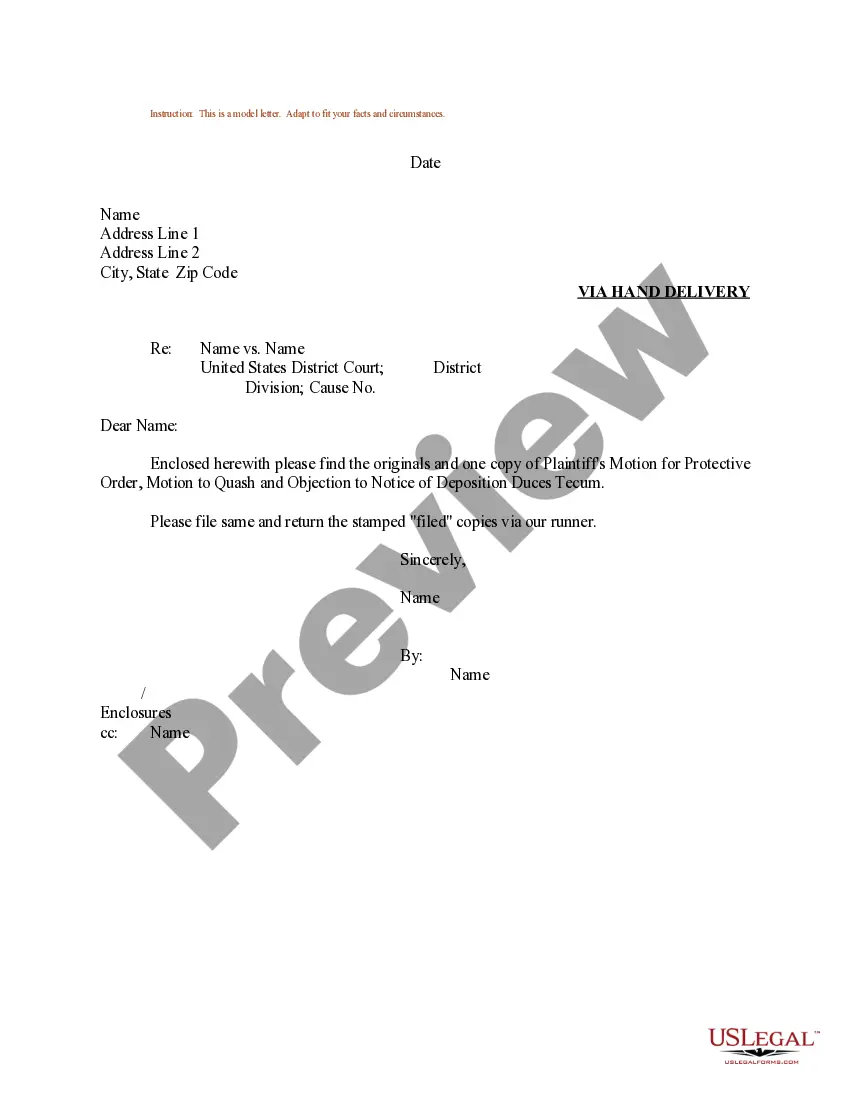
Sample Letter for Plaintiff's Motion for Protective Order, Motion to Quash, Objection to Notice of Deposition Duces Tecum
What this document covers
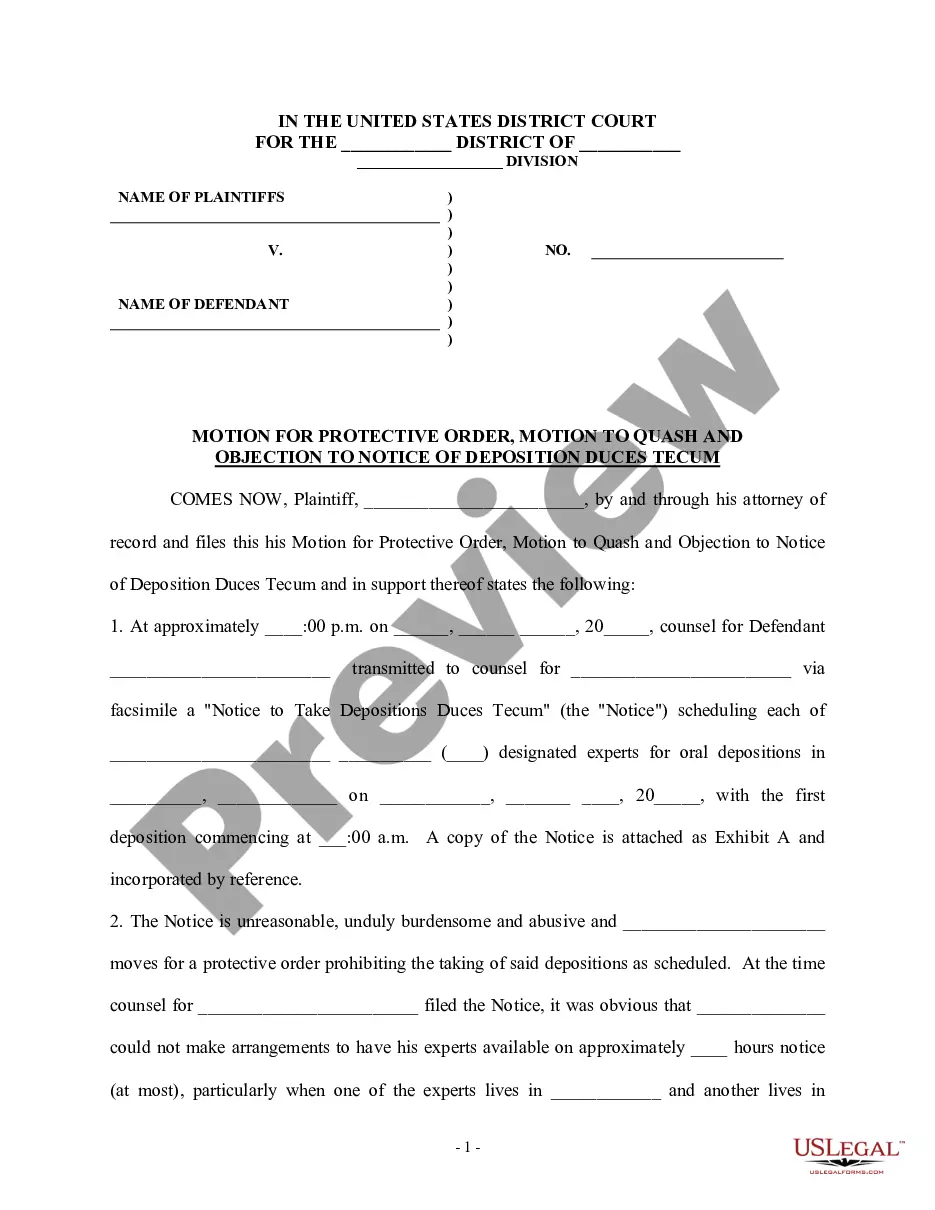
This Sample Letter for Plaintiff's Motion for Protective Order, Motion to Quash, Objection to Notice of Deposition Duces Tecum is a legal document used to formally request protection from certain deposition requests in litigation. This letter serves to notify the opposing party of the plaintiff's objections and the reasons for seeking the protective order or motion to quash, which can provide significant strategic advantages during legal proceedings.
Form components explained
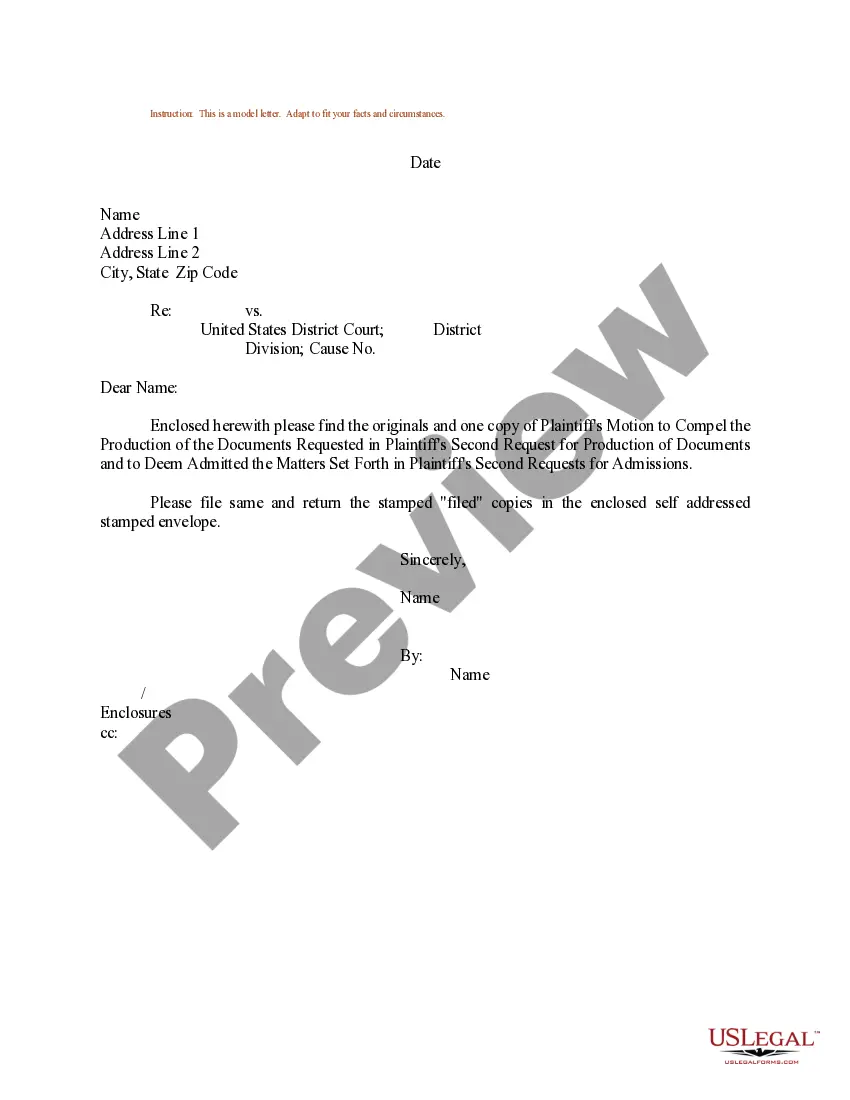
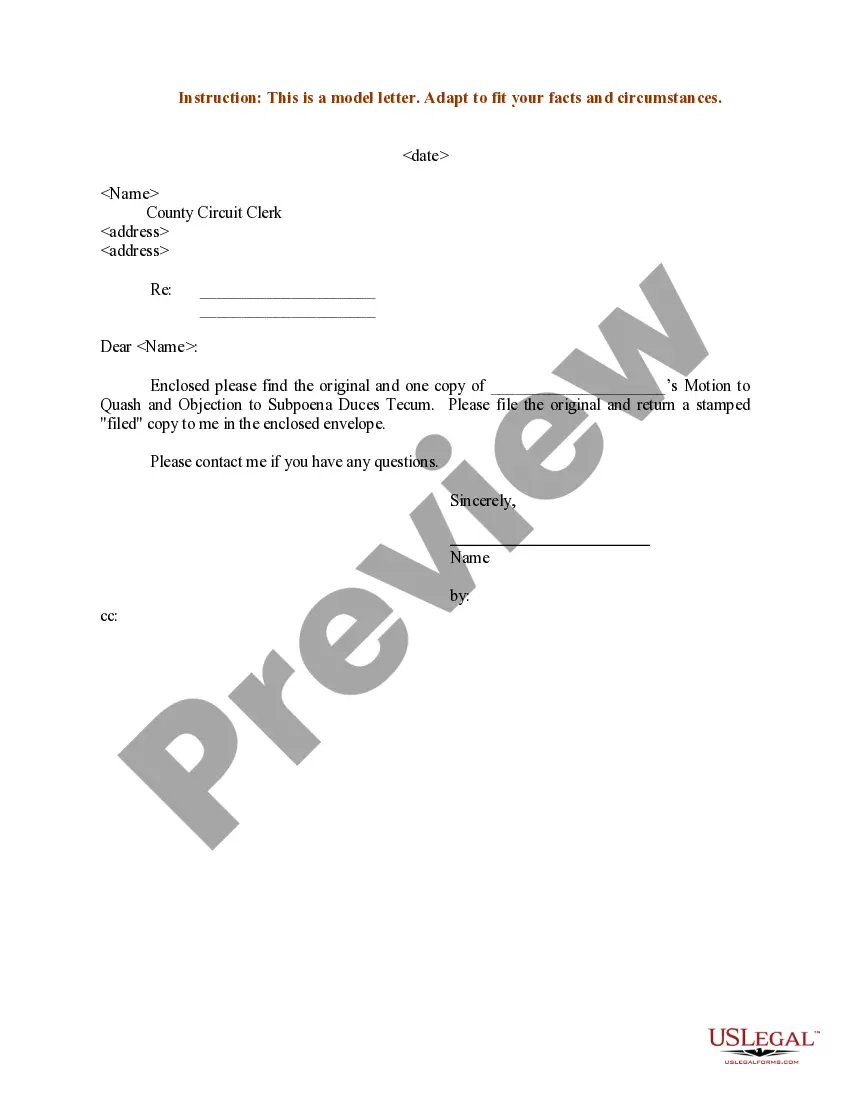
- Date of the letter to document when the motion is filed.
- Sender's name and address for formal identification.
- Recipient's address to ensure proper delivery.
- Subject line referencing the case title (e.g., "Name vs. Name").
- Details outlining specific objections and legal justifications for the motion.
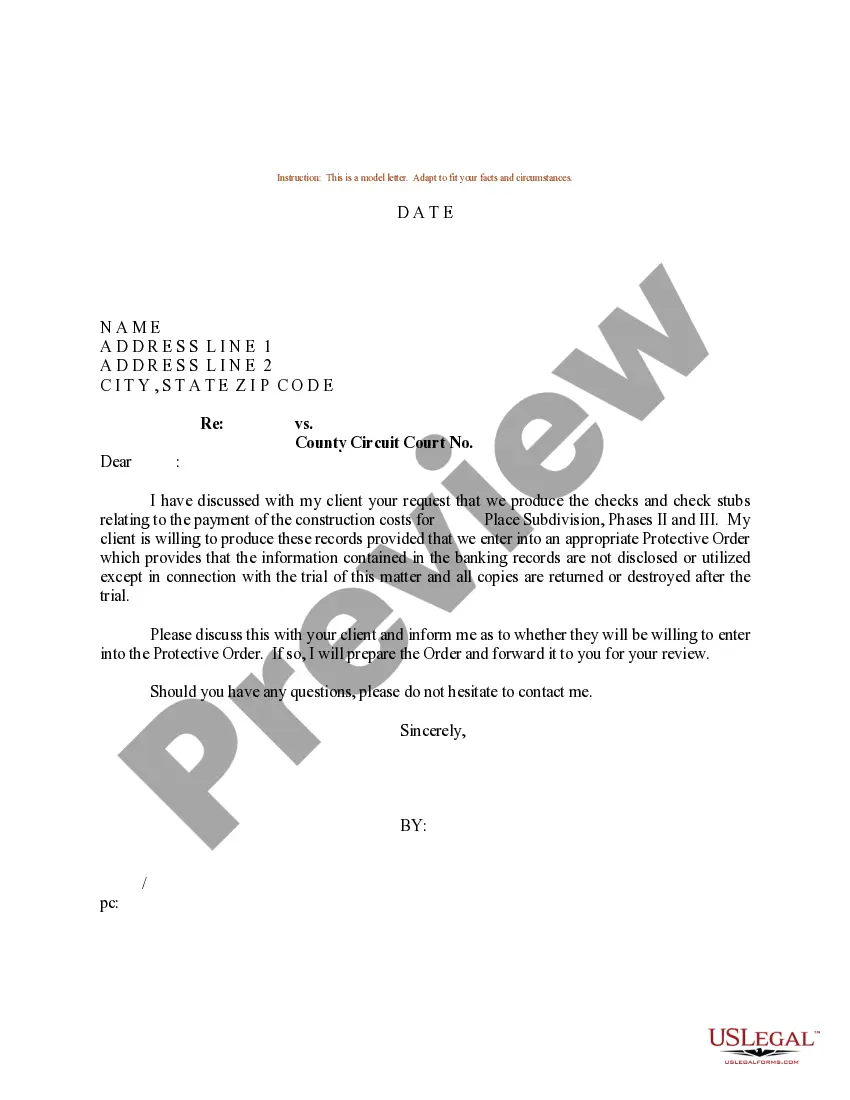
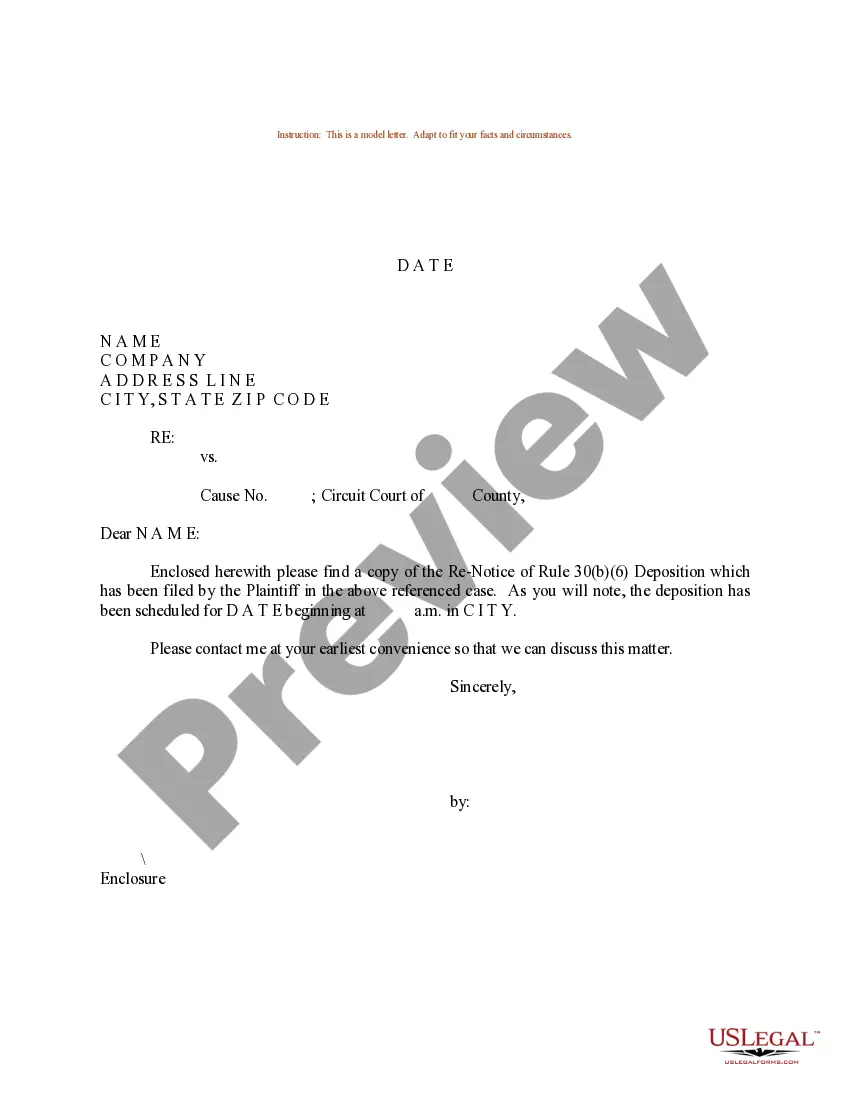
When to use this document
This form is appropriate when a plaintiff needs to challenge a deposition notice that demands the production of documents or evidence. It is commonly utilized when the request is deemed overly broad, burdensome, or irrelevant. Using this letter can help protect sensitive information or limit the scope of discovery in ongoing litigation.
Who this form is for
- Plaintiffs involved in litigation who have received notice of a deposition.
- Legal professionals, including attorneys, representing plaintiffs.
- Individuals seeking to protect their rights and interests during legal discovery.
Instructions for completing this form
- Enter the date at the top of the letter.
- Fill in your name and address, followed by the recipient's details.
- Specify the parties involved in the case in the subject line.
- Outline the specific objections to the deposition request.
- Provide legal justifications to support the protective order or motion to quash.
Does this form need to be notarized?
Notarization is generally not required for this form. However, certain states or situations might demand it. You can complete notarization online through US Legal Forms, powered by Notarize, using a verified video call available anytime.
Get your form ready online
Our built-in tools help you complete, sign, share, and store your documents in one place.
Make edits, fill in missing information, and update formatting in US Legal Forms—just like you would in MS Word.
Download a copy, print it, send it by email, or mail it via USPS—whatever works best for your next step.
Sign and collect signatures with our SignNow integration. Send to multiple recipients, set reminders, and more. Go Premium to unlock E-Sign.
If this form requires notarization, complete it online through a secure video call—no need to meet a notary in person or wait for an appointment.
We protect your documents and personal data by following strict security and privacy standards.

Make edits, fill in missing information, and update formatting in US Legal Forms—just like you would in MS Word.

Download a copy, print it, send it by email, or mail it via USPS—whatever works best for your next step.

Sign and collect signatures with our SignNow integration. Send to multiple recipients, set reminders, and more. Go Premium to unlock E-Sign.

If this form requires notarization, complete it online through a secure video call—no need to meet a notary in person or wait for an appointment.

We protect your documents and personal data by following strict security and privacy standards.
Common mistakes
- Failing to provide sufficient legal grounds for the objections.
- Not addressing the correct party in the letter.
- Omitting important case information, such as the case number.
Benefits of using this form online
- Convenience of immediate access to a legal template.
- Editability to customize the letter as per your specific requirements.
- Reliability of using a form drafted by licensed attorneys, ensuring legal compliance.
Legal use & context
- This form is intended for use in formal legal proceedings related to deposition notices.
- It is a tool for protecting sensitive information during the discovery phase.
- Failure to object timely may waive the right to challenge the deposition later.
Key takeaways
- The form is essential for protecting a plaintiff's interests in litigation.
- It serves as a formal communication of objections to a deposition notice.
- Using the form correctly can enhance legal strategy during dispute resolution.
Looking for another form?
Form popularity
FAQ
3. Any non-party who has been served with a business records subpoena may bring a motion to quash. Note, however, that some case law holds that a non-party may simply serve written objections and is not required to bring a motion to quash. The discovery rules do not discriminate against nonparty deponents.
A motion to quash, by itself, does not stop the deposition. You will have to get the hearing advanced to a date before the deposition date.
A lawyer may file a motion to quash if a mistake has been made on the part of a court, or if an attorney believes that the issuance of some court document like a subpoena was not done in a legal manner. For example, a party that receives improper service of process may file a motion to quash.
Providing objections suspends your obligation to comply with the subpoena until or unless a court orders compliance, or you reach an agreement with the party that served you with the subpoena. If you do not wish to comply with the subpoena, you may file a motion to quash it before the date set forth on the subpoena.
Subpoena has not been issued correctly according to the law (technical grounds); subpoena is an abuse of process or oppressive (general objections); and. requested documents cannot be disclosed because of special rules that apply to the evidence (privilege).
A motion to quash must be based on valid grounds.If the court grants the motion, it may quash the subpoena entirely, modify it, or order that you comply with it on specified conditions. If the court denies the motion, you will usually have to comply with it as written.
After the motion to quash is filed, the court will review the case and make its determination. For example, if the judge grants a motion to quash service, then the service on the defendant would be considered void. A motion to quash that is approved would also invalidate any applicable decisions from a lower court.
A motion to quash a subpoena duces tecum should be filed within ten (10) days after receiving the subpoena or before the time stated for compliance if that time is fewer than ten days.