Sample Letter for Motion to Quash
About this form
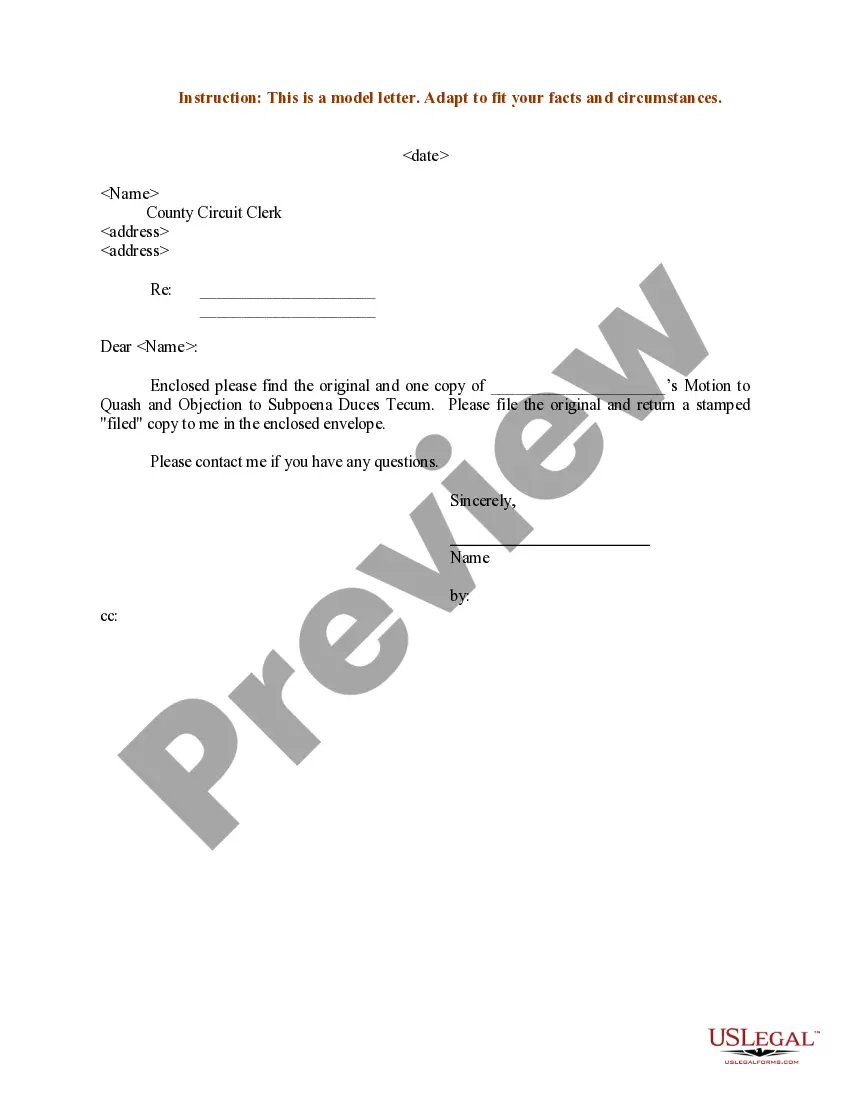
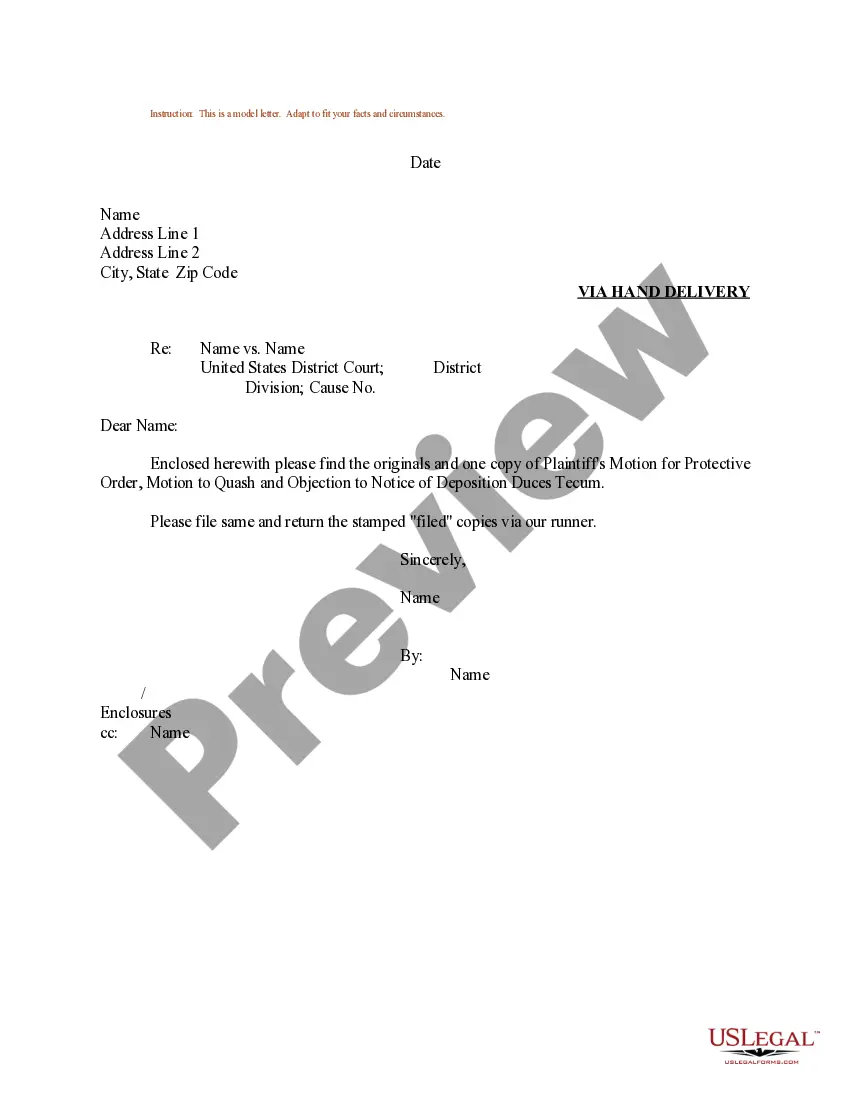
The sample letter for motion to quash is a template that allows an individual to formally object to a subpoena duces tecum. This form is specifically designed for the legal process of quashing a subpoena, which seeks to prevent the enforcement of a request for documents or evidence. Unlike generic response letters, this template is tailored to meet specific legal standards and can be adapted for various jurisdictions.
Key parts of this document
- Address and date line: Where you include your contact information and the date of the correspondence.
- Recipient's name: The name of the individual or entity to whom the letter is addressed.
- Motion to quash statement: A clear declaration of the motion being filed, referencing the subpoena duces tecum.
- Instructions for filing: Directions regarding the filing of the original document and the request for a stamped copy.
- Contact information: A section inviting the recipient to reach out with any questions.
Situations where this form applies
This form should be used when an individual or entity has received a subpoena duces tecum and wishes to contest its validity. Common scenarios include when the documents requested are overly broad, irrelevant to the case, or if compliance would cause undue burden. It is essential to respond promptly to avoid any legal penalties for non-compliance with the subpoena.
Intended users of this form
The sample letter for motion to quash is intended for:
- Individuals or entities who have received a subpoena and wish to challenge it.
- Attorneys representing clients in legal matters involving subpoenas.
- Litigants seeking to protect their rights or sensitive information.
How to prepare this document
- Fill in the date and your full contact information at the top of the letter.
- Enter the recipient's name and address as required.
- Clearly state the motion to quash, including details about the subpoena.
- Add specific instructions on filing and requests for a stamped copy.
- Sign the letter and provide your name at the bottom.
Does this document require notarization?
This form does not typically require notarization unless specified by local law. It is advisable to check jurisdiction-specific requirements before submission.
Get your form ready online
Our built-in tools help you complete, sign, share, and store your documents in one place.
Make edits, fill in missing information, and update formatting in US Legal Forms—just like you would in MS Word.
Download a copy, print it, send it by email, or mail it via USPS—whatever works best for your next step.
Sign and collect signatures with our SignNow integration. Send to multiple recipients, set reminders, and more. Go Premium to unlock E-Sign.
If this form requires notarization, complete it online through a secure video call—no need to meet a notary in person or wait for an appointment.
We protect your documents and personal data by following strict security and privacy standards.

Make edits, fill in missing information, and update formatting in US Legal Forms—just like you would in MS Word.

Download a copy, print it, send it by email, or mail it via USPS—whatever works best for your next step.

Sign and collect signatures with our SignNow integration. Send to multiple recipients, set reminders, and more. Go Premium to unlock E-Sign.

If this form requires notarization, complete it online through a secure video call—no need to meet a notary in person or wait for an appointment.

We protect your documents and personal data by following strict security and privacy standards.
Mistakes to watch out for
- Failing to address the letter to the correct recipient.
- Not including all necessary information about the subpoena.
- Missing deadlines for filing the motion to quash.
- Forgetting to sign the letter before submission.
Benefits of completing this form online
- Convenient access: Easily download and customize the form as needed.
- Editability: Adjust the template to fit your specific situation quickly.
- Reliability: Utilize a form drafted by licensed attorneys to ensure legal compliance.
Looking for another form?

Form popularity
FAQ
In order to file a motion to quash, you will need to draft the motion and file it in the case/court that appears on the document you were served with. Once filed, the motion to quash will stay the subpoena, until a judge makes a ruling on the motion or the subpoenaed party and the issuing party reach an agreement.
A lawyer may file a motion to quash if a mistake has been made on the part of a court, or if an attorney believes that the issuance of some court document like a subpoena was not done in a legal manner. For example, a party that receives improper service of process may file a motion to quash.
Typically, the losing party may appeal after the court has delivered its final judgment. In addition to appealing the final decision, the appellant can also appeal earlier rulings that were not definitive when they were issued.
Definition. To set aside; to void. As in "to quash a motion" or "quash evidence."
Where the judge has made a mistake in ruling on the motion to quash, you have the right to a mini-appeal on that narrow issue, called a Petition for Writ of Mandate. This can be filed within the time to respond.
The remedy against the denial of a motion to quash is for the movant accused to enter a plea, go to trial, and should the decision be adverse, reiterate on appeal from the final judgment and assign as error the denial of the motion to quash.
After the motion to quash is filed, the court will review the case and make its determination. For example, if the judge grants a motion to quash service, then the service on the defendant would be considered void. A motion to quash that is approved would also invalidate any applicable decisions from a lower court.
X FILED A MOTION TO QUASH ON THE FOLLOWING GROUNDS: THAT THE COURT LACKED JURISDICTION OVER THE PERSON OF THE ACCUSED AND THAT THE COMPLAINT CHARGED MORE THAN ONE OFFENSE. CAN THE COURT GRANT THE MOTION ON THE GROUND OF LACK OF JURISDICTION? on this ground.