Tennessee Parenting Plan - part 1
Description
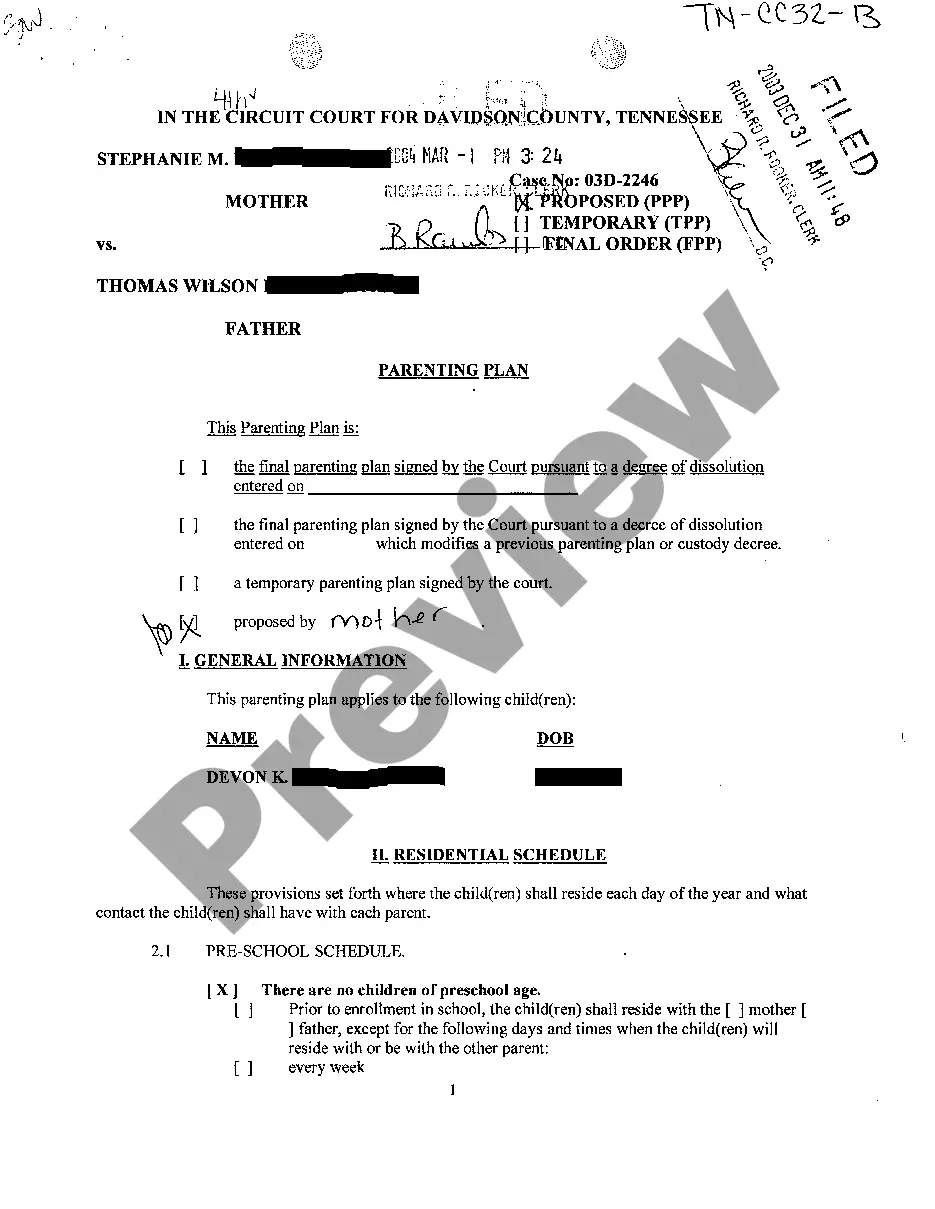
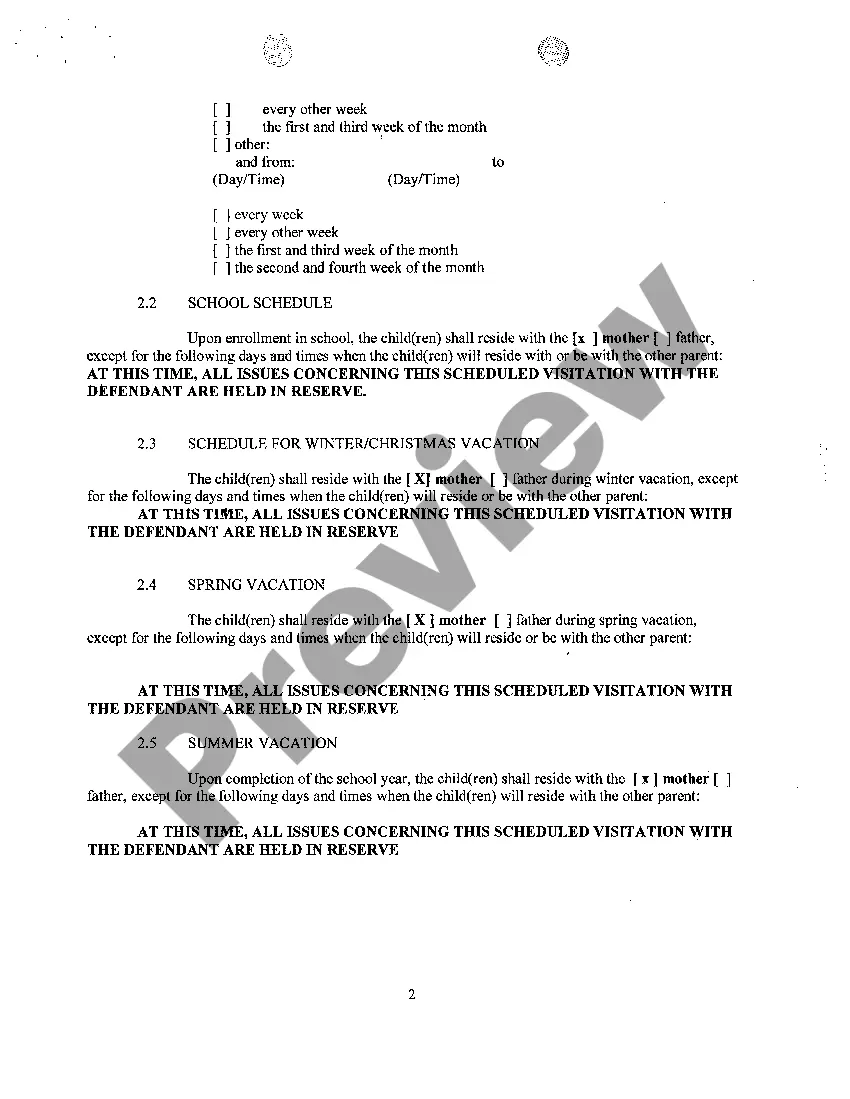
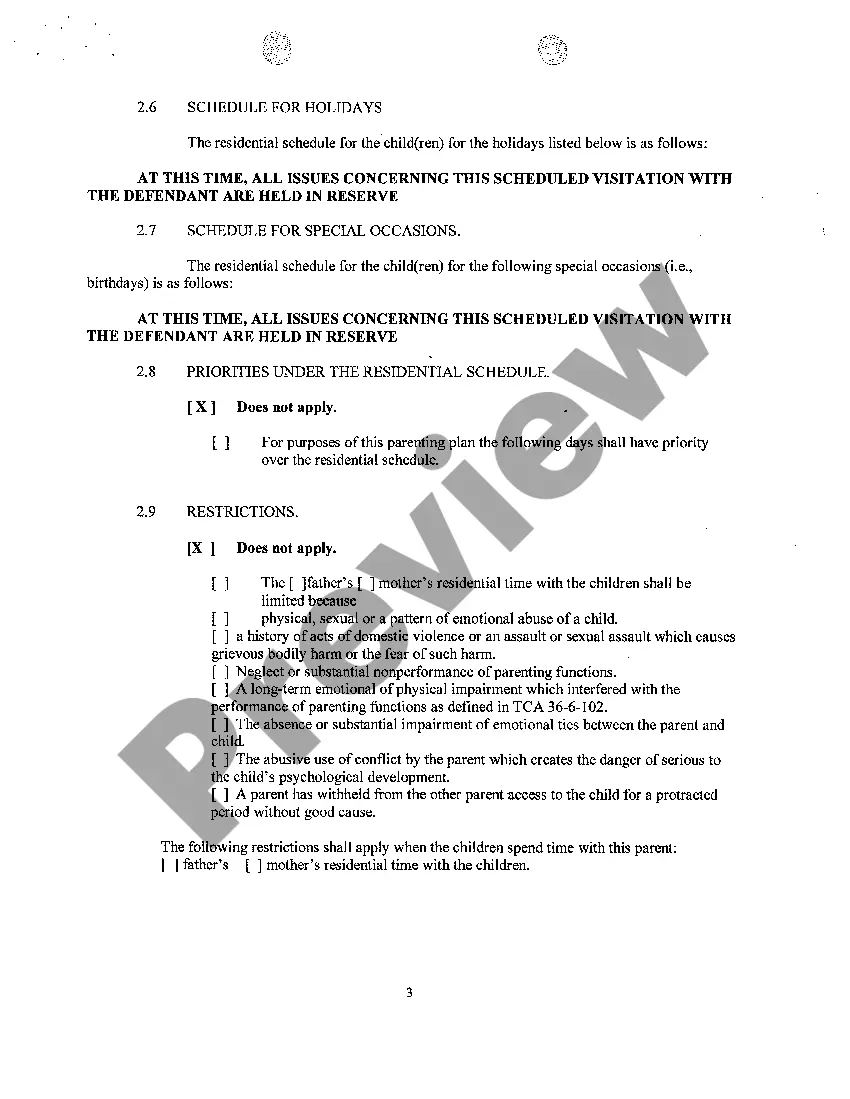
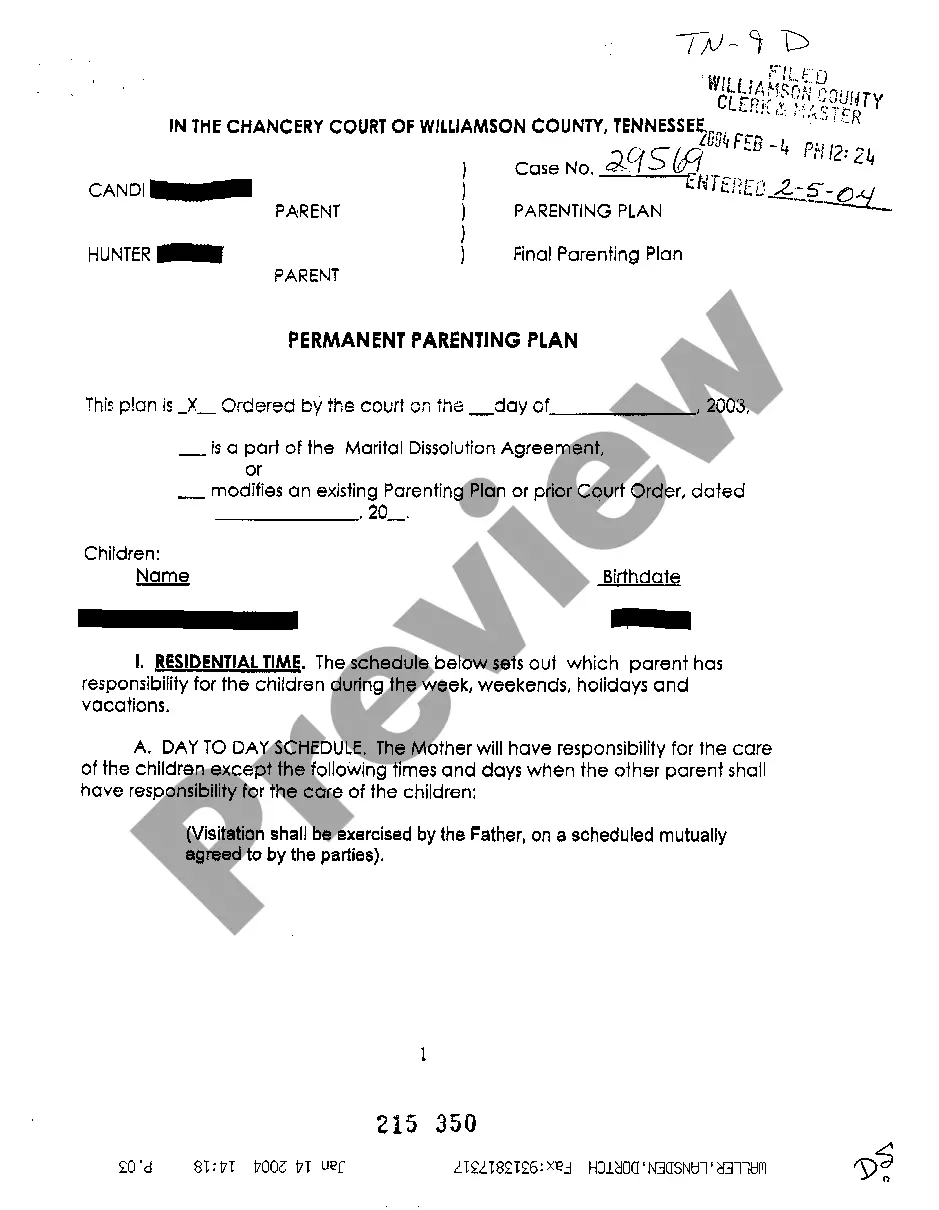
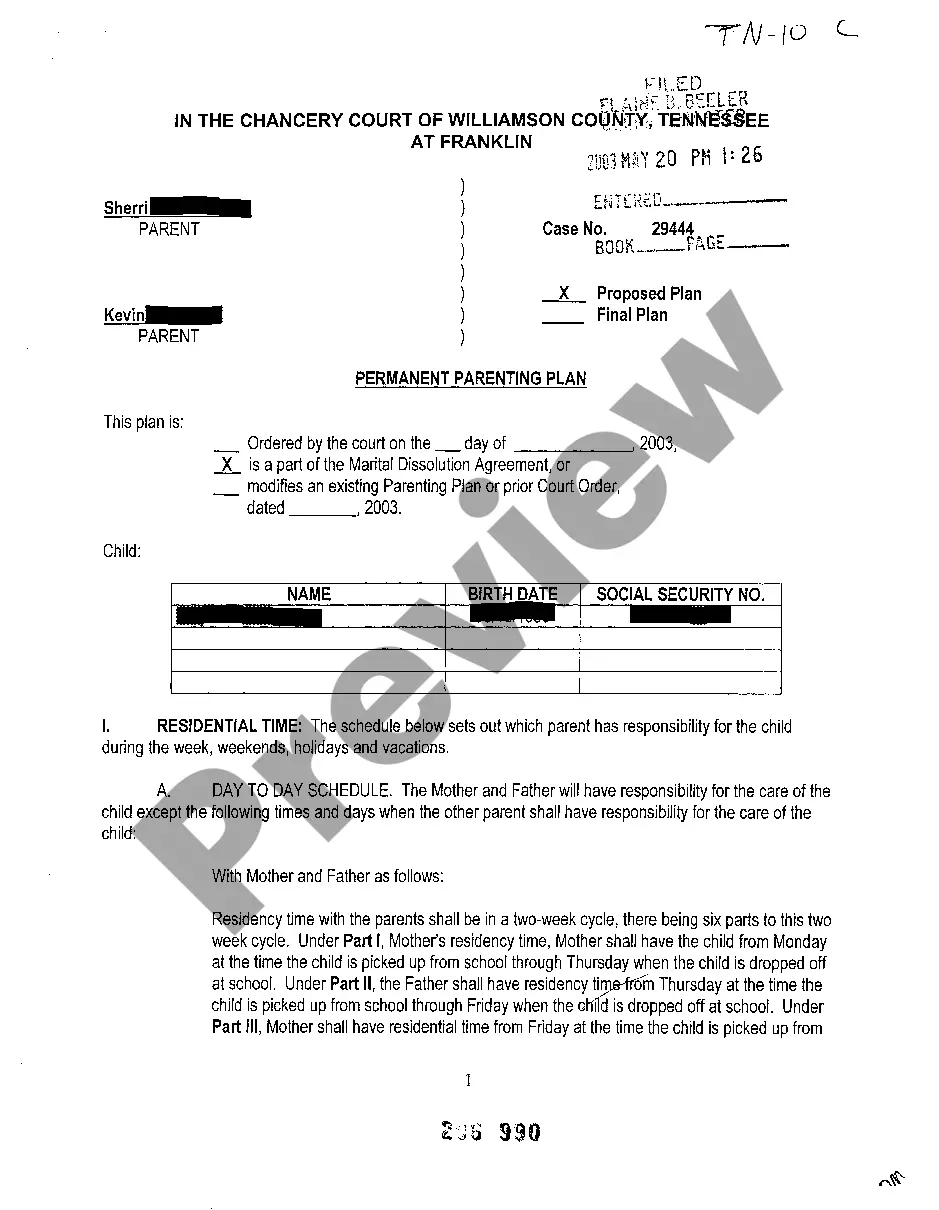
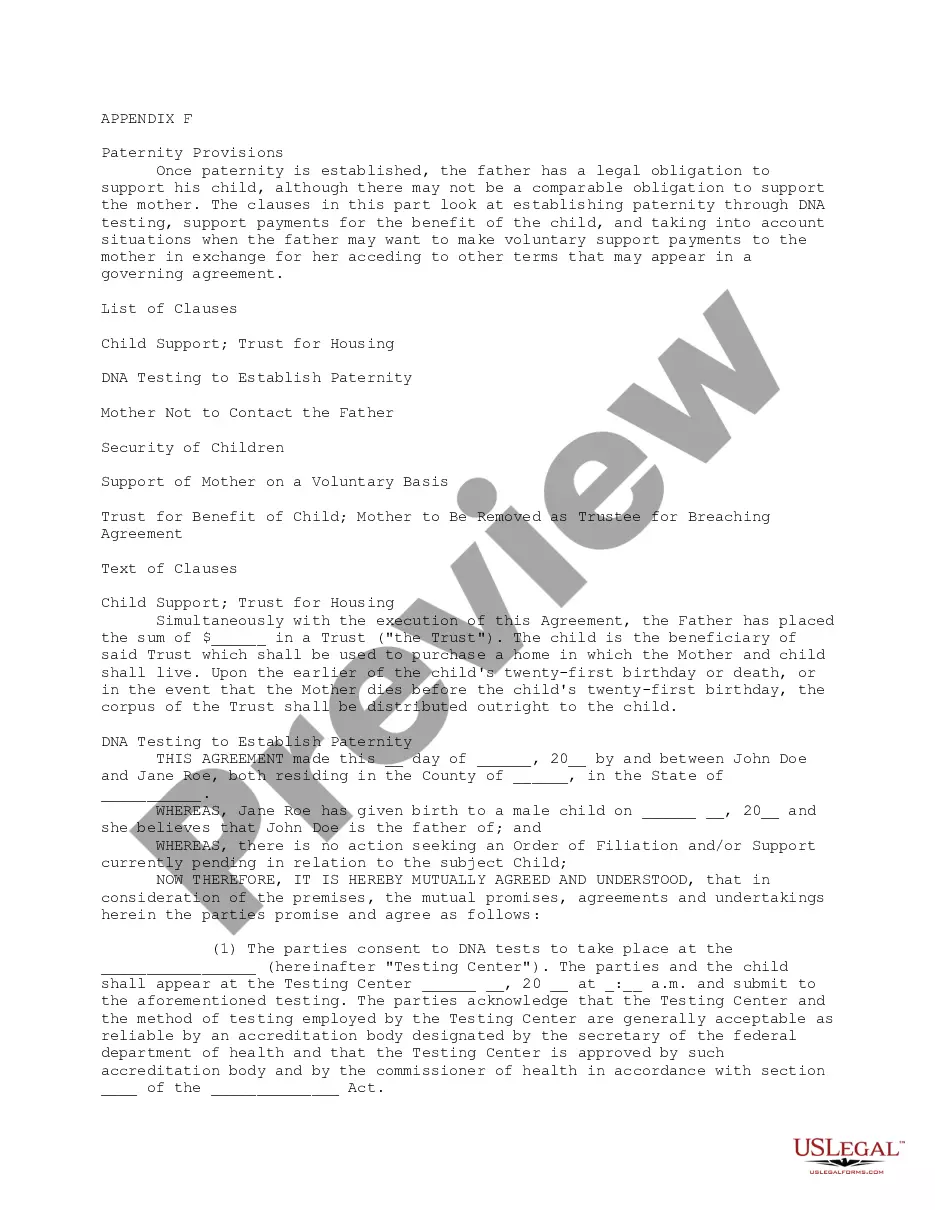


How to fill out Tennessee Parenting Plan - Part 1?
Get access to high quality Tennessee Parenting Plan - part 1 samples online with US Legal Forms. Prevent days of wasted time seeking the internet and lost money on forms that aren’t updated. US Legal Forms gives you a solution to exactly that. Get above 85,000 state-specific authorized and tax templates you can save and submit in clicks in the Forms library.
To find the sample, log in to your account and then click Download. The file is going to be saved in two places: on your device and in the My Forms folder.
For individuals who don’t have a subscription yet, have a look at our how-guide listed below to make getting started easier:
- Verify that the Tennessee Parenting Plan - part 1 you’re considering is appropriate for your state.
- Look at the form utilizing the Preview function and read its description.
- Check out the subscription page by clicking on Buy Now button.
- Select the subscription plan to keep on to sign up.
- Pay by card or PayPal to finish creating an account.
- Pick a favored format to save the document (.pdf or .docx).
Now you can open up the Tennessee Parenting Plan - part 1 sample and fill it out online or print it out and do it yourself. Think about giving the papers to your legal counsel to make sure all things are filled out correctly. If you make a mistake, print out and complete sample again (once you’ve registered an account all documents you download is reusable). Make your US Legal Forms account now and access much more templates.
Form popularity
FAQ
When can my child decide which parent to live with? Under Tennessee statute, the court shall consider the reasonable preference of the child over the age of 12. The court may choose to hear the preference of a child under the age of 12.
When can my child decide which parent to live with? Under Tennessee statute, the court shall consider the reasonable preference of the child over the age of 12. The court may choose to hear the preference of a child under the age of 12.
In Tennessee, an unmarried mother automatically has both physical and legal custody of the child until the father establishes paternity. However, once paternity is established, you have the same rights as any father does, under the law.
In cases where parents can't agree, a judge will decide visitation and custody based on the child's best interests.Both parents are bound by the terms of a custody order. If your child refuses to go to visits with the other parent, you could still be on the hook for failing to comply with a custody order.
Can a child choose not to visit a parent? The mere age of your child will not determine your family law matter. There have been cases before the Court where a 17 year old child's wishes were given limited weight because the basis for this child's decision was not balanced.
A parent may also be unfit if he or she shows a lack of responsibility for, concern about or interest in the child's welfare. In Tennessee, if the Court finds grounds and finds that it is in the best interest of the children, it will terminate parental rights, clearing one of the major hurdles to your adoption.
Tennessee Code on Parental Restrictions, Unfit Parents The parent has engaged in willful abandonment that continues for an extended period of time. Physical or sexual abuse or a pattern of emotional abuse of the parent, child, or of another person in the home has occurred.
Although a child can never decide issues relating to custody or visitation, Tennessee law requires a court to consider the wishes of a child over the age of 12 when making visitation related decisions.