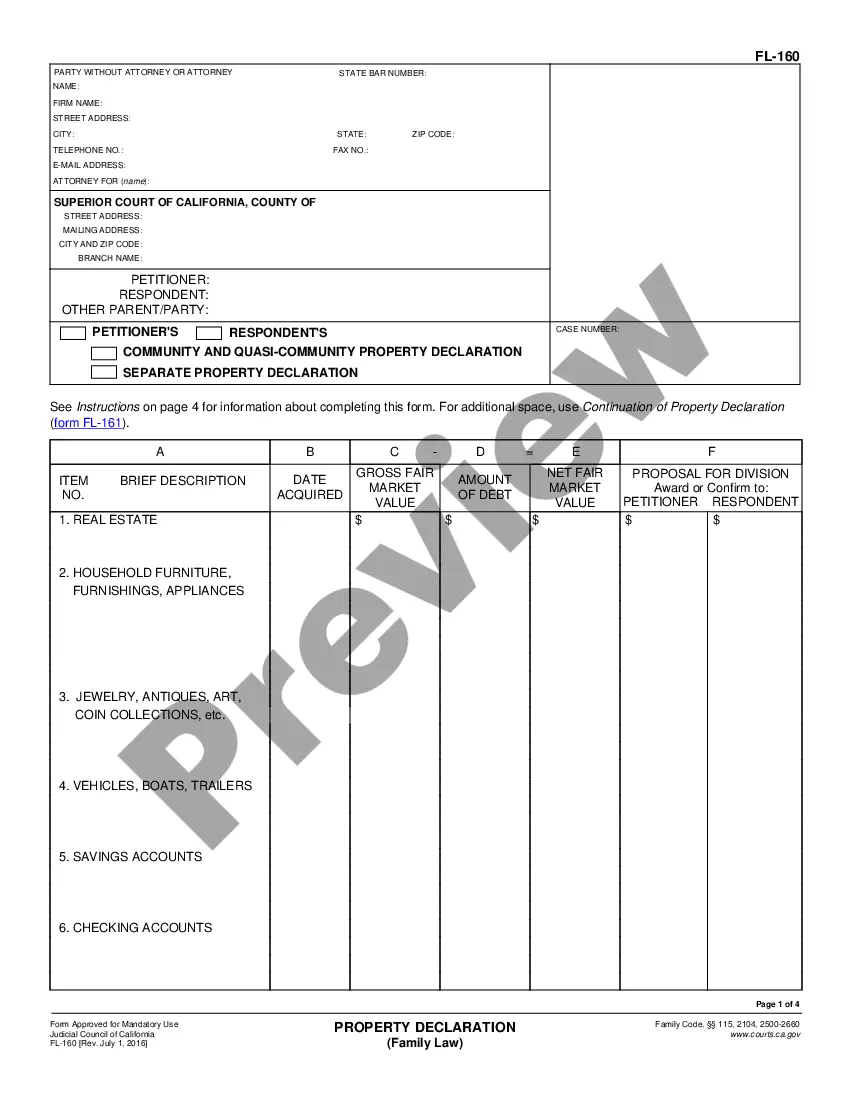
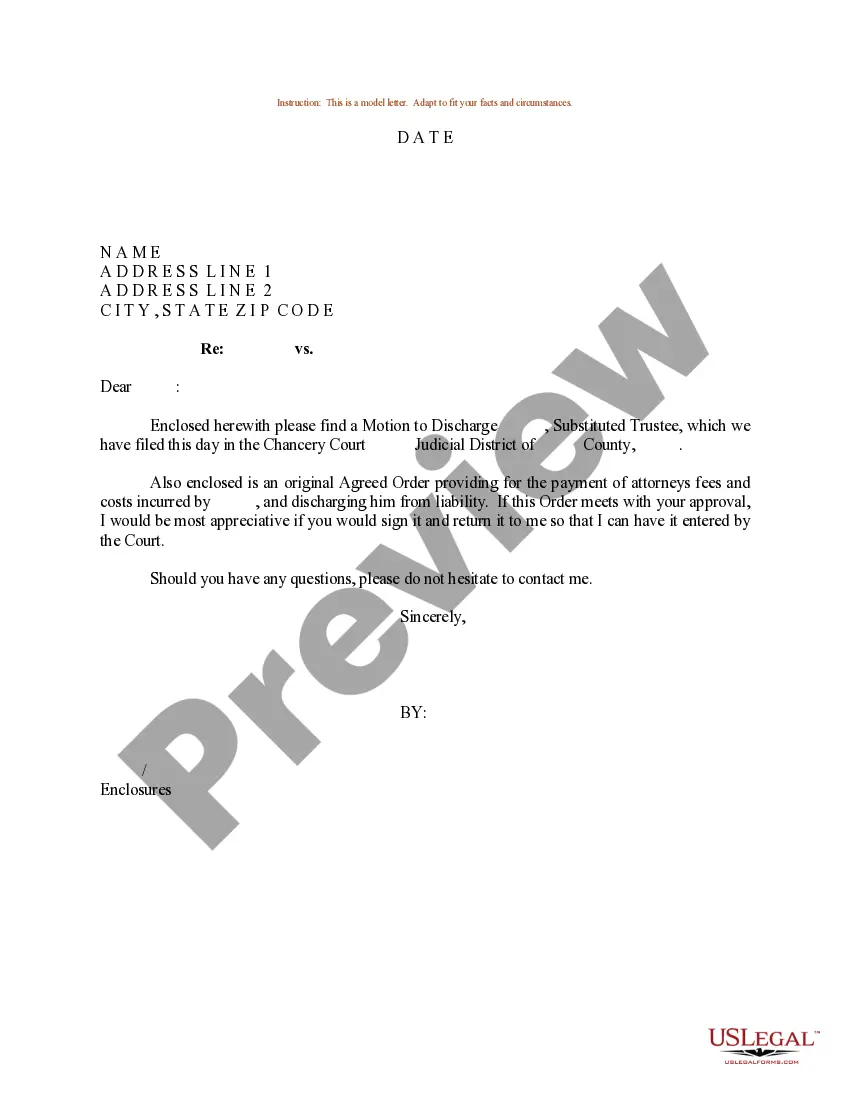
Sample Letter for Motion to Discharge
What is this form?
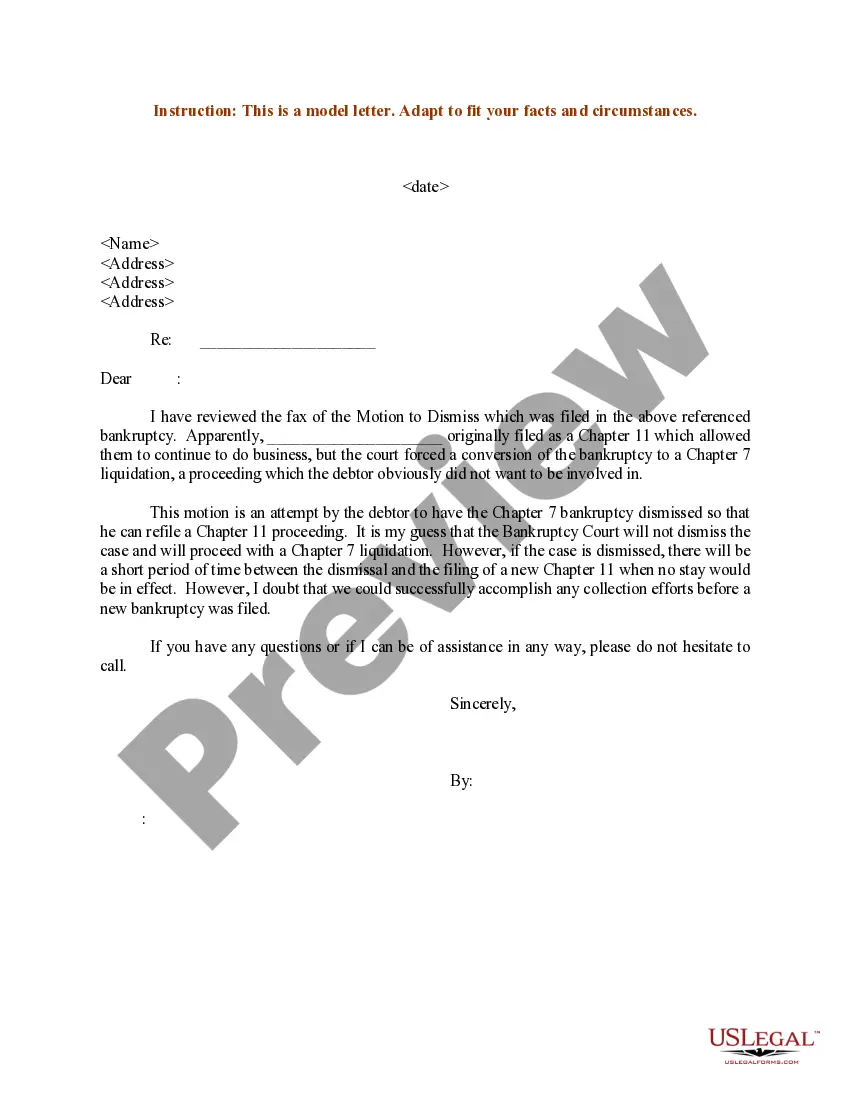
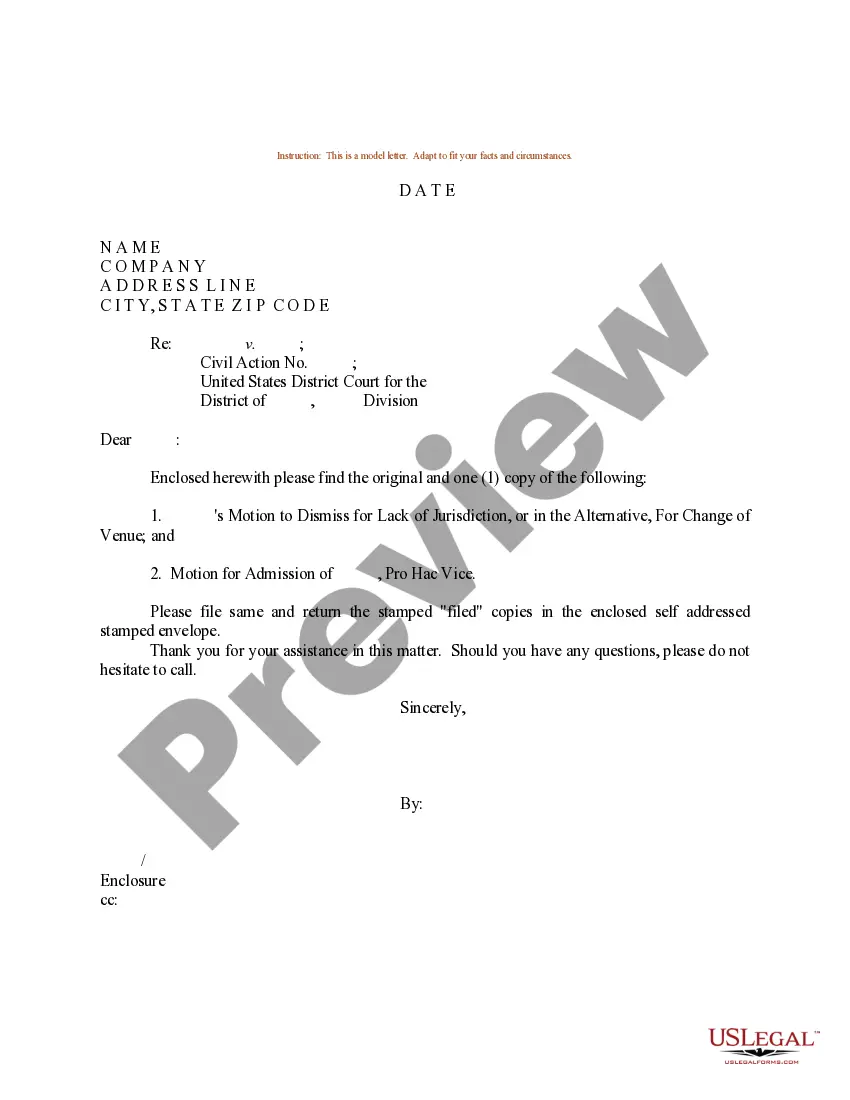
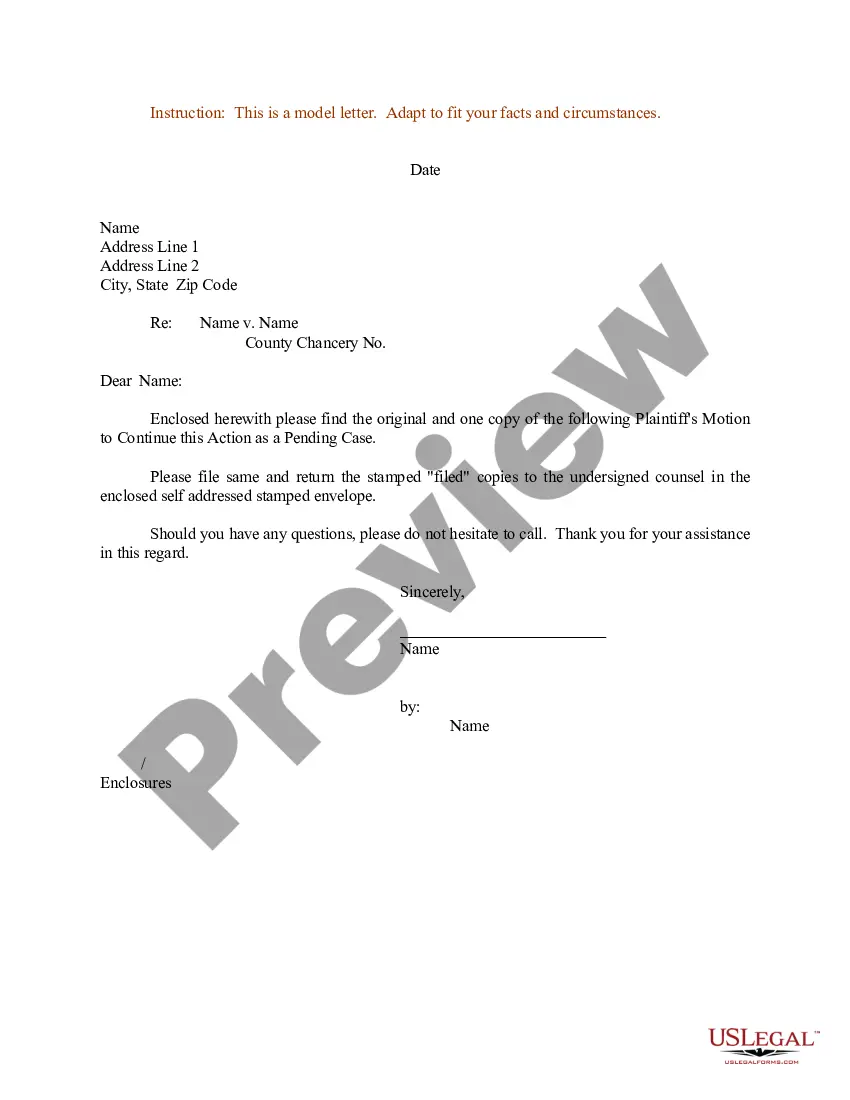
The Sample Letter for Motion to Discharge is a template designed to assist individuals in drafting a formal request to the court asking for a discharge from certain obligations or conditions. This letter serves specific legal purposes and is different from general letters or motions, as it adheres to established legal standards. This form is especially useful for those navigating court procedures without extensive legal experience.
What’s included in this form
- Date of the letter
- Sender's name and address
- Recipient's name and address (typically the court or relevant authority)
- Subject line indicating the purpose of the letter
- Body of the letter outlining the motion request
- Signature line for the sender
Situations where this form applies
This form is appropriate when an individual needs to formally request the court to discharge a specific obligation, whether it relates to a personal matter or a legal case. Situations can include requesting the discharge of bail, probation, or other court-imposed conditions. Using this letter can clarify the request and present it in a structured manner to the court.
Intended users of this form
- Individuals facing court obligations that they seek to discharge.
- Defendants who are compliant with court conditions and are requesting relief.
- Anyone with a clear legal basis for making a discharge request.
How to prepare this document
- Enter the current date at the top of the letter.
- Fill in your name and address, including city, state, and ZIP code.
- Provide the name and address of the recipient, usually the relevant court.
- Clearly state the purpose of the letter in the subject line.
- Compose the body of the letter, explaining the request and reasons for discharge.
- Sign the letter at the bottom to validate your request.
Does this form need to be notarized?
In most cases, this form does not require notarization. However, some jurisdictions or signing circumstances might. US Legal Forms offers online notarization powered by Notarize, accessible 24/7 for a quick, remote process.
Get your form ready online
Our built-in tools help you complete, sign, share, and store your documents in one place.
Make edits, fill in missing information, and update formatting in US Legal Forms—just like you would in MS Word.
Download a copy, print it, send it by email, or mail it via USPS—whatever works best for your next step.
Sign and collect signatures with our SignNow integration. Send to multiple recipients, set reminders, and more. Go Premium to unlock E-Sign.
If this form requires notarization, complete it online through a secure video call—no need to meet a notary in person or wait for an appointment.
We protect your documents and personal data by following strict security and privacy standards.

Make edits, fill in missing information, and update formatting in US Legal Forms—just like you would in MS Word.

Download a copy, print it, send it by email, or mail it via USPS—whatever works best for your next step.

Sign and collect signatures with our SignNow integration. Send to multiple recipients, set reminders, and more. Go Premium to unlock E-Sign.

If this form requires notarization, complete it online through a secure video call—no need to meet a notary in person or wait for an appointment.

We protect your documents and personal data by following strict security and privacy standards.
Typical mistakes to avoid
- Failing to include the date of the letter.
- Not addressing the letter to the correct authority or court.
- Overlooking important details in the body explaining the discharge request.
Benefits of using this form online
- Convenience of downloading the form immediately.
- Editable format allows for customization based on individual needs.
- Reliability of forms drafted by licensed attorneys, ensuring legal soundness.
Key takeaways
- The Sample Letter for Motion to Discharge helps request the dismissal of legal obligations effectively.
- It includes important components like the date, names, and specific rationale for the motion.
- Be cautious of common mistakes to ensure your request is clear and valid.
Looking for another form?
Form popularity
FAQ
Discharge petition. A device by which any member of the House, after a committee has had a bill for thirty days, may ask to have it brought to the floor. If a majority of the members agree, the bill will leave the committee. This was designed to prevent a committee from killing a bill by holding it for too long.
The House Rules Committee considers all bills reported from policy and fiscal committees and determines whether, and in what order, to schedule their consideration on the floor of the House. The Rules Committee also reviews, adopts and schedules consideration of floor resolutions.
The rules committee can be bypassed in three ways: 1) members can move rules to be suspended (requires 2/3 vote)2) a discharge petition can be filed 3) the House can use a Calendar Wednesday procedure.
Because the House wanted a manageable number of members, Congress twice set the size of the House at 435 voting members. The first law to do so was passed on August 8, 1911. President William H. Taft signed legislation increasing the membership of the House from 391 to 433.
In United States parliamentary procedure, a discharge petition is a means of bringing a bill out of committee and to the floor for consideration without a report from the committee by "discharging" the committee from further consideration of a bill or resolution.
The rules committee can be bypassed in three ways: 1) members can move rules to be suspended (requires 2/3 vote)2) a discharge petition can be filed 3) the House can use a Calendar Wednesday procedure.
What is the purpose of a discharge petition? A discharge petition is a petition signed by the members of the House of Representatives to bring a bill from committee to the floor for consideration. A discharge petition requires the signature of an absolute majority of the members which is signature of 218 members.
The president signs bills he supports, making them law. He vetoes a bill by returning it to the house in which it began, usually with a written message. Normally, bills he neither signs nor vetoes within 10 days become law without his signature.
Functions. The Rules Committee, for example, has significant power to determine which bills will be brought to the floor of the House for consideration and whether amendments will be allowed on a bill when it is debated by the entire House.