Outside Work - Strict Policy
What this document covers
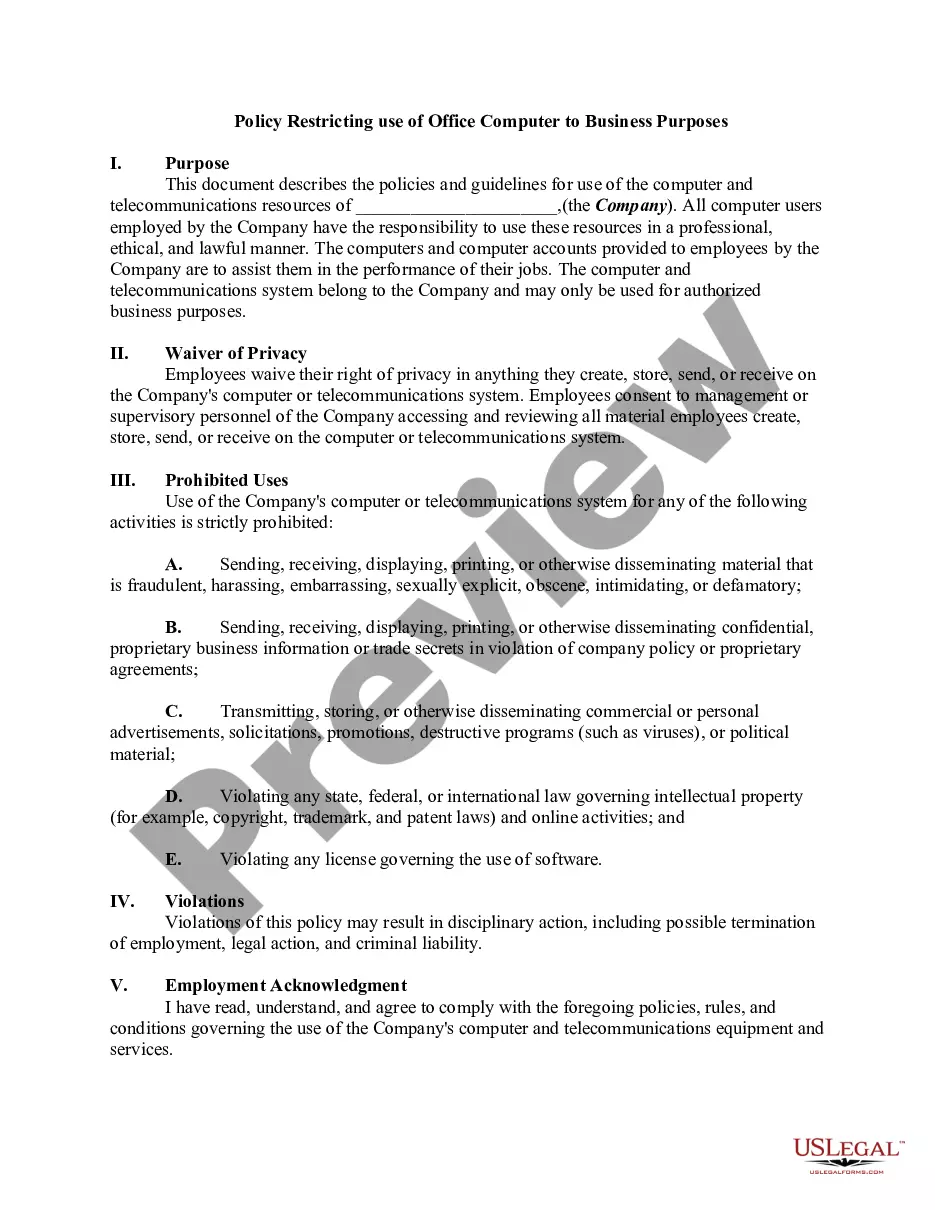
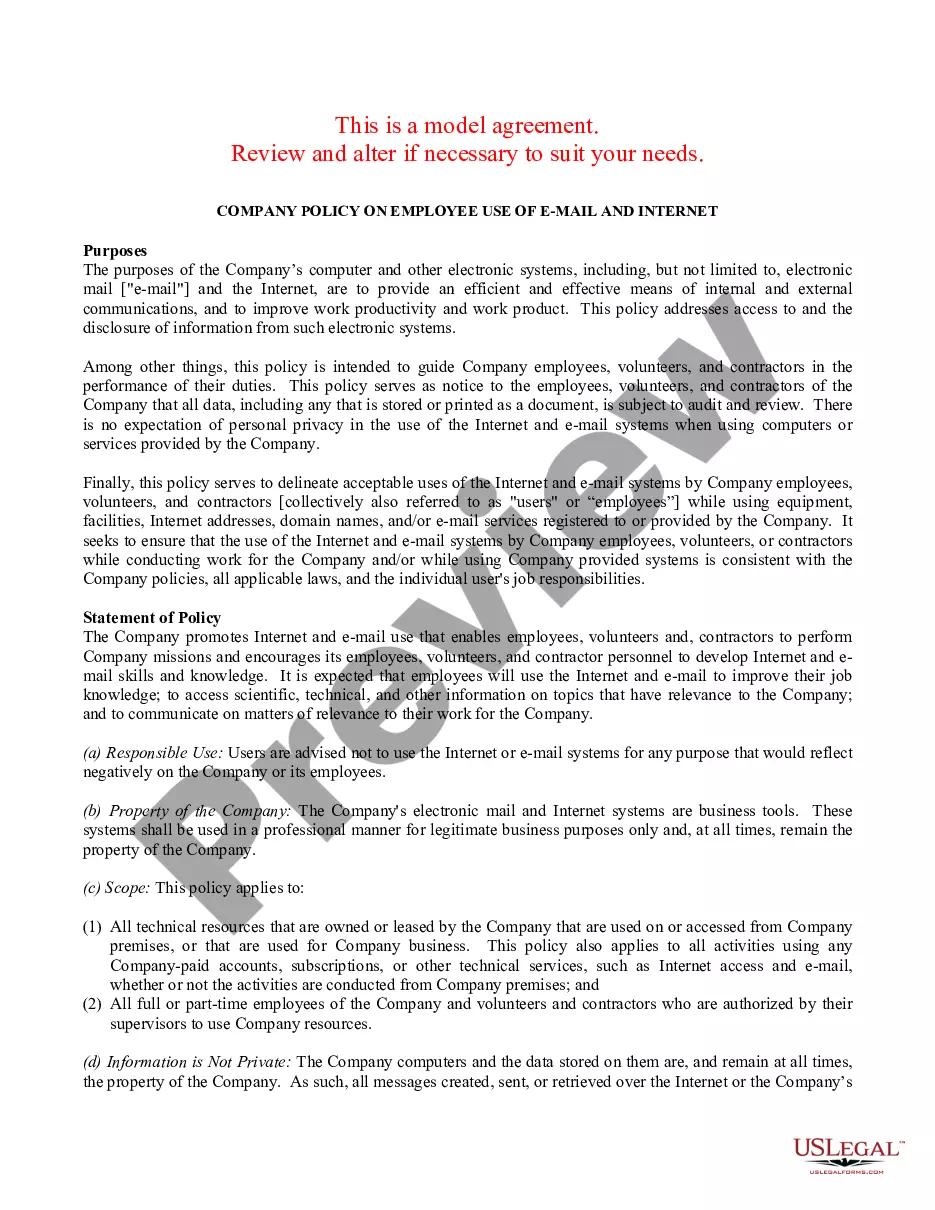
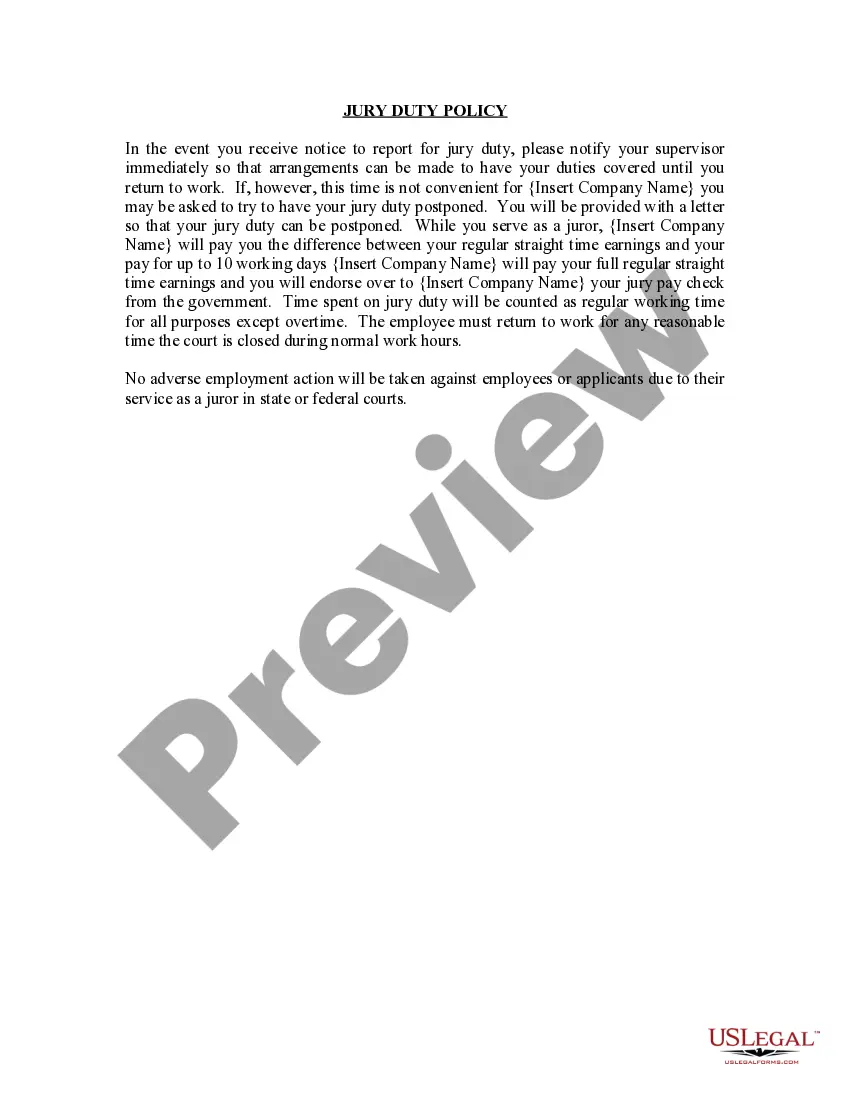
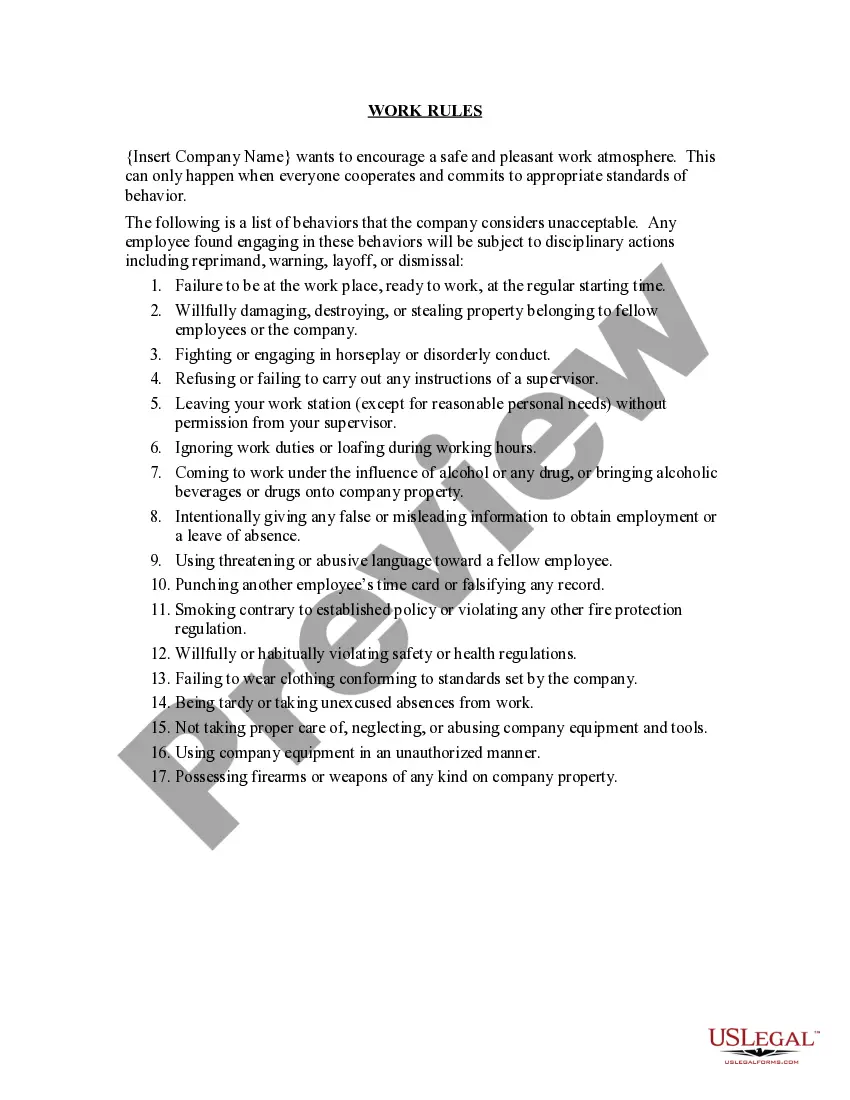
The Outside Work - Strict Policy form is a document that outlines a company's strict approach to moonlighting, which refers to employees taking up other employment while working for the company. This policy clearly states that without prior approval, employees cannot engage in outside work that may interfere with their job performance or compete with the company's interests. The form serves to prevent conflicts of interest and maintain employee commitment to their primary role within the organization.
What’s included in this form
- Definition of moonlighting and its implications for employees.
- Consequences for employees who violate the policy, including termination for working with competitors.
- Importance of discussing outside work with the Director of Human Resources.
- Clarification on what constitutes acceptable outside employment.
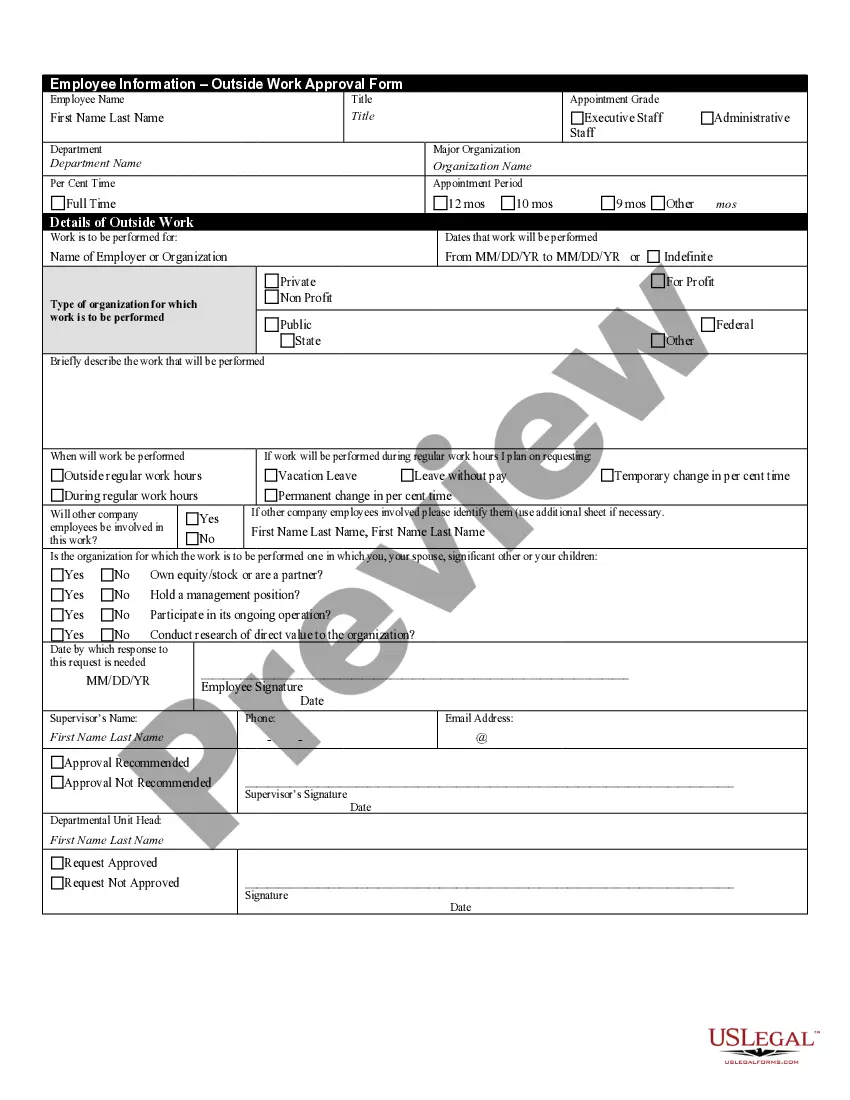
- Procedure for requesting approval for moonlighting.
When this form is needed
This form should be used by organizations that want to establish a clear policy regarding outside employment for their employees. It is particularly applicable in scenarios where the company wants to ensure that employee performance and loyalty are not compromised by interests outside the workplace. Situations may include new hires, annual employee reviews, or when an employee expresses interest in taking on additional work.
Who can use this document
- Employers who need a formal policy on outside work for their employees.
- Human Resources departments seeking to clarify expectations related to moonlighting.
- Managers who want to address potential conflicts of interest with employees.
- Organizations that operate in competitive industries requiring strict guidelines on external employment.
How to complete this form
- Specify the name of the company in the designated section.
- Identify the company official responsible for approving outside work requests.
- Clearly communicate the policy details to employees.
- Outline the procedure employees must follow to seek approval for moonlighting.
- Ensure all employees receive and acknowledge the policy to avoid violations.
Does this form need to be notarized?
This form usually doesn’t need to be notarized. However, local laws or specific transactions may require it. Our online notarization service, powered by Notarize, lets you complete it remotely through a secure video session, available 24/7.
Get your form ready online
Our built-in tools help you complete, sign, share, and store your documents in one place.
Make edits, fill in missing information, and update formatting in US Legal Forms—just like you would in MS Word.
Download a copy, print it, send it by email, or mail it via USPS—whatever works best for your next step.
Sign and collect signatures with our SignNow integration. Send to multiple recipients, set reminders, and more. Go Premium to unlock E-Sign.
If this form requires notarization, complete it online through a secure video call—no need to meet a notary in person or wait for an appointment.
We protect your documents and personal data by following strict security and privacy standards.

Make edits, fill in missing information, and update formatting in US Legal Forms—just like you would in MS Word.

Download a copy, print it, send it by email, or mail it via USPS—whatever works best for your next step.

Sign and collect signatures with our SignNow integration. Send to multiple recipients, set reminders, and more. Go Premium to unlock E-Sign.

If this form requires notarization, complete it online through a secure video call—no need to meet a notary in person or wait for an appointment.

We protect your documents and personal data by following strict security and privacy standards.
Typical mistakes to avoid
- Failing to specify the consequences of violating the policy.
- Not clearly identifying the person responsible for approving requests.
- Neglecting to inform all employees about the policy changes.
Benefits of using this form online
- Convenient access for downloading and printing.
- Editable templates allow customization to fit company needs.
- Quick updates to policies as regulations change.
Main things to remember
- The Outside Work - Strict Policy is essential for managing employee commitments.
- Approval from HR is mandatory before taking on outside jobs.
- The form helps prevent conflicts of interest and ensures focus on company responsibilities.
Looking for another form?



Form popularity
FAQ
Legality of fights that involve an employee that is not currently working is usually not an issue if the employer suspends him or her through valid and reasonable situations.
If you are an at-will employee, you could be terminated based on what you do outside of work.However, any employee who is considered at-will that is, he or she is not in a union and does not have a contract can be terminated for any non-illegal reason. This often includes what an employee does outside of work.
If your employer can prove that drugs or alcohol have had a detrimental impact on your ability to do your job, you may be dismissed. They must have a good reason to justify dismissal, related to your conduct or capability.
When companies fire someone, it can be for a number of reasons. For example, poor work performance, unethical conduct, or breach of contract.
Could I be sacked for being on drugs or under the influence of alcohol while at work? If your employer can prove that drugs or alcohol have had a detrimental impact on your ability to do your job, you may be dismissed. They must have a good reason to justify dismissal, related to your conduct or capability.
In almost all cases, an employer can legally fire an employee for inappropriate behavior during personal time. The First Amendment doesn't apply to work and employers have wide latitude to terminate people for things they say and do.
Can your employer keep track of what you do when you're not at work? Today, employers have the technological means, and occasionally the inclination, to find out what workers are doing on their own time. However, their right to monitor what you do off the joband make decisions based on that conductis limited.
An at-will employee can be fired at any time, as long as the reason isn't illegal.Depending on the circumstances, an off-duty conduct law might limit your employer's right to fire you for moonlighting, unless it conflicts with or affects your work. However, many states do not have broad off-duty conduct laws.