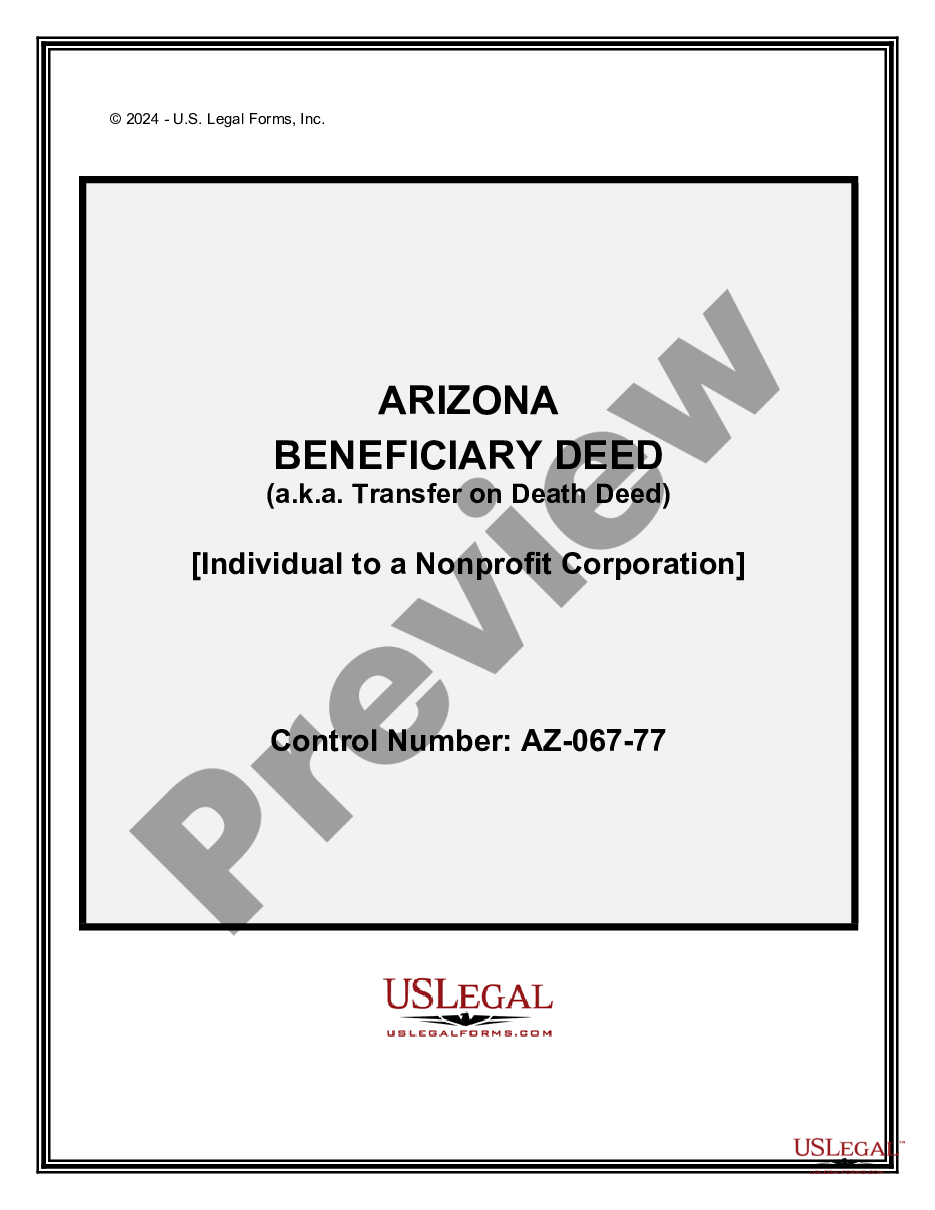
Arizona Beneficiary or Transfer on Death Deed from an Individual Owner to a Nonprofit Corporation as Beneficiary
Overview of this form
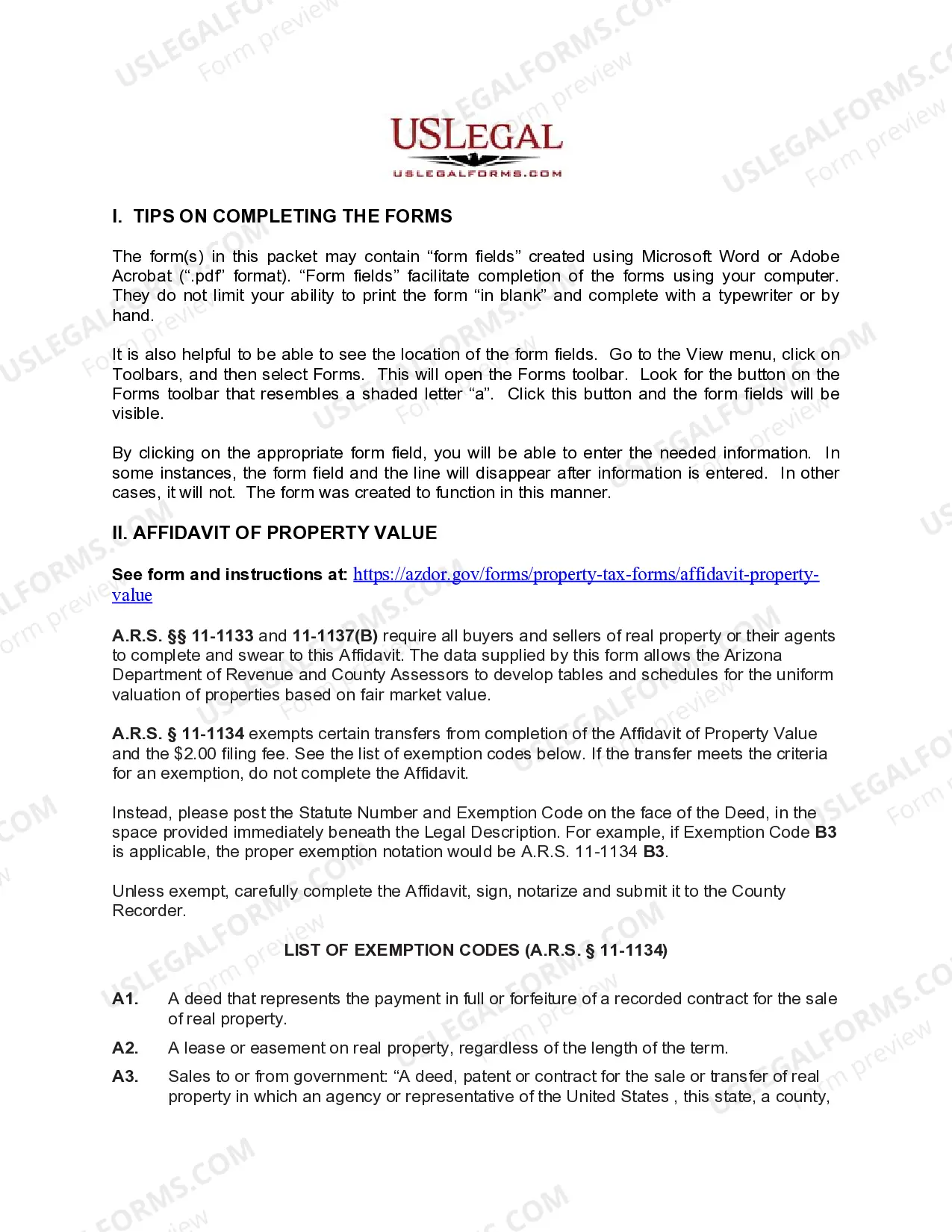
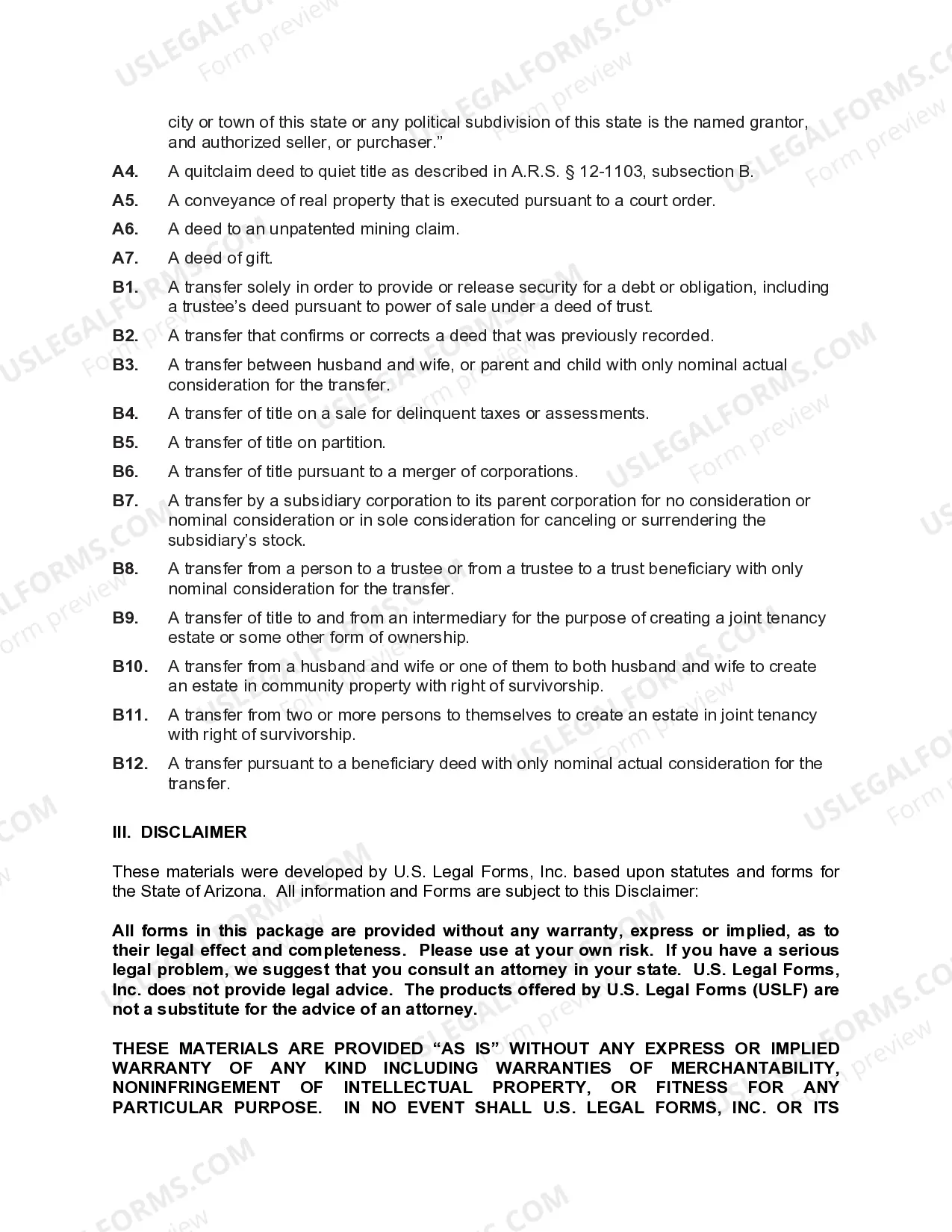
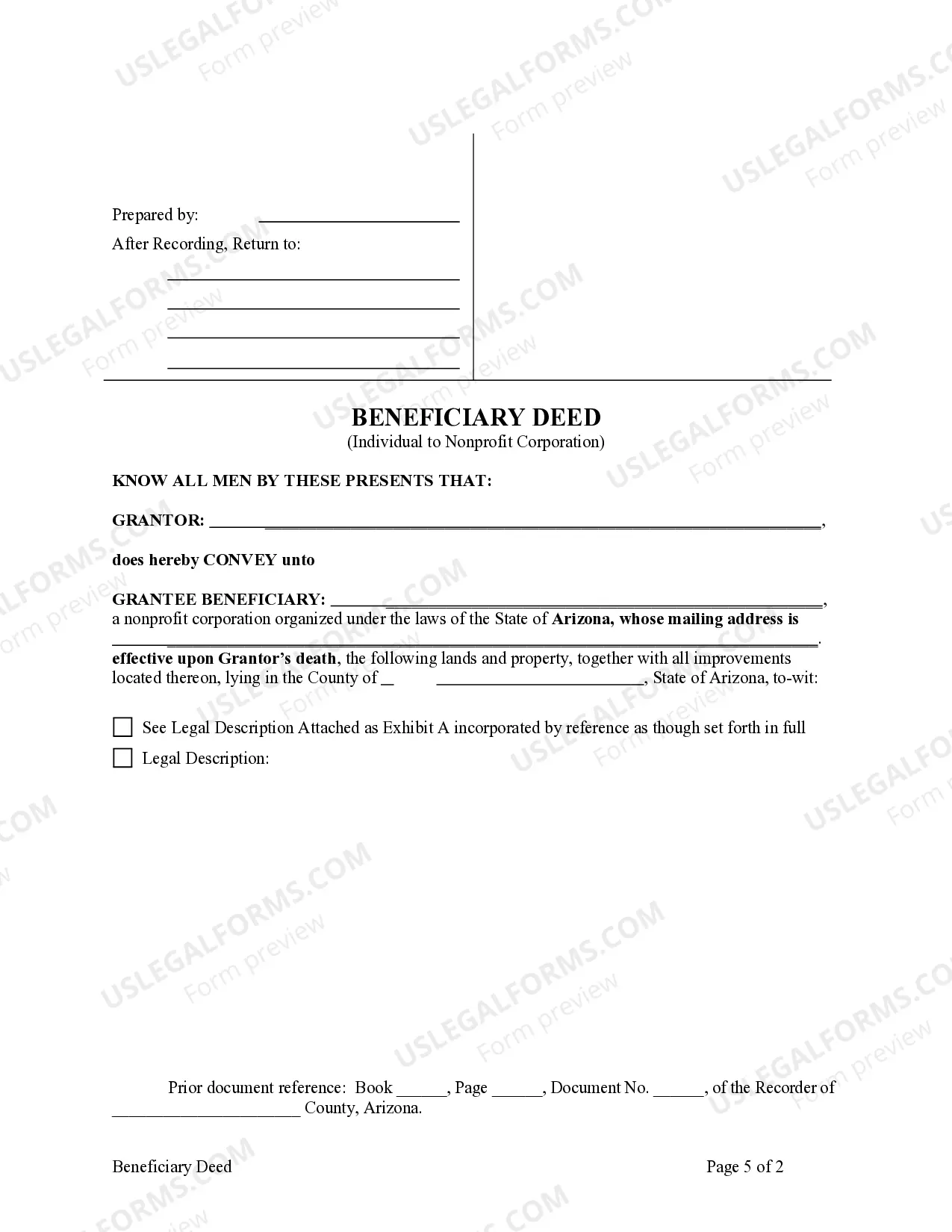
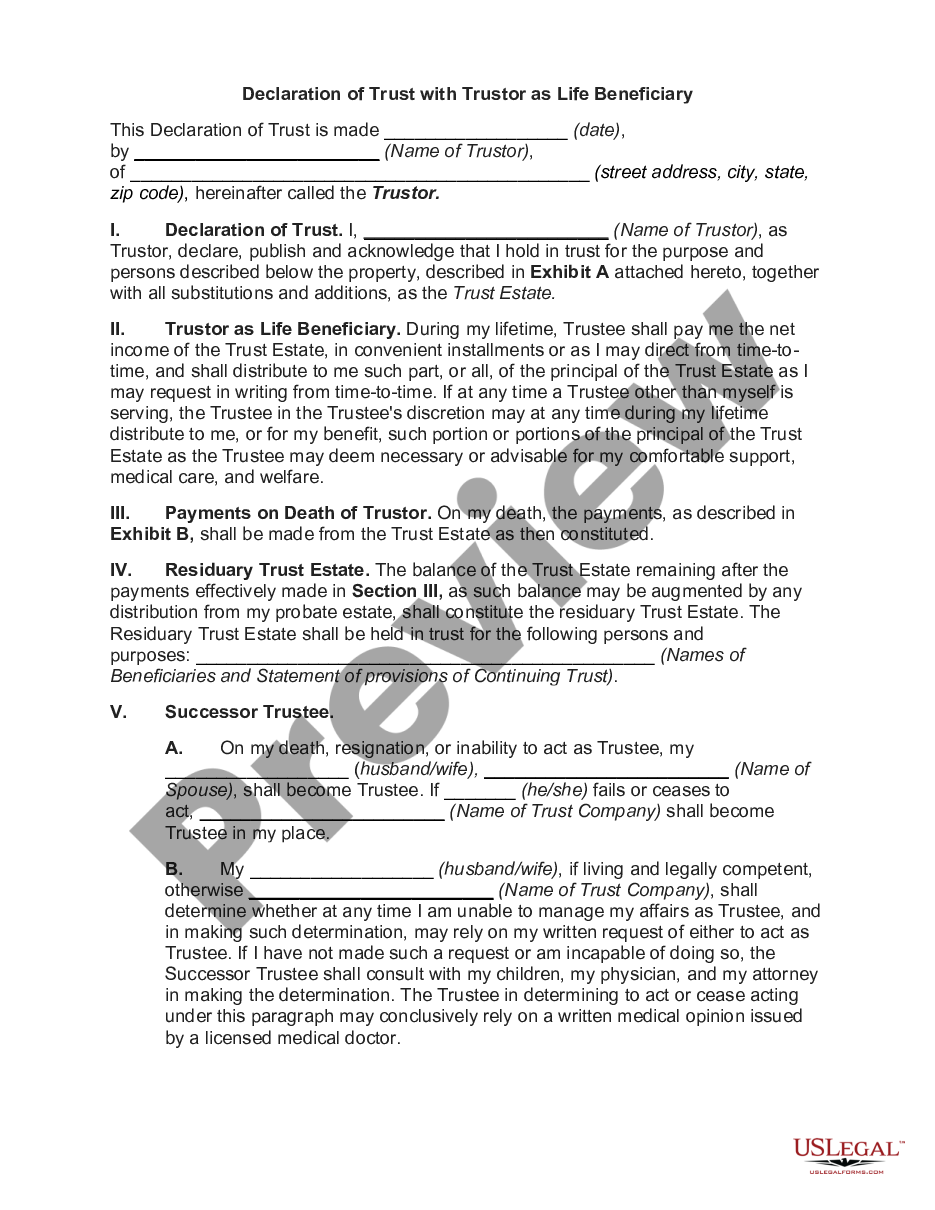
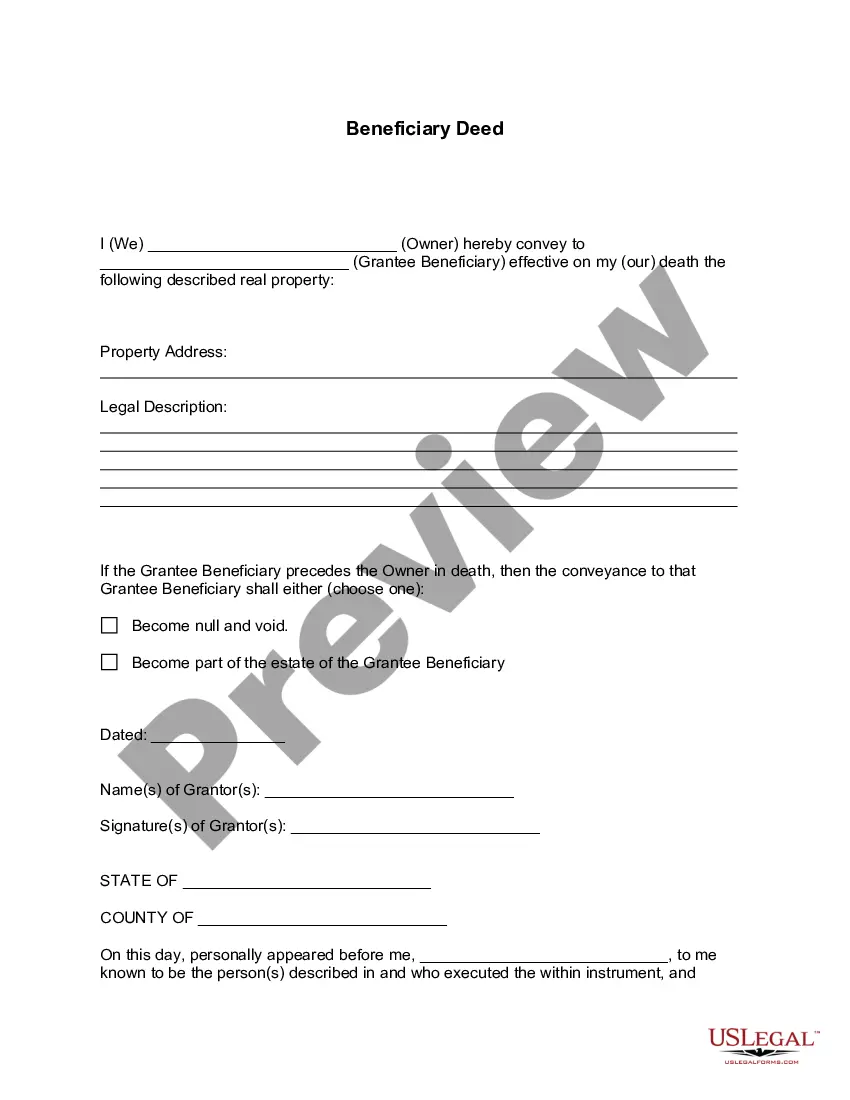
This form is a Beneficiary or Transfer on Death Deed that allows an individual owner (the Grantor) to designate a nonprofit corporation as the beneficiary. This deed facilitates the transfer of property upon the Grantor's death without going through probate. It is revocable while the Grantor is alive and becomes effective only after their passing. This distinctive feature sets it apart from traditional deeds, as it solely activates upon the Grantor's death.
Key components of this form
- Grantor: The individual transferring property.
- Grantee/Beneficiary: The nonprofit corporation receiving the property.
- Revocability clause: Allows the Grantor to revoke the deed at any time before dying.
- Property description: Specifies the property being transferred.
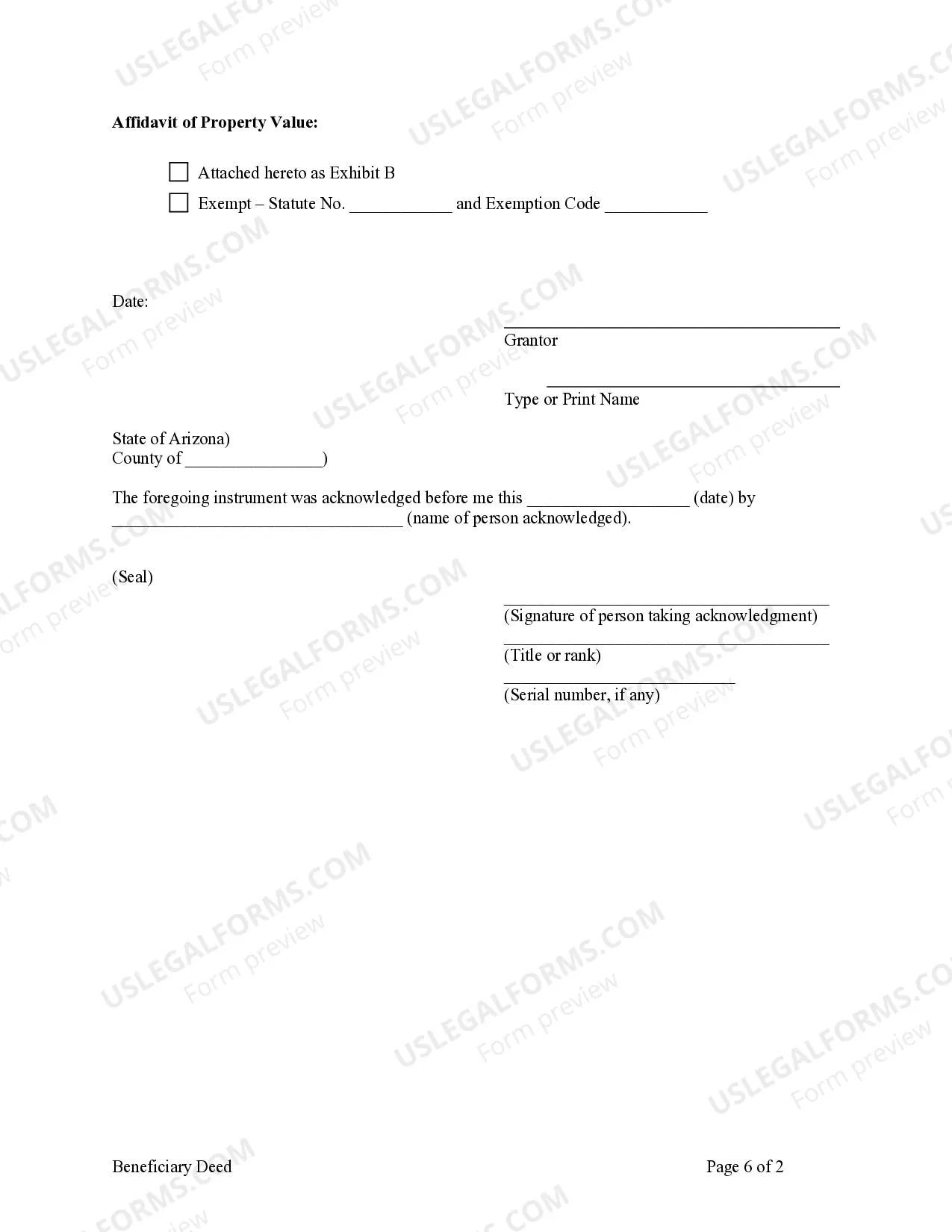
- Signatures: Required from the Grantor for validation.
- Recording instructions: Indicates that the deed must be recorded before the Grantor's death.





When this form is needed
This form is useful when an individual wishes to transfer property directly to a nonprofit corporation after their death. It is particularly relevant for those who want to support charitable organizations with their estate while simplifying the transfer process, eliminating the need for probate. Examples might include making a property donation to a local charity or foundation.
Who needs this form
- Individuals who own property and wish to pass it to a nonprofit after death.
- People looking for a straightforward way to support a charity through their estate.
- Homeowners seeking to avoid the probate process for their estate.
- Anyone wanting flexibility in managing their property until death.
Steps to complete this form
- Identify the Grantor and enter their full name and address.
- Specify the nonprofit corporation as the Grantee/Beneficiary, providing their legal name and address.
- Clearly describe the property being transferred.
- Include the revocability clause(s) to confirm the Grantor's right to change or revoke the deed during their lifetime.
- Have the Grantor sign and date the document in the presence of a witness if required.
- Record the completed deed with the appropriate county office prior to the Grantor's death.
Notarization requirements for this form
This form does not typically require notarization unless specified by local law. It is advisable to check state-specific regulations regarding notarization for legal validity.
Get your form ready online
Our built-in tools help you complete, sign, share, and store your documents in one place.
Make edits, fill in missing information, and update formatting in US Legal Forms—just like you would in MS Word.
Download a copy, print it, send it by email, or mail it via USPS—whatever works best for your next step.
Sign and collect signatures with our SignNow integration. Send to multiple recipients, set reminders, and more. Go Premium to unlock E-Sign.
If this form requires notarization, complete it online through a secure video call—no need to meet a notary in person or wait for an appointment.
We protect your documents and personal data by following strict security and privacy standards.

Make edits, fill in missing information, and update formatting in US Legal Forms—just like you would in MS Word.

Download a copy, print it, send it by email, or mail it via USPS—whatever works best for your next step.

Sign and collect signatures with our SignNow integration. Send to multiple recipients, set reminders, and more. Go Premium to unlock E-Sign.

If this form requires notarization, complete it online through a secure video call—no need to meet a notary in person or wait for an appointment.

We protect your documents and personal data by following strict security and privacy standards.
Typical mistakes to avoid
- Failing to record the deed before the Grantor's death.
- Not including a complete description of the property.
- Inaccurate or incomplete beneficiary information.
- Omitting the Grantorâs signature.
- Neglecting to check state-specific requirements related to nonprofits.
Advantages of online completion
- Convenience of completing the document at home without needing an attorney.
- Immediate access to downloadable formats for easy customization.
- Guided instructions ensure correct form completion.
- Ability to revise and save forms for later use.
What to keep in mind
- This form allows for a seamless transfer of property to a nonprofit organization after the Grantor's death.
- The Grantor retains control during their lifetime and can revoke the deed at any time.
- Proper execution and recording of the deed are crucial for it to be legally valid.
Looking for another form?


Form popularity
FAQ
To transfer a property deed from a deceased relative in Arizona, start by checking if a Transfer on Death Deed exists. If it does, file the appropriate documentation with the local recorder’s office to officially change the title to the beneficiary. This method aligns with the Arizona Beneficiary or Transfer on Death Deed from an Individual Owner to a Nonprofit Corporation as Beneficiary regulations. If you need specific forms or instructions, uslegalforms provides comprehensive tools to assist you through this process.
To transfer a title from a deceased person in Arizona, you generally need to determine if a Transfer on Death Deed was executed. If there is a deed naming a beneficiary, you must complete and file a Notice of Beneficiary form with the county recorder's office. This process ensures that the Arizona Beneficiary or Transfer on Death Deed from an Individual Owner to a Nonprofit Corporation as Beneficiary functions correctly. For further guidance, consider using uslegalforms, which offers resources tailored for this type of title transfer.
The best way to transfer property after death is through an Arizona Beneficiary or Transfer on Death Deed from an Individual Owner to a Nonprofit Corporation as Beneficiary. This method allows for an efficient transfer without going through probate. By naming a nonprofit corporation as the beneficiary, you ensure that the property goes directly to your chosen organization, streamlining the entire process.
To transfer a property deed from a deceased relative in Arizona, you need to obtain the death certificate and the existing deed. You must complete an Arizona Beneficiary or Transfer on Death Deed from an Individual Owner to a Nonprofit Corporation as Beneficiary if it was not already executed. If needed, legal assistance can smooth the process, especially when navigating court proceedings for property transfer.
To transfer a property deed in Arizona, you must prepare a new deed that reflects the intended transfer and then record it with the county recorder's office. If you are considering using an Arizona Beneficiary or Transfer on Death Deed from an Individual Owner to a Nonprofit Corporation as Beneficiary, this method allows for a smooth transition without court involvement. Ensure all parties involved are properly informed and document any necessary approvals. Utilizing platforms like uslegalforms can simplify creating and filing the required documents.
Yes, Arizona does allow a transfer on death deed, enabling property owners to designate beneficiaries who will inherit the property upon their death. By using an Arizona Beneficiary or Transfer on Death Deed from an Individual Owner to a Nonprofit Corporation as Beneficiary, you can bypass the probate process entirely. This deed is a powerful tool for estate planning, providing peace of mind that your property will go to your chosen nonprofit organization efficiently and effectively.
After the death of a spouse in Arizona, you may need to change the deed associated with the property. If you have an Arizona Beneficiary or Transfer on Death Deed from an Individual Owner to a Nonprofit Corporation as Beneficiary in place, it can facilitate the transfer without going through probate. For changes, gather the necessary documentation, including the death certificate, and file a new deed with the county recorder. This action can help clarify ownership and prevent potential disputes.
To transfer title on death in Arizona, you can use an Arizona Beneficiary or Transfer on Death Deed from an Individual Owner to a Nonprofit Corporation as Beneficiary. This deed allows the property to be transferred directly to the designated nonprofit upon your passing, avoiding probate. First, you must complete the deed form, sign it in front of a notary, and record it with the county recorder. This straightforward process can simplify transferring ownership and ensure your wishes are honored.