Renunciation of Legacy
What this document covers
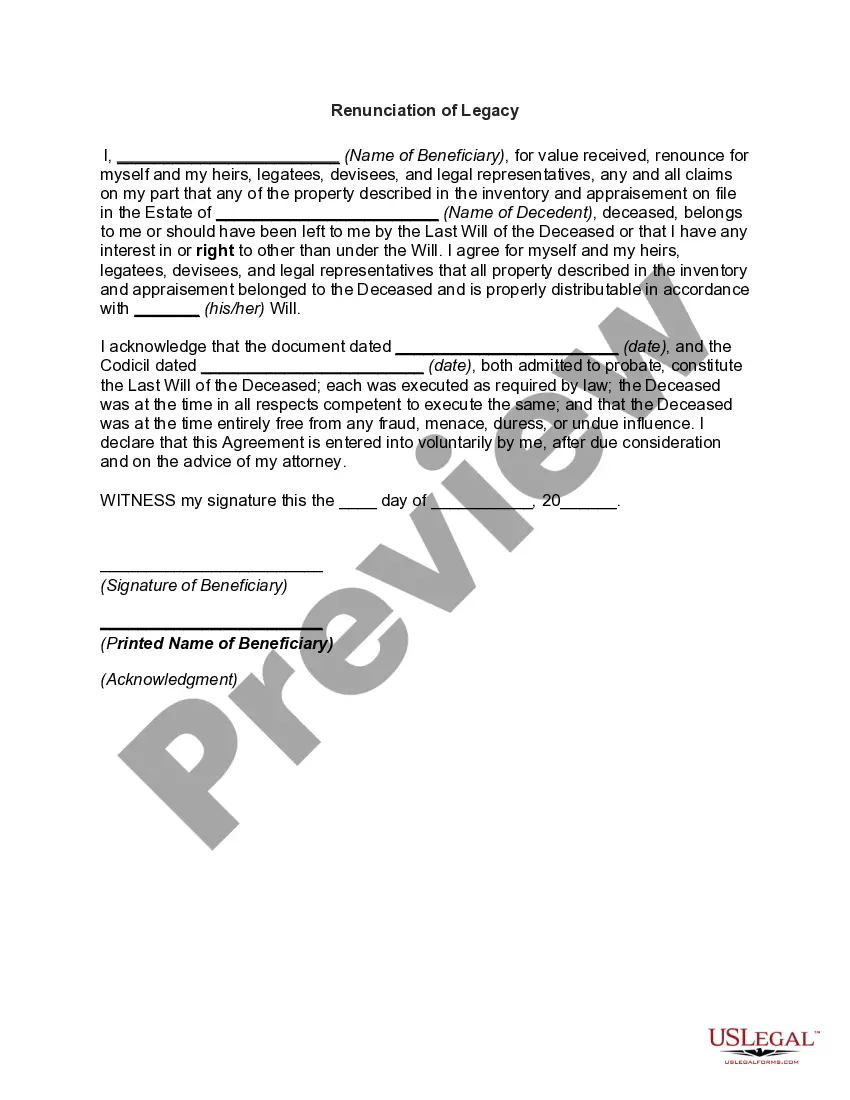
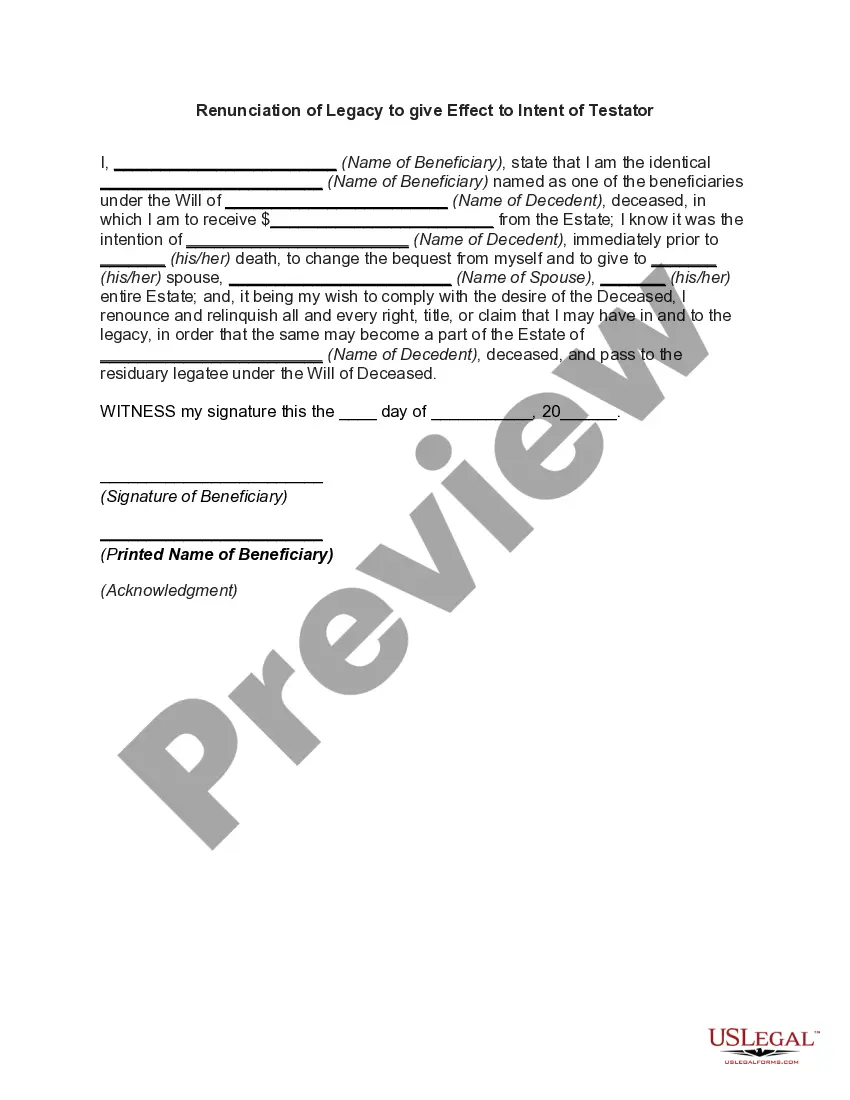
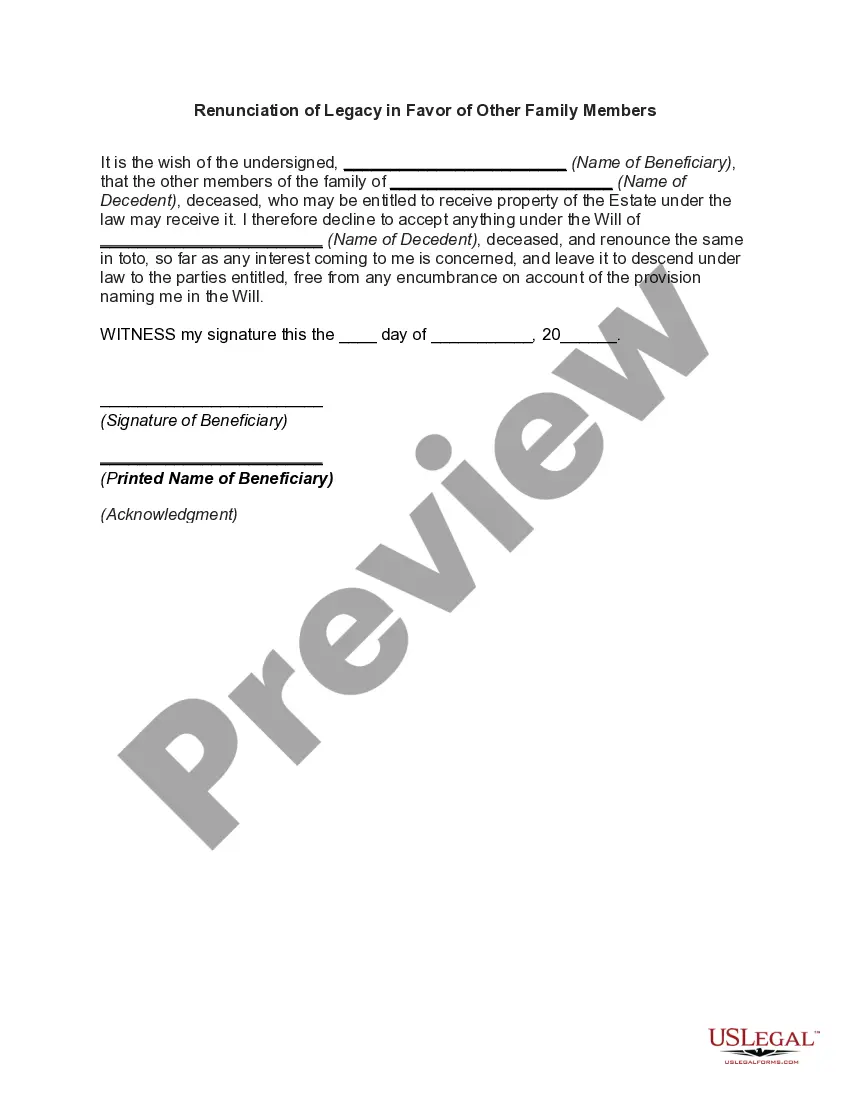
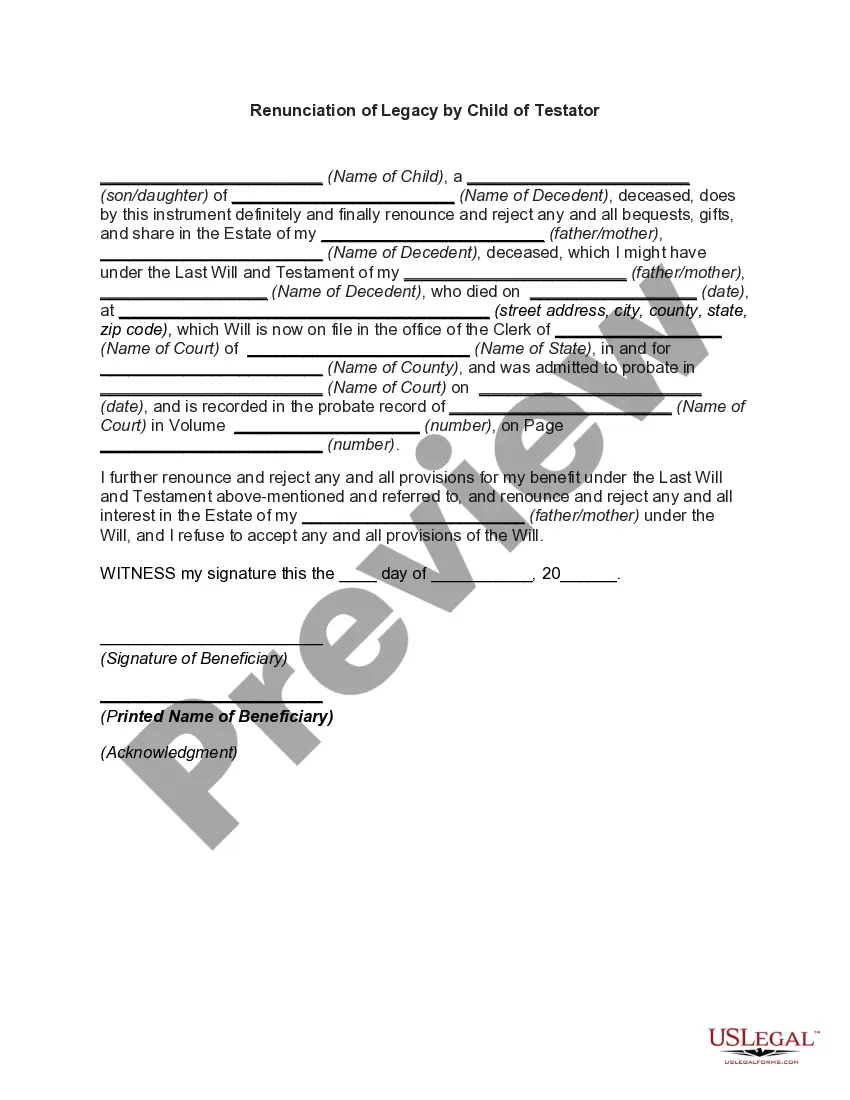
The Renunciation of Legacy form is a legal document that allows a beneficiary to formally decline an inheritance specified in a will. Unlike a devise, which refers to real property, a legacy pertains to personal property or money. This form ensures that the renouncing beneficiary waives their claims on the inheritance and acknowledges the validity of the deceased's will. It is essential for beneficiaries who wish to decline their rights to avoid potential disputes over the estate.
What’s included in this form
- Name of the beneficiary who is renouncing the legacy.
- Name of the deceased individual and their estate.
- Detailed description of the property being renounced.
- Signature of the beneficiary and date of the renunciation.
- Acknowledgment of the deceased's last will and testament details.
Common use cases
This form is needed when a beneficiary decides to reject an inheritance specified in a will. Common scenarios include situations where the beneficiary may not want to take on associated debts, tax liabilities, or simply prefers not to receive their share of the estate. Additionally, this form may be used when there are disputes among beneficiaries and one party chooses to step back from claiming their legacy.
Who can use this document
- Beneficiaries named in a will who wish to renounce their inheritance.
- Individuals seeking to clarify their position regarding property left to them.
- Heirs looking to avoid potential conflicts with other beneficiaries regarding the estate.
How to prepare this document
- Enter your name as the beneficiary renouncing the legacy.
- Provide the name of the deceased and details of their estate.
- Specify the property or legacy you are renouncing.
- Review the acknowledgment of the last will to confirm it reflects the details of the estate.
- Sign and date the document in the designated section.
Notarization requirements for this form
This form usually doesn’t need to be notarized. However, local laws or specific transactions may require it. Our online notarization service, powered by Notarize, lets you complete it remotely through a secure video session, available 24/7.
Get your form ready online
Our built-in tools help you complete, sign, share, and store your documents in one place.
Make edits, fill in missing information, and update formatting in US Legal Forms—just like you would in MS Word.
Download a copy, print it, send it by email, or mail it via USPS—whatever works best for your next step.
Sign and collect signatures with our SignNow integration. Send to multiple recipients, set reminders, and more. Go Premium to unlock E-Sign.
If this form requires notarization, complete it online through a secure video call—no need to meet a notary in person or wait for an appointment.
We protect your documents and personal data by following strict security and privacy standards.

Make edits, fill in missing information, and update formatting in US Legal Forms—just like you would in MS Word.

Download a copy, print it, send it by email, or mail it via USPS—whatever works best for your next step.

Sign and collect signatures with our SignNow integration. Send to multiple recipients, set reminders, and more. Go Premium to unlock E-Sign.

If this form requires notarization, complete it online through a secure video call—no need to meet a notary in person or wait for an appointment.

We protect your documents and personal data by following strict security and privacy standards.
Common mistakes
- Failing to properly identify the estate and property being renounced.
- Not signing the form or omitting the date of signing.
- Overlooking state-specific requirements that may affect the renunciation.
- Forgetting to provide accurate acknowledgment of the deceased's last will.
Why complete this form online
- Convenience of downloading and completing the form at your own pace.
- Access to legally vetted templates drafted by licensed attorneys.
- Ease of customization to fit your particular situation.
Legal use & context
- The Renunciation of Legacy serves as a formal declaration and can prevent future claims against the estate.
- It is advisable to submit this form promptly after the decedent's death to ensure proper estate administration.
Looking for another form?

Form popularity
FAQ
When you relinquish property, you don't get any say in who inherits in your place. If you want to control who gets the inheritance, you must accept it and give it to that person. If you relinquish the property and the deceased didn't name a back-up heir, the court will apply state law to decide who inherits.
You can step down as executor before formal court appointment without giving a reason. In most states, all you need to complete is a Renunciation of Executor form, which is a legal document that states the person named in the will as executor will not act as executor for the estate.
Executors can renounce a will and their appointment to oversee probate of the estate by filing a renunciation form with the probate court. Many states have procedures in their statutes to relieve the executor of duty if he does nothing toward probating the estate for a prescribed period of time, usually 30 days.
Sign the will.Conclude the document with your signature, name, date and location. Follow your state's requirements on signing. How you sign the will is a matter of state law and can affect its validity. Initial or sign each page of your will, per your state's requirements.
The answer is yes. The technical term is "disclaiming" it. If you are considering disclaiming an inheritance, you need to understand the effect of your refusalknown as the "disclaimer"and the procedure you must follow to ensure that it is considered qualified under federal and state law.
Put the disclaimer in writing. Deliver the disclaimer to the person in control of the estate usually the executor or trustee. Complete the disclaimer within nine months of the death of the person leaving the property. Do not accept any benefit from the property you're disclaiming.
A: You may need to clarify what type of administration you are referring to, but if you are asking about administration of a decedent's estate, then renunciation refers to giving up your right to be qualified as the Administrator of the estate.
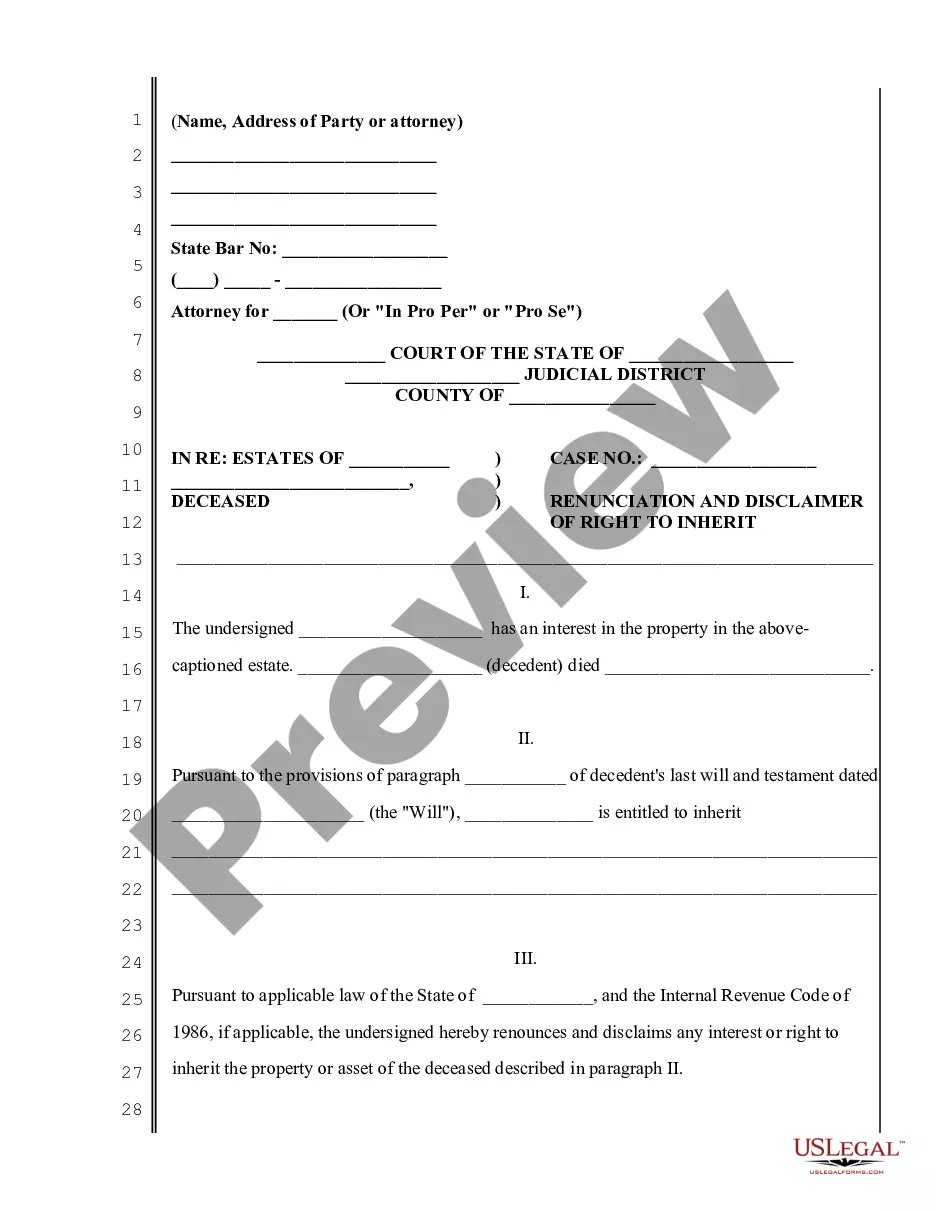
Disclaim Inheritance, Definition In a nutshell, it means you're refusing any assets that you stand to inherit under the terms of someone's will, a trust or, in the case of a person who dies intestate, the inheritance laws of your state.
If you are an executor and you do not wish to act You can appoint someone else to apply for probate on your behalf.You then file the form at a probate registry, together with the will. This means that someone else could then apply for letters of administration.