Mississippi Agreement for the Termination and Cancellation of Rights of First Refusal and Covenants
What is this form?
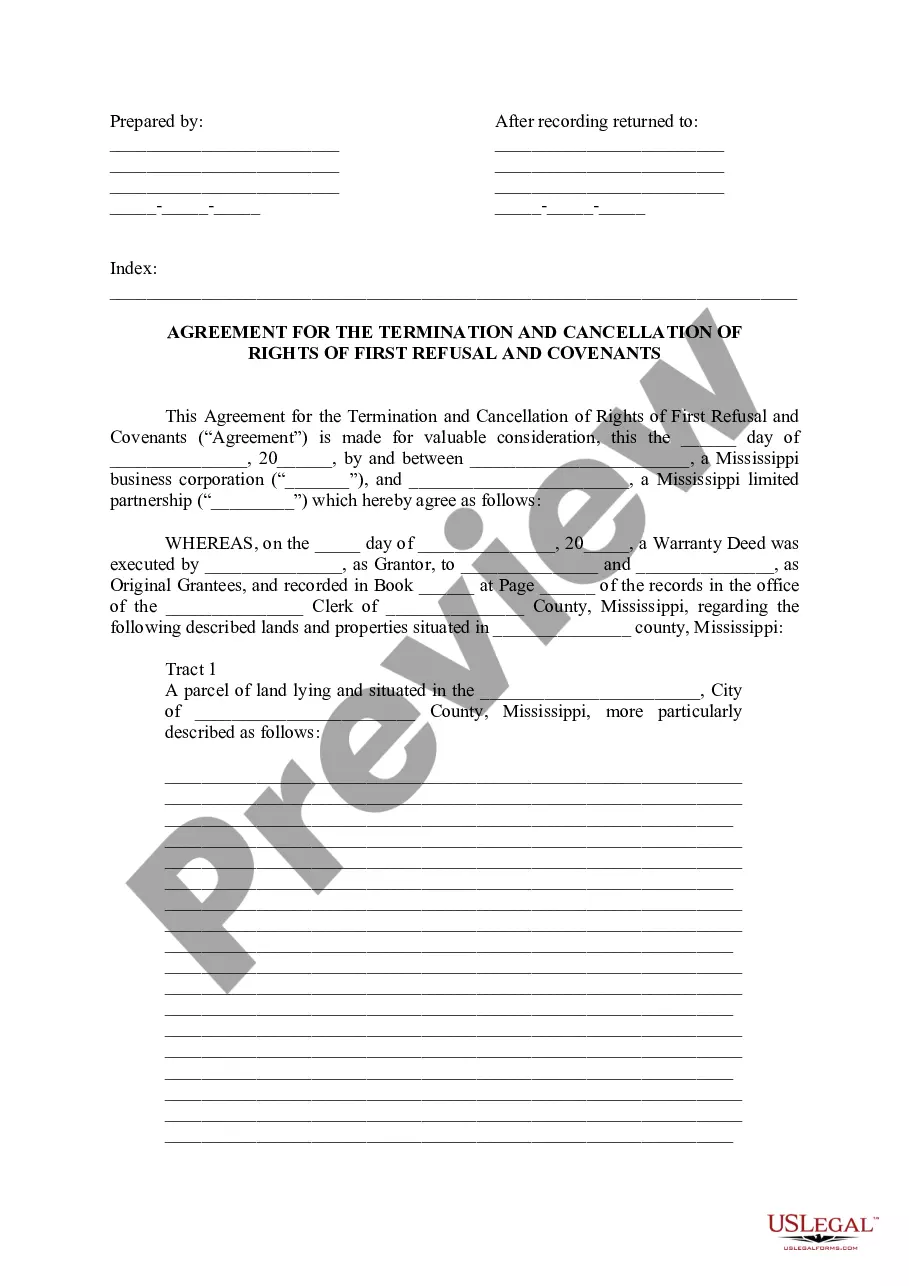
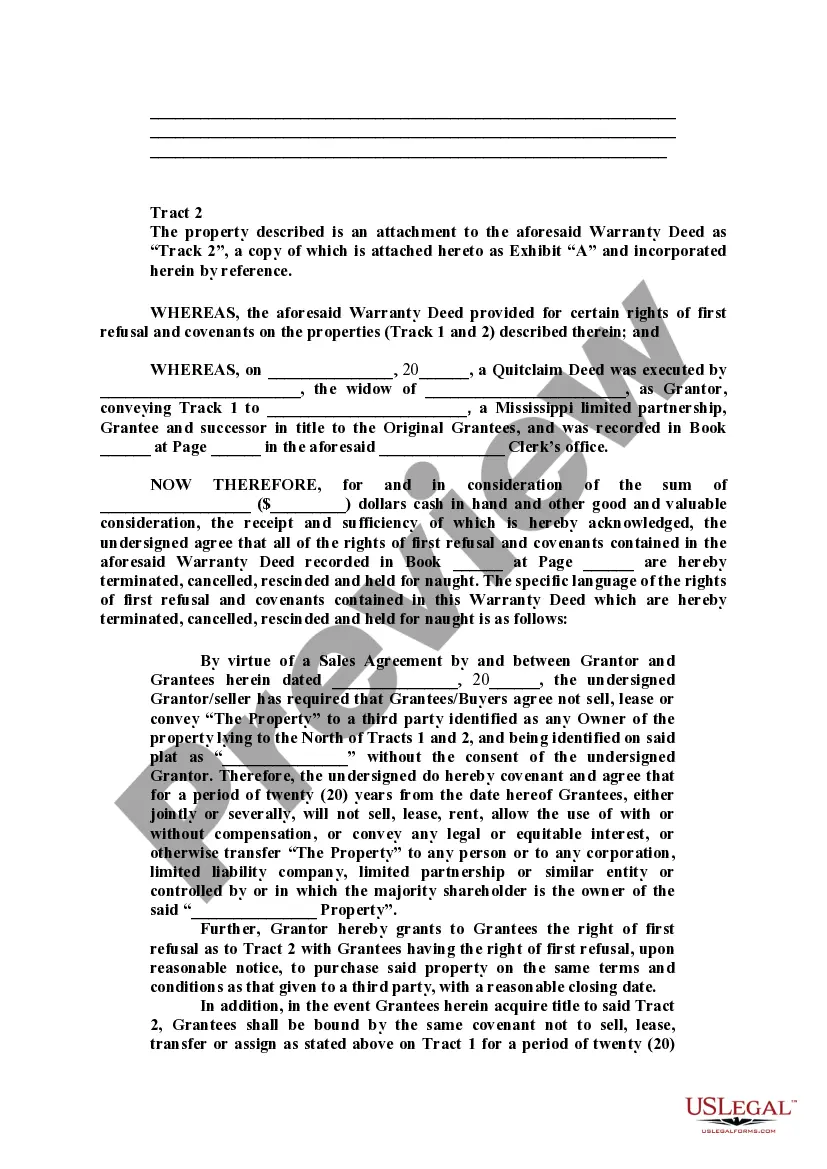
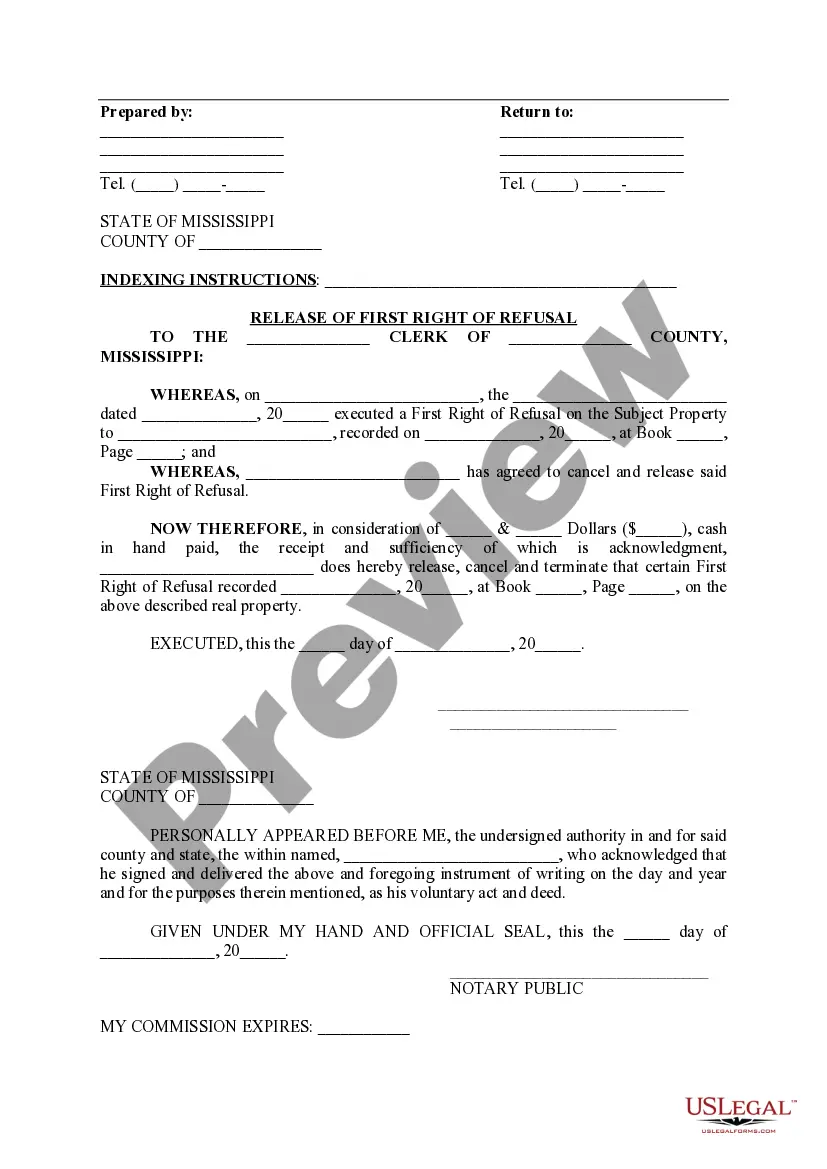
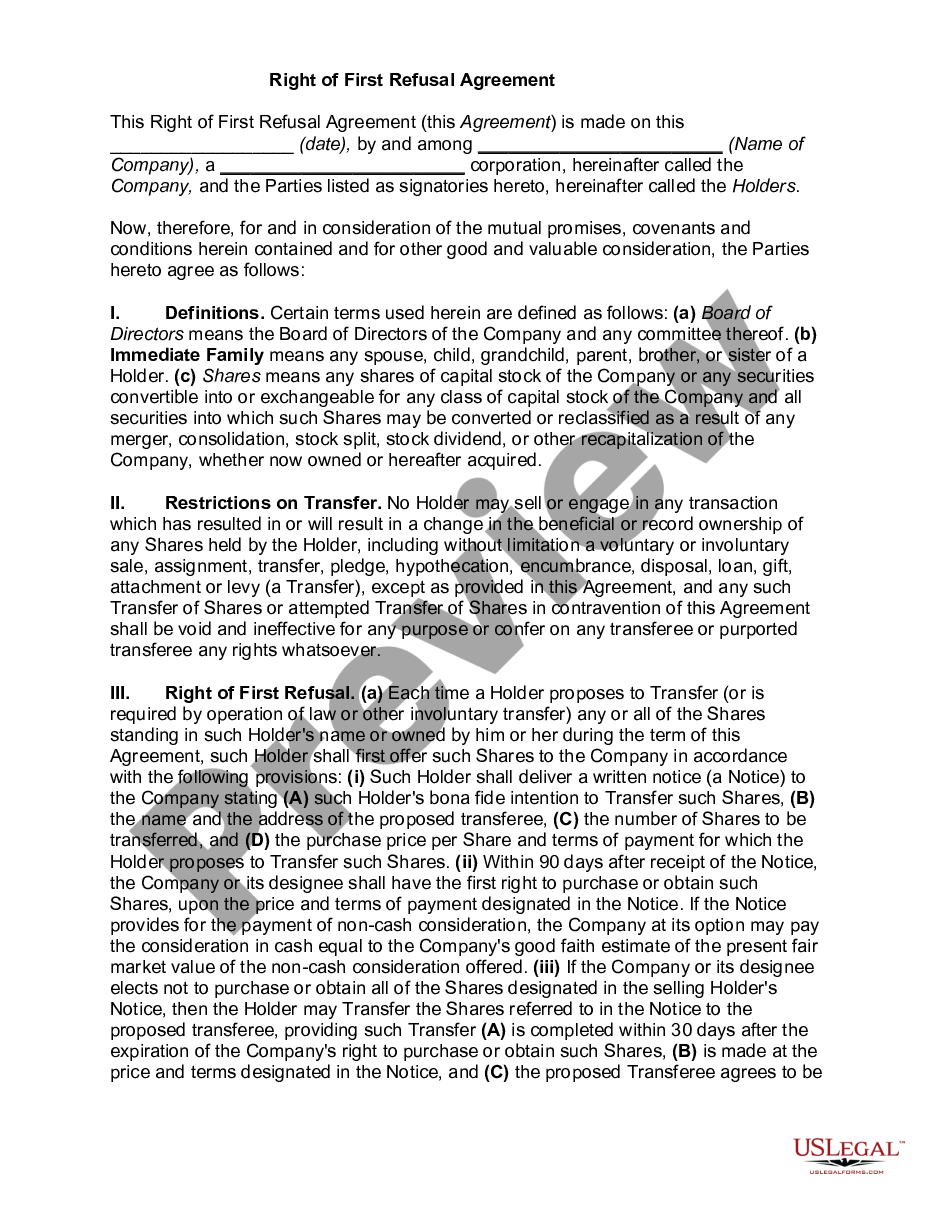
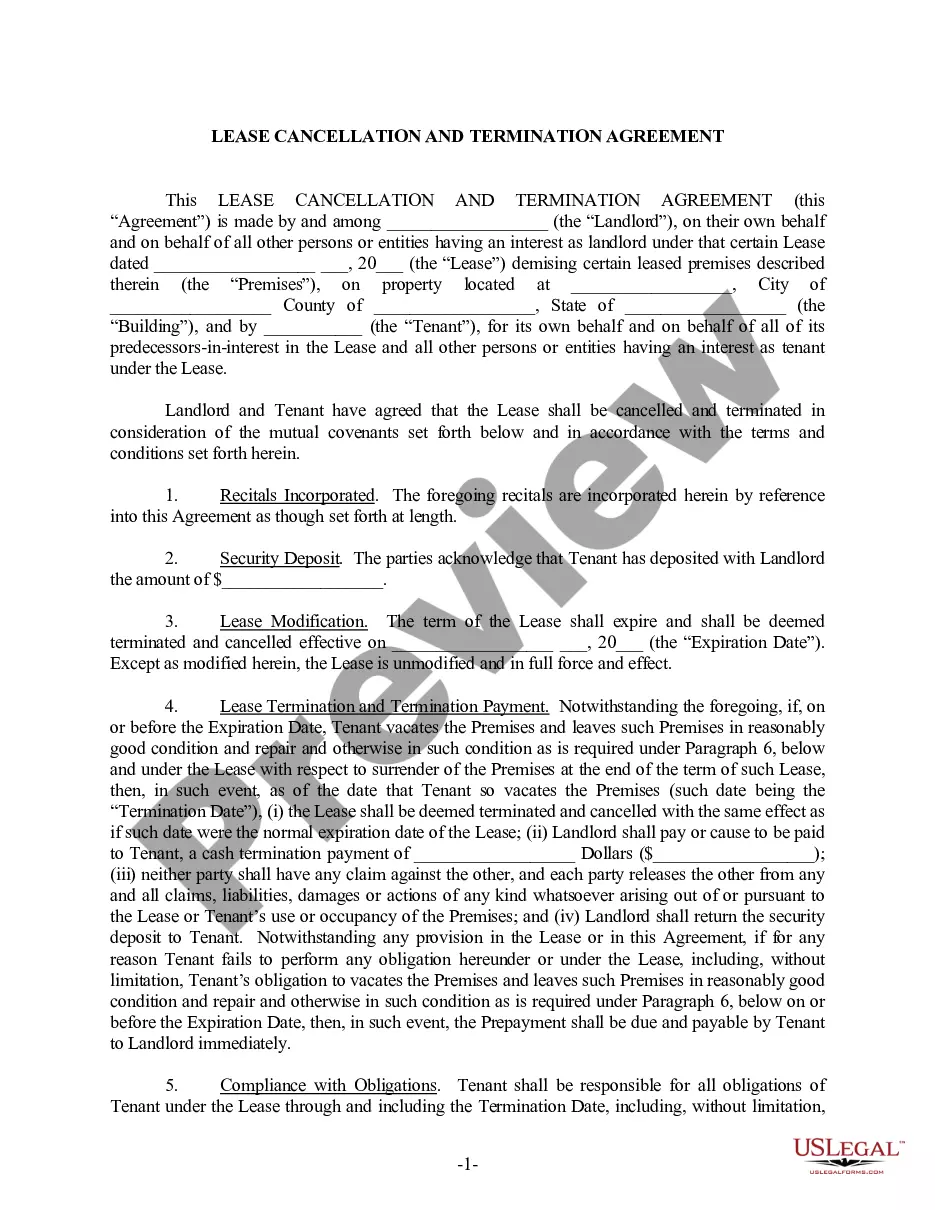
The Agreement for the Termination and Cancellation of Rights of First Refusal and Covenants is a legal document used to formally terminate previously granted rights of first refusal associated with a real property sale. This form is essential for parties who wish to cancel existing contractual rights, ensuring clear title and the freedom to sell the property without restrictions imposed by prior agreements. Unlike other property agreements, this document specifically addresses the cancellation of rights of refusal and covenants, providing a streamlined approach to property transactions.
Key components of this form
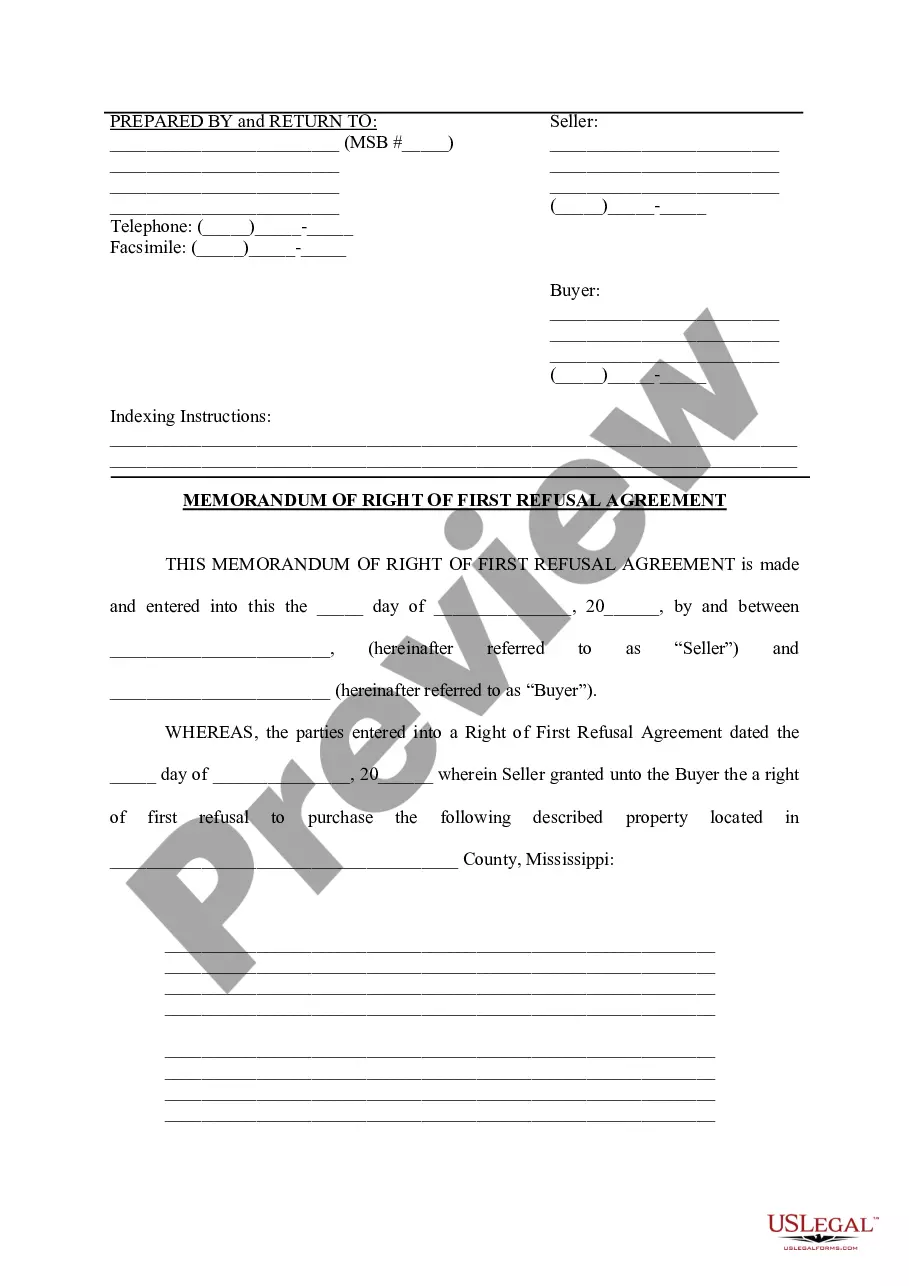
- Parties involved: Identification of the entities entering the agreement.
- Description of the property: Detailed identification of the real estate being affected.
- Termination clause: Specifies which rights and covenants are being terminated.
- Consideration: Explanation of any payment involved in the termination.
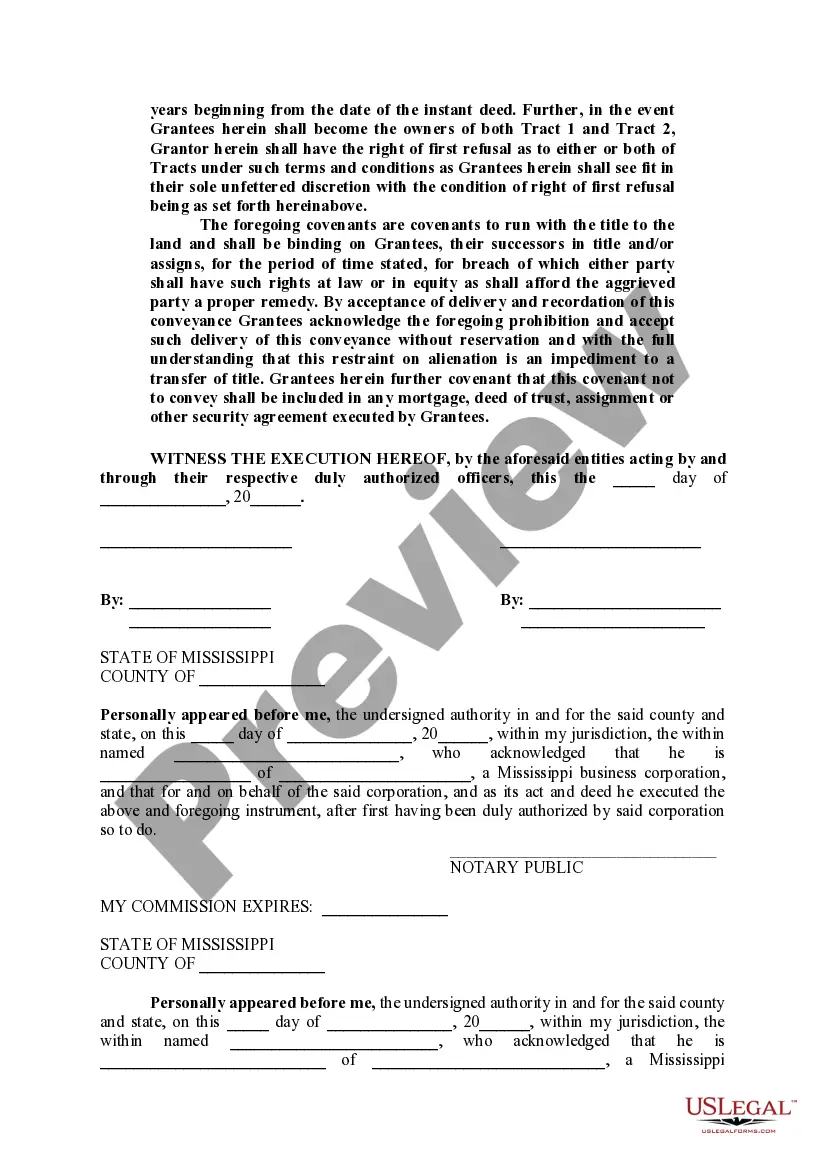
- Signatures: Spaces for authorized representatives to sign, ensuring the agreement is legally binding.
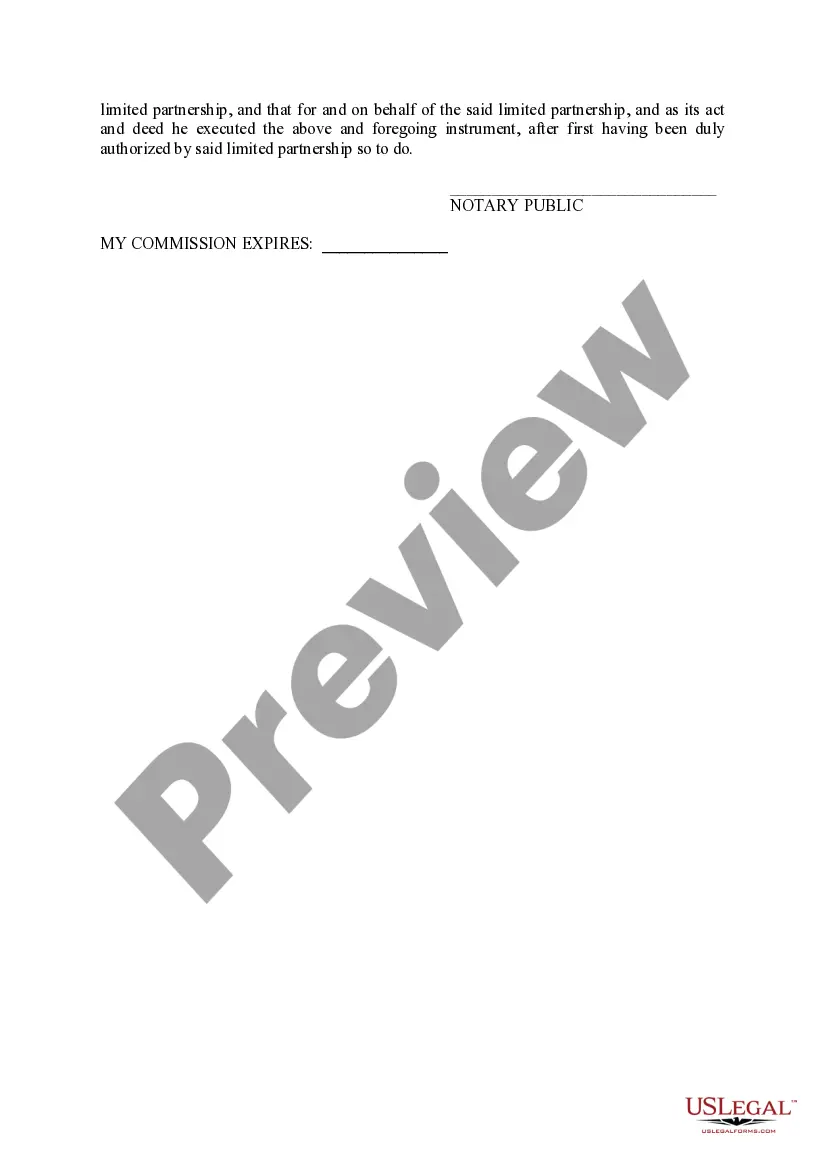
- Notary acknowledgment: Section for notarization, confirming the identities of the signatories.
Situations where this form applies
This form should be used when property owners or entities wish to cancel any existing rights of first refusal related to a specific parcel of real estate. Common scenarios include selling a property while eliminating obligations to prior interested parties, such as in cases of ownership transfer, real estate development, or when the terms of the original right of first refusal are no longer feasible or desired.
Who should use this form
This form is intended for:
- Property owners looking to free their title from previous rights of first refusal.
- Legal representatives of businesses involved in real estate transactions.
- Parties to a real estate contract who need to formally terminate existing covenants.
- Real estate investors acquiring properties with existing restrictions.
How to complete this form
- Identify the parties: Enter the names and details of the individuals or entities involved in the agreement.
- Specify the property: Provide a detailed description of the real property affected by the rights of first refusal.
- Enter the dates: Fill in the relevant dates related to the agreement and prior deeds.
- State the consideration: Indicate any payment or consideration exchanged as part of the agreement.
- Obtain signatures: Ensure all parties involved sign the agreement, and include the notary section for confirmation.
Notarization guidance
Yes, this form must be notarized to be legally valid. US Legal Forms offers integrated online notarization services, allowing you to complete the process securely via video call, ensuring convenience without the need for travel.
Get your form ready online
Our built-in tools help you complete, sign, share, and store your documents in one place.
Make edits, fill in missing information, and update formatting in US Legal Forms—just like you would in MS Word.
Download a copy, print it, send it by email, or mail it via USPS—whatever works best for your next step.
Sign and collect signatures with our SignNow integration. Send to multiple recipients, set reminders, and more. Go Premium to unlock E-Sign.
If this form requires notarization, complete it online through a secure video call—no need to meet a notary in person or wait for an appointment.
We protect your documents and personal data by following strict security and privacy standards.

Make edits, fill in missing information, and update formatting in US Legal Forms—just like you would in MS Word.

Download a copy, print it, send it by email, or mail it via USPS—whatever works best for your next step.

Sign and collect signatures with our SignNow integration. Send to multiple recipients, set reminders, and more. Go Premium to unlock E-Sign.

If this form requires notarization, complete it online through a secure video call—no need to meet a notary in person or wait for an appointment.

We protect your documents and personal data by following strict security and privacy standards.
Typical mistakes to avoid
- Failing to accurately describe the property, leading to potential disputes.
- Not including all necessary parties' signatures, which may invalidate the agreement.
- Neglecting to have the document notarized when required, compromising its legal validity.
- Overlooking the details of compensatory agreements or consideration amounts.
Benefits of using this form online
- Convenience: Downloadable forms save time compared to drafting from scratch.
- Editability: Easy to customize for specific needs and circumstances.
- Reliability: Verified by licensed attorneys to meet legal standards.
- Accessible: Available anytime, allowing for quick completion of legal documents.
Legal use & context
- The agreement should clearly state the past rights and their cancellation to protect the parties involved.
- It is crucial to comply with state laws regarding property transfer and rights of refusal.
- Ensure all parties understand the implications of canceling any rights before execution.
Quick recap
- This form is essential for terminating rights of first refusal on real property.
- Accurate identification of the property and parties involved is crucial.
- Notarization is necessary to validate the agreement.
- Using the online form saves time and provides a legally recognized solution.
Looking for another form?
Form popularity
FAQ
The Right of First Refusal is a court-ordered right, usually negotiated in an agreement between the parties, granting the non-custodial parent an option to care for the child or children during the custodial parent's designated time, when the custodial parent is otherwise unavailable, instead of placing that child in
In a ROFR mechanism, the selling shareholder has to solicit an offer from a third party before offering its shares to the non-selling shareholders.In contrast, the ROFO places the onus on the non-selling shareholder to make an offer for the selling shareholder's shares, usually within a given timeframe.
Depending on your needs, the cost of negotiating a right of first refusal for your transaction can vary signficantly. Hourly rates for corporate lawyers in the Priori network with experience negotiating ROFRs can vary from $150 per hour to $550 per hour.
A right of first refusal, different from a right of first offer, gives the right holder the option to match an offer already received by the seller. A right of first offer is said to favor the seller, while a right of first refusal favors the buyer.
The right of first refusal is usually triggered when a third party offers to buy or lease the property owner's asset. Before the property owner accepts this offer, the property holder (the person with the right of first refusal) must be allowed to buy or lease the asset under the same terms offered by the third party.
Every RFR should be drafted as either an agreement or a contract (in which the holder gives some consideration, or pays for, the right). It may bind the current owner alone or run with the land. In either case, I would advise having it recorded.
A right of first refusal agreement allows a buyer and seller to enter into an arrangement by which the potential buyer is given the first crack at a property when it goes up for sale.
Right of first refusal (ROFR), also known as first right of refusal, is a contractual right to enter into a business transaction with a person or company before anyone else can. If the party with this right declines to enter into a transaction, the obligor is free to entertain other offers.
One or two years is the typical range. Some RFRs allow either seller or buyer to invoke the RFR at any point during its term. Others give the buyer the right to make an offer only at the end of the specified term.