New York Child's Medical History
What is this form?
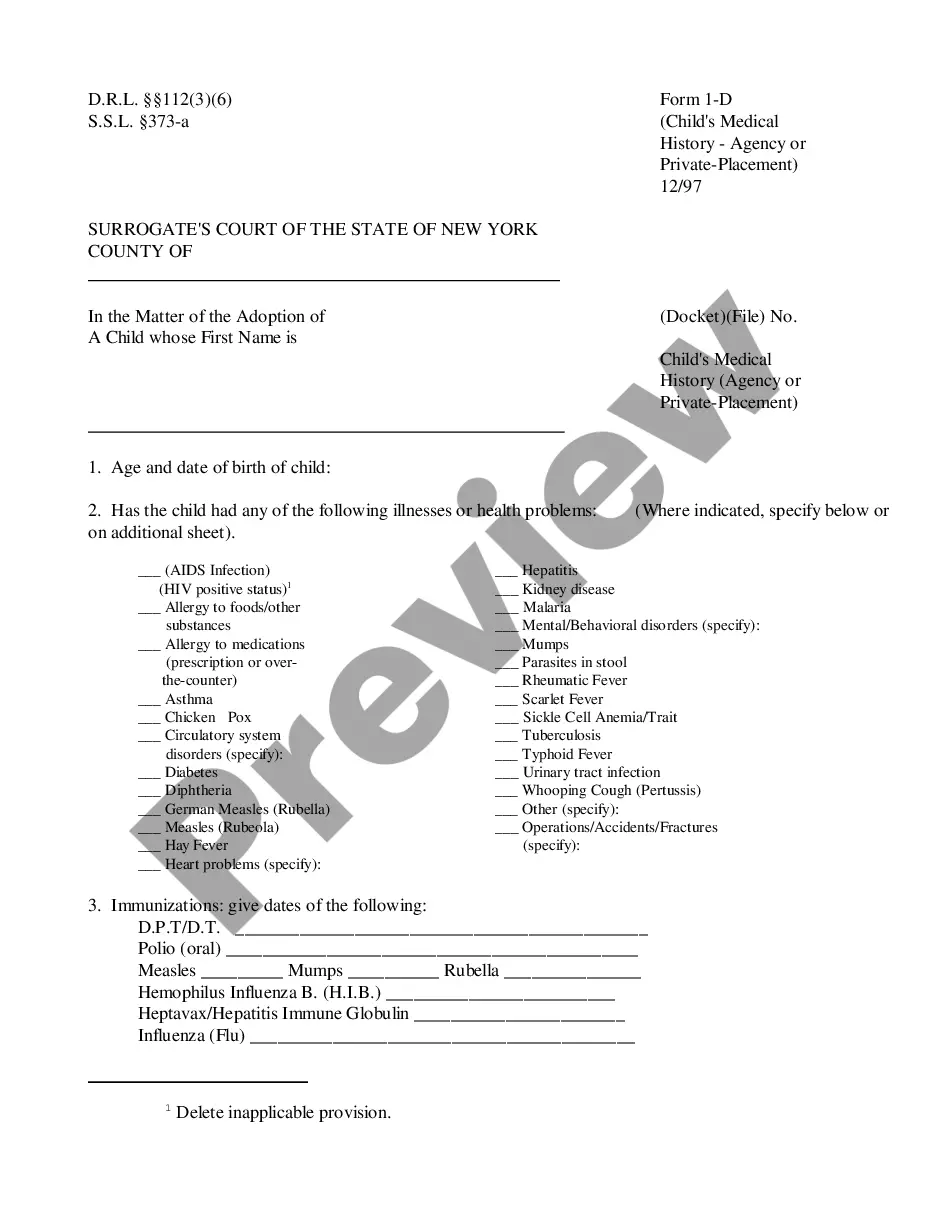
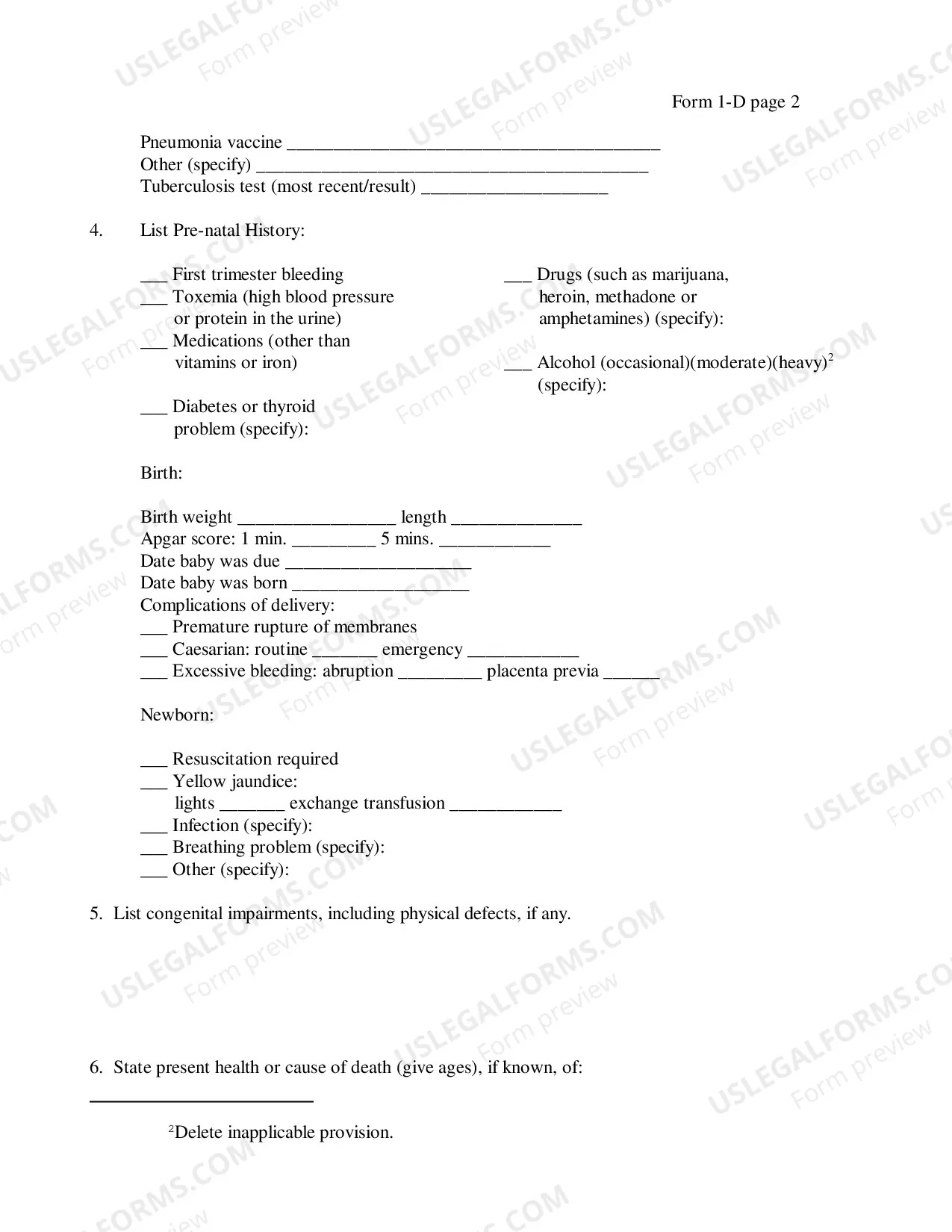
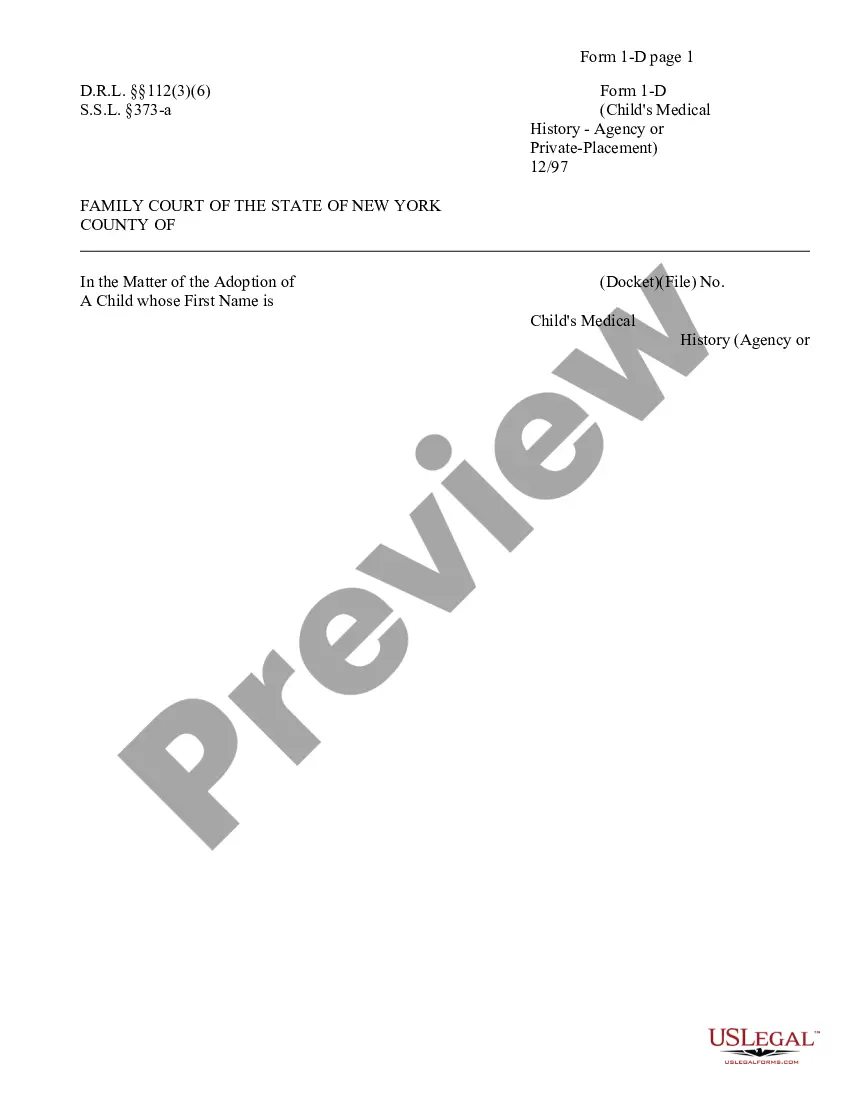
The Child's Medical History form is an official document used in New York for adoption proceedings. It is designed to collect essential medical information about a child being adopted. This form is crucial for ensuring that potential adoptive parents have access to the childâs health history, which can influence medical decisions and ongoing healthcare needs. Unlike other adoption forms, this specific document focuses on the child's medical history, including any past illnesses, immunizations, and prenatal details.
Key parts of this document
- Child's age and date of birth
- List of past illnesses and health issues
- Immunization records
- Pre-natal history of the birth mother
- Details of any congenital impairments
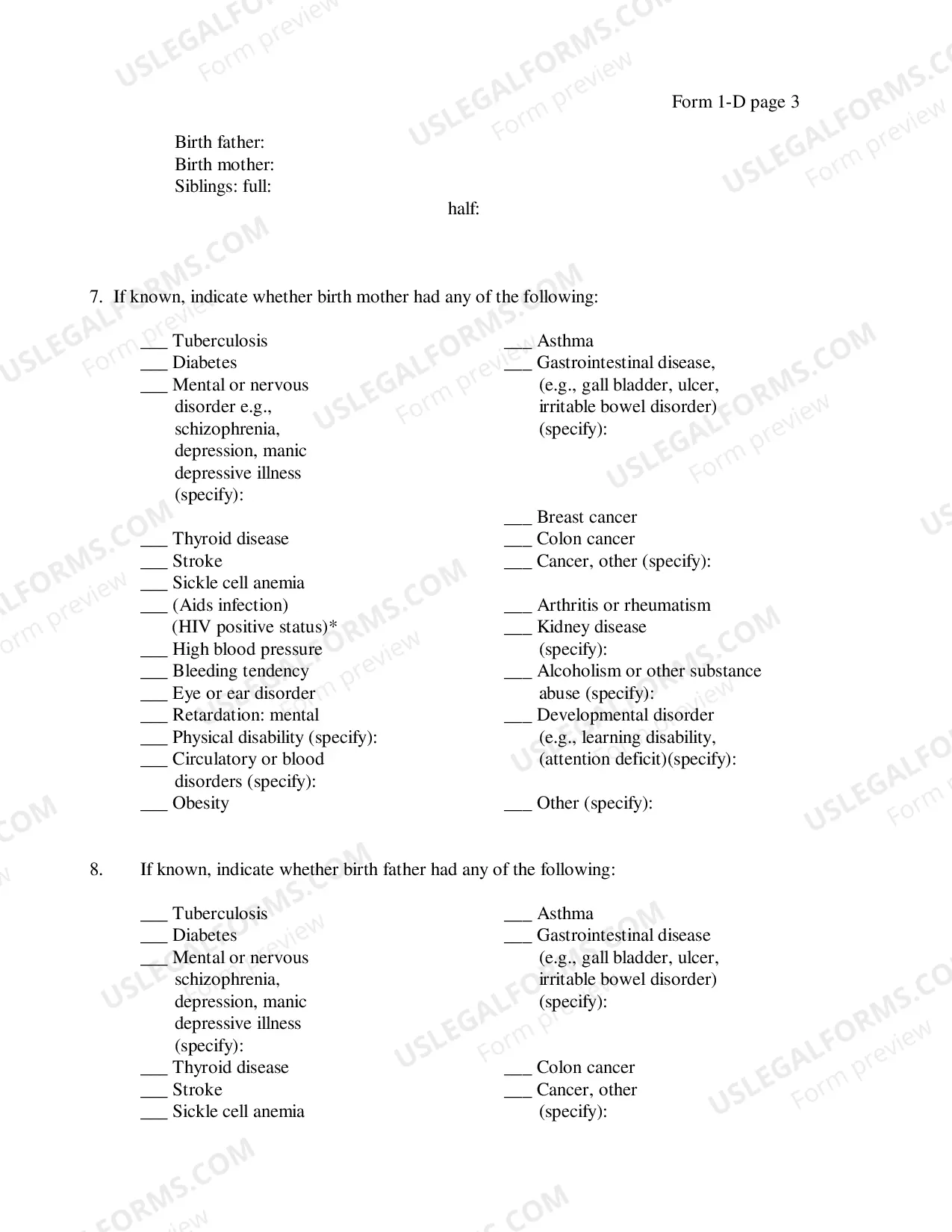
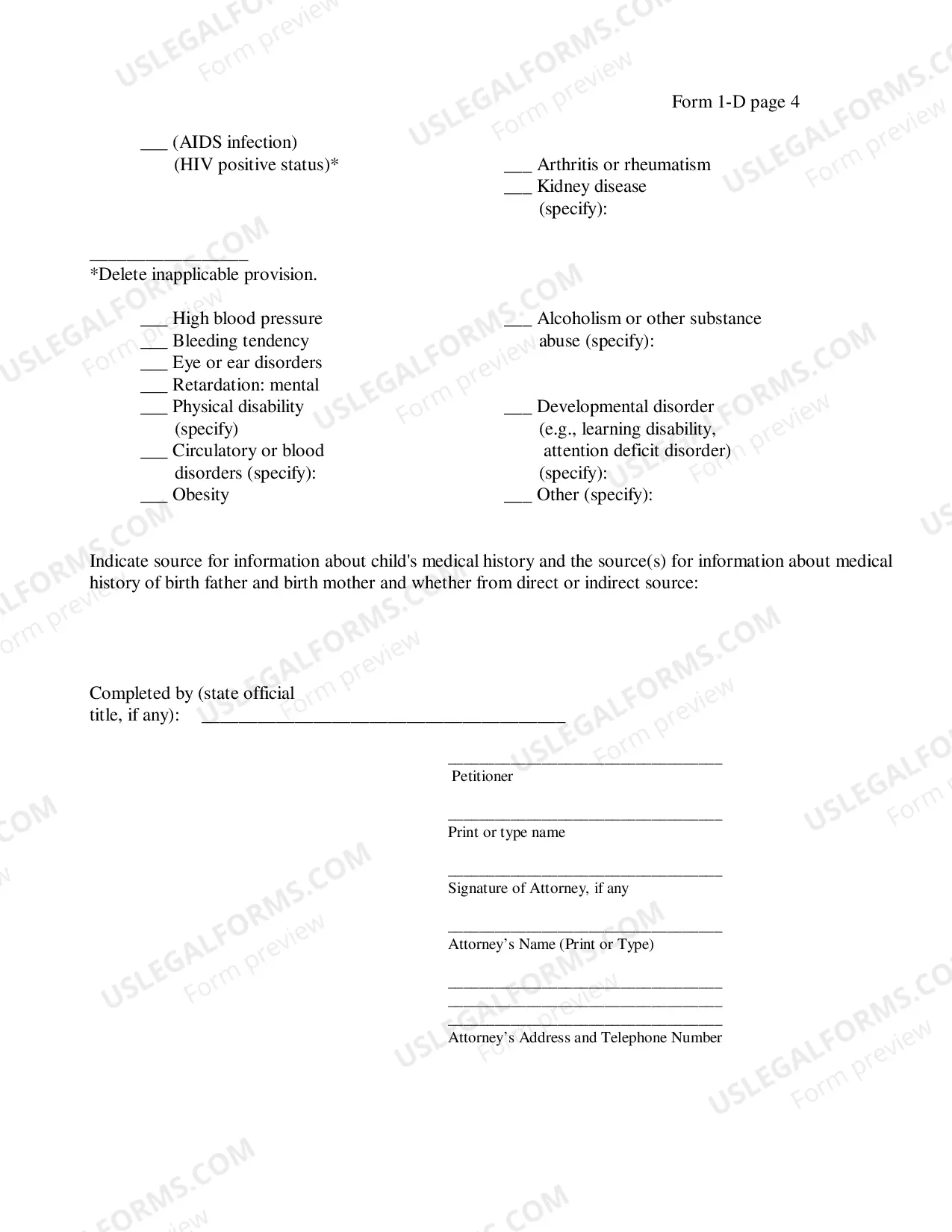
- Medical history of birth parents and siblings
When this form is needed
This form should be used during the adoption process in New York when prospective adoptive parents need to provide a comprehensive medical history of the child. It is particularly important when there is limited or no known medical information available about the child's history, ensuring that the adoptive parents can make informed healthcare decisions for their new child.
Who needs this form
- Prospective adoptive parents in New York
- Adoption agencies handling private or agency placements
- Legal representatives involved in the adoption process
How to prepare this document
- Enter the child's age and date of birth at the top of the form.
- Check all relevant illnesses and health issues from the provided list.
- Fill in the child's immunization dates for required vaccinations.
- Provide detailed pre-natal history regarding the birth mother.
- List any known congenital impairments or disabilities.
- Document the health history of birth parents and siblings, if available.
Notarization requirements for this form
This form does not typically require notarization unless specified by local law. However, it is always advisable to check for any additional requirements that may apply to your specific situation.
Get your form ready online
Our built-in tools help you complete, sign, share, and store your documents in one place.
Make edits, fill in missing information, and update formatting in US Legal Forms—just like you would in MS Word.
Download a copy, print it, send it by email, or mail it via USPS—whatever works best for your next step.
Sign and collect signatures with our SignNow integration. Send to multiple recipients, set reminders, and more. Go Premium to unlock E-Sign.
If this form requires notarization, complete it online through a secure video call—no need to meet a notary in person or wait for an appointment.
We protect your documents and personal data by following strict security and privacy standards.

Make edits, fill in missing information, and update formatting in US Legal Forms—just like you would in MS Word.

Download a copy, print it, send it by email, or mail it via USPS—whatever works best for your next step.

Sign and collect signatures with our SignNow integration. Send to multiple recipients, set reminders, and more. Go Premium to unlock E-Sign.

If this form requires notarization, complete it online through a secure video call—no need to meet a notary in person or wait for an appointment.

We protect your documents and personal data by following strict security and privacy standards.
Mistakes to watch out for
- Leaving out critical medical history details.
- Failing to specify the dates for immunizations.
- Not providing prenatal information or complications of delivery.
- Inaccurately documenting the health issues of birth parents.
Advantages of online completion
- Convenience of downloading and filling the form at your own pace.
- Editable format allows direct modifications as needed.
- Access to professionally drafted templates ensures legal accuracy.
Looking for another form?
Form popularity
FAQ
If you spent time in the hospital, ask for a copy of your records when you're discharged. Use an online patient portal to access your medical records. Keep copies of your medical bills and insurance claims as they occur. Talk to your doctor if you need help figuring out which records to include.
Identification Information. Patient's Medical History. Medication History. Family Medical History. Treatment History and Medical Directives.
Physicians and hospitals are required by state law to maintain patient records for at least six years from the date of the patient's last visit. A doctor must keep obstetrical records and records of children for at least six years or until the child reaches age 19, whichever is later.
If you are interested in obtaining a copy of your medical records, you will need to contact the doctor's office, clinic or hospital where you were treated.
Agency: New York State Department of Health. Division: Professional Medical Conduct. Phone Number: (800) 663-6114. Business Hours: Monday - Friday: 8 AM - PM.
A medical chart is a complete record of a patient's key clinical data and medical history, such as demographics, vital signs, diagnoses, medications, treatment plans, progress notes, problems, immunization dates, allergies, radiology images, and laboratory and test results.
Visit: www.myhealthrecord.gov.au. Call the My Health Record Helpdesk on 1800 723 471.
A request for information from health (medical) records has to be made with the organisation that holds your health records the data controller. For example, your GP practice, optician or dentist. For hospital health records, contact the records manager or patient services manager at the relevant hospital trust.
The law allows physicians and institutions to charge no more than 75 cents a page, plus postage, for paper copies of medical records.