Louisiana Plaintiff's Request for Production in personal injury Action
What this document covers
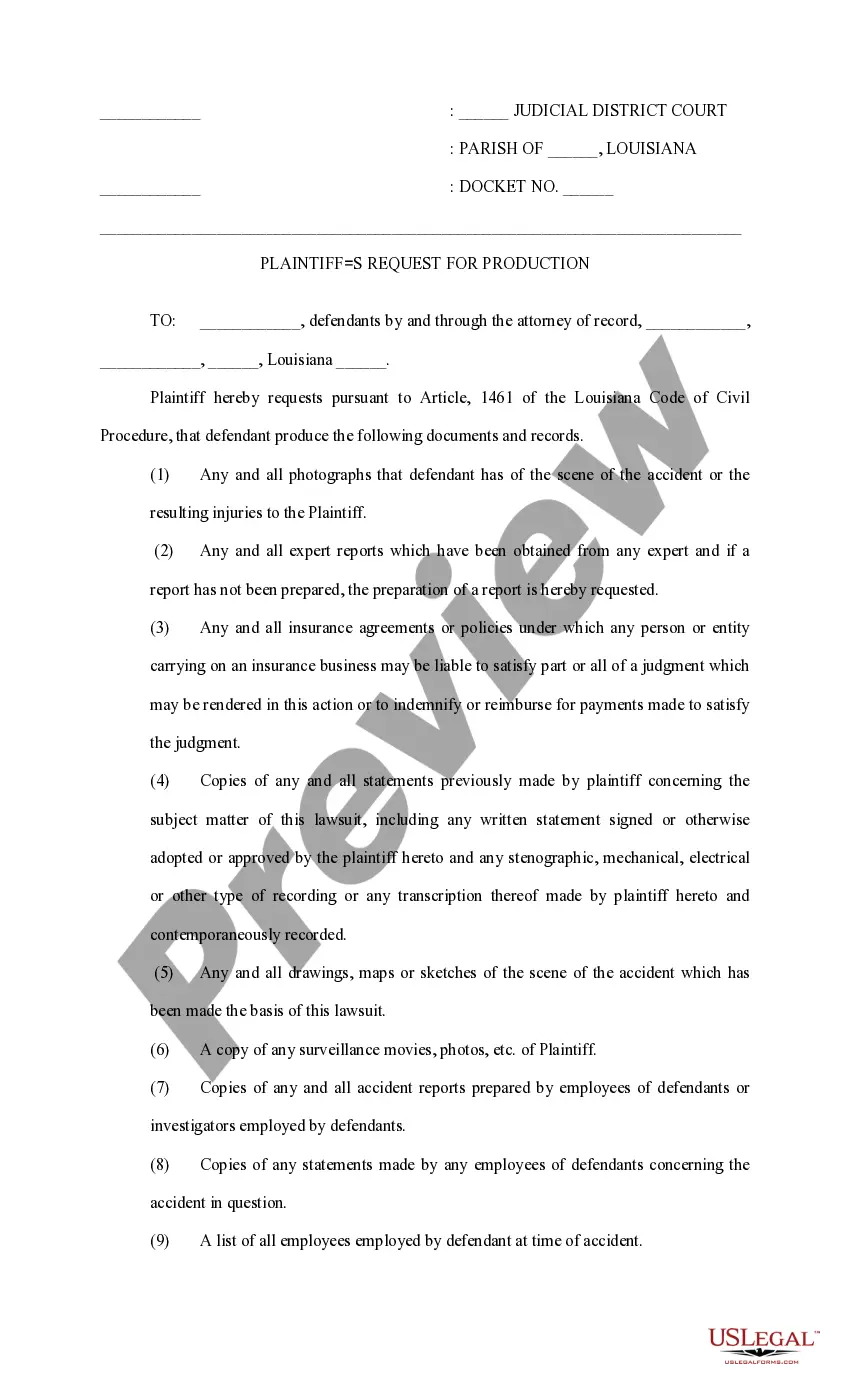
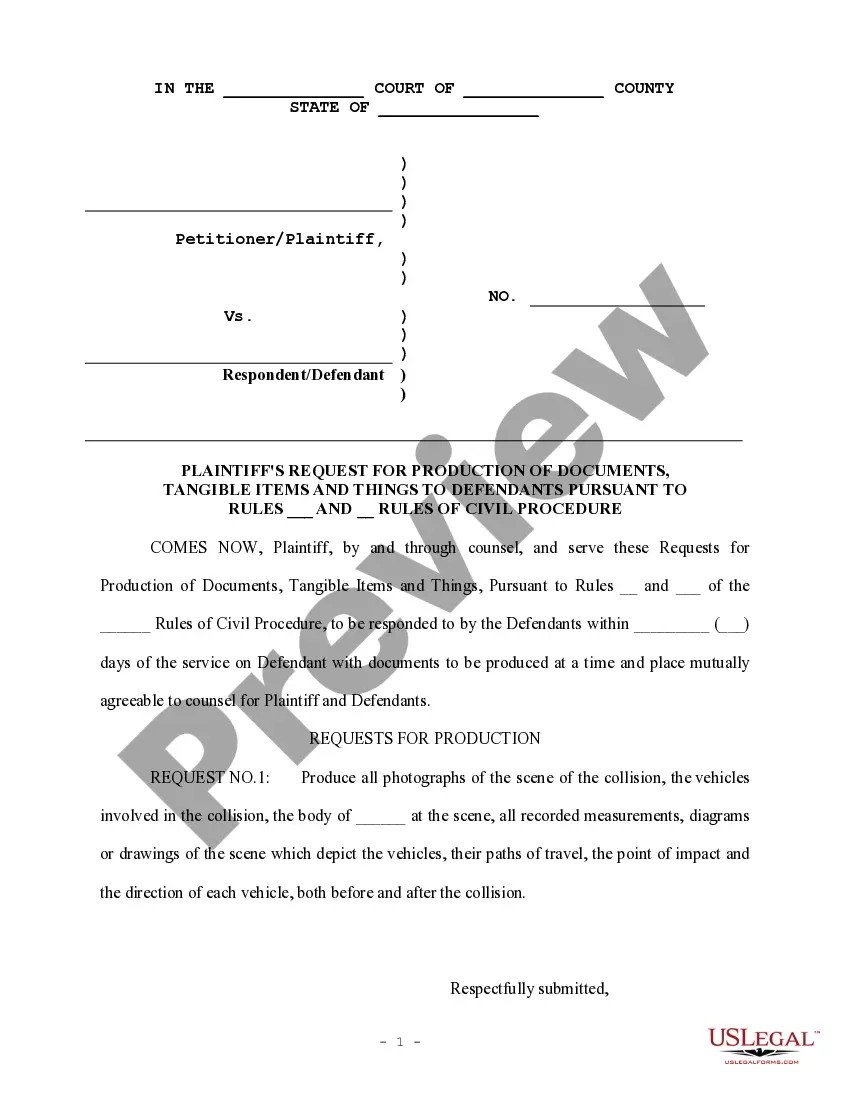
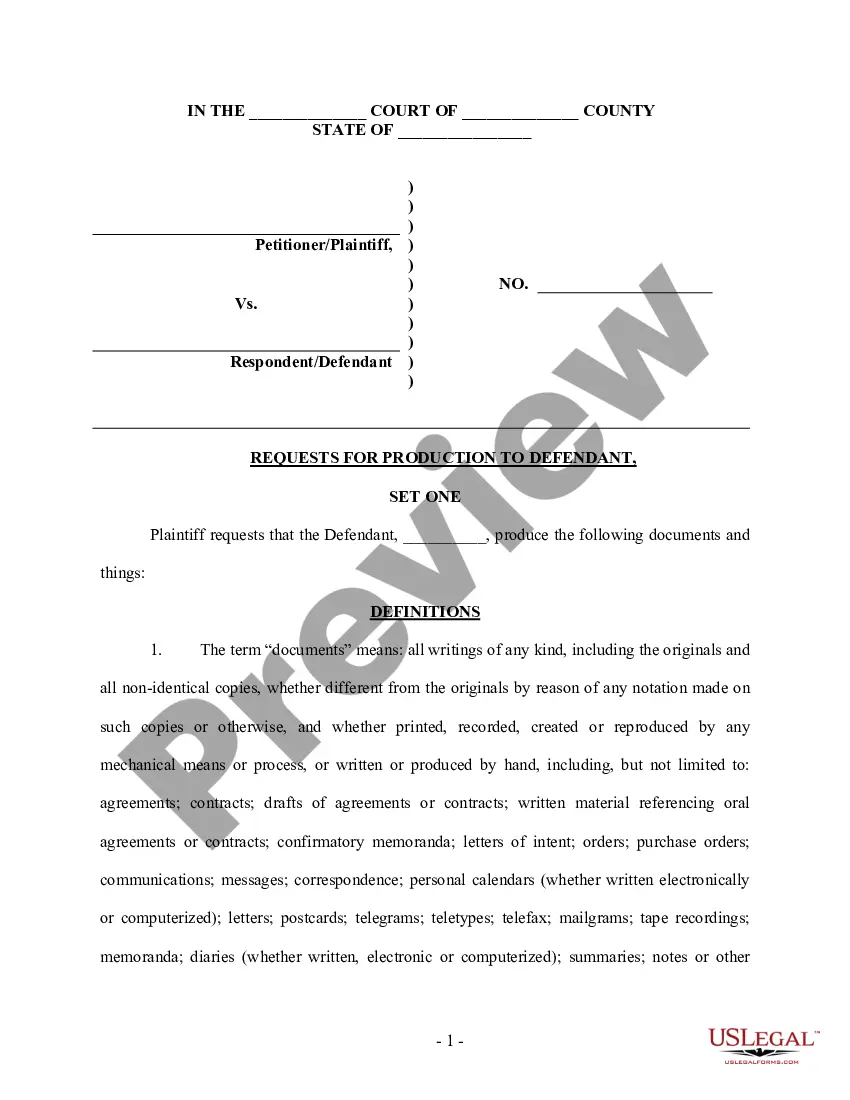
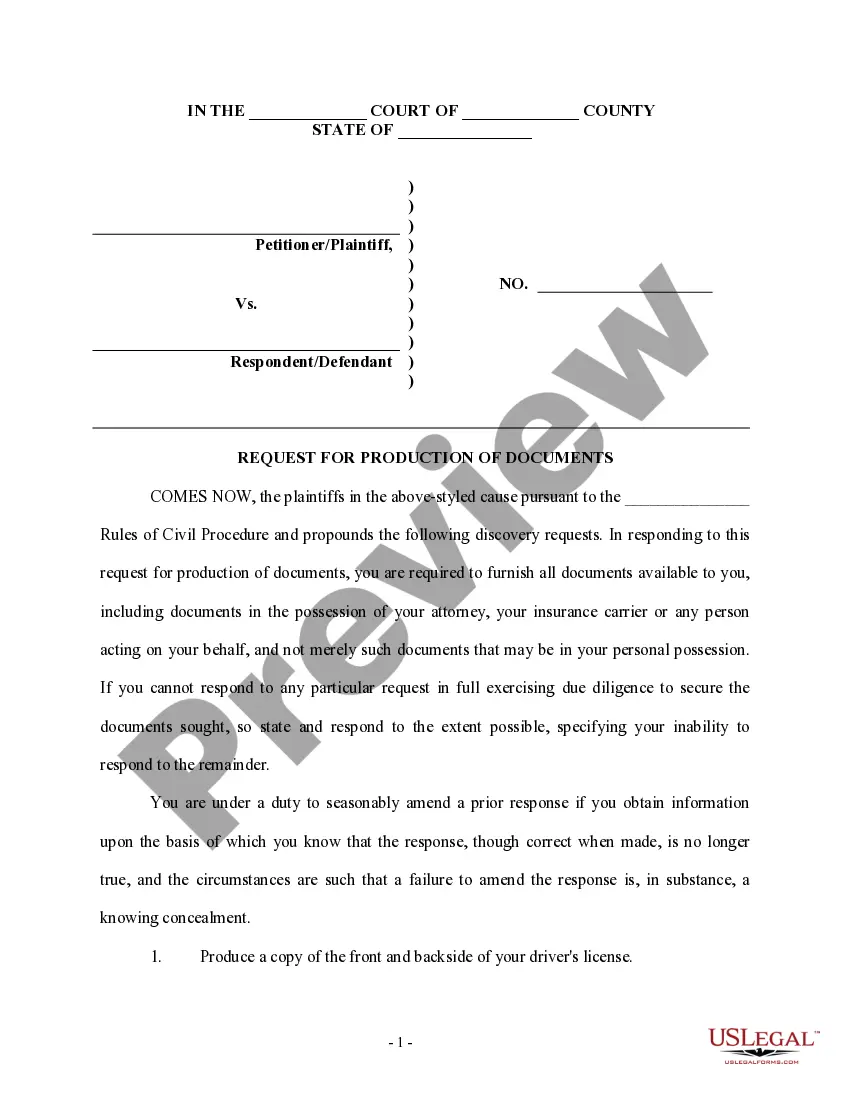
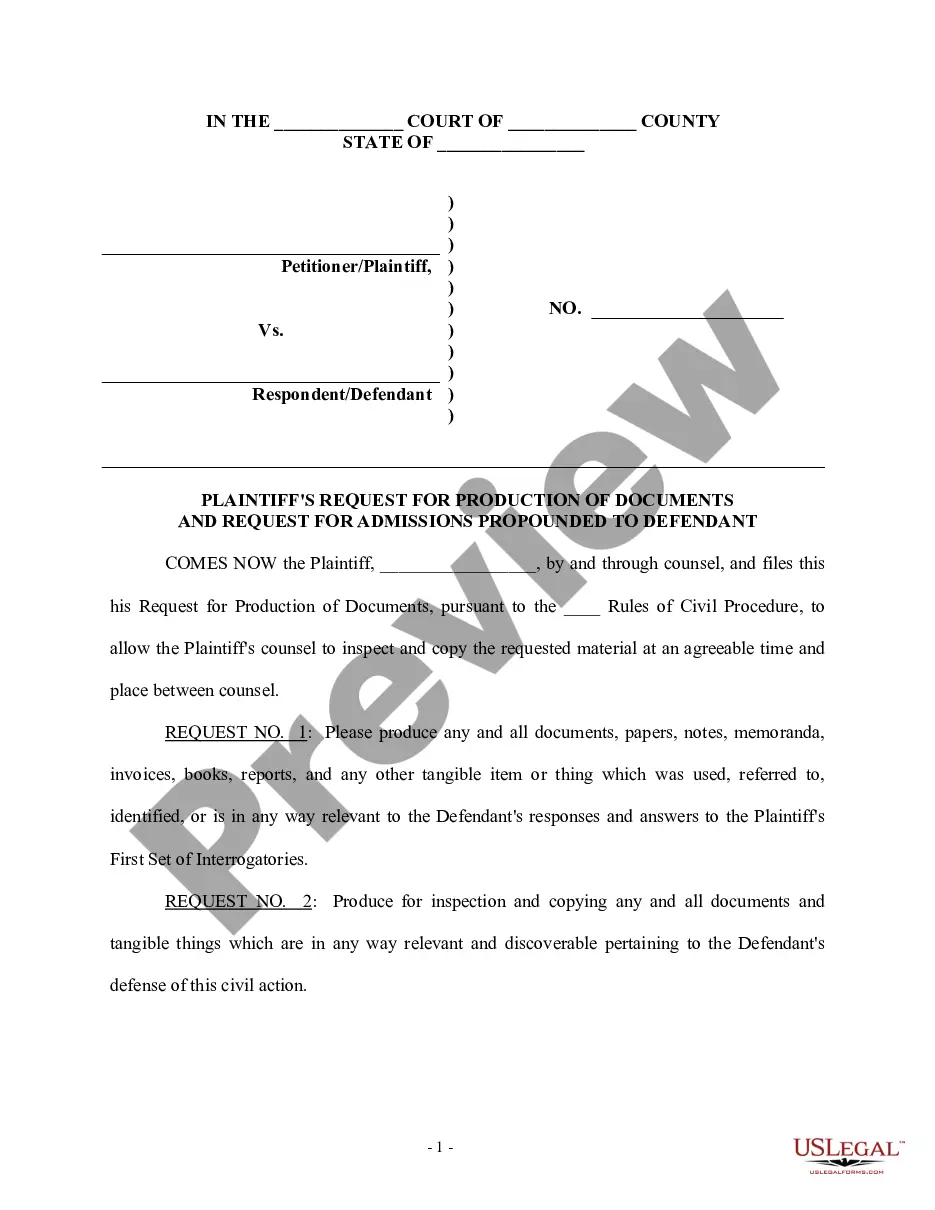
The Plaintiff's Request for Production in a personal injury action is a legal document used to request specific documents and records from the defendant in a personal injury case. Unlike interrogatories or depositions, this form focuses specifically on obtaining tangible evidence that may be relevant to the case. By utilizing this request, the plaintiff can gather crucial information that could aid in resolving the matter or strengthening their position in court.
Main sections of this form
- Identification of parties involved, including the plaintiff and defendant.
- Explicit requests for documents, such as photographs, expert reports, and insurance policies.
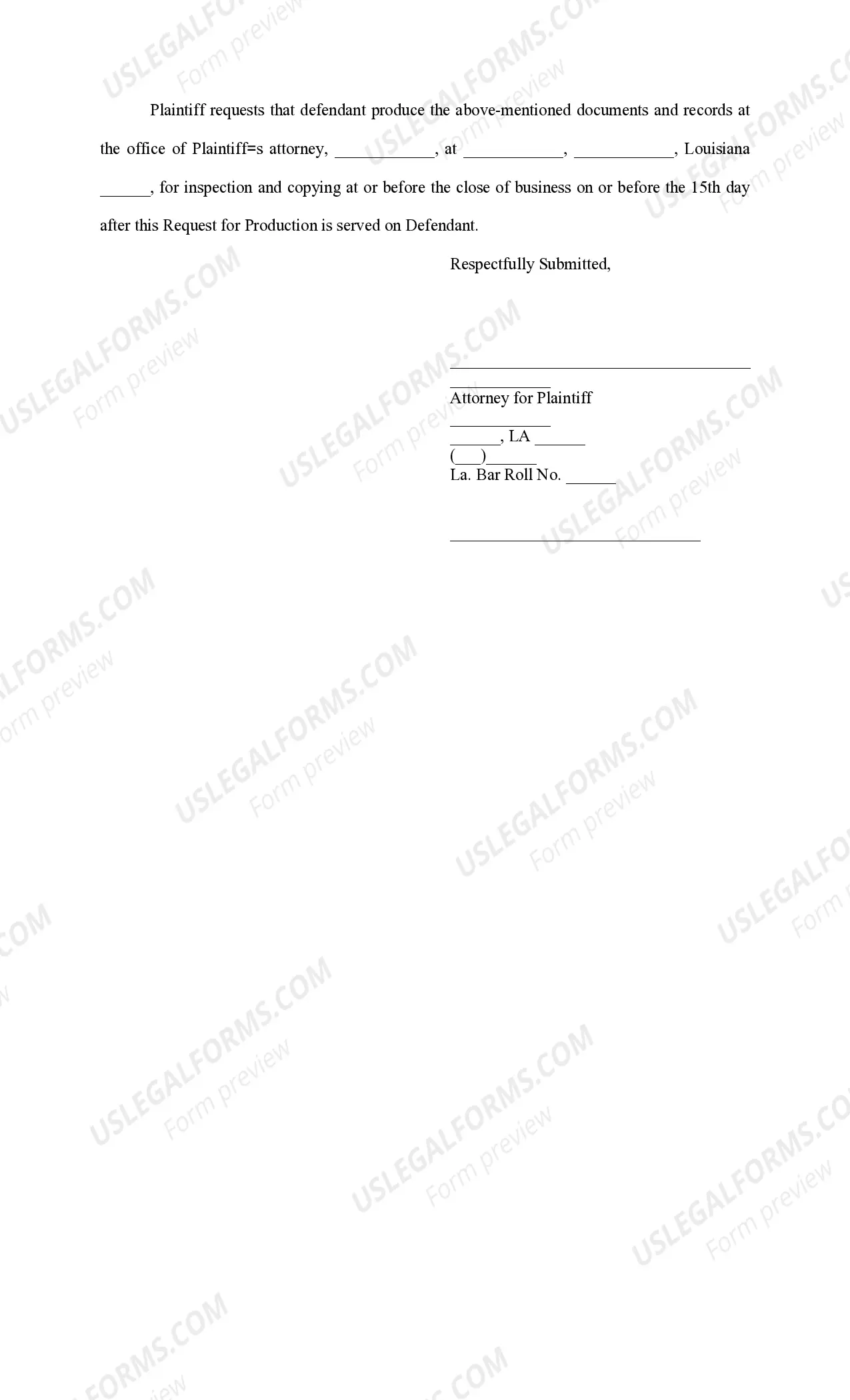
- Instructions for where and when to produce the requested documents.
- Signature and contact information of the plaintiff's attorney.
When to use this form
This form is used in a personal injury action when the plaintiff seeks to obtain documents that are necessary to support their claims or to prepare for trial. It is appropriate to use this form after a lawsuit has been filed and discovery is underway, as it can help uncover facts that may influence the case's outcome.
Who this form is for
- Individuals who have filed a personal injury lawsuit and need information from the defendant.
- Attorneys representing a plaintiff in a personal injury case.
- Parties who wish to ensure that they have all relevant documentation before going to trial.
Completing this form step by step
- Identify the parties involved: clearly list the plaintiff and defendant's names and contact information.
- Specify the documents requested: detail each item you wish to obtain, such as photographs, expert reports, and any relevant correspondence.
- Indicate the deadline: provide a date by which the defendant must produce the requested documents.
- Complete the attorney's information: include the name and contact details of the plaintiff's attorney, as well as their bar number.
- Sign and date the document: ensure the form is signed by the attorney representing the plaintiff.
Does this document require notarization?
This form does not typically require notarization unless specified by local law. However, it's advisable to check specific requirements in your jurisdiction to ensure compliance.
Get your form ready online
Our built-in tools help you complete, sign, share, and store your documents in one place.
Make edits, fill in missing information, and update formatting in US Legal Forms—just like you would in MS Word.
Download a copy, print it, send it by email, or mail it via USPS—whatever works best for your next step.
Sign and collect signatures with our SignNow integration. Send to multiple recipients, set reminders, and more. Go Premium to unlock E-Sign.
If this form requires notarization, complete it online through a secure video call—no need to meet a notary in person or wait for an appointment.
We protect your documents and personal data by following strict security and privacy standards.

Make edits, fill in missing information, and update formatting in US Legal Forms—just like you would in MS Word.

Download a copy, print it, send it by email, or mail it via USPS—whatever works best for your next step.

Sign and collect signatures with our SignNow integration. Send to multiple recipients, set reminders, and more. Go Premium to unlock E-Sign.

If this form requires notarization, complete it online through a secure video call—no need to meet a notary in person or wait for an appointment.

We protect your documents and personal data by following strict security and privacy standards.
Common mistakes
- Failing to specify each document clearly, which may lead to inadequate responses.
- Not including a proper deadline for document production.
- Neglecting to sign the document or omitting the attorney's contact information.
Advantages of online completion
- Convenience of downloading and filling the form at your own pace.
- Access to templates drafted by licensed attorneys, ensuring accuracy and legality.
- Ability to easily edit the form as necessary before submission.
Summary of main points
- The Plaintiff's Request for Production is essential for gathering evidence in a personal injury case.
- Accuracy in detailing the requested documents is critical for the form's effectiveness.
- Compliance with state-specific rules is necessary for legal validity.
Looking for another form?
Form popularity
FAQ
When responding to Requests for Admissions, remember to answer as follows: Admit: If any portion of the Request for Admission is true then you must admit to that portion of the request. You are also allowed to have a hybrid response admit the part of the request that is true while denying another part.
Thank you for your inquiry regarding our product or service. Thank you for your interest in our product or service. We would like to thank you for your letter inquiring about our product. We truly appreciate your letter asking for information about our service.
Have a strategy. Adjust the scope of your requests to the questions at issue. Send clear requests. Always consider how your client would be prepared to respond to similar requests. Make your objections clear and specific.
When responding to Requests for Admissions, remember to answer as follows: Admit: If any portion of the Request for Admission is true then you must admit to that portion of the request. You are also allowed to have a hybrid response admit the part of the request that is true while denying another part.
A request for production is a discovery device used to gain access to documents, electronic data, and physical items held by an opposing party in a legal matter. The aim is to gain insight into any relevant evidence that the opposing party holds.
If a request asks for a document, make a copy of the document; in your response, describe the document and say that a copy is attached; and attach a copy of the document to the responses you send back to the other side.
The making available by a party of documents in his possession, custody or power for inspection by the other party or for use as evidence at trial.
In a civil action, a request for admission is a discovery device that allows one party to request that another party admit or deny the truth of a statement under oath. If admitted, the statement is considered to be true for all purposes of the current trial.