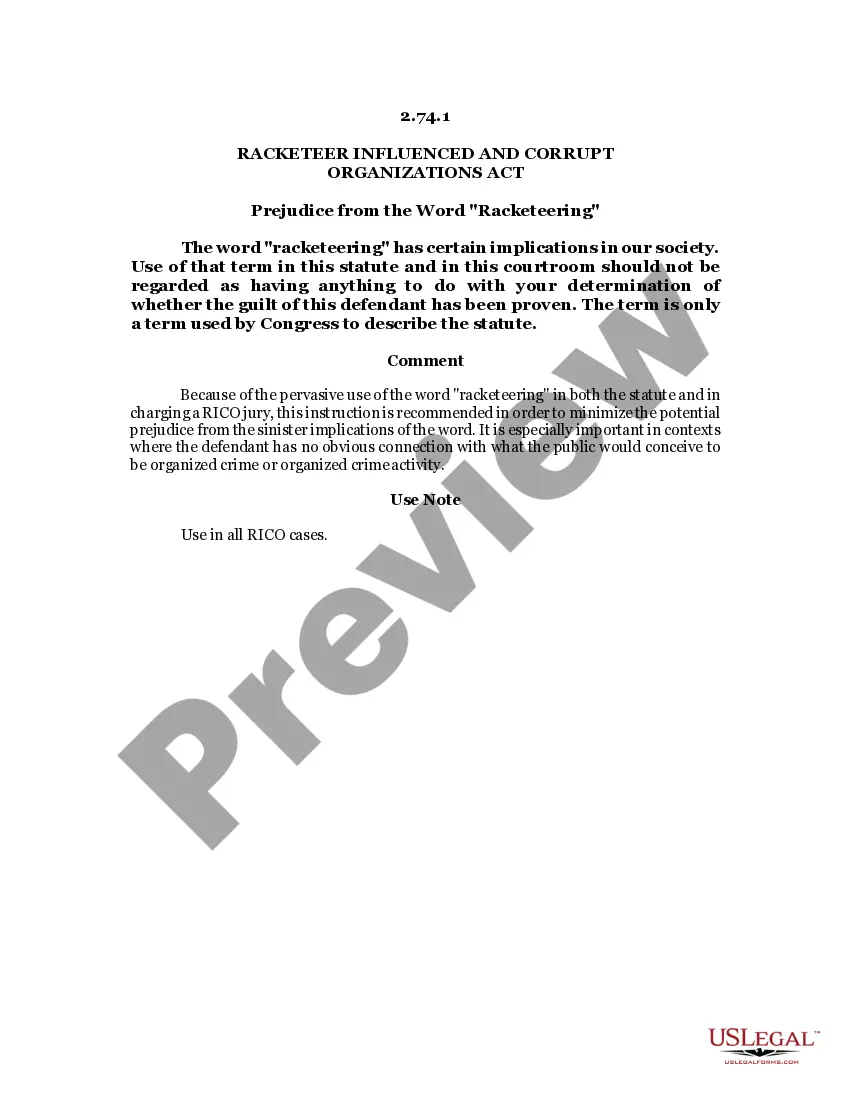
2.74.1 RACKETEER INFLUENCED AND CORRUPT ORGANIZATIONS ACT
Overview of this form
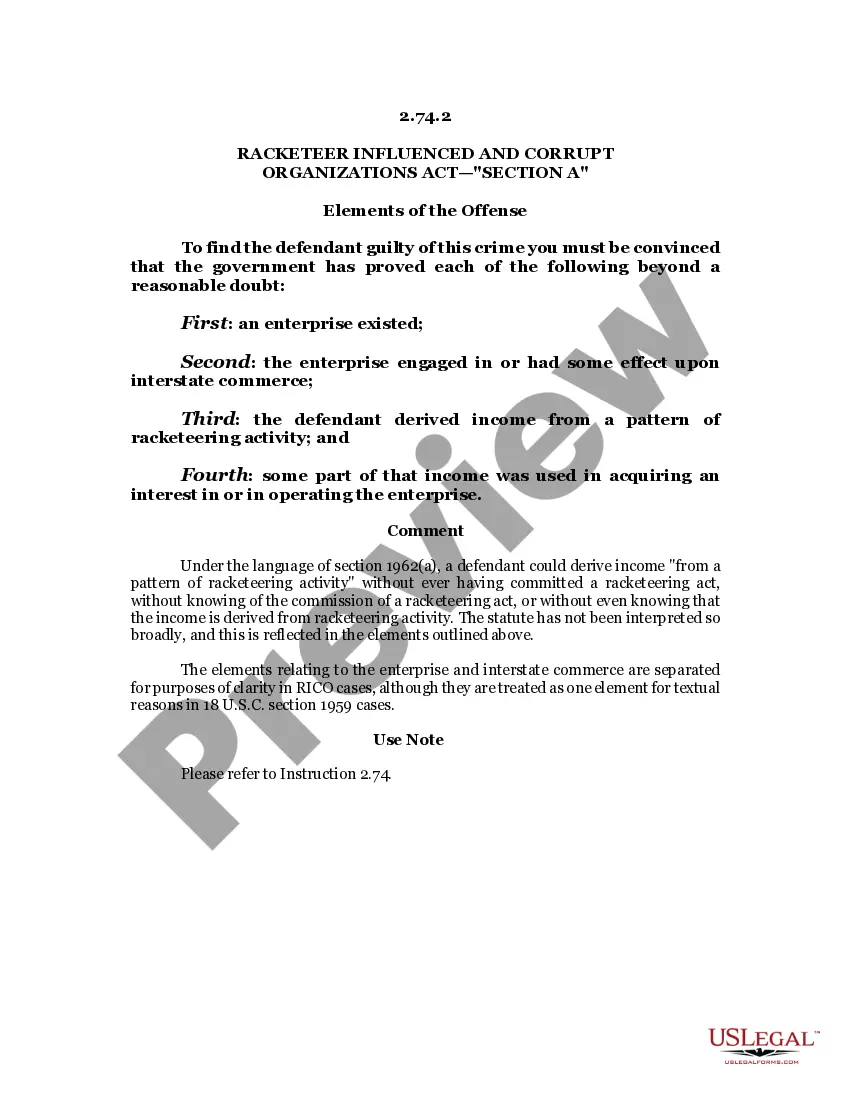
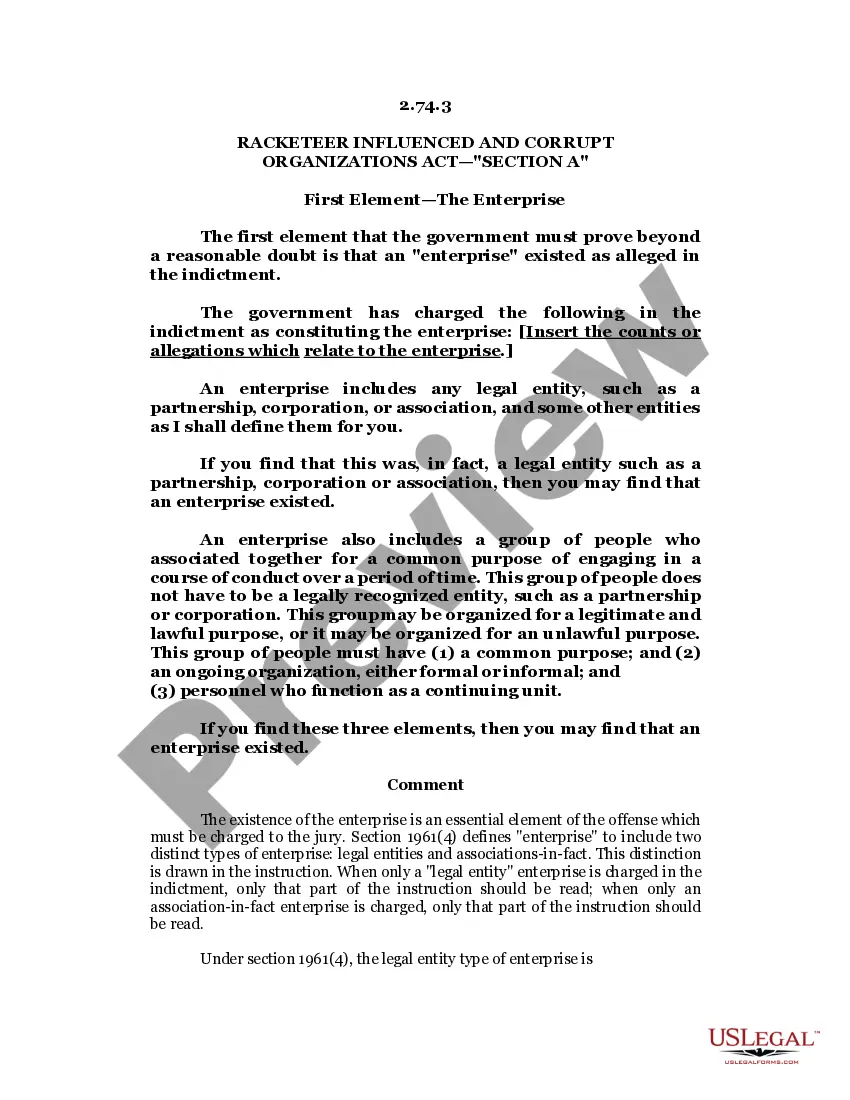
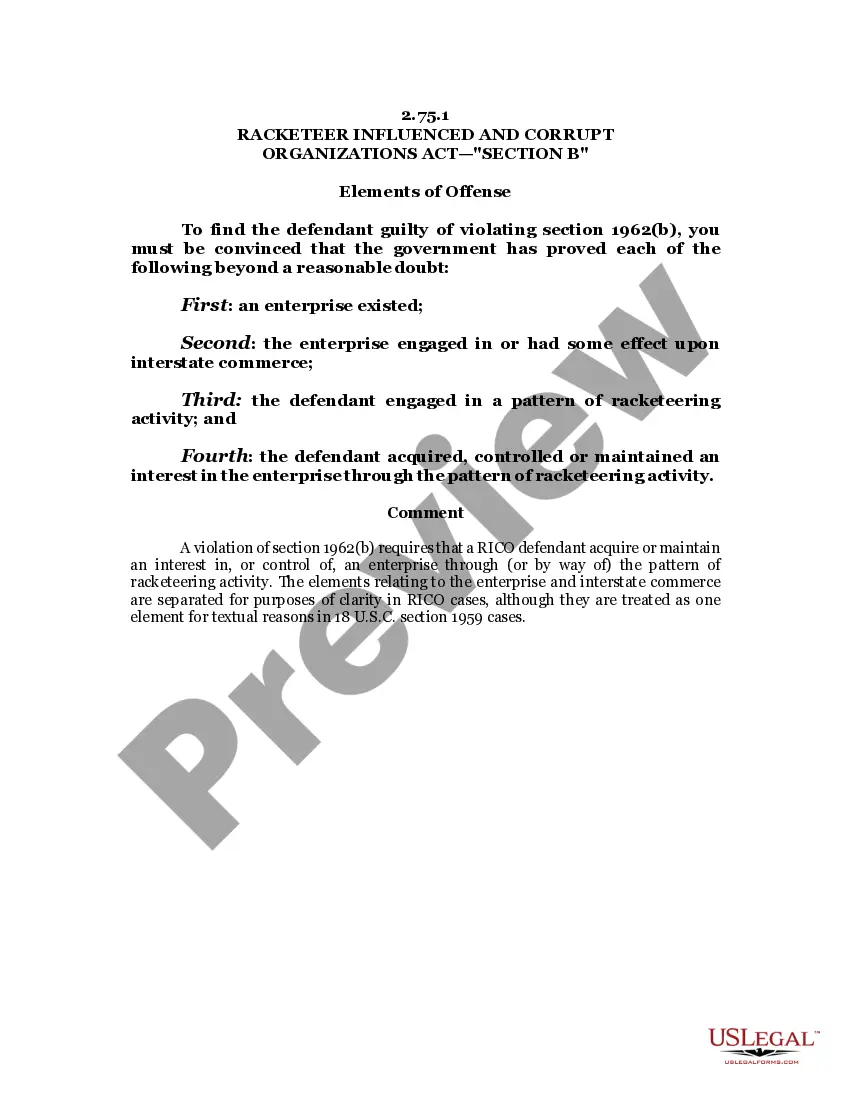
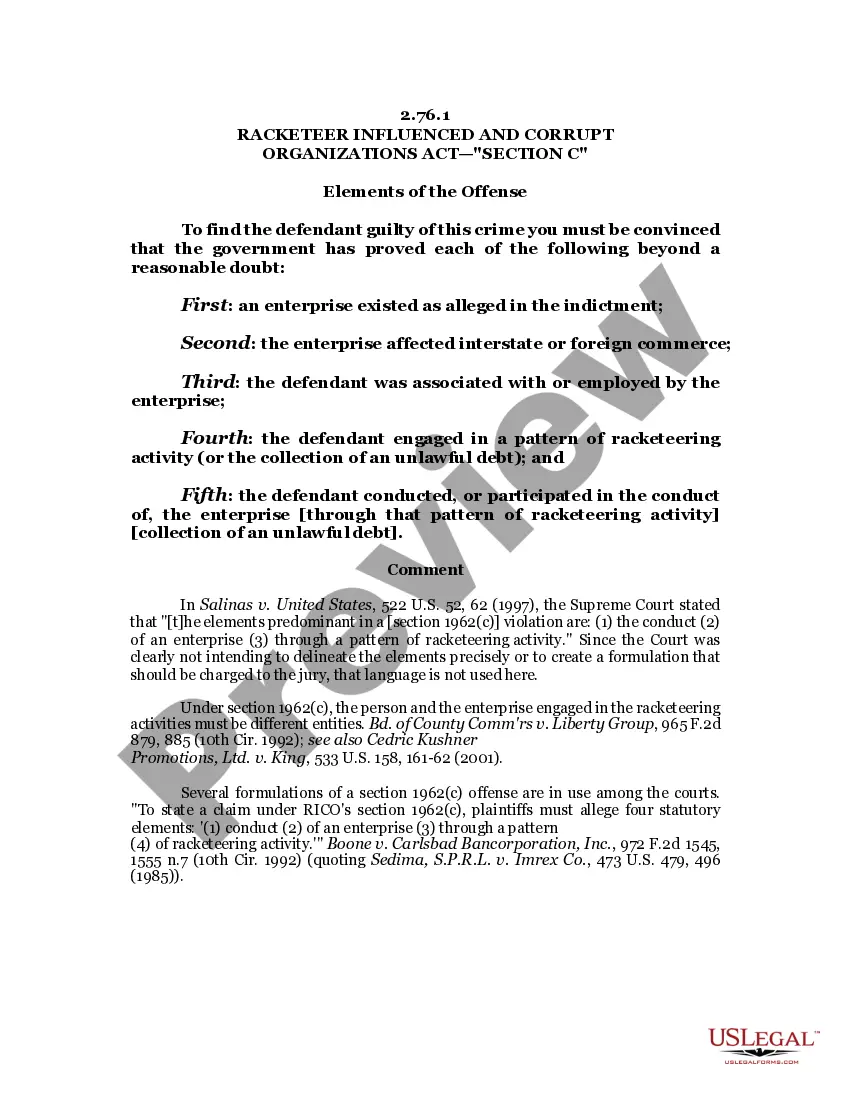
The RICO Act form, formally known as the Racketeer Influenced and Corrupt Organizations Act, is designed to guide juries in evaluating evidence related to racketeering activities. This form specifically addresses the definition of racketeering and ensures that jurors do not let preconceived notions about the term influence their judgment in cases involving alleged RICO violations. This form is crucial for cases where the defendant may not have apparent ties to organized crime, helping to maintain impartiality in the legal process.
Form components explained
- Clarification on the term "racketeering" to mitigate bias in jury decision-making.
- Definitions of key concepts related to RICO cases.
- Guidance on how jurors should evaluate evidence presented in such cases.
- Instructions on maintaining a fair trial, especially regarding prejudicial implications.
- Notes on applicability in all RICO-related legal proceedings.
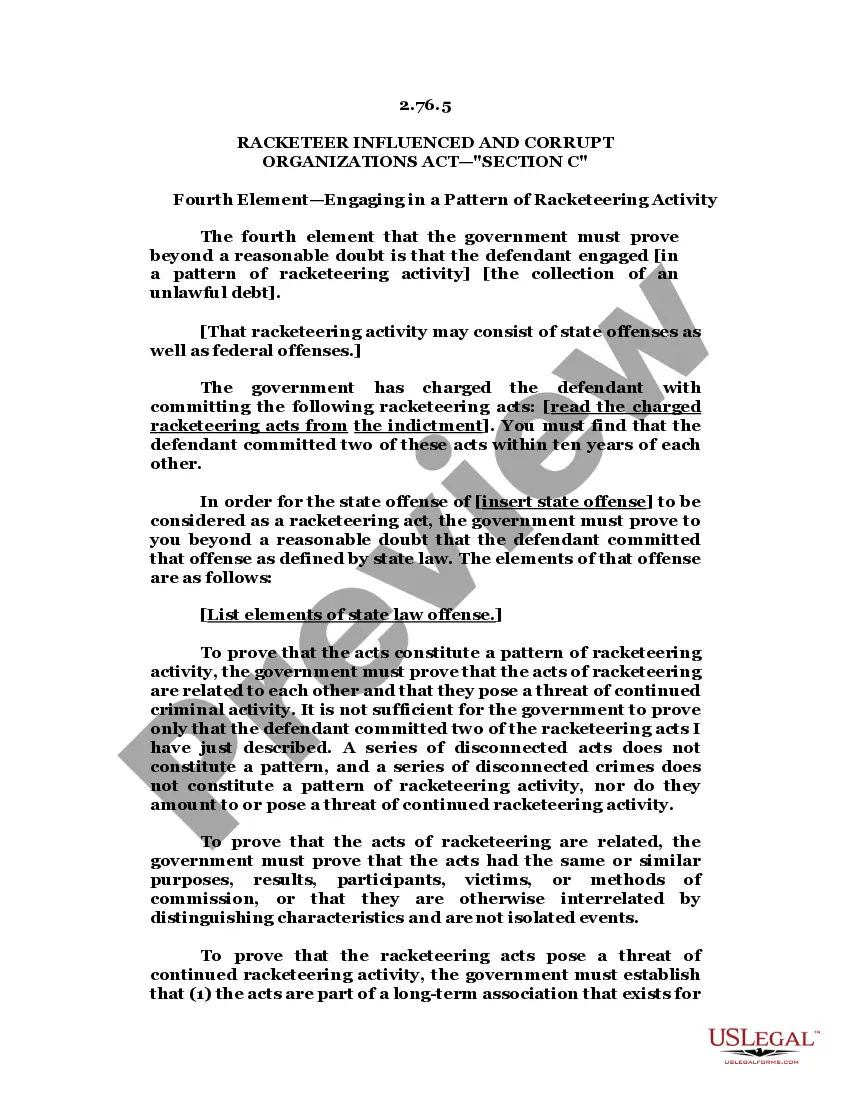
When this form is needed
This form is used in legal cases involving allegations of racketeering as defined under the RICO framework. It is applicable when the prosecution believes that a defendant's actions fit within the scope of organized crime activities or other corrupt practices. Lawyers will provide this form during jury instructions to ensure an unbiased assessment of the defendant's actions.
Who needs this form
- Judges presiding over RICO cases.
- Prosecutors presenting cases related to racketeering.
- Defense attorneys representing defendants accused under RICO.
- Jurors tasked with deciding cases involving RICO allegations.
Completing this form step by step
- Identify the case and parties involved in the RICO allegations.
- Specify the definition of racketeering as it applies to the case.
- Provide clear jury instructions on evaluating evidence without bias.
- Include comments or notes that clarify legal terms and their implications on the trial.
- Finalize the form by ensuring all relevant information is accurate and complete.
Does this form need to be notarized?
Notarization is not commonly needed for this form. However, certain documents or local rules may make it necessary. Our notarization service, powered by Notarize, allows you to finalize it securely online anytime, day or night.
Get your form ready online
Our built-in tools help you complete, sign, share, and store your documents in one place.
Make edits, fill in missing information, and update formatting in US Legal Forms—just like you would in MS Word.
Download a copy, print it, send it by email, or mail it via USPS—whatever works best for your next step.
Sign and collect signatures with our SignNow integration. Send to multiple recipients, set reminders, and more. Go Premium to unlock E-Sign.
If this form requires notarization, complete it online through a secure video call—no need to meet a notary in person or wait for an appointment.
We protect your documents and personal data by following strict security and privacy standards.

Make edits, fill in missing information, and update formatting in US Legal Forms—just like you would in MS Word.

Download a copy, print it, send it by email, or mail it via USPS—whatever works best for your next step.

Sign and collect signatures with our SignNow integration. Send to multiple recipients, set reminders, and more. Go Premium to unlock E-Sign.

If this form requires notarization, complete it online through a secure video call—no need to meet a notary in person or wait for an appointment.

We protect your documents and personal data by following strict security and privacy standards.
Common mistakes
- Assuming all jurors understand the implications of "racketeering" without clarification.
- Overcomplicating definitions that should be straightforward.
- Failing to emphasize the importance of unbiased judgment among jurors.
Advantages of online completion
- Easy access to download and complete the form from any device.
- Editable fields allow for customization based on specific case details.
- Reliability of templates drafted by licensed attorneys ensures accuracy and compliance.
Legal use & context
- The RICO Act provides a framework for prosecuting organized crime in the U.S.
- It establishes the legal definition of racketeering activities.
- Improper use of the term can lead to jury bias, which this form seeks to minimize.
Looking for another form?


Form popularity
FAQ
Is it possible to beat charges for RICO violations? RICO charges are serious federal crimes accompanied by serious consequences. To avoid a conviction for racketeering and a lengthy stay in a federal prison, you need to hire the right attorney. Beating a RICO charge is tough, but it isn't impossible.
Modern racketeering crimes include credit card frauds, data theft, and cybercrimes. They belong to the category of white-collar crimes.
Beating a RICO charge is tough, but it isn't impossible. If you or your organization is under investigation for RICO charges, you don't just need any lawyer, you need a federal criminal defense lawyer who isn't afraid to go to trial in a federal court.
Recent News. Racketeer Influenced and Corrupt Organizations Act (RICO), U.S. federal statute targeting organized crime and white-collar crime. Since being enacted in 1970, it has been used extensively and successfully to prosecute thousands of individuals and organizations in the United States.
Popular Examples of RICO Cases in the United States Mail and wire fraud, tax evasion, money laundering, honest services fraud. The more crimes an organization commits, the higher their penalties.
A conviction under RICO has serious consequences. Not only does the RICO statute provide for criminal penalties including 20 years of prison, but the financial penalties are severe. A person convicted can face a fine of either $250,000 or double the amount of proceeds earned from illicit activity.
The mandatory minimum sentence for someone who is convicted under the CCE statute is at least 20 years in federal prison along with a maximum fine of up to $2 million. The defendant must also forfeit all assets gained in commission of the crimes and relinquish all ties to the criminal enterprise.
A violation of RICO occurs when a person, in connection with an enterprise, engages in a pattern of racketeering activity. Racketeering activity includes: Arson. Bribery. Counterfeiting.