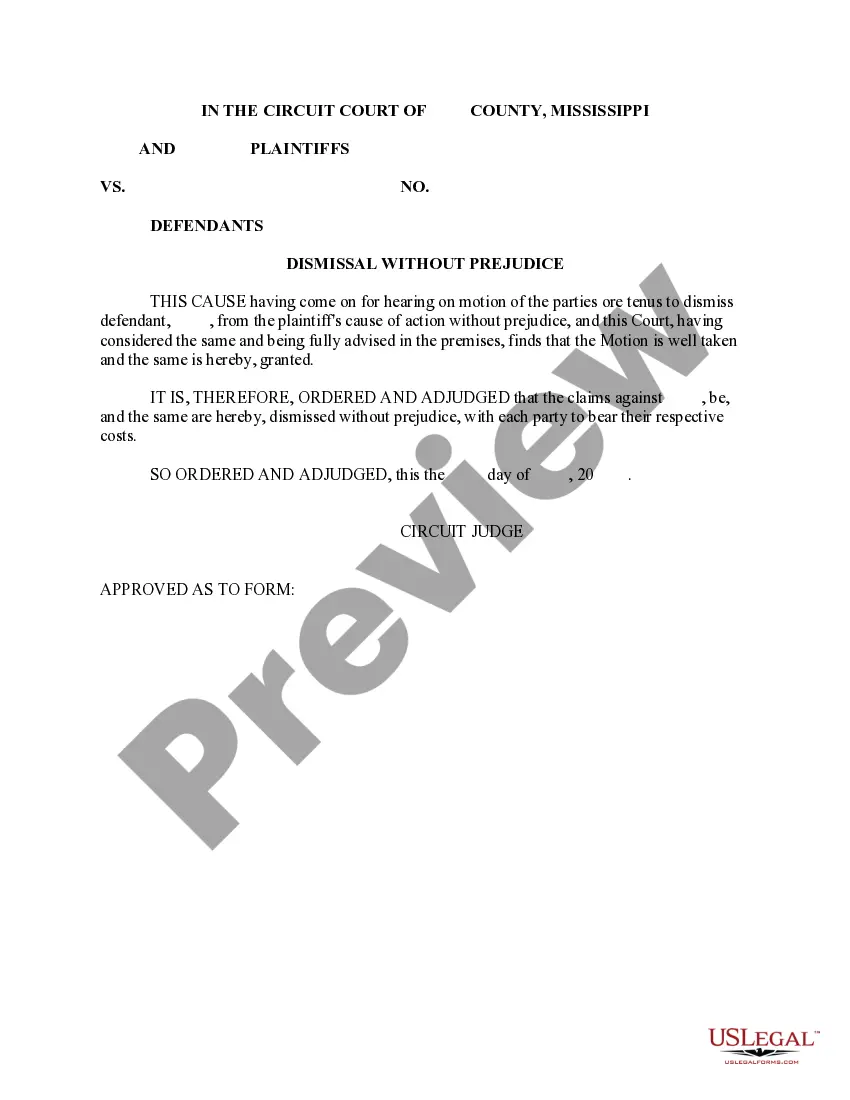
Louisiana No Lien Affidavit
What this document covers
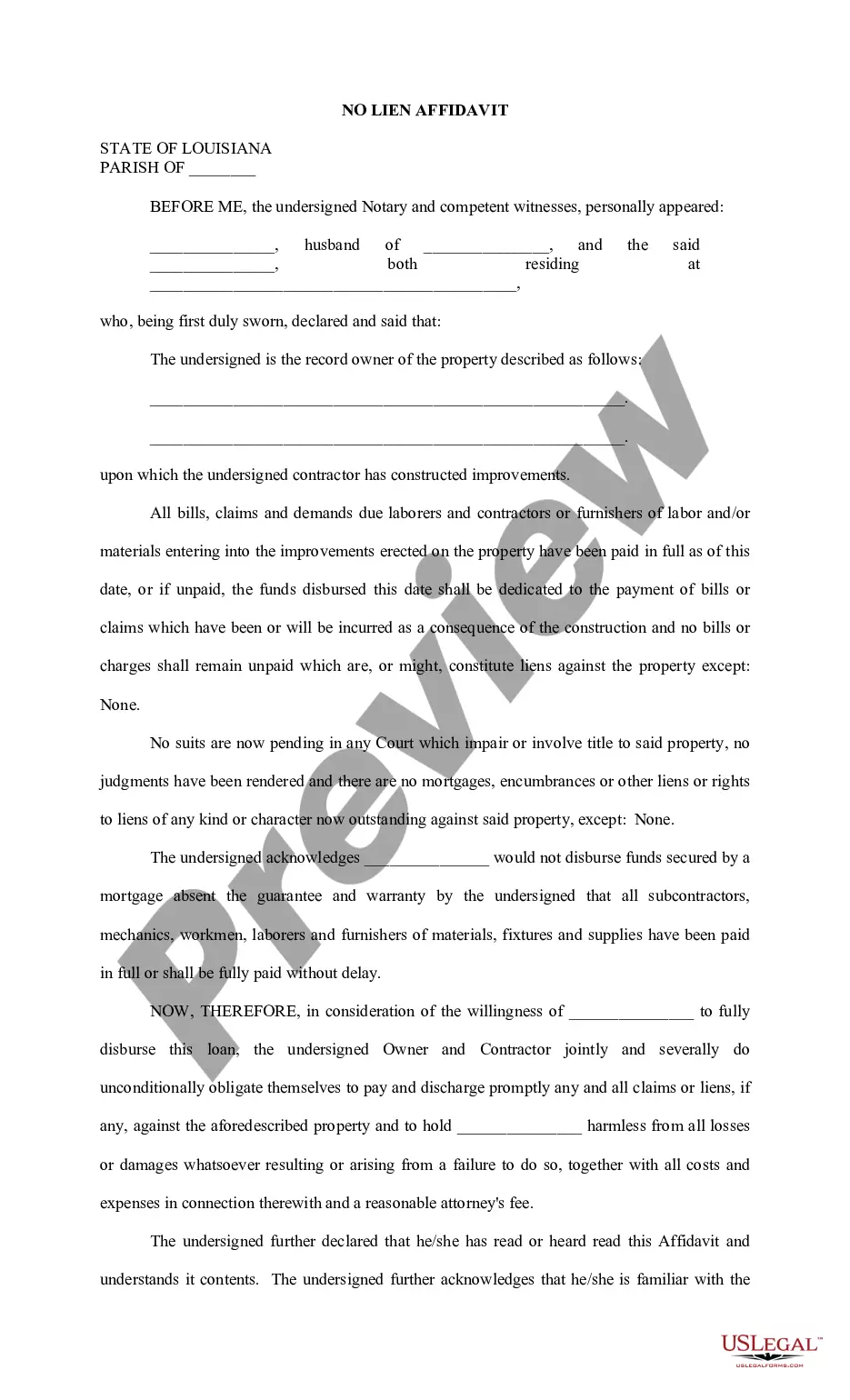
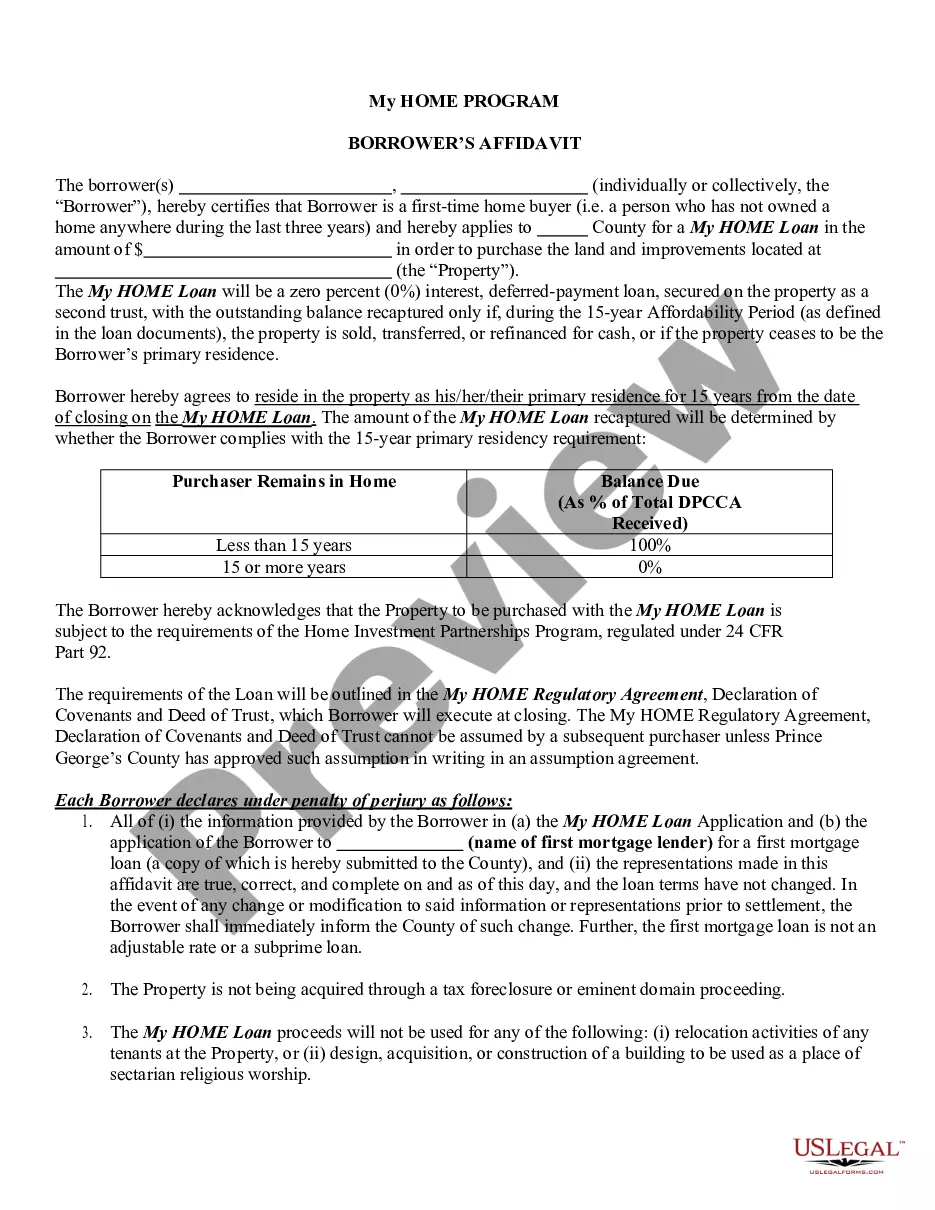
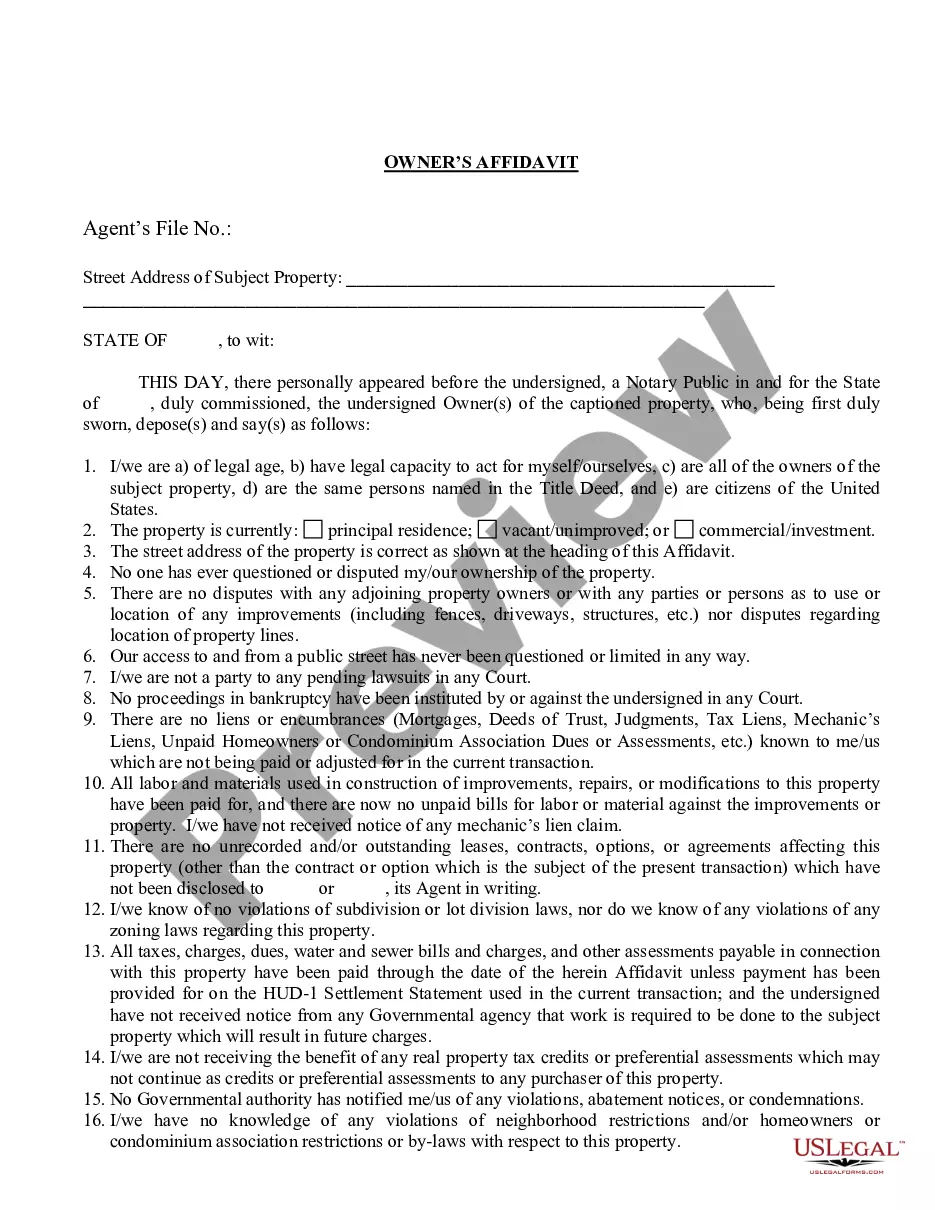
The No Lien Affidavit is a legal document that a property owner uses to affirm that their property is free of liens or mortgages. This affidavit serves as a declaration that all claims and demands related to construction on the property have been satisfied, ensuring that no outstanding debts could affect the title. It is distinct from other affirmations by focusing solely on the absence of financial encumbrances on the property in question.
Main sections of this form
- Identification of the property owner and their spouse
- Description of the property with clear boundaries
- Statement of full payment to contractors and laborers related to property improvements
- Disclosure of any lawsuits, judgments, or liens against the property
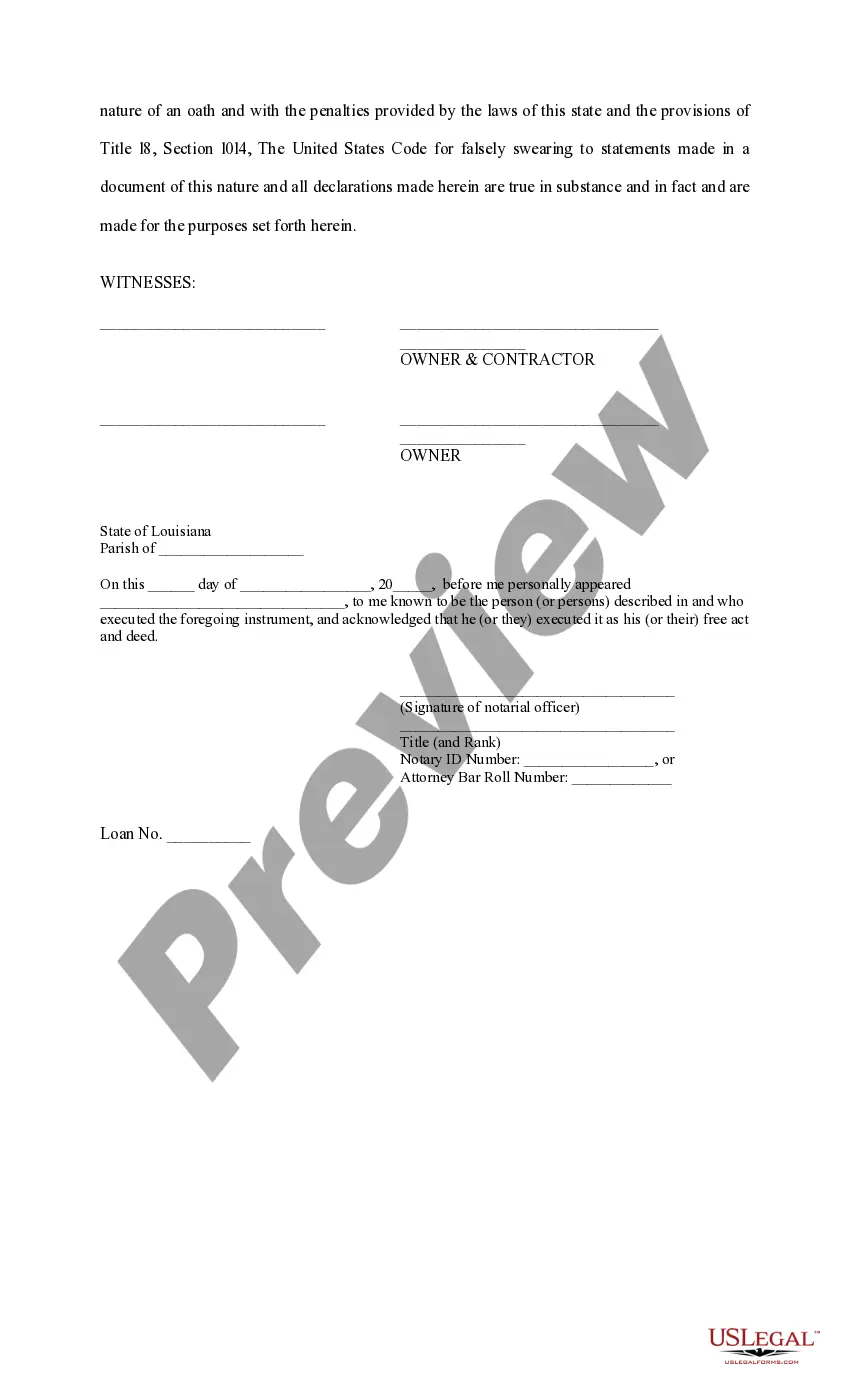
- Owner and contractor's acknowledgement of responsibility for potential claims
- Signature and notarization section for legal validation

When to use this document
This form is commonly used in real estate transactions where property improvements have been made and the owner needs to confirm that there are no outstanding debts or legal claims against the property. It is particularly useful when securing financing for construction projects or when transferring property ownership, ensuring that buyers can acquire the title without concerns of existing liens.
Who this form is for
- Property owners looking to affirm the removal of liens or mortgages
- Contractors or builders requiring assurance of paid labor and materials
- Buyers or sellers in real estate transactions
- Anyone involved in financing arrangements related to property improvements
Instructions for completing this form
- Identify the full names of the property owner and their spouse.
- Provide a detailed description of the property, including boundaries.
- State that all payments for construction-related work have been made.
- Indicate that there are no pending lawsuits or liens against the property.
- Sign the affidavit in front of a notary public to finalize the document.
Does this form need to be notarized?
Notarization is required for this form to take effect. Our online notarization service, powered by Notarize, lets you verify and sign documents remotely through an encrypted video session, available 24/7.
Get your form ready online
Our built-in tools help you complete, sign, share, and store your documents in one place.
Make edits, fill in missing information, and update formatting in US Legal Forms—just like you would in MS Word.
Download a copy, print it, send it by email, or mail it via USPS—whatever works best for your next step.
Sign and collect signatures with our SignNow integration. Send to multiple recipients, set reminders, and more. Go Premium to unlock E-Sign.
If this form requires notarization, complete it online through a secure video call—no need to meet a notary in person or wait for an appointment.
We protect your documents and personal data by following strict security and privacy standards.

Make edits, fill in missing information, and update formatting in US Legal Forms—just like you would in MS Word.

Download a copy, print it, send it by email, or mail it via USPS—whatever works best for your next step.

Sign and collect signatures with our SignNow integration. Send to multiple recipients, set reminders, and more. Go Premium to unlock E-Sign.

If this form requires notarization, complete it online through a secure video call—no need to meet a notary in person or wait for an appointment.

We protect your documents and personal data by following strict security and privacy standards.
Common mistakes
- Failing to provide complete and accurate property descriptions.
- Omitting required signatures, especially from both the property owner and spouse.
- Not disclosing existing liens or obligations.
- Submitting the form without proper notarization.
Benefits of completing this form online
- Convenient accessibility for users at any time of day.
- Editability allows for personalization based on individual circumstances.
- Reliable templates drafted by licensed attorneys ensuring legal compliance and accuracy.
Main things to remember
- No Lien Affidavits are critical for affirming a property's financial status.
- Appropriate for use before real estate transactions and contractor payments.
- Ensure all required information is accurate and complete for validity.
Looking for another form?
Form popularity
FAQ
Subject to some exceptions, a lien for materials, services, or wages may be registered any time up to 45 days from the day the last materials, services, or wages were provided, or since the contract was abandoned. After those 45 days elapse, the lien expires.
In Alberta, for example, your lien is valid for 180 days from the date the lien was placed. In Ontario, liens are only valid for 90 days from the date of last on site working.
Complete the Louisiana Statement of Claim and Privilege form. Record the claim form with the recorder of mortgages office in the parish where the property is located. Serve notice of the lien claim to the property owner.
Complete the Louisiana Statement of Claim and Privilege form. Record the claim form with the recorder of mortgages office in the parish where the property is located. Serve notice of the lien claim to the property owner.
A judgment lien in Louisiana will remain attached to the debtor's property (even if the property changes hands) for ten years.
Satisfy Your Debt: This is the most straightforward option. Once you have paid off the balance of your debt, in full, you can file a Release of Lien form. This acts as evidence that the debt has been paid and will effectively remove the lien from your property.
If the Notice of Contract is filed, a contractor has 60 days from the filing of a Notice of Acceptance to file a Louisiana mechanics lien. If no Notice of Contract has been filed, a contractor has 60 days from completion on the project to file a Louisiana mechanics lien if the contract amount is less than $25,000.
A contractor's lien (often known as a mechanic's lien, or a construction lien) is a claim made by contractors or subcontractors who have performed work on a property, and have not yet been paid.After all, contractors would rather work out a deal than go through the hassle of filing a lien against your property.
A mortgage creates a lien on your property that gives the lender the right to foreclose and sell the home to satisfy the debt. A deed of trust (sometimes called a trust deed) is also a document that gives the lender the right to sell the property to satisfy the debt should you fail to pay back the loan.