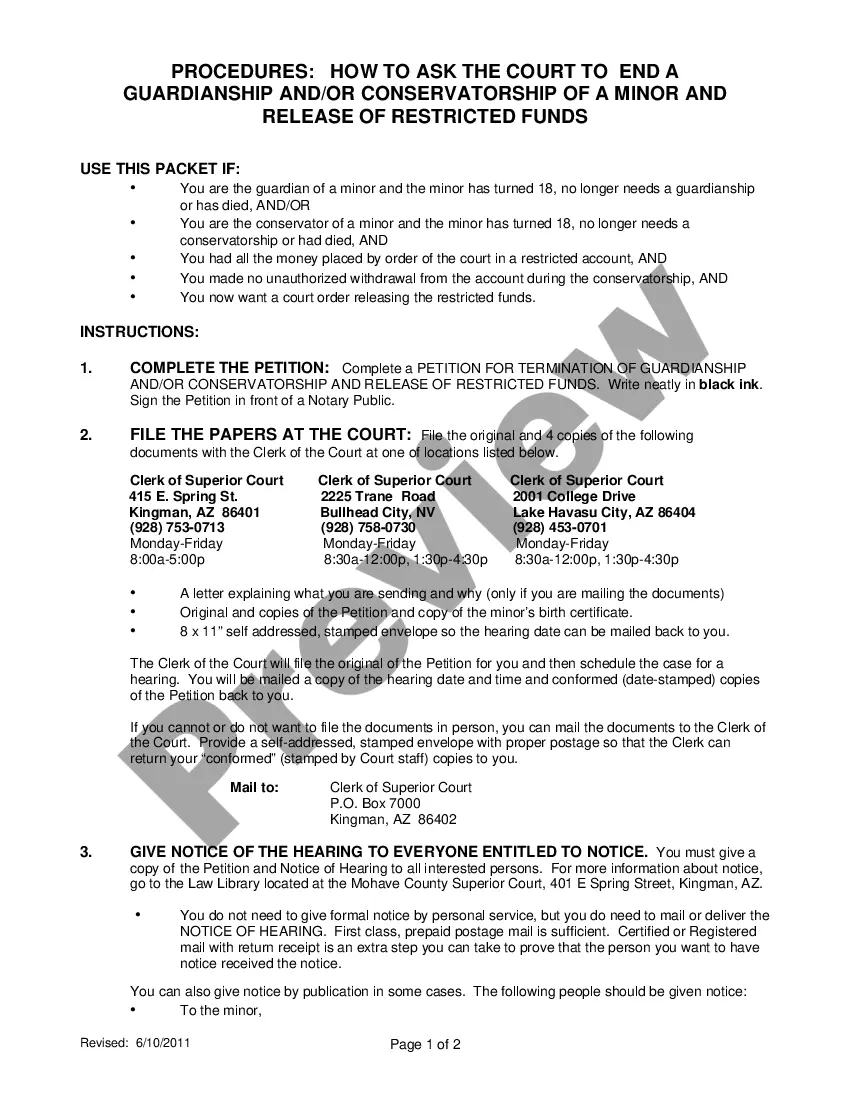
Mississippi Response to Motion to Quash Subpoena Duces Tecum
About this form
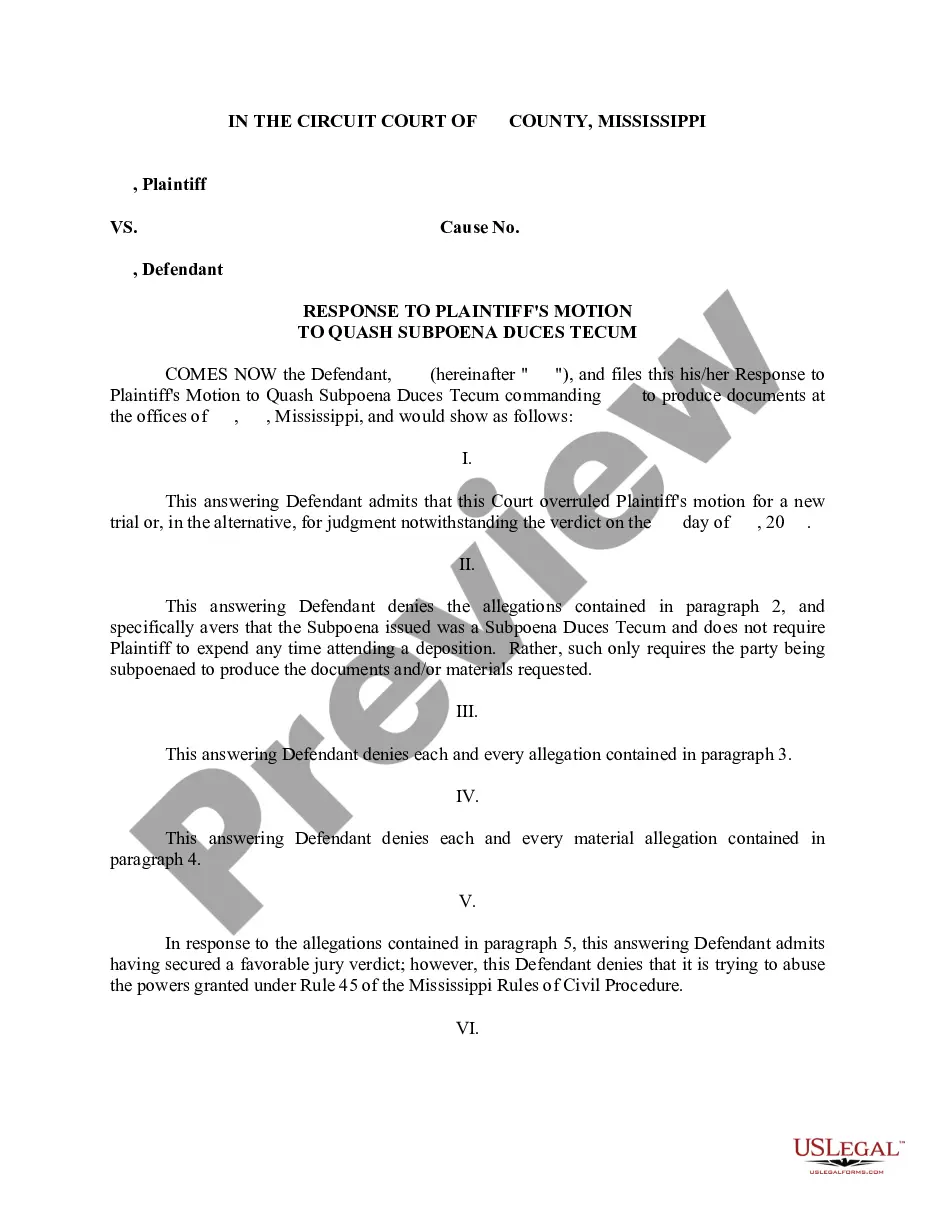
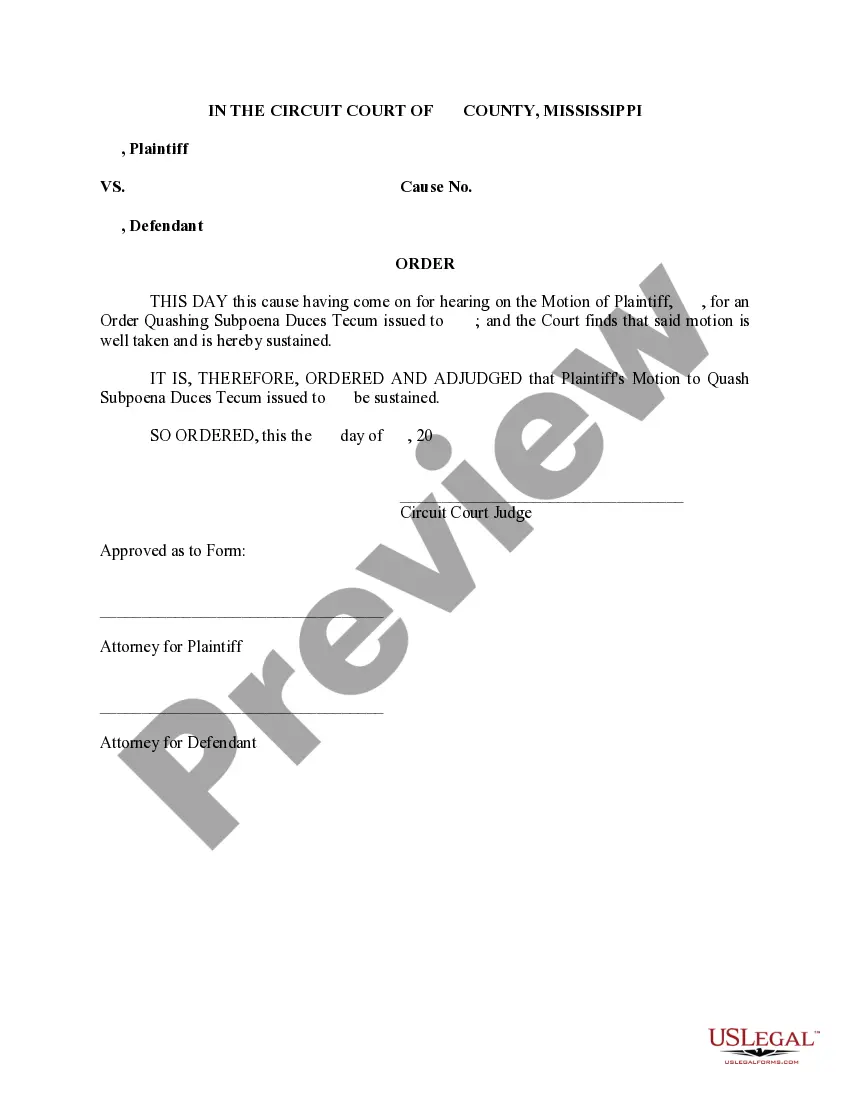
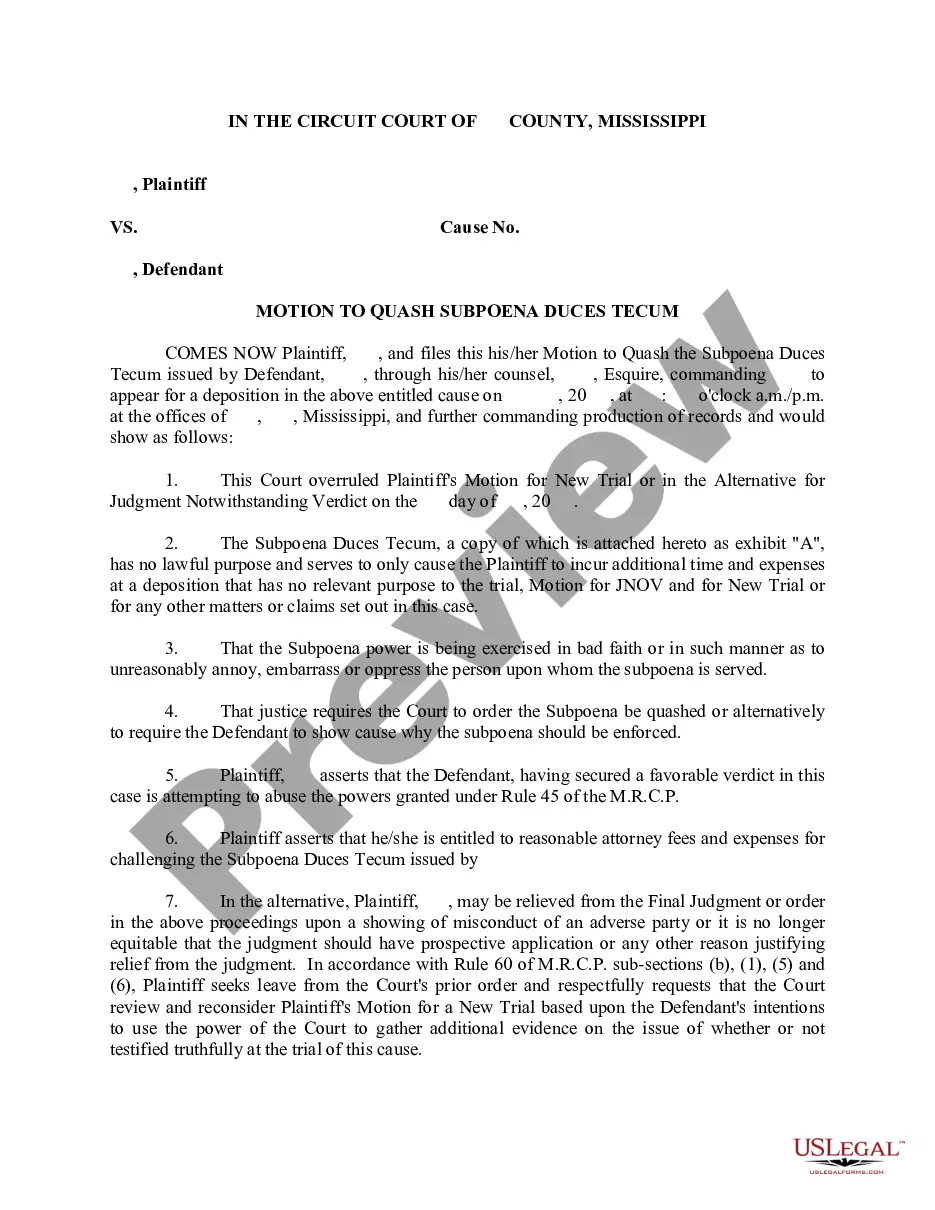
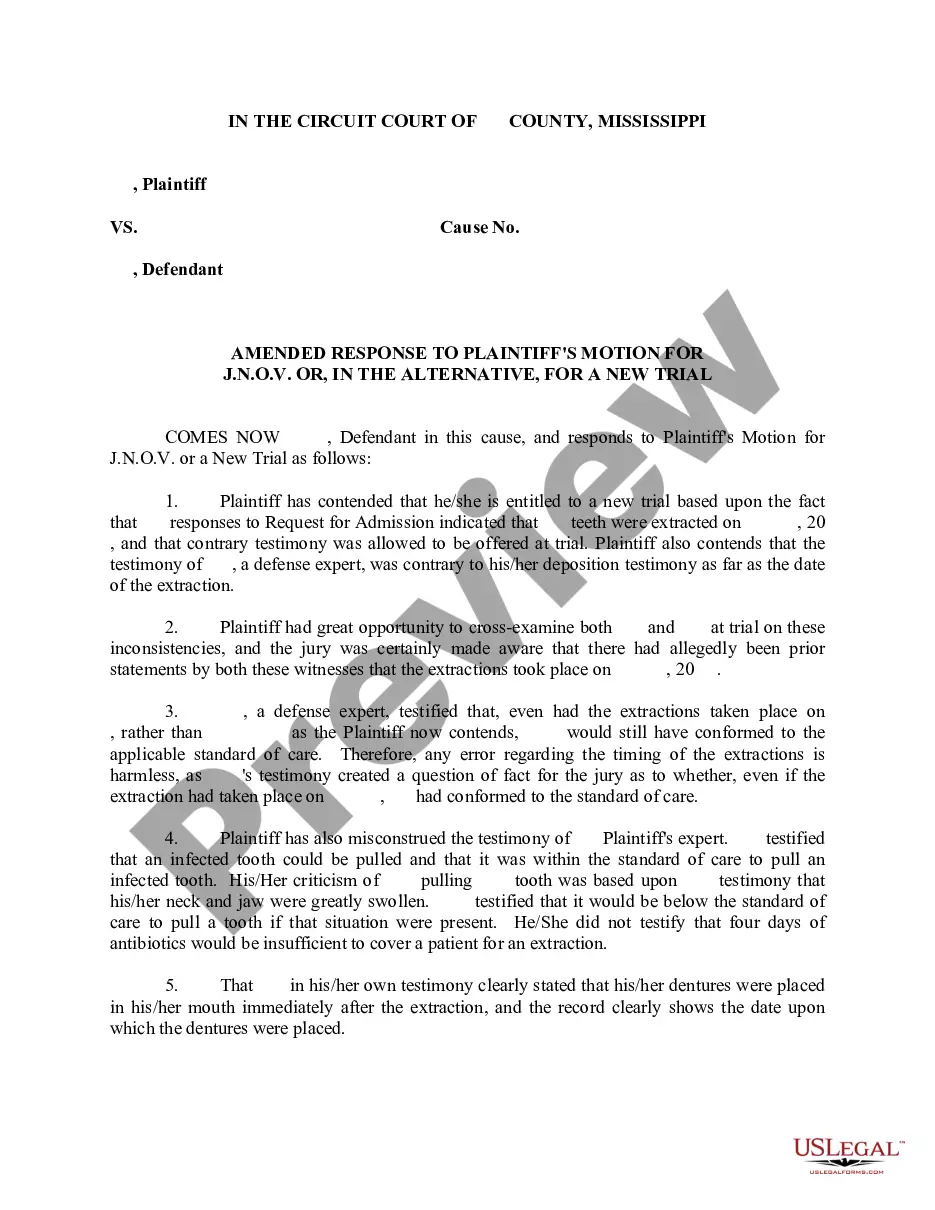
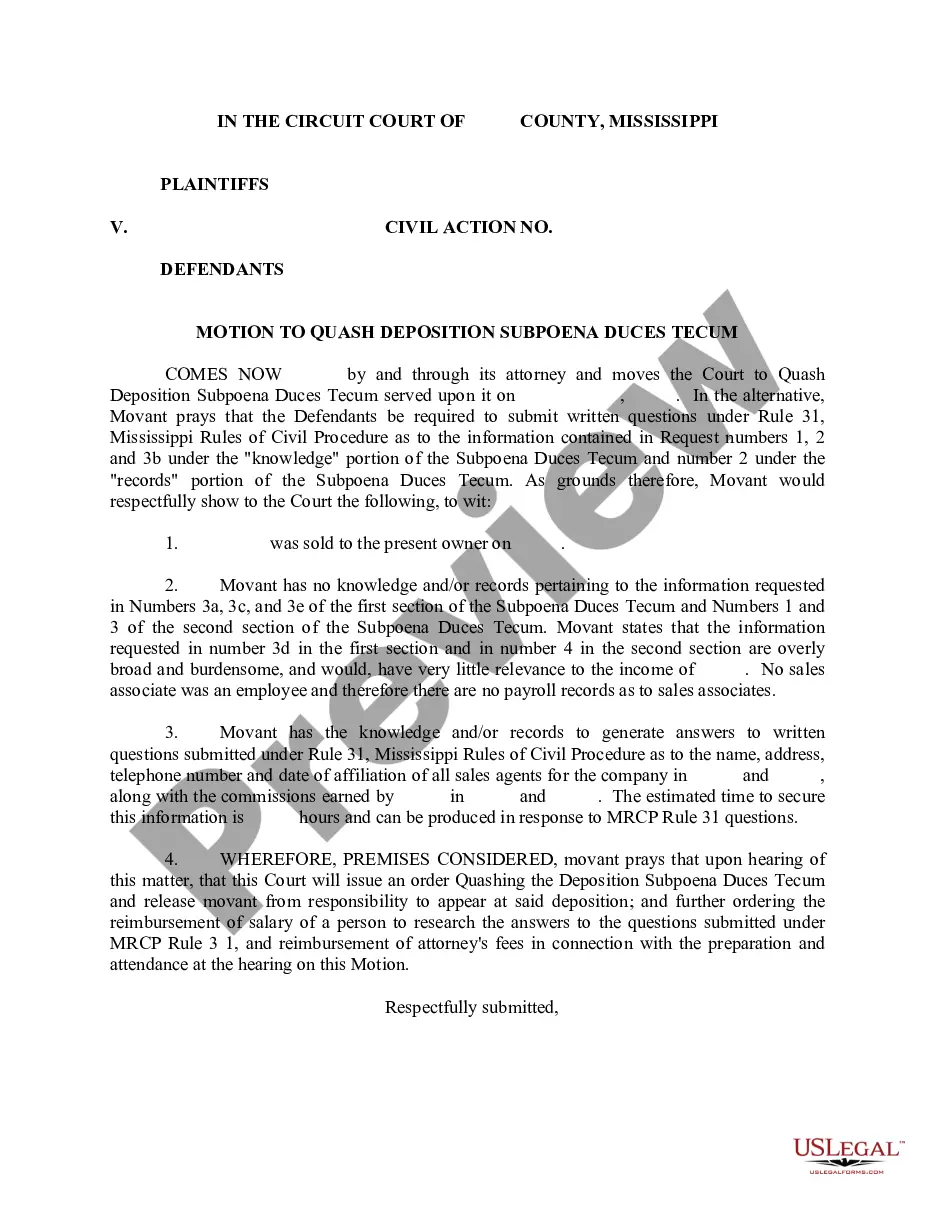
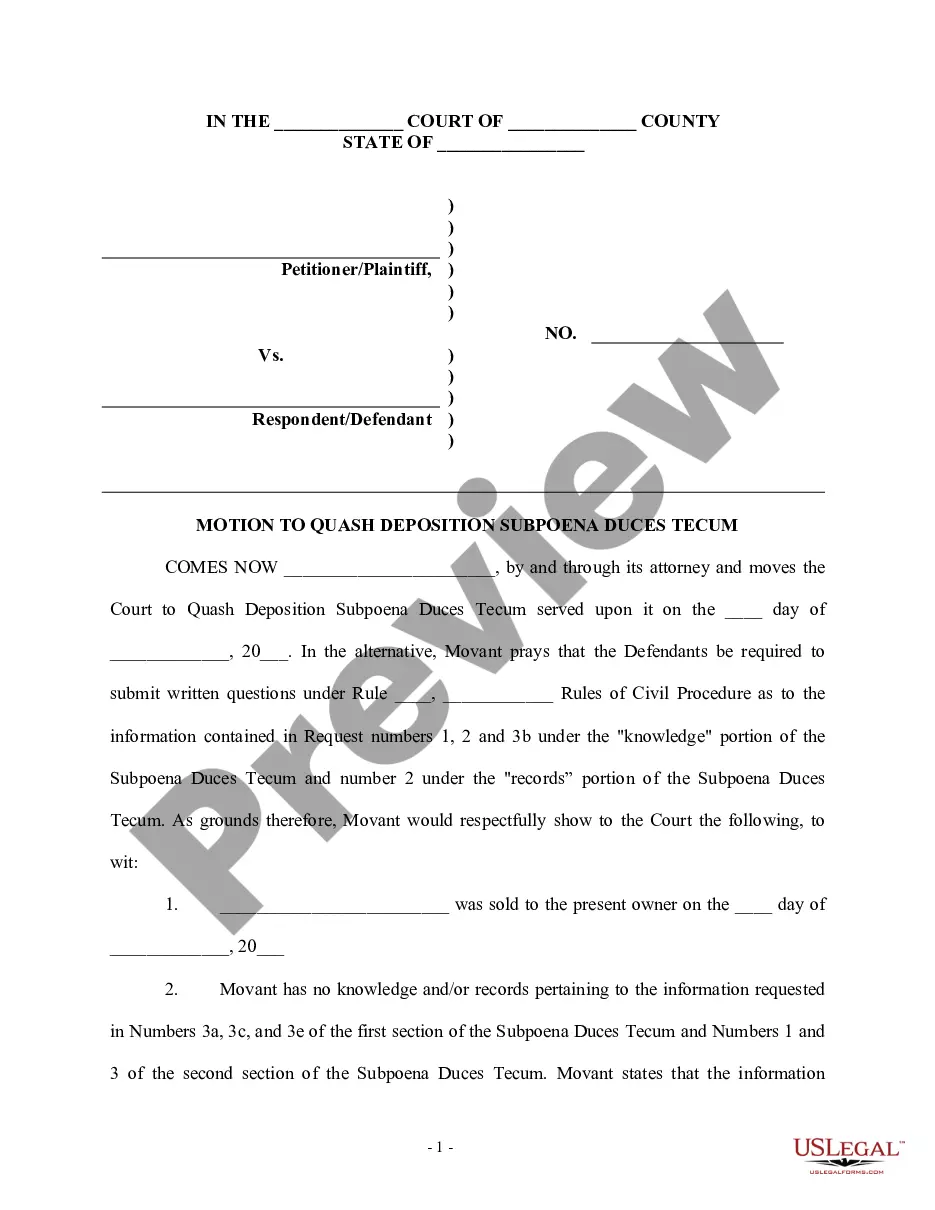
The Response to Motion to Quash Subpoena Duces Tecum is a legal document used by a defendant in response to a motion filed by a plaintiff to challenge a subpoena. This form specifically addresses the request to produce documents without requiring an appearance in court. It differentiates itself from other response forms as it focuses on the validity of the subpoena and the obligations it imposes on the defendant to provide requested materials.
Key components of this form
- Case caption: Identifies the parties involved and the case number.
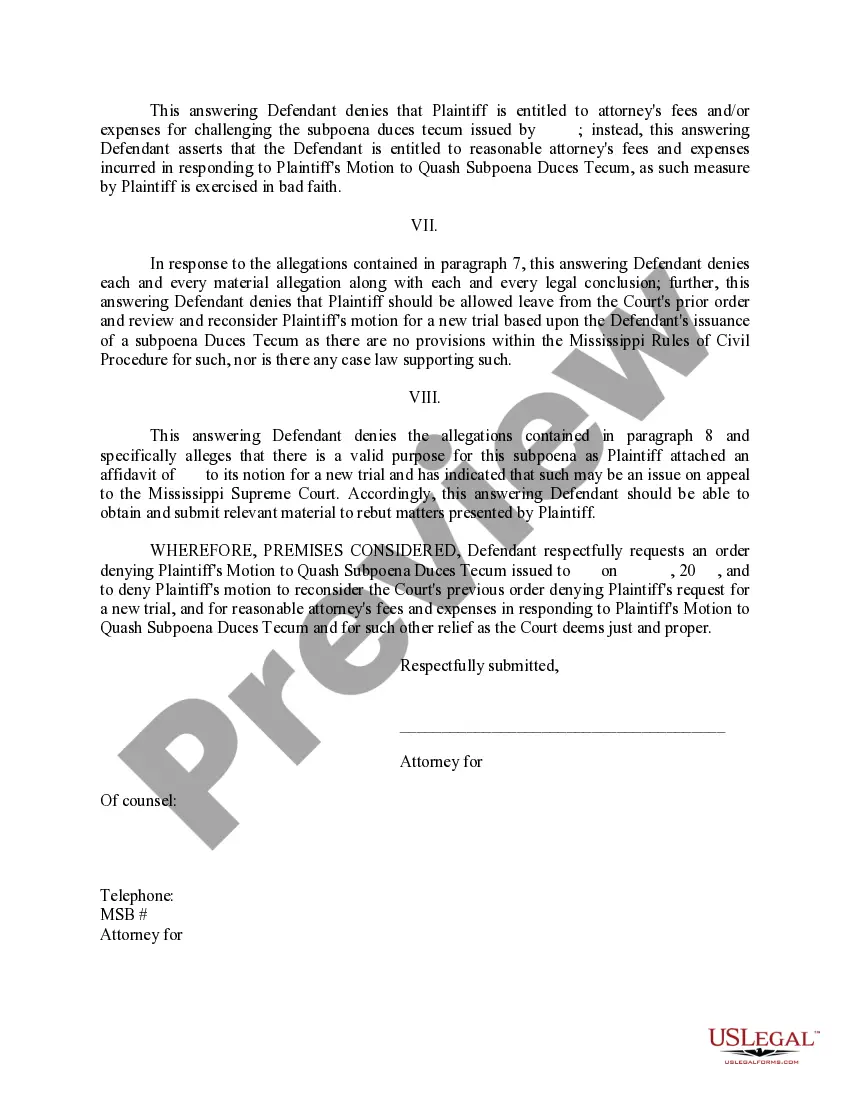
- Admissions and denials: Outlines the defendant's responses to the allegations made in the motion.
- Legal arguments: Provides the justification for why the subpoena should remain in effect.
- Request for relief: Specifies the defendant's requests to deny the motion and award attorney's fees.
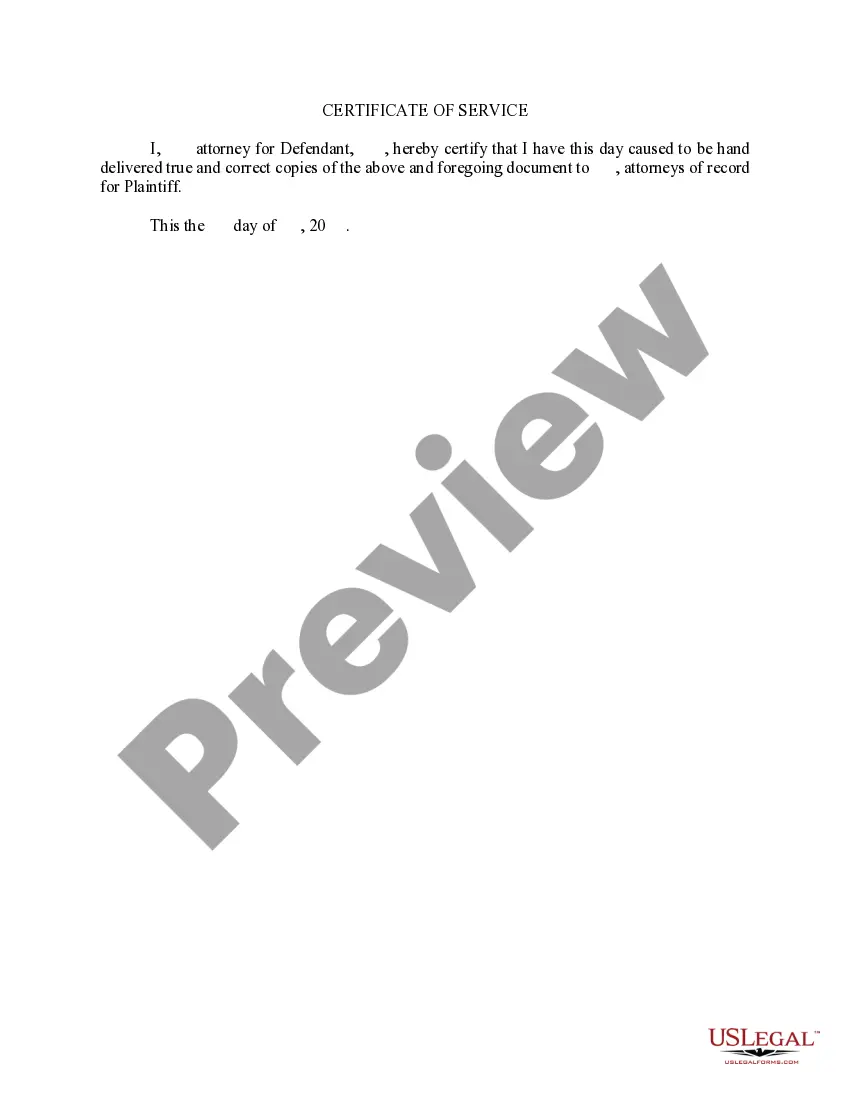
- Certificate of service: Confirms that copies of the response have been delivered to the plaintiff's attorney.
When to use this document
This form is necessary when a defendant receives a motion to quash a subpoena duces tecum from the plaintiff. It is particularly useful in legal scenarios where the defendant believes that the subpoena is proper and necessary for the case, and wishes to formally state their objections to the motion filed by the plaintiff.
Who needs this form
- Defendants in legal cases who have been served with a motion to quash a subpoena.
- Individuals or entities required to produce documents as part of a civil legal proceeding.
- Attorneys representing defendants who need to respond formally to such motions.
Completing this form step by step
- Identify the parties: Fill in the names and roles of the plaintiff and defendant at the top of the form.
- Enter the cause number: Include the case number as assigned by the court.
- Respond to each allegation: Provide admissions or denials to the specific paragraphs outlined in the motion.
- State your legal arguments: Clearly articulate why the subpoena should be upheld and not quashed.
- Sign and date the response: Ensure the document is signed by the defendant or their attorney and dated.
Notarization guidance
Notarization is not commonly needed for this form. However, certain documents or local rules may make it necessary. Our notarization service, powered by Notarize, allows you to finalize it securely online anytime, day or night.
Get your form ready online
Our built-in tools help you complete, sign, share, and store your documents in one place.
Make edits, fill in missing information, and update formatting in US Legal Forms—just like you would in MS Word.
Download a copy, print it, send it by email, or mail it via USPS—whatever works best for your next step.
Sign and collect signatures with our SignNow integration. Send to multiple recipients, set reminders, and more. Go Premium to unlock E-Sign.
If this form requires notarization, complete it online through a secure video call—no need to meet a notary in person or wait for an appointment.
We protect your documents and personal data by following strict security and privacy standards.

Make edits, fill in missing information, and update formatting in US Legal Forms—just like you would in MS Word.

Download a copy, print it, send it by email, or mail it via USPS—whatever works best for your next step.

Sign and collect signatures with our SignNow integration. Send to multiple recipients, set reminders, and more. Go Premium to unlock E-Sign.

If this form requires notarization, complete it online through a secure video call—no need to meet a notary in person or wait for an appointment.

We protect your documents and personal data by following strict security and privacy standards.
Avoid these common issues
- Failing to respond in a timely manner, which may result in default.
- Not addressing each allegation specifically as required.
- Omitting the certificate of service, which confirms delivery of the response.
Why complete this form online
- Instant access to a legally vetted template tailored to address a motion to quash.
- Easy to fill out and modify to suit specific circumstances.
- Downloadable in various formats, ensuring compatibility with different systems.
Looking for another form?
Form popularity
FAQ
Consider Engaging an Attorney. Businesses: Notify Anyone Else of Importance. Identify all individuals who have responsive documents. Instruct individuals on how to search for and collect documents. Comply with the subpoena and provide the requested documents. Object to the subpoena. Move to quash the subpoena.
Failure to respond to a subpoena is punishable as contempt by either the court or agency issuing the subpoena. Punishment may include monetary sanctions (even imprisonment although extremely unlikely).
For a subpoena duces tecum in a criminal action, the response must be provided five (5) days after receipt of the subpoena or within the time agreed upon by the party serving the subpoena and the custodian of records or witness.
Whether you've received a subpoena to appear as a witness or a subpoena duces tecum, it's never a good idea to simply ignore the subpoena. If you ignore a subpoena, a judge could hold you in criminal contempt and punish you accordingly.The judge can impose fines or order the person jailed for up to six months.
Failure to respond to a subpoena is punishable as contempt by either the court or agency issuing the subpoena. Punishment may include monetary sanctions (even imprisonment although extremely unlikely).
If you want to take the risk, save the money you would have spent on a motion to quash (lawyers often charge from $2,000 to more than $3,000) and instead use it to settle the case if: a) you are served a summons and complaint, or b) you are actually targeted in an individual lawsuit against you.
Under HIPAA, any subpoena duces tecum that is not accompanied by a court order must contain a written statement and accompanying documentation demonstrating that the requesting party made reasonable efforts to (1) notify the patient whose records are being requested, or (2) secure a qualified protective order.
Ii. A Subpoena Duces Tecum (meaning 'subpoena for production of evidence') is a court order requiring the person subpoenaed to produce books, documents or other records under his or her control at a specified time/place in a court hearing or a deposition.