Mississippi Order regarding Motion Quashing Subpoena
What this document covers
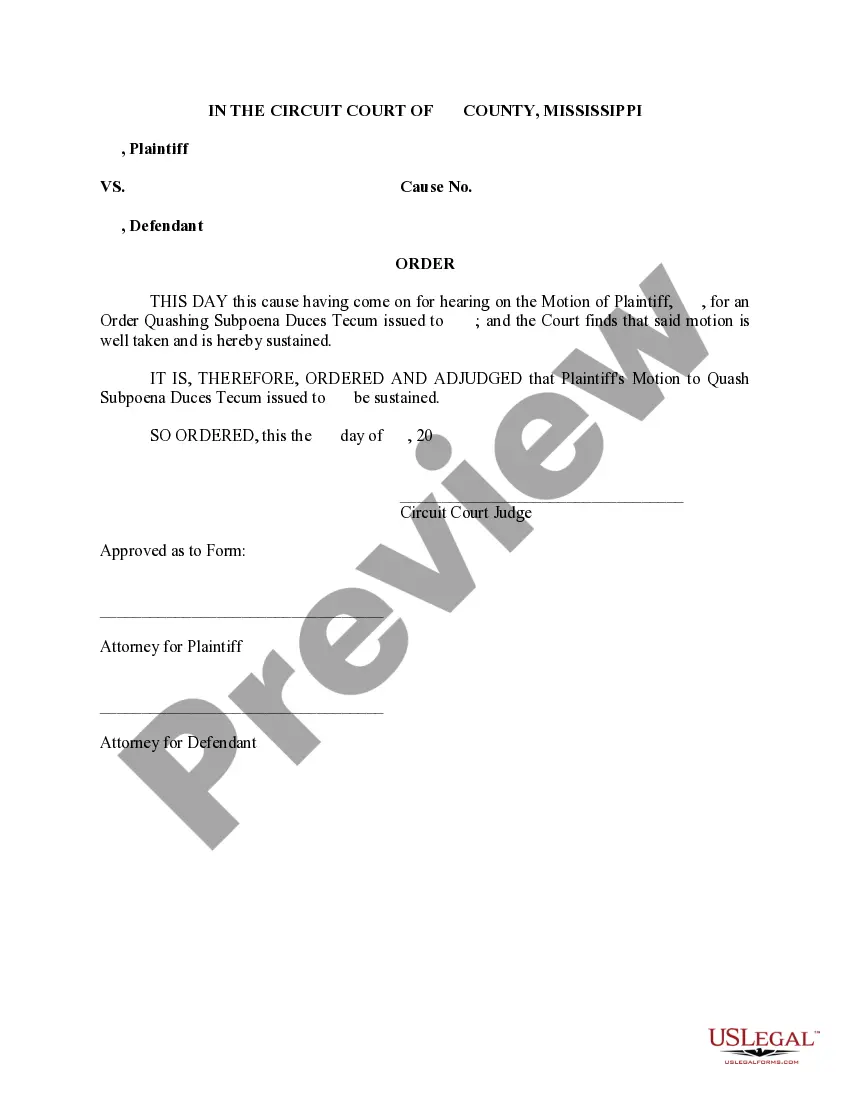
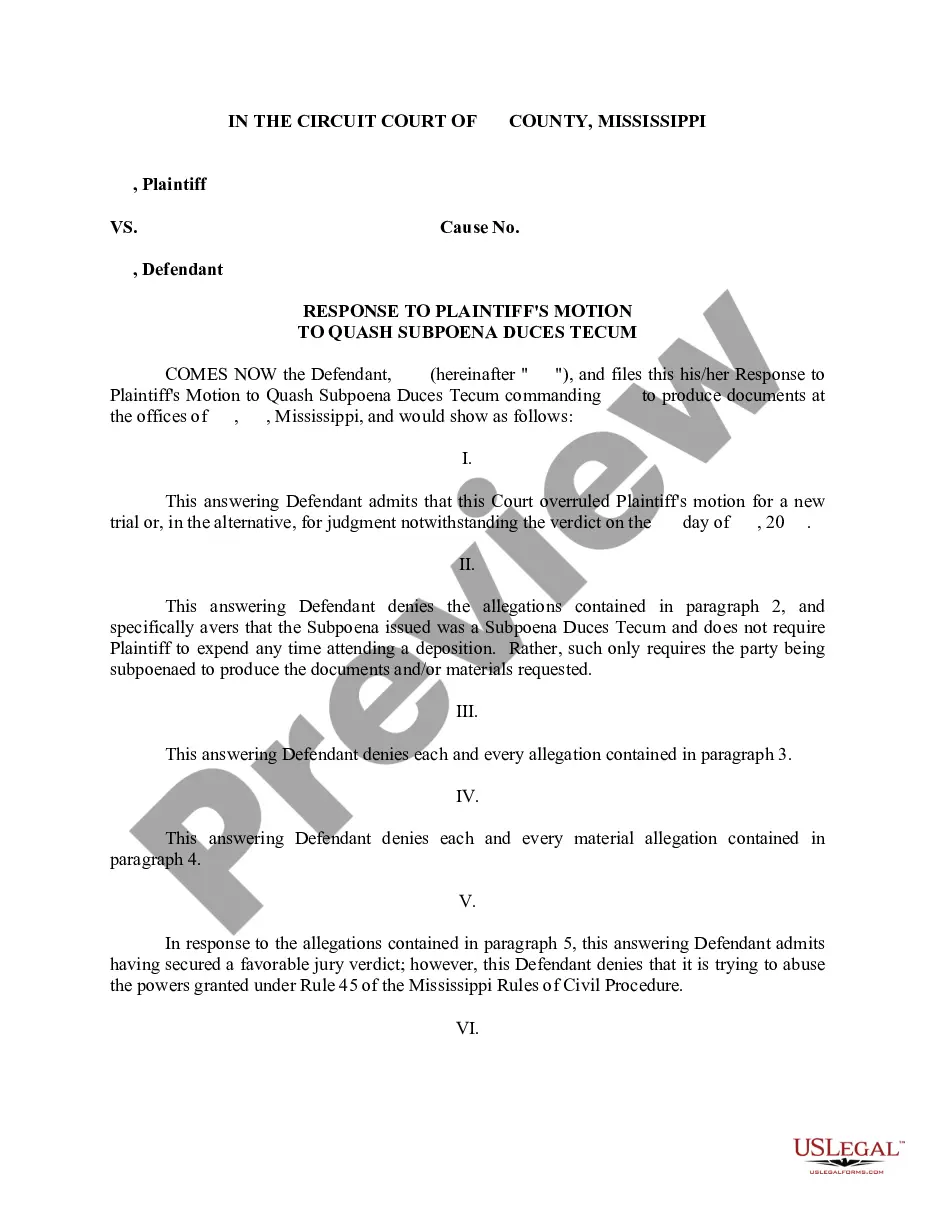
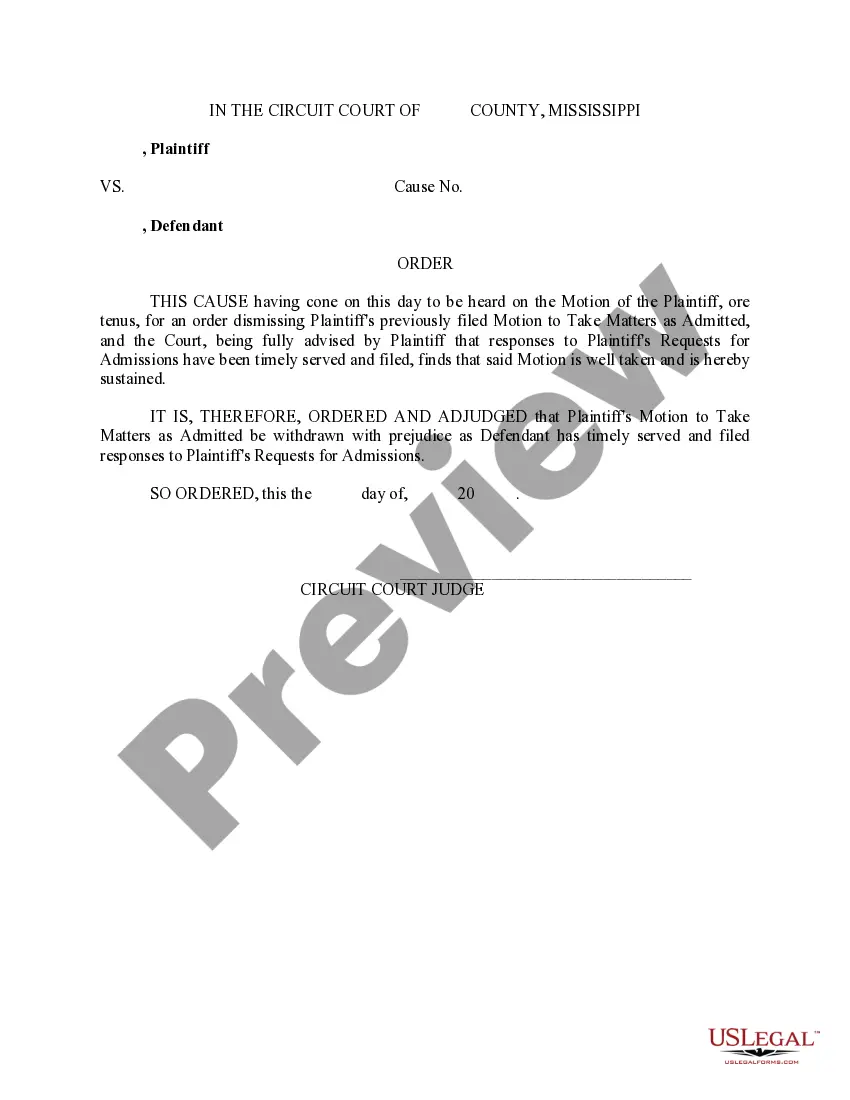
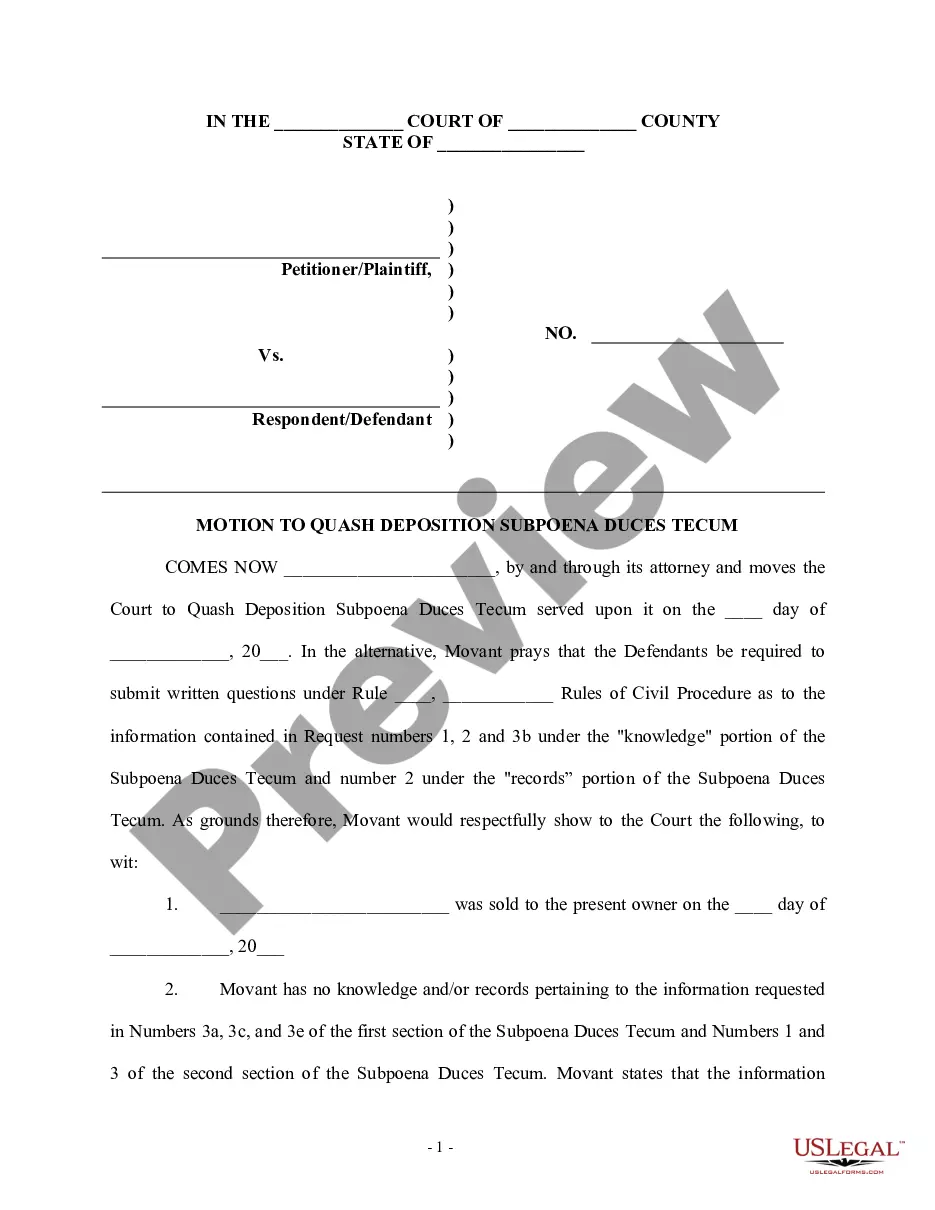
The Order regarding Motion Quashing Subpoena is a legal document used to request that a court nullify or set aside a subpoena. This form is distinctly intended for situations where a party seeks to challenge the validity of a subpoena duces tecum, which orders the production of documents or evidence. By utilizing this order, the requesting party can formally present their arguments to the court, seeking relief from the demands of the subpoena, distinguishing it from other motions that may not specifically target subpoena actions.
Key components of this form
- Title: Clearly identifies the order as relating to a motion quashing a subpoena.
- Header Section: Includes the names of the plaintiff and defendant along with the cause number for reference.
- Order Statement: The court's finding regarding the motion for quashing the subpoena.
- Judgment: A definitive statement granting or denying the motion to quash.
- Signature Lines: Spaces for the judge and attorneys to sign, confirming the order's validity.
When this form is needed
This form is utilized when a party receives a subpoena duces tecum and believes that the request is improper or burdensome. Common scenarios include situations where the subpoena seeks irrelevant documents, excessively broad requests, or information that is protected by privilege. Filing this order helps protect a partyâs rights and ensures that the court evaluates the merits of the subpoena before compliance is mandated.
Who needs this form
- Parties involved in a legal proceeding who have received a subpoena duces tecum.
- Attorneys representing clients who need to contest the validity of a subpoena.
- Individuals or entities concerned about compliance with a subpoena that may infringe on their legal rights.
Instructions for completing this form
- Identify the names of the plaintiff and defendant, entering them in the header section.
- Enter the cause number associated with the case to provide context.
- Fill in details about the subpoena that is being challenged, including the issuing party.
- Specify the date when the order is being issued.
- Include signature lines for the judge and both attorneys to validate the order.
Does this document require notarization?
This form does not typically require notarization unless specified by local law. However, it is always advisable to check the requirements of your specific jurisdiction.
Get your form ready online
Our built-in tools help you complete, sign, share, and store your documents in one place.
Make edits, fill in missing information, and update formatting in US Legal Forms—just like you would in MS Word.
Download a copy, print it, send it by email, or mail it via USPS—whatever works best for your next step.
Sign and collect signatures with our SignNow integration. Send to multiple recipients, set reminders, and more. Go Premium to unlock E-Sign.
If this form requires notarization, complete it online through a secure video call—no need to meet a notary in person or wait for an appointment.
We protect your documents and personal data by following strict security and privacy standards.

Make edits, fill in missing information, and update formatting in US Legal Forms—just like you would in MS Word.

Download a copy, print it, send it by email, or mail it via USPS—whatever works best for your next step.

Sign and collect signatures with our SignNow integration. Send to multiple recipients, set reminders, and more. Go Premium to unlock E-Sign.

If this form requires notarization, complete it online through a secure video call—no need to meet a notary in person or wait for an appointment.

We protect your documents and personal data by following strict security and privacy standards.
Common mistakes
- Failing to provide complete details about the subpoena being challenged.
- Not including necessary signatures, which can render the order invalid.
- Neglecting to check local court rules that might dictate specific formatting or content requirements.
Why use this form online
- Convenience: Easily download and edit the form to fit your specific legal situation.
- Accessibility: Available for immediate download any time, minimizing delays in legal proceedings.
- Security: Provides reliable access to professionally drafted legal forms, written by licensed attorneys.
Legal use & context
- This order is legally binding once signed by the judge and filed with the court.
- Using this form helps ensure that parties are not unduly burdened by irrelevant or excessive requests for information.
- Filing this motion is an essential step in protecting your legal rights against improper subpoenas.
Summary of main points
- The Order regarding Motion Quashing Subpoena is crucial for challenging improper subpoenas.
- Correctly filling out this form protects legal rights while addressing undue burdens of compliance.
- Always reference local rules and seek legal guidance if uncertain about the process.
Looking for another form?


Form popularity
FAQ
Your rights: You have the constitutional right against self-incrimination, which means that while you may have been subpoenaed, you generally cannot be forced to testify against yourself. You also have the right to retain counsel to represent you.
A motion to quash must be based on valid grounds.If the court grants the motion, it may quash the subpoena entirely, modify it, or order that you comply with it on specified conditions. If the court denies the motion, you will usually have to comply with it as written.
If you want to take the risk, save the money you would have spent on a motion to quash (lawyers often charge from $2,000 to more than $3,000) and instead use it to settle the case if: a) you are served a summons and complaint, or b) you are actually targeted in an individual lawsuit against you.
Under the Fifth Amendment, you can refuse to testify to self-incriminating evidence.So, if you've been subpoenaed and do not want to testify, consult with a experienced criminal defense attorney to see if any of these privileges apply to you, or you could face jail time if you don't show up.
Although receiving a court summons may be jarring, it does not automatically mean you are in trouble. You may just have important information or access to information necessary for a particular case to proceed.
If it is your subpoena, you can cancel.
Contact the lawyer who subpoenaed you and ask him/her to let you off the hook or alternatively postpone the trial. If you have a good excuse and the lawyer will not relent, get an attorney you know to contact the judge to get the case postponed.
Any employee whose employment records are sought by a subpoena duces tecum may bring a motion to quash. Note that non-party employees may object to a subpoena by serving written objections. 3. Any non-party who has been served with a business records subpoena may bring a motion to quash.
A motion to quash, by itself, does not stop the deposition. You will have to get the hearing advanced to a date before the deposition date.